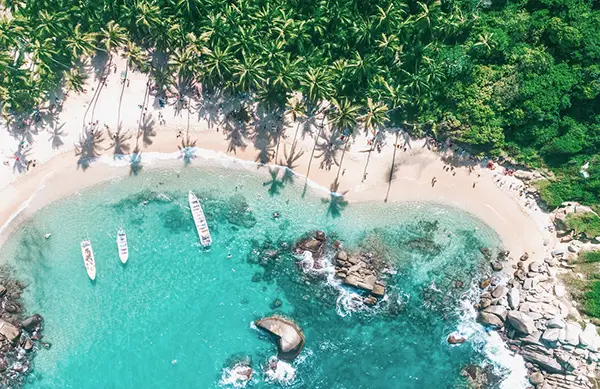
In 1849, a sailing barque named Aliwal, under the command of Captain James Anderson, nearly came to grief on “a very large and dangerous rock or shoal with heavy breakers.” It was the first recorded sighting of what would become Aliwal Shoal. For the better part of almost a century, the reef remained largely unexplored.
By the 1950s, recreational scuba diving was still in its infancy, but divers were beginning to explore Aliwal Shoal and quickly recognized it as an extraordinary dive site. Today, this rocky reef off the KwaZulu-Natal coast is one of South Africa‘s best-known diving destinations, famous for its rich marine life, dramatic underwater terrain and encounters with sharks. Even Jacques Cousteau came to dive here and allegedly placed it within his top ten dive sites.
What Makes Aliwal Shoal Special?
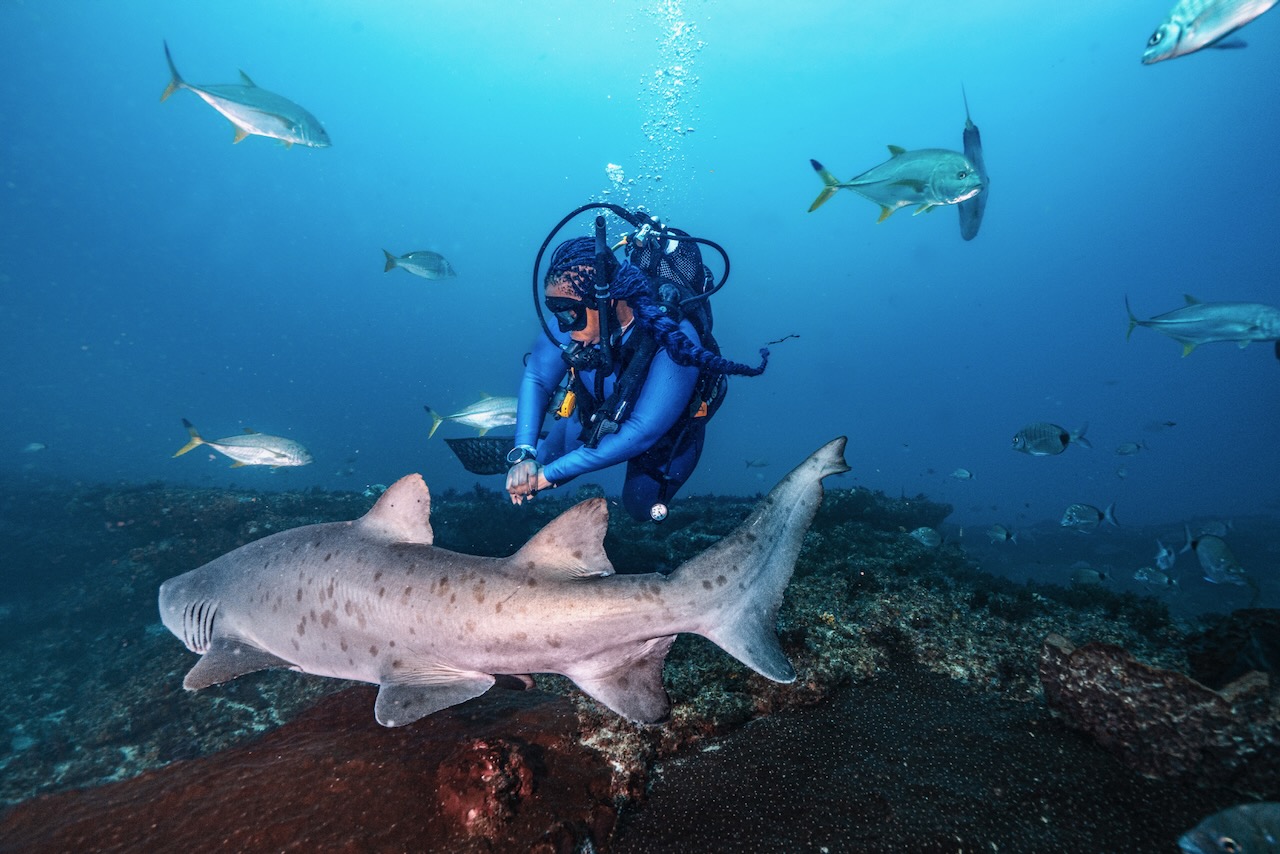
Aliwal Shoal is the remains of an ancient sand dune, now covered with hard and soft corals and surrounded by sandy seafloor. Its caves, overhangs and pinnacles provide shelter for smaller fish and hunting opportunities for larger predators. The warm Agulhas Current also sweeps along the reef, bringing nutrient-rich water that supports an impressive diversity of tropical and subtropical marine life.
The Aliwal Shoal Marine Protected Area was expanded in 2019 and now covers approximately 260 square miles (673 square kilometers). The protected area safeguards the reef, deeper offshore habitats and important areas for sharks, seabreams and other marine species.
Diving With Sharks on Aliwal Shoal
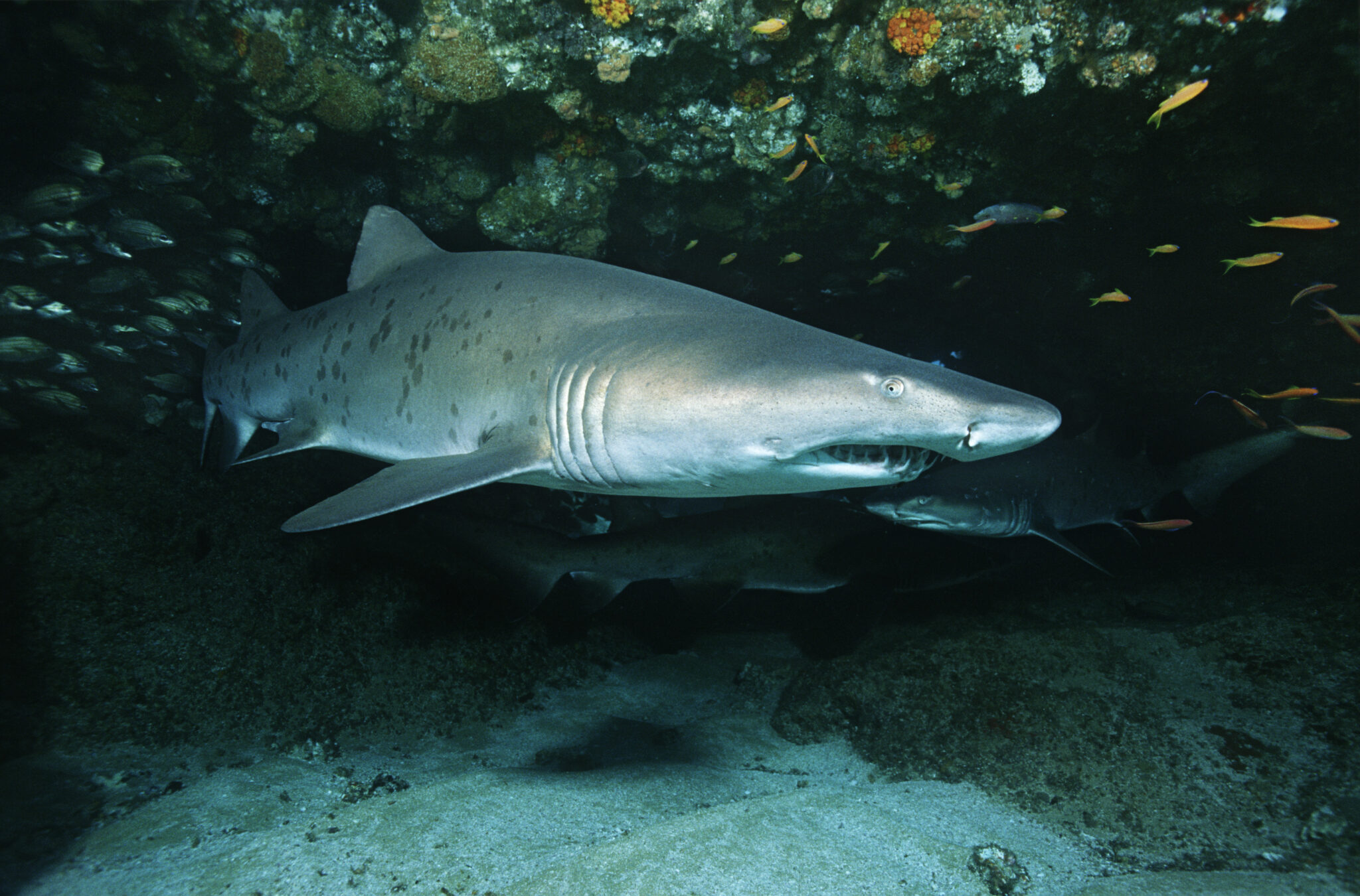
Sharks are one of Aliwal Shoal’s biggest draws, and the species you encounter can vary with the season.
From around July to November, ragged-tooth sharks, also known as sand tiger sharks, gather around the reef. These large, distinctive sharks are particularly associated with caves and overhangs, where they rest during the day. The species also uses the area during an annual reproductive migration.
During the warmer months, divers can encounter tiger sharks, oceanic blacktip sharks and other shark species. Mantas, dolphins, turtles and whales can also make appearances, while the reef’s smaller residents include nudibranchs, ragged-tooth scorpionfish, paperfish, frogfish, pineapplefish, eels and other tropical reef fish.
Explore Aliwal Shoal’s Wrecks
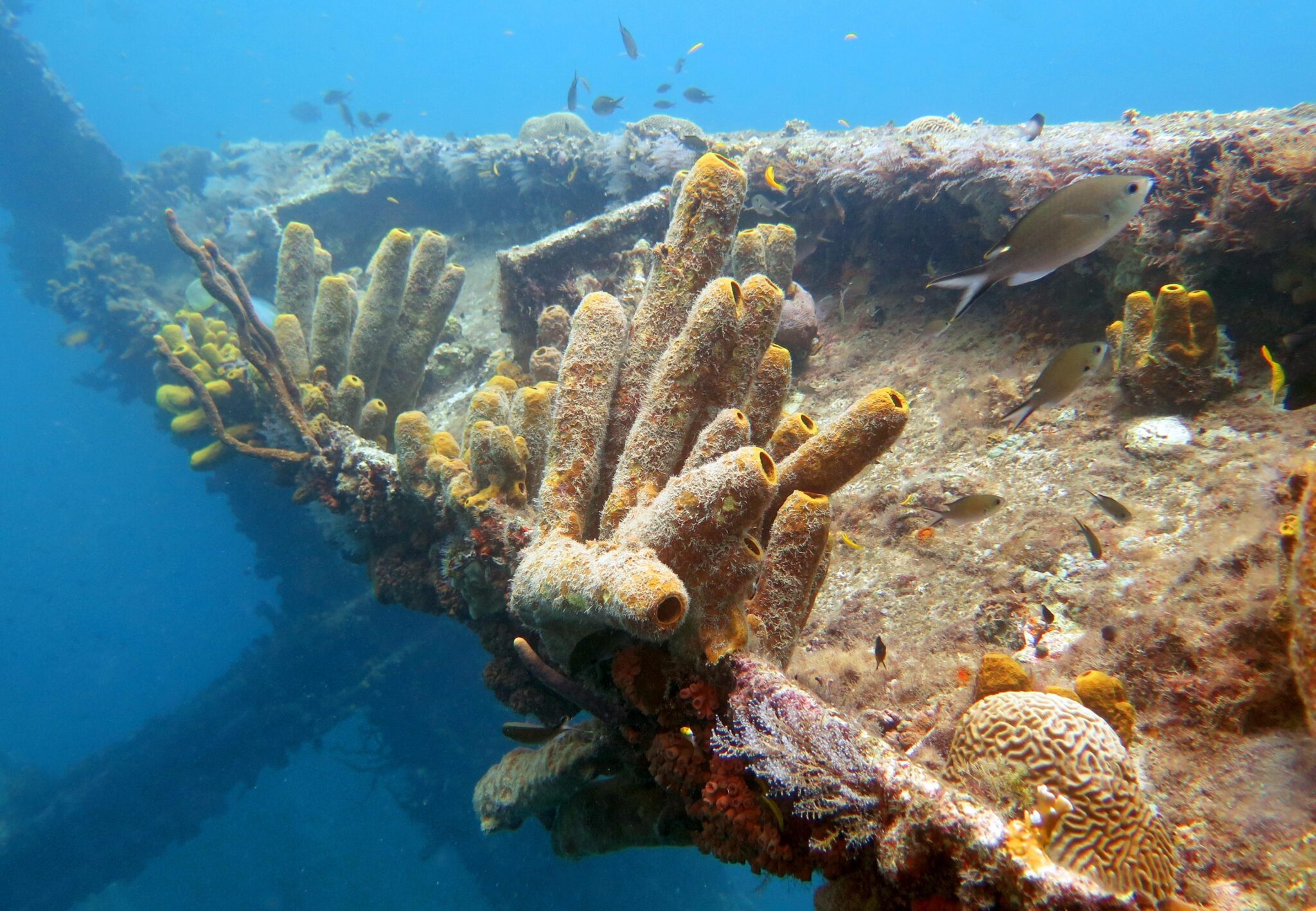
Aliwal Shoal also offers excellent wreck diving. The MV Produce sits at a maximum depth of around 32 meters (105 feet), while the SS Nebo reaches approximately 27 meters (89 feet). Both wrecks have become artificial reefs, attracting marine life while offering divers the chance to combine history, exploration and underwater photography in a single dive.
For divers interested in deeper exploration, the area also has technical diving opportunities beyond recreational limits, including the MS Griqualand wreck at around 60 meters (197 feet). This dive requires appropriate technical training, equipment and planning.
Why Go Diving on Aliwal Shoal?
Aliwal Shoal packs a remarkable amount of variety into one dive destination. Depending on your certification, interests and the conditions, you can explore the coral-covered reef, swim through caves and overhangs, dive historic wrecks or spend a dive watching sharks glide through the blue.
And you don’t have to be an advanced diver to enjoy it. With dive sites beginning at around 12 meters (39 feet), there are plenty of opportunities for Open Water Divers, while deeper reefs and wrecks at up to 40 meters (131 feet) offer a natural next step for divers with additional training.