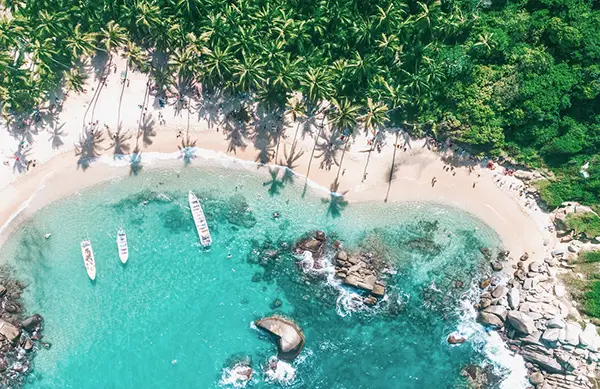
When people think of Spain, they think of sun-drenched beaches, rich culture, and mouthwatering food. It’s the world’s second-most visited country, after neighboring France, with nearly 100 million international visitors arriving each year. But did you know that Spain is also home to some exceptional dive sites?
The almost 8,000 km (5,000 miles) of Spanish shoreline hits both the Mediterranean Sea and the Atlantic Ocean and includes two island archipelagos. If you pair that with an expanding network of Marine Protected Areas (MPAs), which today cover 12% of the country’s marine waters, you can see why your next trip should be scuba diving in Spain.
Here are 11 of the best dive sites you can find in Spain.
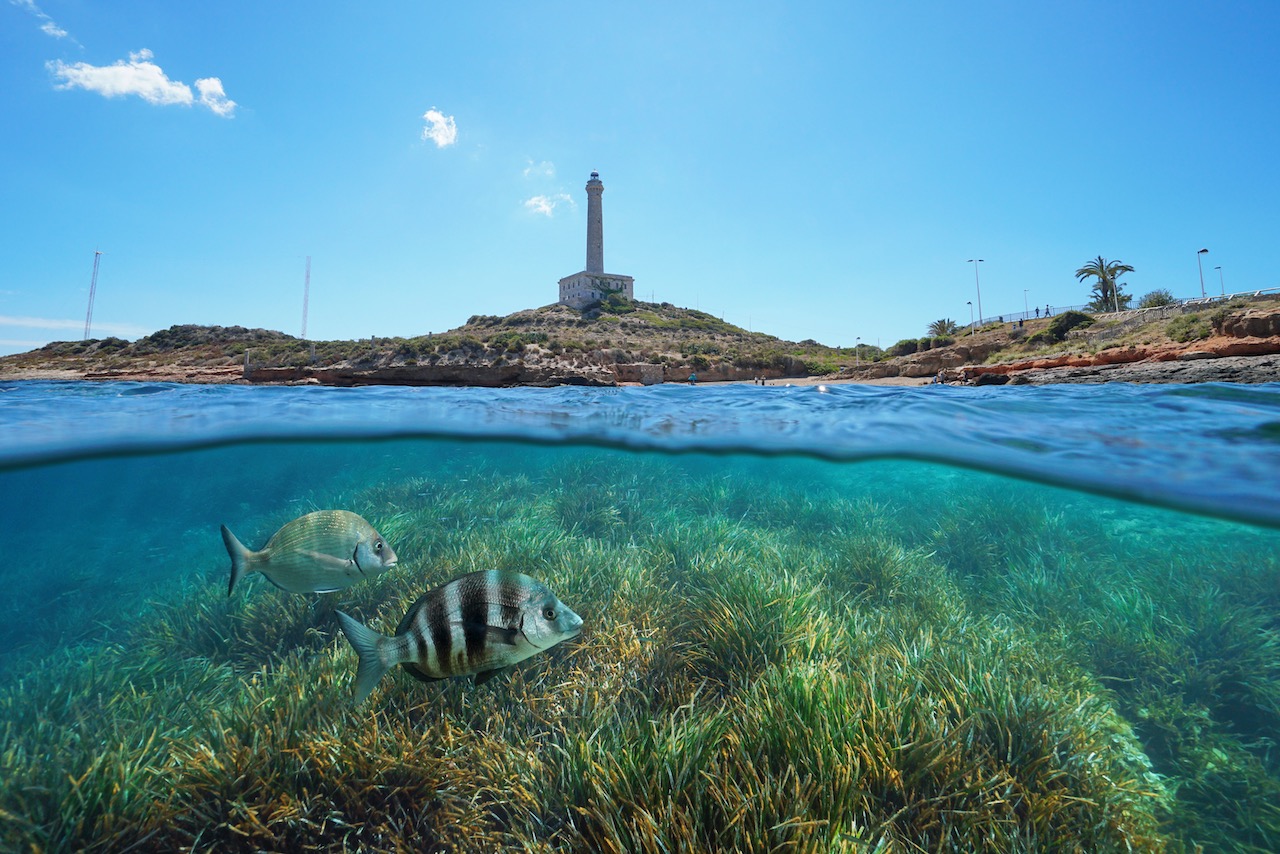
1. Cabo de Palos (Murcia)
Cabo de Palos, on Spain’s southeastern coast in Murcia, is a world-class destination thanks to the Islas Hormigas Marine Reserve. Known as one of Europe’s premier sites due to its rich biodiversity, this protected area is home to schools of barracuda, massive groupers, moray eels, and the occasional sunfish. While diving directly on the islands is off-limits due to conservation reasons, a mooring system provides access to the vibrant nearby underwater pinnacles, or “Bajos.”
Wreck diving fans shouldn’t miss “El Naranjito,” a merchant ship that sank in 1946, releasing its cargo of oranges (hence the name!). It now lies between 26 and 40 meters (85 and 130 feet), offering an unforgettable deep dive.
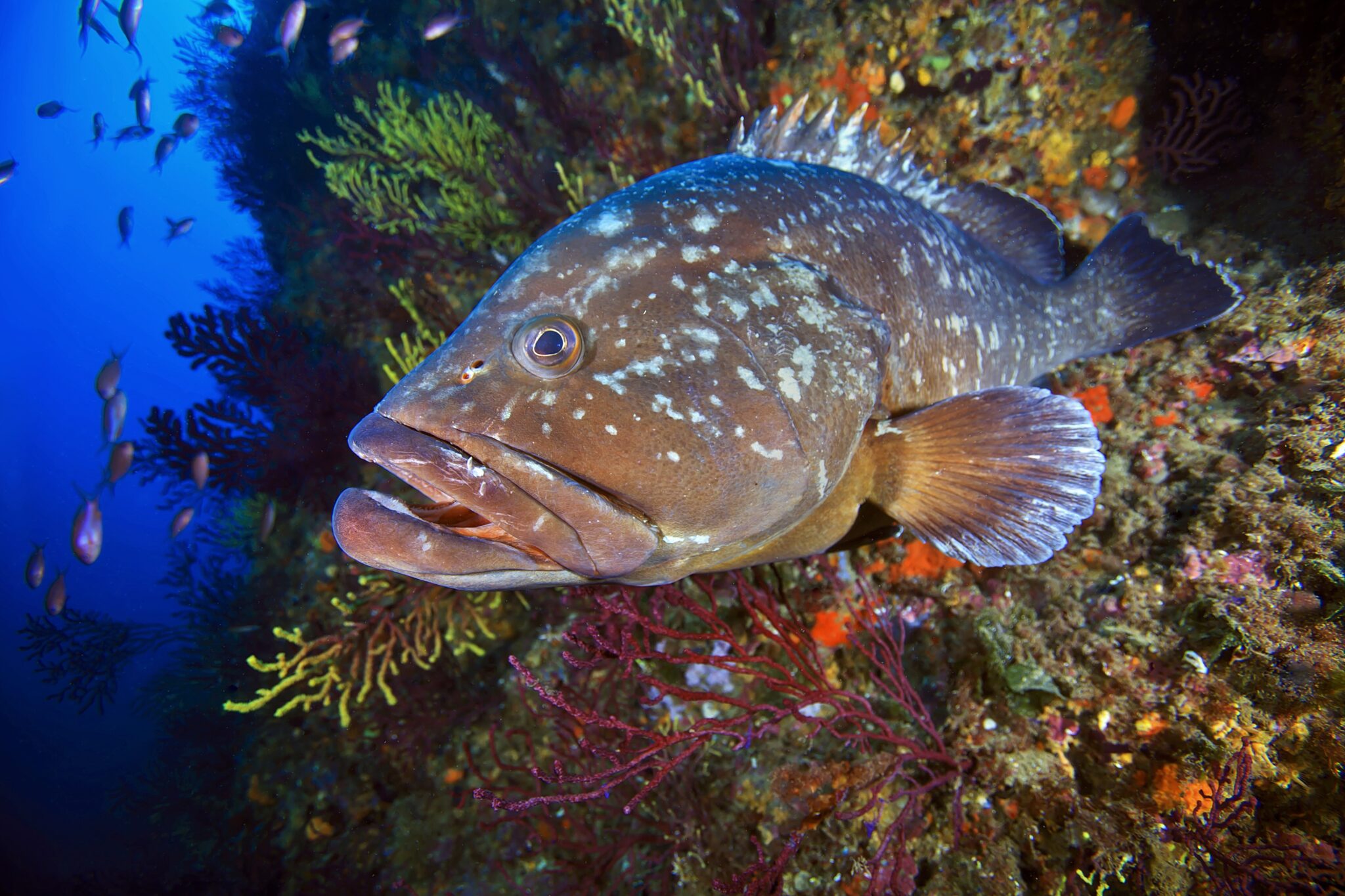
2. Medes Islands (Girona, Catalonia)
Just off the Costa Brava in Catalonia, the Medes Islands are another of Spain’s top diving spots. Located within the Montgrí Natural Park, the islands have been protected for well over 30 years. This has allowed marine life to flourish, so you can expect to see schools of fish, octopus, nudis, and possibly the biggest groupers you’ll ever see.
It’s not just the fauna that’s impressive; you’ll also love the underwater landscapes. There are plenty of caves, tunnels, and rock formations that make the many dive sites around the islands a joy to explore.

3. La Herradura and Marina del Este (Granada, Andalusia)
The beauty of diving in Spain is that you can combine it with plenty of tourism. In Granada, you can visit the Alhambra, go for tapas, or enjoy a flamenco show between dives. Then, head to the Cerro Gordo Natural Park for some of the region’s most accessible and enjoyable diving.
La Herradura Bay and the Marina del Este sites are known for their calm, clear waters and gentle conditions. This makes them ideal for beginners and relaxed dives.
Beneath the surface, you’ll find a mix of rocky reefs and sandy bottoms teeming with groupers, octopuses, moray eels, and many colorful fish. There are various routes you can take to cover the sites, but whatever you do, don’t forget to look up at the blue. You’ll sometimes find eagle rays or sunfish passing by!

4. Rías Baixas (Galicia)
For a different kind of diving experience, you’ll love the Rías Baixas in Galicia, on Spain’s northwestern Atlantic coast. The waters here are cooler than in the Mediterranean, but for that very reason, they’re bursting with life. Head to the Cíes Islands, part of the Atlantic Islands of Galicia National Park, for unexpectedly turquoise water and white sand beaches.
Underwater, you’ll encounter plenty of Atlantic marine species, like spider crabs, conger eels, seahorses, anemones, and nudibranchs. The rugged underwater terrain includes rocky outcrops, algae forests, and sandy bottoms, all shaped by the powerful tides of the Atlantic.
You will need to wear a slightly thicker wetsuit. However, the biodiversity and raw natural beauty of this area make it well worth the trip.
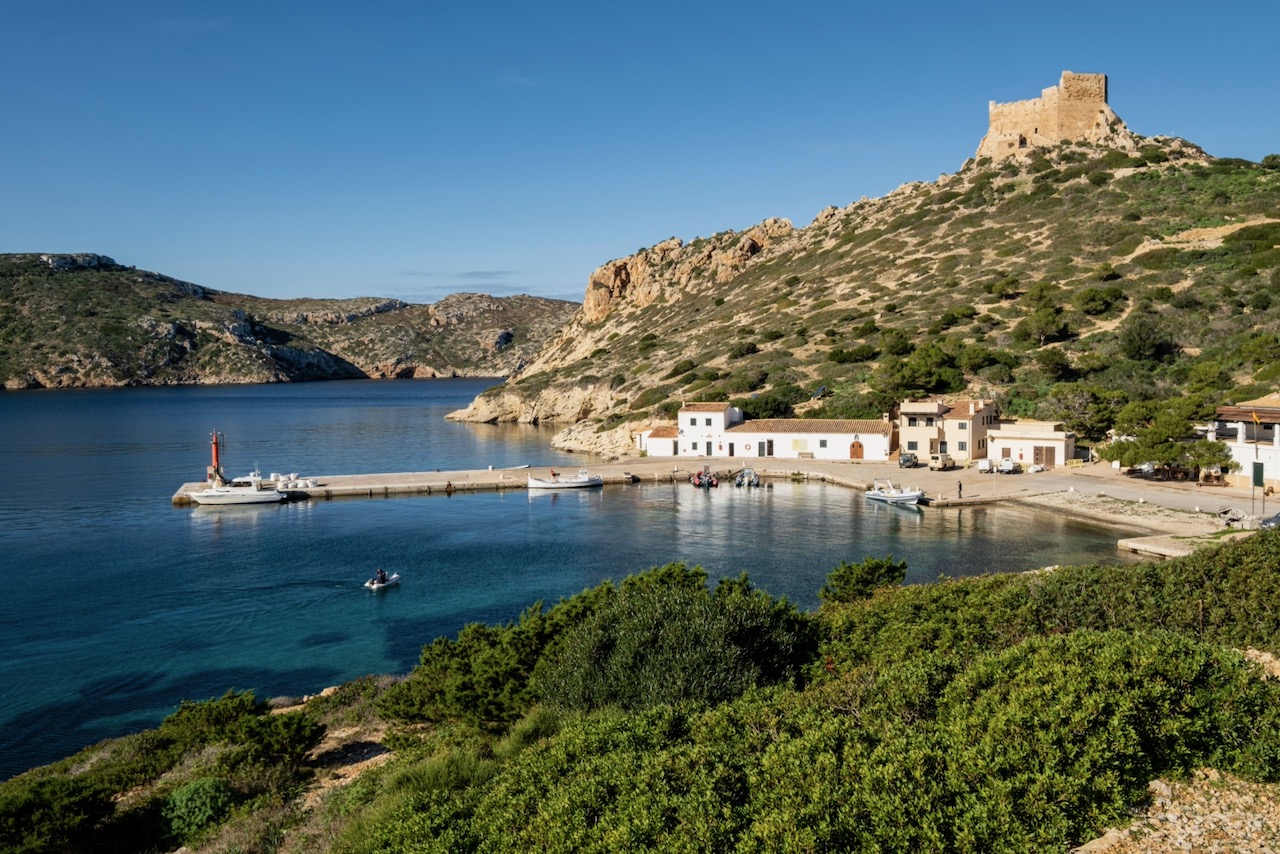
5. Cabrera (Mallorca)
The largest of the Balearic islands has no shortage of top-quality diving. When you’re in Mallorca, don’t miss the chance to explore Cabrera, a pristine sanctuary just off the southern coast of the island. Part of the Cabrera Archipelago National Park, this area is one of the best-preserved marine environments in the Mediterranean.
Thanks to the strict protection and the distance from Mallorca, making it accessible only by boat, you won’t find many divers in the crystal-clear waters here. What you will find instead is barracudas, groupers, octopuses, and even corals. The underwater topography is just as impressive, with a plethora of the underwater caves and tunnels so characteristic of the Balearic Islands.
This makes for a great day trip and a peaceful escape from the busier dive spots around Mallorca.
6. El Toro (Mallorca)
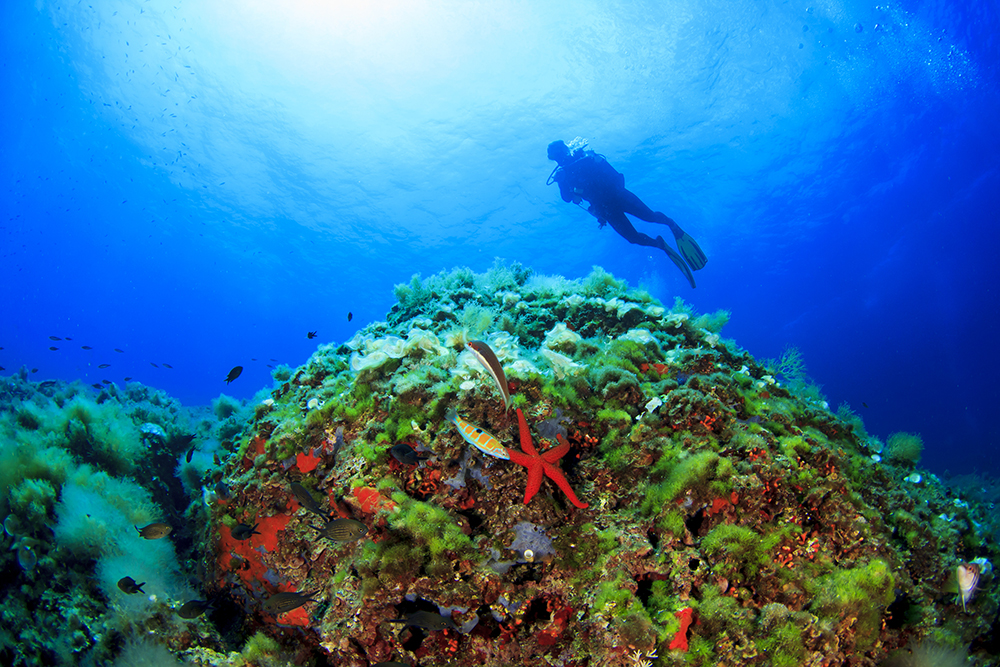
Another excellent marine reserve you can find in Mallorca is El Toro, located on the southwest coast of the island. This area is known for its dramatic underwater landscape, featuring tunnels, canyons, and walls that drop to 40 meters (130 feet). Divers often encounter large schools of fish, barracudas, groupers, and all the typical Mediterranean marine creatures.
The protection has allowed marine life to flourish, making it one of the most abundant dive sites you can visit. Whether you want to explore the underwater rock formations or the large seagrass meadows of Posidonia, you’ll find plenty to see in El Toro for divers of all levels.
7. Cueva de la Luz (San Antonio, Ibiza)
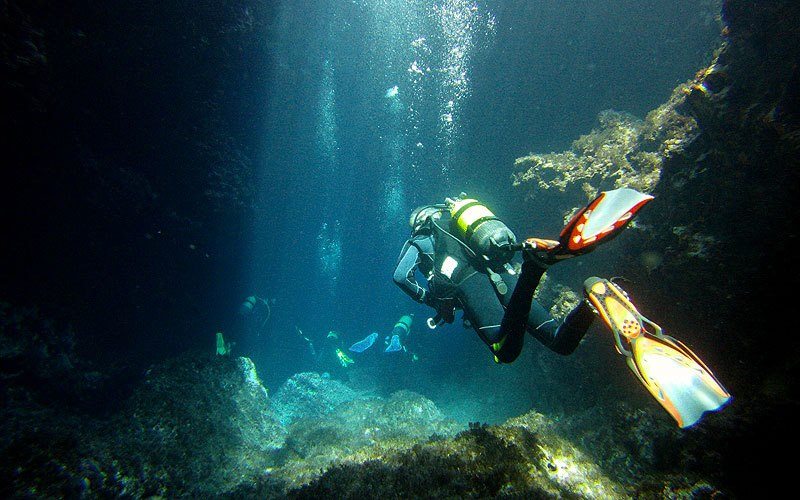
When you think of Ibiza, diving’s probably not the first thing that comes to mind, but you’ll be pleasantly surprised! While diving in Ibiza, you’ll be mesmerized by the natural light filtering through the many holes in the rocks as you swim through tunnels, canyons, and caverns. One of the most magical dive sites is the Cueva de la Luz, near San Antonio.
You enter through a vertical chimney that opens up into a stunning underwater cave, giving you a unique dive experience. The site feels more like a cathedral than a cave, and the roof is well above sea level, allowing you to come up for a breath of fresh air to take in the rock formations.
On the other side of the island, you can visit the famous Don Pedro wreck, one of the largest shipwrecks in the Mediterranean that sank in 2007 after crashing into an underwater pinnacle.

8. El Hierro (La Restinga)
The Canary Islands, located off the northwest coast of Africa, are not only a hotspot for tourists. The deep, warm waters surrounding the islands are a favorite stop for many pelagic species on their migration routes. This also makes the islands perfect dive spots, especially El Hierro, the smallest of the Canary Islands. Known for its wild and unspoiled beauty, El Hierro boasts exceptional visibility, along with striking lava formations and dramatic drop-offs.
Make sure you don’t skip La Restinga Marine Reserve, located off the island’s southern tip. This remote reserve attracts impressive oceanic species, such as mobulas and groupers, as well as the occasional sighting of larger pelagics. Thanks to the island’s isolation and strong conservation measures, the marine life here is abundant and relatively undisturbed.
For those looking for raw nature, clear waters, and world-class diving, El Hierro is hard to beat.
Click to display the embedded YouTube video
9. Gran Canaria (Arinaga – El Cabrón)
Whether you want to dive by boat or from the shore, there’s plenty to see in Gran Canaria. While the island boasts other popular spots, such as the Sardina del Norte port, which is perfect for spotting angel sharks and rays on a night dive, El Cabrón Marine Reserve in Arinaga is one site you’ll love to return to again and again.
Located on the eastern coast of the island, it’s known for its volcanic rock formations, featuring arches and tunnels that provide a perfect habitat for many marine species. You can spot trumpetfish, barracudas, moray eels, and large shoals of sardines or yellow snapper (roncadores). The reserve’s easy shore access and reliable visibility make it a favorite among both local and visiting divers.
10. Montaña Amarilla (Las Galletas, South Tenerife)
Tenerife really has a little bit of everything. It’s home to Spain’s highest peak, the Teide volcano, with an elevation of 3,715m (12,190 feet), and there are few places in the world where you can hike up a volcano and go diving on the same holiday. Just make sure you leave enough surface interval after your dive before you ascend to higher altitudes.
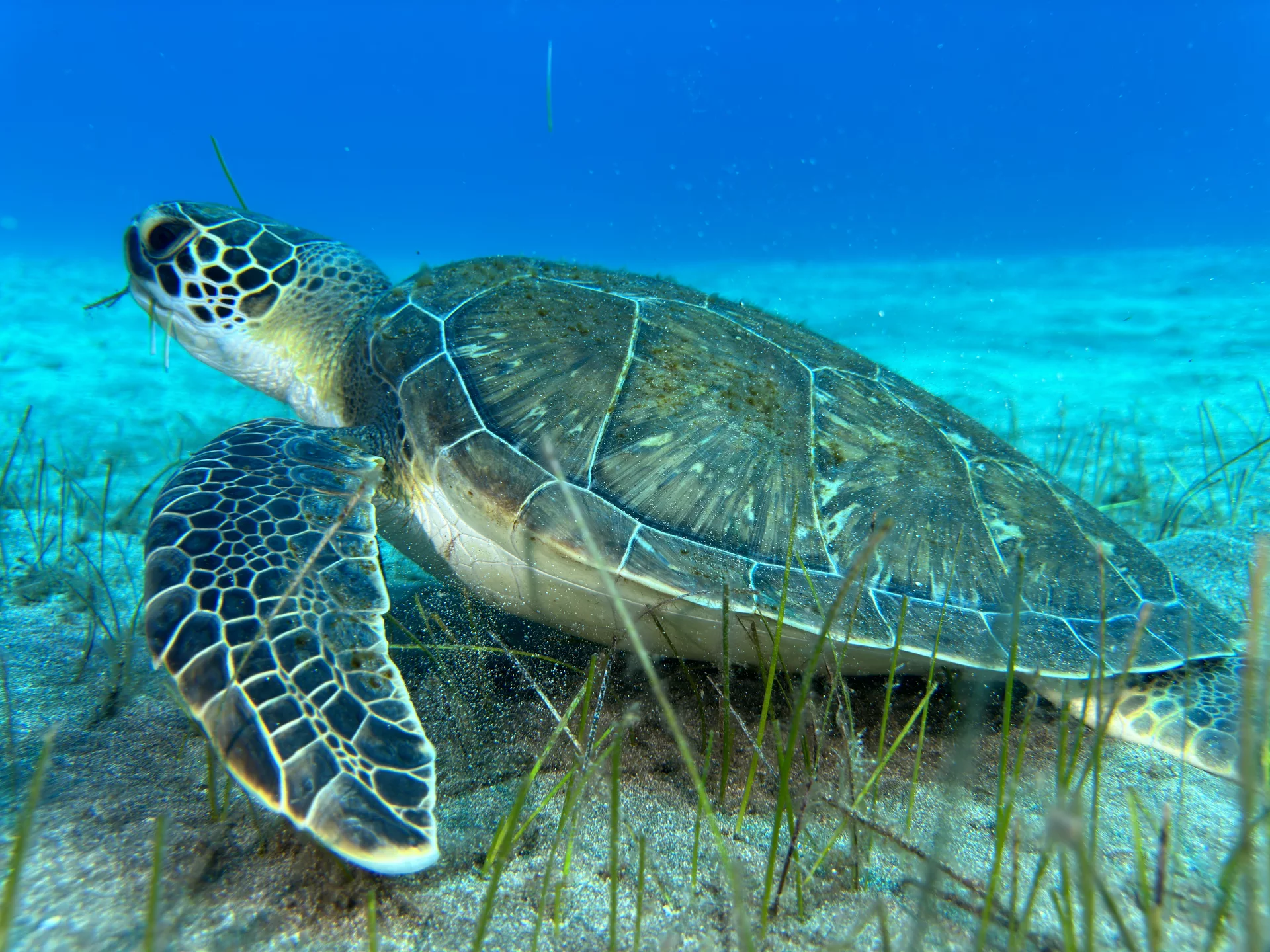
On the southern coast of Tenerife near Las Galletas, Montaña Amarilla is a standout dive site shaped by ancient volcanic activity. You’ll find submerged lava walls that feel out of this world, with caves that are teeming with life. Look out for moray eels, cuttlefish, trumpetfish, octopus, and even turtles.
The visibility is typically excellent, and the site is just minutes from several well-equipped dive centers, making it easily accessible for divers of all levels and abilities.
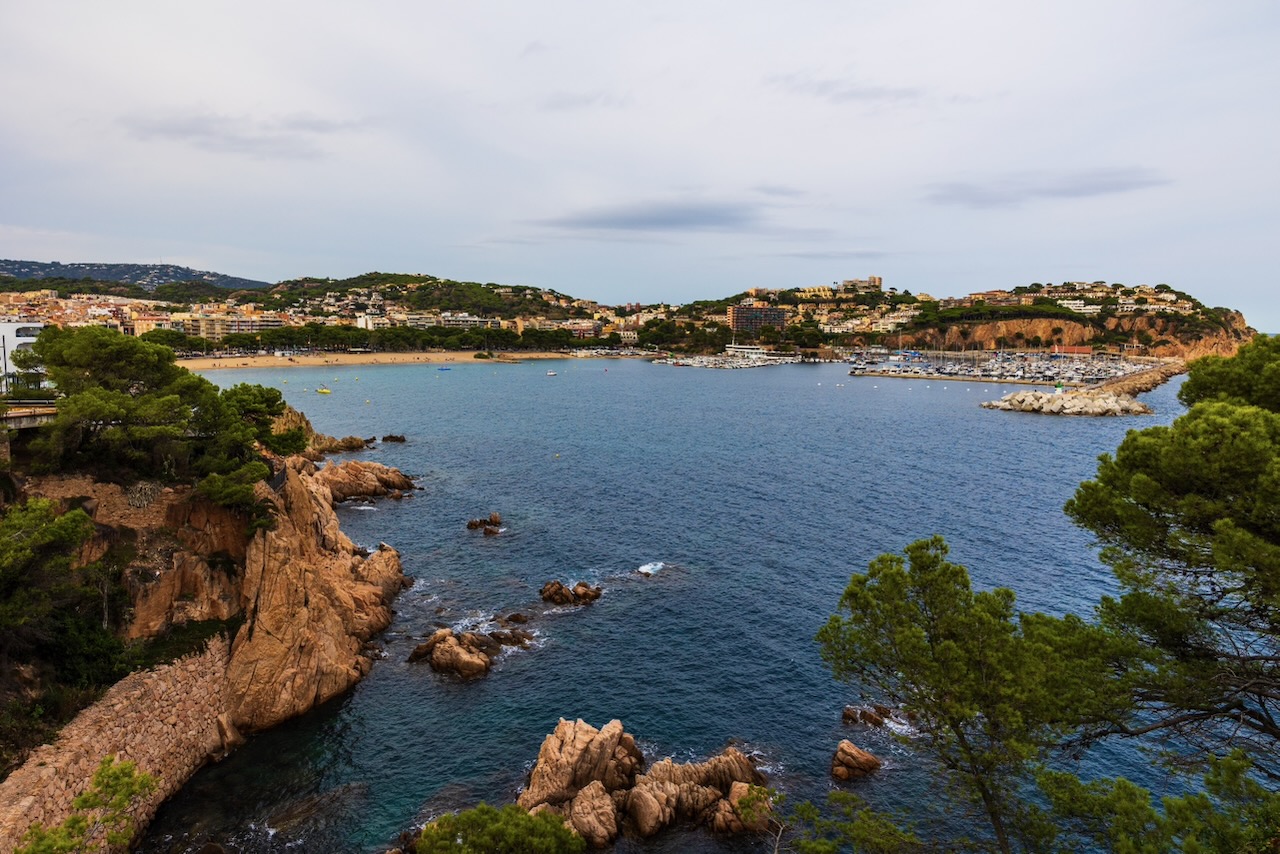
11. Sant Feliu de Guíxols (Costa Brava, Catalonia)
Located in the heart of the Costa Brava, Sant Feliu de Guíxols offers an accessible and rewarding Mediterranean dive experience. Its sheltered bay features a mix of rocky reefs, posidonia seagrass, small walls and swim-throughs, creating ideal conditions for both beginners and experienced divers. You might see octopus, moray eels, nudibranchs and schools of fish in this vibrant yet approachable setting.
What makes this destination stand out is its long-standing commitment to marine conservation. Local dive operators have spent decades removing ghost nets, organizing regular cleanups and implementing solutions, like permanent mooring buoys to protect the seabed. Diving here means not only exploring a beautiful stretch of the Mediterranean, but also supporting a community deeply dedicated to preserving it.
Click to display the embedded YouTube video
Discover the Best Places for Diving in Spain
From the warm Mediterranean to the wild Atlantic coasts, Spain’s dive sites are as diverse as its landscapes. Dive in the morning, explore a historic town in the afternoon, and toast the day with local wine by sunset. So what are you waiting for?
Pack your gear and discover why Spain is one of the most exciting diving destinations for this summer.