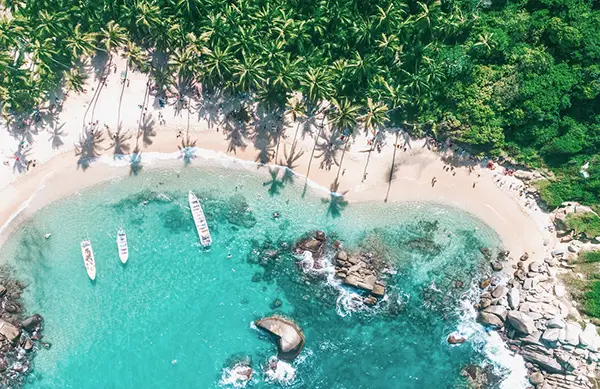
When most people think of the best places to scuba dive in the US, Florida, Hawaii and California most likely come to mind. What many don’t realize is that some of the best scuba diving in the US is tucked away inside the National Park System. From coral-encrusted forts to glacial lakes, the best US National Parks for scuba diving offer surprises for every kind of diver.
To develop this list, we spoke with JD Reinbott, a PADI AmbassaDiver, Instructor and marine conservationist, to learn more about the US National Parks, the scuba diving opportunities in the parks and some of the challenges these parks are facing.
Why National Parks Matter
There are 63 officially designated National Parks in the US across all 50 states. However, the number of sites managed by the National Park Service actually totals 433. This additional number includes other important lands, such as historic sites, lakeshores and recreation areas. Altogether, these protected areas cover more than 85 million acres (34 million hectares).
“National parks are the backbone of America. They preserve our heritage, our history and our culture. They are also a huge supporter of both state and nationwide economies,” Reinbott said. Beyond their practical value, he explained, “I love national parks because they give me the chance to feel grounded with the outdoor world whether that is with my friends, my family or just myself. They truly are places like no other and always leave me with a feeling of pure, unfiltered joy.”
For everyone, but especially a community of scuba divers, Reinbott pointed out that National Parks also extend underwater, preserving some of the best diving sites in the United States. He told us, “US National Parks are not just those that are on land but also those underwater.”
How Everyone (Including Divers) Can Help US National Parks
Reinbott warned that US National Parks are facing growing challenges, from climate change to resource limitations.
At a time when these Parks are facing such threats, Reinbott’s advice begins with a simple action, “First and foremost — visiting the Parks is one of the best ways to support them.” And even if you can’t visit in person, he encouraged divers to share their passion, “Share the importance of and your passion for parks with your friends, family, coworkers and beyond. This can help inspire them to get involved and care just as much as you.”
Small actions can make a big difference. “You can use your voice to speak up against the actions harming our parks. These actions may seem small, but they create a collective voice that can bring about positive change,” Reinbott explained.
Ultimately, Reinbott concluded, “The more recognition these places get, the more people will care about them. The more people care, the more we can protect them.”
One easy first step in the fight for the natural world is to become an Ocean Torchbearer.
In celebration of these unique natural wonders, here are some of the best US National Parks for scuba diving.
1. Biscayne National Park (Florida)
Highlights: Historic Wrecks & Colorful Reefs
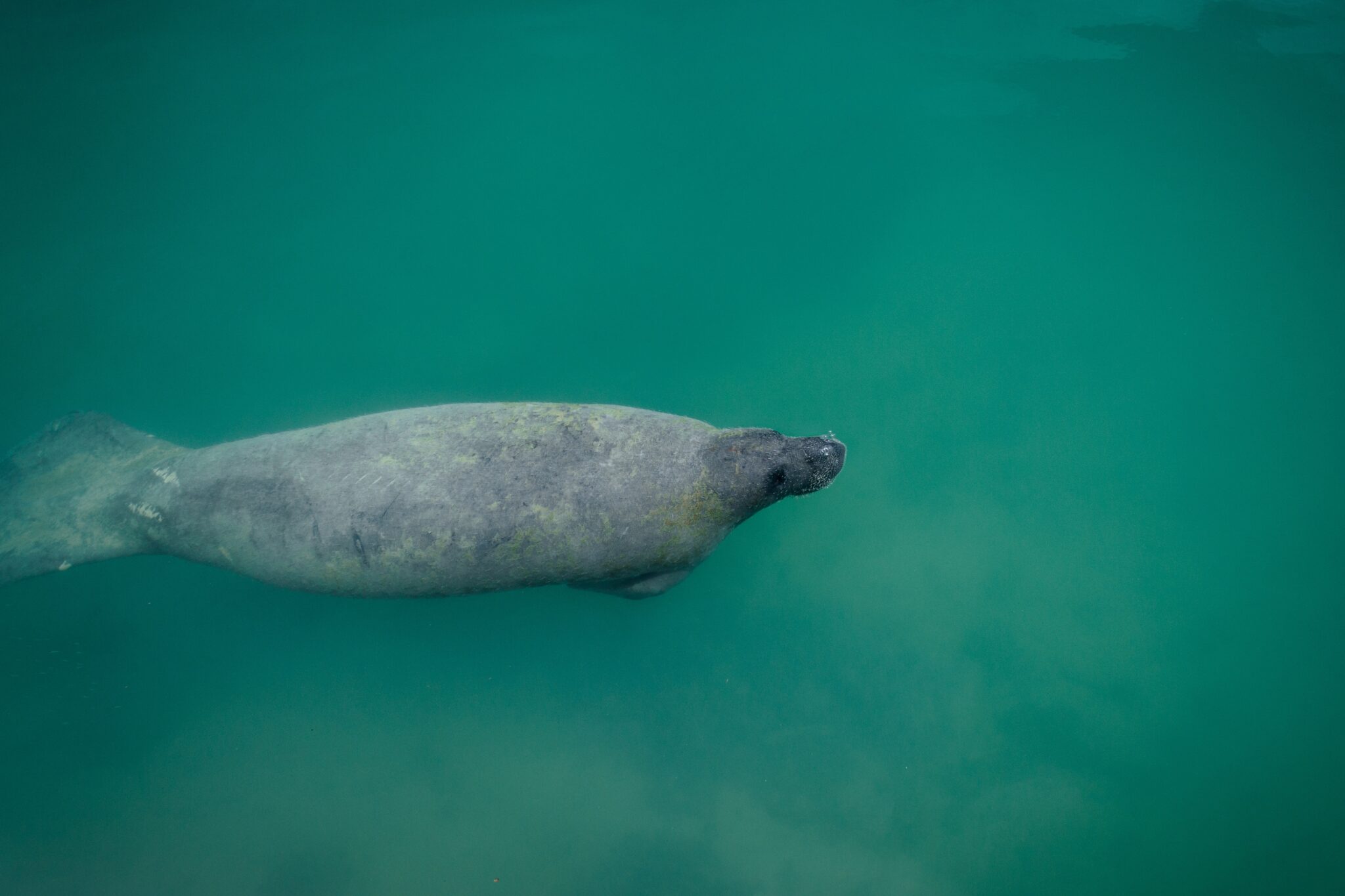
95% of Biscayne National Park is underwater, so it’s little wonder this park offers some of the best scuba diving in the United States. Just south of Miami, Biscayne gives divers access to subtropical waters and the world’s third-largest coral reef system. This aquatic adventure-land offers colorful reefs, seagrass beds and historic shipwrecks.
The Biscayne National Park Maritime Heritage Trail connects a series of dive-worthy wrecks, including the Erl King, Alicia and Mandalay. With many sites comfortably within recreational limits, Biscayne National Park is an ideal destination for both new and experienced divers to explore.
2. Glacier National Park (Montana)
Highlights: Glacial Valleys, Mountain Lakes, Wrecks & Wildlife
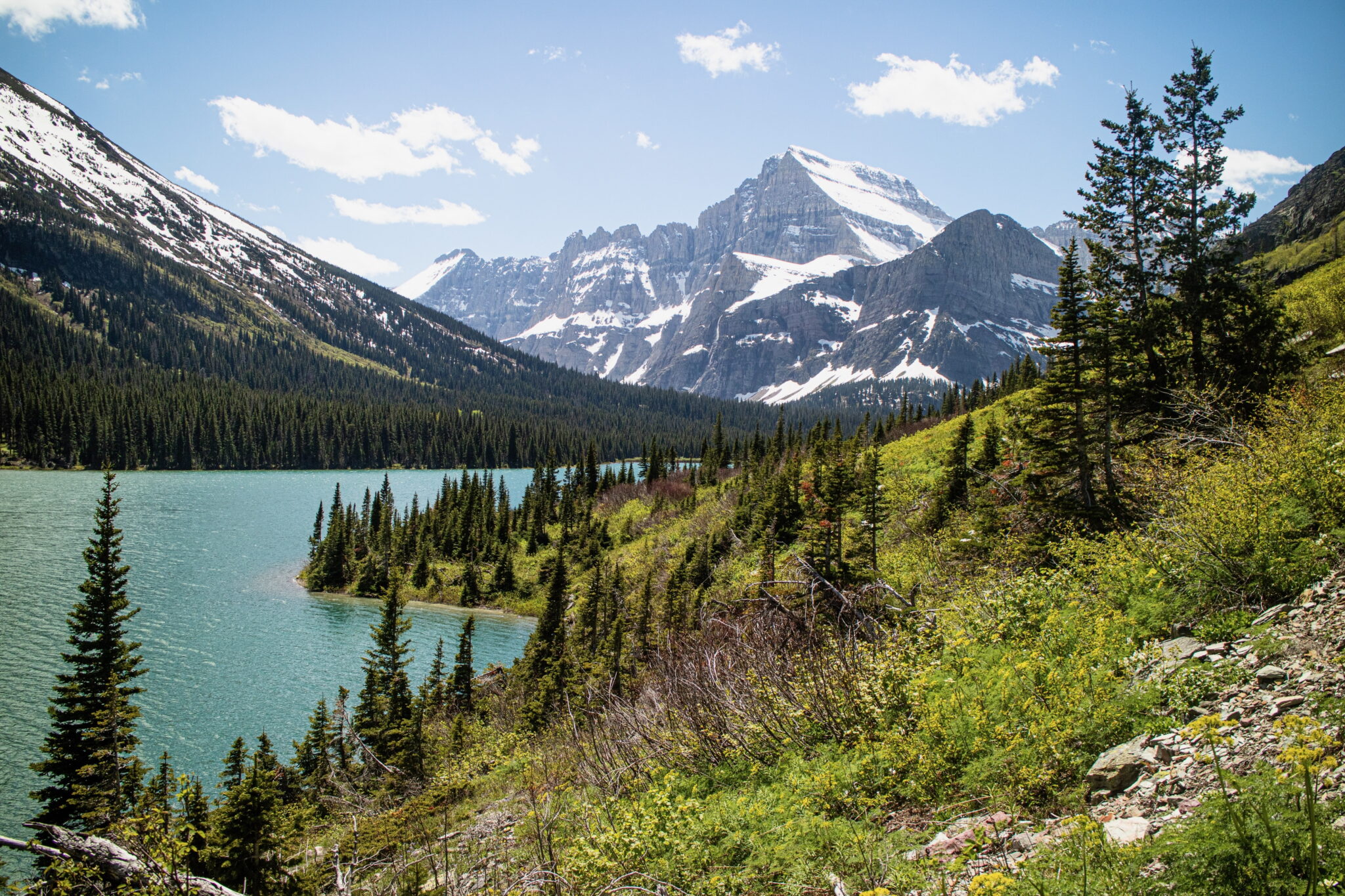
If you’re looking for some of the clearest water you’ll ever dive in, add Glacier National Park to your must-dive list. While not a typical dive destination, this spectacular park straddles the US–Canada border between Montana and Alberta, offering divers a glimpse of alpine stillness from beneath the surface. Expect glassy visibility, rugged peaks and forest-lined shores that create a truly one-of-a-kind dive backdrop.
Popular dive spots include Lake McDonald (US) and Upper Waterton Lake (Canada).
Keep in mind that diving here means cold, high-altitude conditions, so experience in both is strongly recommended. You can learn more about diving in this type of environment by completing the PADI Altitude Diver and Dry Suit Diver Specialty courses.
When you’re not in the water, Glacier National Park delivers unforgettable topside experiences. Watch for wolves, bears and other wildlife as you explore the park’s breathtaking mountain scenery.
3. Channel Islands National Park (California)
Highlights: Wrecks, Kelp Forests & Sea Lions
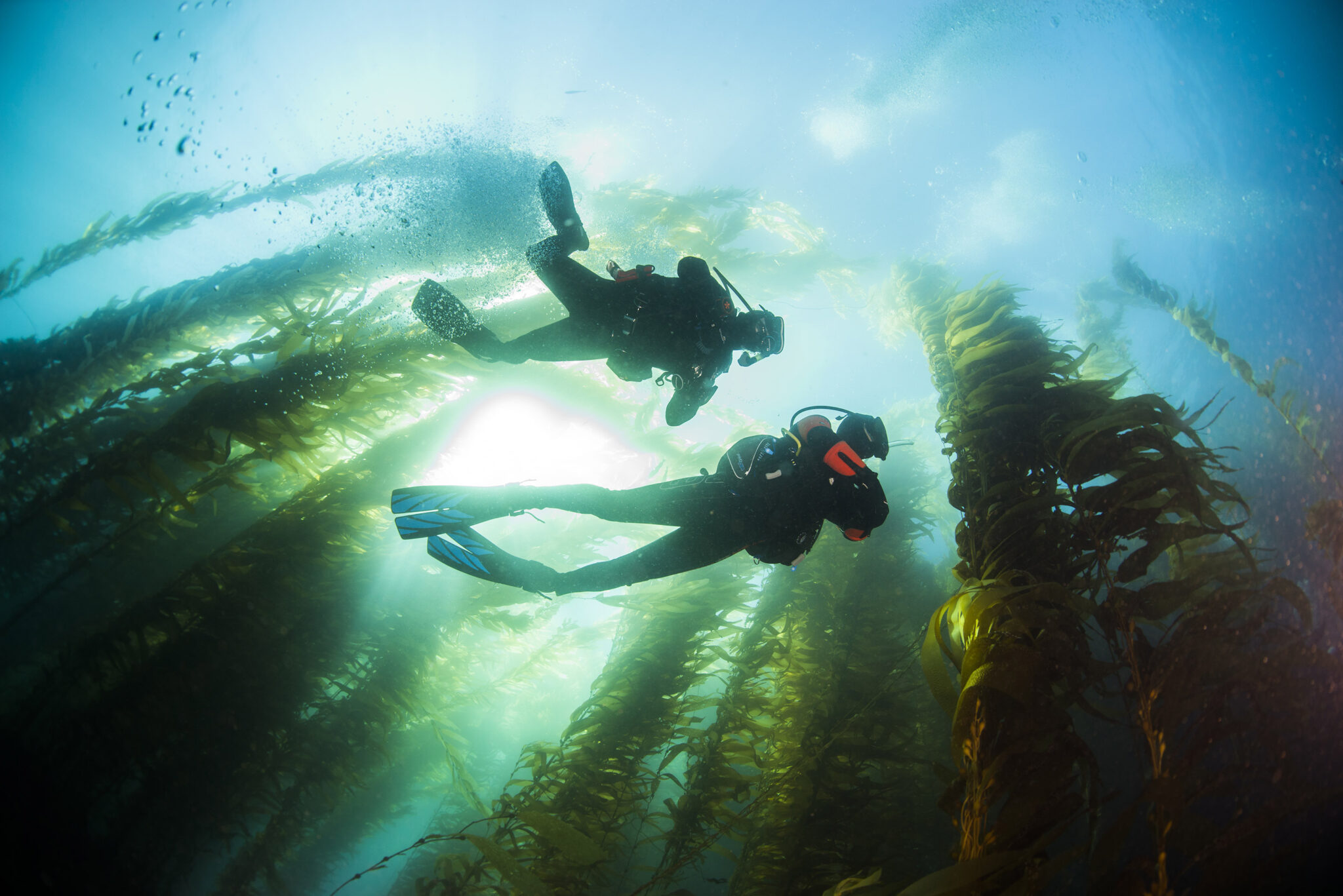
Nicknamed the “Galápagos of North America,” Channel Islands National Park is located just off the California coast near Santa Barbara. With five distinct islands to explore, this park offers visitors a choose-your-own-adventure experience both above and below the surface.
For wildlife enthusiasts, the surrounding waters are home to more than 800 marine species, including whales, dolphins, California sea lions and elephant seals. Wreck divers will find several fascinating sites to explore, ranging from shallow and beginner-friendly to deep and advanced.
Additionally, the Park houses several underwater environments, including kelp forests, coral reefs and rocky formations.
4. Olympic National Park (Washington)
Highlights: Dive in Both the Ocean and a Lake — Within One Park!
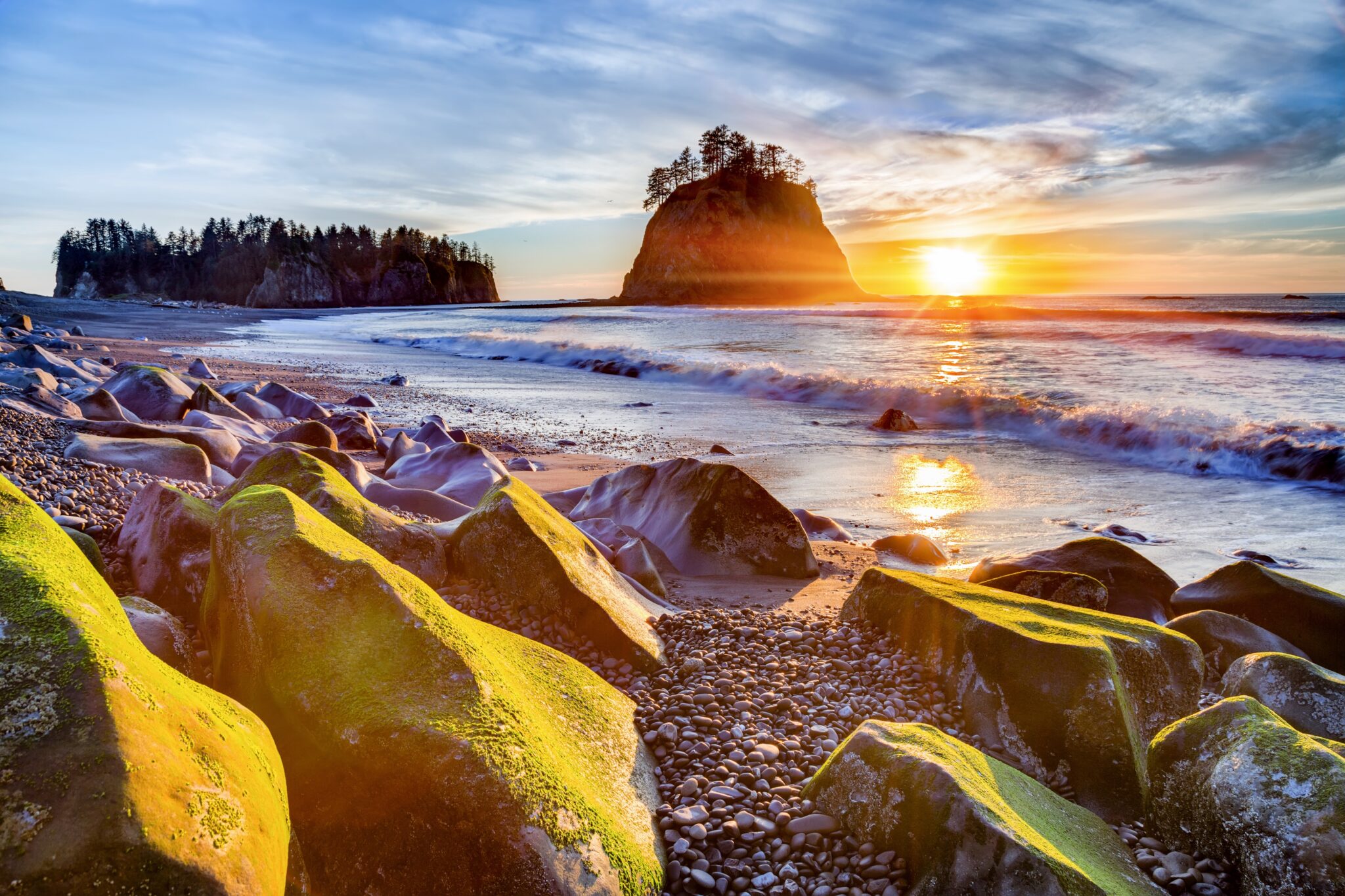
Olympic National Park is tucked away in the very northwest of the continental United States on the border with Canada. Surrounded by saltwater on three sides and home to several freshwater lakes, it’s one of the few US National Parks where you can experience both freshwater and saltwater scuba diving in a single trip.
Above the surface, Olympic stuns with snow-capped peaks, lush rainforests and wild Pacific coastline. It’s a great destination for divers and non-divers alike. But for those ready to explore beneath the surface, two areas stand out.
For saltwater diving, Hood Canal offers a mix of dive-worthy sites. These include wrecks and kelp forests as well as the chance to spot giant octopus. For freshwater exploration, head to Lake Crescent. This glacially carved lake is a sight to behold, and here, you’ll encounter numerous sunken relics in remarkably clear water.
5. Dry Tortugas National Park (Florida)
Highlights: Pristine Coral Reefs & a Unique Historical Landmark
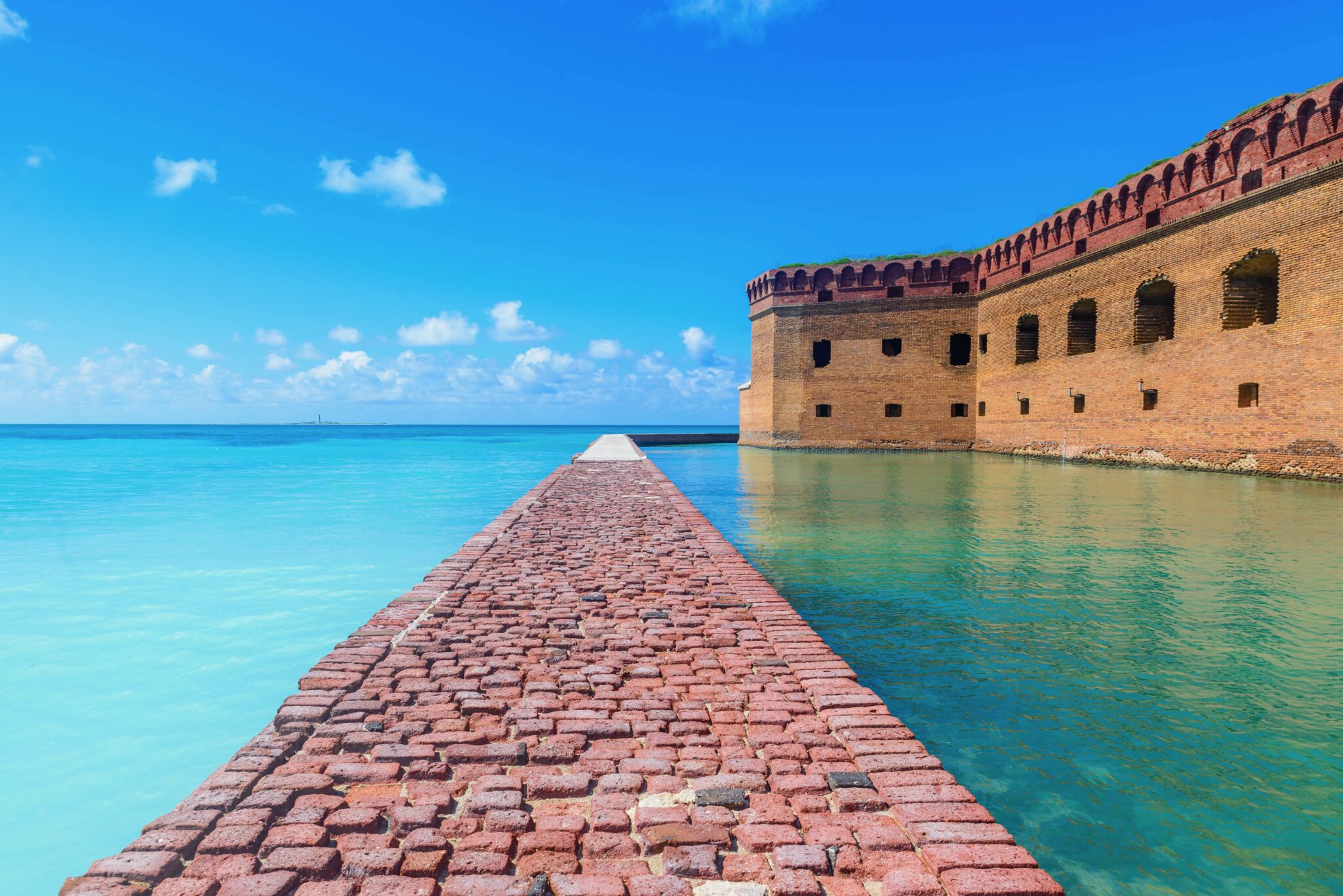
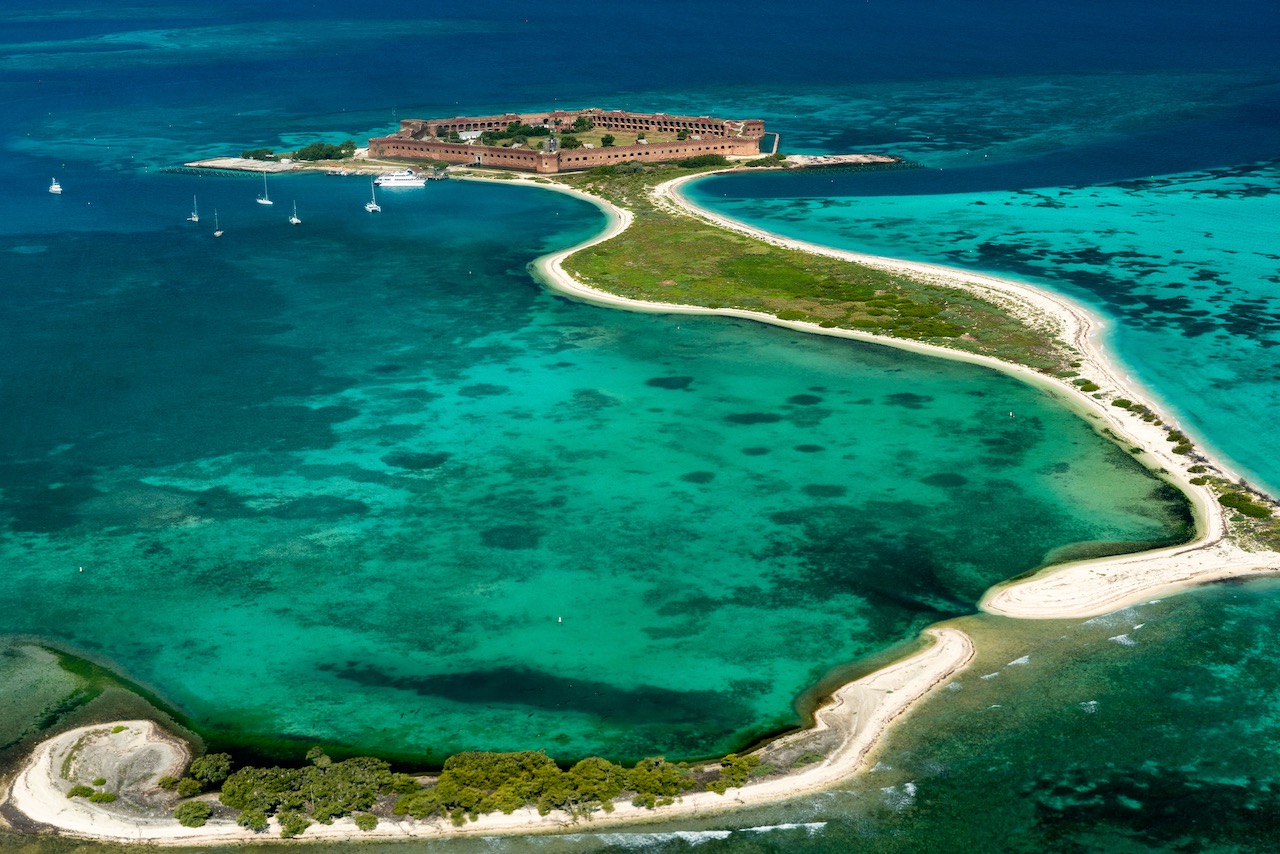
Located 70 miles (113 miles) west of Key West, Florida, Dry Tortugas National Park is accessible only by boat or seaplane. Centered around a hexagonal, 19th-century fort, this instantly recognizable destination delivers a unique American experience and lets divers access some of the continent’s most pristine scuba sites.
As Florida diver Reinbott described, visitors are often struck by, “how remote yet how simultaneously close it is.” While a daytime visit is possible, liveaboard visitors to this National Park can expect several rewards for their efforts. Reinbott recalled his recent liveaboard trip, “We went to bed as we left the dock and woke up to views of the sun rising over Fort Jefferson. The lack of light pollution made it so the sky at night was filled with stars.”
But perhaps the most rewarding — and what struck Reinbott the most — was Dry Tortugas’ coral reefs. As Reinbott explained, “I am used to seeing fishing line, rope and other types of damage when diving on local reefs, and that was something I didn’t really see any of while diving in the Dry Tortugas.” He continued, “We saw so much coral (especially those of the boulder coral species), and they were huge. I wasn’t really expecting anything like that.”
In addition to its thriving reefs, Dry Tortugas is also home to several coral-encrusted wrecks, including the Windjammer — a favorite among divers.
Ultimately, if remote reefs, crystal-clear visibility and a dive site steeped in history sound like your kind of adventure, make sure Dry Tortugas National Park is on your bucket list.
6. Lake Mead National Recreation Area (Nevada/Arizona)
Highlights: Scuba Diving in the Desert — Complete with an Underwater Factory
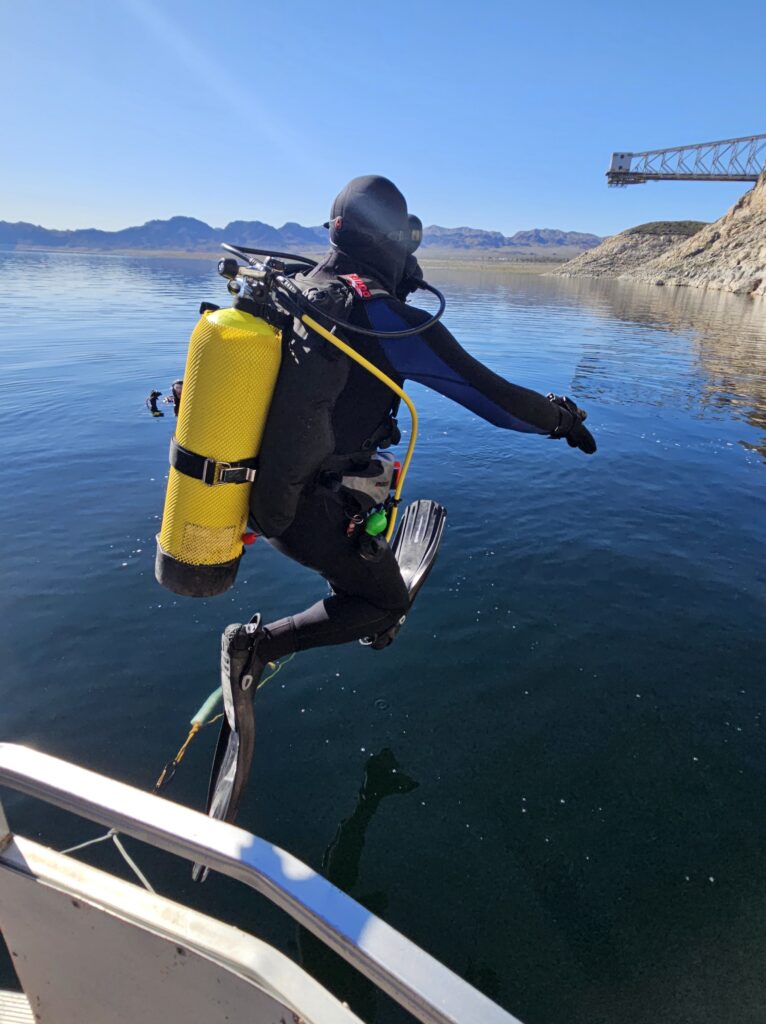
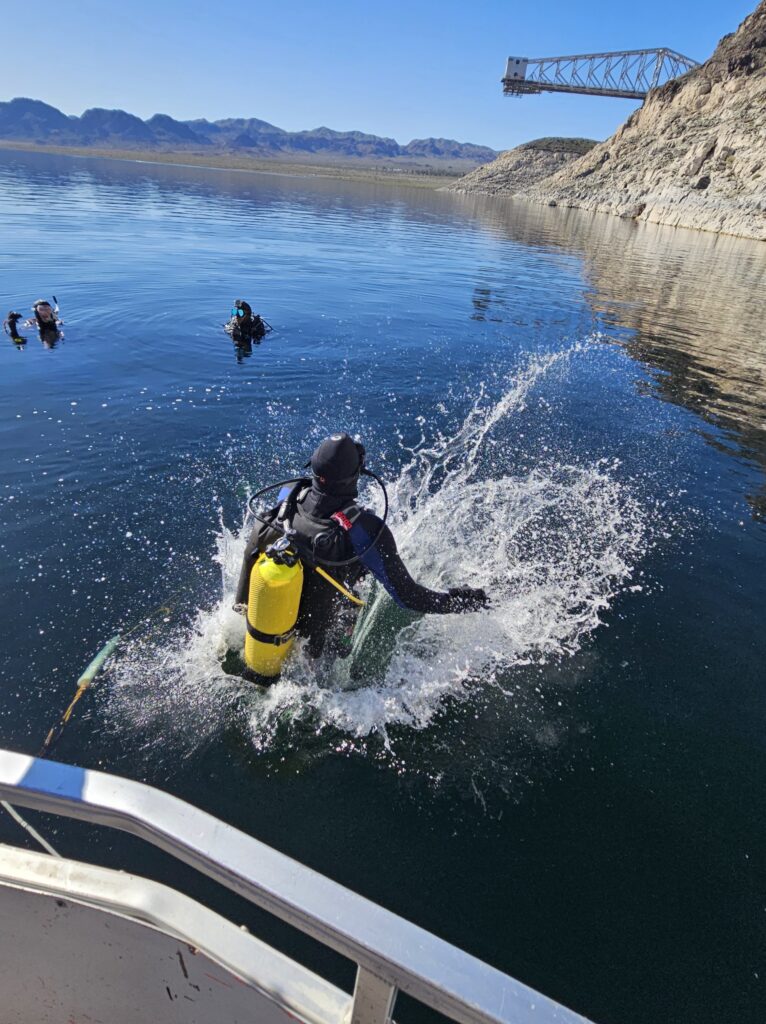
While not natural bodies of water (both Lake Mead and Lake Mohave were created by dam construction), this National Park offers divers the rare chance to explore beneath the surface in two of the driest US states.
Located just 35 miles (56 km) southeast of Las Vegas, this unexpected desert gem includes the wreck of a B-29 Superfortress in Lake Mead, as well as a 38-foot (12-meter) tow barge and other smaller submerged relics in Lake Mohave. If you’re really looking to maximize the post-apocalyptic feel, be sure to check out the remnants of the old aggregate factory, complete with steel-framed structures, conveyor belts, concrete tunnels and railroad tracks.
7. Thunder Bay National Marine Sanctuary (Michigan)
Highlights: More Than 100 Historically Significant Shipwrecks
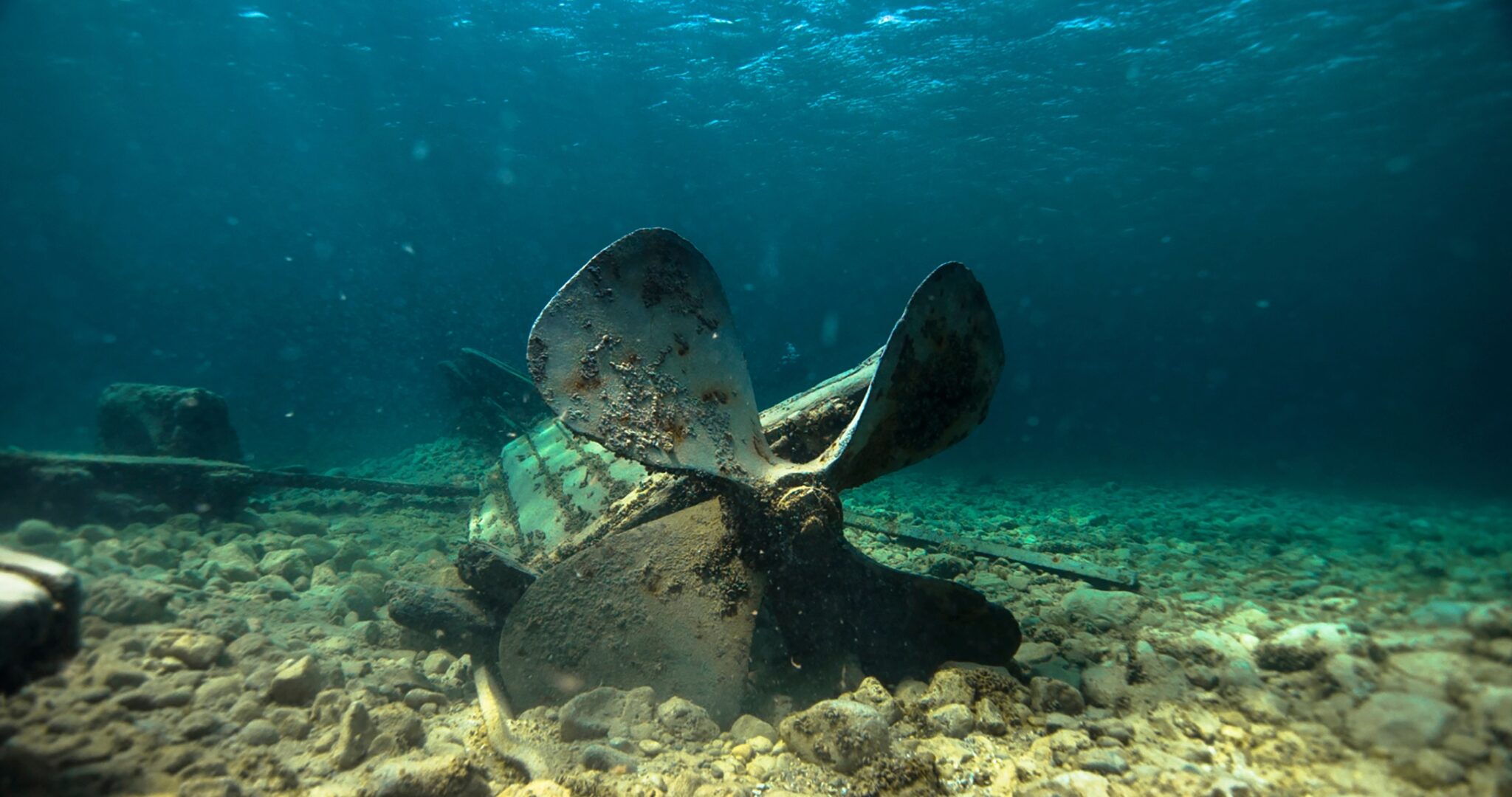
Beneath the surface of Lake Huron, more than 100 shipwrecks await exploration. Known as the “Shipwreck Capital of the Great Lakes,” Thunder Bay National Marine Sanctuary preserves everything from schooners to steamships. These remarkably intact wrecks owe their preservation to Lake Huron’s cold temperatures and freshwater.
Many of the area’s wrecks sit within recreational diving limits, making this destination ideal for divers of all experience levels. A favorite among visitors is the SS Grecian, a steel bulk freighter built to carry iron ore. Much of the ship remains intact, sitting upright in 30 meters (100 feet) of water.
For wreck lovers, there are few better dive spots in the United States.
Ready To Scuba Dive in a US National Park?
Now that you know about some of the USA’s most unexpected underwater adventures, it’s time to experience them for yourself. Whether you’re drawn to a coral-covered fort in the south or the glacial lakes of the northwest, explore the National Parks and immerse yourself in the natural world.
Use the PADI Dive Shop Locator to find your local dive center, browse unique adventures through PADI Adventures or explore PADI Specialty Diver courses to build your skills before taking on these one-of-a-kind underwater experiences.