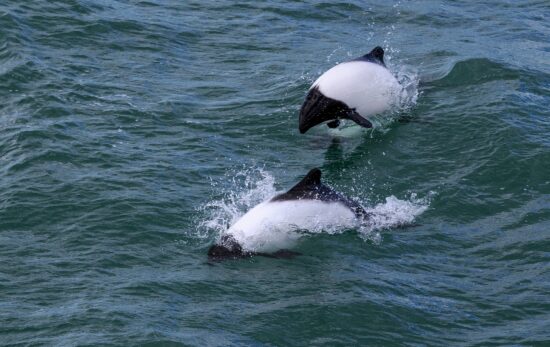
Located about 24 hours south of Tokyo by ferry from Takeshiba Pier, the Ogasawara Islands are a remote chain of over 30 islands that have never been connected to a continent. Thanks to this isolation, the islands are home to a one-of-a-kind ecosystem and are often called the “Galápagos of the East.” In 2011, they were designated a UNESCO World Natural Heritage site.
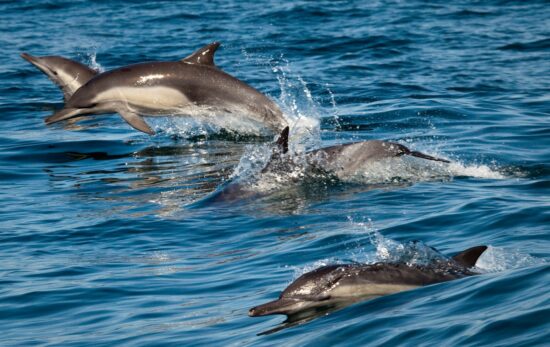
While Ogasawara’s natural beauty is well known, its greatest treasures lie beneath the waves. From large pelagics, like manta rays and whale sharks, to vibrant schools of fusiliers and soldierfish, the underwater scenes are rich, dynamic and teeming with life. Look closely and you may spot rare species, like the cherry anthias or peppermint angelfish. Encounters with dolphins and whales are also possible, making this a true once-in-a-lifetime destination for divers of all levels.

Chichijima Island
Chichijima Island is framed by rugged cliffs and white sandy beaches, offering stunning coastal scenery and lush inland greenery. The island is home to many species unique to the Ogasawara Islands, making it a paradise for nature lovers. Scenic viewpoints and tropical beach spots across the island enhance its remote island charm.
Diving in this area mainly centers around Chichijima and the nearby Anijima and Ototojima Islands, offering a diverse range of dive sites, from thrilling encounters with large marine life to detailed macro photography opportunities and striking underwater landscapes. There’s something for everyone, from beginners to seasoned divers. In the surrounding waters, lucky visitors may even spot dolphins or whales during surface intervals or boat rides.

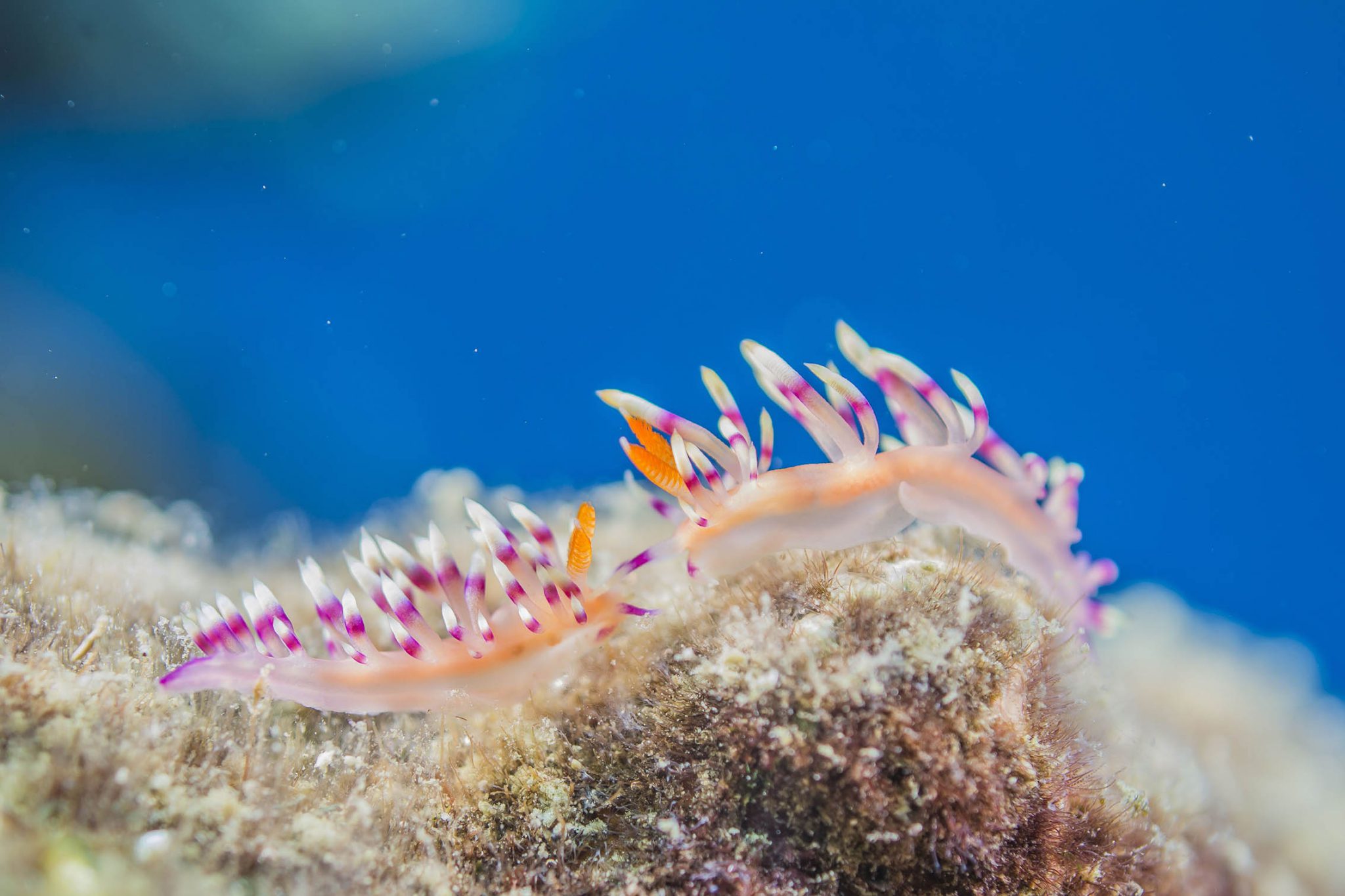
Top Dive Spot: Dobu Iso
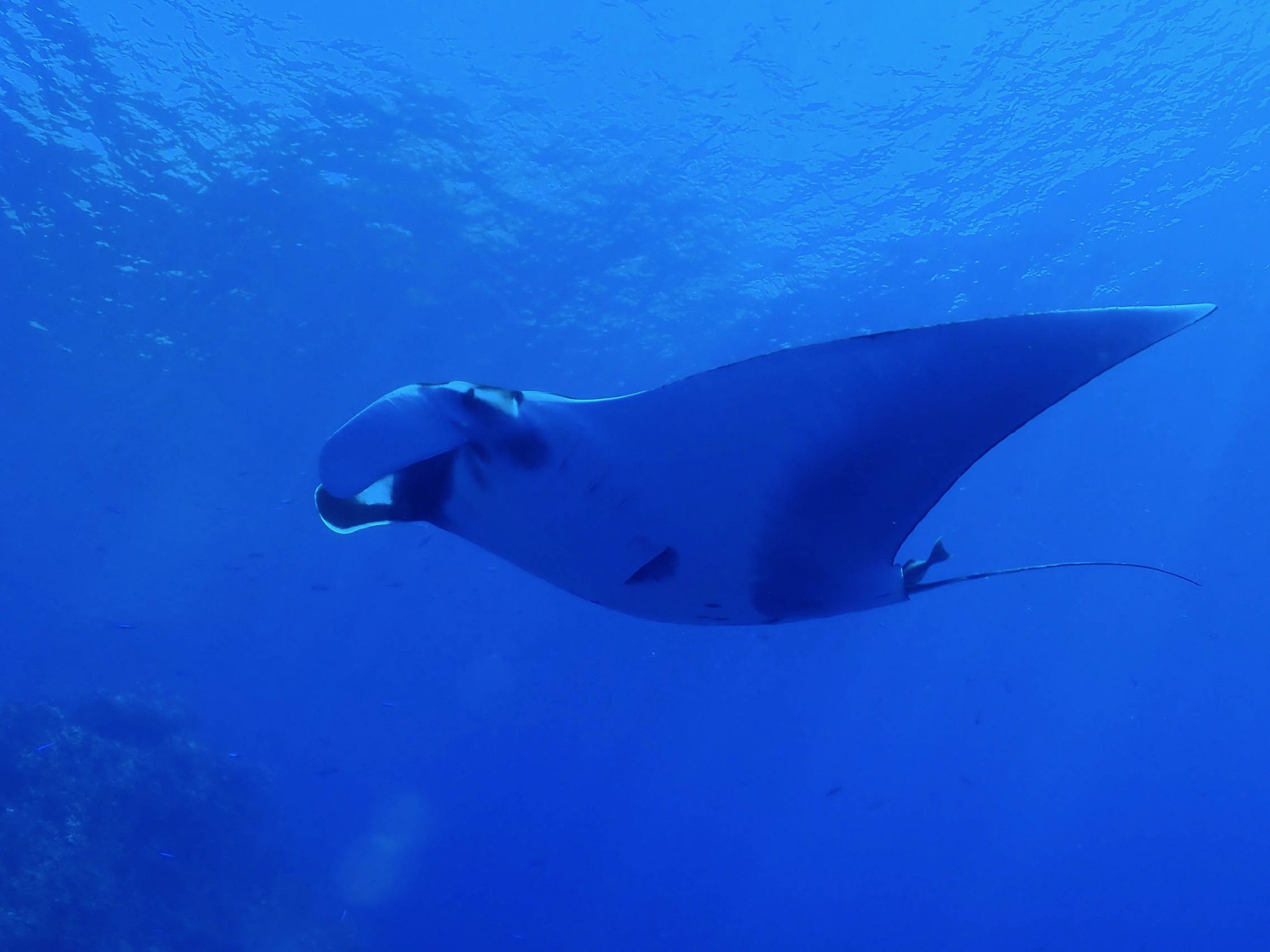
Along with Tako Iwa, Dobu Iso is one of the top spots around Chichijima for seeing larger marine life. The dive begins near a massive underwater pillar that rises dramatically from a 50-meter (164-foot) seabed. As you follow the steep, rocky slopes, you’re likely to come across schools of dogtooth tuna, bigeye trevally, barracuda and flashes of yellow-and-blue fusiliers. White-tip reef sharks are also a regular sight, and if luck’s on your side, you might even see manta rays or dolphins gliding by near the surface — sometimes even during your safety stop.
Strong current are common here, so this site is considered advanced-level and is recommended for experienced divers.
How To Get There
The main way to reach Chichijima Island is by taking the Ogasawara Maru ferry, which runs between Tokyo’s Takeshiba Passenger Terminal and Futami Port on Chichijima. As of April 2025, the ferry departs from Takeshiba at 11:00 AM and arrives at Chichijima at 11:00 AM the following day. The return trip departs Chichijima at 3:00 PM and arrives back in Tokyo at 3:00 PM the next day.
Depending on the season, luxury cruise ships, such as Nippon Maru, Pacific Venus, and Asuka II may also make port calls to the island, offering a scenic voyage to the Pacific frontier.
Hahajima Island
Hahajima Island offers an even more peaceful and untouched atmosphere than its larger neighbor, Chichijima. With a population of just around 450 and only one dive shop on the island, it’s the perfect place for a quiet, unhurried dive trip surrounded by pristine nature.
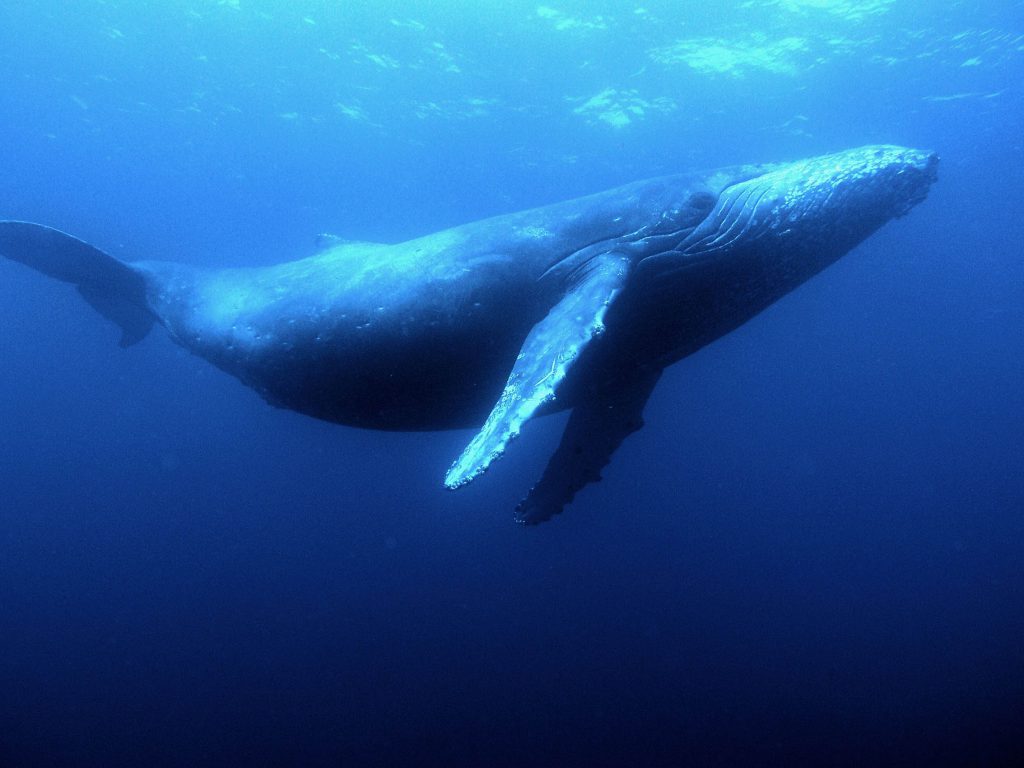
The waters around the island are divided into five distinct dive areas. The southern region features dramatic seascapes, while the north is known for its sandy bottoms. The east boasts vibrant coral reefs, the west is home to striking underwater terrain and pelagic species, and the area near Mukojima and Hirashima Islands offers the chance to encounter dolphins and even whales.
After your dives, Hahajima invites you to slow down and take it all in. One of the best ways to unwind is with a visit to Shinyuuhigaoka on the island’s west side; it’s a popular sunset spot with sweeping ocean views. Other highlights include the white sands of Horaine Beach, the fossilized coin stones of Miyukinohama, and Kitako Port, a favorite local spot for shore fishing.

Top Dive Spot: Horaine Wreck
At a depth of around 20 meters (66 feet), divers can explore the Daini Saikai Maru, a sunken vessel measuring approximately 50 meters (164 feet) long and 8.5 meters (28 feet) wide. Now functioning as an artificial reef, the wreck has become home to a variety of marine life, including vibrant schools of bluestripe snapper, groupers, like tomato grouper, and the striking wrought iron butterflyfish — a species endemic to Japan.
Surrounding sandy areas are rich in macro life, with garden eels and gobies, like the orange-striped shrimpgoby, making frequent appearances. This site is beginner-friendly and is also used for early morning and night dives, offering different perspectives and marine activity depending on the time of day.

How To Get There
The Hahajima Maru ferry operates between Chichijima and Hahajima. Typically, it departs about one hour after the Ogasawara Maru arrives at Futami Port. The journey takes approximately two hours.
Tickets are sold on the day of departure at the Hahajima Maru Passenger Terminal in Chichijima. Note that tickets can only be purchased with cash, so be sure to plan accordingly.

Mukojima Islands
Located about one-and-a-half to two hours by boat from Chichijima Island, the Mukojima Islands are a remote group of uninhabited islands that include Kitanoshima Island, Mukojima Island, Harinoiwa, Nakodojima Island and Yomejima Island. While diving is generally possible year-round, the best season is typically from May to September when the seas are more stable.
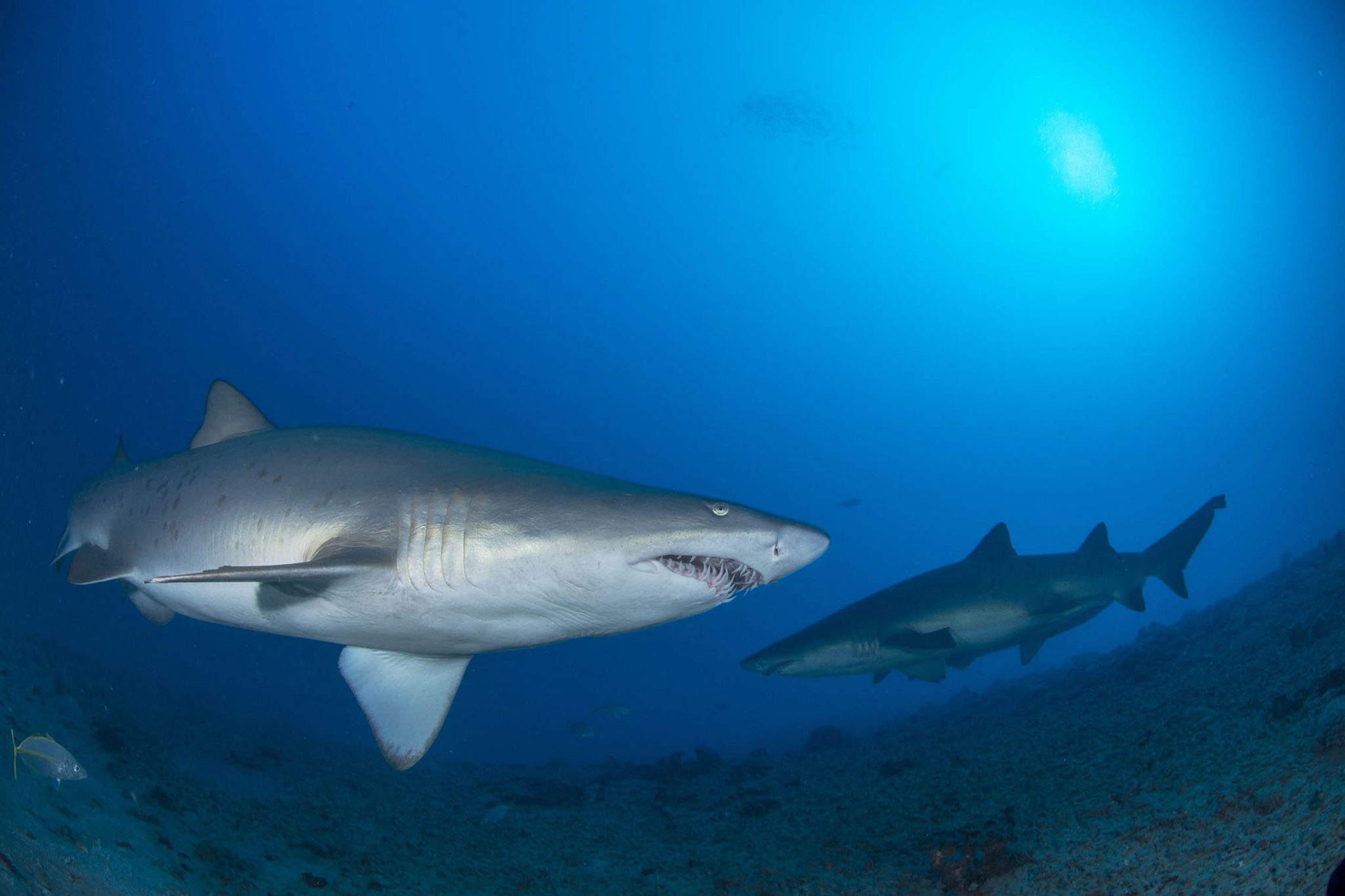
Because all of the islands are uninhabited, divers can enjoy raw, untouched nature and truly wild underwater experiences. Massive schools of dogtooth tuna, clouds of vibrant, blue-and-yellow fusiliers and bartail fusiliers, and occasional sightings of sand tiger sharks are just some of the highlights. The area also offers stunning underwater topography, with dramatic rock formations and drop-offs.
Some dive operators offer “overnight Mukojima” trips, where guests sleep on the boat to reach even more remote and rarely explored sites.
Top Dive Spot: Tuna Hole, Yomejima Island
Located in the southern part of the Mukojima Islands, Yomejima Island is one of the easiest to access from Chichijima Island and home to one of the area’s most popular dive sites. This open underwater hall measures approximately 50 meters (164 feet) deep and 20 meters (66 feet) wide, and during peak times, up to 100 dogtooth tuna can be seen circling through it. Some of them may reach up to two meters (seven feet) in length, offering an unforgettable, high-impact experience. The site sits at a manageable depth of around 10 meters (33 feet), making it possible to enjoy the spectacle at leisure. Schools of blue-lined snapper and fusiliers are also common, and dolphins occasionally pass by underwater. Due to strong currents, this site is recommended for intermediate to advanced divers.

How To Get There
As these islands are uninhabited, there are no regular ferry routes. The only way to access them is by joining a guided tour with a local dive operator. Yomejima Island is about one hour and thirty minutes by boat from Futami Port on Chichijima Island, while Nakodojima Island and Mukojima Island take around two hours. For more distant locations, such as Kitanoshima Island and the remote rock formations known as Ichinoiwa to Gonoiwa, the journey can take two and a half hours to four hours by boat. Some dive shops offer overnight boat trips for extended exploration.
The Ogasawara Islands offer a rare chance to dive in waters that few have experienced, where dramatic seascapes meet extraordinary marine life. Whether you’re seeking encounters with sharks and dolphins, exploring vibrant reefs or swimming through hidden wrecks, this remote archipelago promises memories that will last a lifetime.
To make the most of your journey, connect with a local dive shop in the Ogasawara Islands. Their expertise will help you plan safe, unforgettable dives and discover the very best of this UNESCO World Natural Heritage site.