Moray eels, with their exposed, menacing teeth, can look scary. And because of their tendency to remain in rocky crevices, they can often be easily spotted by divers.
Yes, they look aggressive. But, don’t back away in fear. Read on to learn more about moray eels. Here are five moray eel facts that prove they’re cool, not scary. They just get a bad rep.
1. They’re Apex Predators
With a body like that — flexible, strong and measuring on average 6ft (1.5m) — moray eels are stealthy predators with two hunting methods.
- The lazy method. Peeking from their crevices, moray eels wait for prey to get close enough before lurching forward and grabbing it with their powerful jaws.
- The proactive method. Hunting mostly at night, moray eels stalk the reef or seabed for sleeping fish.
2. Moray Eels Have Highly Specialized Teeth
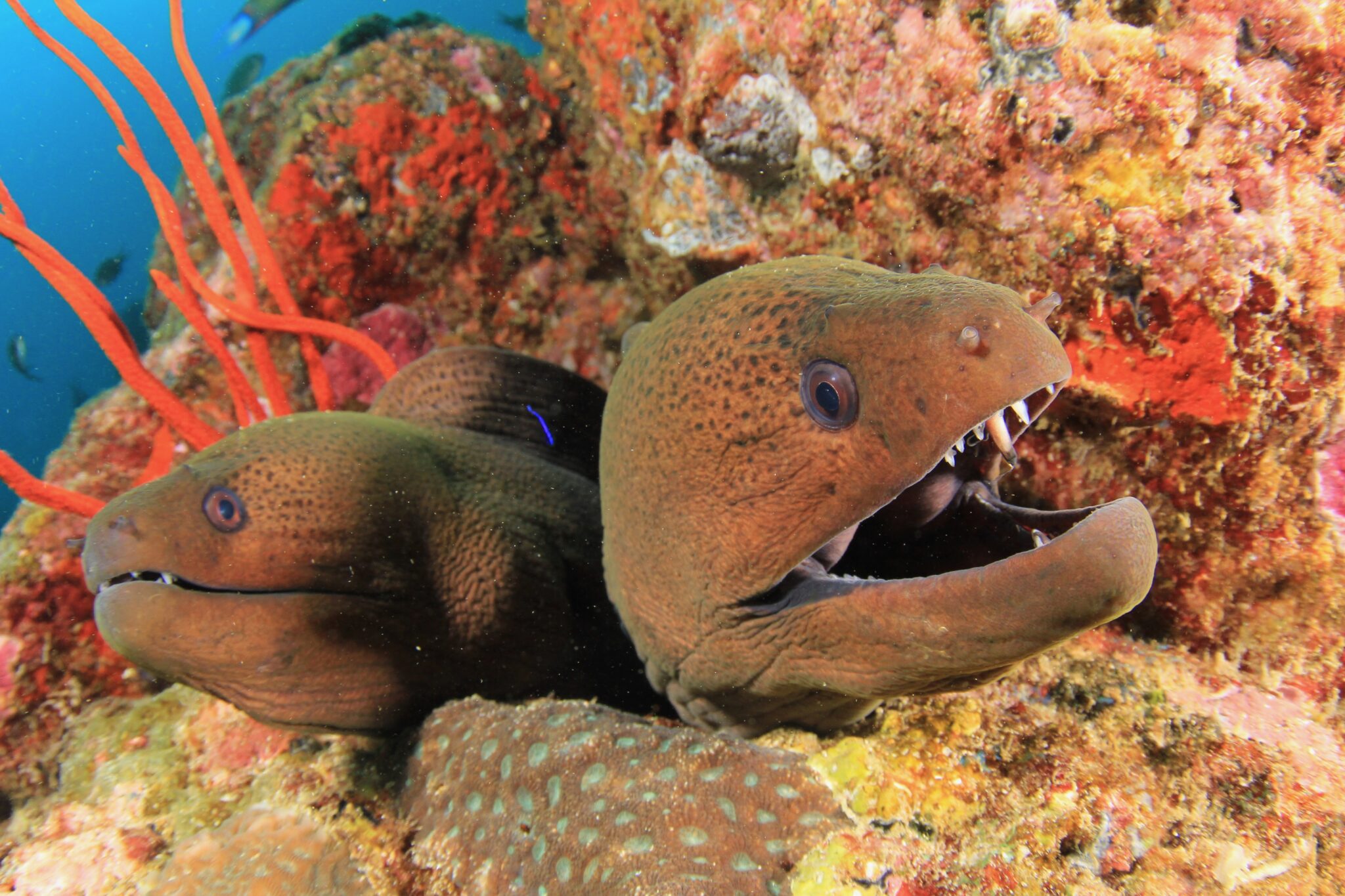
The moray eel’s teeth are what prove it’s a really cool sea animal.
If you’re 40+ years old or a movie fanatic, you’ll understand when we say they’re like the monster in Alien. If not, just know that moray eels have a unique jaw with two sets of teeth.
Because they can’t chew their food, they have to swallow their prey whole. To help with digestion, this is what they do:
- With the first set of teeth (the ones you see), they bite the fish and hold it. These teeth point backward, making it very hard for the prey to escape.
- They then sling the second set of teeth forward. Thanks to this pharyngeal jaw, located at the back of the throat, they can drag the prey down into their stomach.
Pretty cool, right? But, there’s more.
To help tear up their food into easier-to-swallow bites, moray eels tie themselves into knots. This gives themselves leverage to rip the fish into chunks.
Because they have this ability to break up their food, the moray eel can eat a wide variety of species, including fish, octopuses and crabs.
With few natural predators, the presence of morays is a sign of a healthy ecosystem.
3. They’re Passionate Lovers
There’s no moray eel mating season, but when the waters are warm and there’s enough food around, the usually solitary creatures come together to breed. They emerge from their hiding spot into the water column, twisting and twirling their bodies around each other. The female then releases the eggs before the male fertilizes them.
This ornate dance varies slightly from species to species. For some, the courtship is a quick affair, while others take their time. Some species are also more considerate about where they lay their eggs. While some moray eels choose safe crevices, others release them straight into the open water.
Either way, the young take care of themselves from birth.
4. They Manage Multiple Partnerships
Despite its solitary life, the moray eel has many strong partnerships with other sea creatures.
- Moray eels have a symbiotic relationship with groupers. They team up to hunt. The moray eel can slither through small cracks to flush out hiding prey, and the grouper’s speed in open water stops prey from fleeing. This joint predator attack is hard to escape.
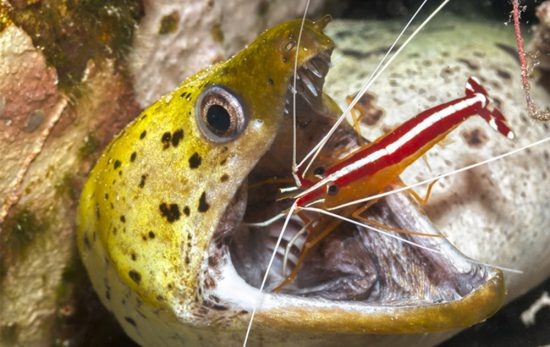
- Moray eels have a mutualistic relationship with shrimp. The shrimp cleans the moray eels from parasites, dead skin and algae. It even gives its teeth a good clean! This, in turn, provides free nutrients for the shrimp.
5. Moray Eels Don’t Attack Divers
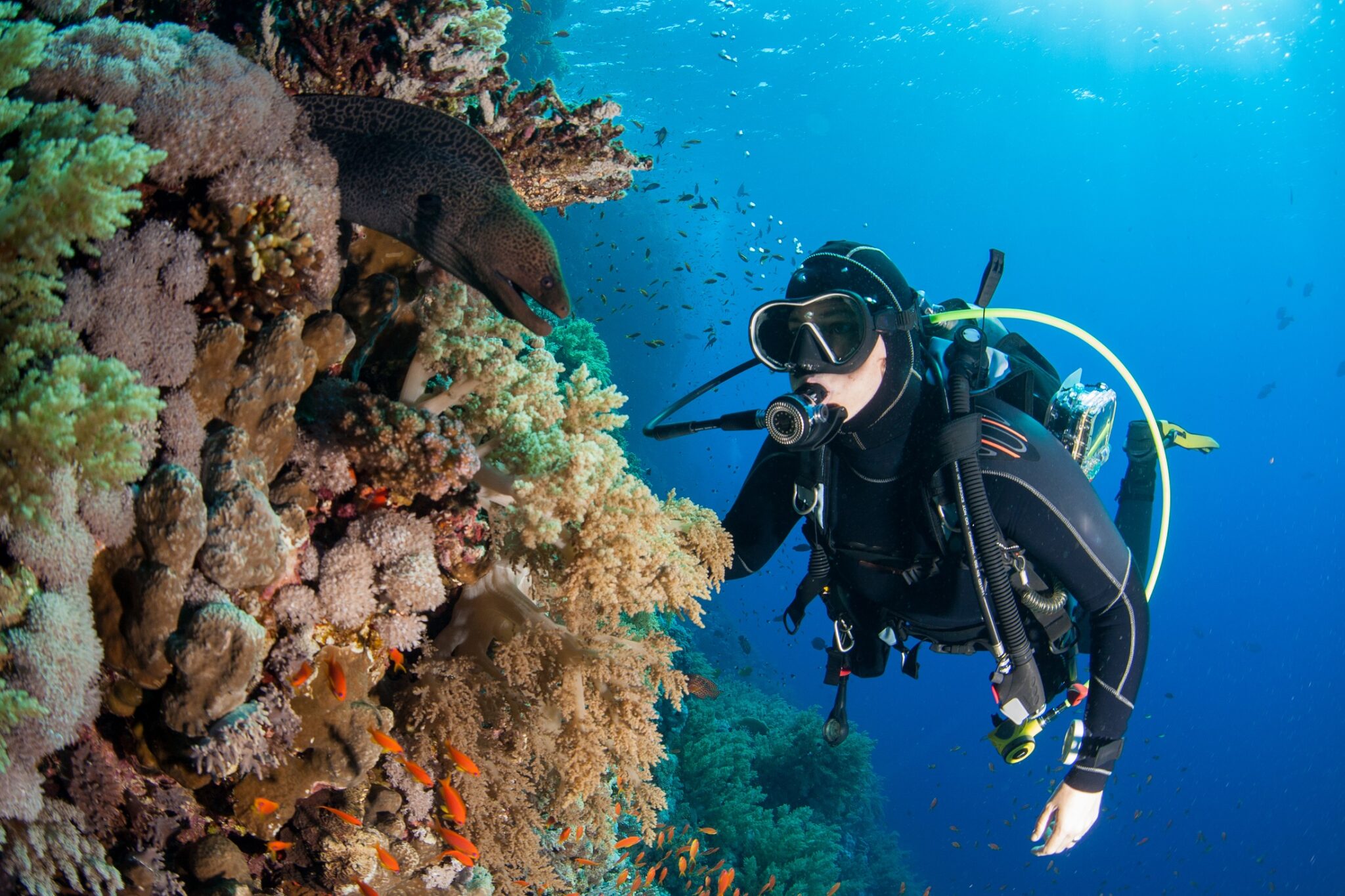
No, moray eels are not dangerous to scuba divers. Unless provoked, they will not attack you.
However, their bite can be incredibly painful and can easily lead to infections, so to minimize accidents:
Do’s
- Maintain good buoyancy and keep a safe distance from the bottom or dive wall to avoid getting inadvertently too close to their territory.
Don’t
- Don’t hold onto the rocks, as there may be a moray eel lurking out of sight.
- Don’t feed the fish. The frenzy might attract a hungry moray eel.
Other Fun Facts About Moray Eels
- The moray eel is known for having poor eyesight, so it relies on its excellent sense of smell to hunt.
- They’re nocturnal creatures, so you’re more likely to see them at night. Consider taking the PADI Night Diver course to see them hunt and experience a different side of marine life behavior.
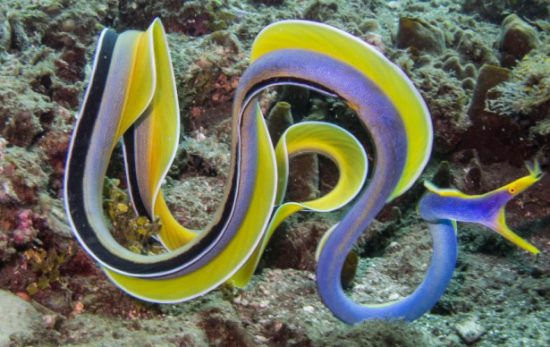
- There are over 200 species of moray eels, varying in size and color. Some are brown; some are yellow; some have dots and some have stripes.
- They open and close their mouth not to intimidate but to breathe. The movement pumps water over their grills, allowing them to stay stationary.
- They have a life expectancy between 10 and 40 years.
Where To Dive With Moray Eels
Moray eels exist around the world. From the Atlantic and the Pacific to the Indian Ocean and everywhere in the middle, they live in shallow ,tropical and temperate waters among reefs and rocks.
Regardless of the location, you’ll see them peeking out from underneath a rock, with the trademark opening and closing of their mouth. But, there are dive destinations where you’re more likely to see them, of course. These include:
- Türkiye (Turkey). You’ll find moray eels throughout the Mediterranean Sea, with Turkey a thriving hotspot for them. Day or night, you’re bound to see them here.
- Spain. There are many diving spots scattered around the country, offering many opportunities to dive with moray eels. Check out Tenerife for rewarding diving experiences.
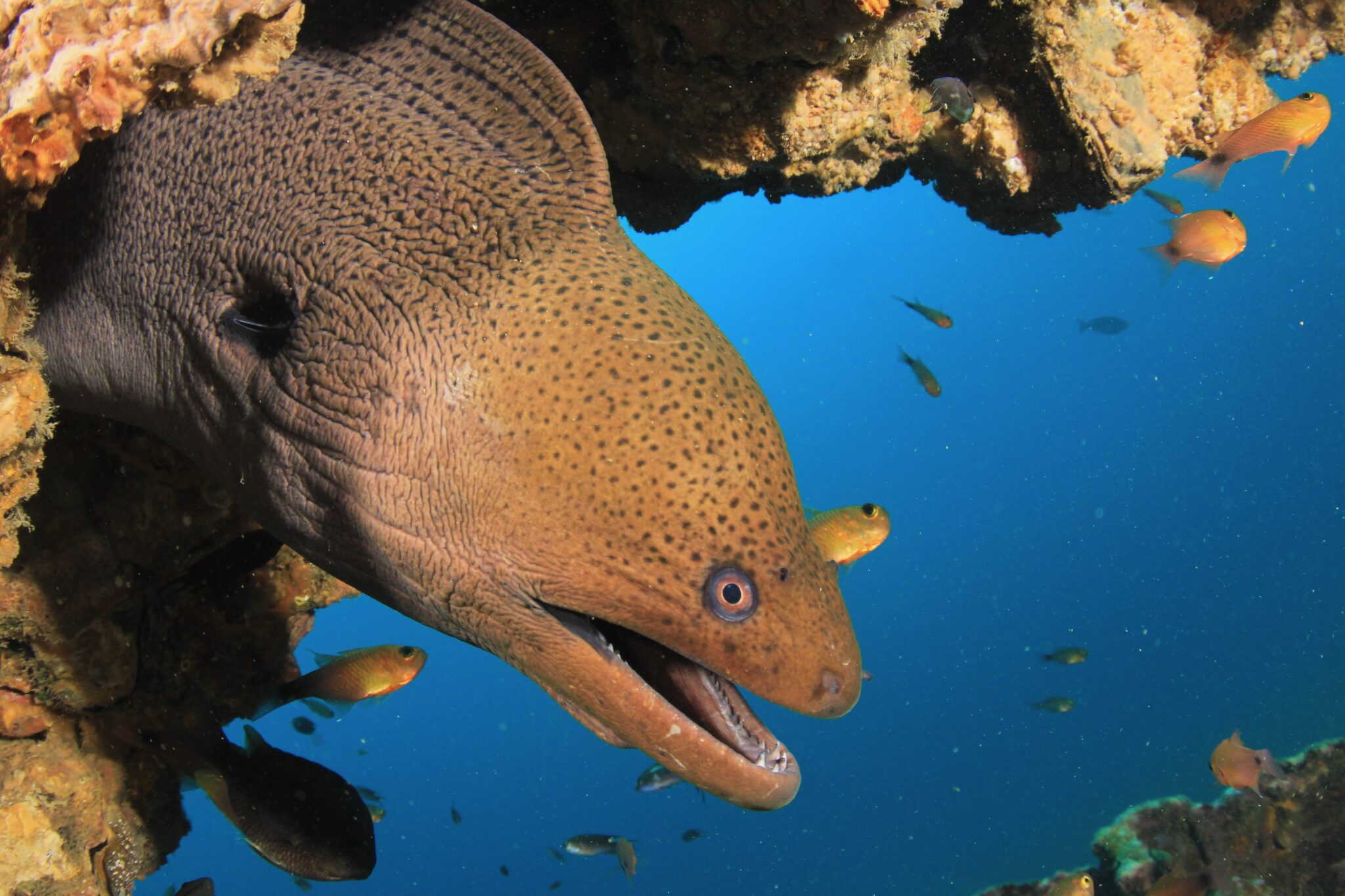
- Maldives. As one of the best diving destinations, moray eels are a common sighting. You can also dive and snorkel with the giant moray eel here. As the name suggests, this is the biggest of all moray eels, measuring up to 10 feet (3m) in length and weighing 66 lb (30 kg). Diving in the North Ari Atoll and Baa Atoll won’t disappoint.
- Thailand. You’ll encounter many species of moray eels in Thailand. Similan and Koh Tao both have beautiful diving conditions with many opportunities to spot moray eels.
- Cozumel, Mexico. You can have your fair share of incredible marine encounters, including spotting moray eels, in this much-loved diving destination.
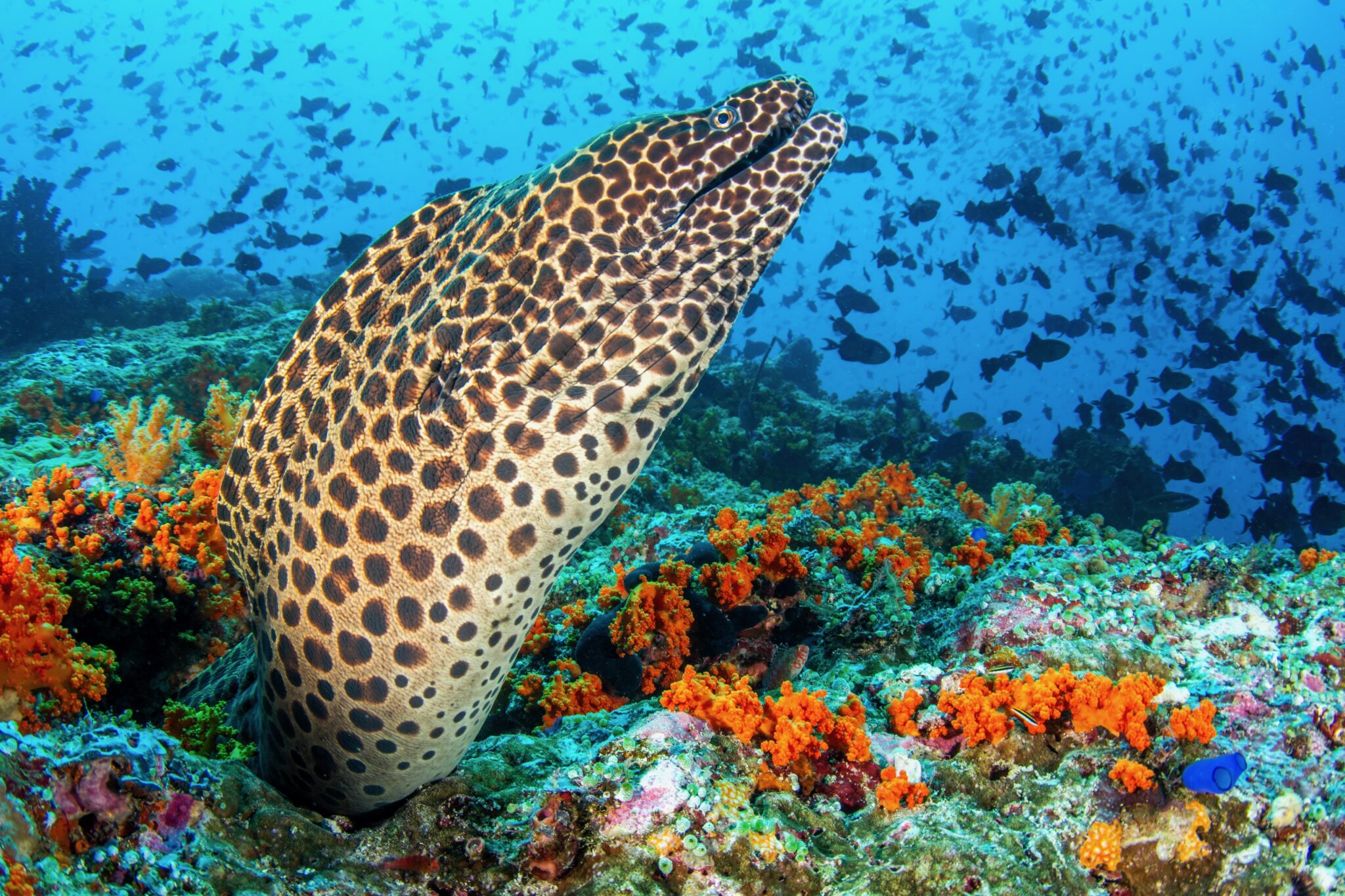
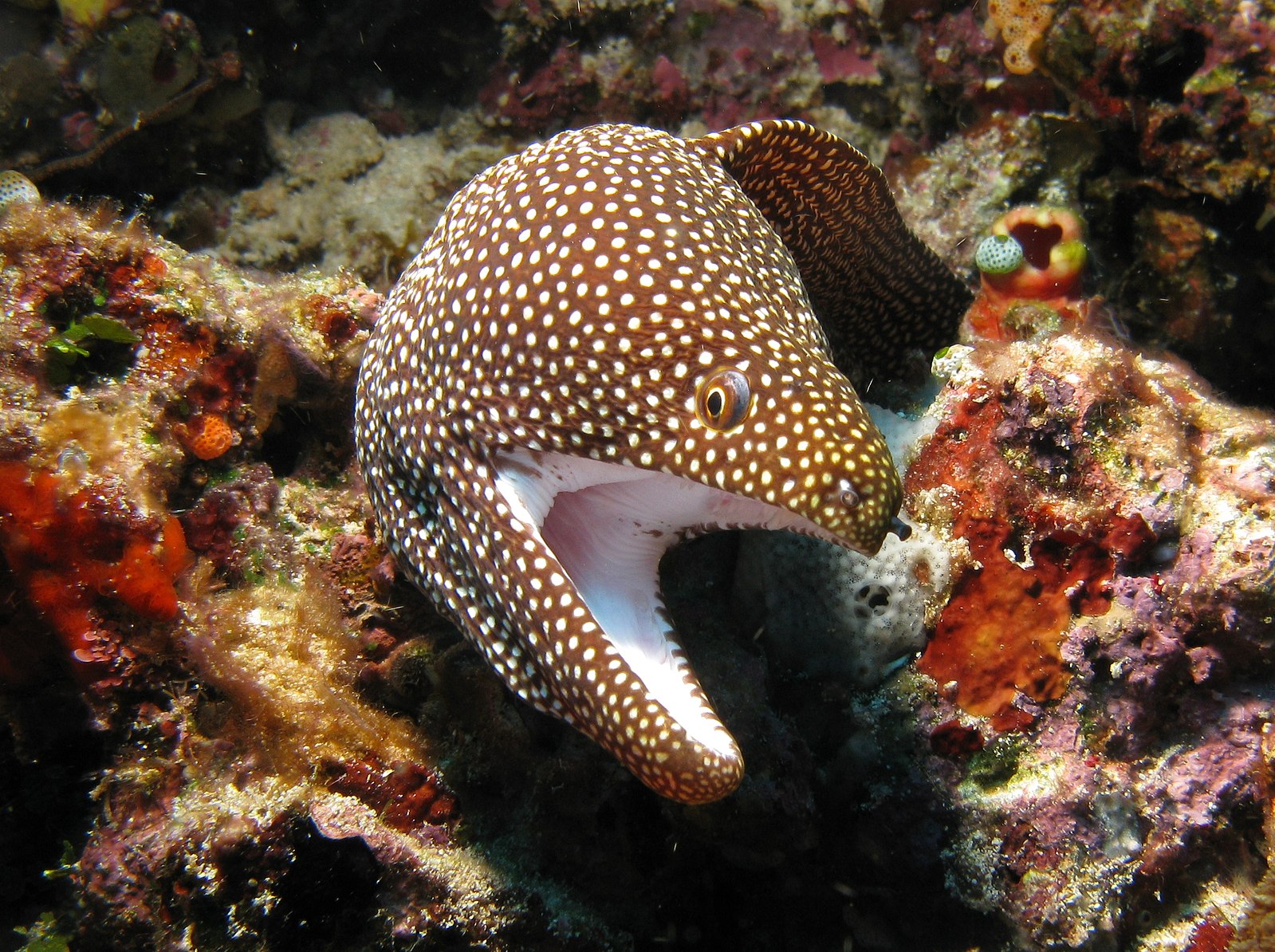
- Egypt. When diving in Egypt, you know you’re in for a treat. If seeing honeycomb morays and other unique marine animals is high on your diving bucket list, visit Hurghada and Sharm El-Sheikh.
- Hawaii, USA. Known to the natives as Puhi, moray eels are a regular sight in the Hawaiian reefs, where you can find dozens of different species of different colors, shapes and sizes. You can even encounter rare species. If this interests you, Maui and Oahu are the diving hotspots you should visit.
Morays: To Know Them Is To Love Them
Surprisingly, there’s still a lot we don’t know about morays, giving them, if anything, an air of mystery.
Yes, they don’t look friendly (or pretty), but there’s no reason to be scared of them. You might even like them if you give them a chance.
If marine life interests you and you want to dive with different sea creatures, then learn to scuba dive with PADI and become an Open Water Diver.