Sri Lanka, known as the Pearl of the Indian Ocean, is a year-round diving destination. Rich coral reefs, shallow bays, countless shipwrecks and the chance to watch the world’s largest animal – the blue whale – draw ocean enthusiasts from all over the world to Sri Lankan waters. Typically, monsoons determine the diving seasons in much of the Indian subcontinent and Southeast Asia. However, the unique topography and position just south of India make Sri Lanka good for diving all year-round. To make the most of its dual diving seasons, here’s a quick guide on where and when to visit Sri Lanka for scuba diving.


Maha and Yala, the Sri Lankan Monsoon Seasons
There are two major monsoons in the Indian Ocean: the Northeast Monsoon (a.k.a. the winter monsoon) and the Southwest Monsoon (a.k.a. the summer monsoon). In Sri Lanka, the Northeast Monsoon is called the Maha season, with winds blowing from the northeast direction between October and April. This is the peak diving season along the western and southern coasts of Sri Lanka. During this time, diving is open in Colombo, Negombo, Kalpitiya, Hikkaduwa, Unawatuna, Weligama, Matara and other areas in the southwest. You can easily find a dive shop in Sri Lanka for the Maha season.
The Yala season refers to the Southwest Monsoon, which brings strong winds and rough seas to the southern region from May to September. The central highlands in Sri Lanka protect the northeastern coast during this time, making it possible to dive here. The Northeast Monsoon tends to be less intense compared to its summer counterpart due to the shielding provided by the Indian Himalayas. As a result, dive shops in Trincomalee and Pasikudah usually remain open from February to November. Your favorite dive shop from the west coast may also temporarily relocate to the east coast to keep diving – so make sure to reach out to them!

Scuba Diving in Sri Lanka Is an Experience To Keep Returning to
The first time I visited Sri Lanka, in December 2017, to get my PADI Advanced Open Water Diver certification, I knew I would be coming back. I did not want to miss out on the must-see dive sites. Thanks to Sri Lanka’s dual diving seasons, I didn’t have to think twice about packing my bags at the last minute the following May.
Since the capital city of Colombo was my port of entry, my second trip was an opportunity to explore the incredible land attractions while crossing central Sri Lanka to reach the east coast. An early morning hike up Pidurangala Rock for a phenomenal view of the Sigiriya rock fortress and the surrounding lush greenery was the highlight, apart from diving, of course.
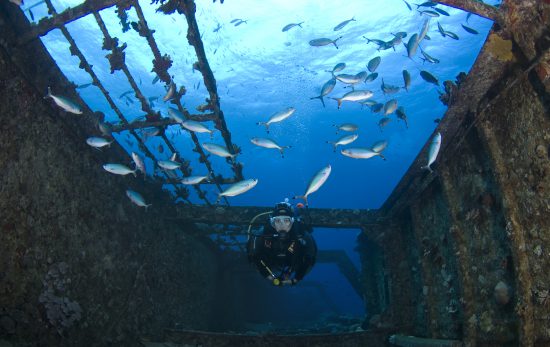
The marine biodiversity in Sri Lanka is truly remarkable, and you will get to see turtles, dolphins, giant cuttlefish, reef sharks, barracudas, banded sea kraits, Napoleon wrasses and every kind of tropical reef fish you can think of. Schooling reef fish, like bannerfish, snappers and fusiliers, are some of my personal favorites. It is a magical experience to be enveloped by thousands of fish.
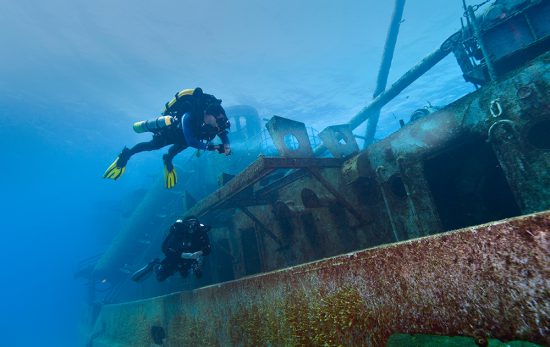
Diving in Sri Lanka is great for beginners as well as those seeking to earn their PADI Wreck Diver Specialty certification or explore Tec Diving. While Sri Lanka is good for diving all year-round, it’s best to check the weather forecast for a specific region before traveling. Many PADI dive shops here have been exploring these waters for several decades. The monsoon seasons and situations may change, but one thing remains constant – it’s always diving season in Sri Lanka!