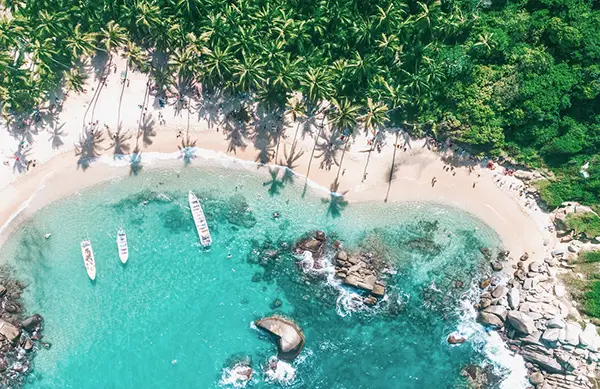
Often described as the “Norway of Arabia,” Musandam, Oman, is a place of both scale and calm. I couldn’t have imagined back in 1998 how much it would shape my life.
It was February or March that year — memory fades a little now — when the owner of the Dubai dive center where I worked told me he was opening a new dive center in Musandam. It was in partnership with Khasab Travel and Tours, who are still operating there today. My friend and I were asked to move north, open the center and locate the dive sites. It would be the first dive center in the region — and a PADI Dive Center at that.
I’d only been in the dive industry for four months and had just qualified as a PADI Divemaster, so you can imagine my excitement.
The Journey North
On 1 April 1998, we loaded the company’s blue pickup with a few sets of dive gear, 12 tanks and our belongings, and we set off. Not far from Ras Al Khaimah, the trailer tire disintegrated — but no worries, we kept going. By the time we reached the border, sparks were flying from the rim. The border guards smiled, welcomed us to Oman and politely suggested we leave the trailer there until we fixed it.
The road to Khasab wasn’t finished back then — just a rough-graded track between the mountains and the sea. We eventually found the house that would become our dive center and home, guided only by handwritten directions. The windows had been left open, and the place was full of crickets. Within minutes of trying to clear them out, we broke a window. No big deal — time for dinner at the local restaurant and a laugh about what we’d just gotten ourselves into.
Discovering Musandam
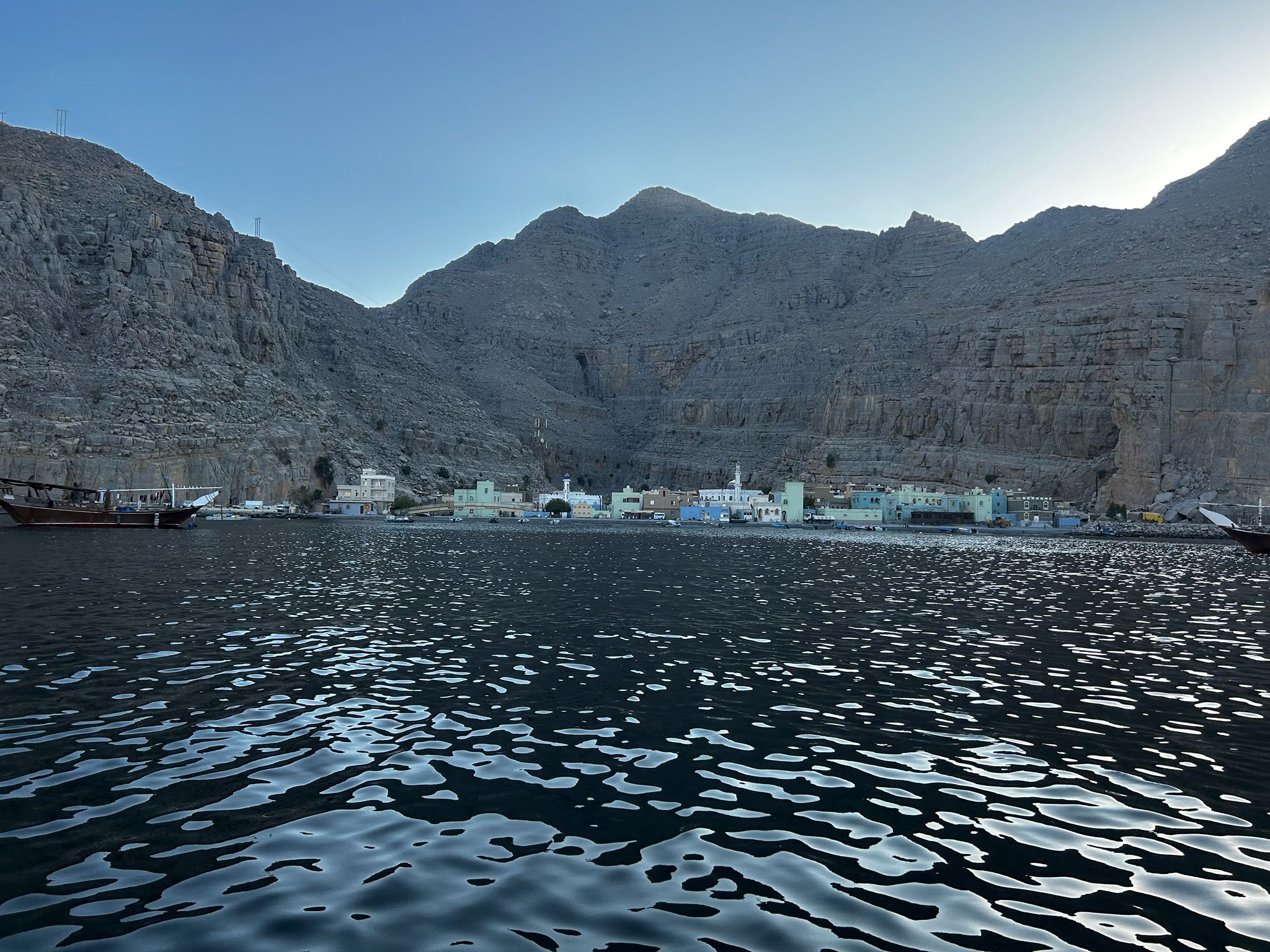
The next morning, the sun came up over the fjords, and I’ll never forget that view. The landscape was raw, vast and beautiful in its simplicity.
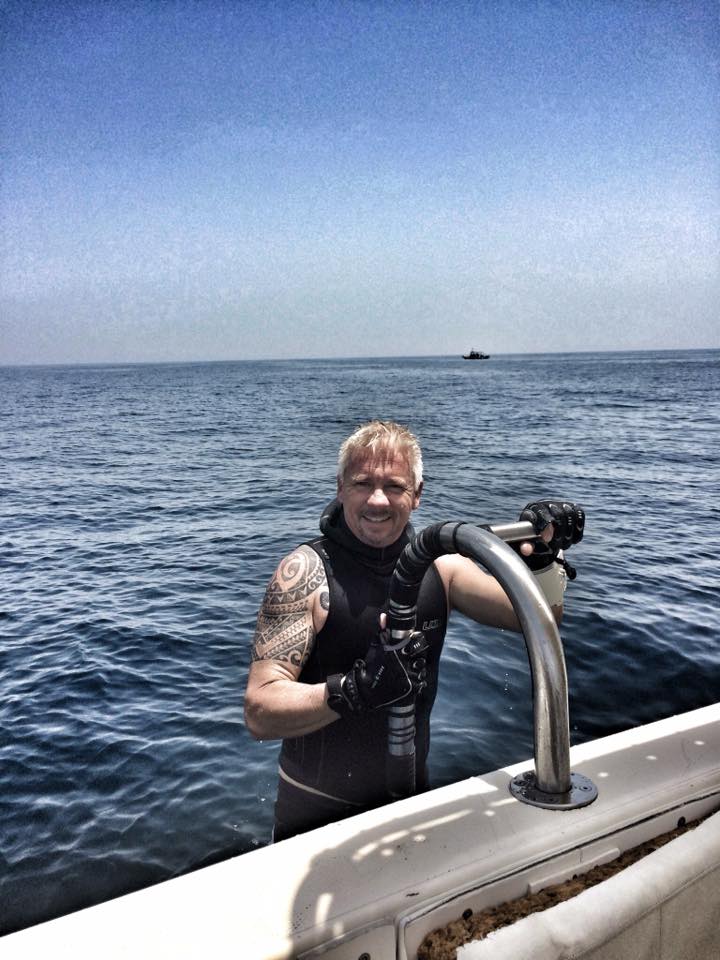
Day one: time to set up a dive center. Our RIB was still at the border, and the Eid holiday was approaching, so we needed a boat quickly — our first guests were arriving in days. The local Omani community welcomed us immediately. A fisherman offered to take us diving, and before long, Malcolm and his son Giles arrived for our first official trip. Just like that, the region’s first PADI Dive Center was up and running.
We soon found a rhythm and became part of the community. Once our RIB was retrieved, we began exploring daily, locating dive sites the old-fashioned way — no GPS, no sonar. We’d choose a spot, drop in and if it was good, mark it on a chart and make notes. I even started writing a book about those early days and the sites we discovered. It still sits unpublished in my office, but the memories remain vivid.
Building a Dive Life
Finding new dive sites was thrilling — diving on reefs that, to our knowledge, no one had explored before. Of course, things didn’t always go smoothly. I still laugh remembering the time we finally found a reef near Jazirat Al Khil after hours of searching. We dropped anchor, only to realize the rope wasn’t tied on.
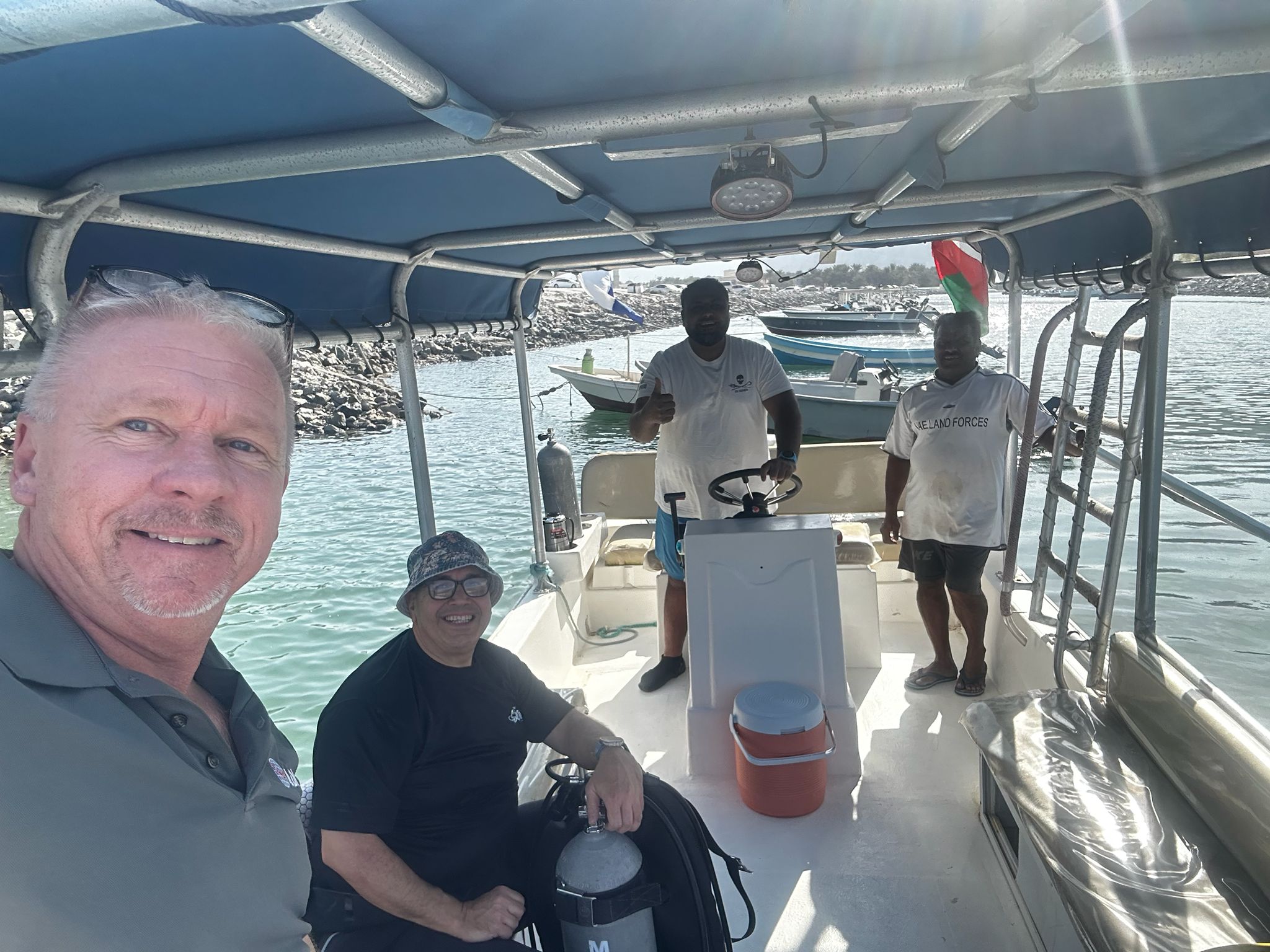
Soon, we had regular customers, diving from fishing boats and dhows, often joined by locals. Guests came for the adventure and the unknown. Between dives, we’d relax on island beaches, serving simple lunches — cheese and cucumber sandwiches or grilled fish when diving from the dhow.
In those days, we had no dive computers. We used the PADI Recreational Dive Planner and logged four dives a day. When one of our Welsh friends’ computers eventually flashed “take a day off,” we listened — spending the day by the pool at the Khasab Motel, the only accommodation at the time. We soon requested dive computers.
We rented a second villa for guests — basic but clean. The compressor sat in our kitchen, and each day we had enough water for either showers or rinsing dive gear, but not both. Our friends from Dubai and Muscat often drove up to dive with us, bringing supplies from the supermarket. Weekdays were for exploration; weekends were for sharing new sites.
Two local captains, Big Mo and Little Mo, joined our team and became family. Little Mo didn’t speak English, so with an Oasis cassette stuck in the truck stereo and plenty of patience, we taught him some. His English ended up much better than our Arabic. Eventually, we saved enough to buy our own dive boat, something we were very proud of.
Musandam Then and Now
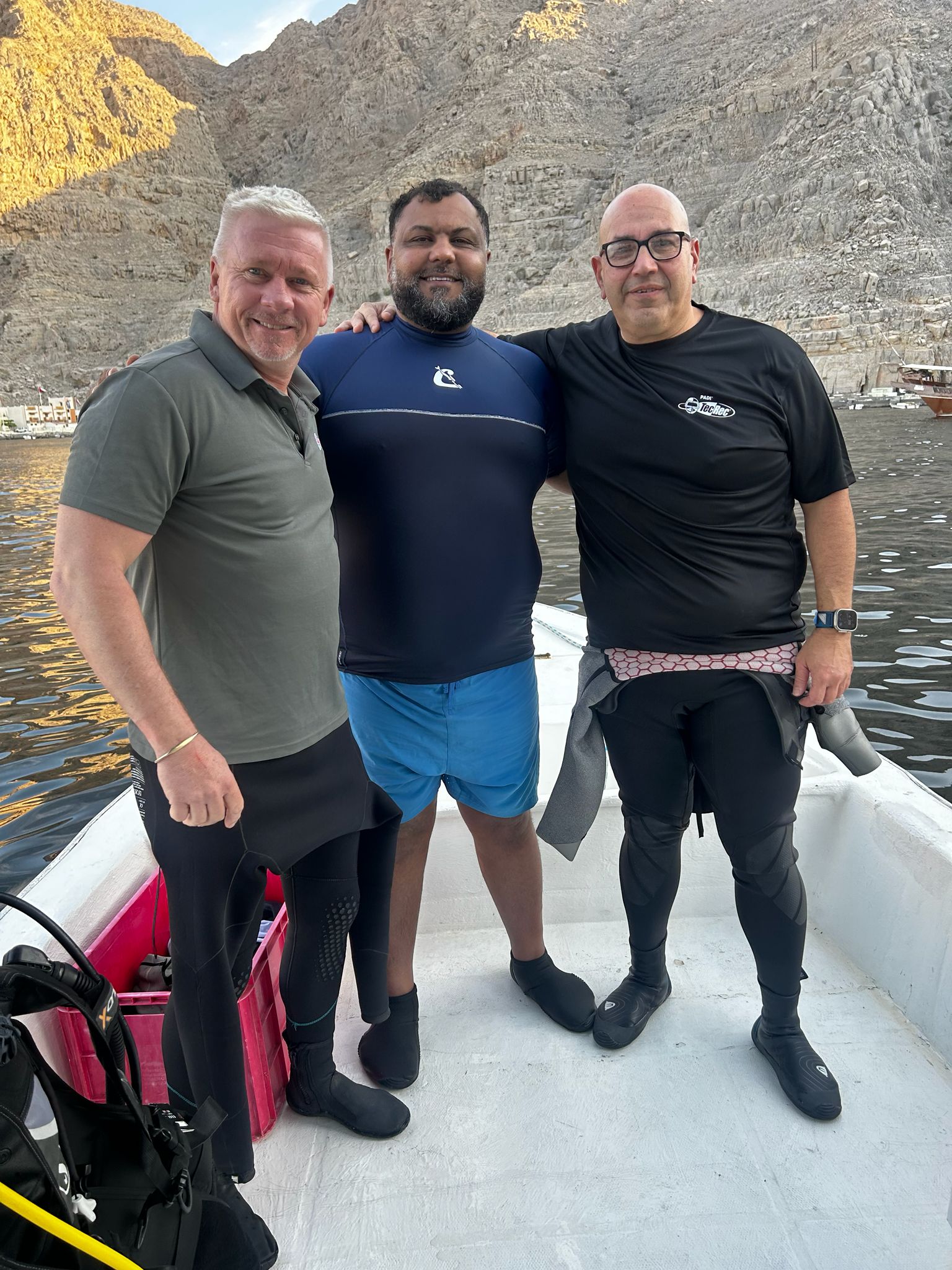
Khasab has changed a lot since those early days, but it’s still special. The Omani authorities have managed growth carefully, protecting both culture and coastline. When I returned recently for a dive show, it was incredible to see familiar faces and thriving dive operations.
Today, the region is home to world-class PADI centers — Musandam Discovery Diving, Ras Musandam Divers, Sheesha Beach Dive Centre and Neptunes Dive Centre Oman. You can dive from custom-built boats, traditional dhows or liveaboards like The Vision, all exploring the same dramatic fjords that first took my breath away.
For years, Musandam’s diving has been one of the Gulf’s best-kept secrets. Those who know, know — the rich marine life, the welcoming Omani culture, the sense of discovery. But perhaps it’s time this secret got out.
Over the next few months, PADI will be releasing a series of blogs celebrating this remarkable region. Don’t wait for them, though. Plan your Musandam dive adventure — this year or next — and experience the magic for yourself.
About the Author: Jason Sockett is a PADI Territory Director with more than 27 years of experience in dive training and operations across the Middle East. His early work establishing Oman’s first PADI Dive Center helped lay the foundation for recreational diving in the Musandam region.