As recreational and technical divers, we dive in many types of environments. Whether fresh or salt water, warm and tropical or cool and temperate, gin-clear or limited viz, we go there because we want to – there’s something that makes the diving itself worthwhile. No matter the conditions, we choose whether to dive there, and our objective is to enjoy the dive itself as a challenge, for relaxation, to see nature or to create imagery.
But, there is another type of diver who dives where they have to – most often places most divers would avoid – and in very often hazardous, zero-visibility conditions. If that weren’t enough, because of what they do, their dives often involve very unpleasant tasks, they go irrespective of weather or time of day, and they’re focused on a mission. Why do they dive like this? They do it as part of a call to duty and a service to the community.
Public Safety Divers
I’m talking about public safety diving – something many divers are not cut out for, to be sure. These divers are police, firefighting or emergency medical professionals, coast guard, specially trained lifeguards/rescuers and volunteers, who make this type of diving part of their journey. In many cases, they don’t get paid more, or even get paid at all – they’re volunteers on dive teams made up of such professionals.
Public safety divers do more than most people realize. They’re trained to search for, locate and properly document crime evidence. They recover drowning and water accident victim remains; safety inspect structures like bridges, dams or buildings (due to flooding); and locate submerged hazards ranging from waterway obstructions to toxic waste. Some are cross-trained as swift-water rescuers – an overlapping but different specialized skill that saves hundreds of lives annually. They always work in teams, sometimes aided by technology, including side scan and other forms of UW sonar, surface-to-diver communication, umbilical diving and full face masks.
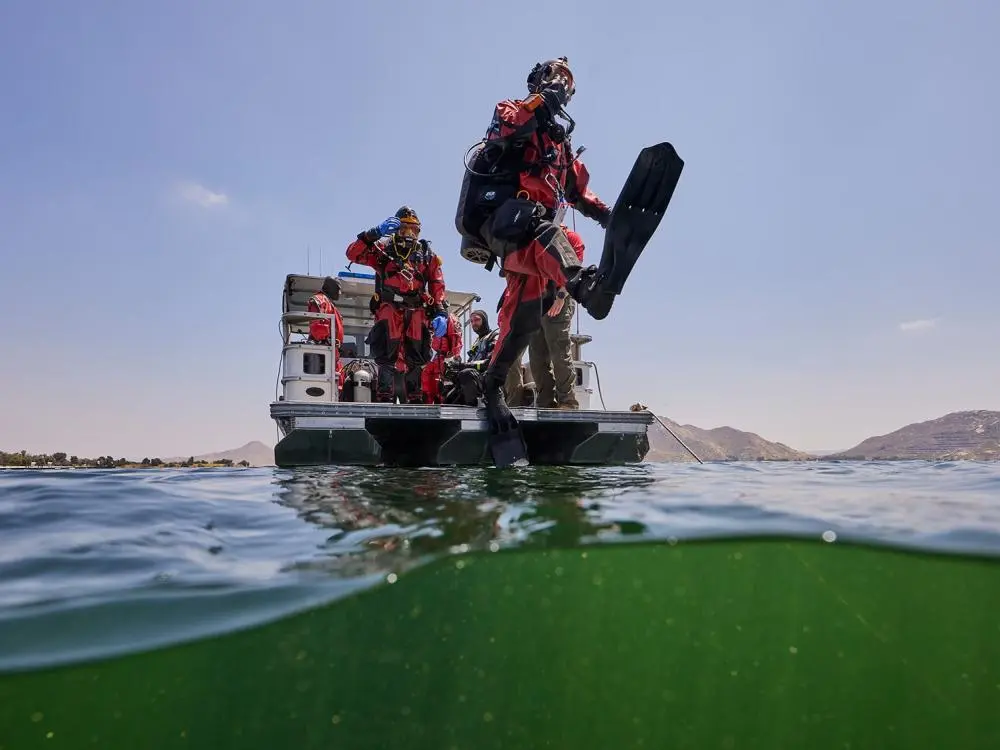
The Risks
Public safety divers face risks well beyond those that all divers manage. Because they can’t choose the dive site, public safety divers often work in water contaminated by biological hazards, chemical toxins, sewage and other such hazards. Working in low or no visibility, they perform by feel and in the process might deal with entanglement, sharp debris or dangerous structures that may not even have been known before the dive.
Just a few of the added physical stresses include hypothermia or hyperthermia at the extremes, combating high water flow and exhaustion. Psychological stresses include being alone amid no viz, dealing with time-critical emergencies, crime scene investigations and the trauma of recovering human remains.
The Rewards
Reading the above, what does it take to become a public safety diver? The short answer is training, experience and discipline. Those who do this usually express a profound sense of reward as members of the community and being part of a dive team that espouses professionalism. They sometimes help take criminals off the streets by recovering evidence that leads to convictions, they’re ready to respond rapidly when there’s a water-related accident and they bring closure to victim’s families by recovering remains. Those involved in this kind of diving usually cite the satisfaction of knowing that amid tragedy, emergency and injustice, they do things that matter.
Want To Know More?
If you’re the kind of person who would want to do this kind of work, it’s clear that being a recreational, or even a technical diver, and having the heart for it isn’t enough. Public safety diving requires very specialized equipment and training. To learn more check out the PADI Public Safety Diver courses, and for a comprehensive look, Public Safety Diving All the Way to the Bottom is a great resource for helping you decide. Also, contact your PADI Dive Center or Resort to learn more. Regardless, if you think public safety diving is something you want to be part of, please do not attempt it in any form until you’re properly trained, equipped and part of an appropriate team.
Understandably, with its physical and emotional demands – not to mention other qualifications and the significant time commitment – only a relatively small number of divers can take on public safety diving.
But they make a difference.
Seek adventure. Save the ocean.
Dr. Drew Richardson
PADI President & CEO