The blue sea dragon (Glaucus atlanticus) is one of the most visually striking animals in the ocean. But there’s far more to this Pokémon-like creature than just its looks. From stealing venom from their prey to spending their entire lives swimming upside down, these tiny sea slugs prove that size has nothing to do with fierceness.
We’ve put together this list of blue sea dragon facts to show why these eye-catching creatures deserve a spot among the coolest marine animals in the ocean.
1. They’re Nudibranchs — Not Dragons!
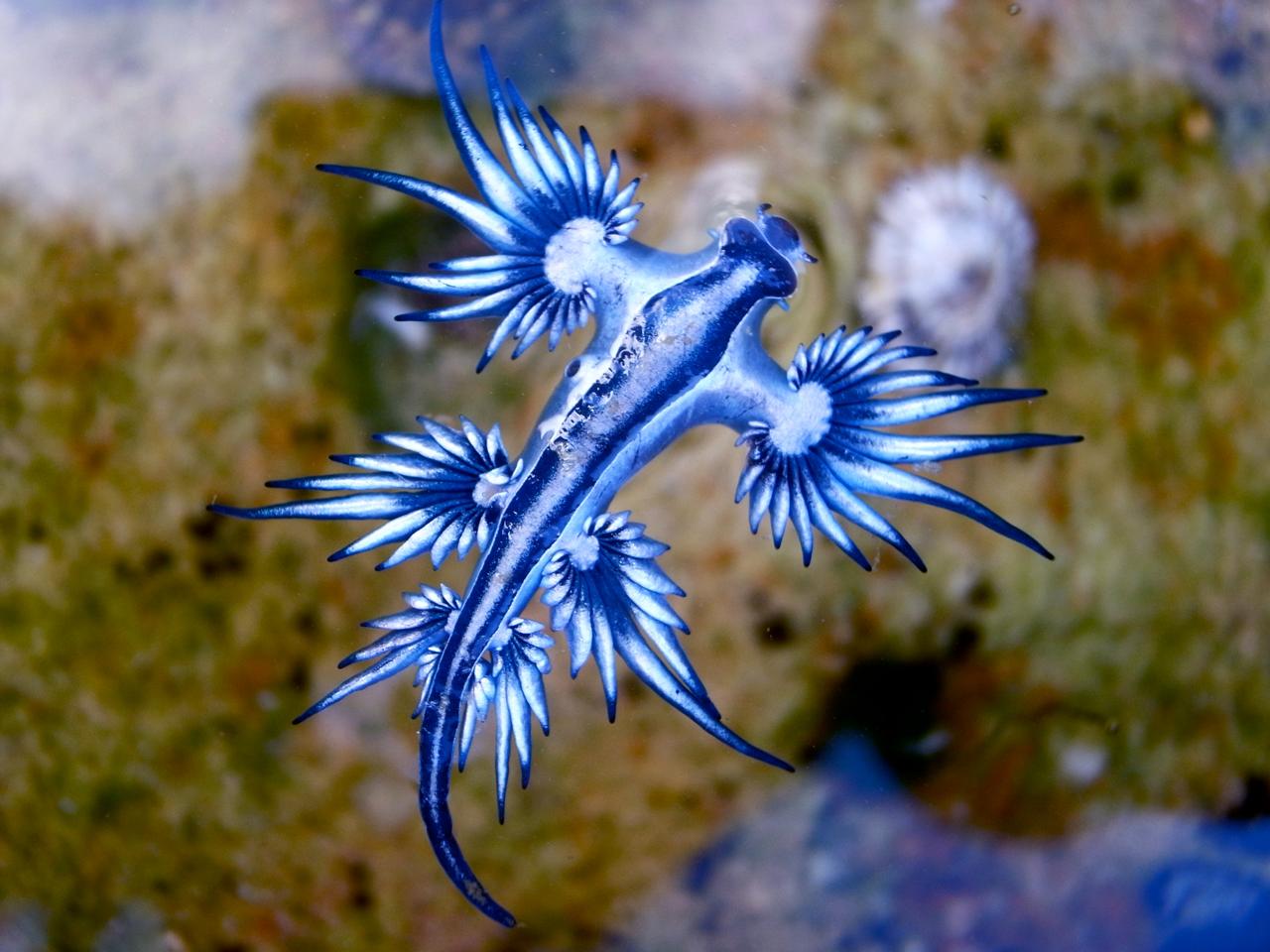
Despite their alien-like appearance and mythical name, blue sea dragons are actually nudibranchs — a type of soft-bodied, shell-less marine mollusk. Nudibranchs actually start life with a shell, but shed it after their larval stage, leaving them with their recognizable bodies.
Blue sea dragons also go by several other names, including:
- Blue Glaucus
- Blue Angel
- Sea Swallow
- Blue Sea Slug
- Glaucus atlanticus
2. They Eat Venomous Animals
Blue sea dragons feast on venomous marine creatures that are often larger than themselves. Their diet includes blue buttons and, most notably, the Portuguese man o’ war — a siphonophore closely related to jellyfish. The blue seadragons target the tentacles of their prey (more on that in #3!).
3. Their Sting Is Surprisingly Powerful
In the process of consuming the man o’ war tentacles, blue sea dragons are able to remove and store the stinging cells (nematocysts) in their own tissues. This works as a powerful defense against potential predators, including humans.
Additionally, because blue sea dragons concentrate these stinging cells in specialized storage pockets called cnidosacs, they’re able to deliver a more intense sting than the original man o’ war (which only releases stinging cells one at a time).
4. They Float Upside Down
Unlike most nudibranchs, blue sea dragons don’t live on the ocean floor. Instead, they spend their entire lives floating on the water’s surface upside down! They stay afloat thanks to a combination of surface tension and a small air bubble they swallow and store in their stomachs.
5. They Use the Same Camouflage Technique as Great White Sharks
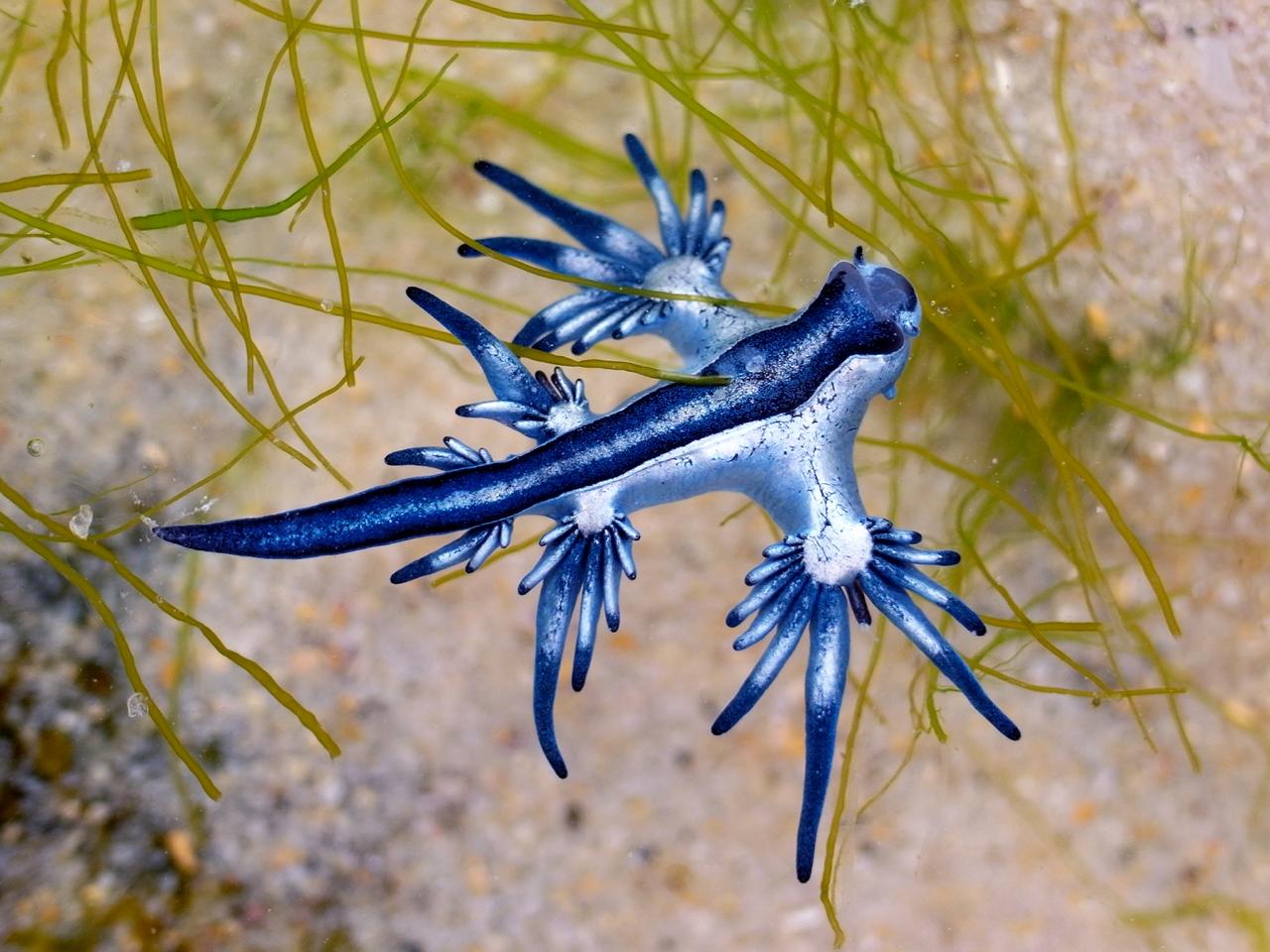
Like great white sharks, blue sea dragons utilize countershading to stay hidden in the ocean. Countershading is an adaptation in which the animal’s upper (dorsal) side is darker, while the underside (ventral) is lighter, helping them blend into their surroundings.
For blue sea dragons, their blue underside (which actually faces upward) blends in with the blue of the ocean when seen from above, while the silvery topside (facing downward) is able to blend in with the sky and sunlight when seen from below.
6. They Are Hermaphrodites
Blue sea dragons are hermaphrodites, meaning each individual has both male and female reproductive organs. After a pair mates, they produce a string of eggs, which is often attached to floating debris or even unsuspecting prey!
7. They’re Small
Despite their powerful sting and fierce reputation, blue sea dragons are tiny, and only reach a maximum length of one inch (three centimeters).
8. They’re Terrible Swimmers
Blue sea dragons are pelagic creatures, meaning they live in the open ocean. But despite calling tropical and subtropical waters home across the Atlantic, Pacific, and Indian Oceans, they’re surprisingly bad swimmers. Instead of actively navigating the seas, these surface-dwelling nudibranchs simply go wherever the winds and currents take them.
This is why your best chance of seeing one is when strong winds wash them up on shore.
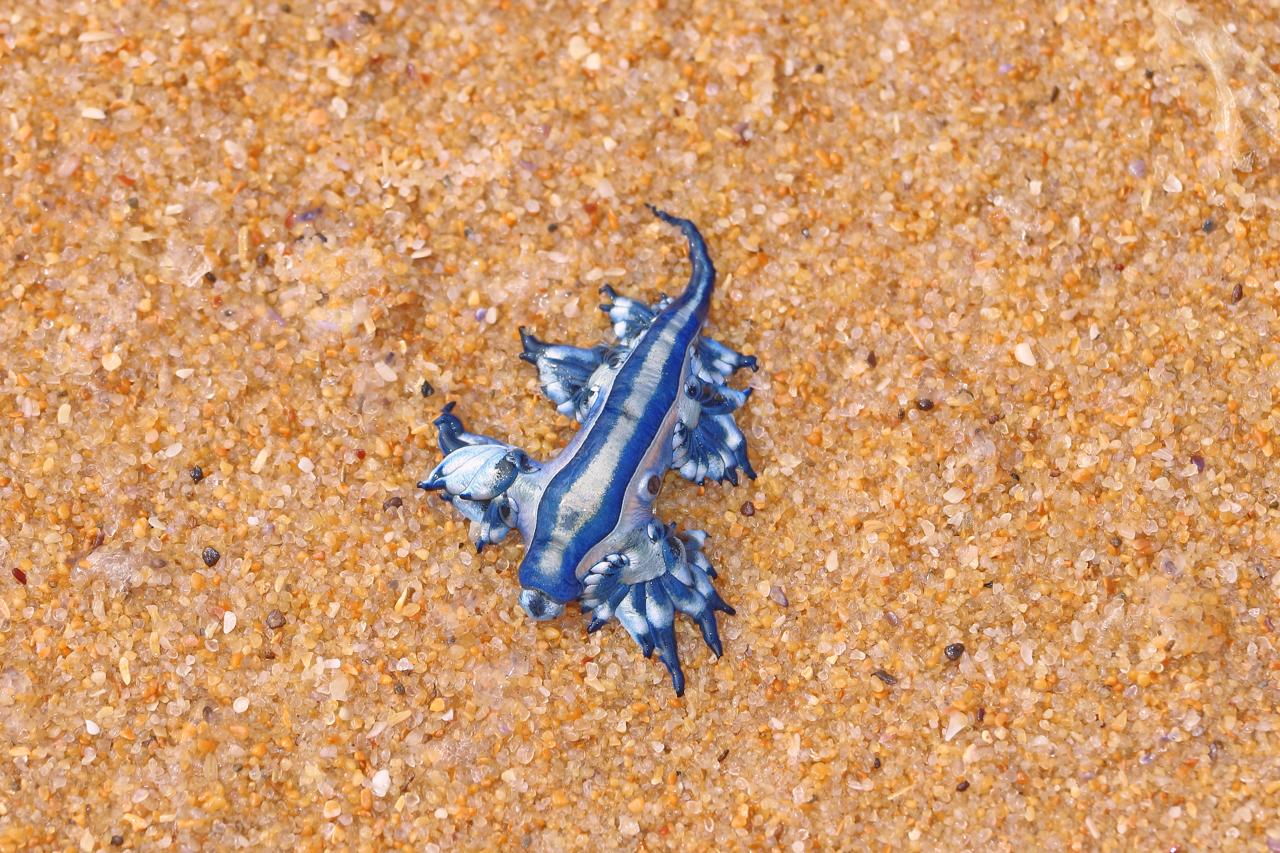
9. A Group of Blue Dragons Is Known as a “Blue Fleet”
When a number of blue sea dragons become concentrated into a large group, they become what is known as a “blue fleet.” This phenomenon is most commonly witnessed when currents or strong winds force a “blue fleet” ashore — often accompanied by other drifters, such as blue bottles or Portuguese man o’ wars.
Ready To Discover the Ocean’s Coolest Creatures for Yourself?
Have our blue sea dragon facts inspired you to seek out the coolest marine creatures? While predictably finding blue sea dragons is rare, finding other incredible macro critters is much easier.
Check out these top macro dive sites for inspiration, or if you’re ready to take the plunge, click below to start your scuba diving course.