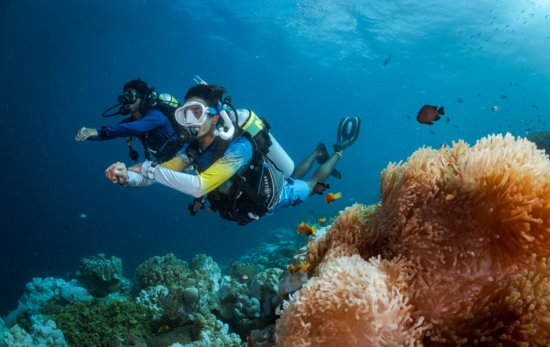
Even if you’re relatively new to diving, you’ve had something undesirable happen underwater: your mask got knocked off, your buddy ran lower on air than planned, it was choppy when you surfaced kinda far from the boat, etc. What did you do? Put it back on, cleared it. Signaled “Up!” and stayed close. Switched to snorkel and took your time swimming back. And, if you’ve been diving awhile, maybe you’ve handled something more serious, like bringing an out-of-air diver up with your alternate second stage.
These things happen in diving, yet when we follow safe diving practices, diving has an excellent safety record. Furthermore, we don’t consider most of these a big deal, nor give them a second thought. A more serious out-of-air-diver situation gets stern “let’s learn from this” introspection, but then we move on. And that is of note when you think about it.
Why? Depending upon personal characteristics, imagine how some who are not trained divers (or under instructor supervision) might react. Lost mask – panic and rapid ascent. Low air – stress and diminished solution thinking (and therefore failing to surface immediately). Long swims in chop – motion exhaustion, stress and choking on water. These are not typically a big deal because divers are trained for these situations. But more than that, diver training develops an underwater survival mindset.
Diver Training Develops Your Survival Mindset
Survival mindset applies to many situations that threaten life or serious harm. Regardless of the situation, though, multiple sources (like this one) list three survival mindset components in common: situational awareness, preparation and practice (rehearsal).
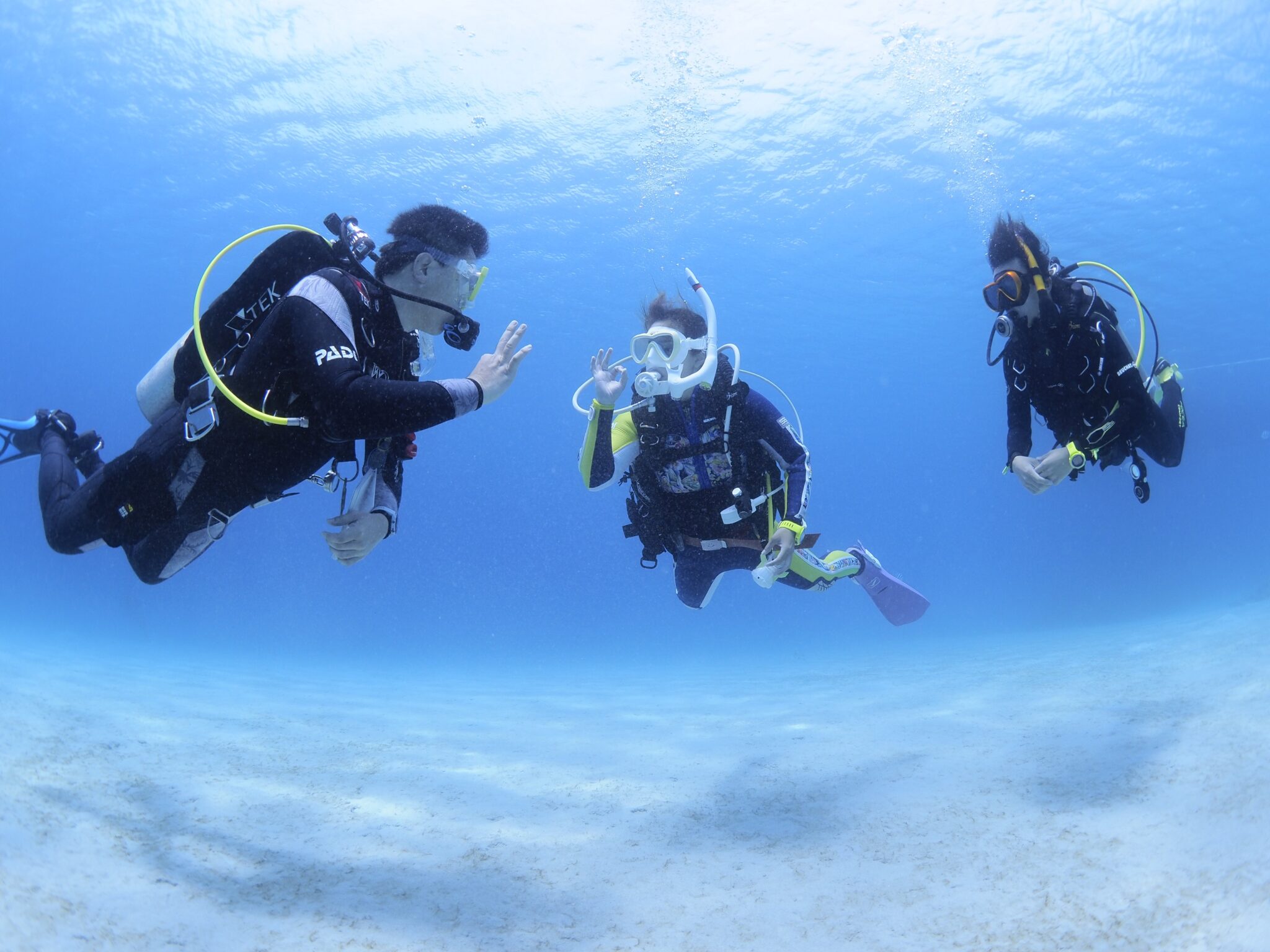
Think about your training as a diver. Starting with the PADI Open Water Diver course, much of what you learned fits into these three categories. For example, you learned how to recognize (be situationally aware of) an out of air diver (e.g. recognize the OOA signal). You learn to be prepared by having an alternate air source secured in the triangle area of your chest. And, you practiced (several times) sharing air, both as the donor and the receiver.
This survival mindset development expands at all levels as you continue your diver education, but especially in the PADI Rescue Diver, PADI TecRec and Emergency First Response courses. With each, your awareness, preparedness and practiced responses increase.
Importantly, your survival mindset isn’t limited to diving. In an extreme situation, the survival mindset says, “I’m not a victim. I can do something.” It’s a mode of thinking that adapts, responds, stays hopeful and is mentally strong, which is what you learn as a diver. Yes, for many situations, specialized survival training may be appropriate, but any survival training – including diver training – helps shift your underlying thinking from victim to survivor. And that’s something we all need as we go through life.
Diving is often cited as a transformative experience, and developing a survival mindset is one more way it transforms us. And, it’s another way we can help others by sharing diving’s healing power.
Seek adventure. Save the ocean.
Dr. Drew Richardson
PADI President & CEO
PS – Through the rest of 2025, through the PADI Refer-A- Friend Challenge, you can earn discounts and have a chance to win dive equipment when you share diving by signing someone up to the PADI Open Water Diver eLearning. They get a discount, too. Click the link and learn how.