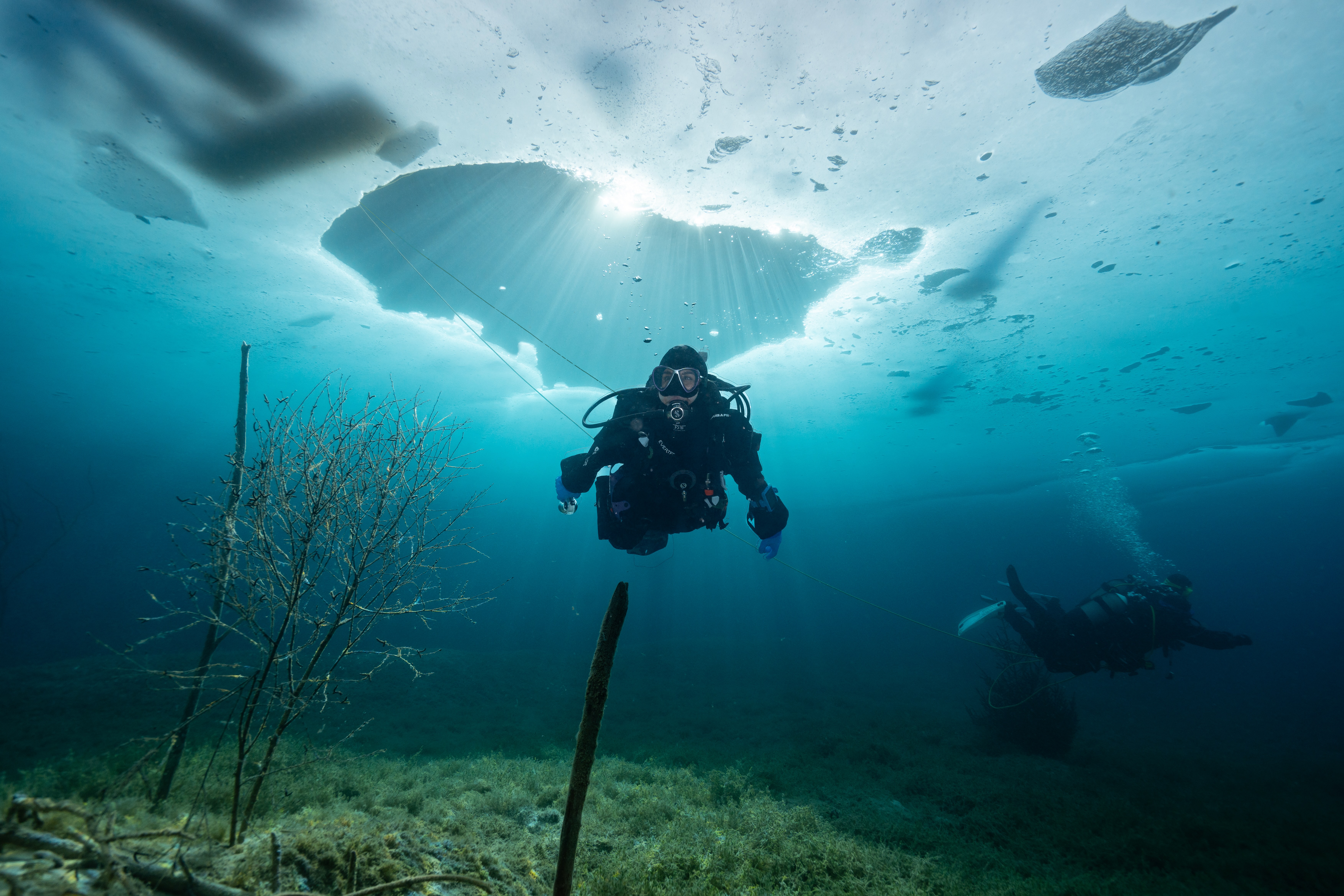
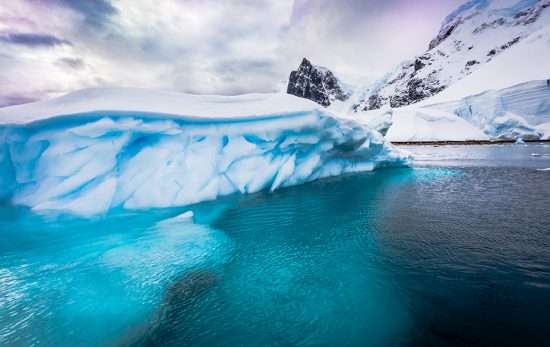
Surrounded by the ocean, Japan is blessed with countless unique dive destinations. Even a short trip from the city can take you to seas full of surprises. Among them, Sado Island and the Hokuriku region stand out for their dramatic underwater landscapes, carved by the powerful waves of the Sea of Japan.
Here, divers are treated to spectacular topography, crystal-clear waters known as “Japan Sea Blue” and encounters with truly remarkable marine life. From the friendly, giant wrasse (kobudai) that roams the waters of Sado to mysterious deep-sea creatures that rise up into Toyama Bay at Namerikawa, every dive offers a chance to witness something unforgettable.
While many imagine the Sea of Japan as cold and forbidding, the warm Tsushima Current flows up from the south, transforming these waters. From summer through autumn, divers can expect schools of pelagic fish and even tropical visitors — making this region a destination with something new to discover in every season.
Sado Island, Niigata
Off the coast of Niigata Prefecture lies Sado Island, Japan’s second-largest island at about 331 square miles (857 km²) — roughly one and a half times the size of Tokyo’s 23 wards. The surrounding waters are where warm and cold currents meet, creating excellent visibility, rich biodiversity and a wide variety of dive sites to explore.
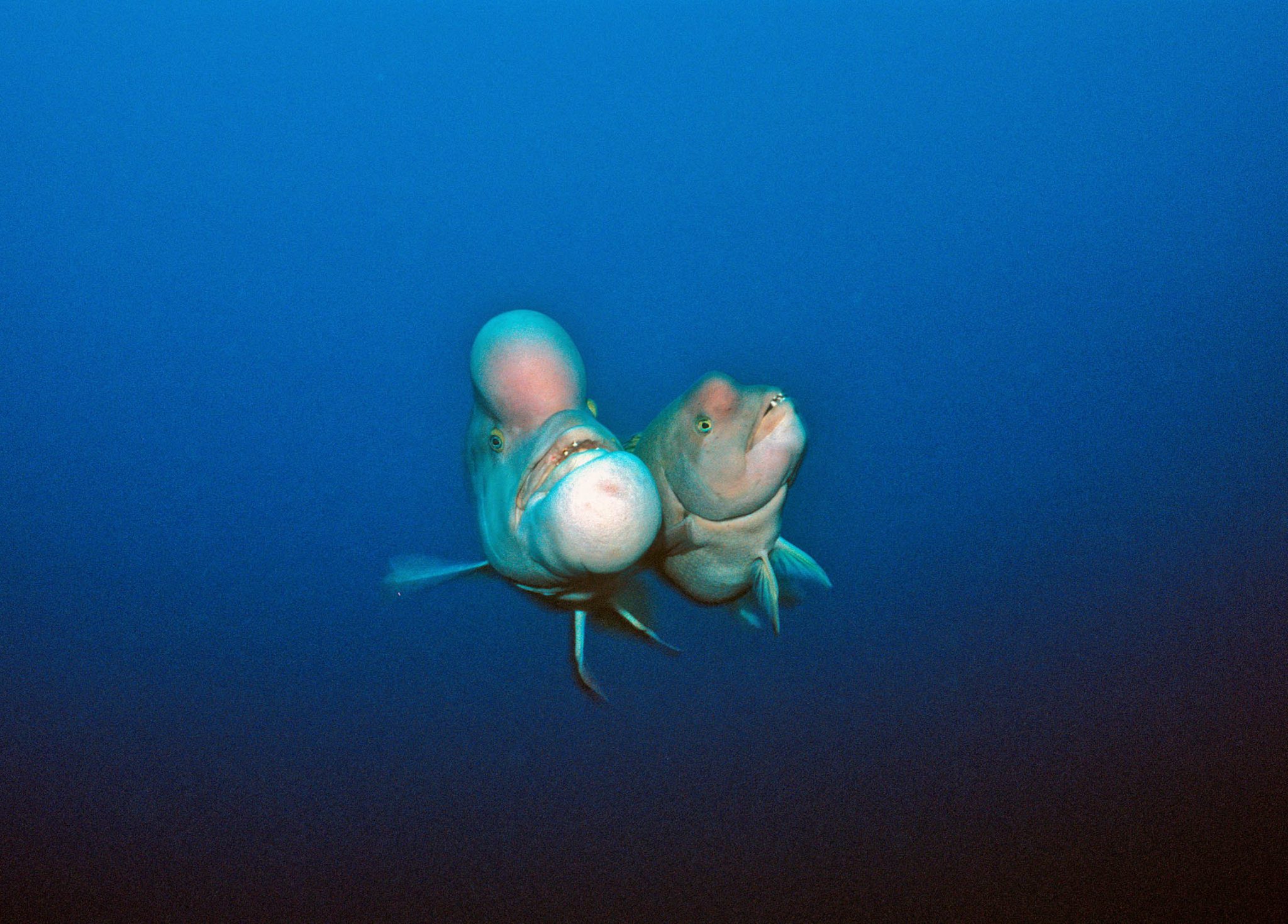
One of the most popular spots is Kita-Koura&Aka-Iwa, where divers often encounter the island’s legendary resident — a giant Asian sheepshead wrasse that boldly approaches divers. Depending on the season, you may also witness the drift of massive Nomura’s jellyfish or, during night dives, the spectacular sight of squid spawning.
But Sado is more than just incredible diving. On land, the island is home to historic attractions, such as the Sado Gold Mine, developed during the Edo period, and the Japanese Crested Ibis Conservation Center, where efforts to protect this iconic bird are underway. Visitors can also enjoy the island’s changing natural beauty across the seasons as well as its warm hospitality.
Getting there is easy, with both ferry and flight options available from mainland Japan. Whether it’s your first visit or a return trip, the ever-changing faces of Sado’s sea promise new adventures and unforgettable memories every time.
Featured Dive Site: Kita-Koura Aka-Iwa
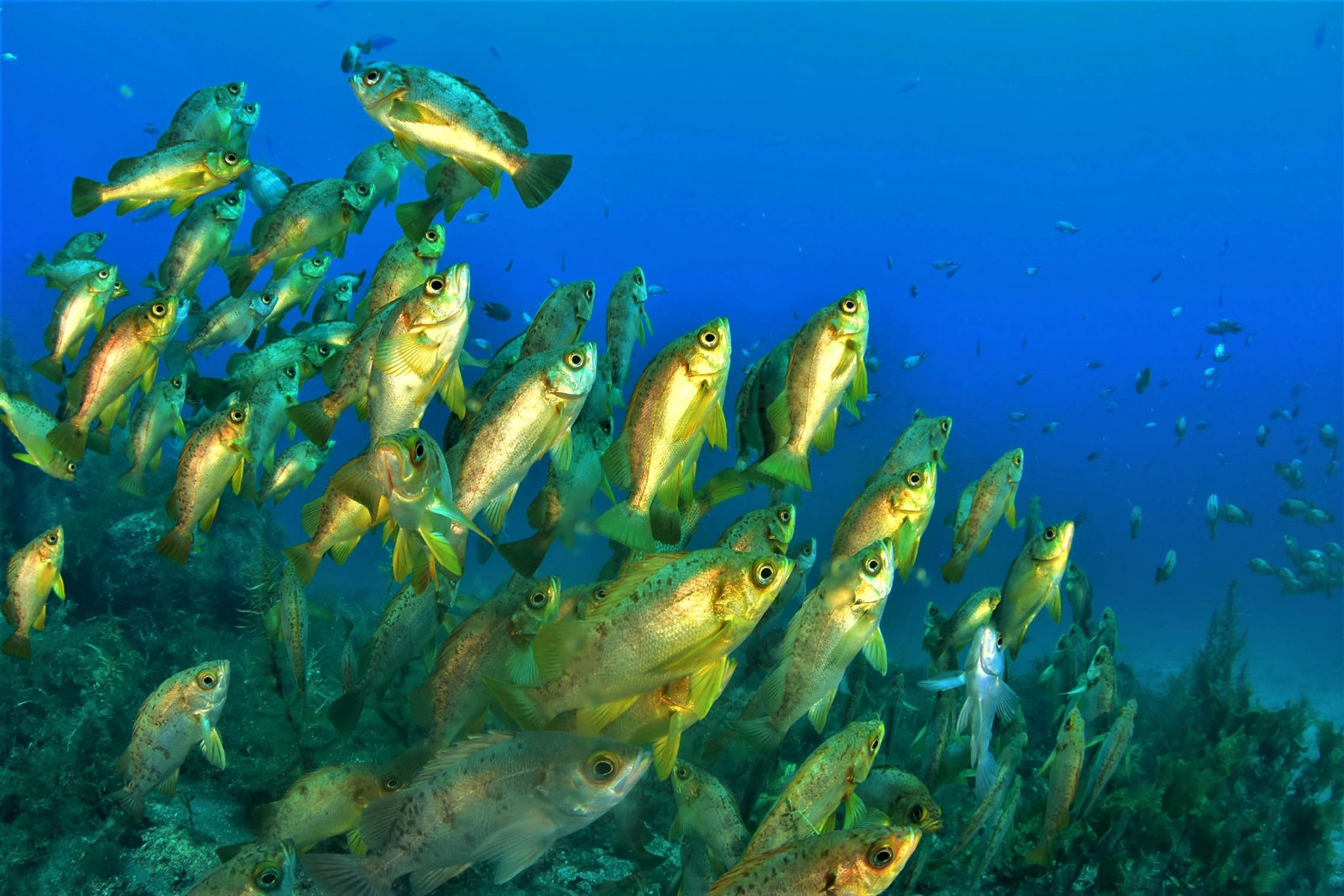
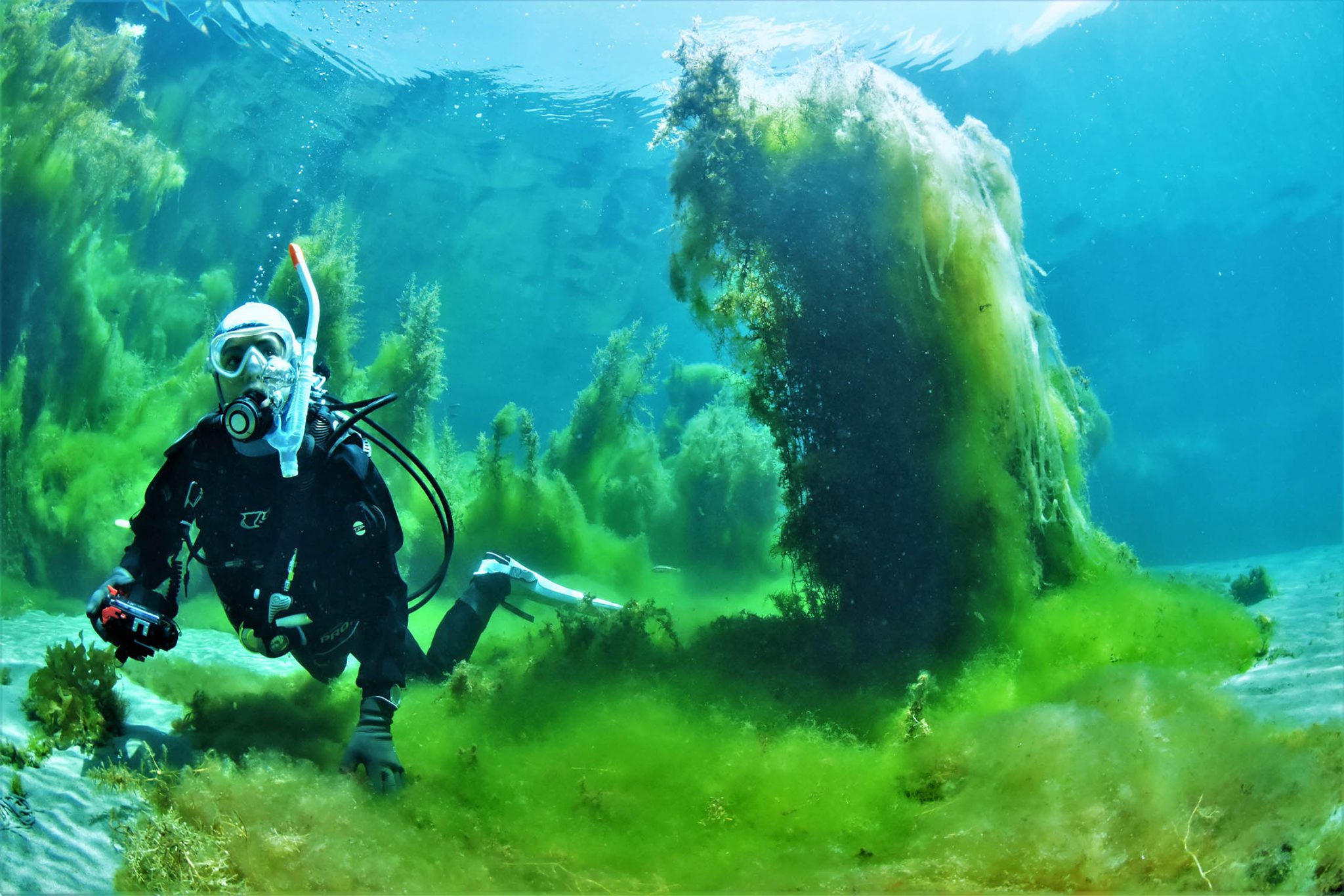
Just off the coast of Kita-Koura fishing port lies Aka-Iwa, one of Sado’s signature dive sites. This spot is famous for its resident kobudai, giant Asian sheepshead wrasse that often swim right up to greet divers upon entry.
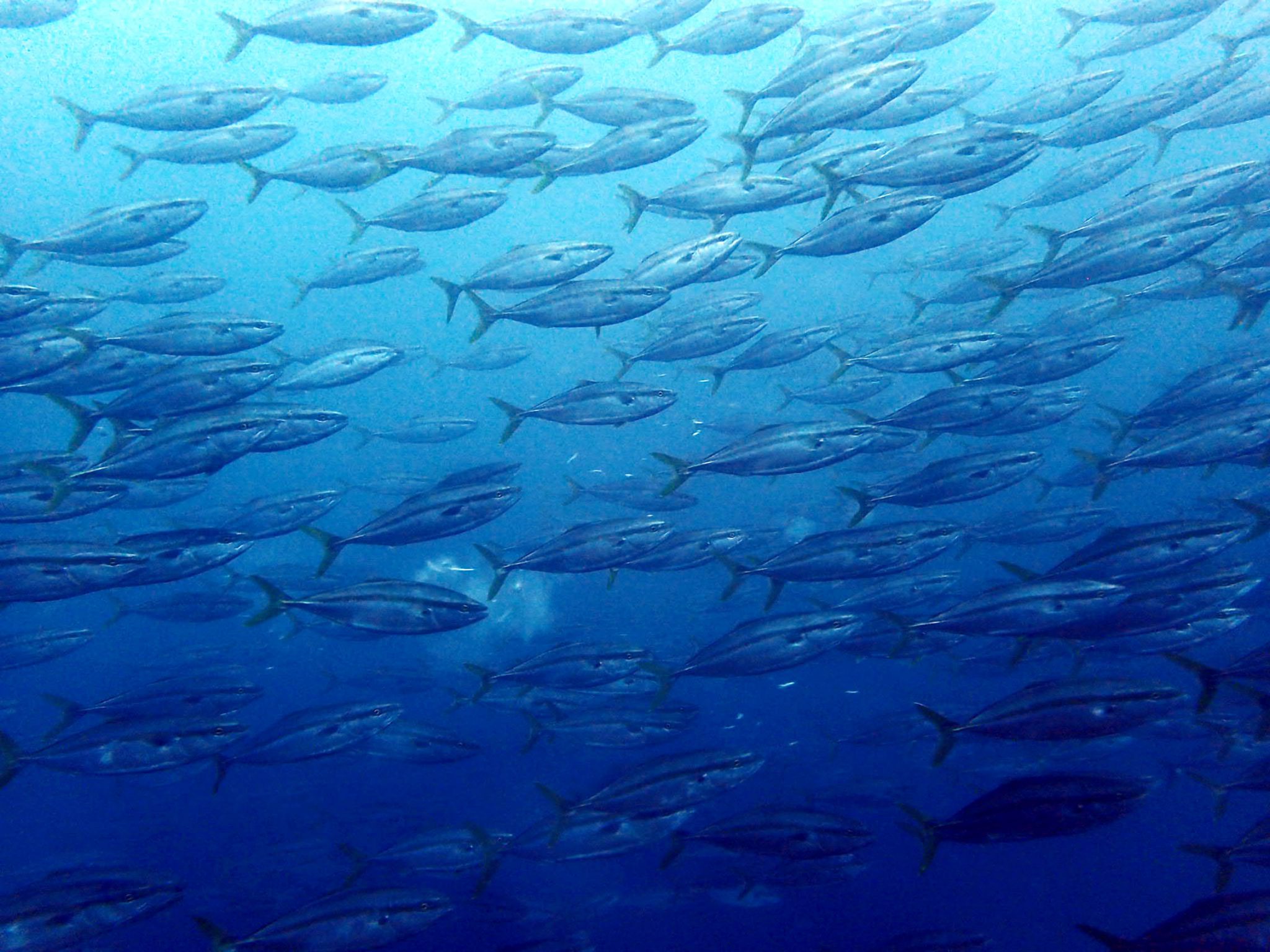
With depths ranging from 46 to 85 feet (14 to 26m), Aka-Iwa is suitable for both beginners and advanced divers. The site offers something for everyone – nudibranchs for macro enthusiasts, schools of pelagic fish and even giant Pacific octopuses for those who love big encounters. Each season brings something new to discover, from the dramatic territorial battles and spawning behavior of Asian sheepshead wrasse in early summer to fascinating nocturnal marine life during night dives.
Getting There
- By Car: About 20 minutes from Niigata City to Niigata Port. From there, it’s a two-and-a-half-hour car ferry journey to Ryotsu Port on Sado. (Driving from Tokyo to Niigata City takes about four hours via the Kan-Etsu Expressway.)
- By Train: From Tokyo Station, take the Joetsu Shinkansen to Niigata Station (approx. two hours). From Niigata Station, it’s about 20 minutes by bus or taxi to Niigata Port, followed by a two-and-a-half-hour car ferry jounrey to Ryotsu Port.
Echizen, Fukui
Nestled within the Echizen-Kaga Quasi-National Park, the small town of Echizen is blessed with a stunning coastline and abundant natural beauty. Diving here is available year-round, with both shore and boat dives to enjoy.
The underwater scenery is incredibly diverse, ranging from sandy flats and giant boulders to caves and rocky slopes. In spring, lush underwater kelp forests spread across the seabed. From summer to autumn, the sea transforms into the crystal-clear “Echizen Blue,” perfect for drifting weightlessly through the water. Autumn brings schools of seasonal visitors, while in winter, encounters with giant Pacific octopuses are a highlight. Each season offers a fresh reason to come back.
Featured Dive Site: Gakkō-shita
Gakkō-shita is a sandy beach dive site suitable for all levels, from beginners to experienced divers. The wide stretch of pure white sand creates a tropical-island feel, especially during the high-visibility season, making for an incredibly refreshing dive.
The site is known for its rich marine life, including seahorses and a variety of nudibranchs, making it especially appealing for underwater photographers. Thanks to its sheltered location, less affected by southern winds, conditions remain calm, making it ideal for try dives and training courses. Year-round, divers can enjoy a variety of seasonal marine life while fish-watching in a relaxed setting.
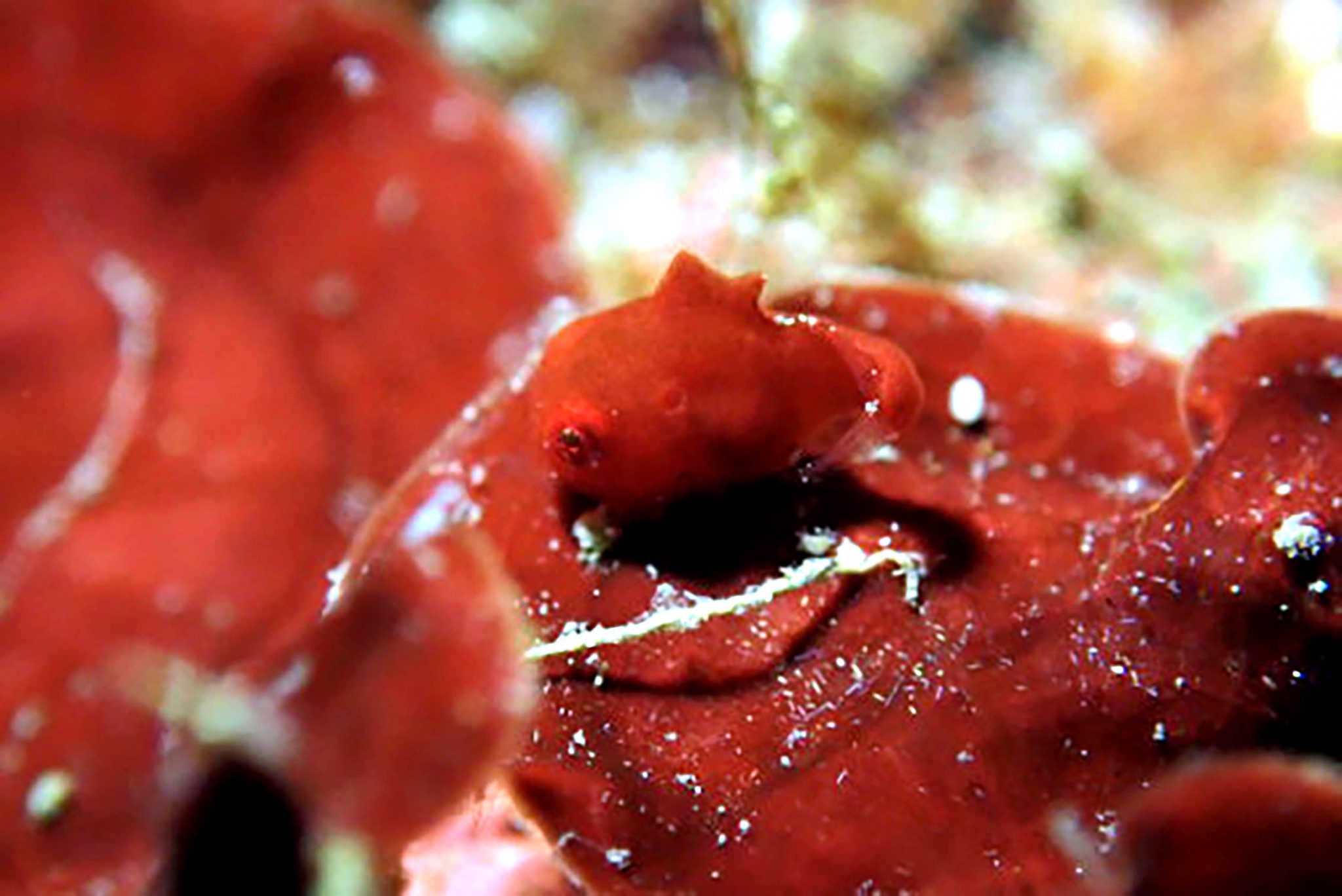
Image courtesy of Diving Center Log
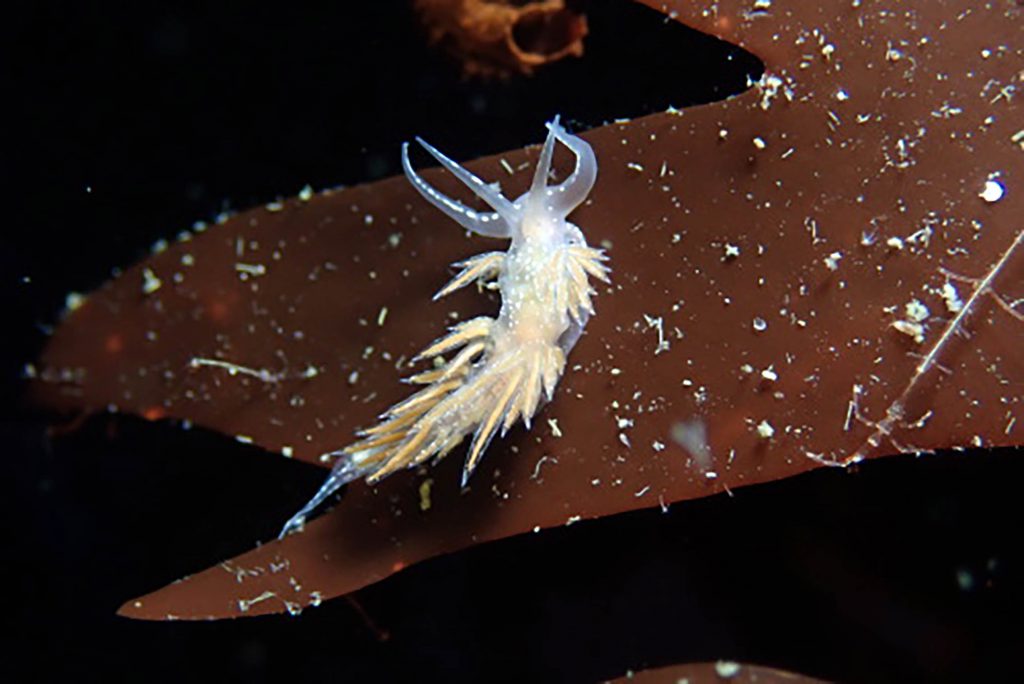
Image courtesy of Diving Center Log
Getting There
- By Car: About 40 minutes from Fukui City. From Osaka, it’s roughly two-and-a-half hours via the Hokuriku Expressway to Fukui IC, then Route 8 and Route 305.
- By Train: From JR Fukui Station, take the Fukui Railway Fukubu Line or the JR Hokuriku Main Line to Takefu Station. From there, it’s about 30 to 40 minutes by taxi or bus to Echizen.
Etchū-Miyazaki, Toyama
On the coast of Toyama Prefecture lies Etchū-Miyazaki, a newly opened dive destination (since 2021) that is quickly gaining attention among adventurous divers. Here, the towering 3,000-meter (9,800-foot) peaks of the Hida Mountains plunge dramatically into the sea, creating massive walls, steep pinnacles and breathtaking underwater formations.
Facing the open sea, visibility is often excellent, and in summer the water temperature can reach a comfortable 86°F (30°C). Unique dive sites with names like “Underwater Approach” and “Sea Shrine” — inspired by local legends — make this area especially appealing to divers who love dramatic seascapes.
In spring, the waters come alive with nudibranchs and tiny Sakura Lumpfish. Autumn brings schools of migrating fish, leading to encounters with red sea bream, yellowtail (buri) and even larger pelagics. At the nearby Jade Coast, divers and visitors can also try their luck searching for natural jade stones washed ashore.

Featured Dive Site: Okino-Se
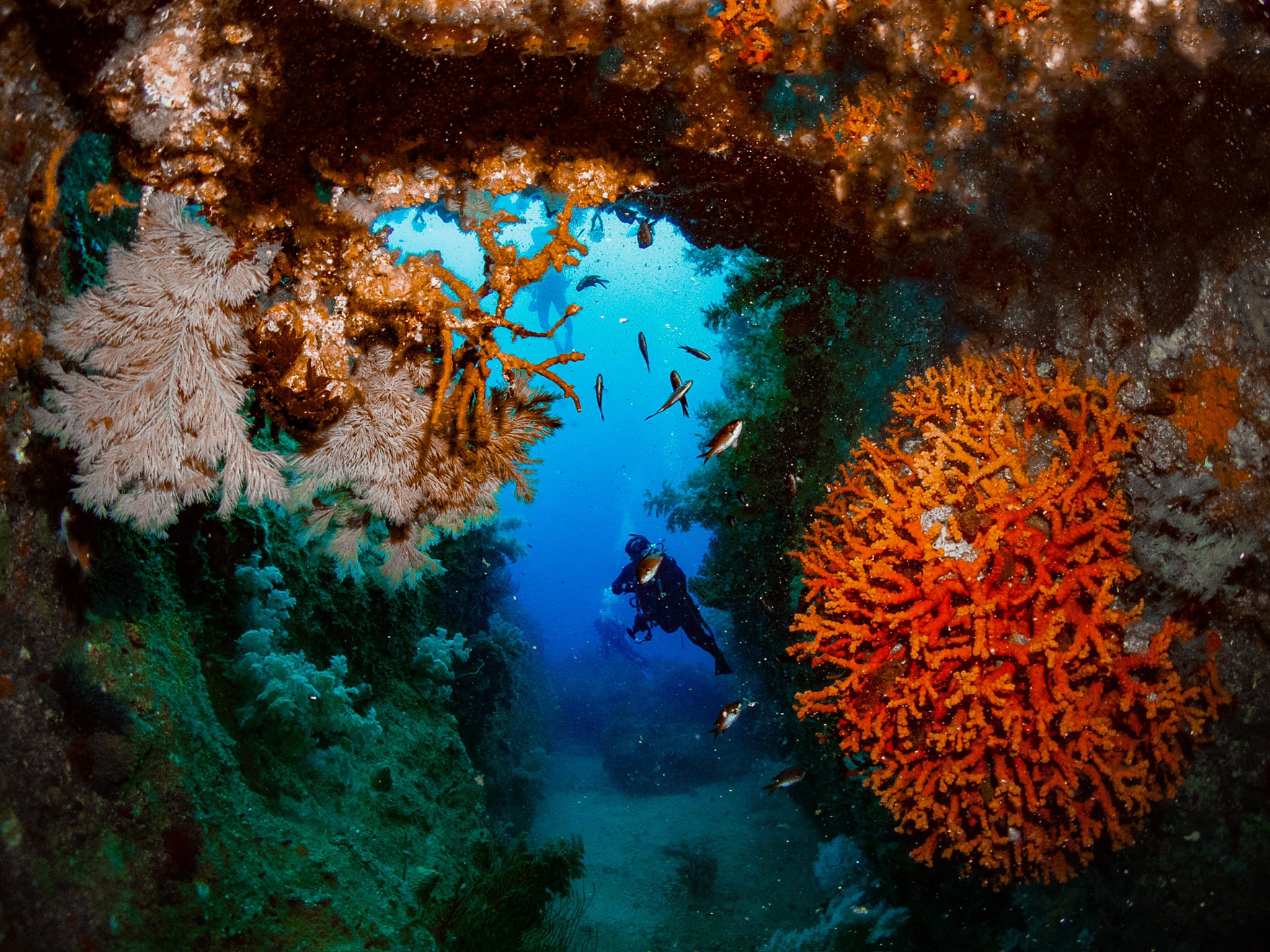
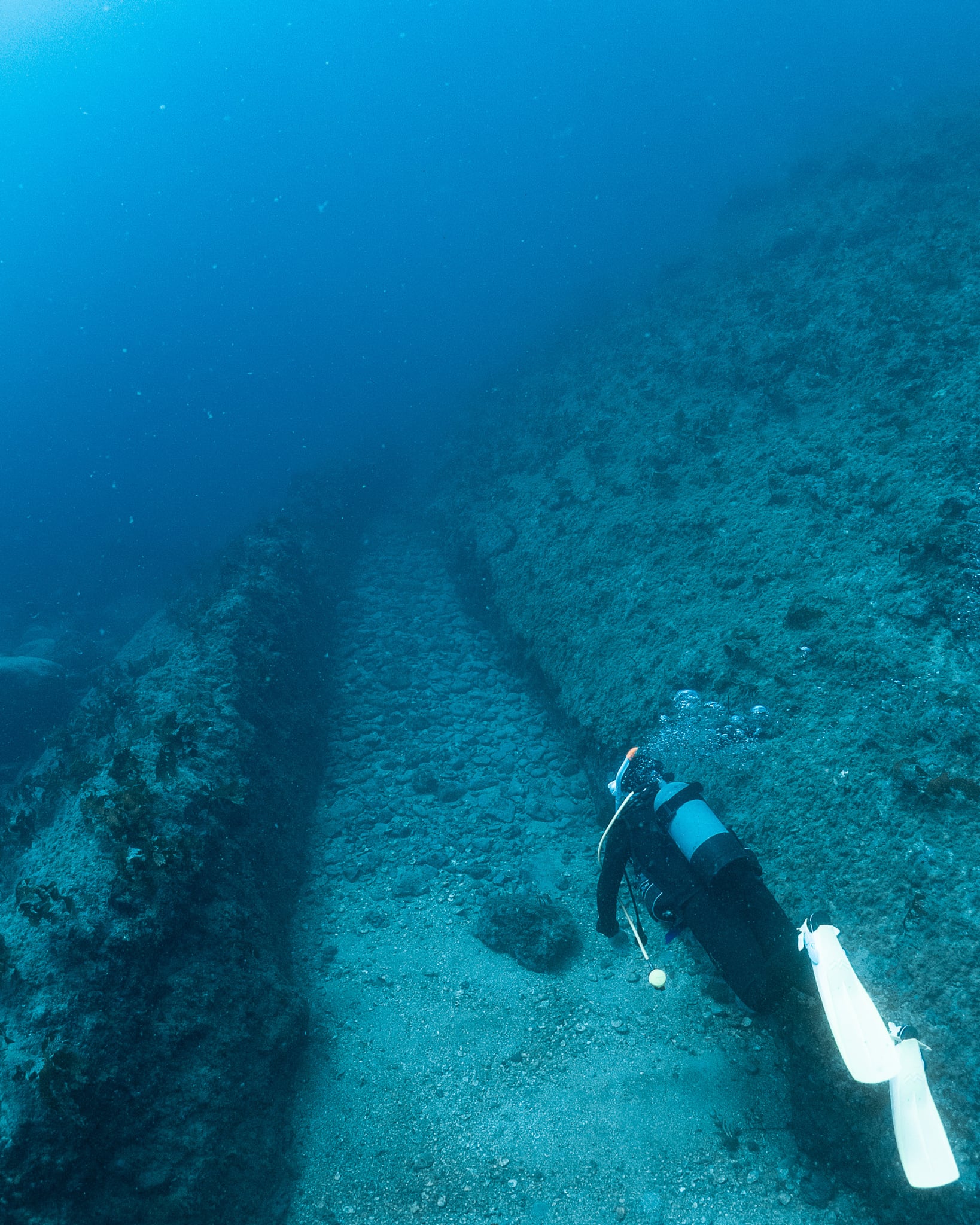
The Okino-Se area, located furthest offshore from Etchū-Miyazaki, offers a collection of exciting dive spots. Sites such as “Double Arch,” “Underwater Approach” and “Labyrinth” each feature distinctive rock formations and thriving marine ecosystems.
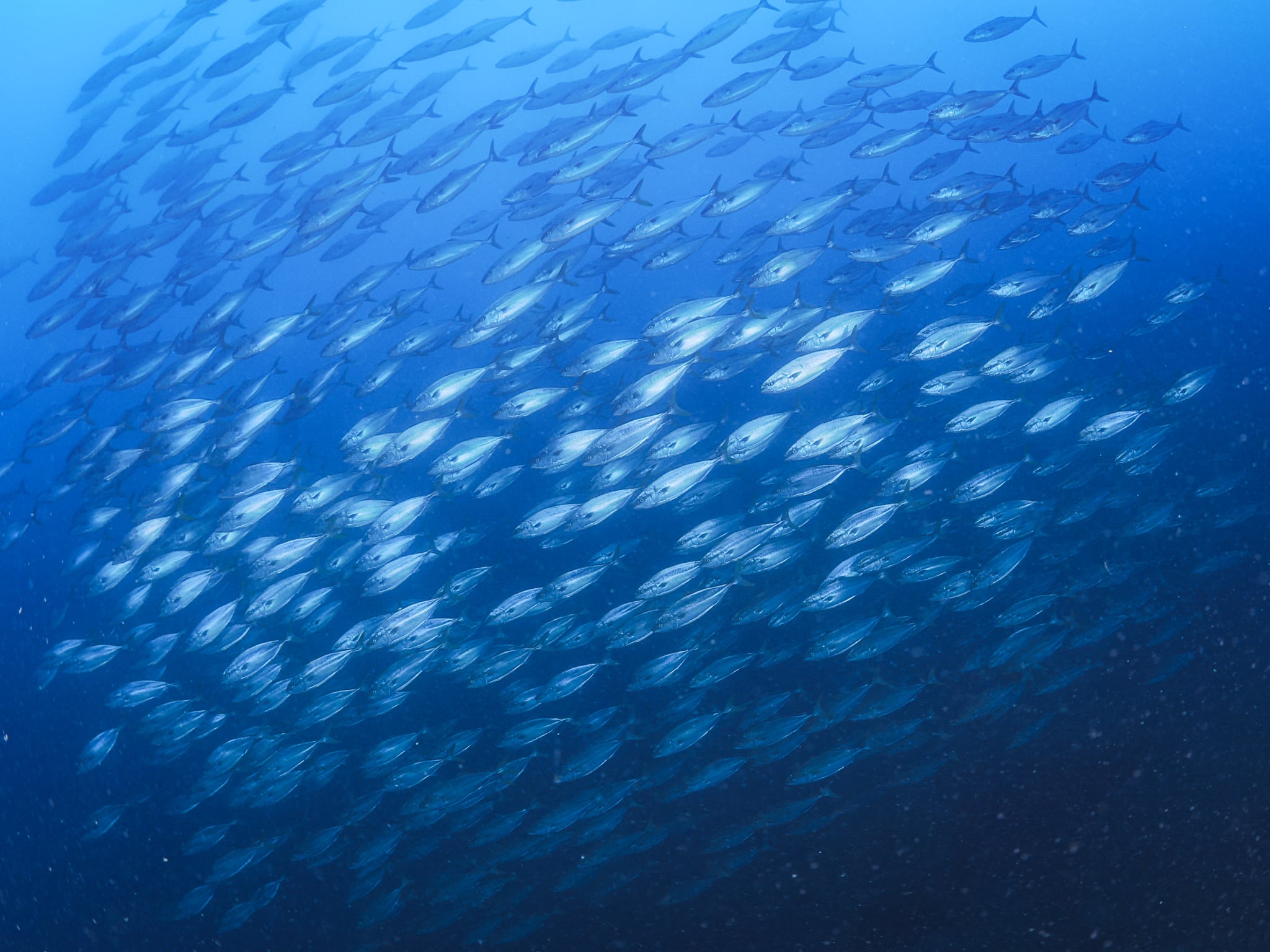
The stone-paved seafloor at “Underwater Approach” and the dense colonies of soft corals at “Labyrinth” are especially impressive. At “The Point,” where currents sweep through, fish life is incredibly rich. Here, you may witness thrilling scenes of yellowtail or amberjack chasing down schools of baitfish.
Due to the strong currents and the need for free descents and drift-diving skills, Okino-Se is best suited for experienced divers. Solid buoyancy control and comfort with current are essential before venturing here.
Getting There
- By Car: About one-and-a-half hours from Toyama City via the Hokuriku Expressway to Asahi IC, then Route 8. From Kanazawa, it’s about one hour via the same expressway.
- By Train: From JR Toyama Station, take the Ainokaze Toyama Railway to Etchū-Miyazaki Station (approx. one hour).
Namerikawa
Located on Toyama Bay, Namerikawa is one of the rare places in the world where you can dive 24 hours a day. This area is shaped by upwelling currents that bring nutrient-rich water and mysterious creatures from the deep sea up toward the coast. With a dramatic drop of nearly 13,000 feet (4,000m) from the peaks of the Tateyama Mountains down to the seabed, divers here can experience truly unique encounters.
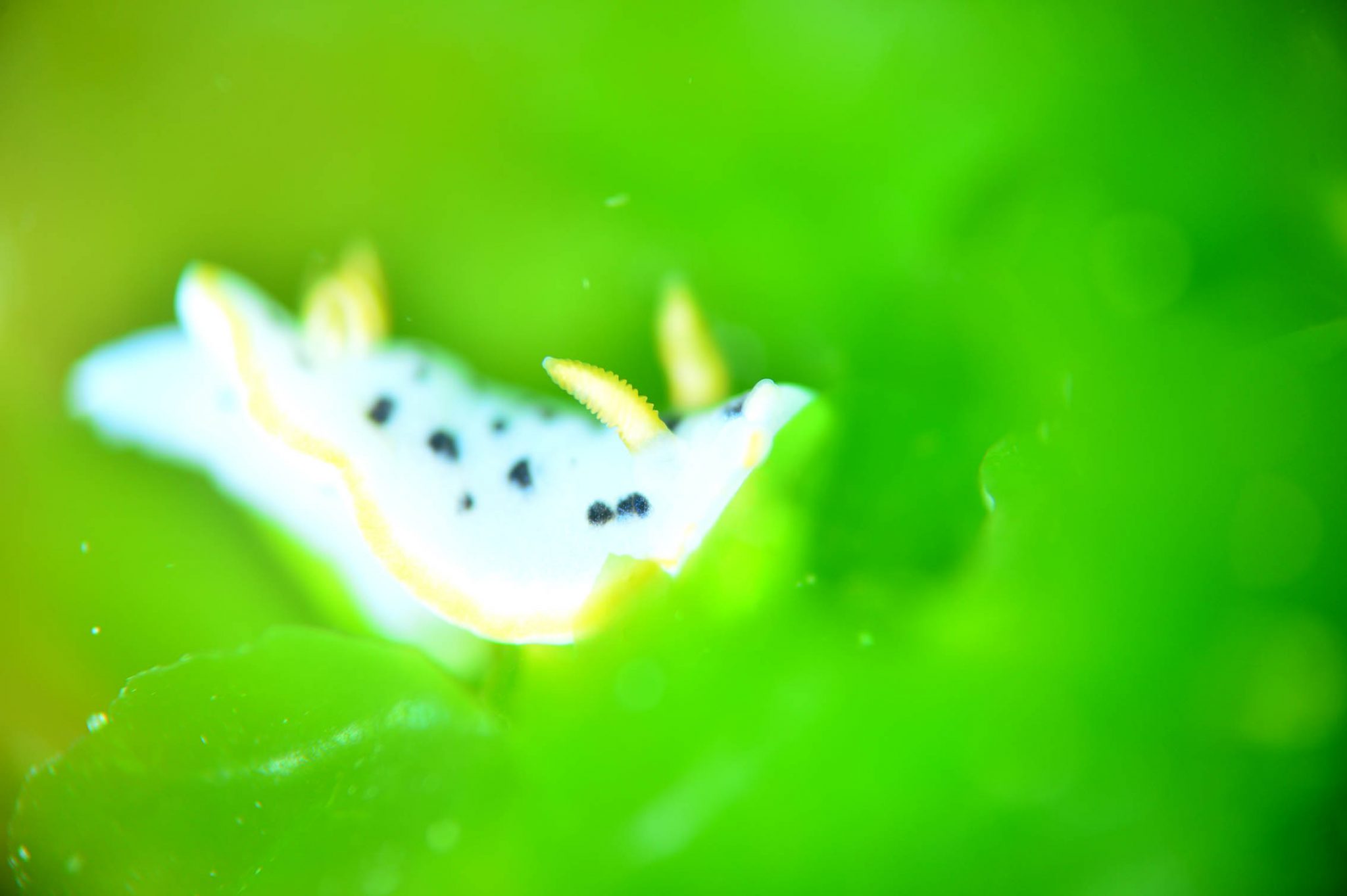
Depending on the time of day, you can enjoy everything from sunset dives to midnight explorations. Popular highlights include spotting lumpsuckers and the cubed snailfish, while from February to April, divers may even witness the extraordinary phenomenon of firefly squid swarming to the shallows to spawn.
Winter through early spring offers the best conditions, with crystal-clear visibility, while autumn brings mesmerizing schools of fish. Night dives are especially exciting, when nocturnal creatures, such as tonguefish and bobtail squid, become active. After a special dive in Namerikawa, it’s worth exploring Toyama’s culture, cuisine and mountain scenery for a complete adventure.

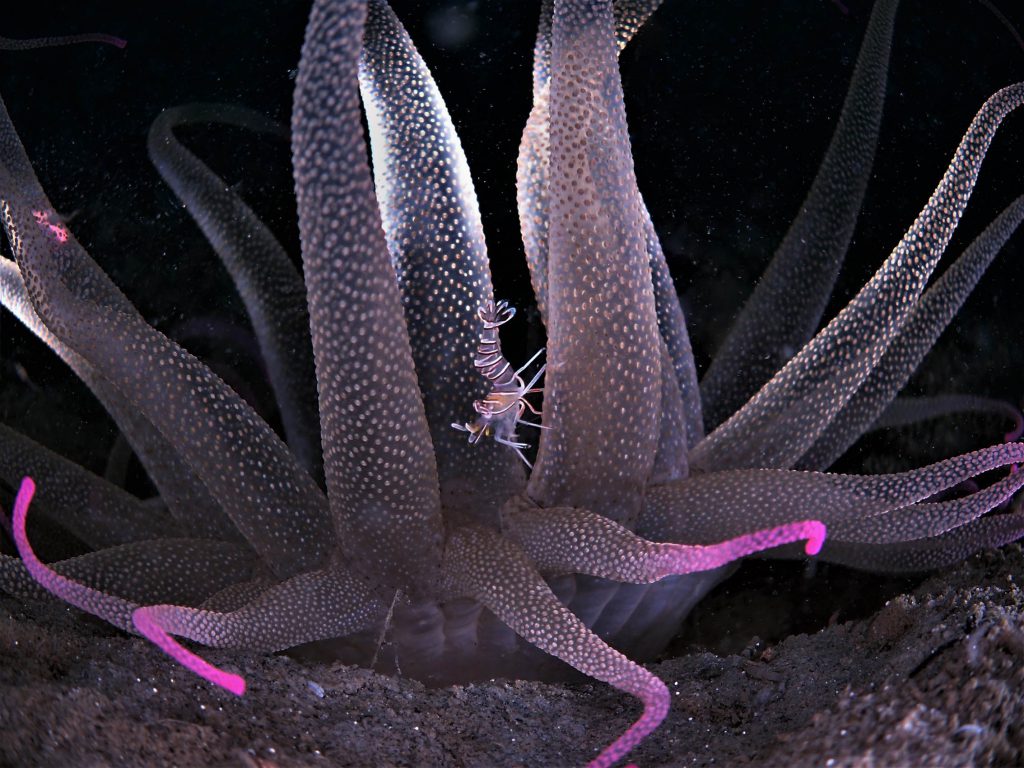
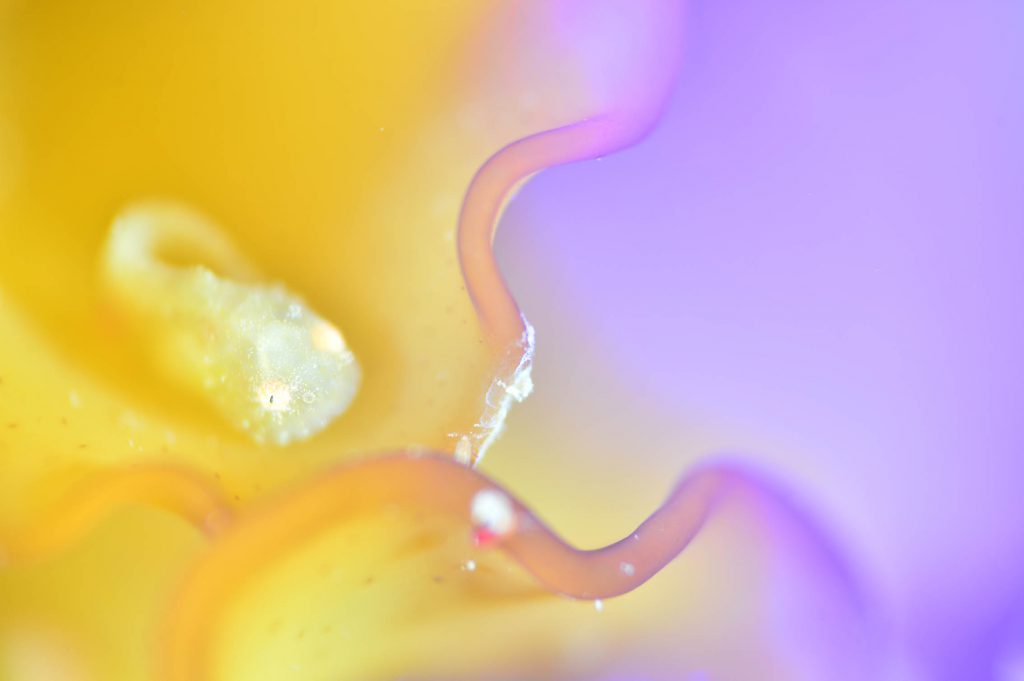
Images courtesy of Diving Shop KAIYU
Featured Dive Site: Namerikawa Outside
This shore-diving site is open day and night, offering opportunities for sunset dives, night dives, midnight dives and even early morning immersions. You could literally go diving after work! Thanks to the upwelling currents in Toyama Bay, divers have the chance to see unusual deep-sea species that rarely appear in shallow waters elsewhere.
The site offers attractions at a variety of depths, from shallow zones perfect for discover scuba dives to deeper areas that challenge experienced divers. Whether you’re new to diving or an advanced adventurer, Namerikawa delivers a truly one-of-a-kind underwater experience.
Getting There
- By Car: About 30 minutes from Toyama City. Easy access from the Hokuriku Expressway, Namerikawa IC.
- By Train: About 20 minutes from JR Toyama Station via the Ainokaze Toyama Railway to Namerikawa Station.
Otomi Peninsula
Located in Takahama, Fukui Prefecture, the Otomi Peninsula lies within the Wakasa Bay Quasi-National Park, an area celebrated for its dramatic natural scenery. The highlight above water is the Otomi Great Cliff, a sheer wall rising over 850 feet (260m) and designated as a scenic landmark. In spring, the cliffs are framed by cherry blossoms, while autumn paints them with vibrant foliage, making this a destination that shines both above and below the water.
Underwater, Otomi features a classic ria coastline with more than 10 dive sites, from easy beach entries to exciting boat dives. In summer and autumn, when the water warms, seasonal pelagic species arrive, adding extra color and energy to the scene. Divers can enjoy a wide range of experiences, from dramatic underwater topography to encounters with charming macro creatures. Beginner-friendly beach sites offer calm conditions, while boat dives can take you further out to legendary spots, like Asaguri and Kanmurijima. Spring brings chances to spot Japanese lumpfish and cubed snailfish, while a rich variety of nudibranchs makes Otomi a paradise for fish watchers.
Featured Dive Site: Neko no Hitai (“Cat’s Forehead”)
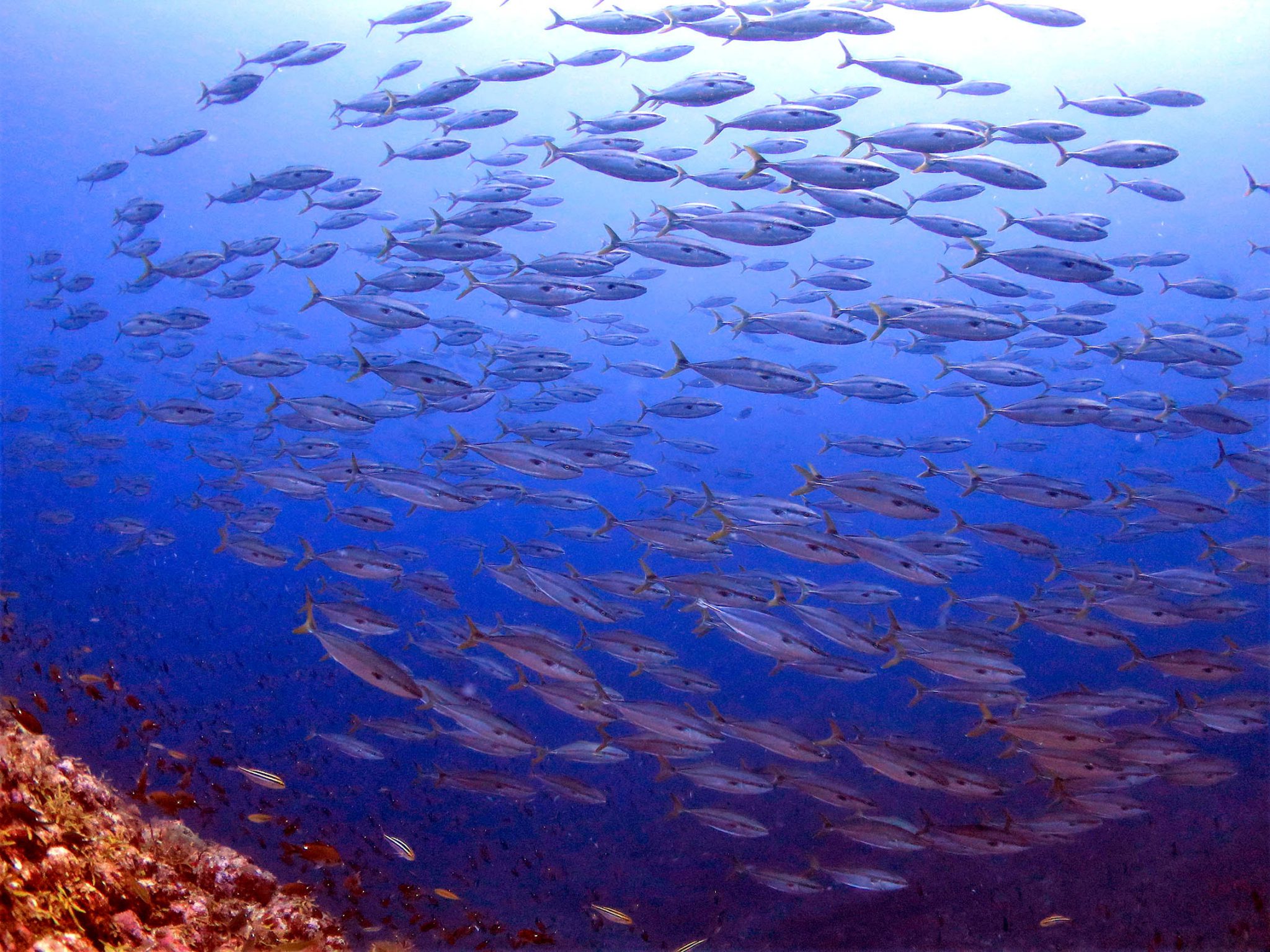
This boat dive site is only a five-minute ride from the harbor and is known for its year-round calm conditions, making it a great choice for beginners or anyone prone to seasickness. In spring, divers can encounter sakura lumpfish and colorful nudibranchs, while summer offers exciting schools of fish. Throughout the year, it’s possible to spot pinecone fish and seahorses, and in early summer, even schools of yellowtail amberjack appear. Rich in macro life yet accessible to all levels, Neko no Hitai is a relaxing and rewarding dive site where you can slow down and explore.
Getting There
- By Car: About 20 minutes from Ohi-Takahama IC on the Maizuru-Wakasa Expressway. From Kyoto, it’s about one-and-a-half hours via the Maizuru-Wakasa Expressway.
- By Train: About 30 minutes by taxi from Higashi-Maizuru Station (JR Maizuru Line & Obama Line), or 20 minutes by taxi from Wakasa-Takahama Station (JR Obama Line).
From giant wrasse encounters on Sado Island to the mysterious deep-sea creatures of Toyama Bay, the Sea of Japan offers diving experiences unlike anywhere else. Each destination in this region has its own seasonal surprises, dramatic landscapes, and welcoming dive community, making it a place worth exploring again and again.
Ready to see “Japan Sea Blue” for yourself? Connect with a local PADI Dive Shop to start planning your underwater adventure today.