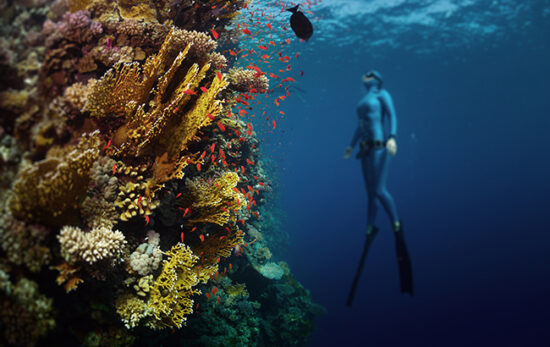
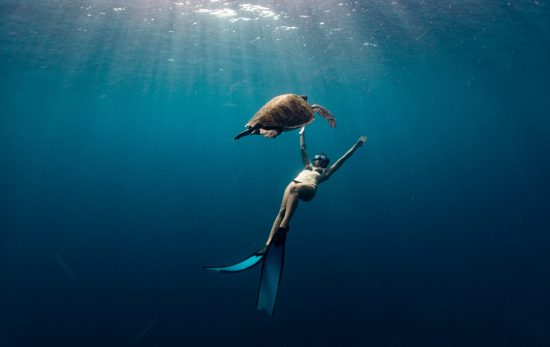
Broadly, any diving that doesn’t involve a breathing apparatus is considered “freediving.” Simply put, that’s all it is. But, it’s also a sport, a recreational activity and a way of life. Whichever way you want to approach this, what I can say with certainty is this: it will change your life. That sounds like every sales pitch ever, doesn’t it? Well, this is based on true stories.
The PADI Freediver course introduces you to the world of apnea, a world where holding your breath and moving a distance equivalent to a three-story building is an achievement. And this is just the beginning. The proverbial tip of the iceberg.
As a PADI Freediver Instructor Trainer, I have had the privilege of witnessing many such journeys. Journeys that don’t need names, but they would resonate with everyone at some level. Let me take you through a few of them.
Physical Capabilities
Freediving can be considered a very democratic sport, without any bias towards age or gender. It not only builds the body in a gentle manner, but it also trains the mind simultaneously. This synergy of body and mind transcends gender, age, shape and size.
Water is a dichotomy of sorts — it is an alien environment for humans, but somehow, we are designed to survive in it. It’s denser than air and needs more effort to move through, yet it’s also low-impact and kind on the body. There is a sense of calm that comes from being immersed, a sense of being shapeless, formless and moving through the medium. Through all this, finning muscles, intercostals, joints, flexibility and the ability to stay calm are all drastically enhanced.
Awareness
The PADI Master Freediver program, with its requirements and longer duration, allows a diver to immerse themselves completely in the sport. Eat-dive-nap-dive-eat-repeat — that’s the life of a Master Freediver.
As the basic techniques are mastered, the focus starts to shift towards taking an internal view. Taking a big breath in and then relaxing is an art. As my Freediving Guru, Sergei Busargin, says, “Relaxation is a skill. Like every skill, it needs practice.” Even a simple movement of the toes can affect the glide and movements in the water — a butterfly effect in real time — building up the awareness of the mind and body.
This becomes quite evident as students progress through the PADI Freediving courses. Their body language starts to change; the movements are more efficient yet not calculated. Disciplines like static apnea help you delve into a full body scan, looking at your own body through closed eyes, trying to isolate any tension in the body and then relaxing it. Externally, it’s just a floating human in the pool. But internally, there’s a monk with laser focus on each part of the anatomy.
Mastery
This is a term that PADI uses as one of the key teaching goals. There is no better motivation than getting better, done right, one step at a time, with small increments in comfort, distance and time. This process should feel seamless. In a few months, numbers that once seemed awe-inspiring will become something more like, “Yeah, that’s comfortable.”
That, more than anything, is the sign you’re looking for. This progress will accelerate and span over multiple fields, ranging from how to train as an athlete, yoga, breath work and meditation. These are just a few of the rabbit holes freediving allows you to sink into.
Community
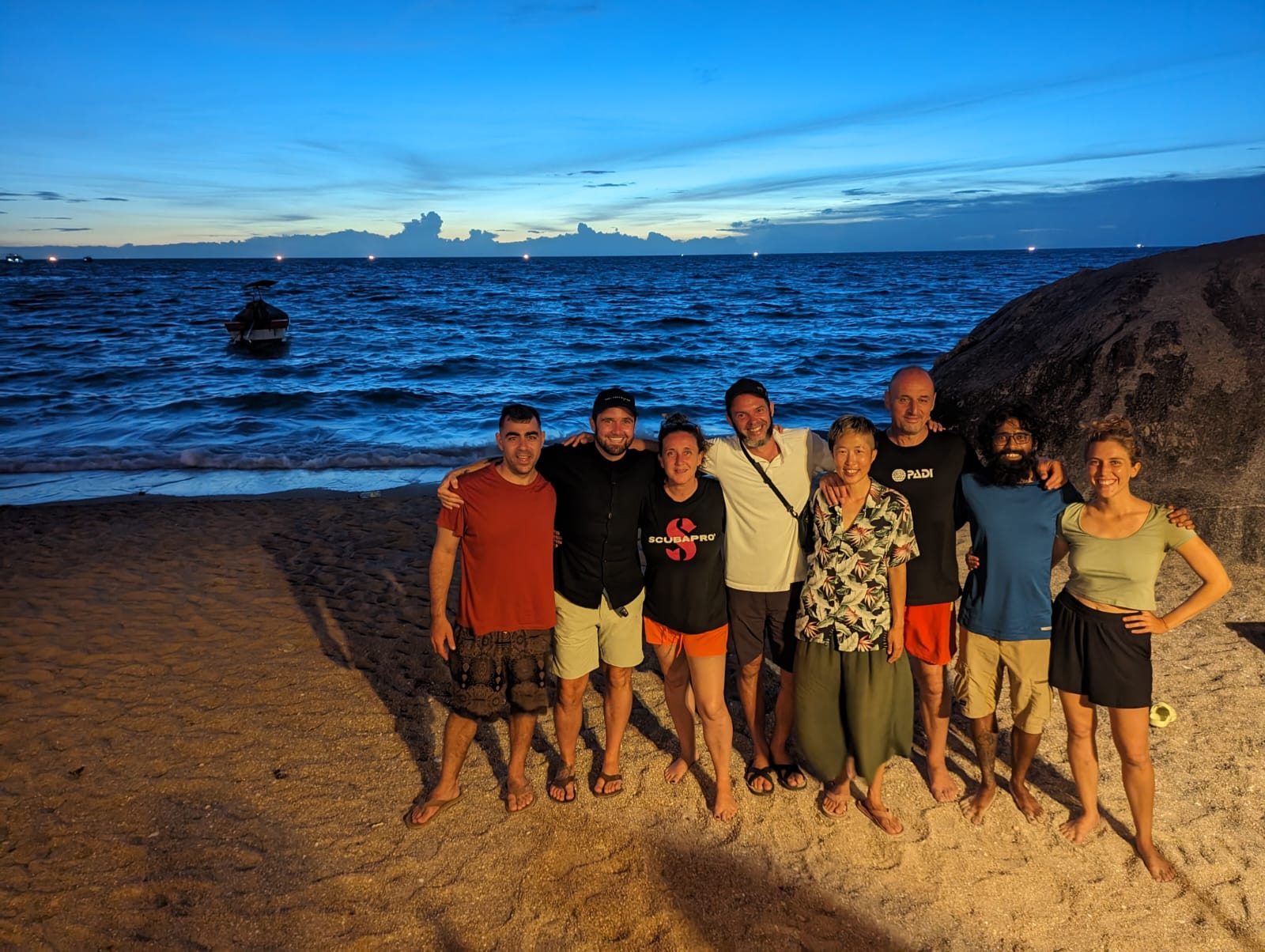
On your PADI Advanced Freediver Course, you dive to a depth of 20 meters (65 feet). That alone makes you part of a unique, yet growing club. In 1953, Edmund Hillary and Tenzing Norgay summited Mt Everest; in the years since, over 7,000 people have summited. In 1953, the depth record was 40 meters (131 feet). The 100-meter (328-foot) mark is almost our version of Everest. How many have been there? Fewer than 150. How many women? 22!
That’s how few of us there are. But unlike an endangered animal, this tribe grows every year. To connect over this experience transcends all boundaries of language and country, and it forms a quiet bond between people. There’s a joy in spotting a pair of long fins at a café and being able to connect over the freediving journey with a stranger. Where you spot freedivers, you’ll also spot some happiness.
Therapy
Armed forces veterans across the globe have picked up a fair share of injuries to add to their ribbon bars. Veterans with back, knee and hip injuries have all embraced freediving as a sport that’s allowed them to give expression to their otherwise “land-injured” bodies. It heals — not just the body, but the mind as well.
There have been many freedivers for whom the ocean has healed. It’s a way of using the mental resilience and discipline of the forces to bring forth calm and not chaos.

Career
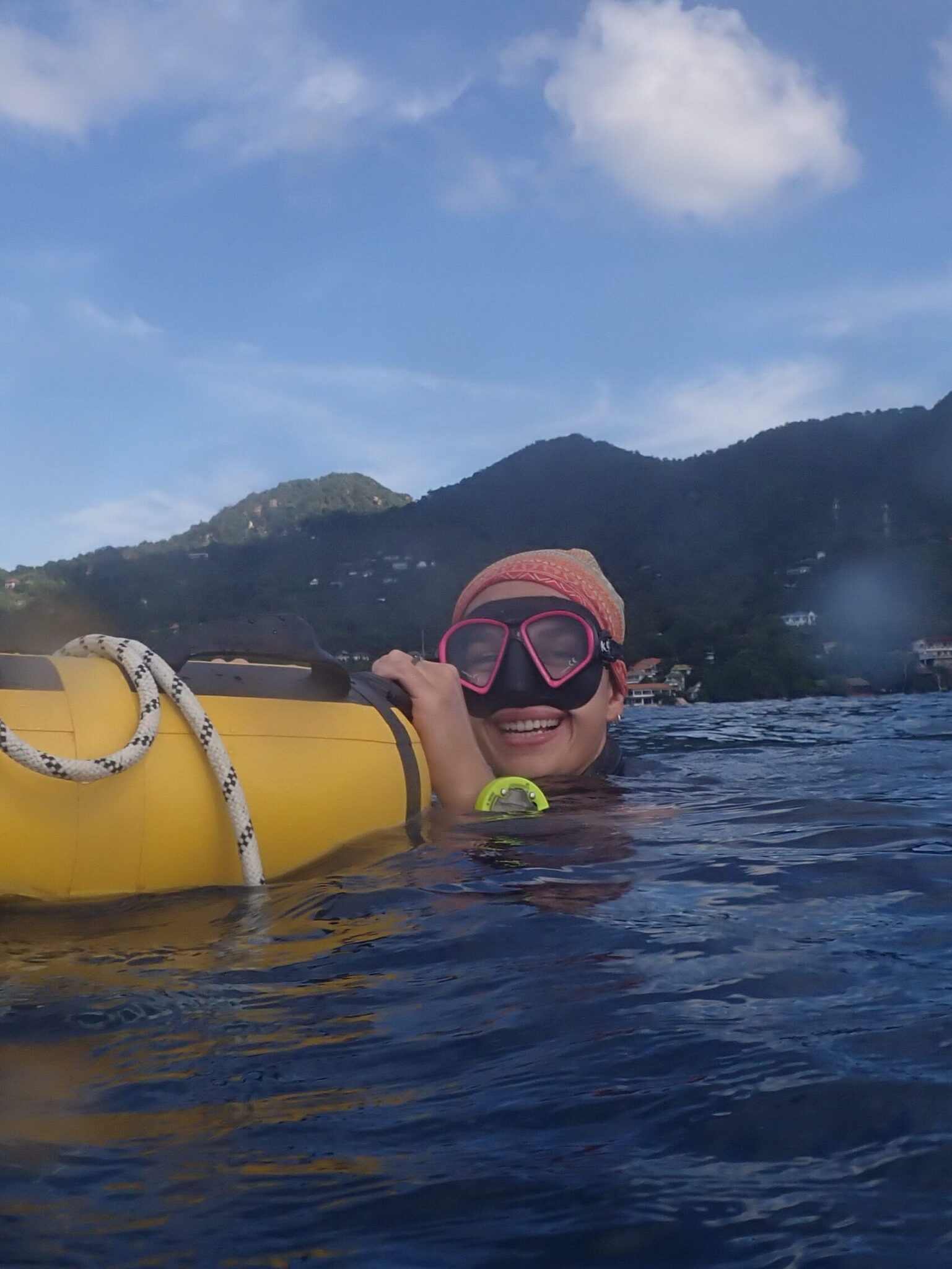
If you love the ocean and freediving, why not be a part of this and spread the joy? Life as an instructor has many perks. One of them is that your office is the ocean, and the buoy is your workspace. There is a joy to watching a student’s face light up when they understand what their body is capable of doing, the sheer joy of rising from the depths. One day, we hope to breach the barriers of our mind and be free in the ocean.
About the Author: Akshay Thatte is a Freediving Instructor Trainer and Athlete. The Indian Army veteran, along with being the first Indian Freediving Instructor Trainer and a national record holder, teaches full-time at Kaizen Freediving, Koh Tao, Thailand. When staying on land, he likes to be surrounded by dogs and cats while birdwatching and moon gazing. Follow his thoughts on his Substack or @akshay_aquanaut on Instagram.