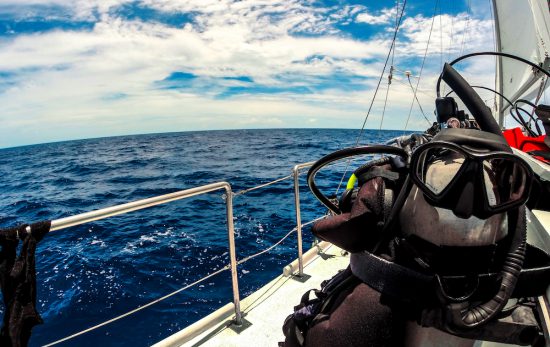
The ocean is vast and supports all life on earth. It goes without saying that we need to understand the ocean and protect it.
One of the most important and effective ways to learn from underwater environments is by diving down and sustaining a human presence below the waves. Stay there long enough and you’ll see the ebbs and flows of marine life, and how an entire ecosystem fluctuates around the clock.
But this is easier said than done.
Because of the pressure involved at depth, and the systems required to sustain human life underwater, our presence at depth can be limited to hours or even minutes per dive.
These challenges are a big reason why most of the ocean remains unexplored.
But what if this were to change. Imagine that you were free to explore the wonder of the ocean for, days, weeks, or even 28+ days?
DEEP, an ocean engineering company on a mission to make humans aquatic, is solving the problem of sustained access to the ocean.

DEEP is Building a New Generation of Subsea Human Habitats
The idea of an underwater human habitat isn’t new.
In fact, there have been at least 65 habitats over six decades – a notable example being Aquarius Reef Base, which was used in NASA’s NEEMO (NASA Extreme Environment Mission Operations) missions to prepare astronauts for space and conduct scientific research.
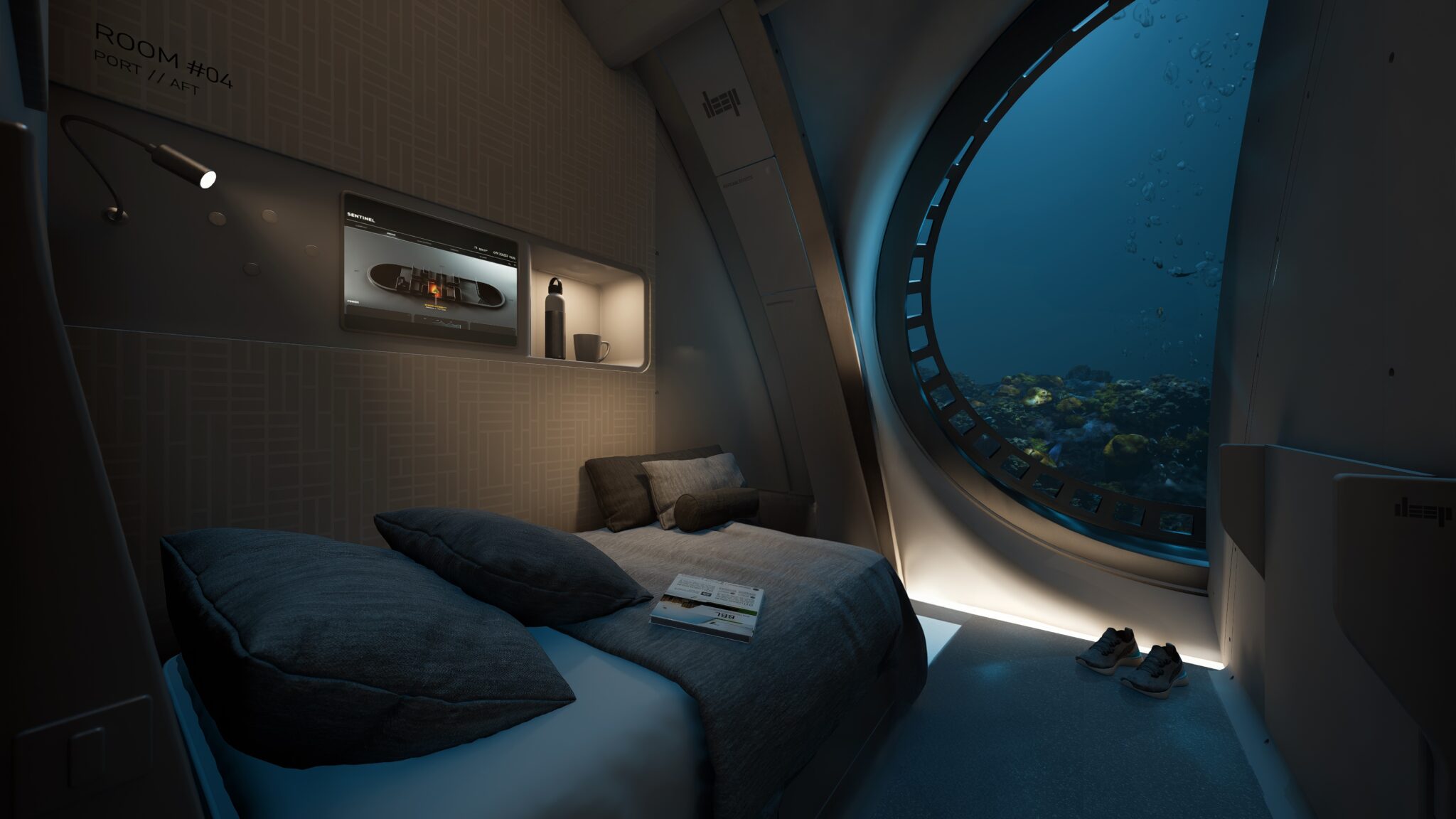
But no subsea human habitat has ever existed quite like DEEP’s Sentinel system. It will use groundbreaking design and harness new technologies to sustain human life in the ocean for 28 days or longer, safely and in comfort.
A Platform for Underwater Research
DEEP’s Sentinel system will improve human access to the ocean, allowing people to live and work underwater for longer periods and unlock new discoveries through more productive research.
Sentinel is designed to be customizable and flexible, using modular components that can be configured in a variety of ways. Each Sentinel has space for six crew and is designed to be a comfortable place to live and work at up to 200 meters (656 feet) deep, anywhere on the continental shelf.
The habitat can operate at ambient pressure (matching the surrounding water) or one atmosphere (the average pressure at sea level). Ambient operation allows qualified divers to use Sentinel’s moon pool for diving excursions outside of the habitat, making it suitable for long-term research missions. One-atmosphere operation means academics and other professionals could also make short visits to a Sentinel via submarine transfer.
DEEP Habitats Will Increase the Productiveness of Ocean Research
Until now, underwater human habitats have been cramped, humid environments, making them relatively uncomfortable to work from and limited in capability.
The scale and flexibility of DEEP’s habitats mean there is not only space for living, but for a laboratory in the habitat itself.
Being able to conduct scientific research at depth is unique and potentially game changing.
With the Sentinel’s size and expanded capabilities, a wide range of research equipment can be operated at depth. This wouldn’t have been feasible using previous generations of subsea habitats, because of the size and power requirements.
This all makes for a productive environment for research, where humans can stay submerged and conduct their research without repeated resurfacing.
Picture it like this. Some of the crew use the moon pool to exit the habitat and complete a dive to collect samples. Back at the habitat, with the samples returned, work immediately begins processing what’s been collected. Perhaps that’s sequencing RNA or looking at cells under a microscope.
How it works today when a researcher collects samples (from a habitat or otherwise), is they must bring those samples to the surface for analysis. Not only does that take time, but it also means the samples must decompress, which could alter their molecular, chemical, and cellular makeup.

Find Out More About Undersea Living
Look out for our next blog in collaboration with DEEP, where we’ll introduce some of the key members of the team and how they are pioneering undersea living. You can also follow @deepengineered or visit deep.