One of the greatest thrills of scuba diving is the chance to encounter all of the amazing underwater creatures under the sun. However, once that sun goes down, the adventure is only just beginning because the ocean doesn’t sleep. In fact, the crustaceans, eels and octopuses that you see during the daytime become more active at night. This is when they hunt for prey under the cover of darkness.
Furthermore, some marine animals are nocturnal, meaning they only venture out at night. This includes creatures dwelling in “blackwater” — that is, dark, open ocean. These animals are primarily in a larval, or infant form. They spend their daylight hours in depths so deep that sunlight doesn’t penetrate. Then, at night, they begin a vertical migration toward the surface, feeding as they rise up.
So grab your dive light and head into the water after sunset, because these night marine animals are worth staying up for.
1. Atlantic Mantis Shrimp
While there are over 400 species of mantis shrimp, only a select few are nocturnal. One of them is the Atlantic mantis shrimp, which hides in coastal mud along the American eastern seaboard by day. Like its diurnal cousins, it isn’t technically a shrimp but is classified as a stomatopod. Stomatopods are crustaceans with a tail and shrimp-like body, as well as torsos, heads and protruding eyes reminiscent of a praying mantis.
In the case of the Atlantic mantis shrimp, these remarkable eyes are utilized at night when they’re on the hunt for small fish, worms, mollusks and other small crustaceans. They kill their prey by spearing them with barbed claws at lightning-fast speed — faster than the blink of an eye.
2. Larval Lizardfish
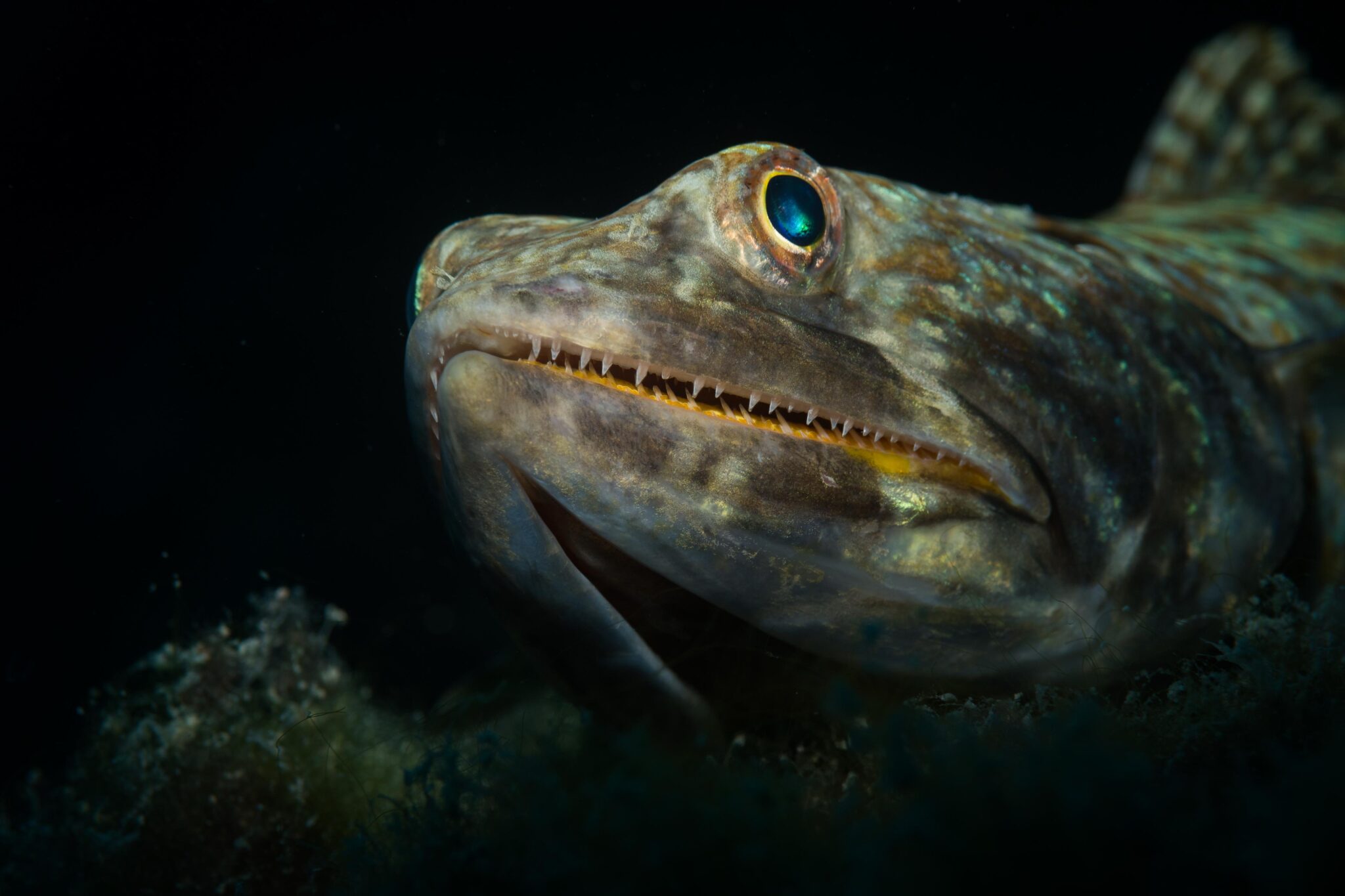
The adult deep-sea lizardfish gets its name from its resemblance to its reptilian namesake, boasting big eyes, sharp teeth and extended pectoral fins. As an adult, it grows to around 2 feet (60 cm) long. They dwell on the ocean floor at depths of 600 feet (180 meters) or more.
However, in its smaller larval form, which appears more like a fish than a lizard, it’s one of the sea creatures that vertically migrates up to shallower, recreational scuba-safe depths at night, when it can feed on the abundant zooplankton while staying clear of its predators.
3. Sea Butterflies
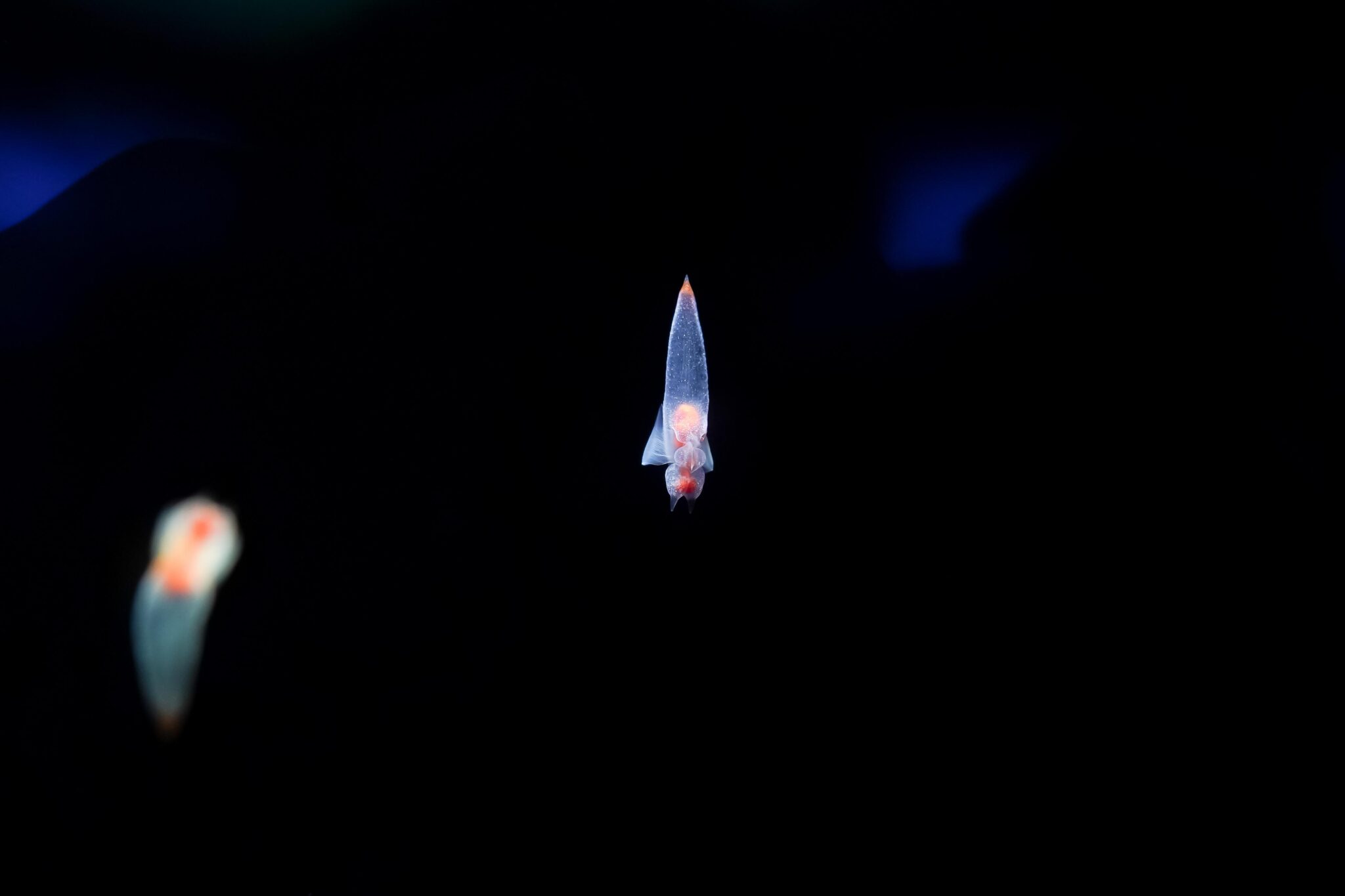
Sea butterflies are not related to the butterfly family at all. They are actually sea snails. These tiny creatures are both translucent and delicate, using a modified foot that resembles butterfly wings to propel themselves through the water. Found in deep, cold waters in polar regions and off the coasts of the US, Canada and Japan, these deepwater snails also exhibit the behavior of coming up to the surface to feed at night, away from predators.
4. Tube Anemone
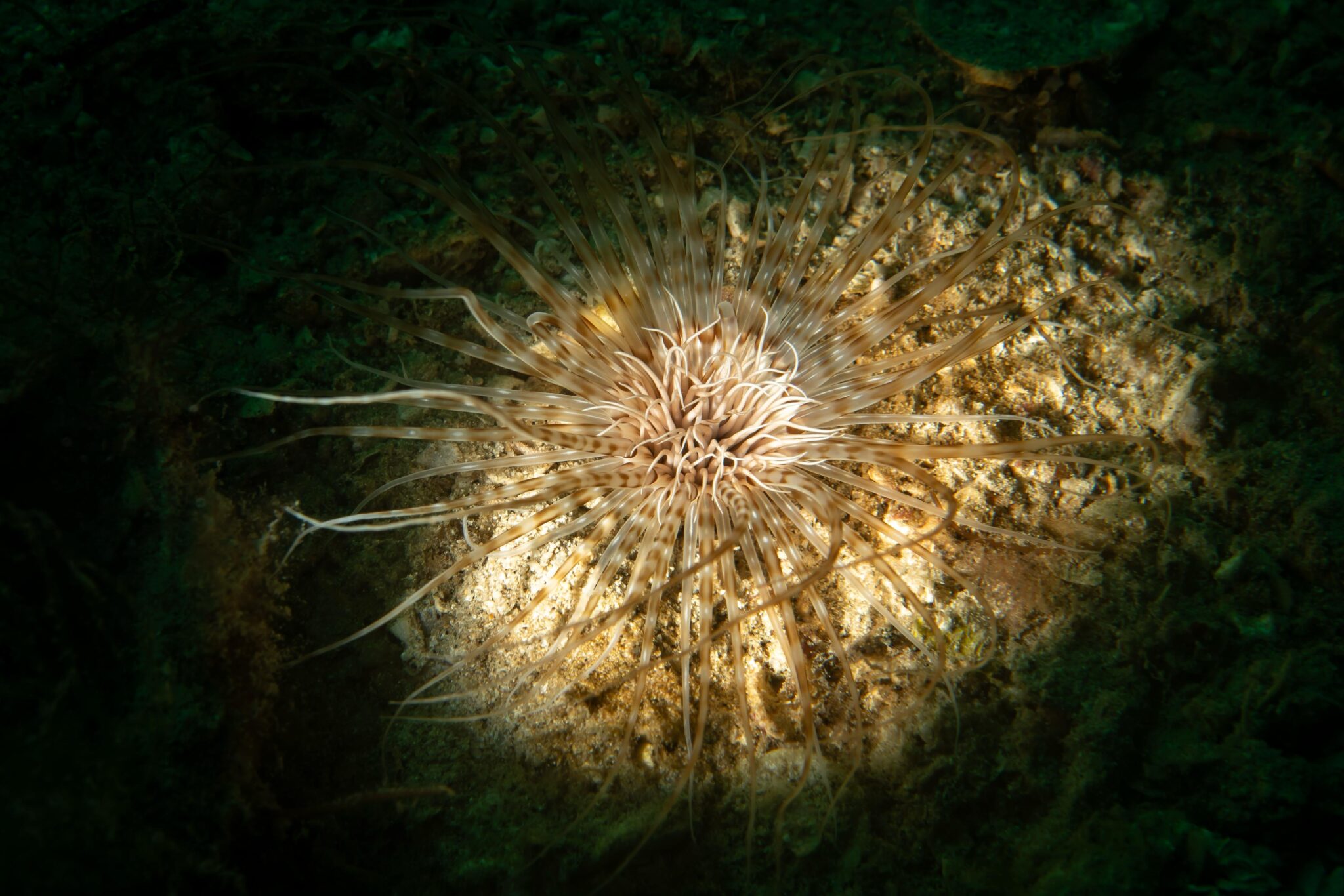
Many sea anemones, named after terrestrial flowers, hide from view during the day. This is the case with the tube anemone, which hides in a semi-rigid tube buried about 2 feet (60 cm) into the sand when the sun is out. After nightfall, it reveals and extends its alluring tentacles to attract and capture prey like zooplankton and small fish. Some species possess tentacles that use absorbed ultraviolet light to glow in the dark.
5. Larval Cusk-Eels
The “eel” in “cusk-eel” is a misnomer; it’s not technically a true eel but a bony fish. These creatures are slender like eels, but not as serpentine. They possess ornate fin rays that give them a delicate, almost decorative appearance. Adults are deep-water bottom dwellers that are rarely encountered by divers — except for hearing their distinct, rapid clicking mating call. However, the larval form, which is almost indistinguishable from its adult incarnation, is part of the vertical migration, feeding near the surface each night.
6. Sharpear Enope Squid
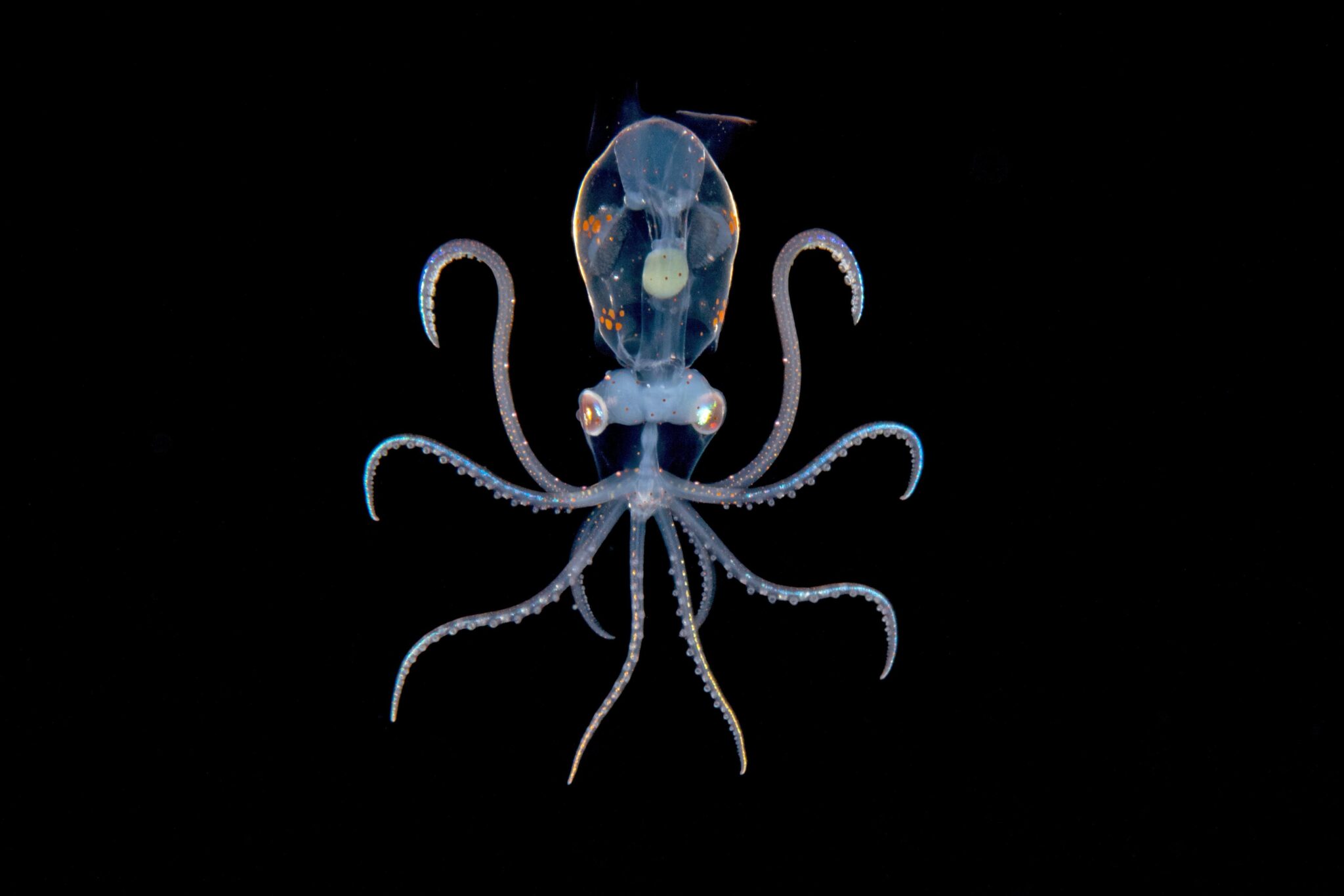
Another deep sea creature that does a nightly vertical migration is the sharpear enope squid. This eye-catching creaure spends most of its days in tropical and sub-tropical waters at depths between 200–1,000 feet (60–300 meters). This translucent mollusk grows to about 9 inches (23 cm) and sports a covering of unique photophores. These bioluminescent spots glow on their mantle when it feeds near the surface.
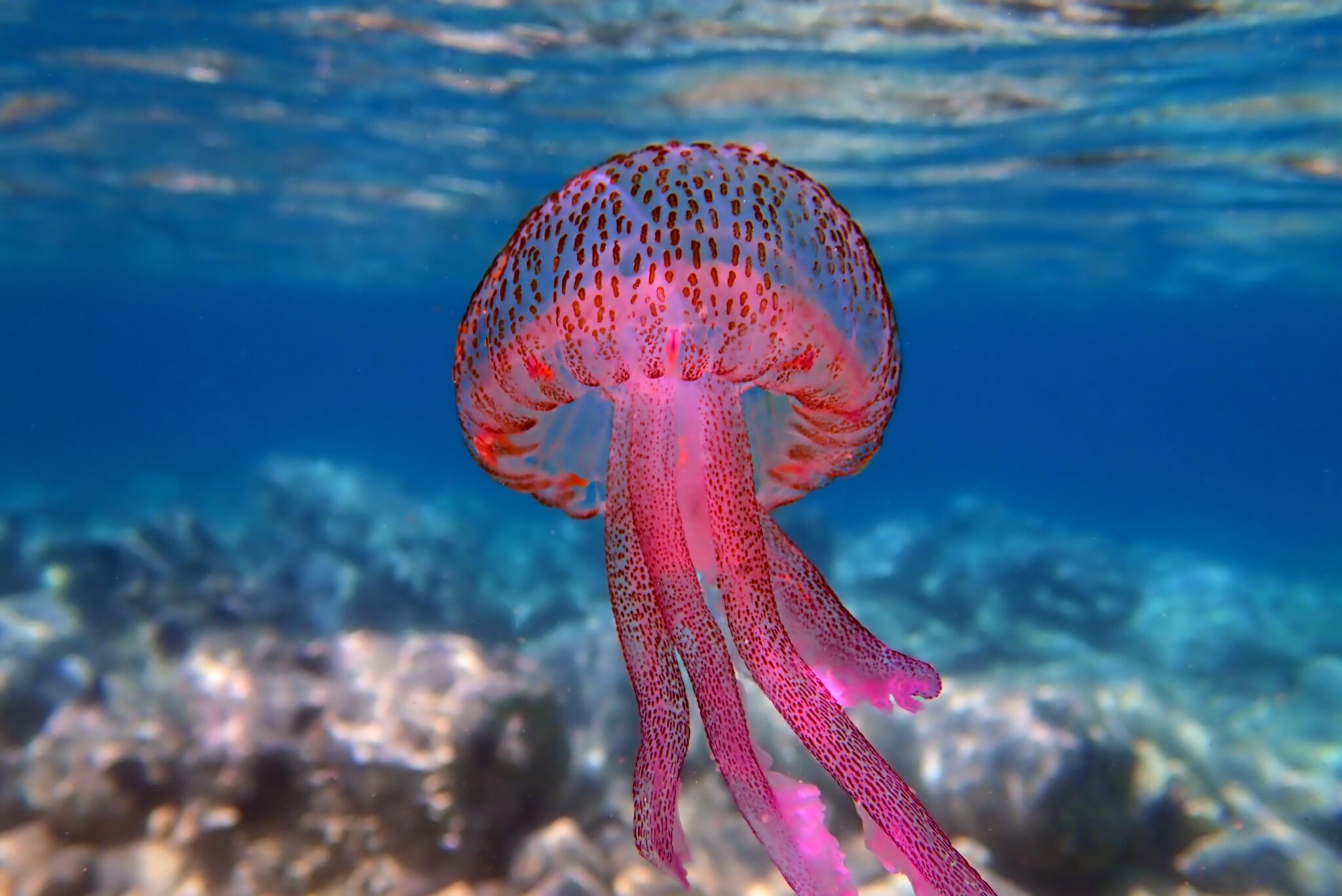
7. The Glowing Mauve Stinger
The mauve stinger is a mostly nocturnal jellyfish that sometimes appears in the daytime. It feeds in shallow waters after migrating up from the depths after dark. It also possesses bioluminescence which is so strong that it visibly glows — in fact, in German it’s known as the Leuchtqualle, which translates to “glowing jellyfish.” In Australia, people know it as the “purple stinger” as it’s often seen with mauve coloration, or even as the “purple people-eater” because of its very painful sting. If you encounter one, it’s best to admire it from a safe distance.
Dive in After Nightfall
Whether they are on the hunt or feeding after a vertical migration, the only way to see and experience the nocturnal activities of marine life is by scuba diving at night. Master the skills to dive confidently after dark with the PADI Night Diver Specialty course and discover a whole side of the ocean few divers ever see.