
Without the ability to talk underwater, scuba divers are pretty adept at having entire conversations using just a few hand signals – whether that’s giving directions, teaching dive skills or asking for some help with equipment. But, without a doubt, marine life hand signals are the most fun to learn.
The most common hand signals typically mimic a creature’s appearance, movement or namesake (such as the barracuda’s stripes, the moray’s mouth or the “halo” for angelfish). What’s more, many scuba signals are shared with those used topside in sign languages, such as ASL.
So, what is the universal shark signal? How do you tell your buddy there’s a sea lion behind them? Here are our favorite marine life hand signals that every diver should learn, and a few tips to make sure they’re easy to understand.
Marine Life Hand Signals Guide
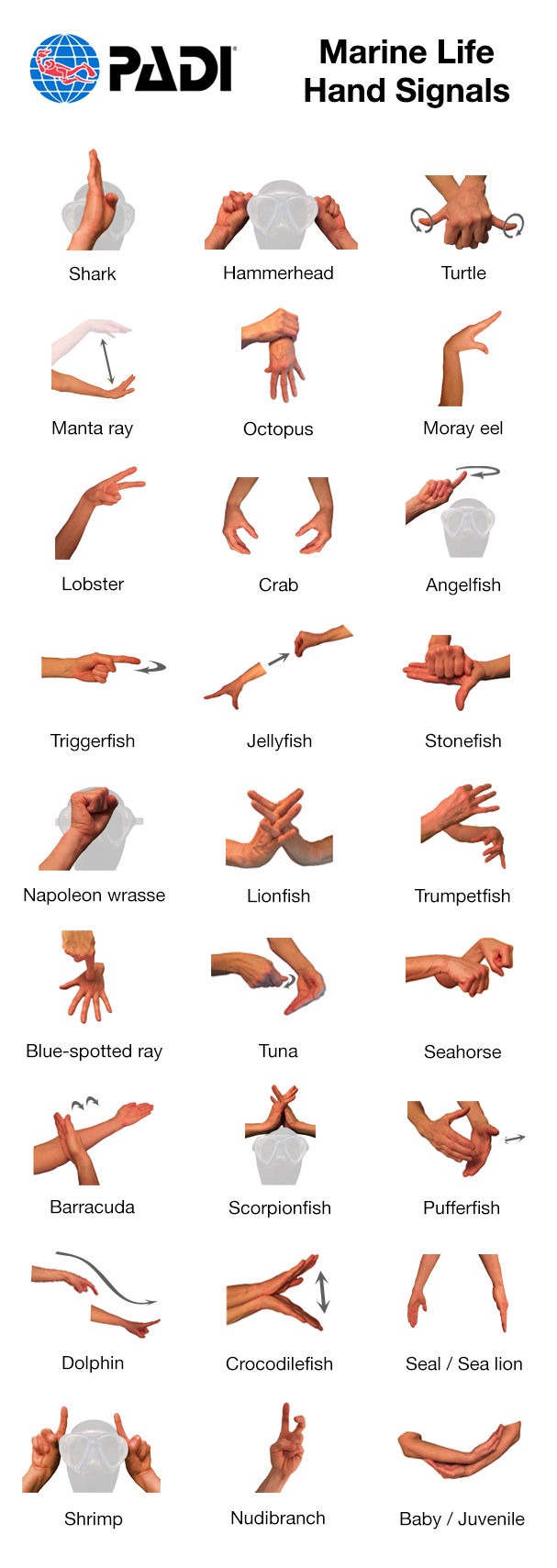
Mammals, Turtles, Sharks and Rays
- Shark: Hold the thumb-side of your hand against your forehead.
- Hammerhead: Place your fists on either side of your head.
- Manta ray: Flap both of your arms like you’re flying.
- Blue-spotted ray: Use your finger to tap random points on the back of your other hand.
- Dolphin: Ripple and move your index finger to mimic the way a dolphin swims.
- Seal / Sea Lion: Make a clapping motion with both of your arms extended.
- Turtle: Place one hand on top of the other and rotate your thumbs.
Crustaceans and Critters
- Octopus: Wiggle your downturned fingers like they’re tentacles.
- Seahorse: Move both hands up and down like you’re riding a hobby horse.
- Moray eel: Tap the fingers and thumb of one hand together.
- Crab: The same as for moray eel, but do it with both hands turned sideways.
- Lobster: Do a scissor-like motion with your index and middle fingers, on both hands.
- Shrimp: Point your index fingers upwards on either side of your forehead.
- Nudibranch: Create a “v” shape with your fingers and wiggle the ends.
- Jellyfish: Move your hand while opening and closing your fingers like tentacles.
Other Fish
- Stonefish: Make a fist and place it on the palm of your other hand.
- Napoleon wrasse: Hold your fist against your forehead.
- Lionfish: Interlock your fingers and wiggle them.
- Scorpionfish: Like lionfish, but put your hands on top of your head.
- Trumpetfish: Hold and move your fingers like you’re playing the trumpet.
- Tuna: Create a turning motion with one hand against the other, as if you’re opening a can.
- Barracuda: With one hand, do a chopping motion along your other arm.
- Angelfish: Draw a hoop (halo) shape above your head with your finger.
- Triggerfish: Point and bend your index finger, similar to pulling a trigger.
- Pufferfish: Clasp your hands and move them toward and away from each other.
- Crocodilefish: Put your palms together, then open and close them at the fingertips.
Finally…
- Juvenile (Baby): Add a cradling motion before the regular hand signal to indicate a juvenile.
Of course, there are many more marine life hand signals than this list alone (and they can also differ from place to place and from person to person). Share your favorites with us by tagging #PADI on social media, or test your marine life hand signal skills with a few demos in our TikTok video!

Why Learn Scuba Hand Signals for Marine Life?
If your buddy is grinning and pointing frantically into the blue, you probably already know there’s a bucket-list marine life encounter on the cards. However, knowing and recognizing the correct hand signals for different underwater creatures can still be pretty helpful during your dives. After all, a camouflaged stonefish or tiny nudibranch is much easier to spot once you know what creature your buddy is pointing out – and new divers will especially appreciate being taught which marine species they’re looking at, as well as what hazards to steer clear of!
In addition to helping scuba divers communicate underwater, using hand signals for marine life while on the surface can also be a great way to teach kids about the ocean!

How To Do Marine Life Hand Signals
Clear underwater communication is one of the easiest ways to be a great dive buddy – after all, no one wants to miss the sighting of a lifetime. Whether it’s a giant whale shark or an elusive seahorse, these tips will keep the guesswork out of your scuba diving hand signals.
1. Review Them Before Diving
As well as your basic diver hand signals, don’t forget to recap the scuba signals for sea creatures you’re hoping to see. It’s a good idea to make this part of your predive checks, particularly if you’re diving with a new buddy or exploring different destinations.
2. Make Eye Contact
It may sound obvious, but make sure your buddy is looking at you, and try to signal the animal’s name before pointing toward it. That way, they’ll know exactly what they are searching for.
3. Give Clear Marine Life Signals
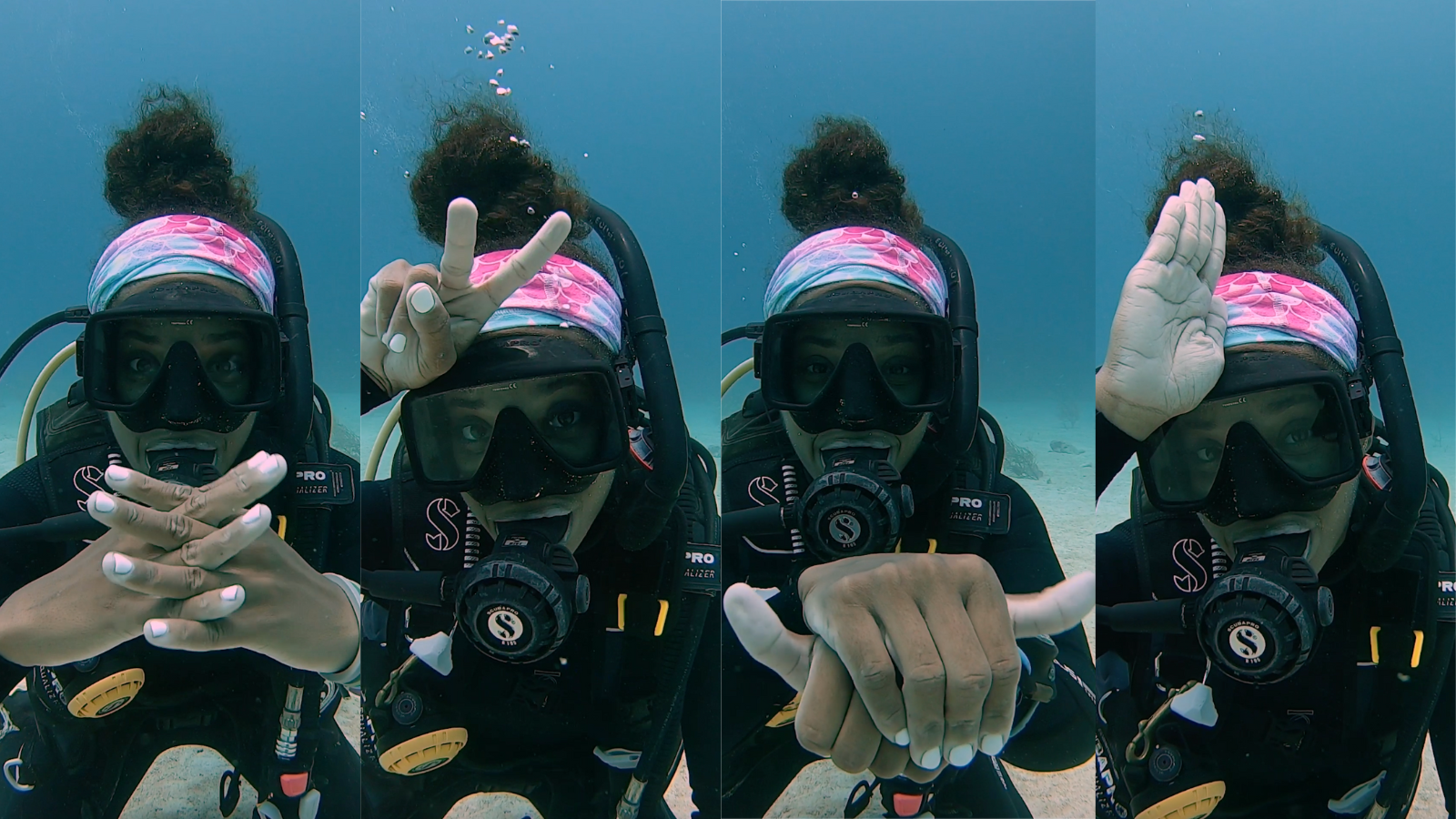
It’s easy to get excited when a manta ray glides into view, but slow down, hold your hands away from your body and make big, deliberate movements so there’s no confusion.
4. Wait for an OK in Return
Before moving on, check if your buddy has seen what you’re showing them. Part of the joy of scuba diving is sharing experiences – so you’ll want to make sure they get to admire that rare hairy frogfish, too!
5. Keep Your Distance
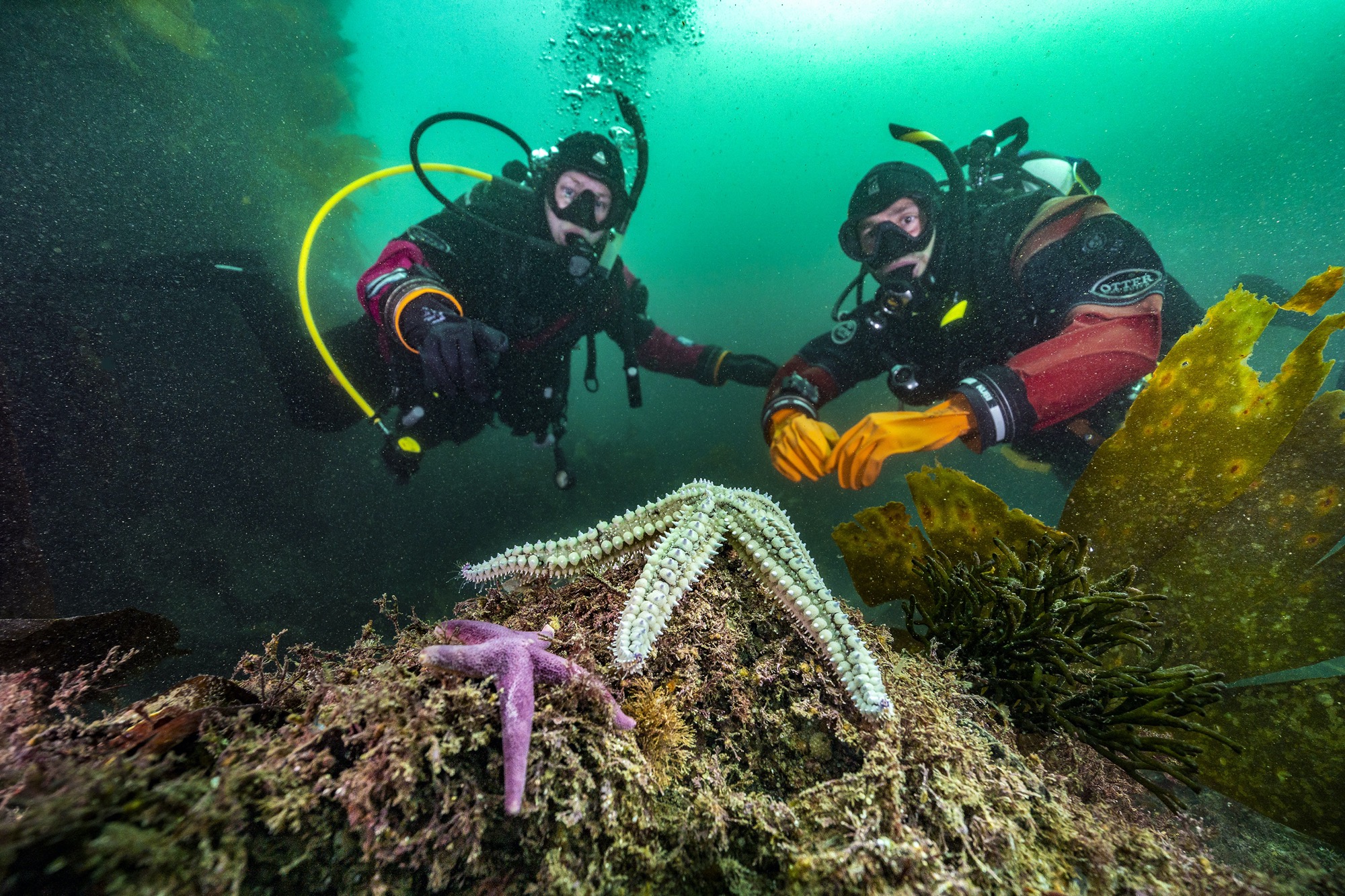
Even if you’re getting blank expressions from your buddy, never help them spot something by touching or getting too close to marine life. Repeating your octopus hand sign is far better than disturbing our eight-legged friends.
Practice Your Marine Life Hand Signals
While marine life hand signals can be useful (and fun) during any dive, they really come in handy for divers earning PADI Specialty certifications such as PADI Fish Identification and PADI Underwater Naturalist. Visit PADI eLearning® or contact your local PADI Dive Shop to enroll in these courses and put your marine life hand signal knowledge to use!