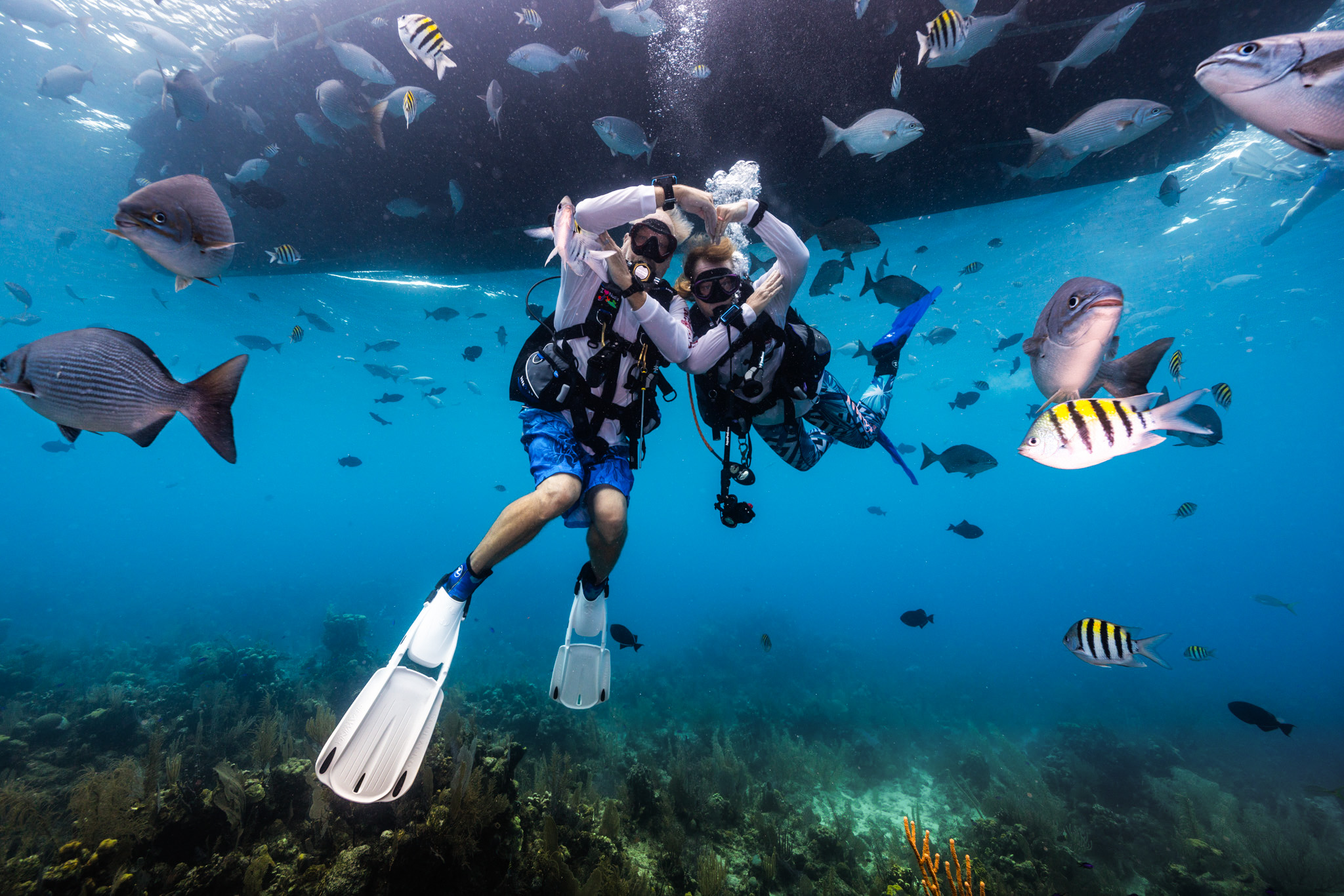
The marine life in Chile is like nowhere else on Earth, quite literally. In the Juan Fernández Archipelago alone, 62% of the species are unique to the area. Just last year, 100 new marine creatures were discovered by a deep water expedition.
Chile is also a leader in marine conservation. It has the largest marine park in the Americas and is a place where animals can thrive. Here are a few examples of the marine life you can see in Chile.
Chungungo Sea Otter
Meet the chungungo, Chile’s smallest (and arguably cutest) marine mammal. Weighing just 3-5 kg/6.6-11 lbs), it grows to a maximum of about 90 cm/35 inches long.
The chungungo was recently named the Chilean wildlife ambassador for 2025. According to chile.travel, the best places to see the chungungo include:
- Pan de Azúcar National Park in the Atacama Region
- Chiloé Island near Cucao or Quellón.
- Patagonia fjords, from Aysén to Magallanes
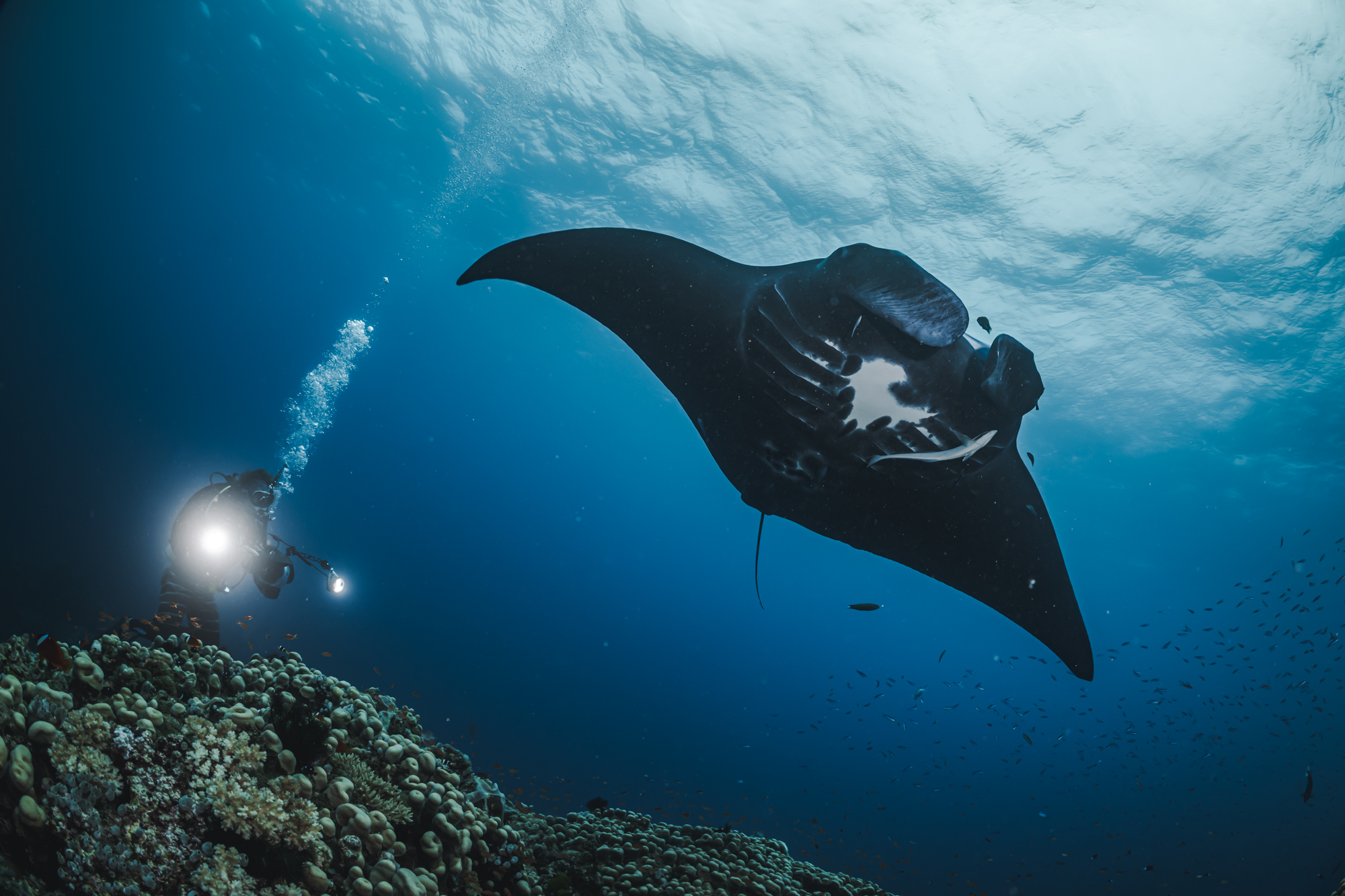
Chilean Devil Ray
The endemic Chilean Devil Ray has a wingspan of up to 2.5 meters/8.2 feet and can weigh up to 350 kg/771 lbs. They are somewhat rare, but truly awe-inspiring.
Whales and Dolphins
Chile’s lengthy coastline is home to nearly 40% of the world’s whale and dolphin species. It isn’t possible to explicitly book an in-water encounter with a dolphin or whale, but it’s possible to see one of these magnificent animals on the way to or from a dive site.
- Sperm whales and pilot whales can be seen year-round.
- Orcas can also be seen year-round, particularly in the Strait of Magellan and around Chiloé.
- Humpback whales pass by in March and April and again in September.
- Southern right whales can be seen from June to December.
- Blue whales can be spotted in September and April. Chiloé is a good place to see them.
Resident dolphin populations include: Commerson’s (pictured above), Peale’s, bottlenose and dusky dolphins. The endemic Chilean dolphin is one of the smallest dolphins in the world.
Seals and Sea Lions
Chile is home to enormous Southern Elephant Seals and massive South American Sea Lions. Elephant seals are the largest seals in the world and can grow to more than 6 meters/20 feet long and weigh more than 3600 kg/4 tons. South American Sea Lions can reach 3 meters/9.8 feet long and weigh as much as 350 kg/771 lbs.
Males from both species can be aggressive. It’s unlikely you’ll see one underwater. If you do, don’t look them in the eye.
South American Fur Seals are much more relaxed. During the day, you’ll likely see them sleeping on a rock. At night, they hunt squid, fish and crustaceans.
Penguins
There are 18 different types of penguins roaming the Earth, and Chile is home to nine of them — including the Emperor, Humboldt, King and Magellanic. Penguins are generally shy. So, while you have a good chance of seeing them from a boat, it’s unusual for penguins to approach divers underwater.
If you have your heart set on seeing a penguin underwater, try diving in Punta de Choros. The Pingüino de Humboldt National Reserve is nearby and, although diving with penguins isn’t guaranteed, the birds are slightly more comfortable around humans.
Fish and Other Marine Life
Other marine life you can see in Chile include:
- Chilean Sandperch
- Crustaceans
- Damselfish
- Groupers
- Giant jellyfish (Dec-Feb)
- Marblefish
- Nudibranchs
- Rockfish
- Sculpin
- Sheepshead
Easter Island is home to 142 endemic marine species, including the Easter Island butterflyfish and the Nazca bigeye. At both Easter Island and the Juan Fernández Archipelago, you can see green sea turtles and sharks.
What about Chilean Sea Bass?
Even non-divers have likely heard of the Chilean Sea Bass. This controversial menu item lives in deep water, so you’re unlikely to see one while diving.
Explore Chile’s Underwater World
If you want to see amazing marine life in its natural habitat, connect with a PADI Dive Shop in Chile. These local experts can help you plan a fun and memorable dive adventure.