Beneath the waves of the Spanish Mediterranean Sea lies something remarkable: the Natural Art Reef (NAR). This family-led project is a collection of more than 400 natural reef structures that bring the regenerative power of the ocean to nature, art, science, and even tourism.
We spoke with co-founder, Max Rota, to learn more about NAR’s mission, methods, and magic, as well as how we can all work together to protect what we love.

Saving the Ocean Across Generations
The Rota family’s connection with the ocean and its vital coral reefs spans three generations.
“Diving has always been part of our story. My grandfather was already diving in the Mediterranean back when very few people did,” says Max. He also credits his father, Miquel, with teaching him that science and passion can go together. “That’s kind of where it all started. He created NAR to fulfill his dream of making the Mediterranean a more alive place.
“It all started with the cultivation of live rock for aquariums. My father was among the first in Spain to do this, and he realized it could be scaled up — not as decoration, but as a living aquarium for the sea itself.”
Restoring Our Blue Planet, One Natural Reef at a Time
Today, Natural Art Reef is a growing non-profit on a mission to restore marine ecosystems, using natural reef designs that boost biodiversity while acting as living labs for research and ocean conservation.
So far, the team has installed three reef parks across different depths and habitats. Each one provides unique insights about how ecosystems respond and recover. These natural reef structures also serve many purposes, including:
- Eco-friendly moorings
- Restoration parks
- Promoting new protected areas
- Hosting sensors for real-time ocean data
An Artificial Reef That Feels Like Home
When most people think of artificial reef structures, they imagine tropical coral nurseries or shipwrecks. However, things are different in the Mediterranean.
“Traditionally, artificial reefs here have been used as fishing deterrents, fish attractors, or breakwaters — often with simple, unnatural shapes and little ecological thinking behind them,” Max explains.
Instead, with a mission grounded in sustainability and a philosophy that nature knows best, NAR’s natural reef structures mimic real underwater habitats. The team’s diving roots allow them to see how marine life behaves, moves, and interacts so they can design reef types tailored to ecological goals.
The Natural Approach to Reef Restoration
“It’s not about dropping structures in the water. It’s about designing space in a way that feels natural, useful, and familiar to marine life,” says Max. “We decided to create reef structures that were not just artificial, but natural in every sense: shape, texture, and material.”
When nature recognizes something as habitat, life comes fast. That’s the magic of it.”
Max Rota
That’s why they became the first to use marine calcium carbonate, the same material that forms coral skeletons and seashells.
“It’s not just environmentally friendly; it’s ecologically meaningful. We avoid artificial shapes and instead use organic, irregular forms that resemble real rocky reefs — promoting water flow, shelter availability, and colonization,” Max continues. “The result is a structure that becomes part of the ecosystem.”
El Biotop: The First Natural Reef of Its Kind
Natural Art Reef’s largest and most iconic project, El Biotop, lies 34m (112 feet) deep off the Catalonian coast, about an hour south of Barcelona.
Max recalls how the inspiration came during a family trip to the Red Sea: “We dived around an incredible submerged pinnacle. We were amazed at how life thrived in such a naturally vertical, complex structure.”
El Biotop was a turning point for the Rota family in understanding and implementing blue infrastructure. “We could say that it is the first of its type in the world,” says Max. “[It’s] a mountain made with natural rocks rising as tall as a four-story building and with an area the size of a soccer field.”
A Game Changer for Marine Conservation
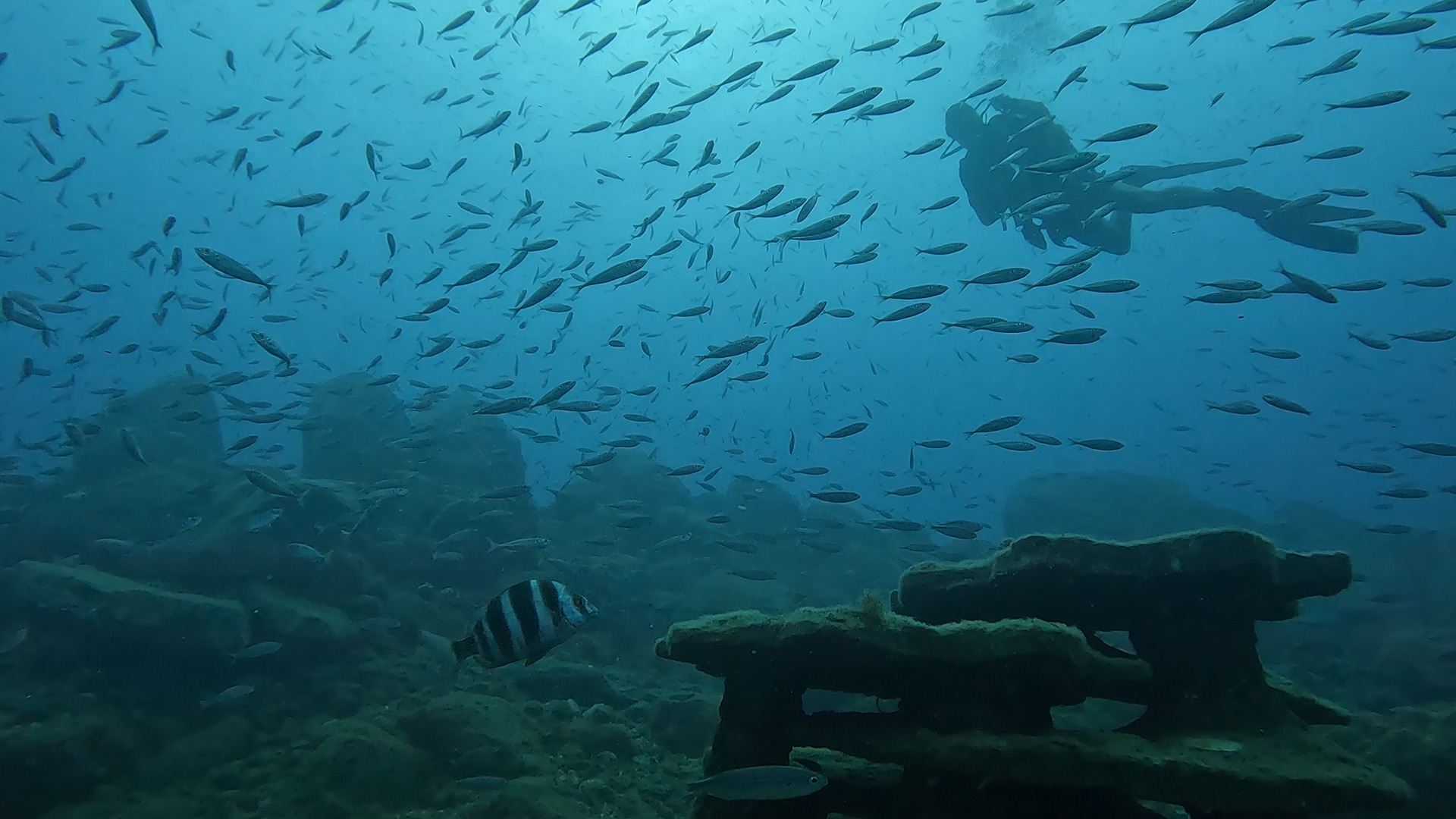
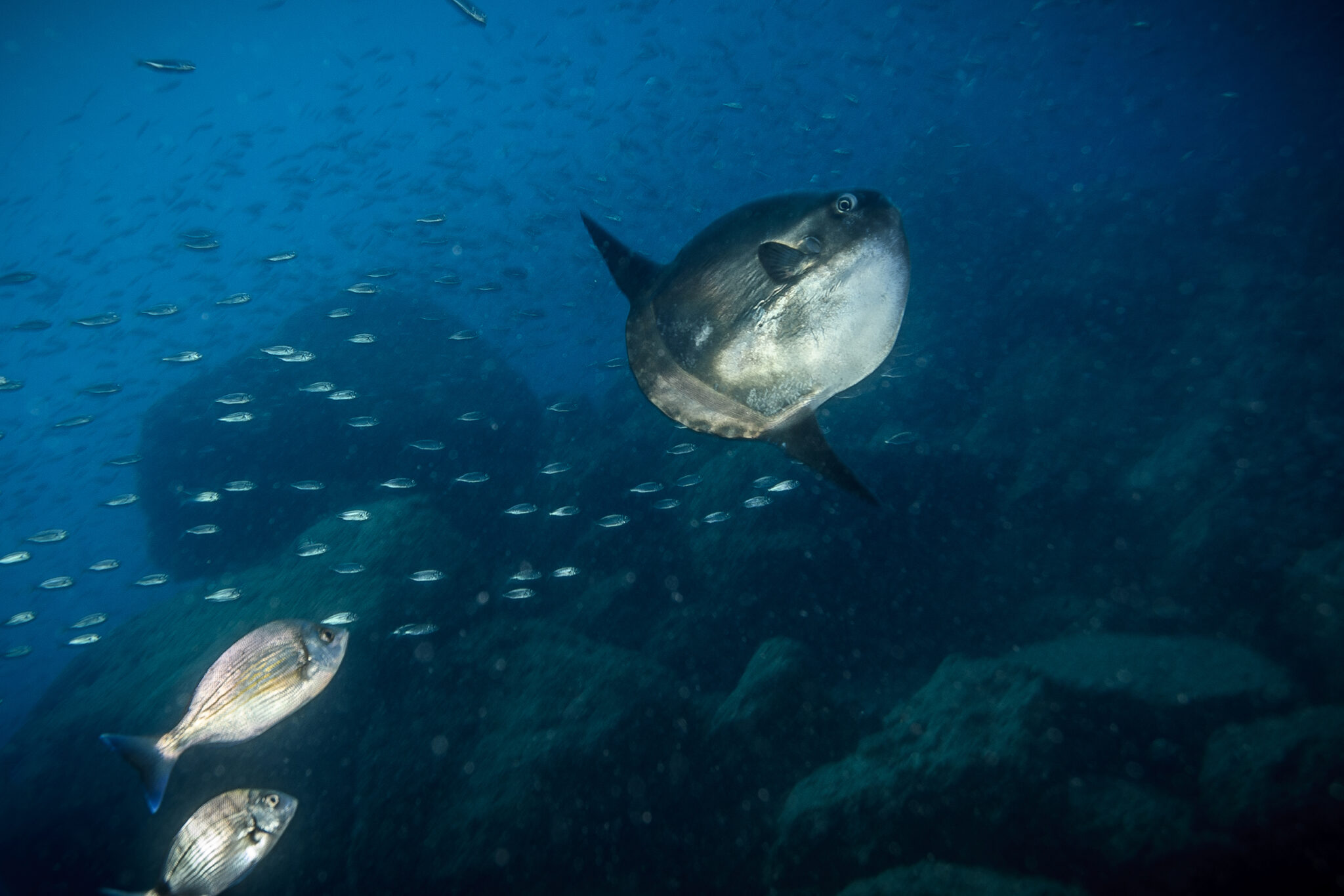
Since its creation, El Biotop has become a sanctuary for over 300 Mediterranean marine species, many of them protected or endangered. It’s a nursery, a feeding ground, and even a cleaning station. Mola mola regularly visit what is now their ‘natural spa’.
“The most amazing part? Thousands of corals have started to recruit naturally, without transplantation or artificial methods,” Max reveals. “That’s the power of letting nature take the lead when the conditions are right.”
Using low-impact materials and installation methods, and working with other scientists, Natural Art Reef makes sure these reef structures will continue to benefit local biodiversity and ecosystems over time.
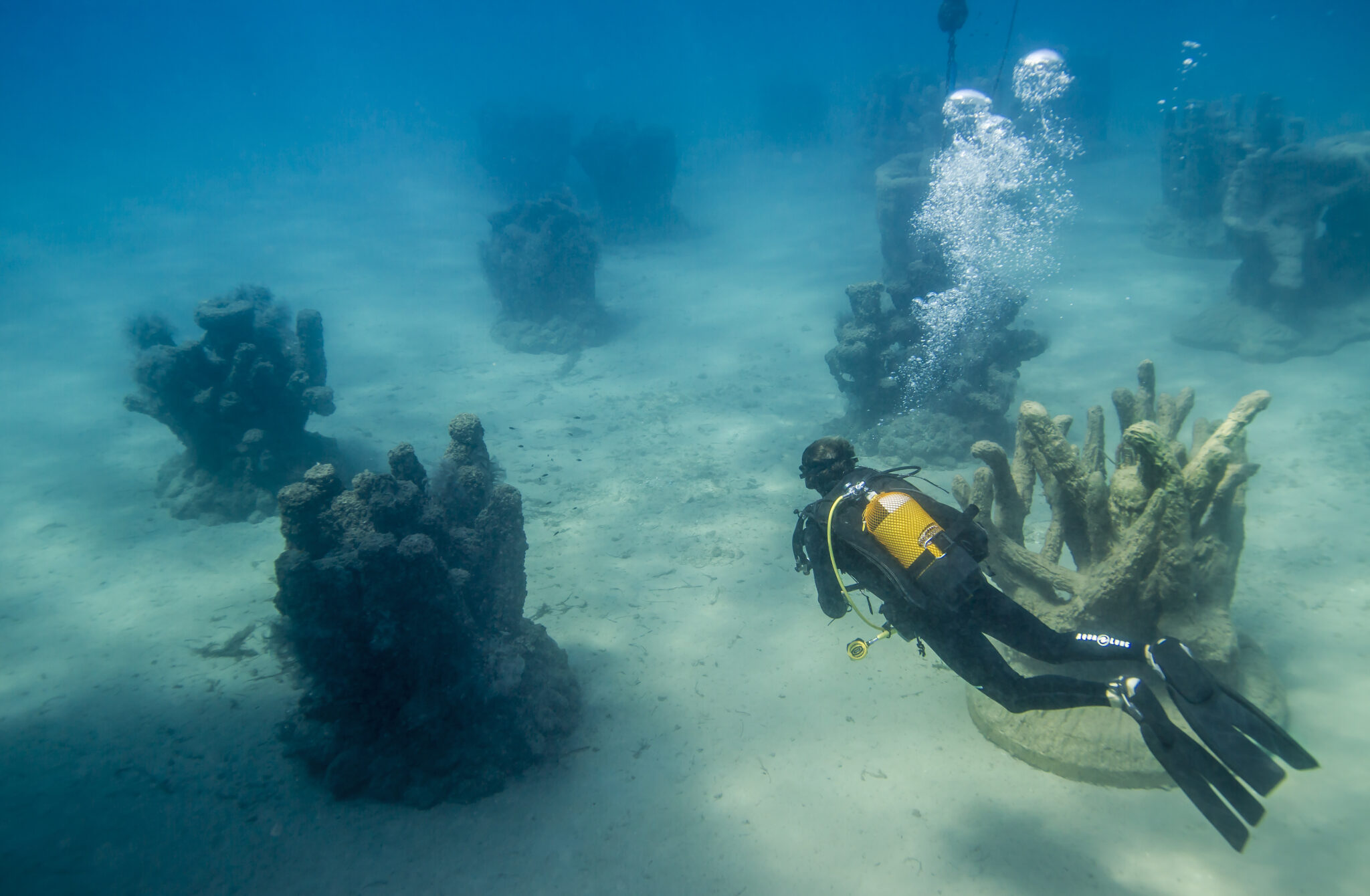
In addition, NAR’s reef parks provide a focal point for Spanish ecotourism. Divers and other ocean adventurers can experience the beauty of the Mediterranean while learning about the importance of coral reefs and conservation.
Diving To Protect Natural Reef Structures
Max’s father, Miquel, founded M. Rota Diving in 2002 to make Natural Art Reef’s projects accessible to everyone.
“It’s a dive center that’s always been more than just a place to dive, it’s a bridge towards marine conservation and restoration,” says Max. “It’s our way of inviting people to join our cause and be ‘part of the ocean.’”
Indeed, M. Rota Diving is now a PADI Five-Star Instructor Development Center that specializes in adaptive diving alongside hands-on conservation. From the Port of Torredembarra, divers can see first-hand the regenerative power of natural reef structures like El Biotop while learning about the ecosystems they are exploring.
Bringing Science and Passion Together
Through citizen science programs, M. Rota Diving and NAR are also educating divers on how to collect ecological data, monitor marine life, and even take part in restoration efforts to help tackle threats to coral reefs.
“The people who have been diving with us since the beginning are part of our story. They witnessed the entire process, from the first stones, and helped make it all possible. We would not be where we are without those who believed in the vision and chose to dive in with us,” says Max. “That’s why we believe getting involved is not just possible, it’s essential.”
Be a Part of Ocean Change
By making the underwater world accessible to all, PADI Mission Hubs, like M. Rota Diving, are empowering people around the world to experience, explore, and protect our blue planet. United by a shared belief in a balance between humanity and ocean, the Torchbearer community is leading a powerful movement to take local action for global impact.
Ready to create #OceanChange? Turn your passion into purpose by taking the Torchbearer pledge and seeking out conservation activities in your area.