
Night diving is one of the most incredible types of diving — but it can also feel daunting at first. I’ve often joked that there’s no such thing as night diving in Scotland, where I dive locally. It can be so dark beneath the surface that all dives feel like night dives. So why bother, right?
Now that’s not entirely true, but it did take a lot of convincing for me to try diving at night, and no, it’s not because I’m scared of the dark… honest! Joking aside, even in the height of summer, our waters can be rather murky. So, you would be forgiven for thinking that not much would change at night — but how wrong you would be.
Here are a few night diving tips, some general advice and several compelling reasons to give it a go!

Is Night Diving Dangerous?
There is risk involved in all scuba diving, including night diving. This is why it’s important to be properly trained and prepared for the dive you’re planning, whether it’s at night or during the day.
Night diving does come with its own set of specific challenges. Completing the Night Diver Specialty course will help you manage them with confidence, and it opens the door to a world that’s probably as close to floating in space as many of us will ever get. As cheesy as it sounds, night diving really is like being in another world.
Tip #1: Get Ready To Spot Marine Life
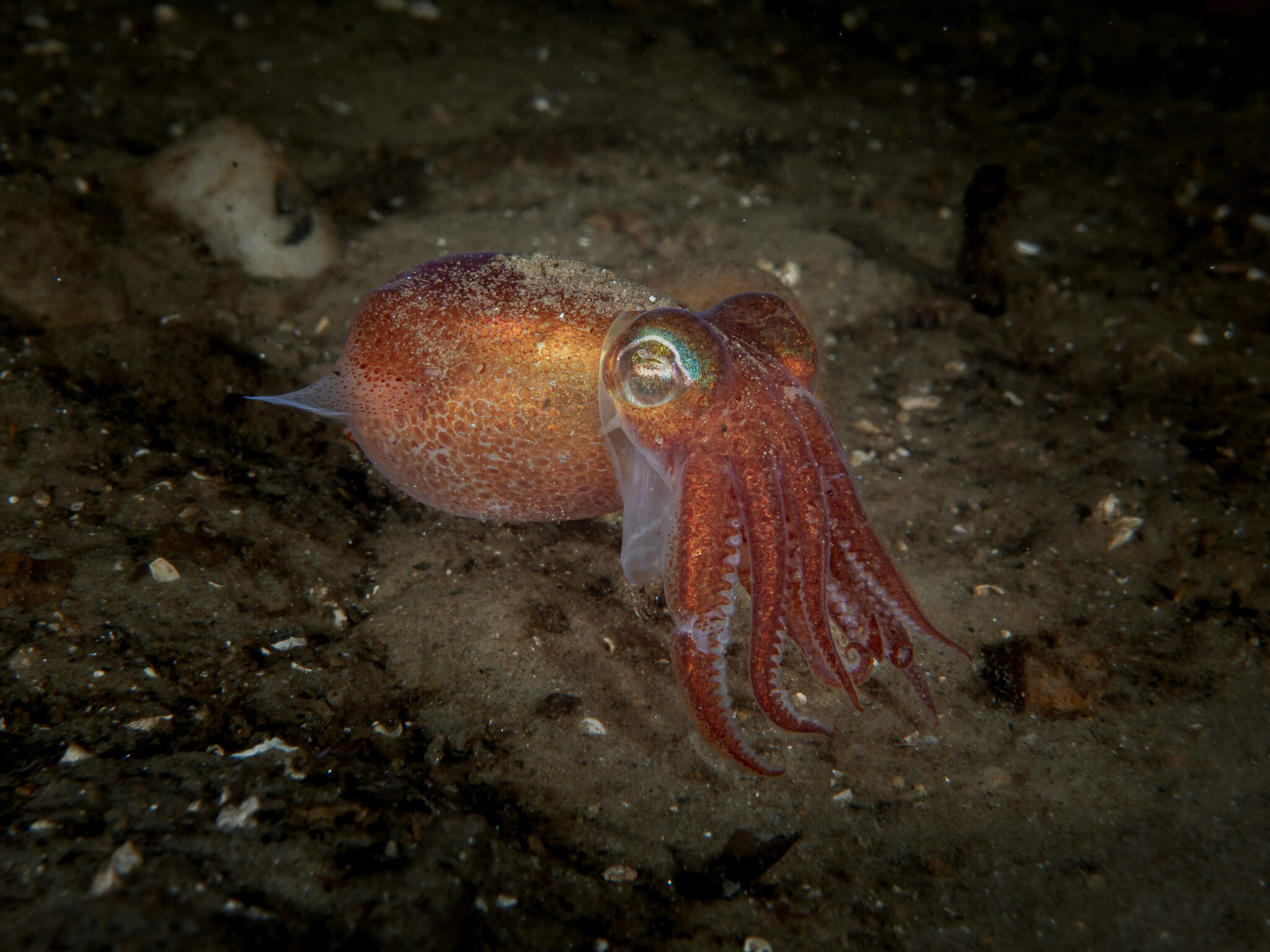
Before I started diving, I didn’t think much about how marine life would react differently at night. I had no idea there were such things as nocturnal marine animals. So, when my dive buddies told me about them, I thought they were winding me up.
It’s incredible how dive sites can transform once the sun goes down. I’d always suggest heading to one of your local dive sites for night diving. Not only are you familiar with it, you’ll also be amazed just how different it feels. It’s as if the seabed comes alive once it gets dark. Watching creatures scuttling around in and out of the torch beams is fascinating.
The variety of life can change dramatically as well. In Scotland, we often find bobtail squid and octopuses popping out. It can be a real shock to realize that these amazing creatures were always there, just hiding out of sight on a site you’ve visited countless times.
Tip #2: Brush Up on Navigation
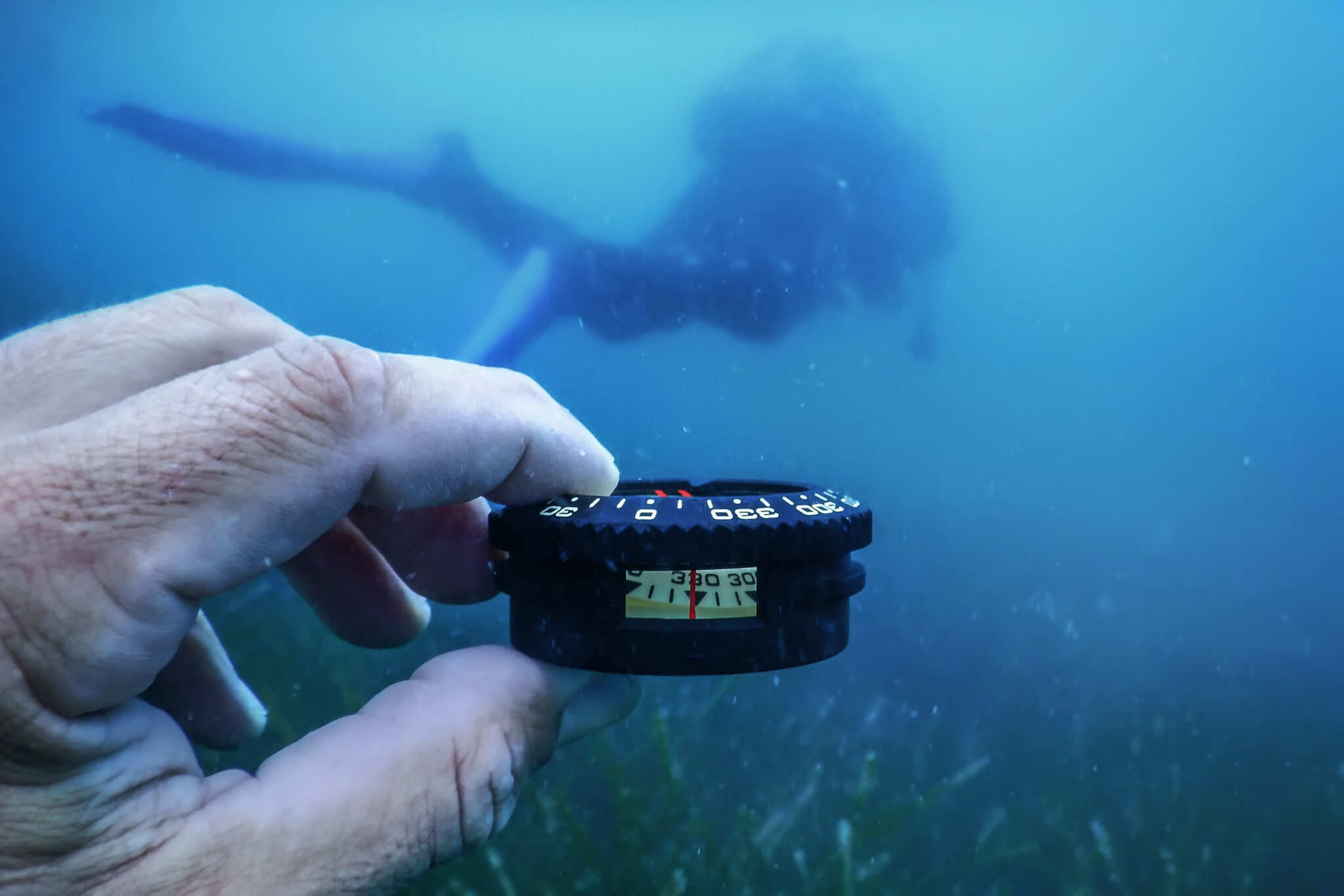
One of my biggest night diving tips is to brush up on your navigation skills and dive planning before entering the water. You should always plan the dive and dive according to the plan. This includes letting people know where and when you expect to enter and exit the water. It’s even more important during night diving, when it can be easy to become disoriented on the surface, meaning you are unable to find your exit point.
Tip #3: Let There Be Light!
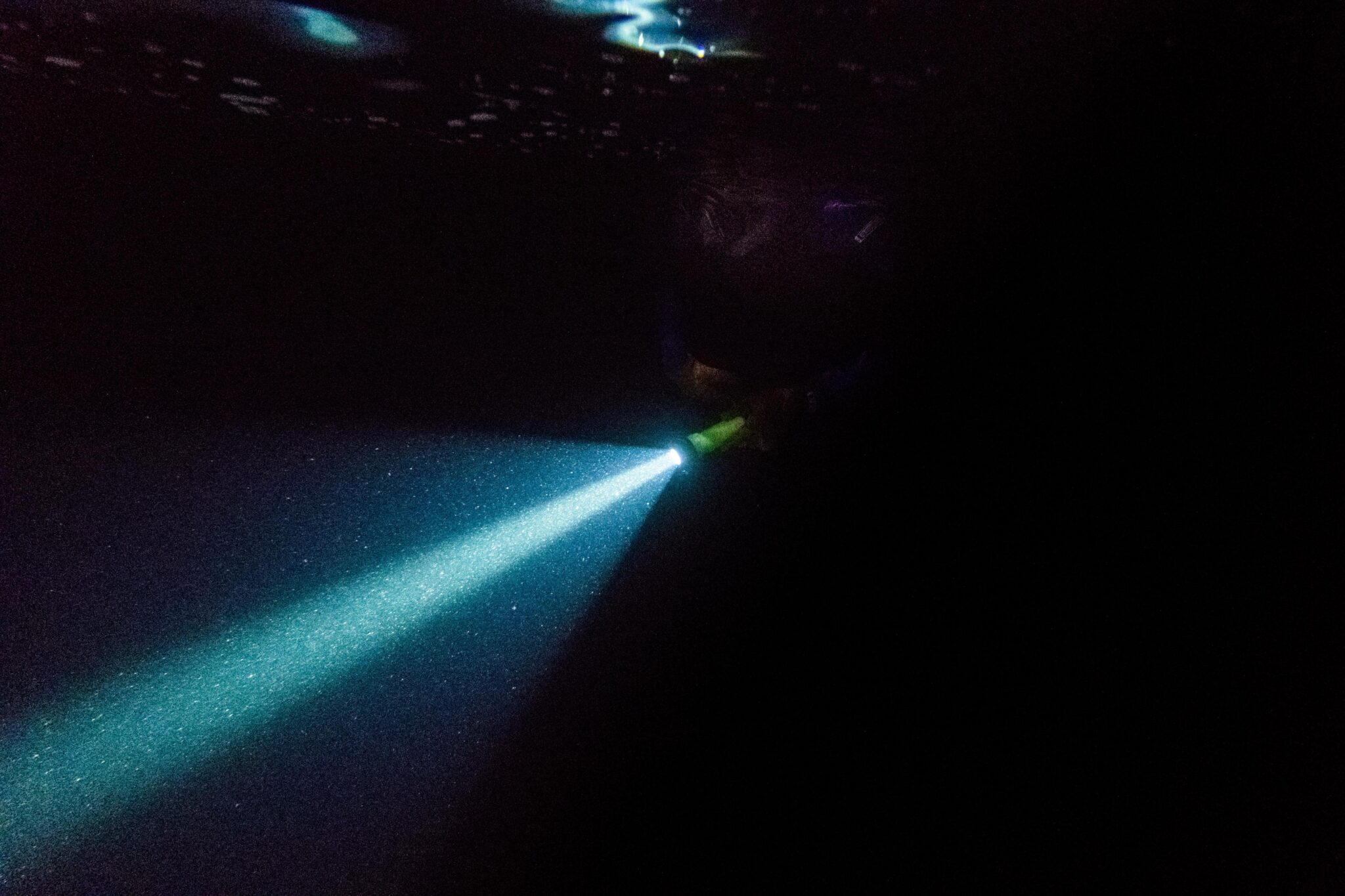
Another tip for night diving is to carry not just one torch (also known as a flashlight or dive light), but two. In fact, having at least two lights is standard practice. More than once, I’ve been halfway through a dive and found myself plunged into darkness when my primary light gave out, despite being sure I’d fully charged it beforehand.
A backup or redundant light gives you the peace of mind that you won’t be without a source of light. On top of having at least two lights, it’s also a good idea to carry a small strobe or something like a glow stick attached to your BCD. That way, it’s easier for your dive buddies or the boat crew to spot you if your main flashlight fails.

Tip #4: Know Your Night Diving Signals
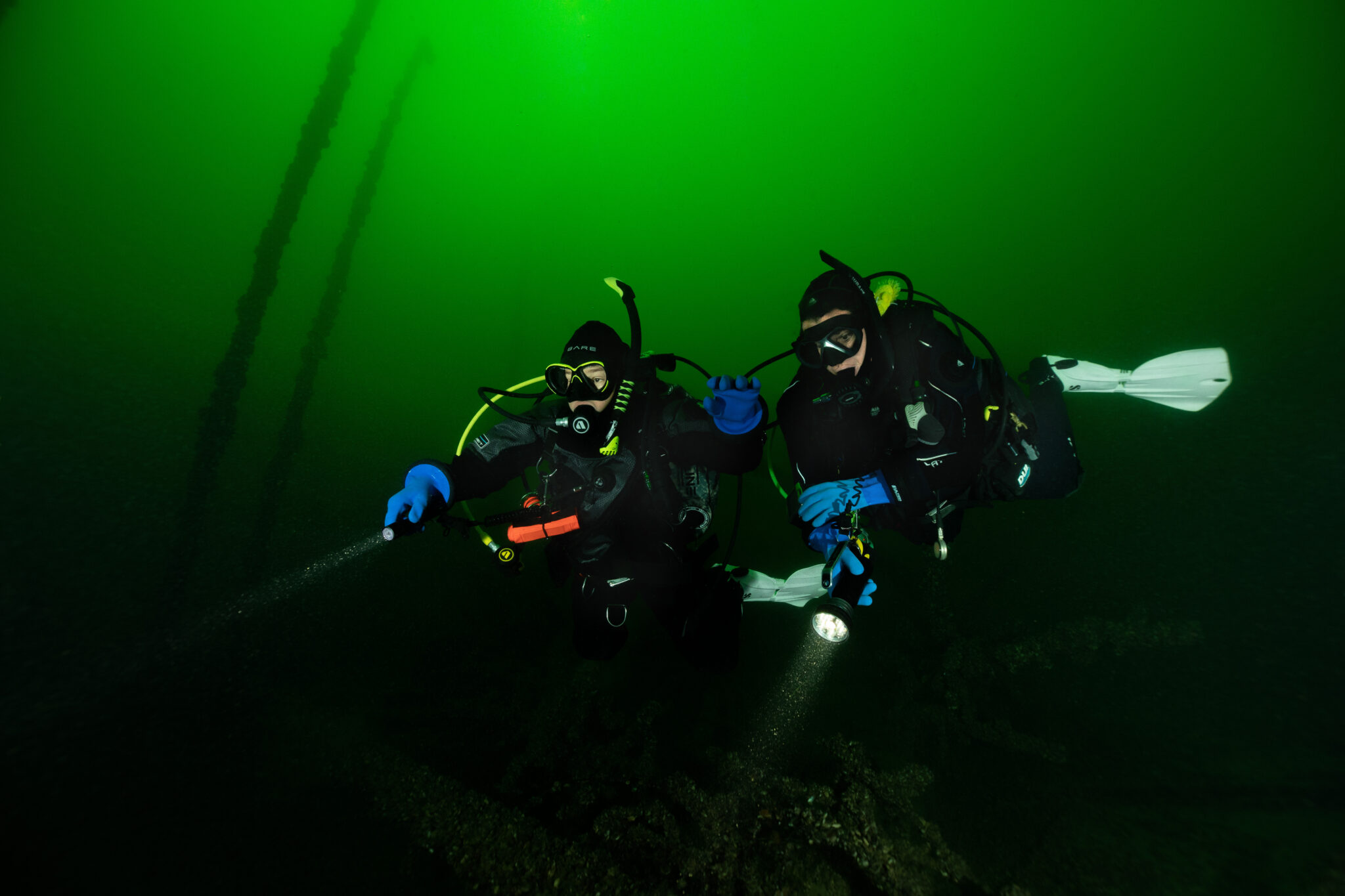
As well as helping you spot critters, torches (also known as dive lights or flashlights) will become your main method of communication during a night dive. An important night diving tip is to check both you and your buddy are comfortable using night diving signals with your lights before entering the water.
Use a large circular motion with the light to signal that you are ok. Make quick side-to-side horizontal movements to indicate that you have a problem. An alternative option is to shine the light onto your hand while making a standard hand signal. Clarifying these communication methods before entering the water helps to prevent misunderstandings underwater and potential surface-level debates afterwards.
Oh, and here’s another wee tip, one I often find myself needing a reminder of. Try not to shine your light directly in your buddy’s face. I’ve had more than one telling-off for getting overexcited when I’ve spotted something and blinding my buddy in the process of trying to show them.
Tip #5: Slow Things Down
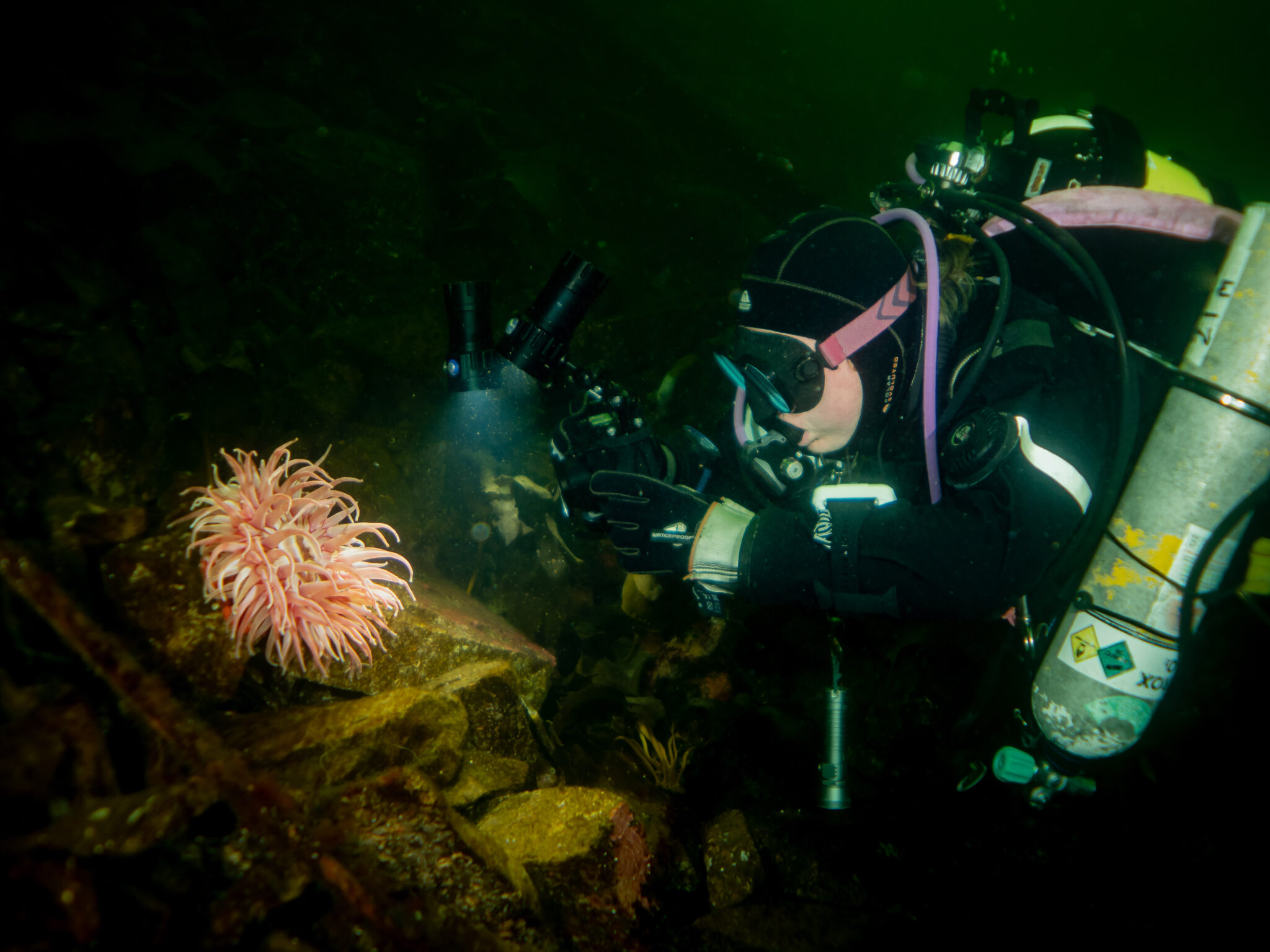
Above the surface, as the day ends and night descends, a natural calm sets in — and the underwater world is no different. Slowing down helps you stay relaxed, especially if night diving is new to you. This also makes spotting wildlife easier and helps prevent you from accidentally kicking up sand from the seabed.
In addition, moving slowly and staying calm not only creates a more relaxed atmosphere, it helps improve air consumption and makes maintaining your buoyancy easier. This is especially important if you’re night diving to see particularly skittish wildlife, such as the mandarin fish.
Tip #6: Keep Your Buddy Close
It’s always a surprise the first time your buddy disappears from view on your first night dive. While torchlight can be seen for miles on the surface, limited underwater visibility can make it possible to lose sight of your dive buddy in a much shorter distance.
Before you descend, be sure to agree on how close you’ll stay with your buddy. This includes going over the plan if you do lose each other. Ensuring you remain well within your buddy’s field of view makes for a more relaxing and enjoyable experience.
Tip #7: Stand Out From the Crowd
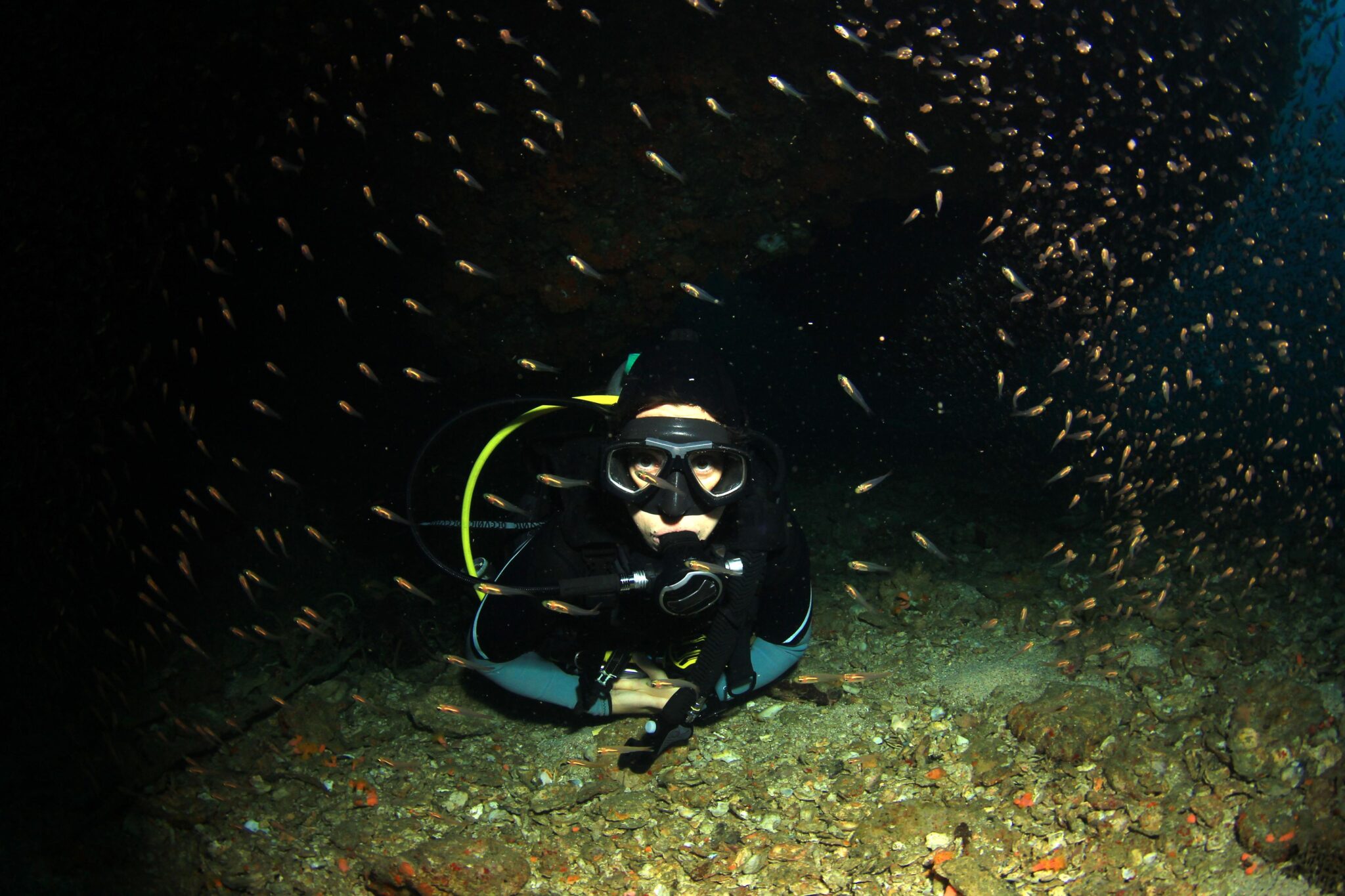
Wearing something that makes you easily identifiable can be useful during day dives — especially when a dive boat is busy — but it can be even more useful at night. As mentioned earlier, shining lights directly at divers is a no-no, so having a distinct item of dive gear or something on your BCD will help you and your buddy remain together.
Brightly colored fins, a unique wetsuit, a marker light, a strobe light, a glow stick or even a piece of headwear may ensure buddy identification takes minimal time, resulting in minimal disturbance with your flashlight.
Why Night Diving Is Worth It
Despite all my initial worries, I’ve found night diving to be one of the most relaxing types of diving. It’s truly a feeling like no other. It’s an opportunity to meet some of the ocean’s most fascinating creatures that you won’t see during the day. So, if there’s one Specialty Diver course I’d recommend, it’s the Night Diver Specialty course.
Want to save 20% on your Night Diver eLearning course? Sign up for PADI Club to start saving on eLearning and more!