Some leaders forge their legacy through courage, others through compassion. Les Burke — PADI Master Scuba Diver Trainer, Navy veteran, educator and founder of Junior Scientists in the Sea (JSIS) — embodies both.
For more than two decades, Les has dedicated his life to empowering youth, particularly from underserved communities, to explore and protect the ocean. Through JSIS, he merges scuba training, marine science and personal development into one transformative experience — turning curiosity into knowledge and knowledge into leadership.
In recognition of his extraordinary contributions, Les has been named a recipient of the PADI Ocean Torchbearer Award, presented quarterly to PADI Professionals who demonstrate remarkable leadership and impact across PADI’s Pillars of Change: Ocean Conservation, Dive Industry Sustainability and People and Humanity.
Raised on the waters of Long Island Sound and later Florida’s Gulf Coast, Les began diving in 1980 and went on to become the eighth African American to complete the U.S. Navy’s elite Deep Sea Diving and Salvage School. Mentored by legendary Master Diver Carl Brashear, he served 33 years in the Navy and participated in historic missions, including the recovery of the Space Shuttle Columbia.
Today, Les is the driving force behind a youth movement rooted in exploration, inclusion and education. We sat down with Les to learn more about his vision, his journey and the ripple effects of JSIS.
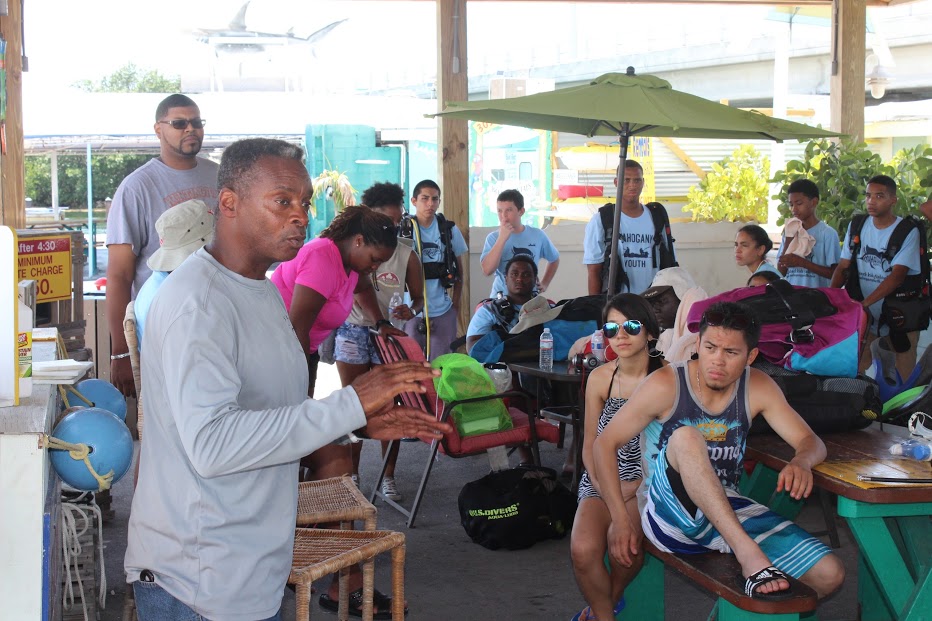
What inspired the creation of Junior Scientists in the Sea, and how has it evolved over time?
It started with a conversation I had with Captain Jacques Cousteau in 1985. He recognized something in me that I didn’t yet see in myself. He made me promise to share my love of the ocean with others, especially those who might never have access to it. That promise guided the birth of JSIS.
The program grew alongside my Navy career. We were “citizen scientists” before that was a buzzword. JSIS began to introduce kids to diving but quickly became much more. Over the years, we layered in STEAM education — science, technology, engineering, arts and math. And we’ve always focused on leadership. Our goal is to turn students into explorers, storytellers and advocates — people who protect what they love because they understand it deeply.
You use diving, science and art to shape young leaders. How do those elements work together in JSIS?
We use scuba as the hook — an exciting gateway. Once we’ve got them underwater, we shift their mindset from tourists to underwater workers. Our goal is to make science cool, but in the interim, we teach the science of marine biology or underwater archaeology, then we use technology, engineering and math to make it fun. We introduce technology – full-face masks so they can communicate underwater, ROVs for those who can’t dive, even extended stays in habitats like Jules’ Undersea Lodge.
But here’s where it gets powerful: we bring in the arts to help students tell their stories – photography, film, even virtual reality. We work with people like Stephen Frink and Frazier Nivens to teach visual storytelling. Because if a student can share their experience, it ripples outward. Art gives their voice reach. That’s how transformation spreads.
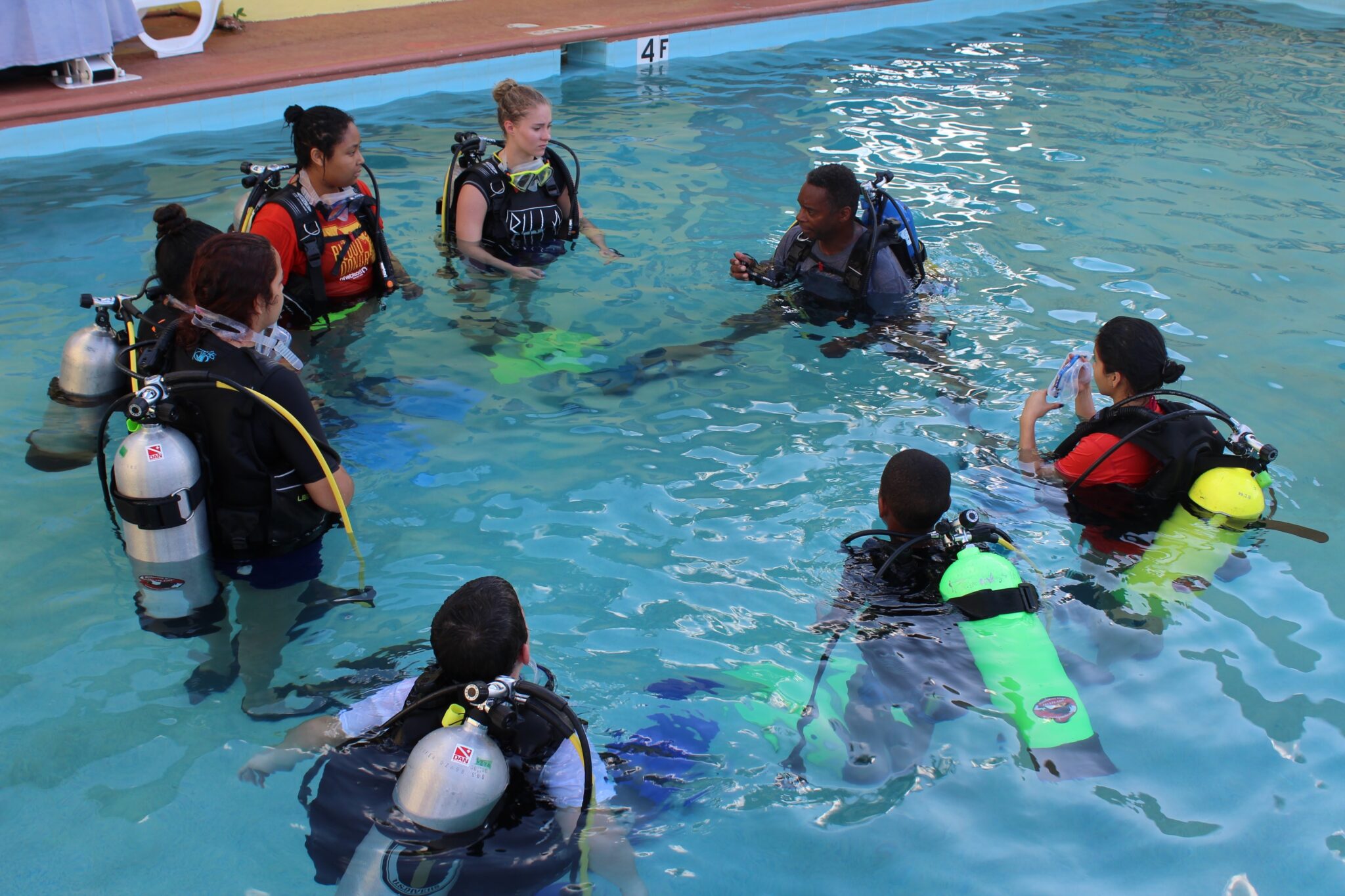
Why is ocean access for underrepresented youth so important, and how do you make those connections last?
For me, the ocean isn’t just a beautiful view, it’s a living world. When I was growing up, shows like The Undersea World of Jacques Cousteau made you want to dive in and explore. But kids today don’t have that. So we create it.
We show them other kids, who look like them and come from the same neighborhoods, doing incredible things underwater. We build pathways by showing them the fun and adventure of being an explorer. We help them see that the ocean belongs to them, too. And then we go a step further – we train them to understand the damage done over decades and how they can be part of the solution. That connection becomes personal. And that’s where the magic happens. They realize they’re not just visitors; they’re protectors. We engage our most precious resource (them) to care for and protect our most endangered resource – our oceans, rivers and estuaries.
What role does representation play in your work, and how has it impacted the field of diving and conservation?
Interestingly, diversity is not the focus. Diversity is the by-product of making sure everyone has an opportunity. We understand not everyone will be able to engage, but we focus on those who can. We welcome students based on potential, not background. Everyone is treated with respect and dignity, in a nurturing and fun environment. When underrepresented youth see someone who looks like them diving, leading, restoring coral — it changes everything. They start to believe it’s possible.
And that belief spreads. Other organizations have emerged with a focus on marine conservation and minority engagement. That’s exposure. That’s growth. We say, “Conservation begins with education,” and when that education reaches the right communities, it multiplies. Now, students are teaching their friends about coral reefs, plastic pollution and sea turtle protection. That’s how change scales — peer to peer.
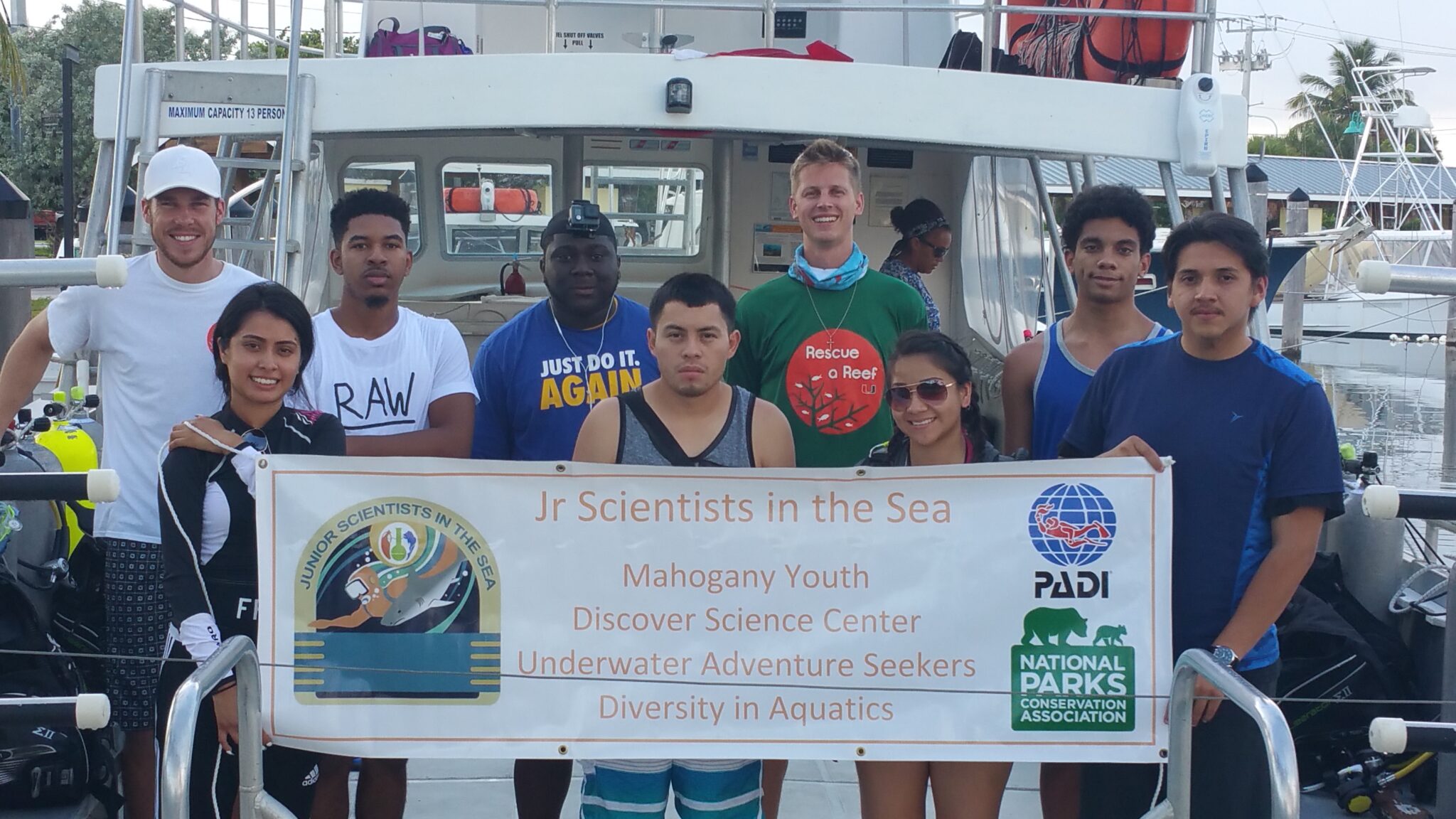
Looking ahead, what’s your vision for the future of JSIS and the legacy you hope to leave?
I’m ready to pass the torch. JSIS has been going strong for 20 years. Now we’re looking for youth leadership to keep it sustainable and high performing. I want JSIS to matter on a college application — to be recognized as a program of excellence by universities and marine science institutions. We are members of the American Academy of Underwater Sciences (AAUS). As such, we teach and operate at a standard that is recognized by post-secondary institutions that have marine science programs and by marine science research facilities. And for those not college-bound, we’ll continue to offer pathways through real-world training and meaningful work.
But more than that, I hope my legacy is this: that we created caretakers of the planet. That we made science fun, diving accessible and leadership possible for kids who were never handed those opportunities. That we used the ocean to heal, to teach and to uplift. That we didn’t just tell students to dream; we showed them how. Conservation begins with education, and we make education fun!
Les Burke is a living testament to what’s possible when passion meets purpose.
His story reminds us that leadership is about action, not just in the water, but in our communities.
PADI, in partnership with Luminox, is proud to recognize Les Burke as the 2025 Q3 Ocean Torchbearer Award winner, a true leader who dives deep, reaches wide and lifts others with every breath.