
If you wear contact lenses or glasses, you might be wondering if you are able to scuba dive. The answer is definitely yes. Scuba diving is not an activity that requires perfect vision. There are a variety of options available to help divers with impaired vision navigate the underwater world. The most popular options divers around the world use today are:
- Prescription scuba masks
- Specially made prescription eyeglasses that can be worn under a scuba mask
- Soft, disposable contact lenses
But before you commit to any vision-correcting mechanism, here’s something to consider. Water magnifies your vision. Because of refraction, objects appear one-third larger and closer underwater. This means that if you are slightly nearsighted or only have very minor vision impairment, you may not need to wear contacts or a prescription scuba mask to dive.
Your local PADI dive shop can help you decide whether you need to wear contact lenses or a prescription diving mask. During your gear fitting session, check if you can read the air and depth gauges without your glasses. If you can’t see the numbers, you’ll need to wear contact lenses or invest in a prescription mask or mask/glasses combo.
Below, we will look at scuba diving with contacts and prescription masks in greater detail. This includes which option may work best for you, as well as some of the benefits and potential drawbacks.
Scuba Diving With Contact Lenses
Contact lenses are often recommended over prescription dive masks because they help you see clearly even when your mask is off. Plus, they usually cost less than buying a prescription dive mask.
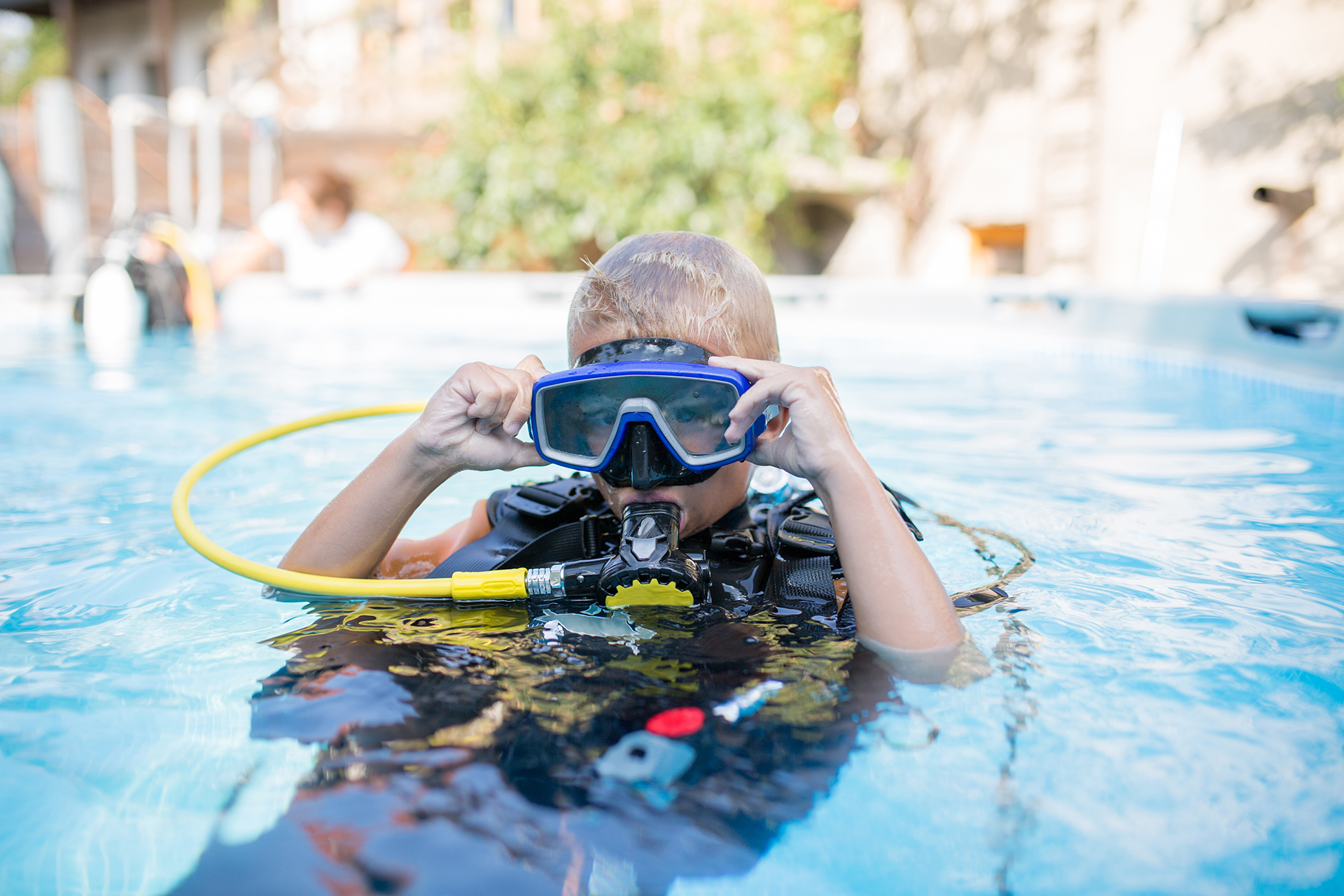
If you are new to diving and wear contacts, the best course of action to prevent losing them mid-dive is to keep your eyes closed during any skills that require you to flood or remove your mask. It’s also worth letting your dive instructor know you wear contacts, so they can prepare for your training and provide the correct assistance if you encounter a problem.
Scuba Diving With Soft Contact Lenses vs. Hard Contact Lenses
If you currently wear hard contact lenses and are wondering whether you should switch to soft contact lenses for diving, here’s what Divers Alert Network (DAN) has to say about scuba diving with contacts:
“Divers should ask their ophthalmologists or optometrists to prescribe soft contact lenses. Hard lenses or rigid gas-permeable lenses have been found to sometimes cause symptoms of eye pain and blurred vision during and after dives. These symptoms occur as a result of gas bubbles forming between the cornea and the contact lens.”
Here’s an overview of the key reasons to choose soft contact lenses over hard contact lenses:
- Hard contact lenses don’t allow gas to penetrate, which may result in blurry vision or general discomfort
- Divers have reported that hard contact lenses made their eyes feel dry
- Soft contact lenses are larger and more likely to stay in your eye if your mask floods
- Scuba diving with soft contacts rarely causes any issues
Divers scuba diving with contacts should bring rewetting drops with them. Although it is rare, soft contact lenses can become stuck on the eye(s) due to the increased pressure from the dive. Rewetting drops can help the diver’s contacts become unstuck from the eye(s) or provide greater comfort and relief from dryness.
Prescription Masks for Scuba Diving
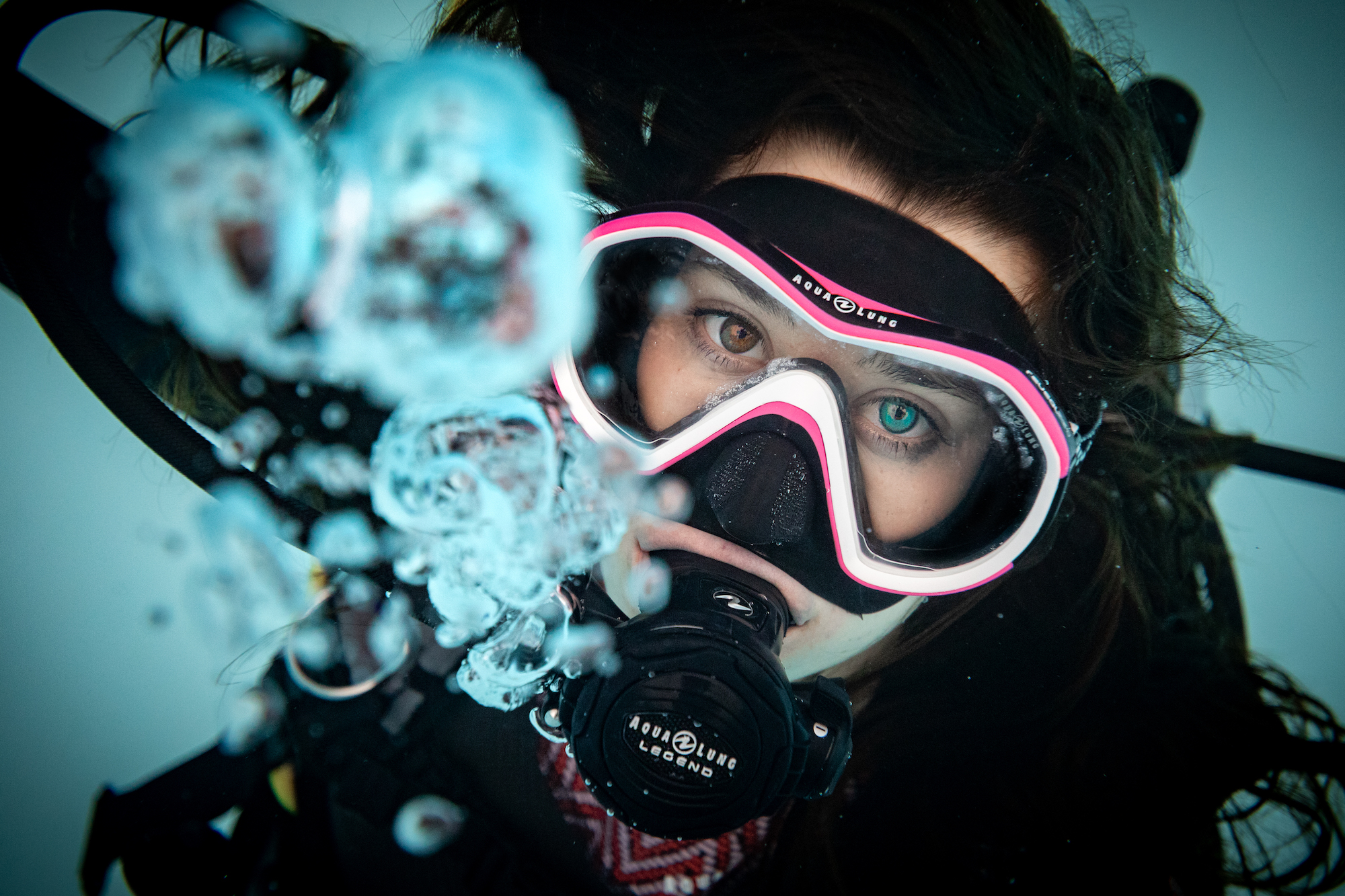
A commonly asked question is, “Can you scuba dive with glasses?” Traditionally, the answer has always been no, but scuba diving equipment is always evolving. Now, at least one company has begun producing prescription eyeglasses that can be worn under a scuba mask. Divers who do not wish to purchase special eyeglasses for diving or wear contacts should dive wearing a prescription mask.
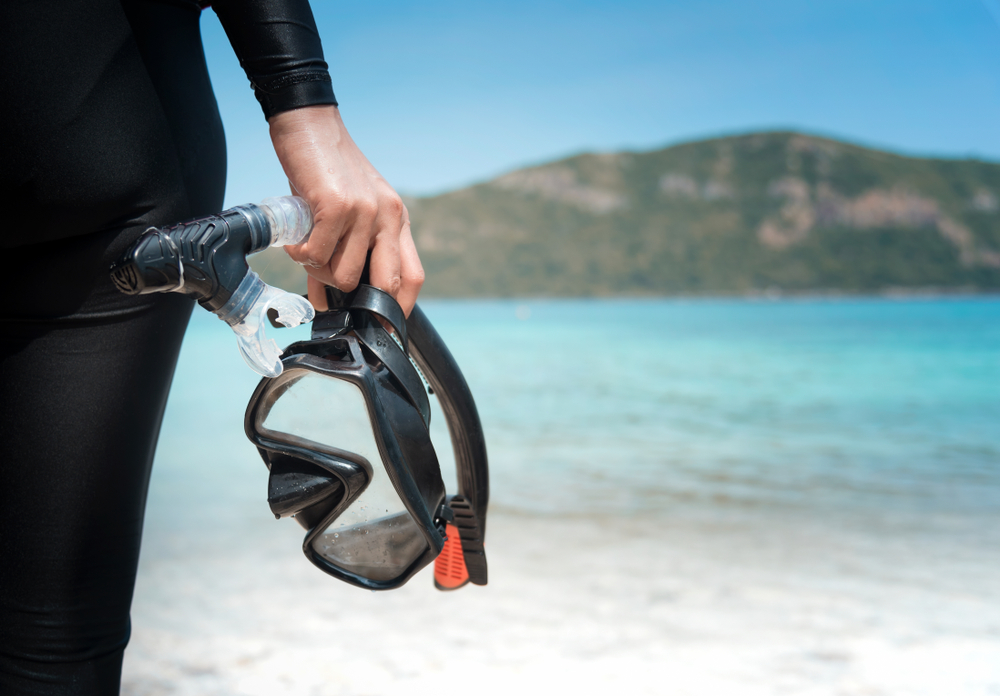
The first and most important step when buying a dive mask is to choose one that fits comfortably and securely. If you are new to diving, you can check out our beginner’s guide to buying a mask.
Your local PADI Dive Center or Resort can help you choose a mask that accommodates prescription lenses and fits correctly. They can also help ensure you get the right lenses. Two key things to note about prescription dive masks are:
- Your prescription will determine the type of corrective lens you need
- A lot of divers like to use drop-in or laminated lenses, but some divers use high-index glass lenses
Here’s some more information about prescription scuba masks from the experts at Divers Alert Network (DAN): “Any quality dive mask can have prescription lenses installed, but not every dive mask is ideal for every prescription. The thickness of a corrective lens is a factor of the strength of the prescription, surface area of the lens and decentration (in nonoptical terms, where the diver’s pupil sits in the lens versus the geometric center of the lens). High-plus spherical lenses are convex and extend toward the center of the diver’s eye, so divers needing high-plus correction should steer toward masks with enough volume to ensure the lenses don’t contact their face.“
Scuba Masks With Bifocals or ‘Readers’
Many divers only need ‘readers’ to distinguish small print and to see things up close. The good news is that stick-on magnifying lenses are available for scuba masks. Ask your local PADI dive shop about stick-on reading lenses, a bifocal dive mask or a bifocal-style mask where only a small part of the lens corrects your vision.
How To Choose the Best Option for You
If you’re able to wear both contacts and glasses, you may find it tricky to decide which option is best for you. There is no one-size-fits-all choice. We recommend thinking about the following factors when deciding whether to use contacts or prescription masks.
Your Level of Vision Impairment
Before choosing between contacts and a prescription mask, take into account how much your vision affects your diving. Remember that underwater refraction makes objects appear about one-third larger, which many divers find compensates for slight nearsightedness. However, any impairment to basic dive skills, including reading gauges and seeing hand signals, needs support. Overall, if you rely on glasses every day (as opposed to just while reading or driving), you’ll need vision support while diving.
What’s Most Convenient
While both options work, both prescription masks and contacts have trade-offs. Consider which ones are dealbreakers for you.
Contact lenses work with any mask and allow easy entry and exit in the water, as they’re not attached to your mask. On the downside, they require careful handling and can be lost if your mask floods.
Prescription masks are stable and reliable, while preventing any risk of losing lenses during the dive. However, they’re considerably more expensive and can affect vision when your mask is removed.
The Style of Diving You Do
Many beginners prefer to use contact lenses and their eyes closed while removing their masks. This is the most cost-effective option for short-term use. As a next step, many divers decide to invest in prescription masks as a longer-term option, once they are committed to diving regularly.
Always Plan Ahead
If your vision is significantly impaired when you’re not wearing contacts or glasses, it’s a good idea to have a plan in place for any dive day, vision-related issues. Here are some key things to consider:
- Inform Your Buddy and Dive Guide
If you lose your mask or contact lens during a dive, it’s important that your buddy understands the problem and is ready to assist you appropriately. During the buddy check, decide on a signal for “I can’t see” and establish how you and your buddy will work together to finish the dive safely. Remember to remain calm if a situation arises before or during your dive. Always follow the appropriate safety guidelines. - Keep Spare Contacts in Your Dive Bag
It’s a smart idea to keep spare contact lenses in your dive bag. That way, if you do lose a contact lens during a dive on a multi-dive day, the rest of your day isn’t ruined. Keeping spares, along with rewetting drops, will also allow you to better deal with general discomfort or dryness. - Know Your Prescription
Whether you remember it yourself or keep a picture of it on your phone, knowing your prescription can be handy if you forget to bring, lose or run out of soft contact lenses on a trip. In many destinations, it’s possible to purchase soft contact lenses over the counter if you have access to a retailer.
So now you know your vision shouldn’t hold you back from exploring everything beneath the water’s surface, it’s time to get in the water. If you’re already a diver, find your next dive destination here. Alternatively, if you’re a new diver, sign up for the PADI Open Water Diver course below.