California’s extensive 1,350 km (840-mile) coastline is dotted with worthwhile dive sites, but scuba diving in San Diego vies for the top spot thanks to its kaleidoscope of underwater experiences. This Southern California city has something to offer every level of diver.
From easily accessible shore dives to haunting wrecks and iconic kelp forests, San Diego deserves a spot on every diver’s must-dive list.
Let’s dive into what makes San Diego’s underwater world so unforgettable.
When Is the Best Time To Visit San Diego?
Don’t let this Spanish-named city fool you. San Diego is not your typical warm-water diving destination, but it is a year-round diving destination.
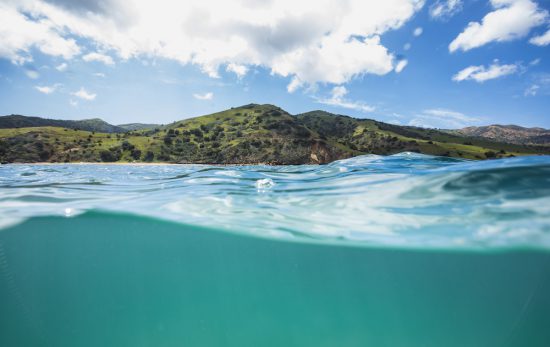
For the warmest surface weather and calmer seas, plan your trip from July until October. During these months, San Diego enjoys sunny and stable weather, with daytime temperatures reaching up to 28°C (82°F).
From November to June, surface conditions are cooler and visibility is more variable. These months bring overcast skies, wind and occasional rainfall. December and January are the coolest months, with temperatures dipping as low as 10°C (50°F), making it a great time to try dry suit diving or to complete the PADI Dry Suit Diver Specialty.

What Are the Diving Conditions Like in San Diego?
San Diego is a year-round diving destination. But there are a couple of key conditions to consider.
- Water Temperature — Bordering the Pacific Ocean, water temperatures never go above 20°C (68°F) or under 15°C (59°F). So, no matter what time of year you visit, you’ll need at least a 7mm wetsuit to be comfortable scuba diving in San Diego. Extra thermal protection, like gloves and a hoodie, is also highly recommended. A Dry suit is even better for protecting you from shiver-inducing conditions.
- Visibility — Seasonality can greatly affect San Diego’s underwater visibility. During peak season, it can be as good as 30m (98ft). However, during the off-season, it can drop to as low as 3m (10ft).

What Marine Life Can I See in San Diego?
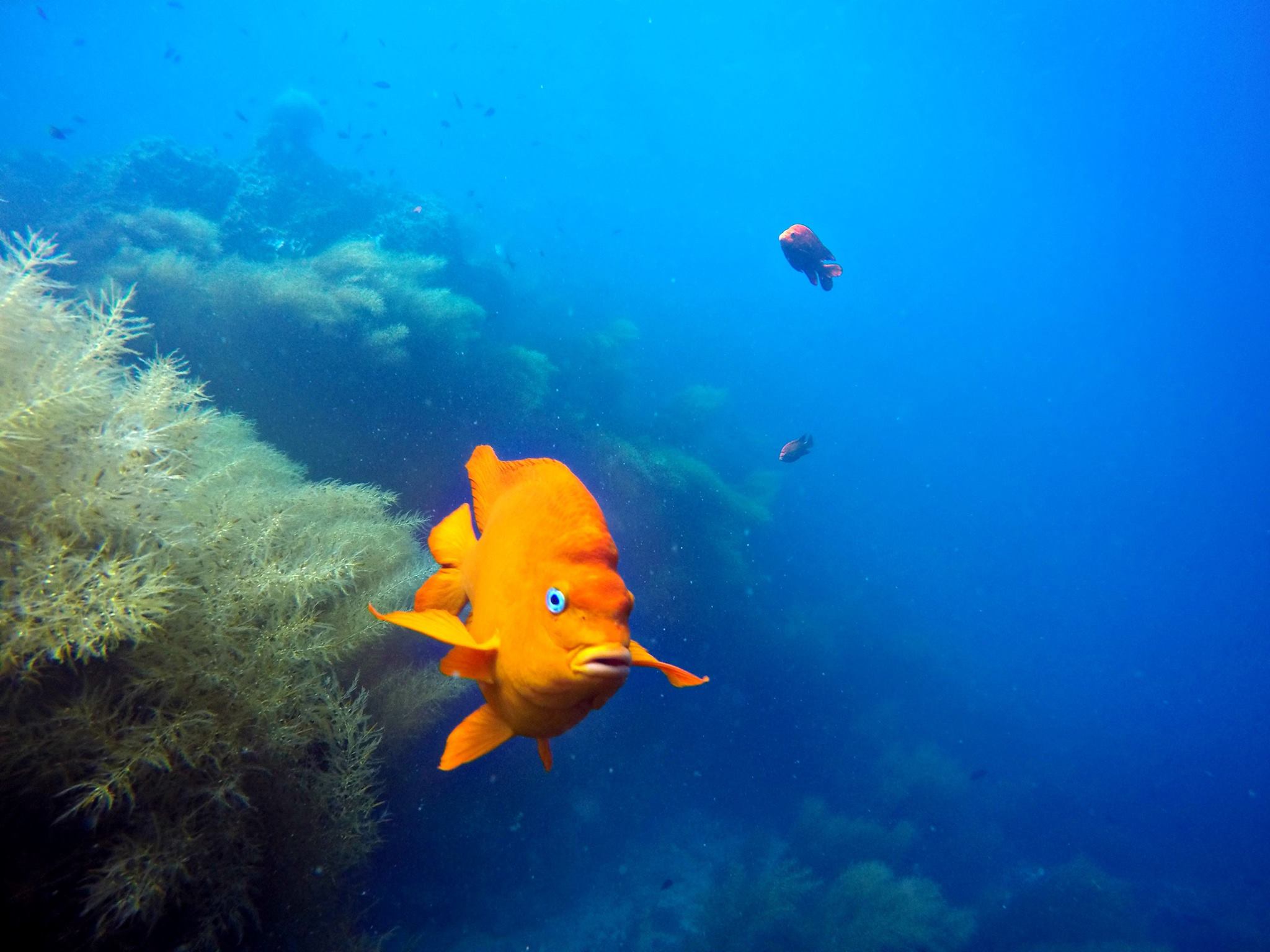
The marine life in San Diego is just as diverse as its dive sites. Facing the Pacific Ocean, the nutrient-rich waters attract a wide variety of marine life, including seals, sea lions and different species of sharks and eels. But keep an eye out for smaller creatures too, like nudibranchs, lobsters and Garibaldi — California’s state marine fish.
What Are the Best Dive Sites in San Diego?
San Diego offers excellent options for both shore diving and boat diving. If you’re prone to seasickness while diving and/or don’t like boat charters, scuba diving in San Diego’s easily accessible shore sites is the perfect solution.
Shore Diving in San Diego
La Jolla Cove & Shores
La Jolla is San Diego’s most famous dive site. It is a protected marine reserve and a truly incredible dive location, plastered with canyons, rocky walls, caves and giant kelp forests. Naturally, these different habitats also attract many different species of fish, invertebrates and mammals. Common sightings include kelp bass, horn shark, leopard shark, sea lions and seals.
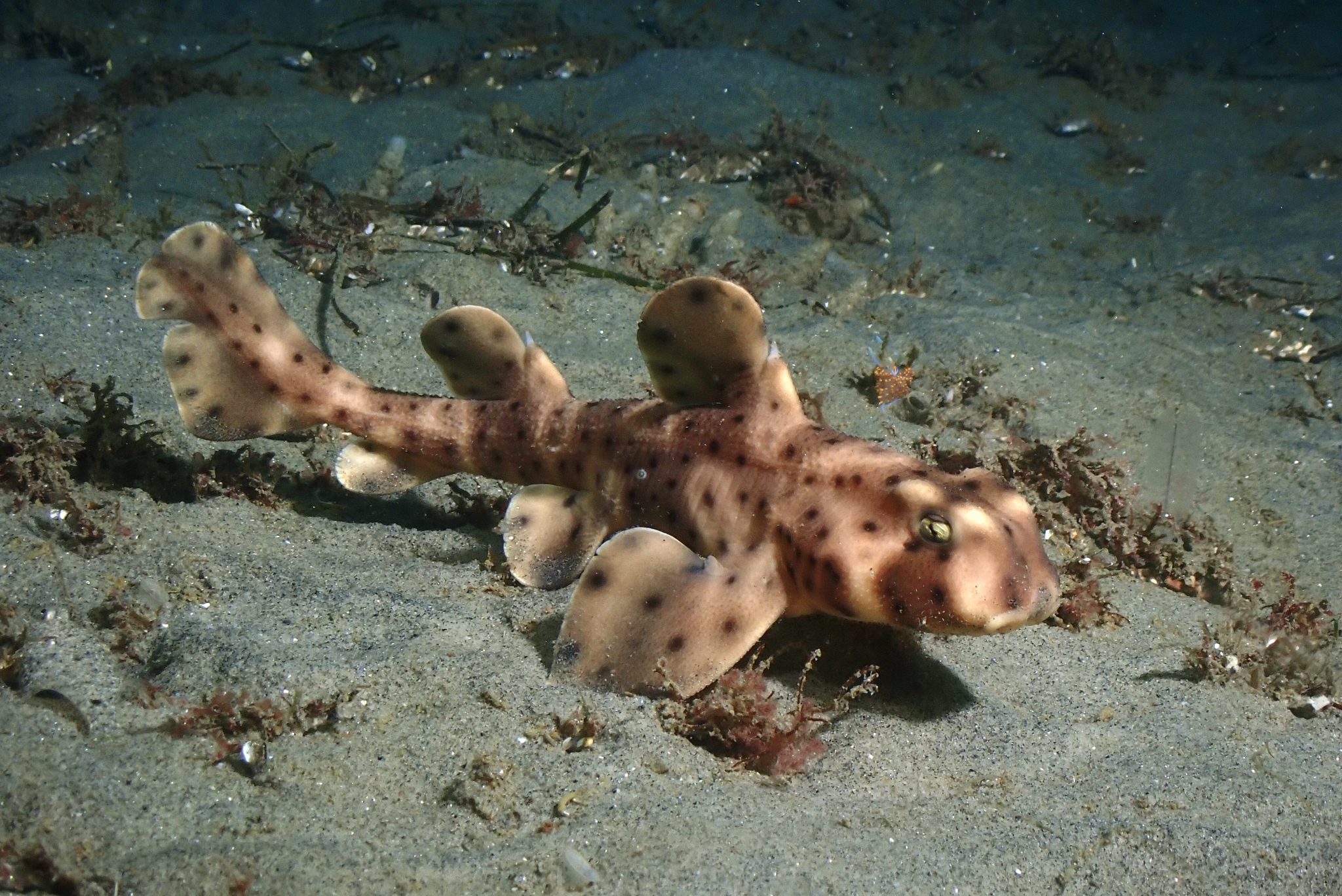
You can see plenty of marine life in the shallow waters between 10-15m (32-49ft). And because the bottom slowly slopes down to greater depths beyond recreational limits, La Jolla is also an ideal dive site for technical divers.
If you want to see and do even more, you can also go night diving in La Jolla. You’ll be amazed by the bioluminescence and the surprising amount of nighttime activity in the area.
Important: Although La Jolla is a shore dive, divers should expect long surface swims and challenging entries and exits due to surge. Be sure to check tides and surf conditions before diving.
Boat Diving in San Diego
Wreck Alley
Wreck Alley in San Diego — The name says it all. This unique dive site is a collection of six wrecks intentionally sunk to create artificial reefs for scuba divers. Each wreck varies in difficulty and depth, so if you have not already completed the wreck diving specialty certification, this is a great place to get certified and put your skills to the test.
For advanced divers, diving highlights include the HMCS Yukon, a Cold War Canadian destroyer resting at 18-30m (60-100ft). Another unique wreck you’re unlikely to find anywhere else in the world is the Ruby E, a kelp cutter sitting at a 20-24m depth (65-80ft), ideal for thorough exploration.
These wrecks are also home to a wide variety of sea life. Commonly encountered creatures include octopuses, sea stars and spiny lobsters. You’ll also find patches of anemones and soft corals.
Point Loma
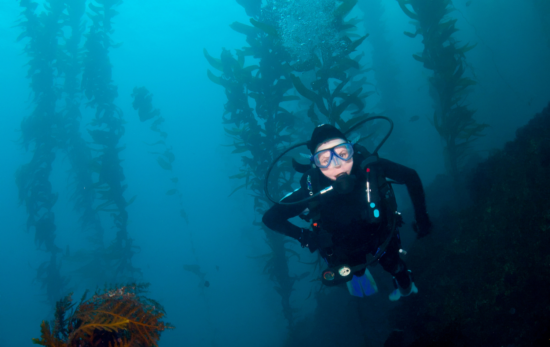
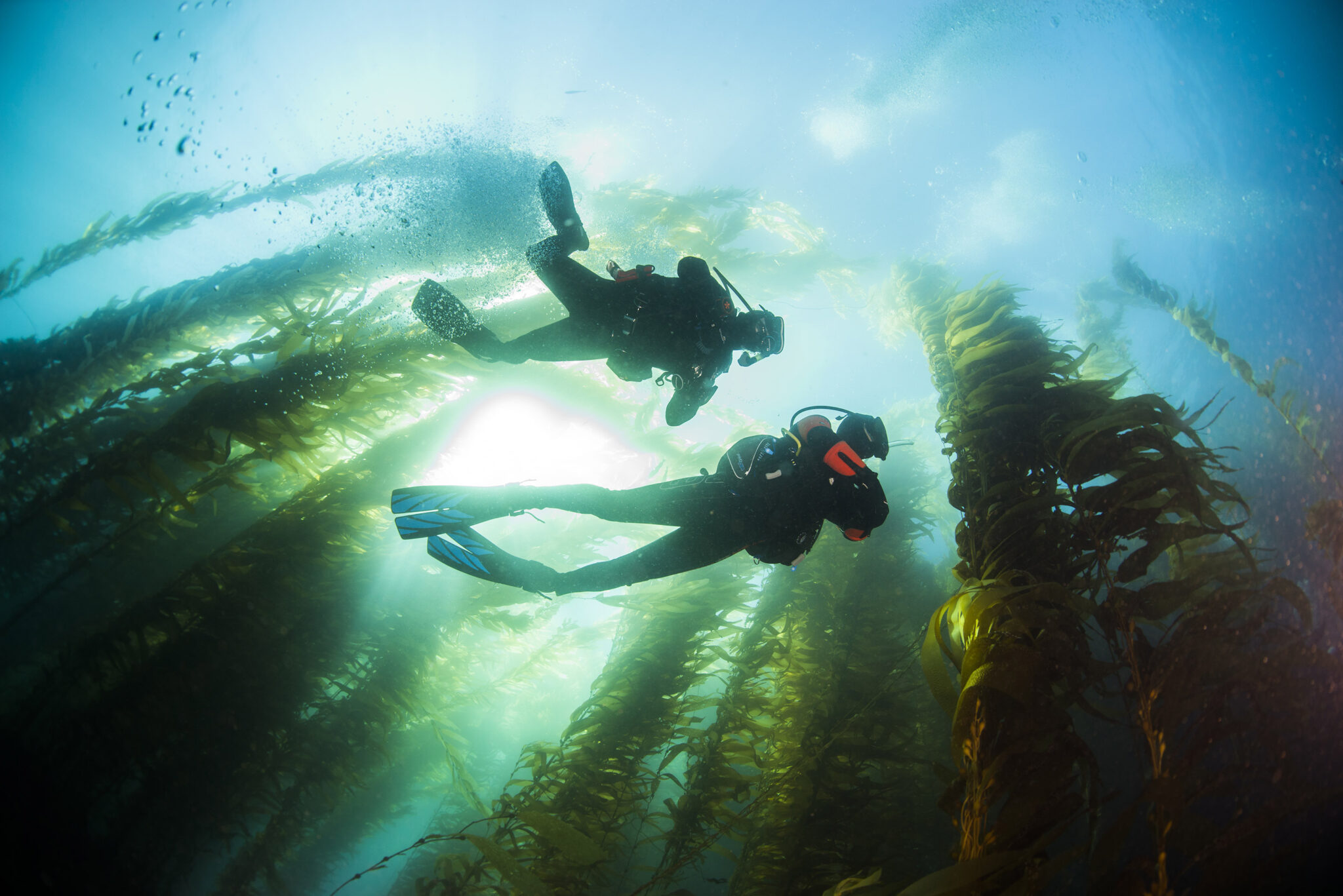
San Diego boasts some of the healthiest and biggest kelp forests in California, with the giant kelp forest in Point Loma being as good as it gets.
Point Loma’s kelp forest is deeper (18m/60ft) and lusher than the shallower forests in La Jolla. One dive here won’t be enough to explore and appreciate this underwater wonderland. Especially because the dive sites also include rocky walls and sandy bottoms that create overhangs, canyons and cliffs, adding to your visual enjoyment.
The underwater forest is also a thriving marine ecosystem that includes over 20 species of nudibranchs. Bigger creatures include giant sea bass, horn sharks and sevengill sharks.
Coronado Islands
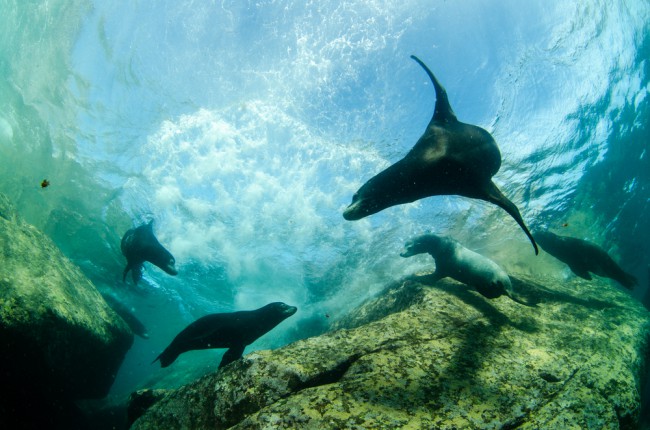
Daily 2-hour boat charters run from San Diego to the Coronado Islands. Despite the short distance, these rocky chain of islands are officially in Mexican waters just off Baja California.
The main attraction of diving in the Coronado Islands is the playful colony of sea lions. But swimming skipjack tuna, mola mola and even whales can be encountered during your time in the water.
Amazingly, this San Diego dive spot remains relatively under the radar, considering each site delivers its own thrill and sense of adventure.

Ready To Go Scuba Diving in San Diego?
Scuba diving in San Diego is a must if you’re ever visiting this part of the world. And if you’re a local, don’t miss out on these incredible dive spots right on your doorstep. Either way, the adventure is waiting — just jump in.
Local PADI Dive Centers and PADI Resorts offer guided dives, classes and charters throughout the year. Reach out to them to plan your next underwater escape. Or, for more information or advice via phone, chat or email, connect with the experts at PADI Travel for help organizing your perfect San Diego dive trip.