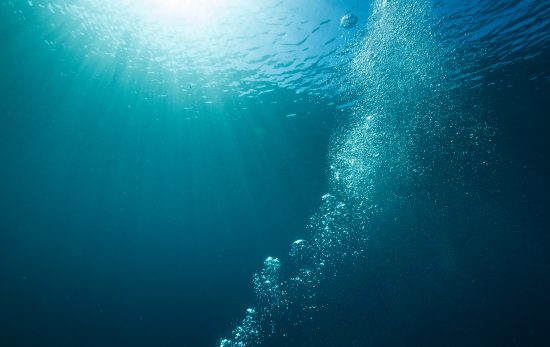
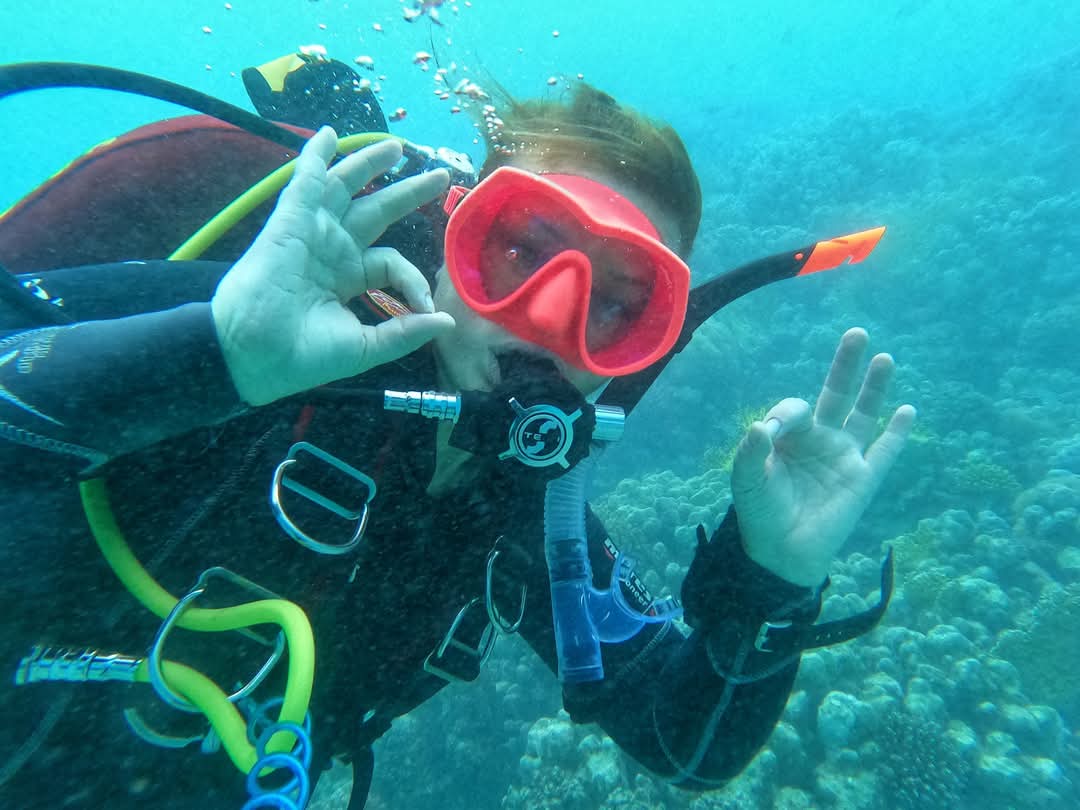
Most people think of diving as a skill-based activity: equipment, techniques, safety procedures, certifications, etc. And while all of that is essential, it’s rarely the reason why so many divers describe their first dives as life-changing.
What truly changes underwater is not just depth – it’s perception.
The Surface Mind
On the surface, our perception is fast, fragmented and externally driven. We process constant stimuli: sound, movement, conversations, notifications and expectations. Even in nature, the mind tends to stay busy, scanning and evaluating.
Many new divers bring this same surface mindset with them into the water:
- Rushed movements
- Shallow breathing
- Mental noise
- A strong need for control
And the ocean responds immediately.
Entering a Different State of Awareness
As descent begins, something subtle but profound happens.
Sound fades.
Vision narrows.
Movement slows.
Breathing, now audible and rhythmic, becomes the main anchor of attention. Unlike on land, it cannot be ignored. Each inhale and exhale directly affects buoyancy, air consumption and overall comfort.
Without realizing it, the diver shifts from thinking about the body to listening to it. This is not a technique. It’s a perceptual transition.
Depth Awareness vs. Surface Awareness
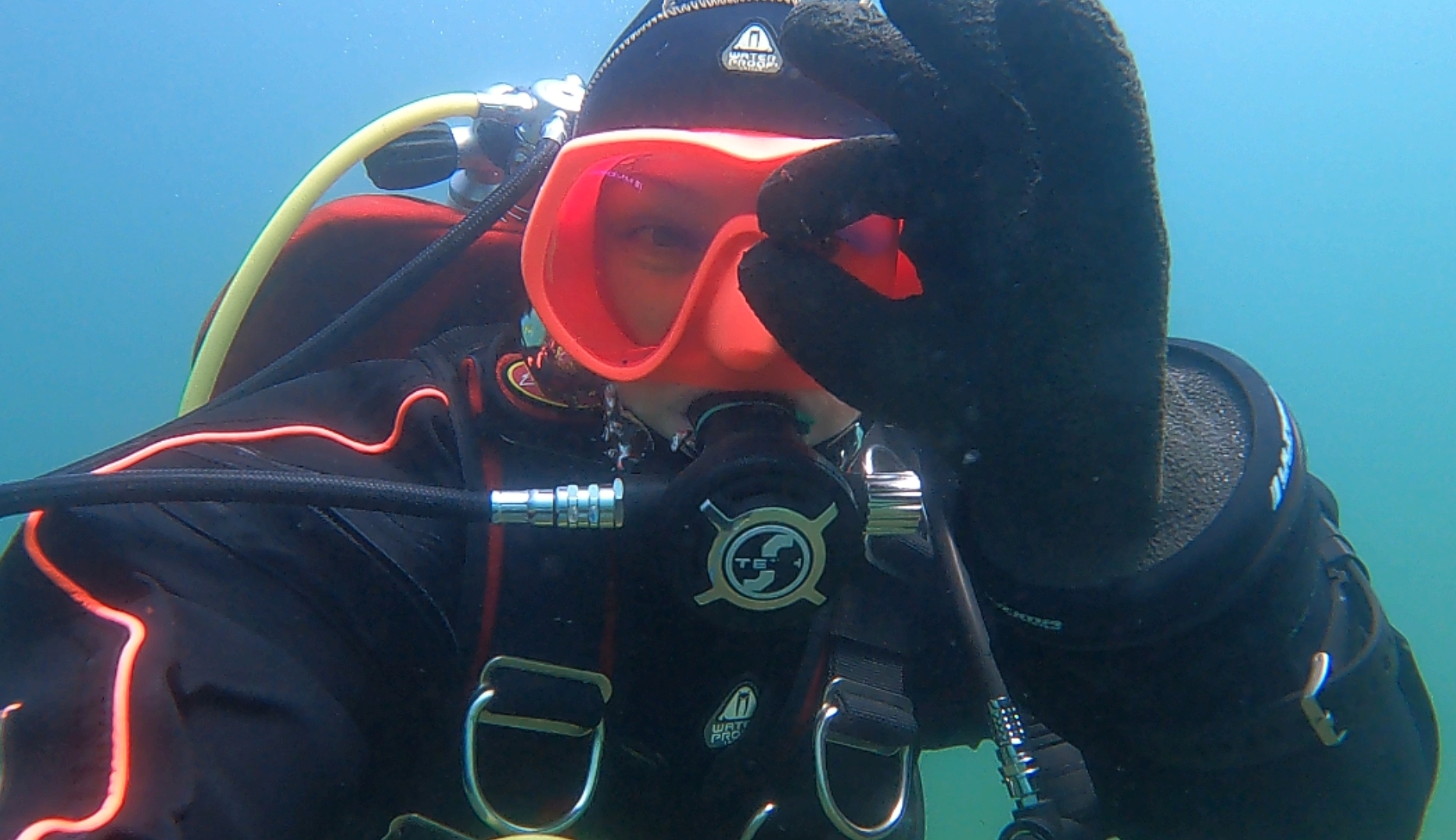
With depth, perception reorganizes itself:
- Time feels different
- Thoughts become less dominant
- The body leads, and the mind follows
This is why many divers report a sense of calm underwater that they rarely experience on land. The underwater environment does not reward mental distraction. It gently requires presence.
As an instructor, I’ve observed this moment a new diver’s mindset shifts countless times. This is the instant a diver stops fighting the water and starts cooperating with it. From that moment on, the dive changes.
Control Gives Way to Trust
On the surface, control feels necessary. Underwater, it becomes inefficient.
Excess tension increases air consumption. Overthinking disrupts buoyancy. Trying to dominate the environment leads to faster fatigue.
Divers quickly learn, often without being told, that ease produces better results than force.
This lesson doesn’t stay underwater.
Many divers later recognize the same pattern in daily life:
- Breathing through stress instead of resisting it
- Slowing down to gain clarity
- Trusting process over pressure
The ocean doesn’t teach these lessons verbally. It demonstrates them through direct experience.
Why This Shift Stays With Us
Unlike a meditation session or a workshop, diving embeds this perceptual shift into the body.
The nervous system remembers:
- How calm feels
- How silence sounds
- How little effort is actually required
That memory can be accessed again, sometimes years later, simply by returning to the water, or even by recalling the sensation of a slow, steady breath. For many divers, this is why they keep coming back. Not for adrenaline, but for coherence.
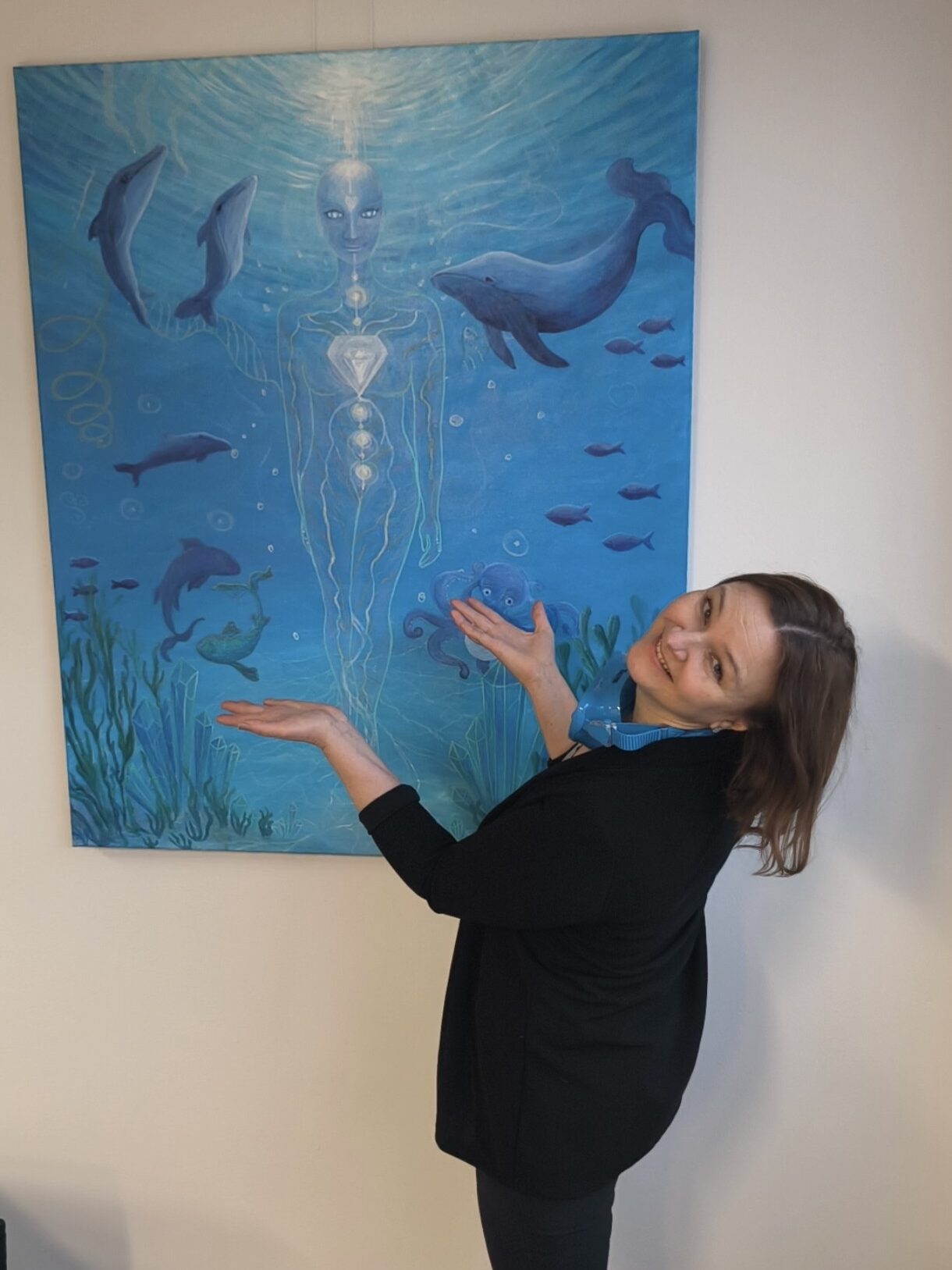
For me, this perceptual shift did not remain only a diving experience. Over time, it became the foundation of my creative work. Diving became both my teacher and my creative language.
Diving as a Creative Threshold
For some, the shift in perception goes even further. Artists, writers, photographers and creatives often describe diving as a space where ideas reorganize themselves. Without mental noise, intuition becomes clearer. Observation deepens.
In my own practice, these underwater states later found expression through writing and visual art. Not as technical dive stories, but as explorations of how perception changes when we move from surface reality into depth awareness.
Diving doesn’t just show us the ocean differently. It shows ourselves differently.
A Quiet Transformation
PADI often speaks about how diving changes lives. What’s rarely discussed is how quietly this change happens.
No dramatic moments are required.
No extreme depths.
No heroic narratives.
Just breath, water and attention.
And perhaps that is diving’s most lasting gift: a lived experience of presence – one that continues long after the gear is rinsed and the dive log is filled.
Experience the Shift for Yourself
Take your first breath underwater and discover how diving can change the way you see the world.
This article was written by guest blogger Elena Gushchina, metaphysician, Water Contactee, energy guide, artist, writer, media & digital “ninja,” marine biology specialist, dive business expert and a PADI Diving Instructor based in Helsinki, Finland. Through her visual scuba art, she creates art with light codes intended to help people reconnect with their authentic inner selves. You can view Elena’s water paintings at @lol2o ((lots of love)² + H₂O), or explore her books and other creative works here.