
Nitrox, formally known as enriched air nitrox (EANx), contains more oxygen than standard air. Throughout this article, we’ll use the term “nitrox.” It’s the name most scuba divers use instead of the longer technical term, enriched air nitrox (EANx).
In recreational scuba diving, nitrox diving refers to diving with enriched air that contains oxygen levels between 22% and 40%, rather than air, which has an oxygen level of 21%. Increasing the oxygen percentage reduces the amount of nitrogen in the breathing gas. As a result, divers can extend their no-decompression limits (NDLs) by absorbing less nitrogen. This makes nitrox diving a popular choice among divers and is one of the many reasons why the PADI Enriched Air (Nitrox) Diver Specialty course is the most popular specialty course PADI offers.
In this article, we will answer the most frequently asked questions related to nitrox diving.
How Does Enriched Air Work?
Nitrox diving is a type of recreational scuba diving that refers to breathing nitrox instead of regular air as the primary gas source. The elevated oxygen content reduces the nitrogen a diver absorbs. This contributes to longer no-decompression limits and may allow for longer dives, depending on air consumption. Also, nitrox may help diminish the risk of decompression sickness.
Why Do Divers Use Nitrox When Diving?
The primary application of nitrox is to facilitate longer dives by decreasing nitrogen absorption. This permits divers to dive longer without reaching no-decompression limits and helps avoid decompression sickness by reducing nitrogen accumulation within the body.
Nitrox is especially popular among divers who make multiple dives in a day. It’s also a great choice for liveaboard trips and dive vacations. Because enriched air reduces the amount of nitrogen absorbed during each dive, many divers choose this breathing gas to maximize their time underwater while staying within no-decompression limits. It’s also a popular option for underwater photographers and marine life enthusiasts who want to make the most of every dive. While nitrox isn’t necessary for every dive, it can offer significant advantages when repetitive diving is part of your plans.

How Deep Can You Dive on Nitrox?
The maximum depth of dives during which the diver breathes nitrox is determined by the percentage of oxygen in the mix. Oxygen becomes toxic at high pressures, so the maximum depth for a nitrox dive is less than it would be on air for some mixes.
The two most common blends for nitrox of 32% oxygen (EANx32) and 36% oxygen (EANx36). For example, the blend containing 32% oxygen (EANx32) has a maximum depth of 34 meters/112 feet. By contrast, if on air, the maximum recreational depth limit is 40 meters/130 feet. Oxygen toxicity is one reason divers analyze every cylinder and carefully plan each nitrox dive. This is also why it’s vital to become properly certified in the use of nitrox before using this breathing gas.
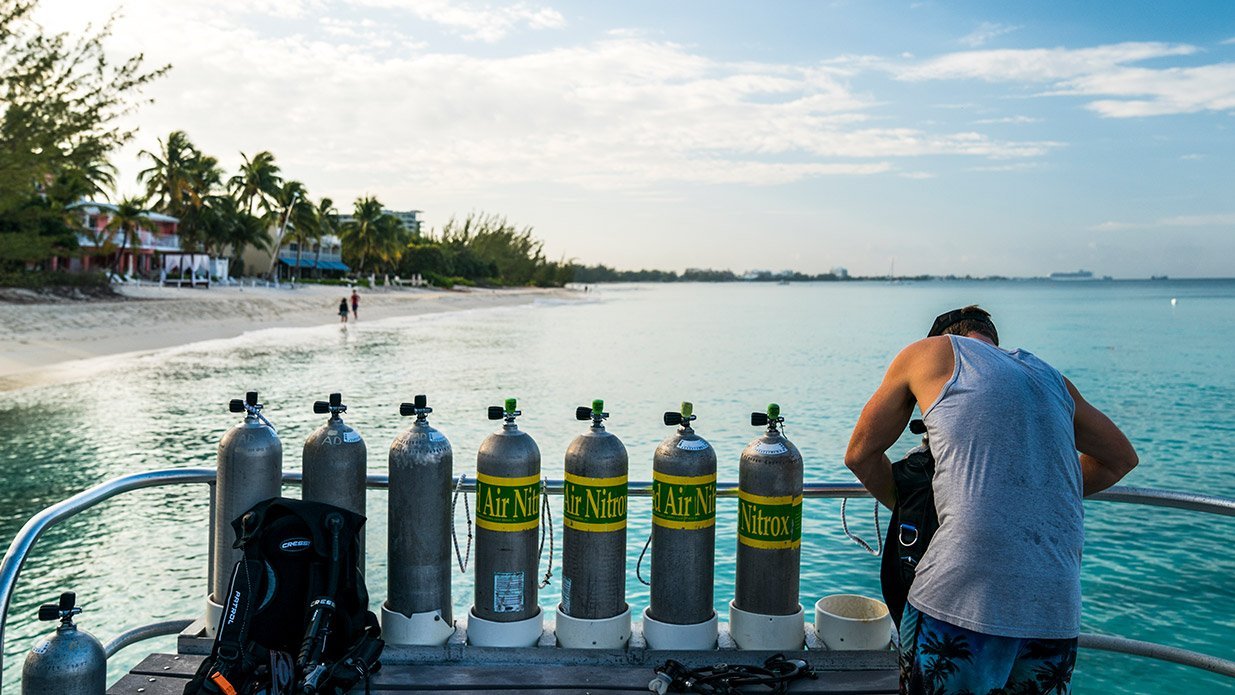
Many dive operators offer nitrox as an option, especially at destinations where divers make multiple dives each day. Before every nitrox dive, you’ll analyze your cylinder to confirm the oxygen percentage and label it correctly. You’ll also set your dive computer to match the gas mixture you’ll be breathing. These simple safety checks help ensure your dive plan is accurate and allow you to enjoy the benefits of enriched air with confidence. Performing these steps becomes second nature after completing the PADI Enriched Air (Nitrox) Diver Specialty course.
What Are the Benefits of Using Enriched Air?
Nitrox offers several benefits. These include longer bottom times, shorter surface intervals, and a reduced risk of decompression sickness. These benefits become more evident for those who make repetitive dives. Some divers report feeling less fatigued after diving nitrox. However, scientific evidence has not confirmed this benefit.
What Are the Drawbacks of Nitrox?
Nitrox has a few drawbacks when compared to air, although for many divers the positives outweigh the negatives. These disadvantages include:
- The need for an additional certification course
- The additional costs associated with nitrox cylinder fills
- The potential risk of oxygen toxicity at greater depths.
Is It Worth Diving With Nitrox?
Yes, diving with nitrox is worth it for many divers. It provides longer bottom times, shorter surface intervals, and a reduced risk of decompression sickness.
Once you’ve earned your PADI Open Water Diver certification, you can enroll in the PADI Enriched Air (Nitrox) Diver Specialty course. In fact, many new divers choose to complete the course early in their diving journey so they can take advantage of enriched air while traveling or diving locally. Because the course focuses on understanding enriched air, analyzing cylinders, and planning dives safely, it’s one of the easiest and most practical specialty courses to complete.
Why Should You Take a Course to Dive With Nitrox?
You need to be certified as an Enriched Air (Nitrox) Diver to get nitrox fills at your local dive shop or to use nitrox during your next dive trip. In the Enriched Air (Nitrox) Diver Specialty course, you’ll learn to use an oxygen analyzer, set up your dive computer for diving with different blends of nitrox, and prevent oxygen toxicity. You’ll also get more information about specific cylinder requirements for enriched air fills and more.
To become an Enriched Air (Nitrox) Diver, you must be at least 12 years old. You must also have completed the Open Water Diver course. Many divers combine the Enriched Air (Nitrox) Diver Specialty course with their Open Water Diver course or their Advanced Open Water Diver course. Be sure to enquire about this at your dive shop of choice.
Which Breathing Gas Is Right for You?
The answer to this depends on your diving goals. Nitrox is probably a better choice if you want longer bottom times and shorter surface intervals when making repetitive or deeper dives. But diving air may be more suitable if you usually make shallower dives and/or want to avoid the additional training and fill costs.
It’s also important to remember that nitrox isn’t automatically the right choice for every dive. Before each dive, consider your planned depth, dive time, and the oxygen percentage in your cylinder. These factors determine whether your chosen gas mix is appropriate. Every enriched air blend has a maximum operating depth (MOD), so divers must plan their dives accordingly and set their dive computers to the correct gas mix. Learning these procedures is one of the key skills covered during the PADI Enriched Air (Nitrox) Diver Specialty course.
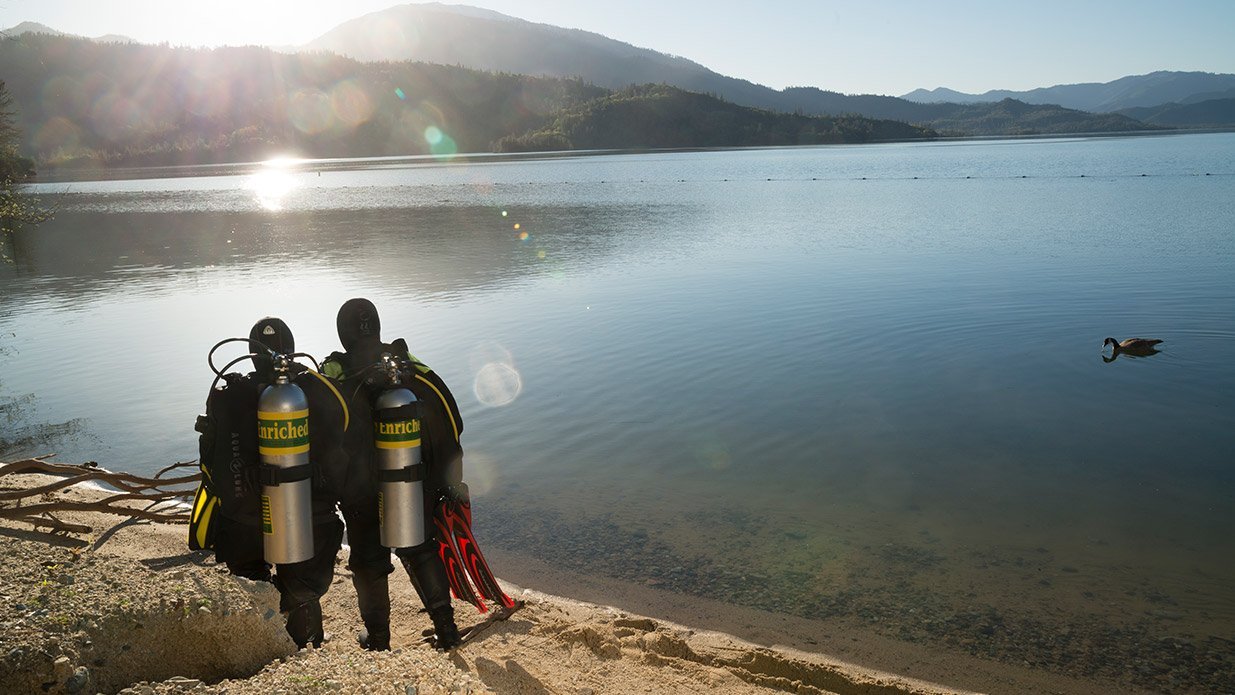
Although nitrox has several benefits for divers, it needs special training and certification to be used safely. The PADI Enriched Air (Nitrox) Diver Specialty course is designed to help you gain the knowledge and skills to safely use nitrox during your dives. This course covers everything from analyzing cylinder contents to planning dives with enriched air. The course can be completed dry and almost entirely online, although two optional and recommended dives are usually offered.
If you want to increase your bottom time and have shorter surface intervals between dives, the PADI Enriched Air (Nitrox) Diver Specialty course is your next step toward fun and exciting underwater exploration.