Sea slugs and nudibranchs are some of the most popular animals among divers. Their colorful appearance and shapes that look like their straight out of a Pokemon game make spotting different species around the world a bucketlist item for many. Below, we’ll discuss everything you need to know about sea slugs and nudibranchs. Once you know more about them, you’ll love sea slugs even more and look closer to spot one on your next dive.
What Are Sea Slugs?
Sea slugs are mollusks belonging to the class Gastropoda of the phylum Mollusca, with over 3,000 species found worldwide. They primarily inhabit the seabed in shallow seas and are distributed globally. Their colors vary widely, from vibrant to muted.
There are also variations with two pairs of gills (the ‘tentacles’ that stick up from their body are actually their ‘lungs’), some with a single pair that splits, and others without any at all.
Generally, sea slugs do not have shells, although some retain vestigial shells. Their forms and ecologies are extremely diverse, and their classification is still fluid.
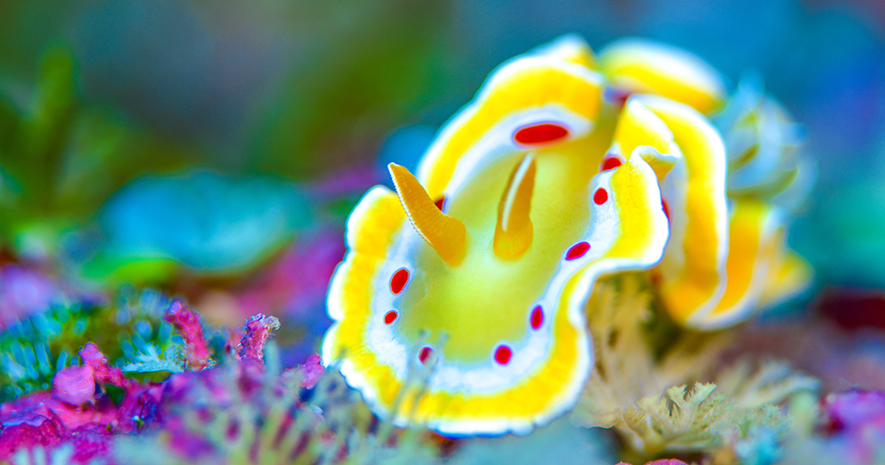
What Is the Difference Between Sea Slugs and Nudibranchs?
While many people use the term nudibranch ubiquitously, but that’s not always correct. All nudibranchs are sea slugs but not all sea slugs are nudibranchs.
Sea slugs belong to the class of Gastropoda, and the term is a common way to identify any snail or slug that lives in saltwater.
On the other hand, nudibranchs are sea slugs that belong to the order Nudibranchia, soft-bodied marine gastropod molluscs that no long use shells after developing past their larval stage.
Types of Sea Slugs
Below we’ll detail some of the different sea slugs divers can spot.
Headshield Species
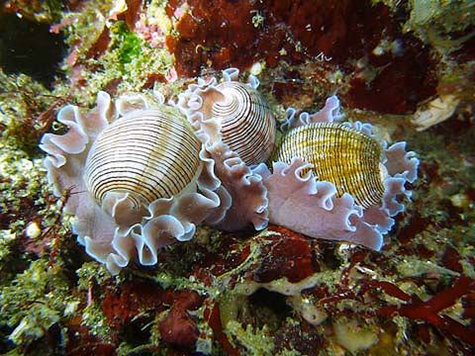
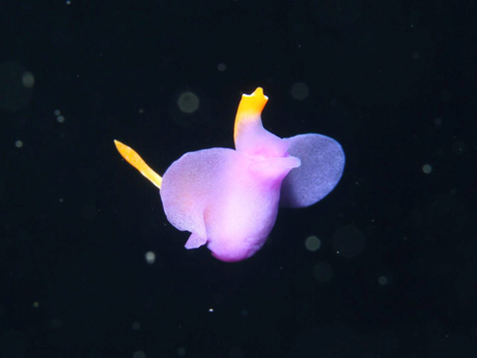
True to their name, a characteristic feature of these creatures is a shield-like protrusion on their head. This protrusion also serves as a sensory organ, helping them to detect their surroundings and search for food. Many in this group possess shells, including species like the flame scallop and miso clam. Members of the sea butterfly group, which flutter through the water, are also included in this category.
Sea Hare Species (Aplysiomorpha)
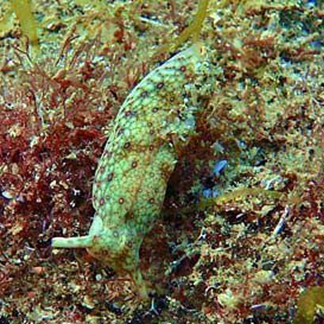
Often spotted crawling around in shallow waters and feeding on seaweed, the sea hare can take many forms. In Japan, many are about 15 cm (6 inches) in size, but some can grow larger than 30 cm (12 inches). When stimulated, sea hares can release a purple liquid, which is said to be the origin of their nickname ‘rain-bringer’. Their eggs are yellow and elongated, resembling noodle-like egg masses and are called ‘sea noodles’.
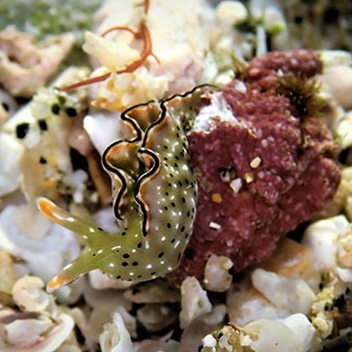
Sacoglossans
This large group consists of hundreds of species, with body lengths ranging from a few millimeters to about 5 cm (2 inches), mostly small in size. The group includes both those with and without shells, and these sea slugs come in various forms. They primarily feed on algae, using an organ called the radula to scrape and eat their food. Some, like the parrot green snail and leaf green snail, can incorporate the chloroplasts of the algae they eat into their cells and perform photosynthesis.
Nudibranchs
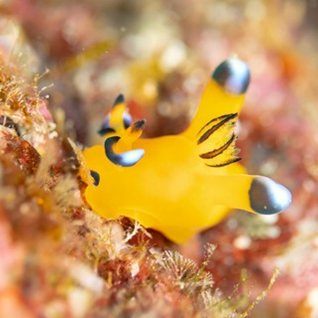
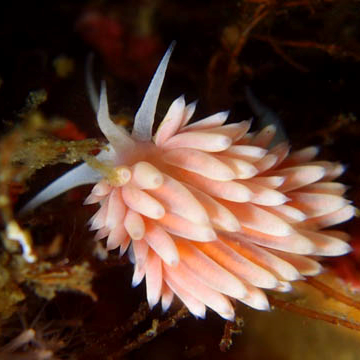
This group includes many sea slugs popular among divers. It encompasses species such as the Thecacera (commonly known as “Pikachu”), the blue dragon and Shaun the Sheep. These are just a few examples of the diverse sea slugs included in this group.
The Appeal of Sea Slugs From a Diver’s Perspective
As mentioned above, sea slugs are a favorite among divers, and there are lots of reasons why their popularity has soared over the years.
They’re Easy to Observe as They Don’t Move Much
One of the charms of sea slugs is that they don’t swim around quickly like many fish, allowing for thorough observation. Many sea slugs can be found in shallow waters, making them accessible even for beginners. It’s enjoyable to collect images of sea slugs in various colors and shapes. There are also opportunities to observe ecological behaviors, such as mating, laying eggs, and feeding.
They’re Can Be Seen in Low Visibility Waters
In seas with poor visibility, it can be challenging to observe marine life, but sea slugs, which do not move much, are easier to find and approach for close observation. Carefully searching the rocks and sandy areas right in front of you, you might find many sea slugs. It can be as exciting as a treasure hunt!
They’re Ideal Subjects for Underwater Photography
As mentioned above, sea slugs, with their slow movements, are the perfect subjects for underwater photography. They are easy to focus on, and it’s simple to apply underwater lighting to capture their beautiful colors accurately. You can also experiment with various angles. For those just starting with underwater photography, practicing with sea slugs as subjects is highly recommended.
Sea Slug & Nudibranch Facts
For some reason, nudibranchs and sea sllugs are often associated with being boring. Maybe that’s due to their land counterparts, the slug, but more than likely it’s because divers just don’t know enough about these incredible creatures.
Here are some facts about sea slugs that prove they deserve extra appreciation.
There Are Over 3,000 Species
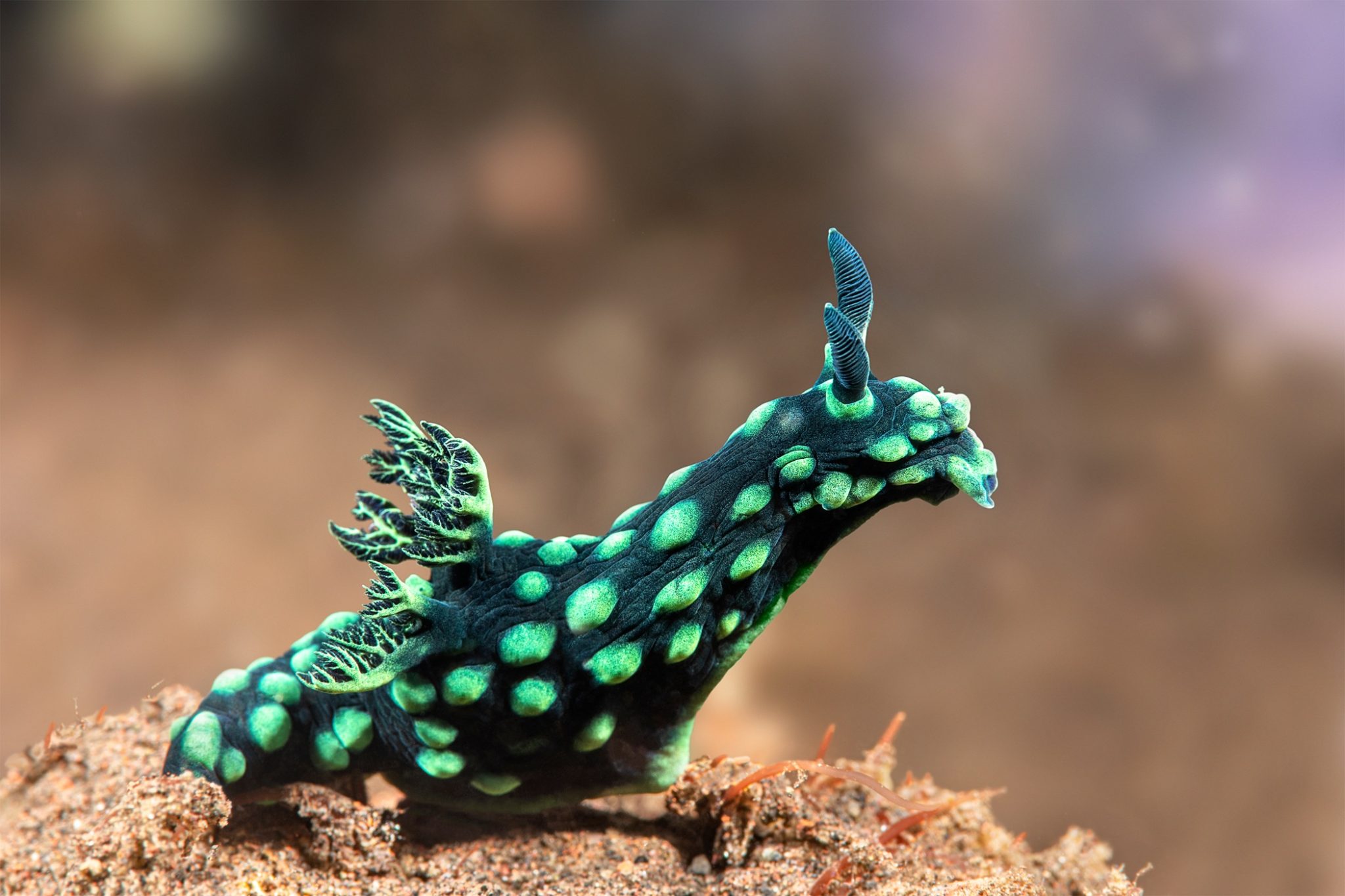
Every new nudibranch you see on a dive will be a completely different experience. That’s because there are over 3,000 species of nudibranchs, and there are still more being discovered today. Nudibranchs can be seen in a wide variety of colors, shapes and sizes, and are found in both cold and warm waters across the world.
Nudibranchs Are Toxic
Divers don’t have to worry about nudibranchs being poisonous, but predators do. Since they lack any protective shell, nudibranchs send warning signals that let other animals know they might be toxic to help keep enemies at bay.
They Change Color Based on Their Diet
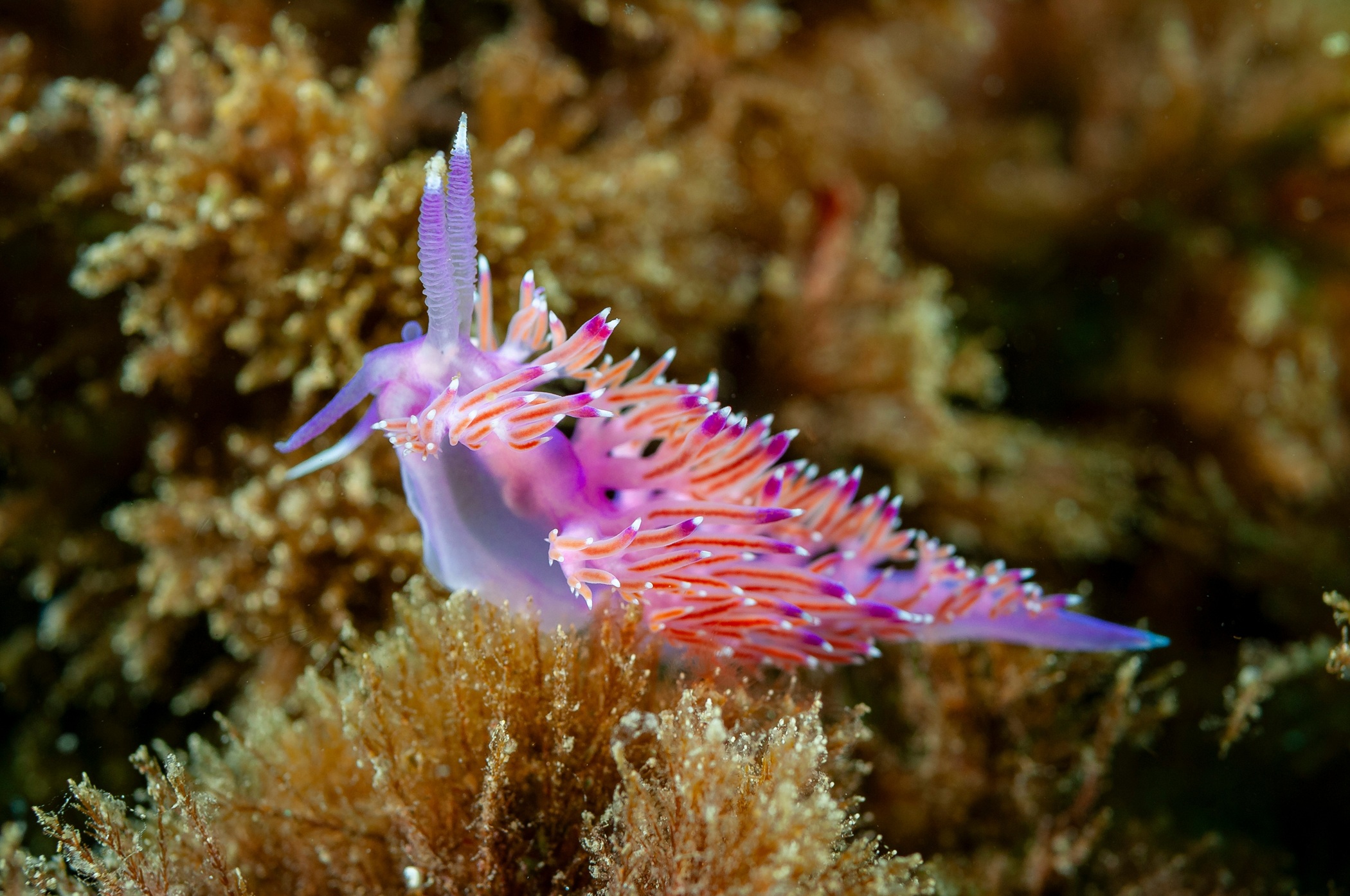
Nudibranchs are carnivores and eat other small animals such as hydroids, sponges, anemones and barnacles. But, what makes the nudibranch unusual is that they often adopt the color of their prey, leaving them looking brilliant, colorful and perfect for photos!
They Leave a Slimy Trail
As nudibranchs move across the ocean floor with their foot, they leave a trail of slime behind. This slime trail actually serves a clever purpose – it communicates messages to other nudibranchs, such as where to find a mate or that danger is nearby.
Sea Slugs Do Not Have Distinct Male or Female Sexes
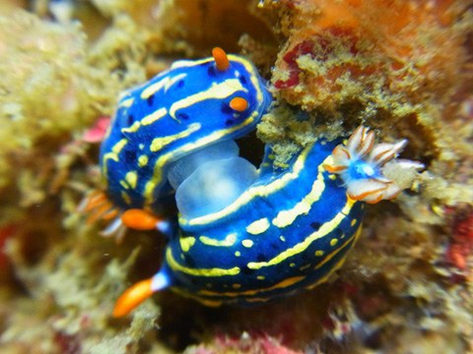
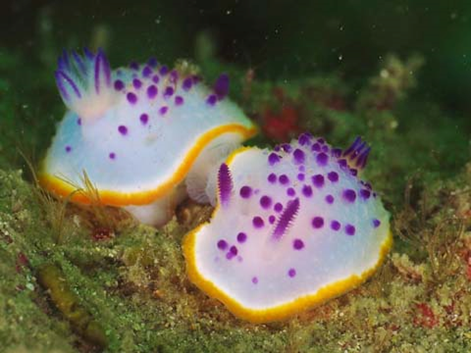
Sea slugs are hermaphrodites, meaning each individual inherently possesses both male and female reproductive organs. However, they cannot reproduce on their own and must mate with another individual to do so. When sea slugs of the same species meet, they extend their reproductive organs from the opening on the right side of their body to mate. If you see two sea slugs of the same type sticking together, take a moment to observe them closely.
Sea Slug Eggs Look Like Flowers
While diving and observing rocky or hard coral surfaces, you may come across beautiful spiral masses that resemble rose flowers. These are sea slug eggs. The color and shape of the eggs vary depending on the species of sea slug, but they are typically laid in a clockwise spiral with countless eggs densely packed together. Many sea slugs have their spawning season in the spring, so be sure to look for these underwater ‘flowers’ yourself.
There Are Sea Slugs That Eat Other Sea Slugs
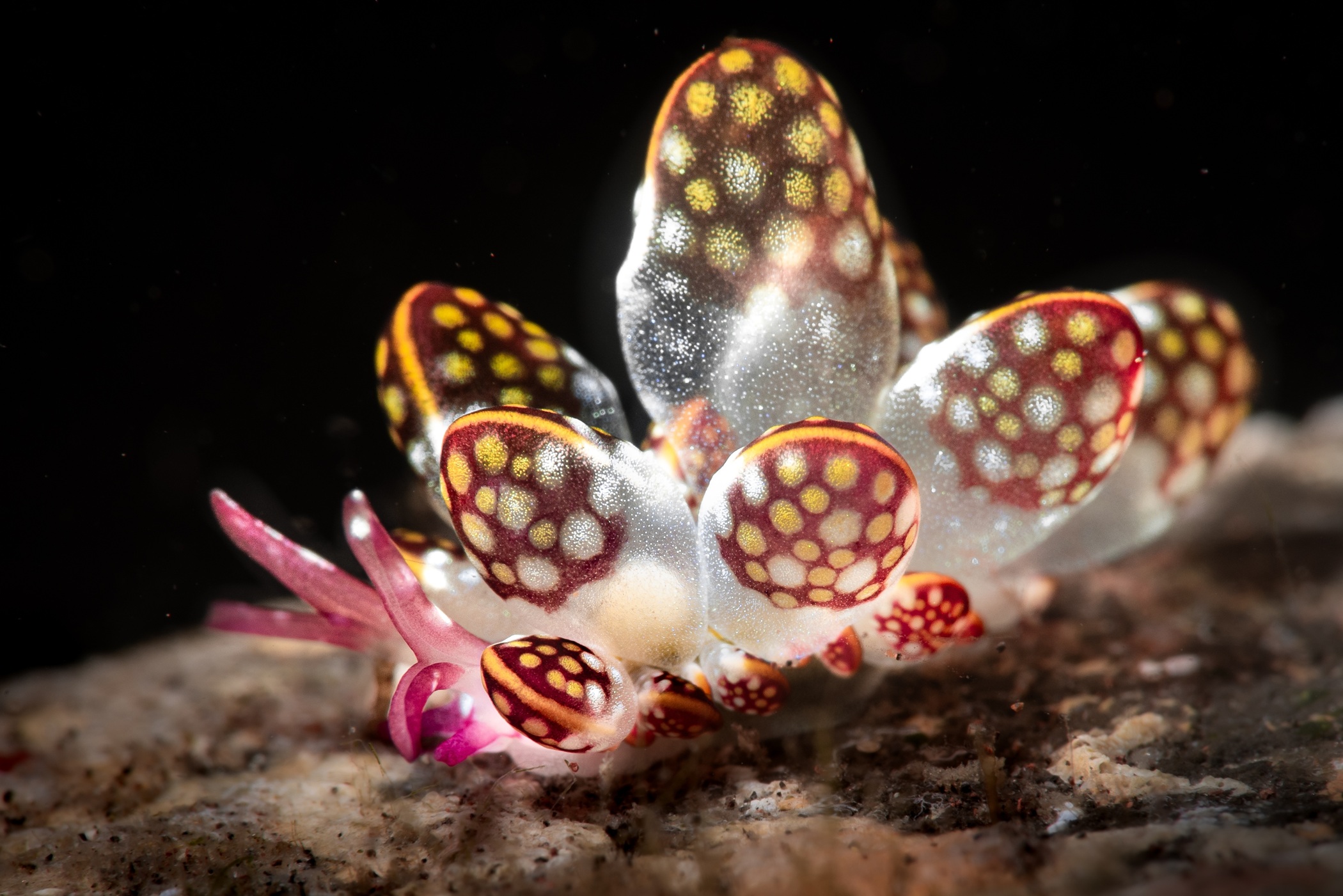
The diet of sea slugs varies depending on the species, but surprisingly, there are sea slugs that eat other sea slugs. This group of sea slugs, known as gymnodorids, can even eat sea slugs larger than themselves or other larger marine life, such as sea stars. Despite their seemingly docile appearance, sea slugs can have unexpected behaviors.
Sea Slugs Have Eyes But They Aren’t Very Functional
When asked where a sea slugs eyes are, many people would be tempted to answer that the eyes are on “the tip of the antennae on the head,” but the sea slug’s eyes are not located there. Most sea slugs’ eyes are located near the base of their antennae and are small black dots, so likely don’t even notice them. Depending on the type of sea slug, the eyes can be almost non-functional, and it seems that sea slugs can’t see details, like color.
Ready to dive in with sea slugs and nudibranch? Plan your next underwater adventure with PADI Travel. Book a liveaboard trip, dive resort stay or a day of diving directly online and get ready to spot your favorite macro marine life soon!