While seahorses have long captivated the imagination, their lesser-known Australian cousins arguably upstage them.
Both the weedy seadragon (Phyllopteryx taeniolatus) and the leafy seadragon (Phycodurus eques) are visual marvels. For divers, it’s mesmerizing to watch as they propel themselves through the water upright with their modified pectoral fins.
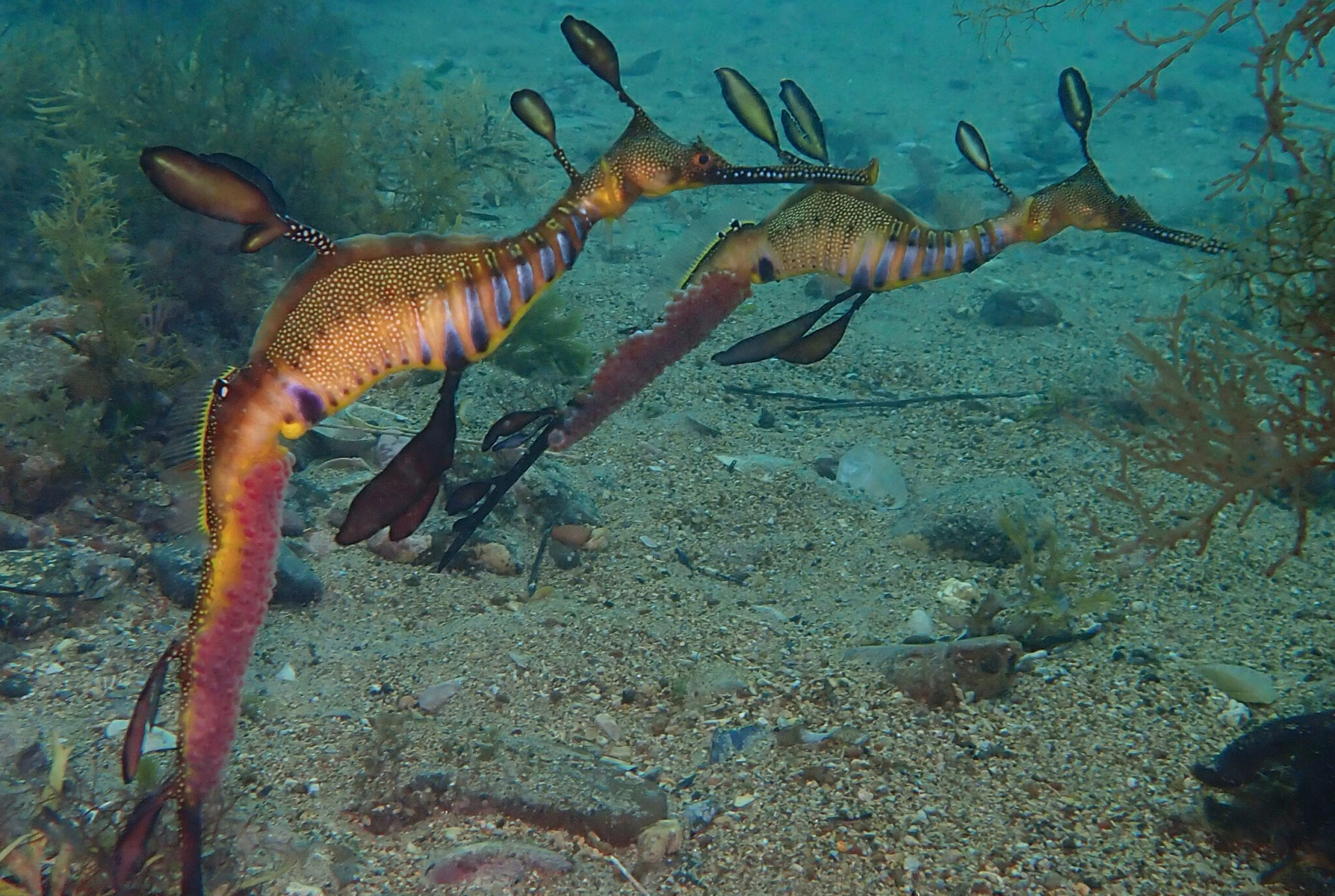
Seadragons are in the family Syngnathidae, which also includes seahorses and pipefish. What makes Syngnathidae unique is that the males in this family carry the fertilized eggs until hatching. Male seahorses have a specialized pouch to deposit the eggs within, while seadragons hold the eggs via a sticky patch on their tails. Seadragons can carry around 120 eggs at a time!
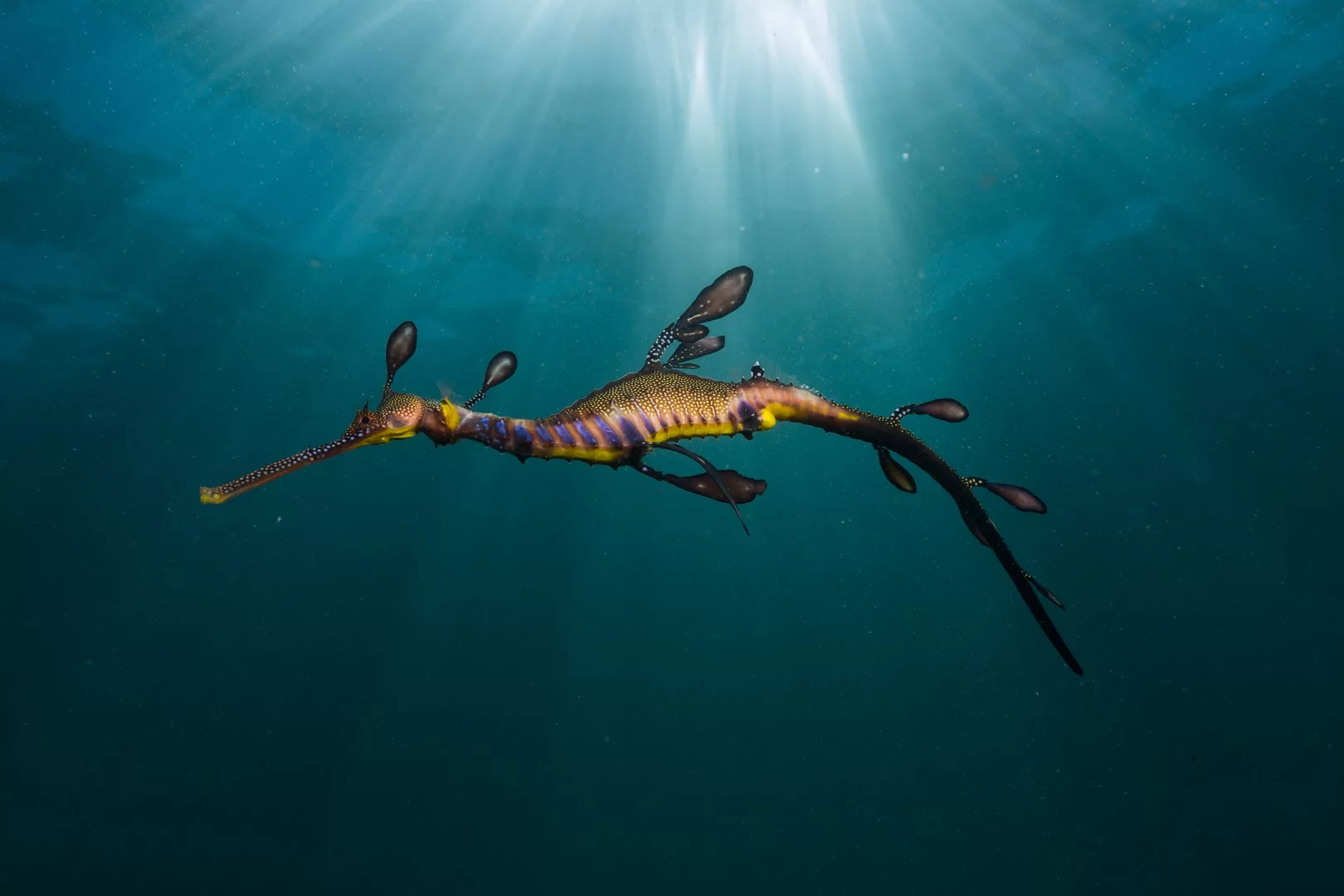
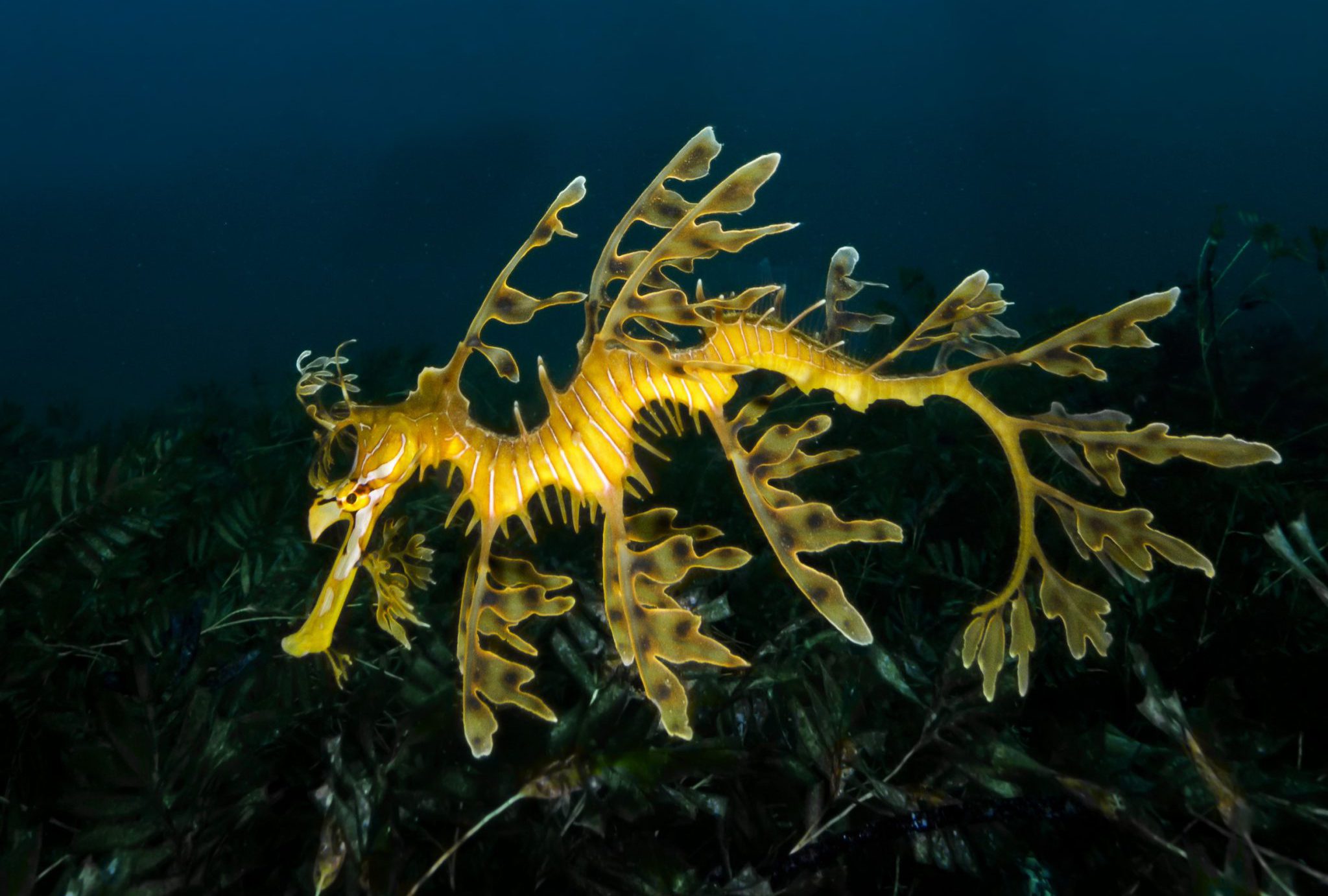
But what’s the difference between these seadragon species? The weedy seadragon resembles an underwater dragon, often displaying brilliant shades of yellow and purple, while the leafy seadragon is more muted and incredibly camouflaged. The latter’s appendages mimic the undulating movements of seaweed floating through the water.
Both species are restricted to the waters around southern Australia. But they’re not found just anywhere in Australia – their habitats are highly specific.
Keep reading to learn the best places to dive with leafy and weedy seadragons.
Where To Find Weedy Seadragons
Weedy seadragons, also known as common seadragons, are found in the temperate coastal waters of South Australia and parts of Western Australia. They inhabit sheltered reefs, kelp forests and seagrass beds. They can be spotted in both shallow estuaries and deep offshore kelp reefs.
Due to their habitat diversity, you have a chance of finding weedy seadragons while both shore and boat diving.
Where To Find Leafy Seadragons
These incredibly camouflaged creatures are often mistaken as seaweed, rendering them extremely difficult to spot. Get ready to practice patience.
Leafy seadragons are typically found over sandy patches near rocky reefs or clumps of seagrass in waters up to around 50 meters (160 feet) deep. They are commonly sighted by divers near Adelaide in South Australia, particularly at Rapid Bay, Edithburgh and Victor Harbor.
Leafies are a bit more specialized than their weedy counterparts – and their range is more limited, which makes sightings extra special and highly location-specific.
Best Places To Dive With Seadragons
If you’re on the hunt for a seadragon, these are the best dive sites to explore on your quest. Remember, stick to kelp forests, seagrass meadows and other algae-covered environments. Seadragons prefer habitats where they blend in.
Note that jetties offer ideal conditions for macroalgae growth. Consequently, piers across southern Australia provide excellent habitats, and they are some of the best places to dive with weedy and leafy seadragons.
Bremer Bay
This little-known spot in southwest Australia has thriving seagrass meadows where both weedy and leafy seadragons reside. The seagrass beds here are believed to offer prime breeding habitat. Divers from around the world travel to Bremer Bay just for a chance to get a glimpse of breeding dragons.
The area is also a bit of a hidden gem, offering sprawling white sand beaches with minimal coastal development.
Rapid Bay
South of Adelaide, Rapid Bay is home to a stable population of both species, and it’s known as one of the best places to dive with weedy and leafy seadragons in the world. It’s especially famous for leafy seadragons living under the old jetty structure.
Edithburgh Jetty
Across from Rapid Bay, Edithburgh is one of the most consistent sites for leafy seadragons, which are more rare. However, the jetty’s dense algae and kelp beds attract both leafies and weedies, and it’s often considered the second “must-dive” seadragon location after Rapid Bay.
Victor Harbor (Encounter Bay/Bluff Area)
Further along the Fleurieu Peninsula, Victor Harbor offers reef and jetty environments where seadragons can be spotted, especially in calmer conditions. Sightings are less guaranteed than in Rapid Bay, but the area is still a recognized habitat.
Portsea Pier (Victoria)
Portsea Pier is one of the best-known weedy seadragon sites outside of South Australia. The kelp-covered pillars and adjacent reef structure make it a reliable place to find weedies year-round.
Flinders Pier (Victoria)
Another classic weedy seadragon hotspot, Flinders Pier is nicknamed as the weedy seadragon capital of the world. It was even featured in BBC’s Blue Planet II. This site is sheltered and very shallow (watch out for boats overhead) with seagrass and a pier that supports resident populations. Divers often repeatedly find the same individuals here due to their site fidelity.
Leafy seadragons, however, are rare at Flinders Pier.
The Steps (Sydney)
Appropriately named, divers must descend a long flight of steps before reaching a rocky platform at this dive site in Botany Bay. Due to an abundance of rocky reefs and kelp forests, it’s a prime habitat for weedy seadragons. The Steps is ideal for those wishing to spot the elusive creatures without travelling across the country from Sydney.
What Else To Know About Diving With Seadragons
Seadragons are active during daylight, so you won’t have much luck spotting them on night dives.
Seadragons also prefer temperate – not tropical – waters where kelp forests thrive; in other words, it’s going to be a chilly dive. Consider enrolling in a dry suit diving course to stay warm and dry during your seadragon search.
There is also technically a third seadragon species, the ruby seadragon (Phyllopteryx dewysea), but it’s been recorded only six times in the wild. It was first documented in 2015, and very little is known about it. Maybe you can be the diver to change that. But please don’t touch them or attempt to remove them; all seadragon species are protected under Australian law, and the animals are incredibly fragile.
Go Diving With Seadragons
Are you ready to go diving with seadragons? Find a PADI Dive Center in South Australia today.