If you’ve been a diver for a while, you’ll know that sci-fi has nothing on reality. Aliens from outer space? Don’t need ‘em. Look to the ocean for stuff that’s really weird. While the deep sea is famous for its abundance of strange marine life, even the house reef behind your local dive center can be teeming with oddities. You just have to know where to look!
Here are seven strange sea creatures to keep an eye out for on your next dive or snorkel trip — and how to spot them.
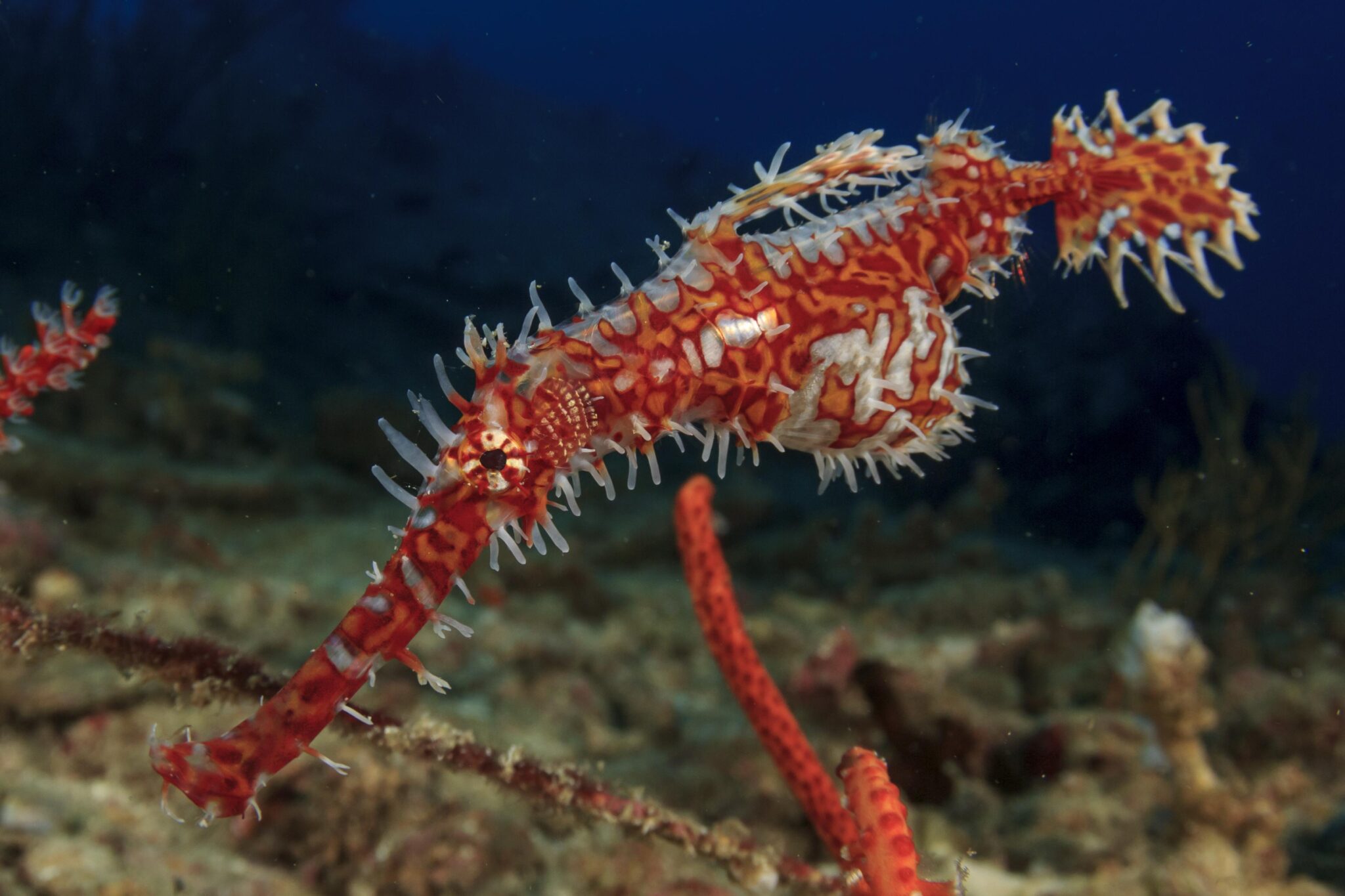
1. Ornate Ghost Pipefish (Solenostomus paradoxus)
Most people are familiar with the leafy sea dragon, the strange seahorse cousin that likes to cosplay as a piece of seaweed. But have you met the ornate ghost pipefish? It follows the same concept, except the ornate ghost pipefish mimics branching coral.
Ornate ghost pipefish come with all the regular wackiness of the Syngnathidae family, which includes seahorses and pipefishes. It’s the males who become “pregnant” for example. But it’s their singular dedication to camouflaging themselves as corals that makes these pipefish truly worthy of sci-fi. You may have to rely on an experienced dive guide if you want to spot one. They are often found hanging upside-down and motionless, blending in perfectly with the surrounding coral.
- Where to find them: Ornate ghost pipefish inhabit the tropical Indo-West Pacific. It’s best to ask your dive guide to keep an eye out for them, because they’re champions of camouflage.
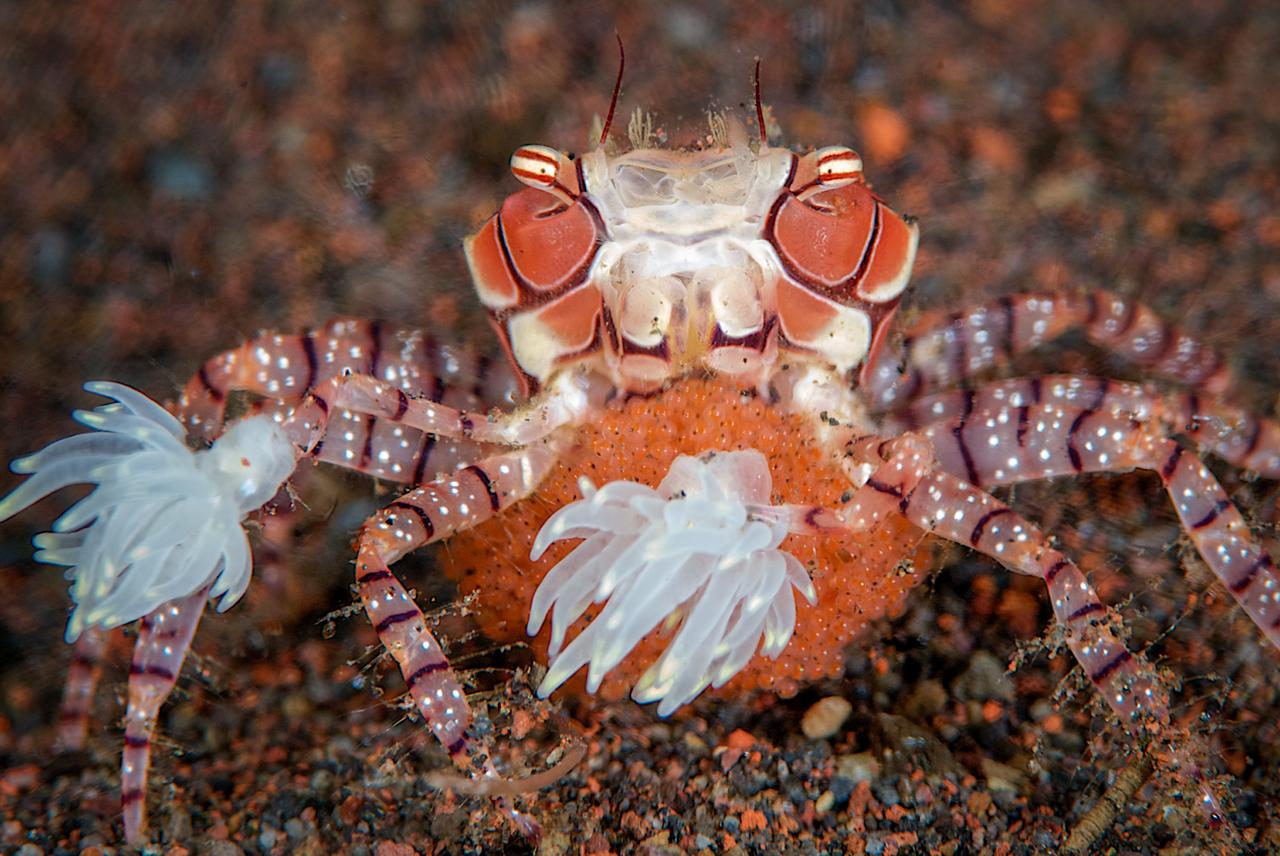
2. Pom-Pom Crab (Lybia sp.)
Crabs of the genus Lybia are not an uncommon sight on reefs in the Pacific region. They are small, growing no more than 2.5 centimeters (1 inch) in diameter. You might think this would make them shy and inoffensive, preferring to hide away from larger critters with a taste for crab sticks. However, you would be wrong!
These colorful, patterned little crabs steal pieces of anemone and attach them to their claws, allowing their stinging pom-poms just enough food to survive. What is the purpose of the anemones? To act as boxing gloves and as the crabs deter their adversaries. Whether it’s a hungry fish or an over-curious human, if you bother a pom-pom crab, you can expect to receive a tiny but stingy punch.
- Where to find them: Try a muck dive among coral rubble, particularly in Southeast Asia.
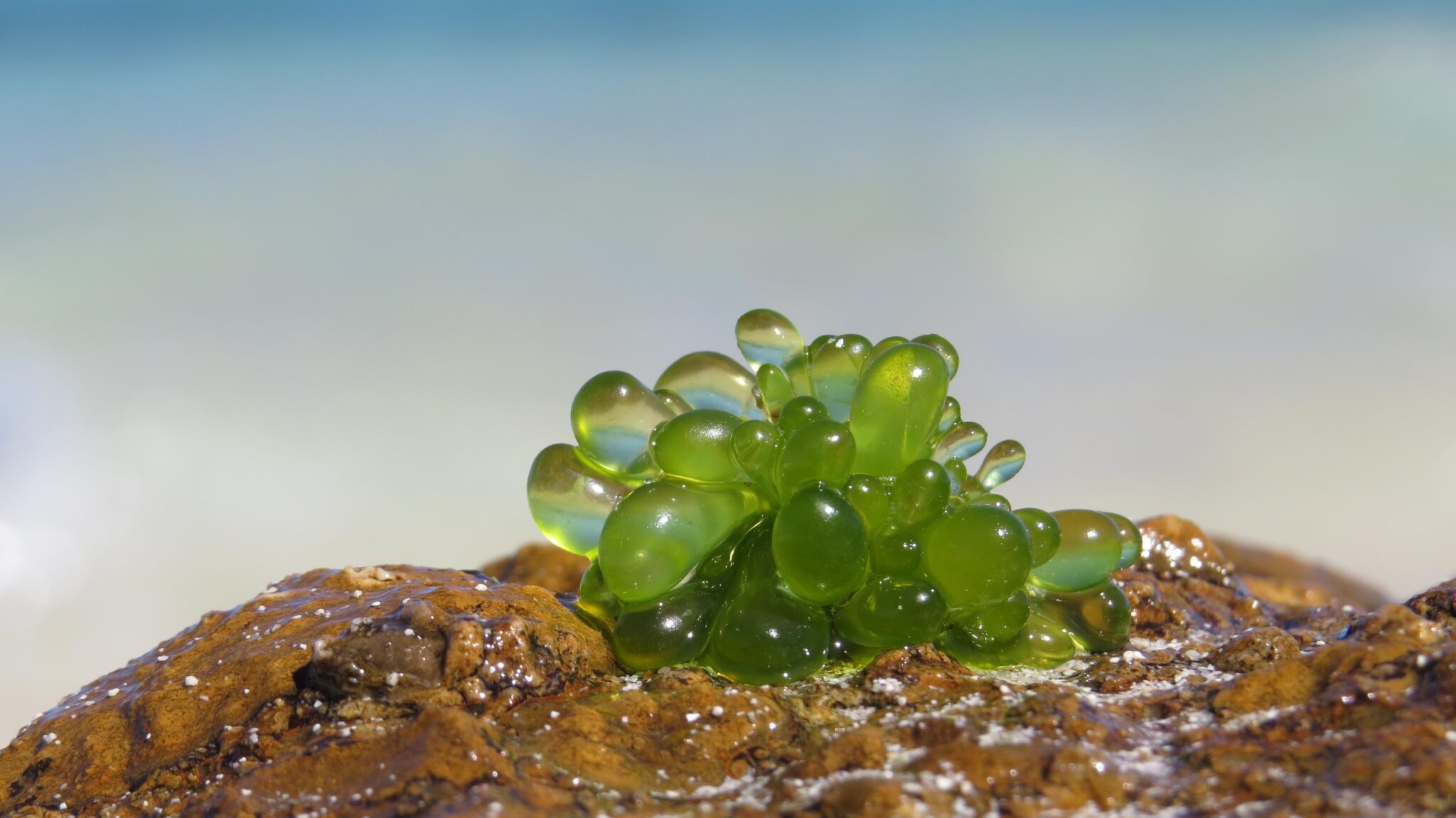
3. Sailor’s Eyeballs (Valonia ventricosa)
Full disclosure: sailor’s eyeballs are actually more commonly known as bubble alga. Still, “sailor’s eyeballs” has a better ring to it, don’t you think? The name certainly seems appropriate for this shiny, perfectly round and perfectly emerald green solitary alga. You really could believe someone lost a very unusually colored glass eye on the reef.
As with most of the creatures on this list, weirdness isn’t just skin deep with Valonia ventricosa. Found in tropical and subtropical seas across the world, this is in fact one of the wolrd’s largest unicellular organisms! Although they can reach the size of a large marble, they consist of one cell. How’s that for weird?
- Where to find them: Look for an unusual green shine among coral rubble when diving in any tropical or subtropical water, as they are widespread.
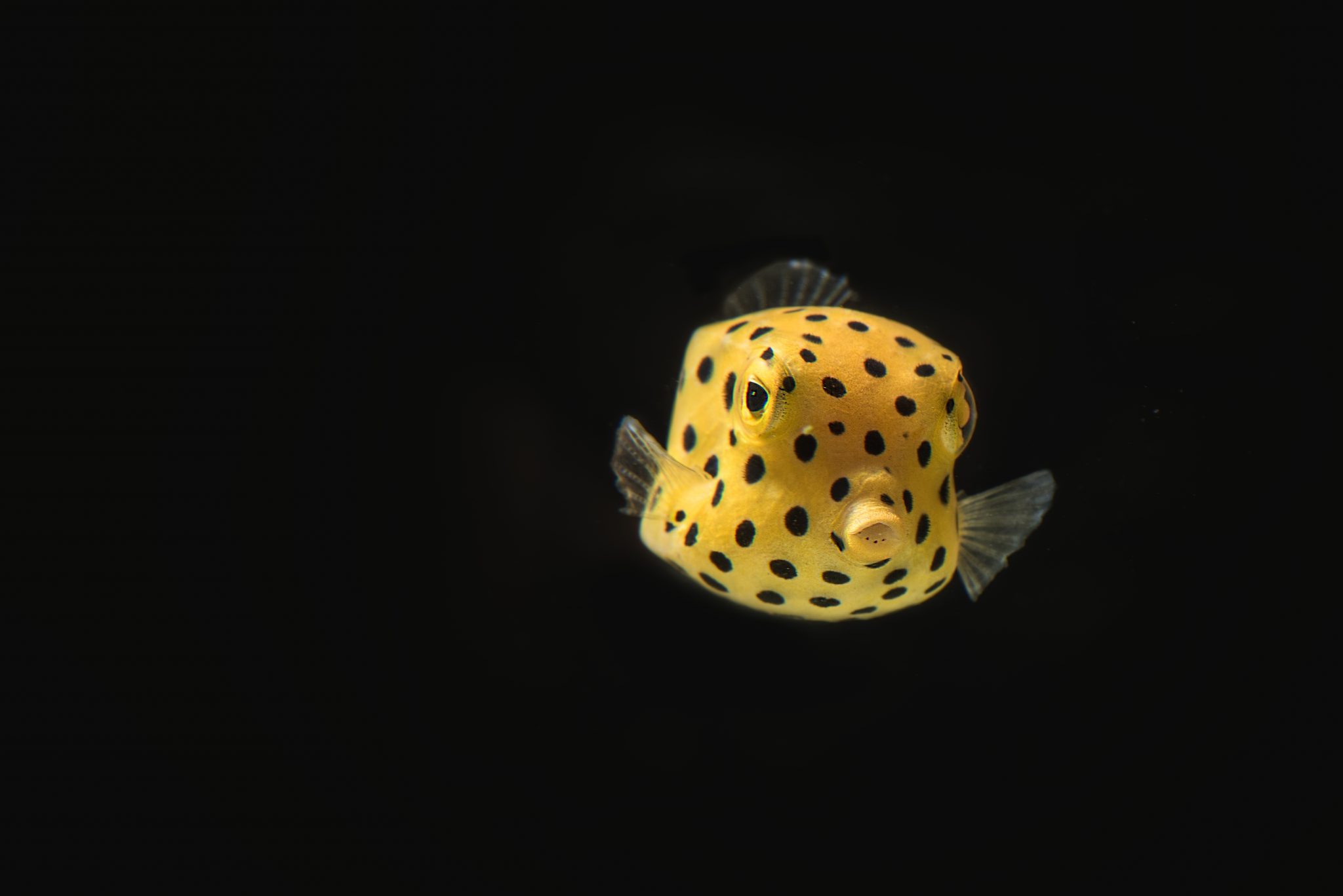
4. Yellow Boxfish (Ostracion cubicus)
There are more weirdos than we can count in the family Ostraciidae. These include boxfishes, trunkfishes and even the wacky horned cowfish. But only one of these fish has ever had a car based on it, and that’s the yellow boxfish. In 2005, Mercedes-Benz unveiled the Bionic, proving that the boxfish’s strange appearance is definitely better suited to a fish than a car.
Mercedes engineers were inspired by the strange design of the boxfish, with a rigid, boxy carapace and flexible fins that allow it a sort of hovering, helicopter-like swimming style. The designers presumed it would make for a highly aerodynamic vehicle (which it didn’t). We’re just glad they left out the big, rotating eyes and potent neurotoxin found in the skin!
- Where to find them: The yellow, polka-dotted juveniles live among branching corals for protection. Once they become big and blue (though no less odd), they become free-swimming.
5. Caribbean Reef Squid (Sepioteuthis sepioidea)
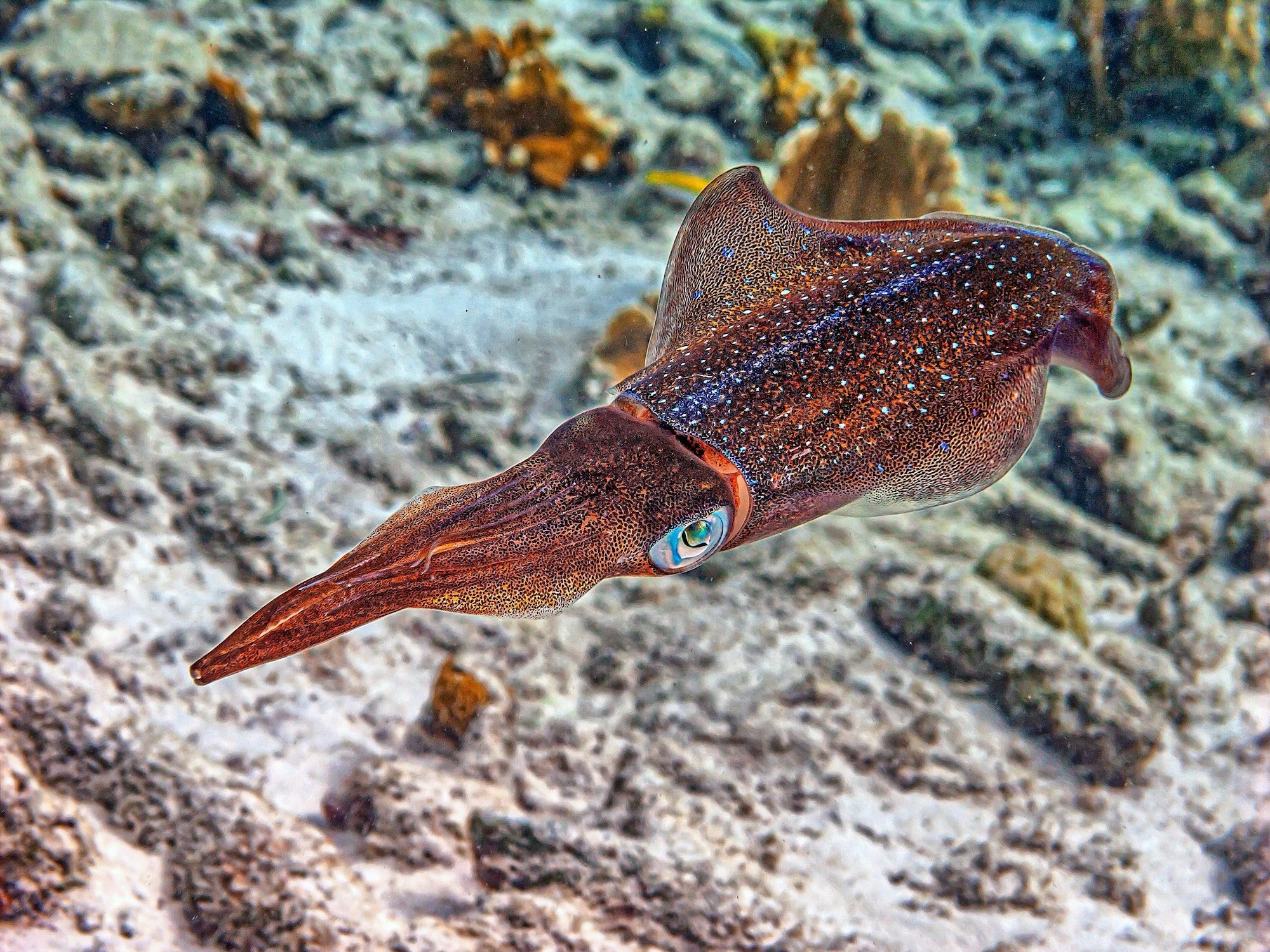
It’s a school of fish! No, wait, it’s a group of cuttlefish! No, wait… what is that? It’s the Caribbean reef squid, of course. It’s a squid that does everything we don’t expect from a squid. Forget about night dives and deep water, because as their name suggests, Caribbean reef squid are found in the shallows in the Gulf of Mexico and Caribbean Sea.
Active during the day, these small squids travel in groups of around ten individuals. From a distance, they can look like an odd pack of fish, until you get closer and spot their saucer-like eyes, face tentacles and rainbow-y, copper-colored body. Reef squid communicate not only by moving their tentacles into different postures, they also flash different colors and patterns to make their feelings known to their peers.
- Where to find them: In protected spots in the Caribbean shallows, like sheltering under boats.

6. Harlequin Shrimp (Hymenocera picta)
This one’s a doozy for macro lovers. The harlequin shrimp may look more like a delicate orchid flower than a reef-dwelling crustacean, but its floral appearance belies a more hardcore lifestyle. These eye-catching shrimp are actually ruthless hunters and killers of sea stars. They even possess claw spikes that allow them to pierce their prey’s tough skin.
When a harlequin shrimp approaches a starfish, including the occasional invasive, coral-wrecking crown-of-thorns, it first flips it on its back to immobilize it. After this, the star remains alive for weeks as its beautiful attacker slowly consumes its legs — a level of brutality we’re more familiar with on the African Savannah.
- Where to find them: Sheltered reefs in the Indo-Pacific. Try a macro photography dive in Southeast Asia.
7. Giant Oceanic Manta Ray (Mobula birostris)
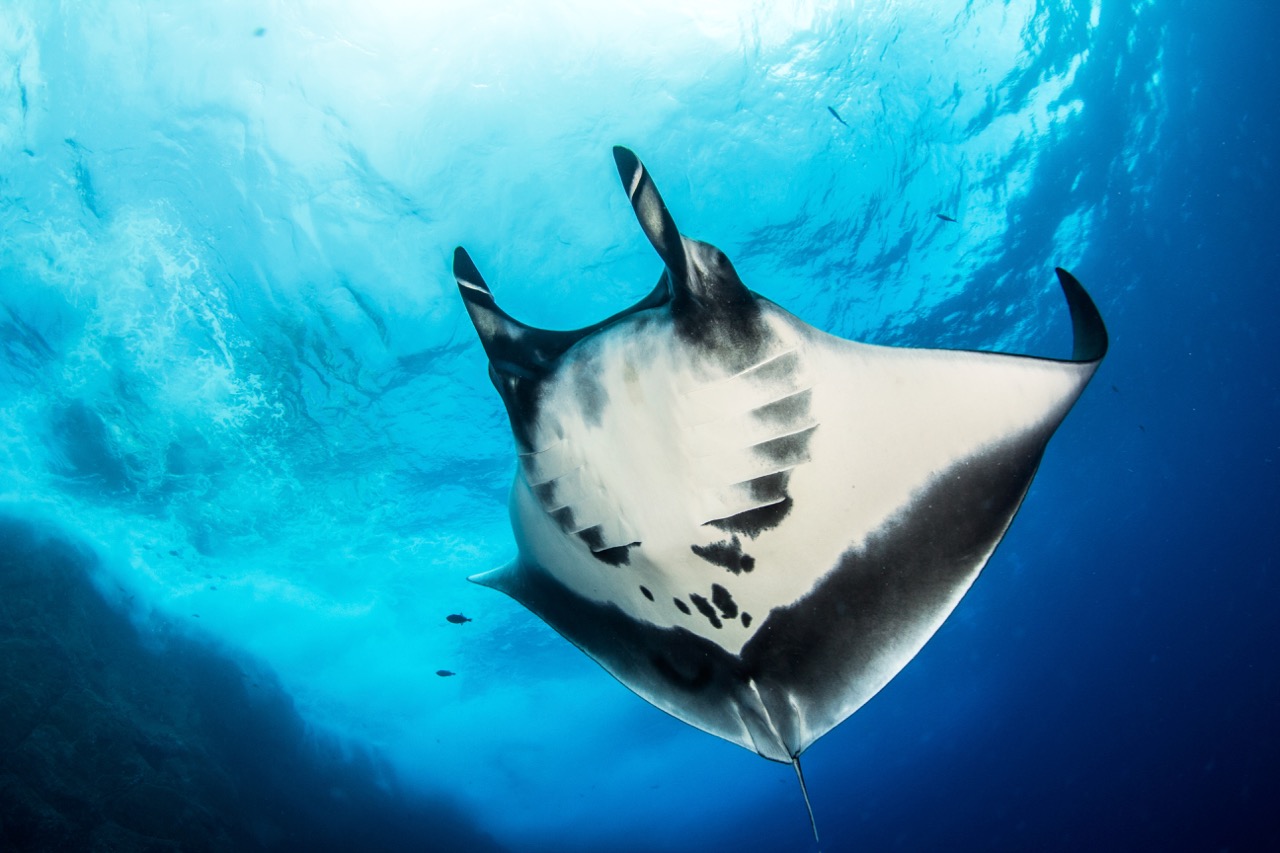
We said we’d give you science fiction, and the mothership has just arrived. The mere sight of a giant oceanic manta ray can be enough to bring divers to tears — so gentle, so calm and so utterly, mesmerizingly different.
Between the 7.6-meter (25-feet) wingspan, the two strange cephalic lobes protruding from the face, the army of funky groupies (like remoras, better known as suckerfish) and the massive, plankton-sucking mouth, does it really get any weirder than the oceanic manta ray? We doubt it, and we can’t get enough of them.
- Where to find them: Join targeted dives at one of the many manta ray destinations. There are options for every month of the year.
Want To Spot These Strange Critters?
In conclusion, truth really is stranger than fiction — especially underwater. Get started on your PADI Open Water Diver course if you’d like to explore the secret sci-fi world under the surface, or book a trip through PADI Travel if you’re already certified. No matter where you end up, you’ll be sharing the reef with some of the strange marine life that calls our blue planet home. Just remember to look, not touch, as protecting wildlife is what matters most — and it keeps you from discovering firsthand what an anemone “glove punch” feels like.