
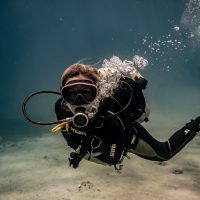
If you’re thinking about enrolling in the PADI Divemaster Course, congratulations — you’re on your way to becoming a PADI professional. The Divemaster course will prepare you to lead dives, assist on courses and act as a role model for marine conservation.
Before taking the plunge, you may be wondering exactly what is included in the course. There are numerous requirements and standards to meet that may seem overwhelming at first. Potential candidates may be discouraged by all the Divemaster course segments. But don’t worry, your instructor will guide you every step of the way, helping you develop into a confident and capable PADI Pro.
Remember that the Divemaster course takes time, ranging anywhere from two weeks to six months. This gives candidates ample time to complete all the requirements and gain practical experience leading other divers.
Ready to jumpstart your PADI career? Keep reading to learn about the components of the Divemaster course.
First, Some Prerequisites
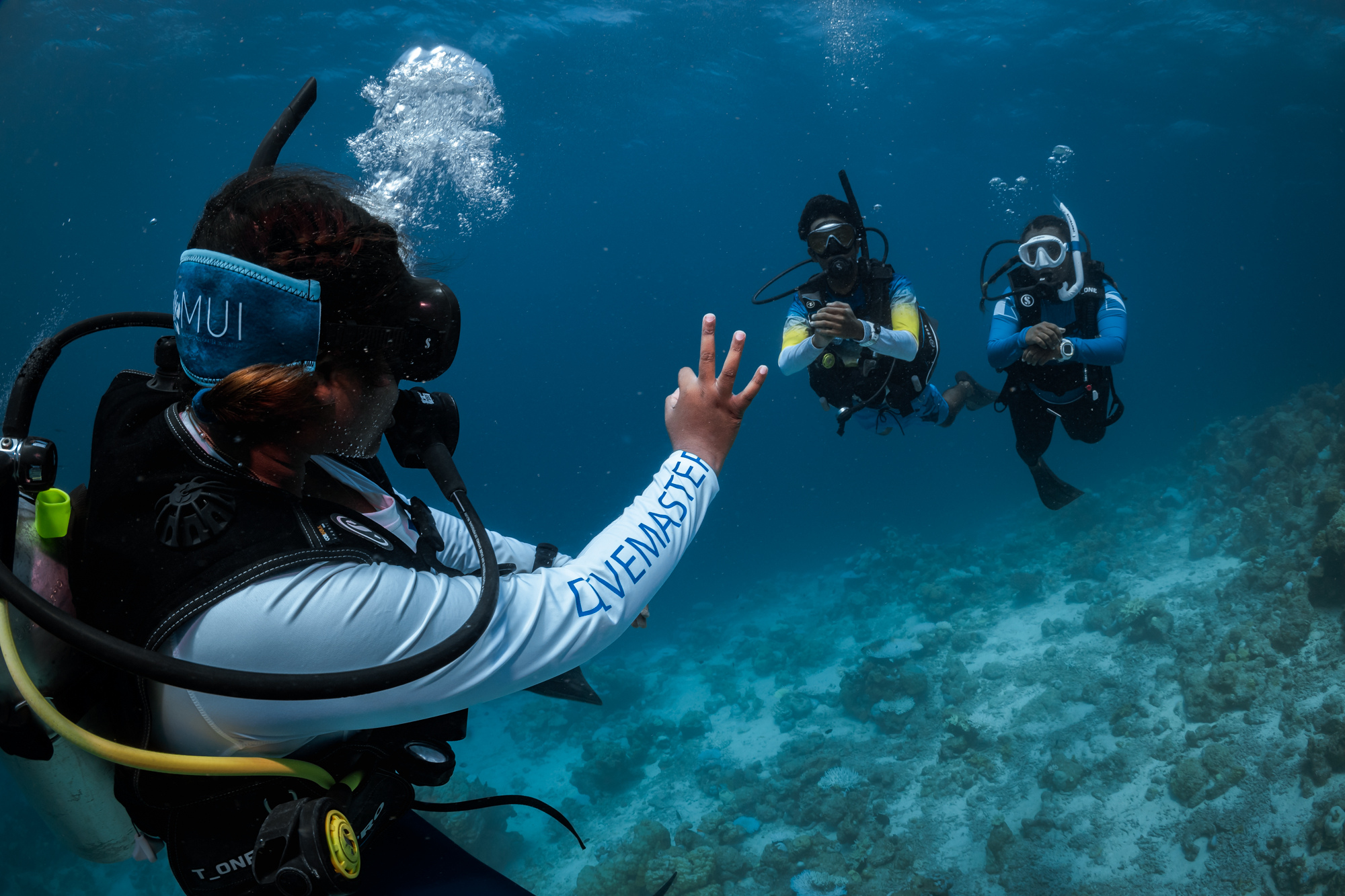
Before we get started, ensure you meet the prerequisites. To enroll in the PADI Divemaster Course, you must have the following:
- Rescue Diver certification
- Emergency First Response® Primary and Secondary Care training (within the last 24 months)
- At least 40 logged dives
- Minimum age 18
- Medical clearance signed by a physician
Swimming Tests (Waterskills Exercises)
After meeting the prerequisites, you’re ready to begin. So what can you expect from the different parts of the Divemaster course?
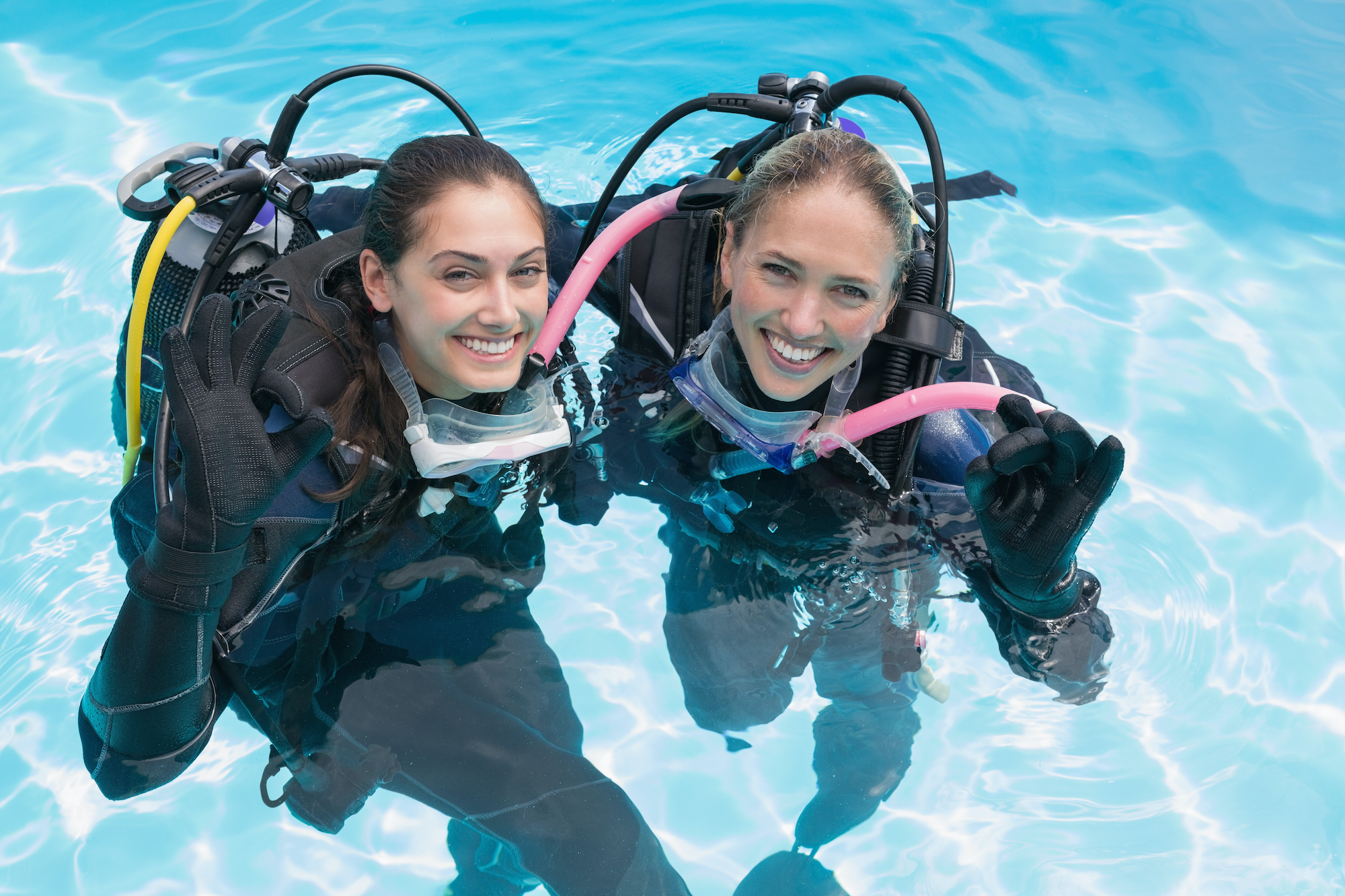
First, to be a competent diving professional, you need to be comfortable in the water. The Divemaster course will test your swimming capabilities through the following challenges:
- 400-Meters/Yards Swim: Swim 400 meters continuously without swimming aids
- 800-Meters/Yards Snorkel Swim: Swim 800 meters using a mask, snorkel and fins.
- 15-Minute Float/Tread: Tread water or float for 15 minutes, with the last 2 minutes keeping your hands out of the water.
- Tired Diver Tow: Tow a diver on the surface 100 meters/yards.
Remember, you don’t have to be Michael Phelps. You just need to display sufficient confidence and endurance in the water.
Skills Circuits – Demonstration Quality
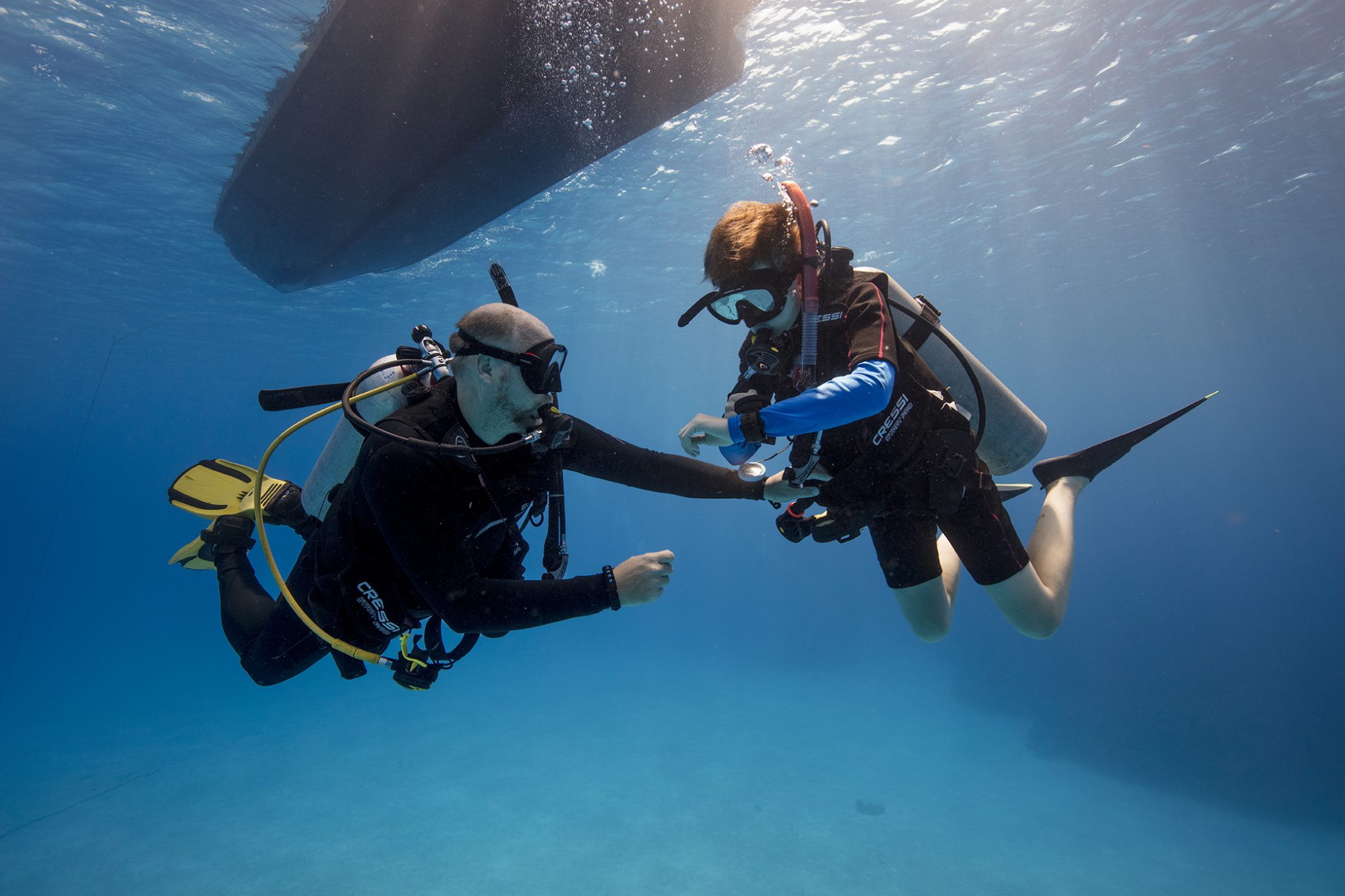
If you have friends who are PADI Divemasters, you’ve likely heard of the skills circuit. This is often described as the most stressful Divemaster course part, but fear not — your instructor will give you plenty of tips for success.
On a skills circuit, Divemaster candidates must demonstrate 24 skills. The objective is to perform the skills at demonstration quality level — meaning slowly, step by step and with exaggerated movements. This allows potential students to watch, learn and copy you.
Your instructor will rate each skill on a scale of 1-5, with 5 being exceptional. To pass the divemaster course, you must earn at least 3 on each skill and score at least 82 points total. But don’t worry; you have plenty of time to practice and improve! Most candidates will perform three to five skill circuits before they receive a passing score. Remember, practice makes perfect.
Some skills are performed at the surface, but most are underwater. The skills are:
- Equipment assembly, adjustment, preparation, donning and disaseembly
- Predive safety check (BWRAF)
- Deep-water entry
- Buoyancy check at surface
- Snorkel-regulator/regulator-snorkel exchange
- Five-point descent
- Regulator recovery and clearing
- Mask removal, replacement and clearing
- Air depletion exercise and alternate air source use (stationary)
- Alternate air source – assisted ascent
- Free-flowing regulator breathing
- Neutral buoyancy, rise and fall – using low-pressure inflation
- Five-point ascent
- Controlled Emergency Swimming Ascent (CESA)
- Orally inflate BCD to hover for at least 60 seconds
- Underwater swim without a mask
- Remove and replace weight system underwater
- Remove and replace scuba unit underwater
- Remove and replace scuba unit on the surface
- Remove and replace weight system on the surface
- Head-first surface dive, snorkel out of mouth
- Disconnect low-pressure inflator
- Re-secure a loose cylinder band
- Perform an emergency weight drop
Practical Application and Assessment
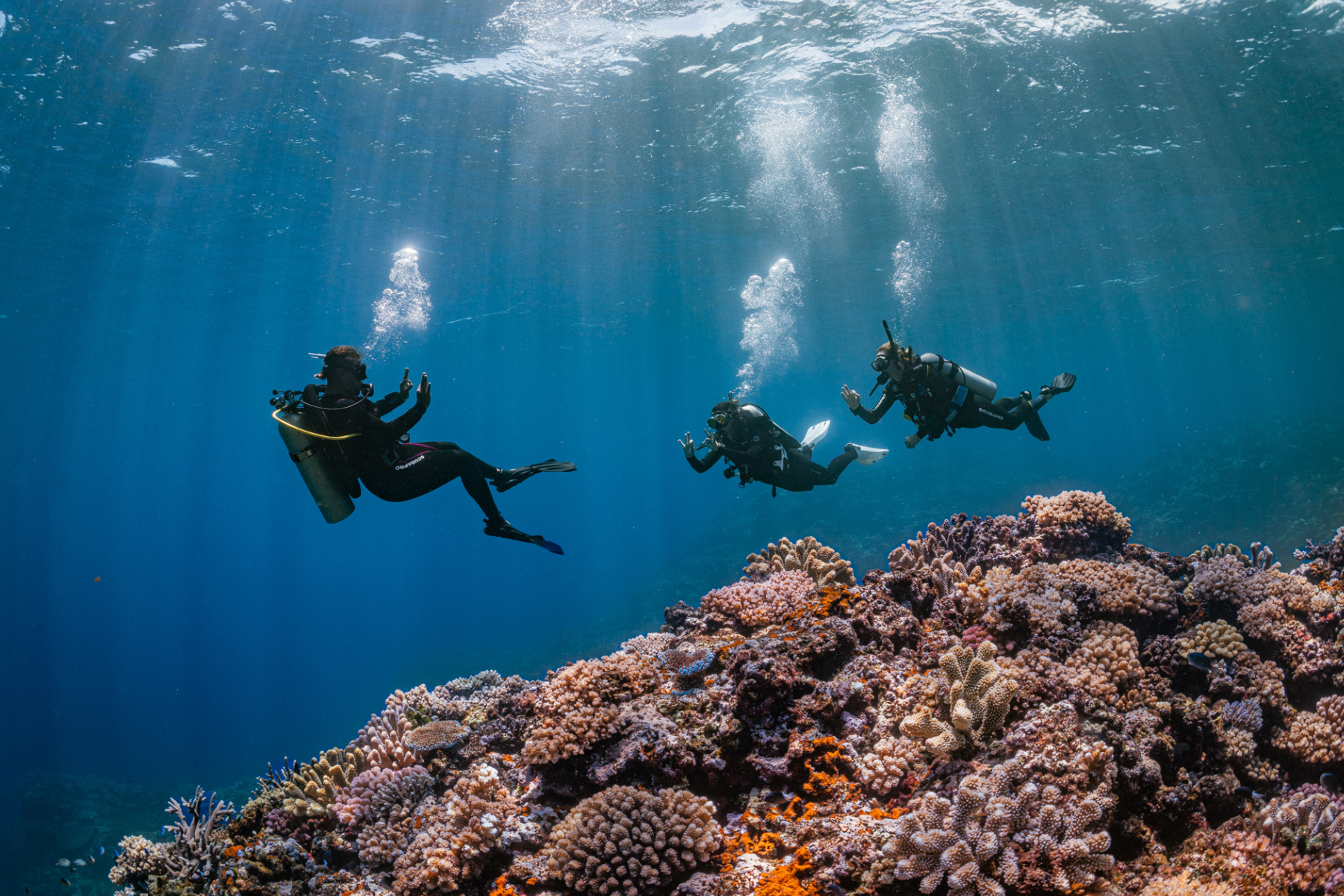
The Divemaster Course is highly hands-on. Throughout the program, you’ll gain real-world experience working alongside instructors and dive professionals. One of the pivotal Divemaster course parts is the practical application.
During this segment, you will:
- Set up a dive site and manage predive preparation
- Give professional dive briefings
- Participate in a Search and Recovery and Deep Dive Scenario
- Lead a Discover Local Diving workshop
- Conduct PADI ReActivate workshop, refreshing skills for divers
- Conduct the Advanced Snorkeler (Skin Diver) Course and Snorkeling Supervision workshop
- Conduct a Discover Scuba Diving Program in Confined Water workshop
- Conduct the Discover Scuba Diving Program additional Open Water Dive workshop
- Assist instructors during Open Water and continuing education courses
- Guide certified divers under an instructor’s supervision
Practical training bridges the gap between being a skilled diver and a confident dive leader.
Some Stuff on Dry Land, Too
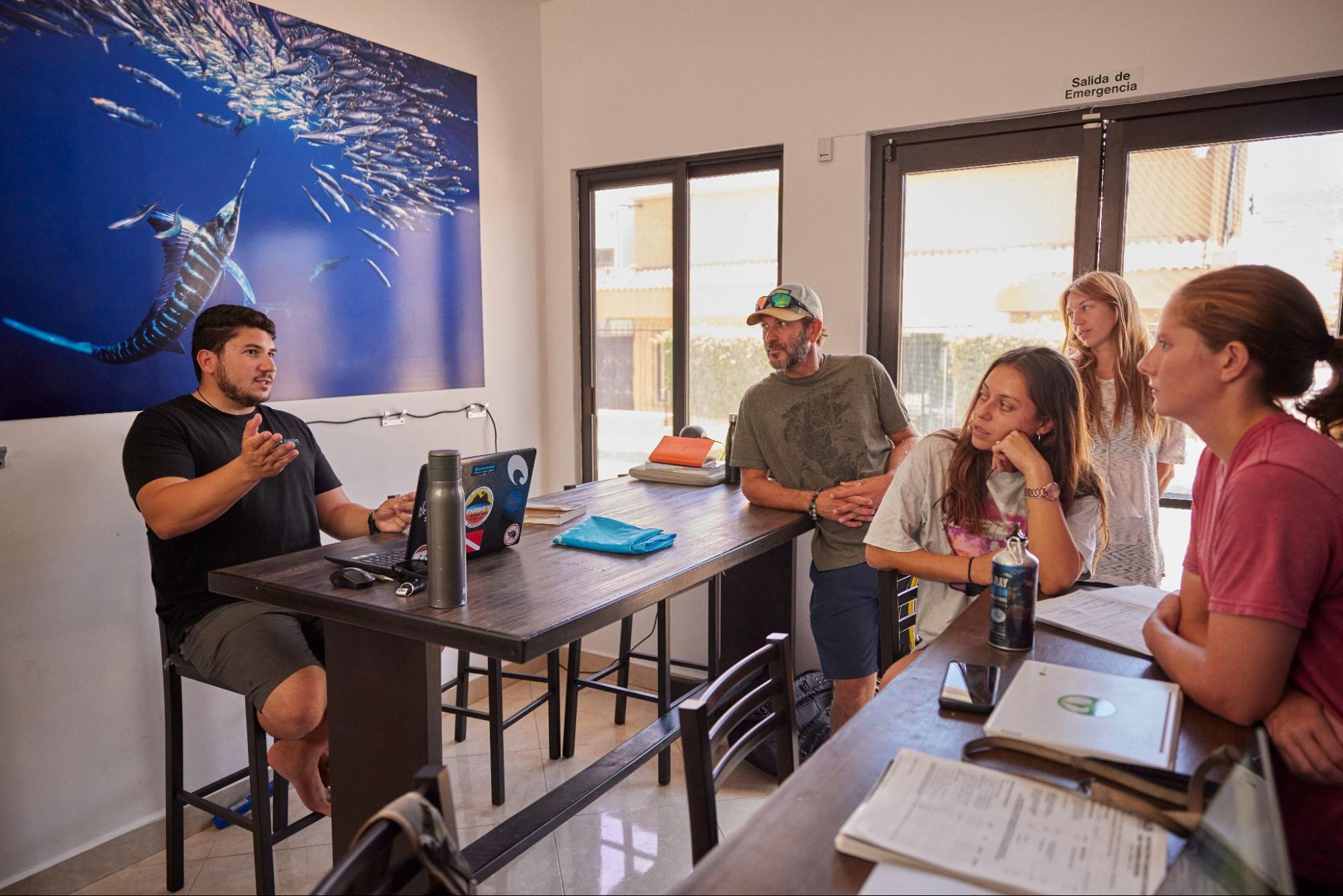
Not everything happens underwater. As part of your Divemaster course, you will:
Create an Emergency Assistance Plan
Create a detailed Emergency Assistance Plan (EAP) for a designated dive site, complete with information needed to manage a diving accident at the site, including emergency contact numbers, evacuation procedures and response protocols.
Map a Dive Site (Mapping Project)
Draw a map of a dive site, documenting underwater features, depths, entry and exit points and potential hazards. Candidates will practice creating professional underwater maps to aid navigation.
Complete Knowledge Development
Divemaster knowledge development covers dive physics, physiology, equipment, dive skills and environment, decompression theory, and PADI standards and procedures.
You’ll complete several knowledge reviews and two exams, Dive Theory and PADI Standards. Candidates may study independently using the PADI Divemaster Manual and Video or through Divemaster eLearning.
However, your instructor will always be happy to explain anything you don’t understand in additional classroom presentations.
Are You Ready To Become a Divemaster?
Ready to become a dive leader and ocean ambassador? You have a long but rewarding journey ahead — so it’s best to get started as soon as possible. Get started right now with the Divemaster eLearning or find your nearest PADI shop and enroll in a Divemaster course today.