Choosing the best dive sites in Chile is a bit like picking the world’s best desserts. With so many different diving environments, it’s challenging to choose which are “the best.”
The Chilean coastline is more than 4270 km/2650 miles long. To put it in perspective, Chile is:
- The height of the US and Canada combined
- As long as Australia and New Zealand stacked end-to-end
- The distance from Norway to Morocco
We’ll start our tour of the best dive areas in Chile in the north and work our way south, with a break to talk about diving Easter Island and the Juan Fernández Archipelago.
Iquique
Iquique is known as the “City of Eternal Spring” due to its almost tropical microclimate. Water temperatures range from a low of about 16°C/61.5°F in August to a high of around 23°C/72°F in February.
Playa Blanca, a picturesque white-sand beach south of the city, is a popular dive site. Rocky formations are home to mussel beds, crustaceans and colorful sea flora. Other popular dive sites include Punta Gruesa and Tres Islas, with a calm northern side for beginners and a kelp forest on the southern side for more adventurous divers.
Antofagasta, Atacama
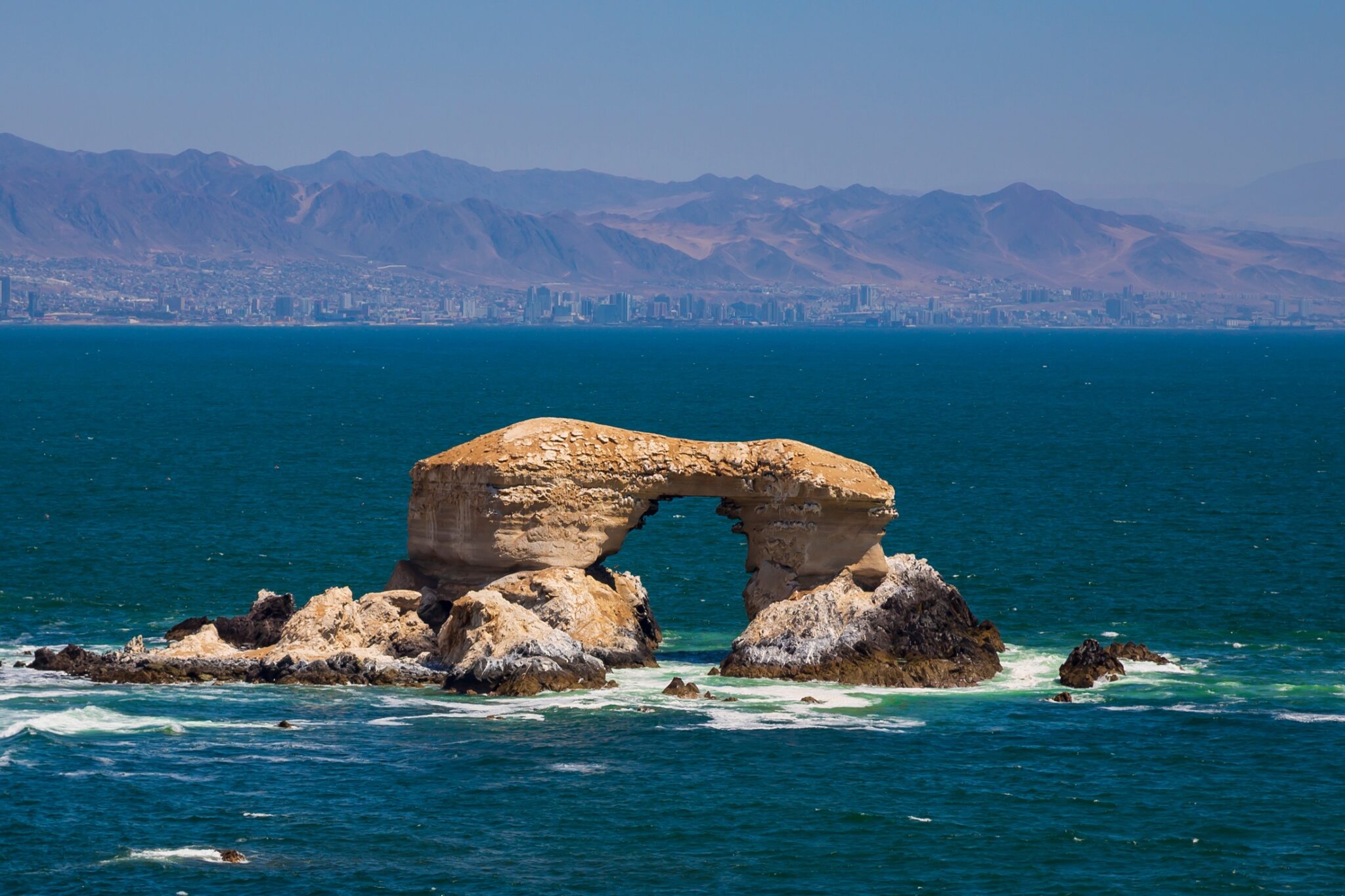
Antofagasta is a small town in Northern Chile that’s part of the Atacama region. From Antofagasta, you can book diving in the Reserva Marina Chañaral de Aceituno. Sea lions are common year-round, and whales are present November through May. You may also see dolphins and orcas topside. Some of the best dive sites in the area include the Maria Elizabeth shipwreck, Anemone Wall and Bahía Inglesa (English Bay).
Coquimbo Region
Scuba diving in Chile’s Coquimbo region, including La Serena, Las Tacas, and Guanaqueros, offers some of the best diving on the mainland. The water is a bit cooler than the north, and there isn’t the biodiversity found in the more remote areas, but it’s much easier to get to.
La Serena is a short flight from Santiago. Once there, you can drive or take a taxi to Las Tacas (11 km/7 mi) or Guanaqueros (35 km/21 mi).
Las Tacas is known for dramatic underwater topography, including tunnels and walls, clear water and abundant marine life. Divers can expect to see schools of castañetas, different types of crustaceans, some groupers, colorful sponges, nudibranchs and anemones. Friendly sea lions hang out near the rocks and dolphins are sometimes seen topside.
Guanaqueros offers calm, sandy-bottomed bays and is ideal for beginners.
Water temperatures in the Coquimbo range from 14°C to 18°C (57°F to 64°F). Some divers may be comfortable in a 7mm wetsuit with a hood, others may prefer a dry suit.
Pichidangui is part of the Coquimbo region but closer to Los Molles, so we’ll talk about those areas together.
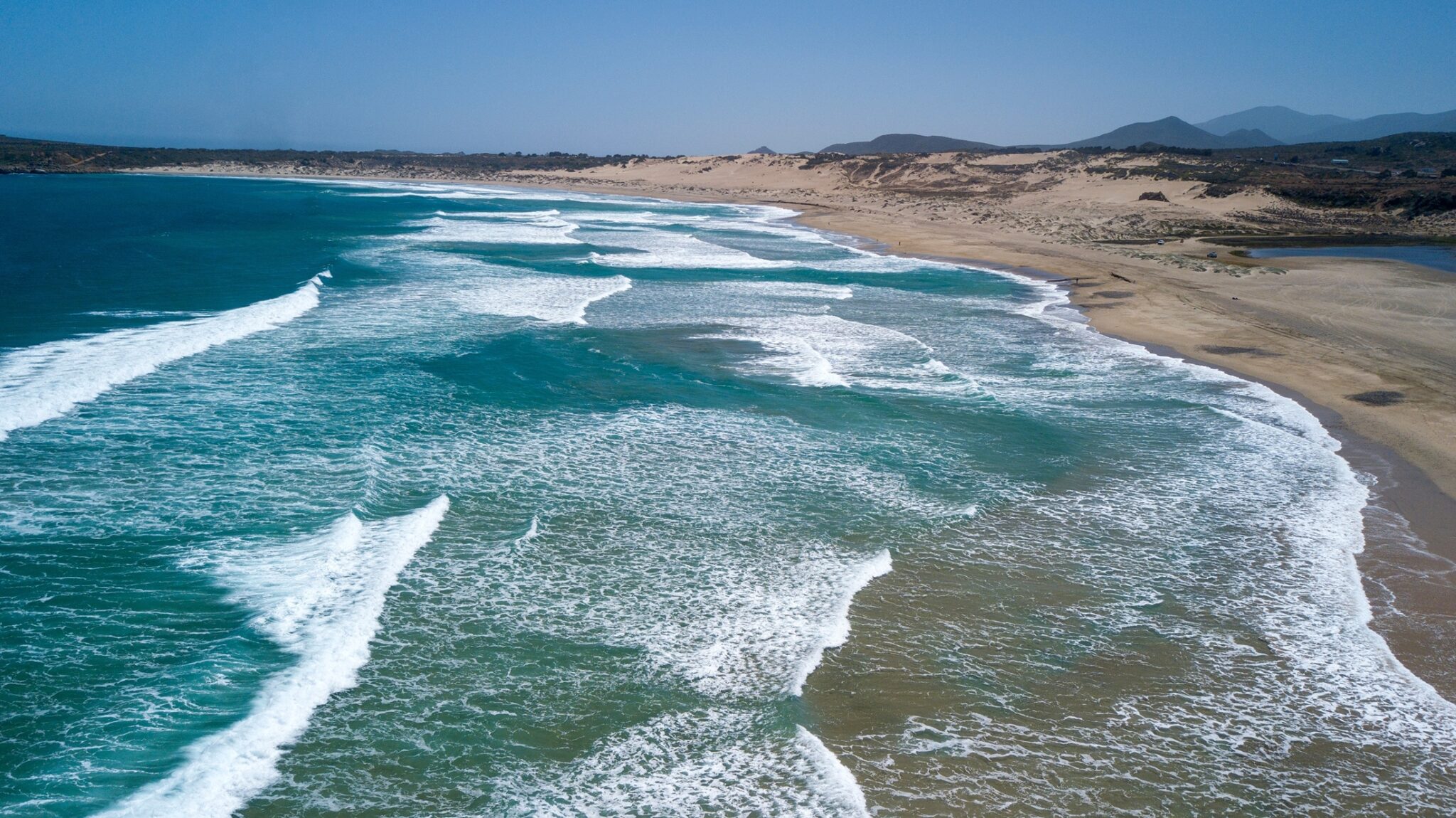
Scuba Diving Near Santiago: Quintay, Los Molles & Pichidangui
Pichidangui, though part of Coquimbo, is actually closer to Santiago. The laid-back town is 198 km/123 miles northwest of the Chilean capital. There are several dive sites, but locals recommend El Penitente.
Just 13 km/8 miles south of Pichidangui and 187 kilometers/116 miles northwest of Santiago is Los Molles. This beach town is known for colorful marine life and a sea lion colony at La Lobera. Tres Islas and Piedra del Bilagay are recommended for new divers.
Quintay, located approximately 121 kilometers/79 miles west of Santiago, is also rich in biodiversity. Recommended dive sites include El Falucho, a sunken whaling ship and La Lobera de Curaumilla, home to a sea lion colony. Los Jardines is named for a sheltered kelp forest.
If your time is limited, Quintay may be the best option. Dives are less likely to be cancelled due to weather.
Water temperatures in this area range from 12°C to 16°C/54°F to 61°F. Dry suits are strongly recommended.
Archipelago Juan Fernández
The Juan Fernández Archipelago, a UNESCO World Biosphere Reserve off the coast of Chile, has an exciting array of underwater life — 62% of species are found nowhere else on Earth. Expect to see Juan Fernández fur seals, sea turtles, golden lobsters and many colorful reef fish. There’s also a chance to see Magellanic penguins and dolphins.
Popular dive sites include:
- Cumberland Bay
- Isla Alejandro Selkirk
- Santa Clara Island
Getting to Juan Fernández Archipelago requires a flight from Santiago to Valparaíso, followed by a two-hour flight to the archipelago, which includes Robinson Crusoe Island. The UNESCO designation means access is limited, so you’ll need to book your dives before you arrive in Chile.
Visibility peaks from November to April. During this time, water temperatures range between 18 and 23°C/64 and 73°F. The warmest water temps are December through March.
Diving in the Juan Fernández Archipelago can be challenging. It is recommended for experienced divers only.
Rapa Nui (Easter Island)
Easter Island, also known as Rapa Nui and Isla de Pascua, is one of the most remote islands in the world. The dry climate and lack of runoff create astonishing visibility; 60 meters/200 feet is considered average.
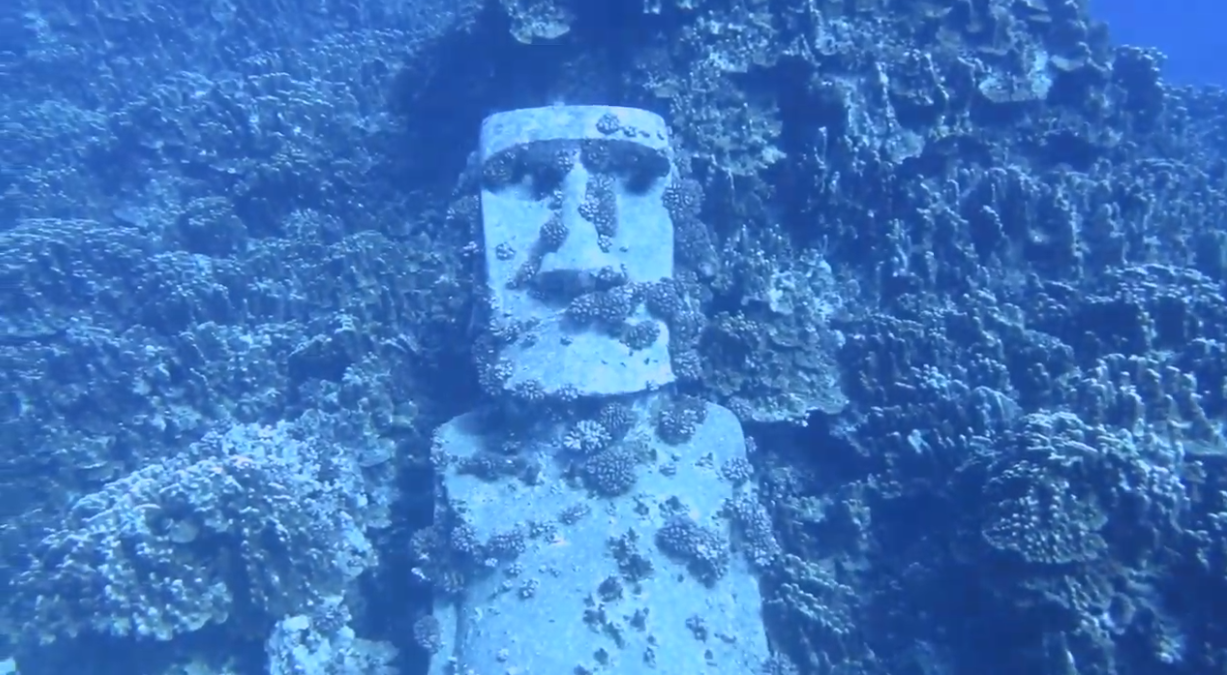
The underwater landscape includes dramatic lava formations, caves, cliffs and a 7.6-meter/25-foot moai statue. Most dive sites are a short boat ride from the main harbor.
Notable dive sites include:
- The Cathedral, a stunning lava tube
- The Moai Site
- Acantilado
- The Great Wall
- The Lost Arch
Easter Island doesn’t have a lot of coral, but there’s an abundance of marine life, including more than 100 endemic critters, such as the Easter Island butterflyfish. Divers can expect to see green sea turtles, moray eels and a variety of macro life.
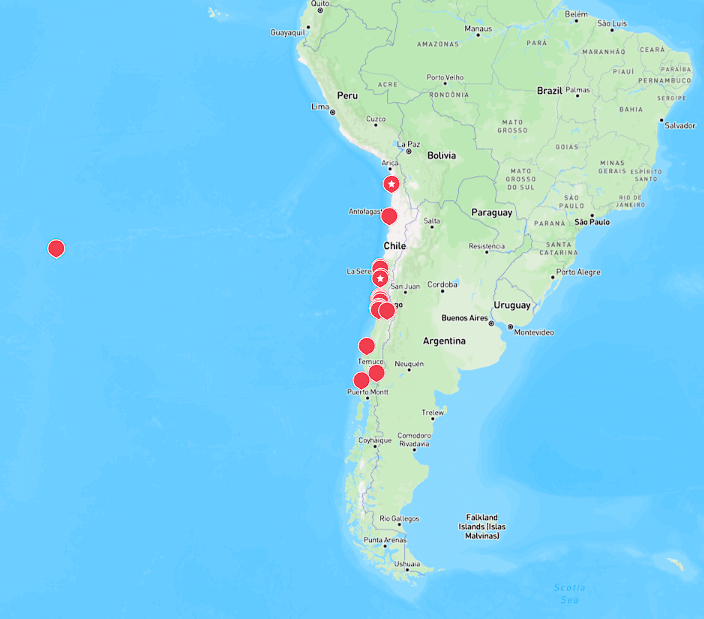
Did we mention Easter Island is remote? From Santiago, it’s a five-hour flight to Rapa Nui.
Water temps are 18-24°C/66-72°F. A 7mm wetsuit with a hood is strongly recommended. If you get cold easily, wear a drysuit.
There are multiple PADI Dive Shops on Easter Island, but the closest decompression chamber is back on the mainland. We hope you’re always doing buddy checks and diving within the limits of your training and experience, but it’s especially important in remote locations.
Punta Arenas
Many cruise ships bound for the Antarctic depart from Punta Arenas. It’s know as “the gateway to Antarctica.”
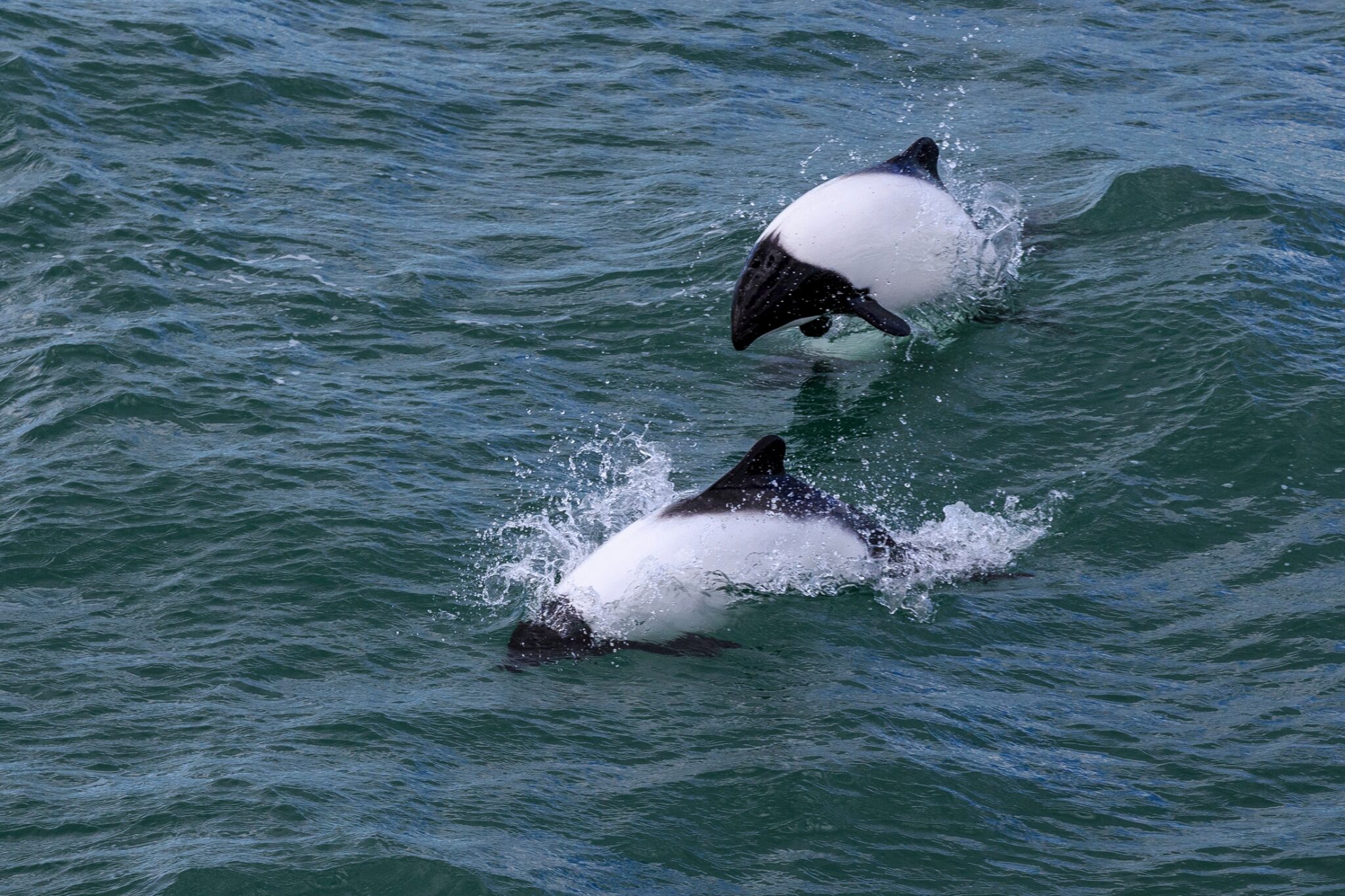
Needless to say, the water is cold. But it’s an amazing dive spot for adventurous divers. The Strait of Magellan is home to more than 100 shipwrecks, and the Cape Horn current attracts whales and dolphins, including the unusual Commerson’s Dolphins.
The ideal time to dive in Punta Arenas is from December to March, when daylight hours are longest. A dry suit is a must. Water temperatures average around 2°C/35.6°F and never get above 7°C/45°F.
The San Isidro Lighthouse is one of the top dive sites in the area. If you want to experience wreck diving in southern Chile, contact a dive shop in advance. Special permits may be required.
Diving in Chile is an adventure. Get in touch with a PADI Dive Shop to plan your dives in this incredibly beautiful country.