In scuba diving, you’ll meet two kinds of water: fresh and salty. Both open the door to incredible underwater experiences. You don’t have to specialize in one of the other, but you do need to understand how each one behaves.
So, what is the difference between freshwater vs. saltwater diving? Understanding the nuances and similarities and how they impact diving techniques and conditions will help you prepare for your adventures.
Buoyancy
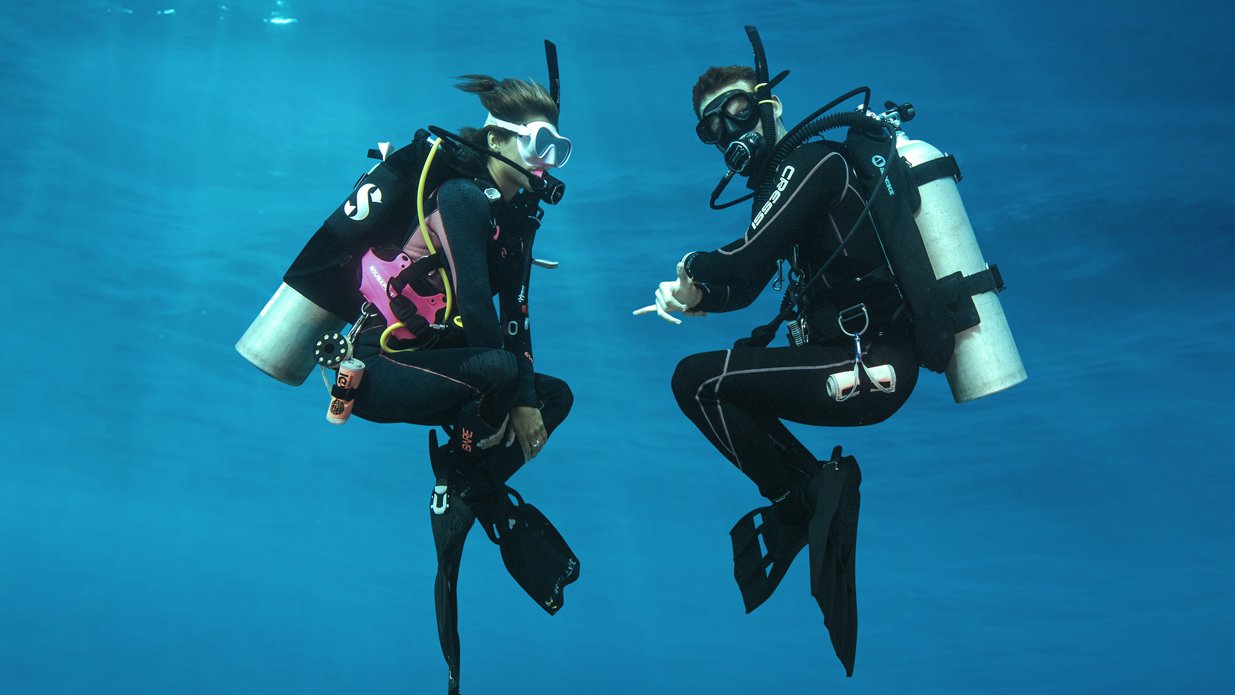
Salt water is denser than fresh water, making it easier for you to float. To counteract this force, you’ll need to wear more weight to become neutrally buoyant in salt water.
By the same logic, in a freshwater environment, you’ll need fewer weights to achieve neutral buoyancy.
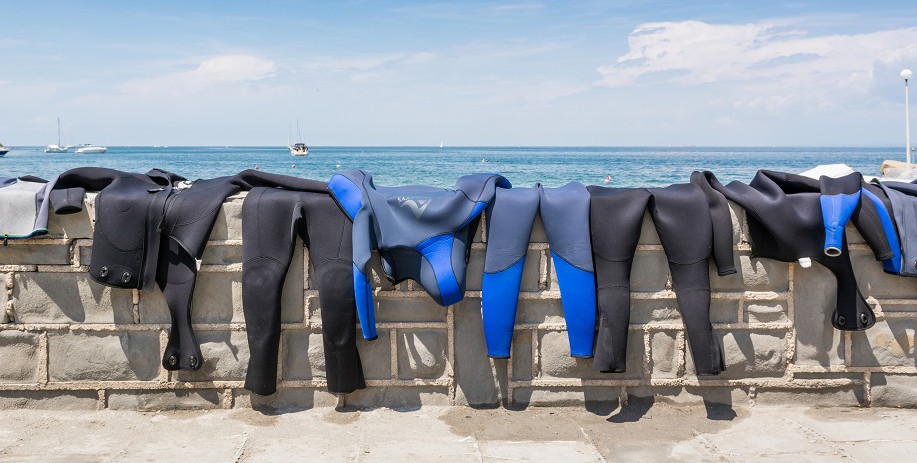
But bear in mind that the type of exposure protection you wear — whether it’s a drysuit or a wetsuit, for example — also impacts how much weight you need.
Exposure Protection
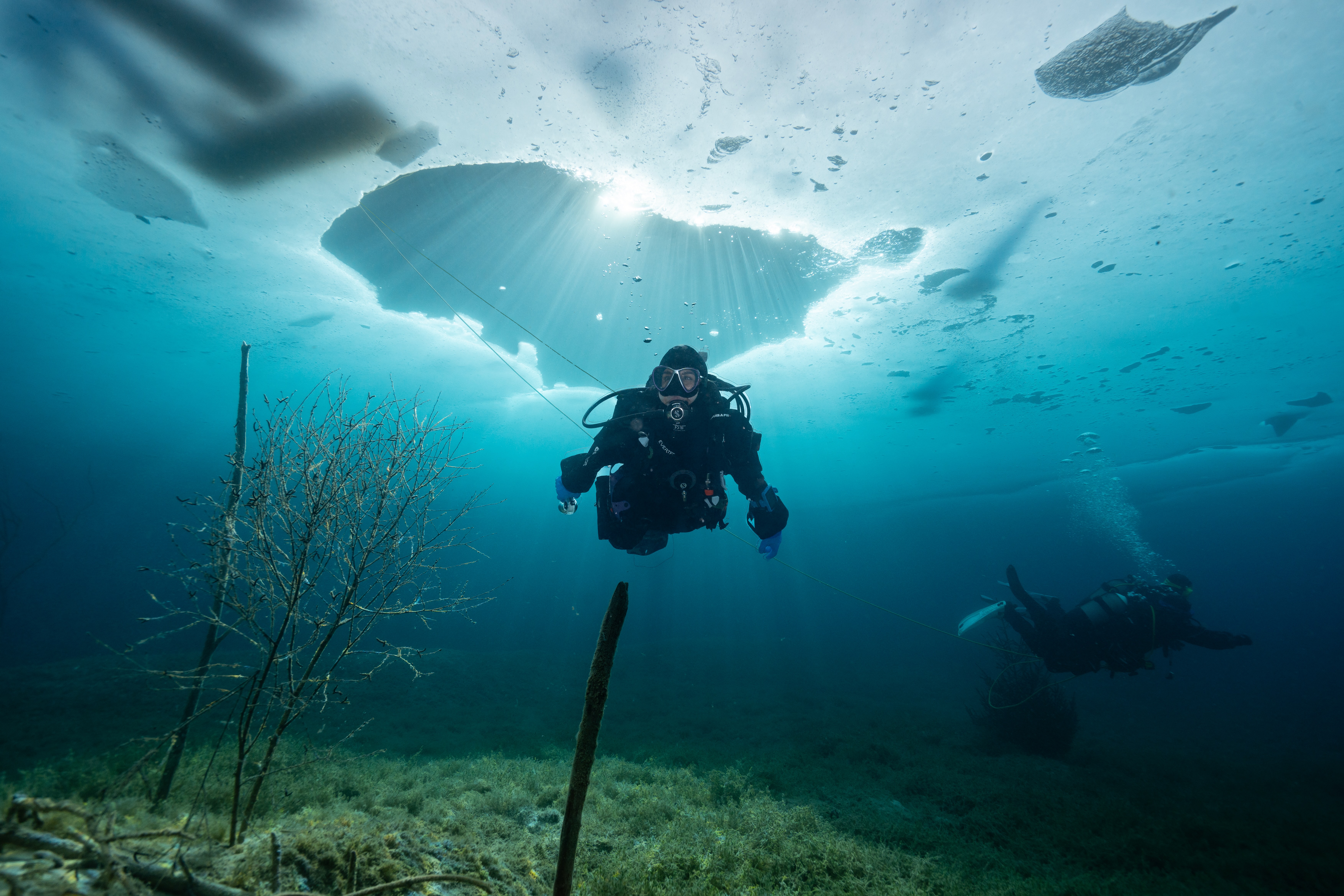
Freshwater dive sites can occasionally have interesting temperature layers, known as thermoclines. They’re usually warmer on the surface and then quickly get colder as you go deeper. For this reason, many freshwater divers opt for diving in a dry suit.
Salt water tends to be more consistent in temperature, but that doesn’t mean you won’t need to dive with a drysuit. Either way, make sure you’re prepared by taking the PADI Dry Suit Diver Specialty course.
One last note on this topic – if you’re interested in ice diving, you’ll likely be diving in a freshwater environment. Learn more by taking the PADI Ice Diver Specialty course.
Marine Life
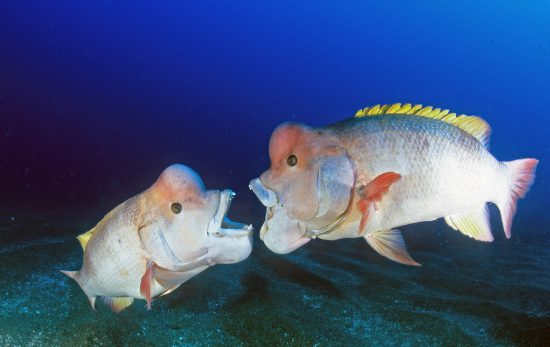
Saltwater habitats tend to have bigger and faster marine life to admire. Think sharks, manta rays and barracuda.
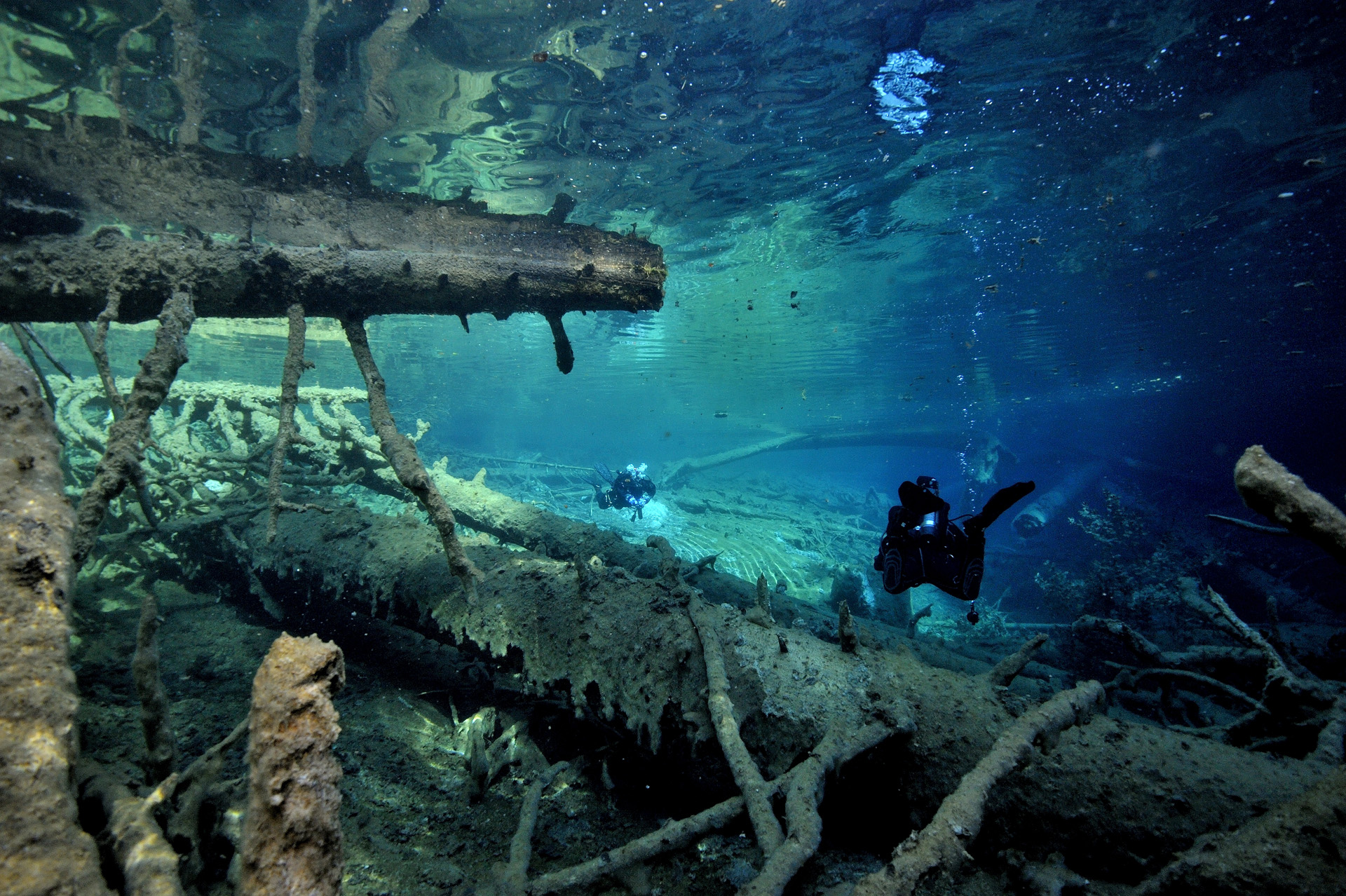
Freshwater ecosystems, by contrast, have smaller marine life that tends to be more camouflaged. Think catfish, trout, snails and freshwater turtles.
But it doesn’t make freshwater dives less exciting! Much like macro diving and muck diving, there is beauty in discovering marine life hiding in plain sight. Plus, you can see things you wouldn’t see in saltwater environments, such as abandoned buildings, well-preserved wrecks and underwater plants.
Visibility
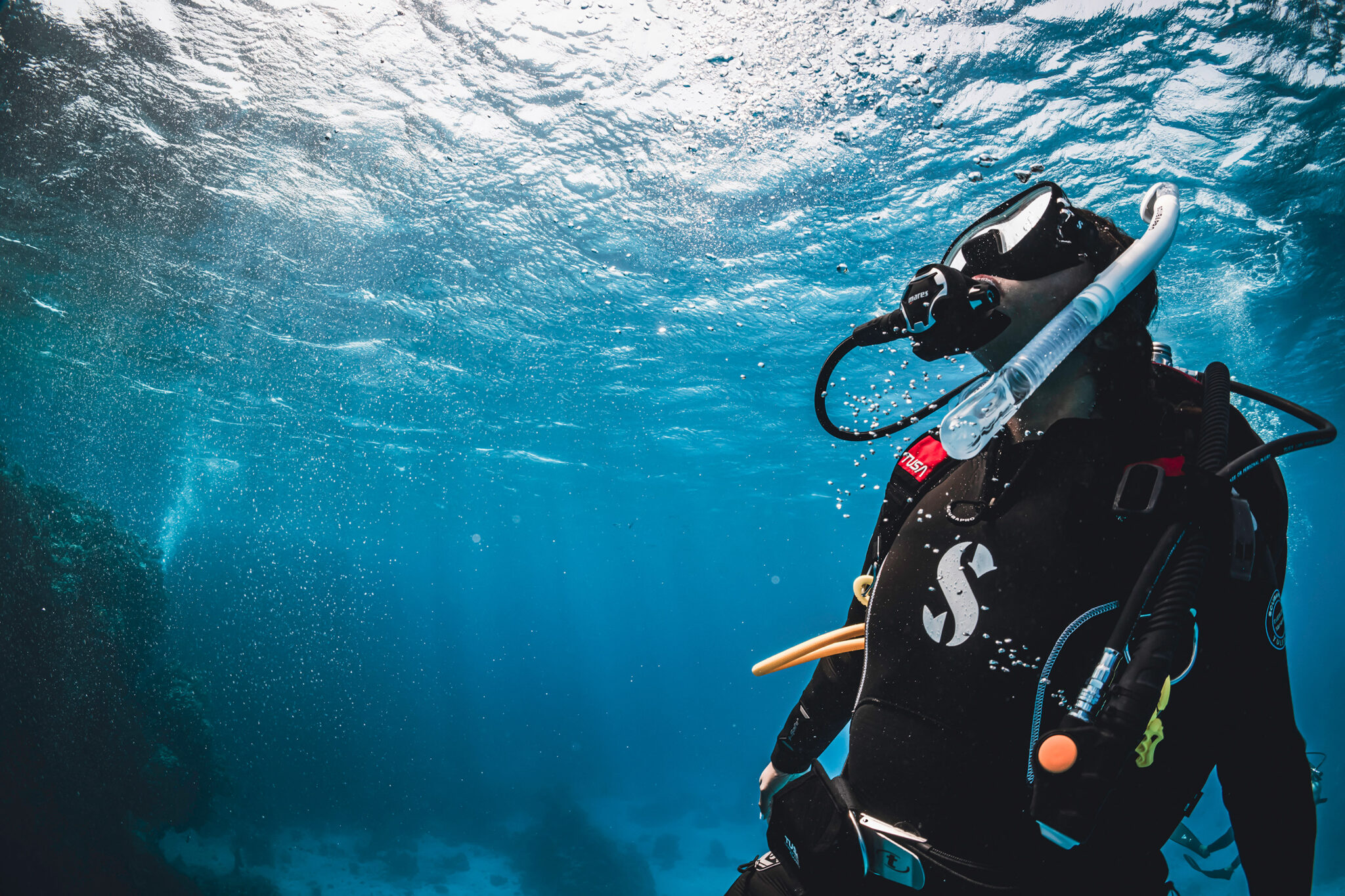
Depending on the location, visibility can go from poor to excellent. This applies to both freshwater and saltwater diving.
Many people, however, think that freshwater dives have lower visibility. While that may be true in some regions due to suspended particles and the lack of currents, there are some incredible freshwater dive sites around the world where the visibility is crystal clear, and the topography is out of this world.
Dive Conditions
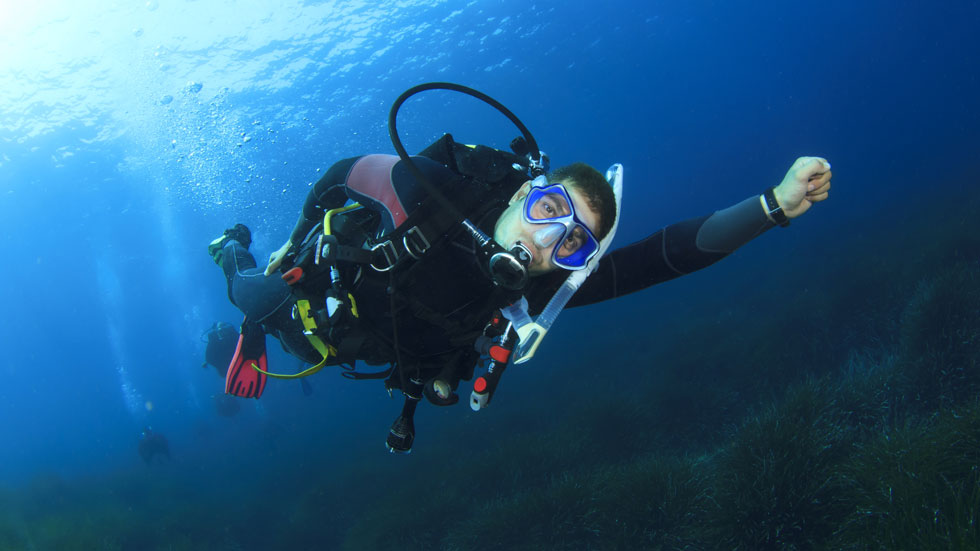
Unless you’re diving in a river with fast-moving currents or a large lake, most freshwater dive sites have minimal currents, making for easy, calm dives — perfect for beginners.
Just make sure your buoyancy control is top-notch, because once you stir up the sediments in the water where there is no current, visibility can be impacted for a long time, until the sediment settles once again.

Entries
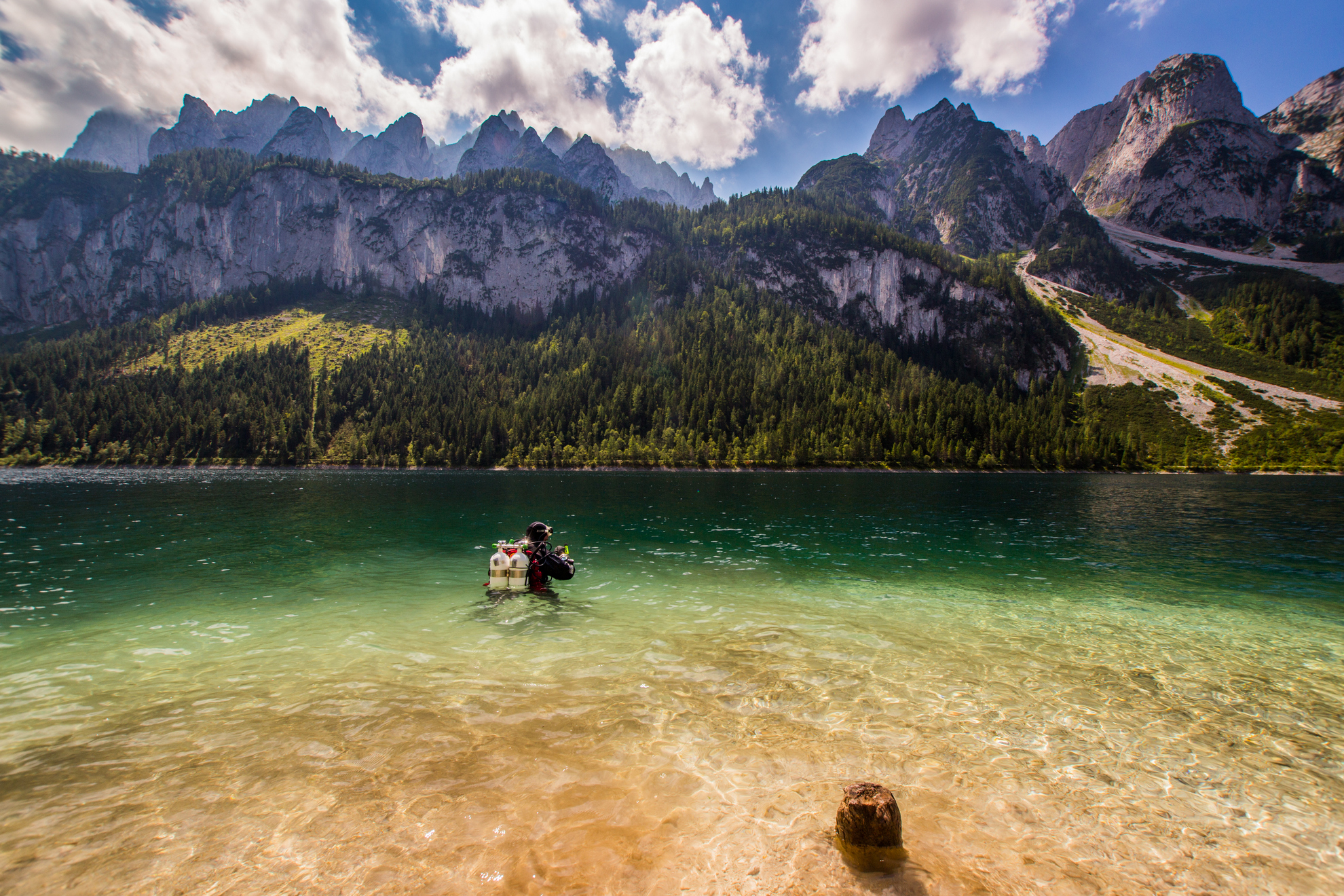
Both fresh water and salt water can feature either boat dives or shore dives. However, shore diving tends to be more common at freshwater dive sites. If you’re prone to seasickness, freshwater diving may save you from long, unpleasant boat rides out to the dive site.
Other Considerations
Sometimes, freshwater diving means diving at altitude. But when diving at altitude, you’ll need to use different recreational dive planning tables. The PADI Altitude Diver course teaches divers how to safely dive freshwater sites above sea level.
Freshwater vs. Saltwater Diving: Which One Is for You?
Diving offers many opportunities, and you haven’t explored them all if you pass up on either freshwater or saltwater dives just because.
There are so many dive sites out there waiting for you. Take your pick, try different diving environments and have fun!