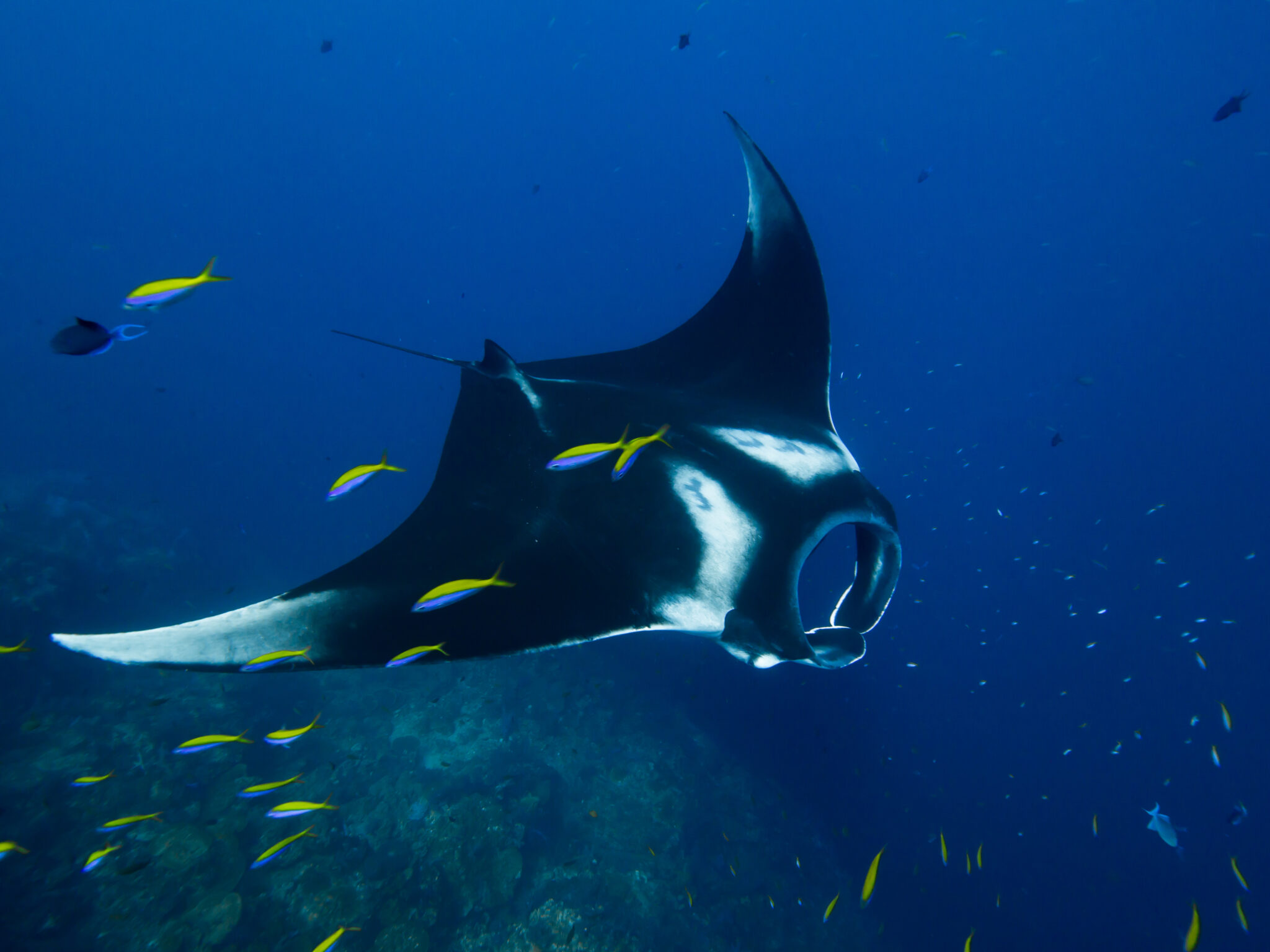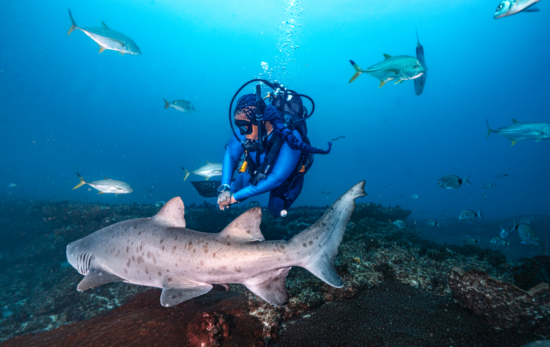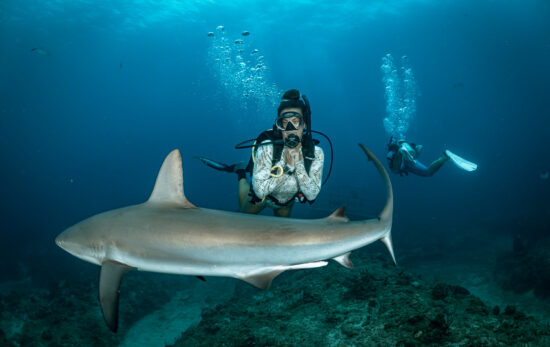
Imagine diving alongside mantas that you actually know by name. For Marine Ecologist, Nakia Cullain, these encounters were once daily miracles – until the coastal waters off Mozambique began to fall silent…
Any diver that’s ever been fortunate enough to be in the water with a manta ray will agree that it is a truly awe-inspiring experience. These gentle giants represent not only the ocean’s beauty but also its fragility. In Mozambique, where mantas have historically aggregated in coastal waters, local populations are facing increasing threats from fishing and trade.
PADI AWARE recently interviewed Nakia Cullain about the ongoing research that she and the Marine Megafauna Foundation (MMF) are working on. Plus, they covered how CITES 2025 (Convention on International Trade in Endangered Species) is crucial for safeguarding mantas and ensuring that this iconic and vital species survives for generations to come.
20 Years of Manta Research
For more than two decades, Marine Megafauna Foundation scientists have been building one of the most significant manta ray datasets in the world along the coast of Mozambique. Their research began in Tofo in the early 2000s and expanded to Zavora in 2009, allowing them to track long-term patterns in local manta populations.
When asked why she initially chose to study manta rays, Nakia Cullain responded, “My first encounter here [in Zavora], actually almost 10 years ago, changed my life. I had a train of six of them that came by and honestly hung out with us for like half an hour, and they were really interactive and curious. It just blew my mind. That changed my research trajectory, and since then I’ve been fully engaged with manta ray research.”
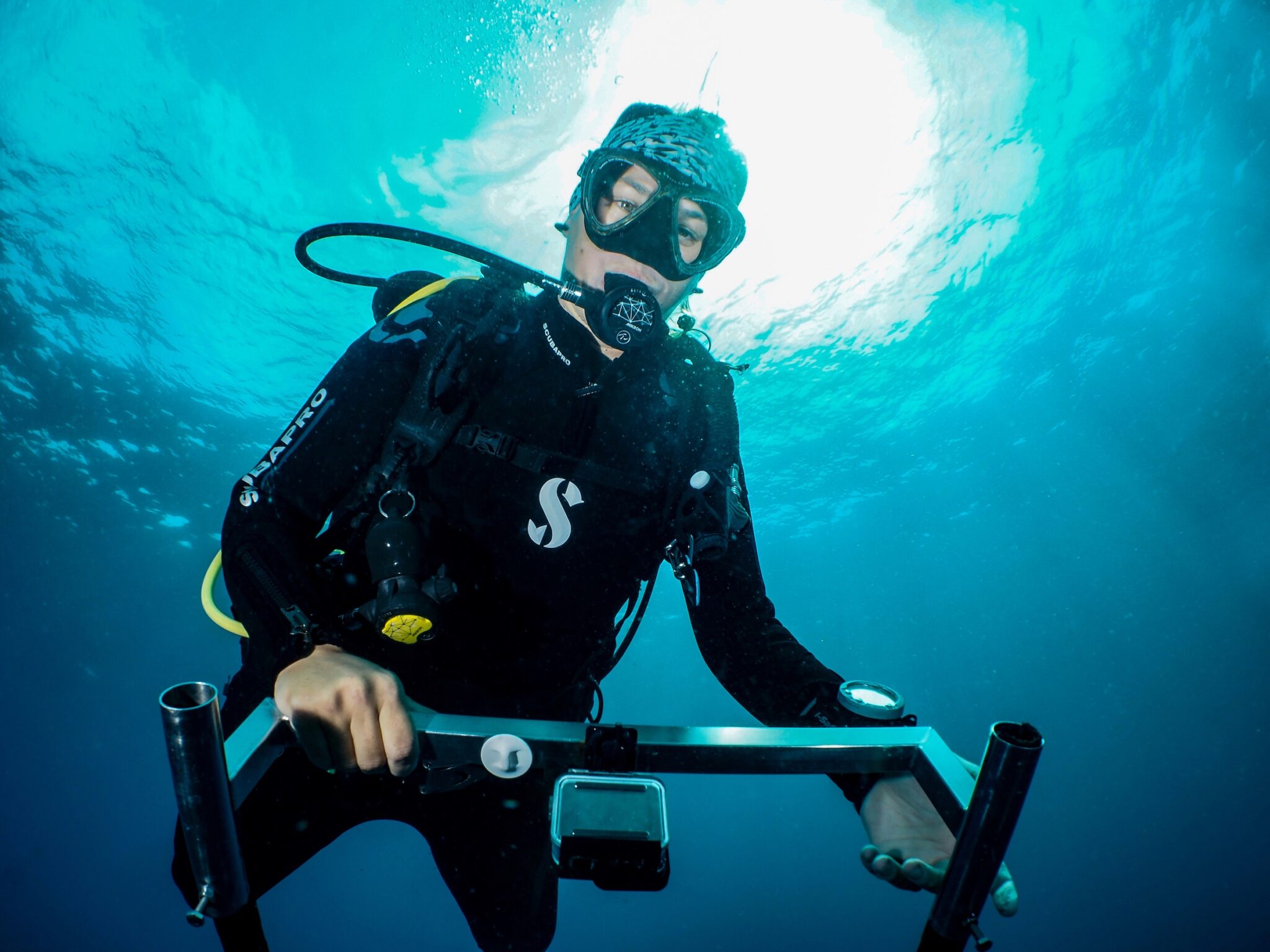
A core part of this research uses photo identification. Divers capture images of the unique spot patterns on the manta’s bellies in order for scientists to recognize and track individual mantas. MMF currently has over 700 manta rays in their database in Zavora alone. This is then paired with telemetry tagging – both acoustic receivers and satellite trackers – which enables the team to track mantas beyond dive sites, revealing where they travel along the coast and offshore, plus which habitats they rely on most.
Unfortunately, this long-term research has revealed a dramatic drop in manta ray sightings along Mozambique’s coastline. In Tofo, sightings declined by 88% in the first decade, and by up to 99% in the second decade. Zavora still experiences large seasonal aggregations (sometimes dozens on a single dive), but the data shows an 82% decline there as well.
Why Mantas Matter
Like all marine life, manta rays play an important role in healthy ocean ecosystems. As large filter feeders, they help move nutrients through the ocean. Plus, their relationship with cleaner fish helps support biodiversity around reefs and feeding/cleaning sites. Manta aggregation sites often indicate productive and beautiful areas of the ocean that are full of life. Fun fact: Mantas have the biggest brain-to-body size ratio of any fish!
Manta rays also bring major benefits to humans via tourism that supports local jobs and businesses. Not just in Mozambique, but at dive destinations around the world, mantas attract scuba divers and snorkelers from far and wide. Their predictable appearances at certain reef sites make them a key driver in responsible tourism, which can provide long-term economic value.
As Nakia explains, the thought of losing mantas isn’t only scientific or economic, it’s also deeply personal. “I think my biggest fear is that in a few years, five years, 10 years, will the mantas still be here? And it’s terrifying. When you think about a whole population just dwindling, it’s really, really heartbreaking.”

Why Manta Populations Are Declining
In Mozambique specifically, mantas have suffered heavily from overfishing at all levels – artisanal, commercial and industrial. Even though protections exist now, as Nakia says, “The damage was already done when so many mantas were removed years ago.”
Changing ocean conditions due to impacts from climate change, such as shifting ocean currents and subsequently where plankton (manta’s main food source) is found, are also negatively impacting this population of gentle giants. Manta dive tourism, when not managed properly, can also drive mantas away from important habitats. Make sure to always choose responsible eco-tourism operators when planning a dive trip.
Protecting Mantas Locally and Globally
Lasting protection for manta rays starts at the community level. Nakia explains that in Zavora, “Locally managed marine areas are what we’re working toward here. We’ve got a really good fishing community, and they want to manage the fishery properly. They want to see a future for their kids. They want to see mantas and more tourism.”
Neighboring South Africa is home to a marine sanctuary that wasn’t even created for mantas – but they are now benefiting simply because the ecosystem is protected. Nakia and her colleagues believe that a similar approach in Mozambique could also help manta populations recover.
But protection can’t stop at national shorelines. Marine Megafauna Foundation’s research clearly shows that manta rays travel long distances, moving offshore into international waters. Here, fishing pressure and bycatch risks are harder to monitor and control. That’s why international frameworks like CITES are essential in order to fully protect these graceful ocean animals.

Why CITES 2025 Matters for Mantas
The opportunity for manta rays to be recognized and protected at the highest international level is coming soon! From 24 November to 5 December 2025, governments from around the world will gather to vote on whether mantas should receive stronger global protection under CITES. This would help prevent international trade and bycatch from further decreasing manta populations, especially when they migrate beyond borders.
Divers and ocean lovers from around the world are encouraged to help give mantas (and other sharks and rays) a voice. Scientists have delivered the evidence – now the world must act. As Nakia explains, “Public support is greatly needed to put pressure on the decision makers to make the right call. Sign the petition to demand world leaders instate stronger protections for mantas at CITES 2025.”
Ready To Dive Into More Manta Conservation?
- Learn more about manta ray conservation from MMF’s Queen of Mantas
- Learn more about why sharks and rays need your help at CITES 2025
- Learn more about PADI AWARE’s Global Shark and Ray Census