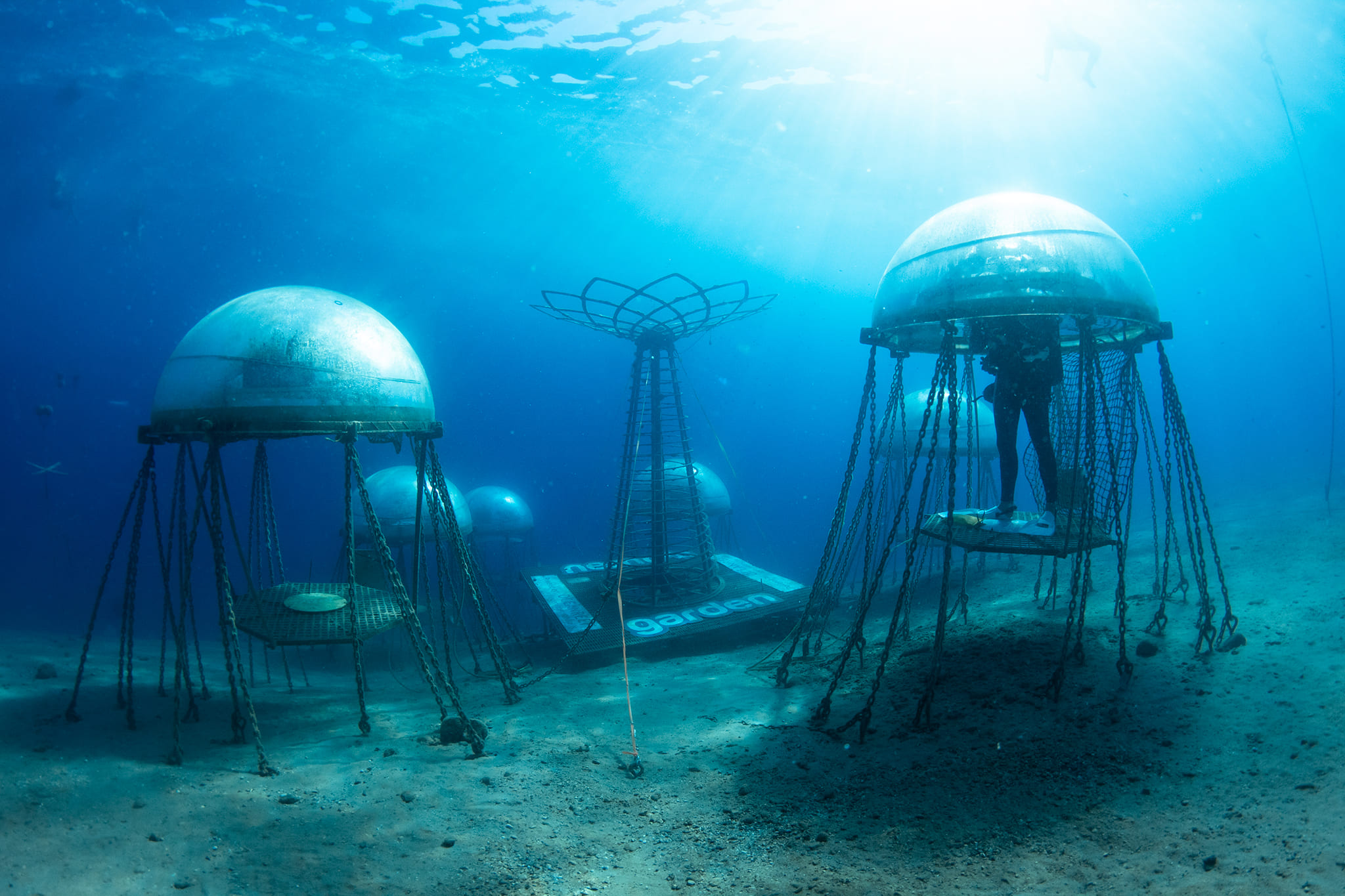
Imagine descending below the surface and finding not a reef, not a wreck, but a cluster of futuristic glass domes quietly growing basil and strawberries under the sea. No, this isn’t science fiction. It’s a real place in Liguria, Italy, called Nemo’s Garden, and it offers one of the most unique dive experiences in the world.
A Dive Site Like No Other
Most divers are familiar with diving to explore coral reefs, underwater caves and sunken ships. But what if your next underwater adventure could take you into the future of sustainable agriculture?
Nemo’s Garden is the world’s first underwater greenhouse for land-based plants. Tucked into the shallow waters off the coast of Noli, this innovative project provides a potential answer to a pressing global question – how can we grow food where traditional farming isn’t possible?
Instead of looking to the stars, the team behind the project looked to the sea.
How It Works (And Why It Matters)
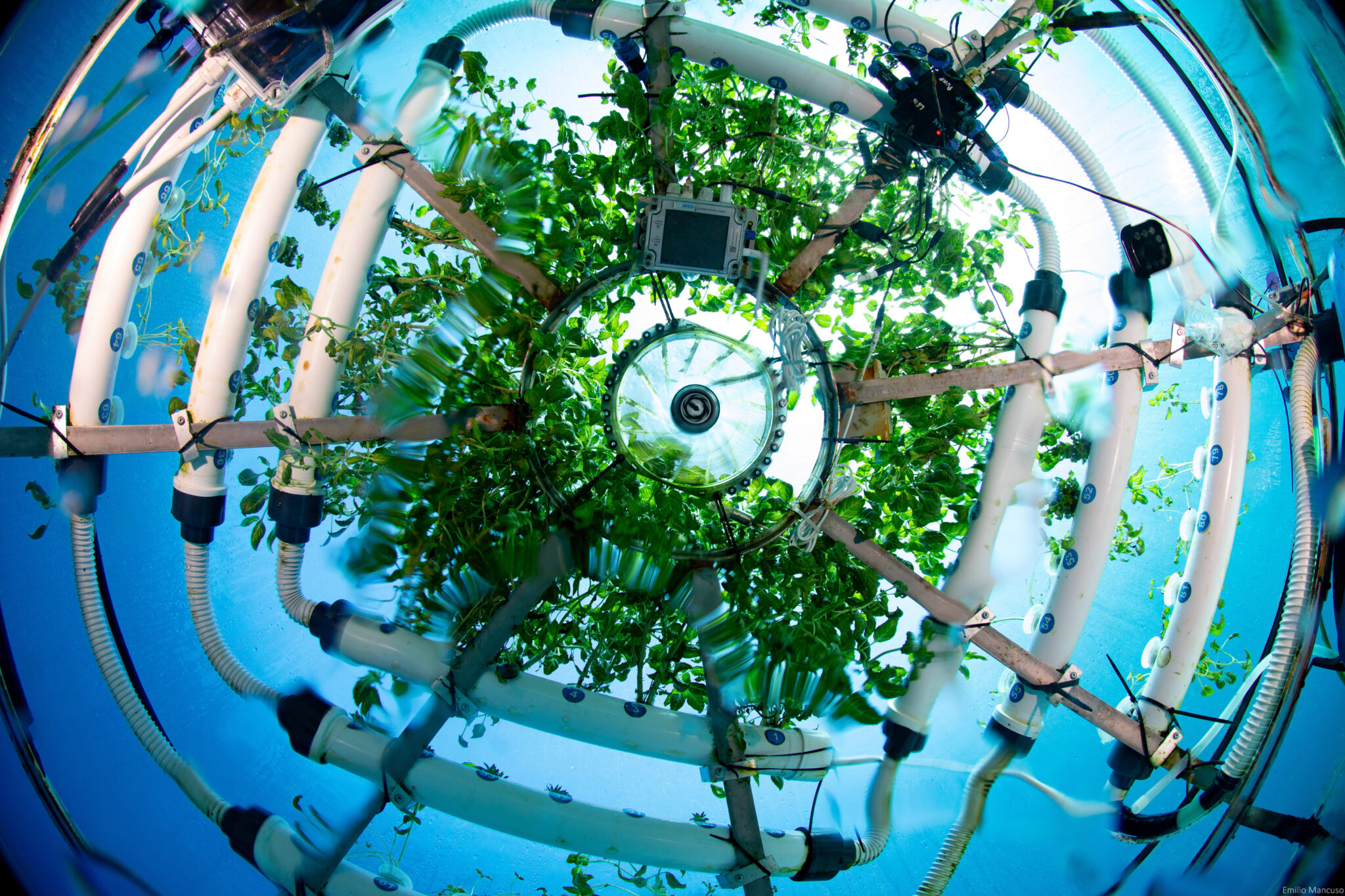
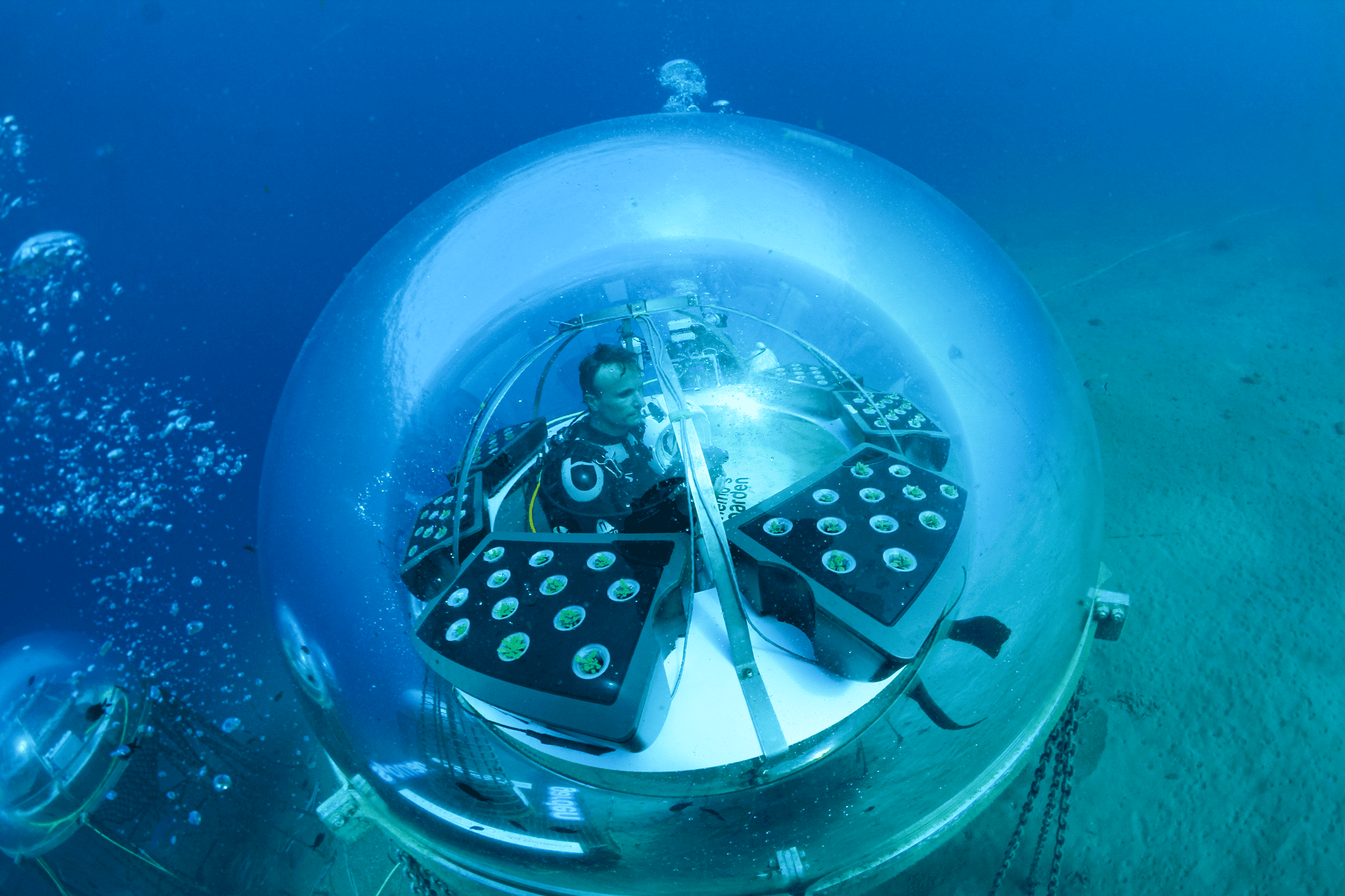
Inside a series of transparent biospheres, herbs, vegetables and flowers grow using a clever mix of hydroponics, renewable energy and the natural properties of the ocean. Sunlight filters through the water, maintaining a steady temperature and humidity. Seawater becomes fresh water through evaporation and condensation — no fancy filters needed. And because there are no insects, there’s no need for pesticides.
For divers who care about sustainability and conservation, Nemo’s Garden isn’t just interesting, it’s inspiring. It shows what’s possible when innovation and environmental awareness come together. The same ocean we explore for its beauty and biodiversity could also be part of a solution to global food challenges.
What You’ll See as a Diver
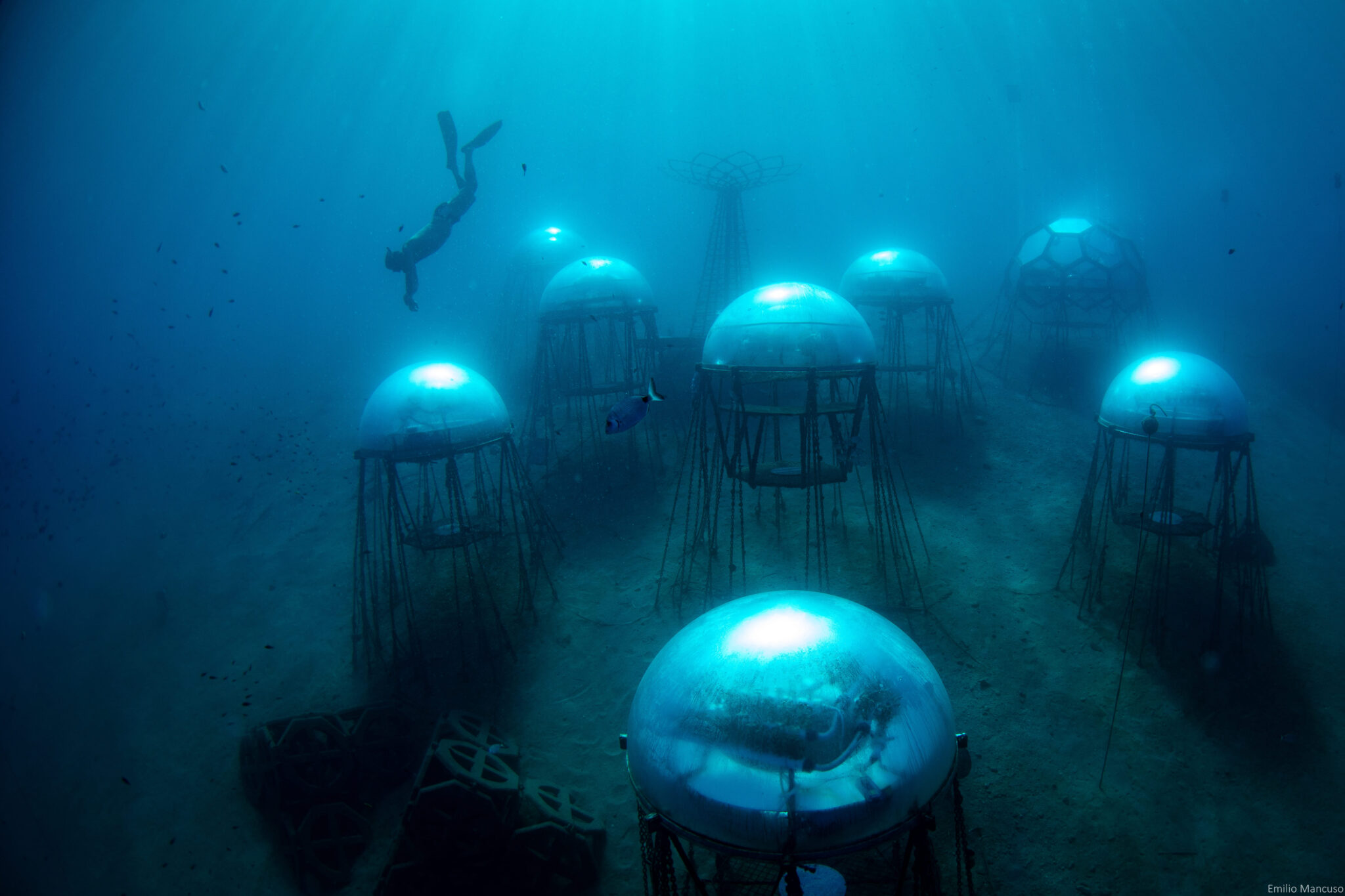
If you dive Nemo’s Garden today, you’ll find nine biospheres anchored to the seafloor, each filled with lush green plants suspended in a completely alien-yet-familiar environment. The sight is surreal, almost like an underwater sci-fi movie set, but very real.
And there’s more to see than just the domes. Over time, the area has become a small marine micro-ecosystem, attracting fish and invertebrates. It’s an unusual blend of human engineering and marine life — something few dive sites in the world offer.
How To Visit
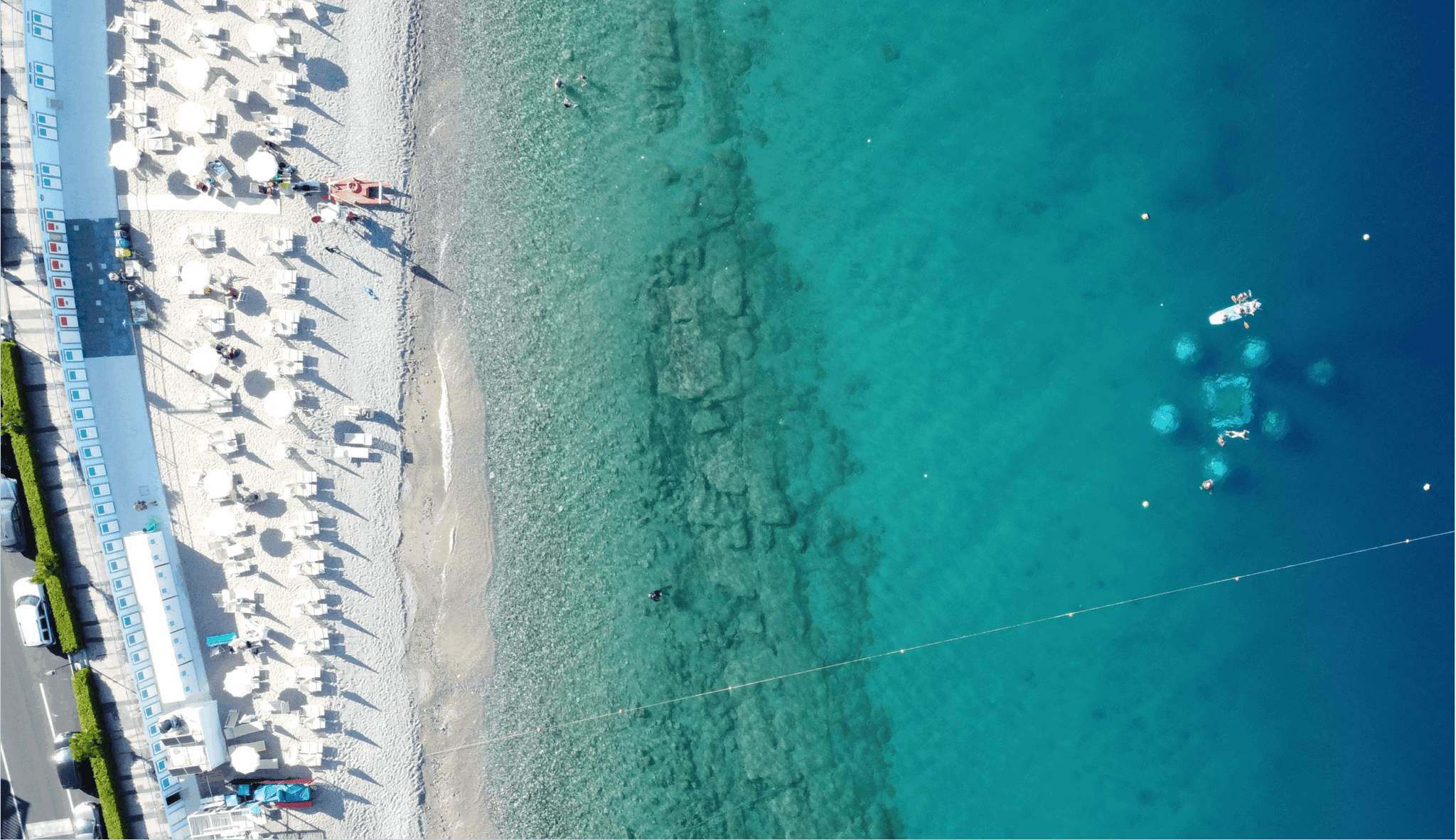
You can visit Nemo’s Garden independently by arranging access through Bagni Letizia, the beach resort that hosts the research base. If you’re looking to dive with guidance, Divenjoy, a nearby PADI Dive Center, can organize recreational dives around the biospheres.
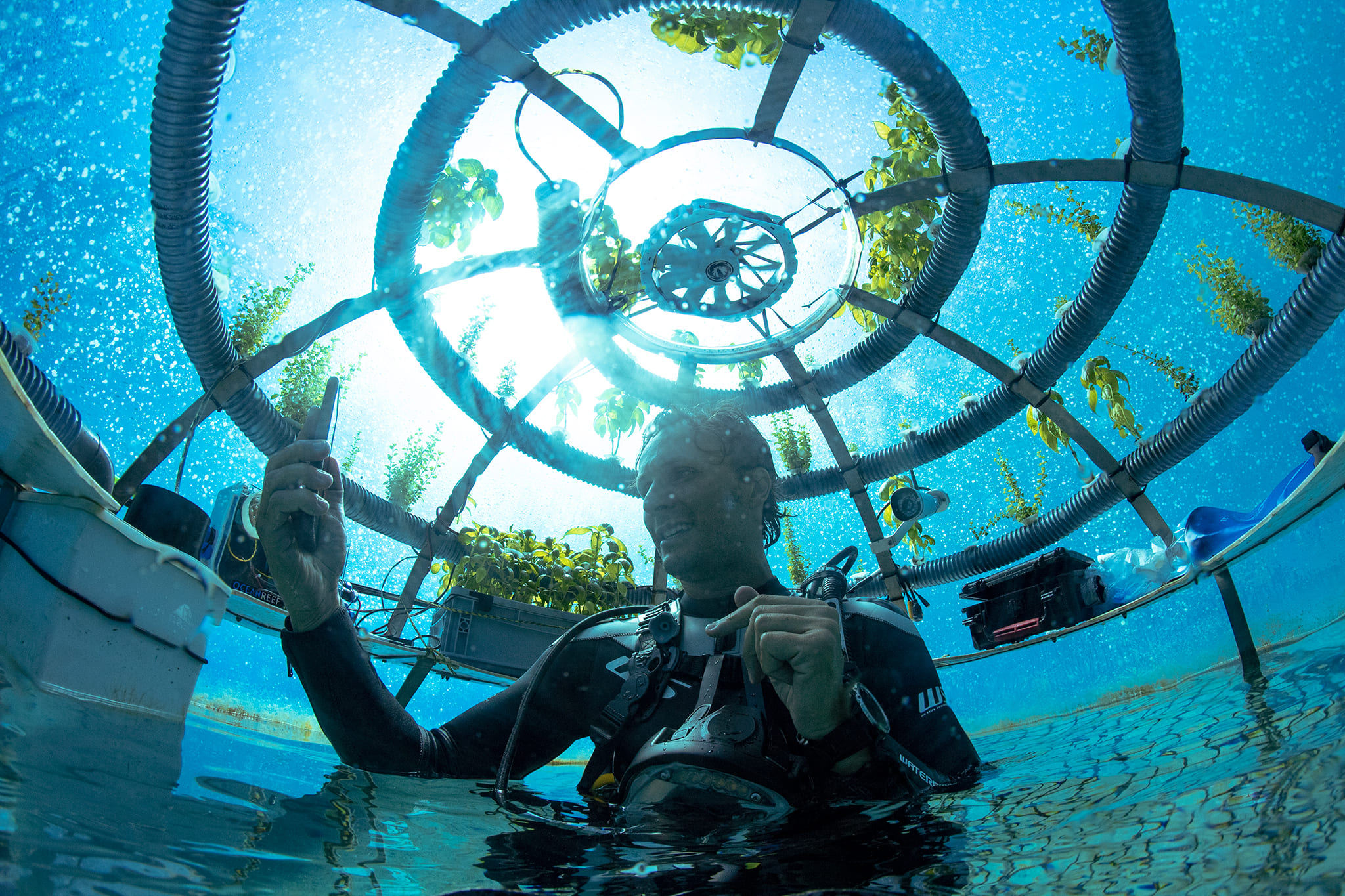
Entry inside the structures isn’t usually allowed for safety and crop health reasons, but occasional open days, announced by Nemo’s Garden and PADI, offer more in-depth visits, including guided tours by biologists and researchers. These events are rare but worth keeping an eye out for.
Click on the button below to check for upcoming events and visitor information.
Why This Dive Is Worth Your Time
Not every dive is about chasing adrenaline or spotting elusive species. Sometimes, the value of a dive lies in perspective, seeing something that changes the way you think about the ocean, or even the planet. Nemo’s Garden is that kind of dive.
Whether you’re passionate about sustainability, curious about underwater tech or just looking for a different kind of dive adventure, this site offers something unique. And by diving here, taking photos or sharing your experience, you’re helping spread awareness about a project that could one day help communities grow food in places where it’s desperately needed.
Pro Tip
For PADI divers interested in marine conservation, this is a great site to visit. It is part of a broader eco-diving itinerary in the Mediterranean. You can also combine it with buoyancy practice, as hovering around the biospheres requires controlled movement for minimal impact.
Want To Dive More Incredible Sites?
From underwater art museums to sunken cities, the ocean is full of awe-inspiring dive destinations. Whether you’re chasing vibrant reefs or seeking one-of-a-kind underwater adventures, there’s a dive waiting for you. Click below to discover more of the globe’s best dive sites.