
Sharks have long fascinated divers around the world. Whether it’s the graceful glide of a reef shark or the adrenaline rush of spotting a hammerhead, encountering these apex predators underwater is a dream come true for many scuba enthusiasts. While the 1975 movie Jaws left a lasting impression by painting sharks as terrifying creatures, the reality is that most sharks are shy, elusive and pose little threat to humans. In fact, for many divers, seeing a shark is the highlight of any dive.
Japan may not be the first destination that comes to mind for shark diving, but its waters are home to a surprising variety of species and unforgettable dive spots. From schools of scalloped hammerheads to close encounters with the rare Japanese bullhead shark, the country offers thrilling underwater experiences for shark lovers.
In this article, we’ll introduce six of the best places to see sharks while diving in Japan, perfect for those eager to add a shark sighting to their scuba bucket list.
1. Mikomoto Island – Hammerhead Sharks
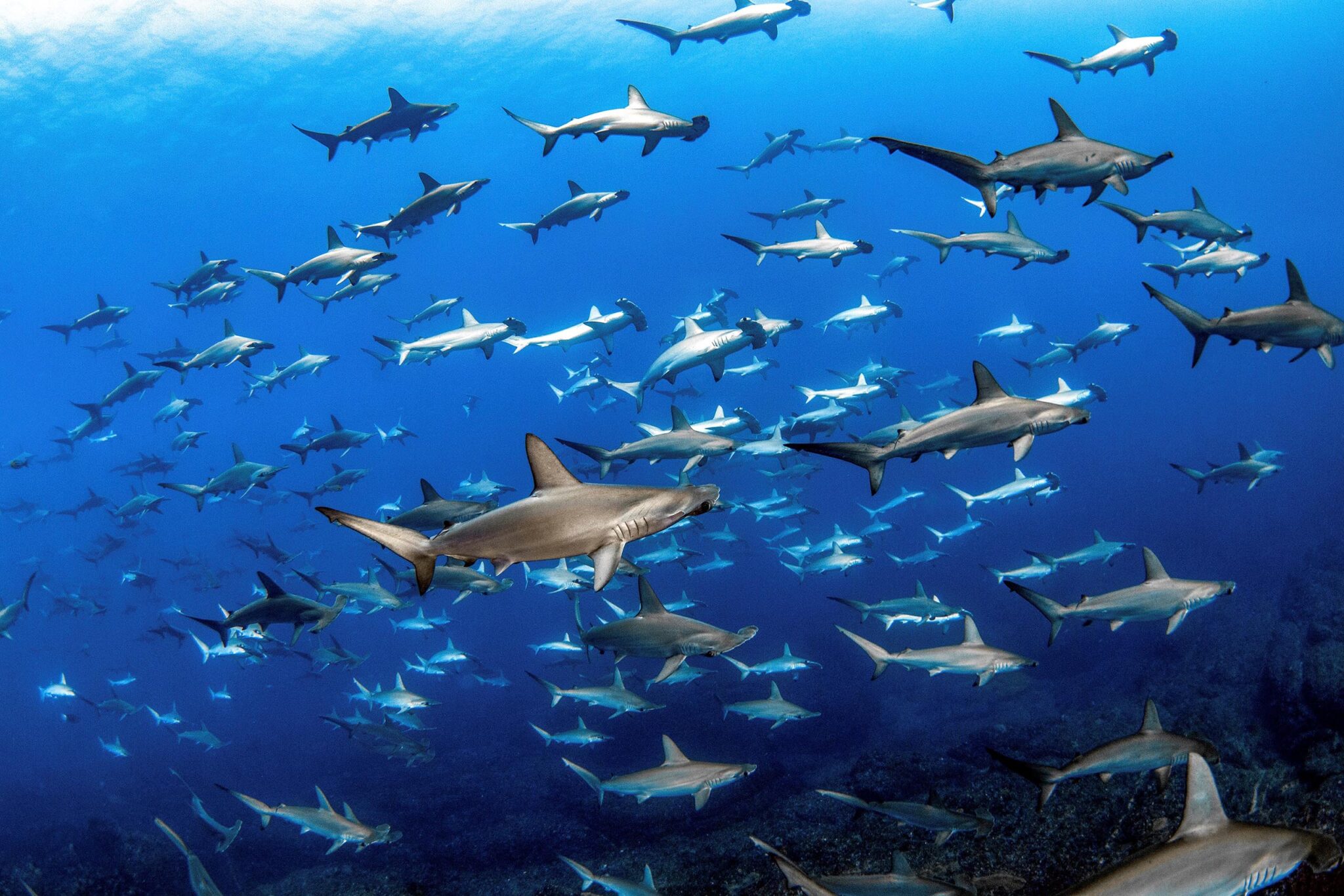
Just off the southern tip of the Izu Peninsula lies Mikomoto Island, one of Japan’s most sought-after dive sites, not just by locals but by shark lovers around the world. Situated in open ocean, Mikomoto is known for its rich marine life and spectacular encounters with schools of scalloped hammerhead sharks.
The best chance to see these iconic predators is from early summer through autumn, especially around a dive site called Kame-ne. On lucky days, divers are treated to the unforgettable sight of a “Hammerhead River”, a flowing mass of dozens, sometimes hundreds, of hammerheads cruising past in formation.
Surrounding the island are several dive spots — Kame-ne, Jabu-ne, Kado-ne, Shirane and Mitsu-ne — but Kame-ne is the top pick for hammerhead sightings.
What To Expect
- All dives are boat dives and drift style, requiring strong dive skills, like rapid descent and excellent buoyancy control.
- Conditions can be challenging, so only experienced and advanced divers should attempt these dives.
- Local dive operators enforce strict rules regarding experience, equipment and dive planning. Following their guidance is essential for safety and success.
Why It’s Special
The sheer number of hammerheads, the adrenaline of a blue-water drift dive and the chance to see one of the ocean’s most iconic species up close — all within easy reach of Tokyo (about three hours by train and boat).
2. Yonaguni Island – Hammerhead Sharks
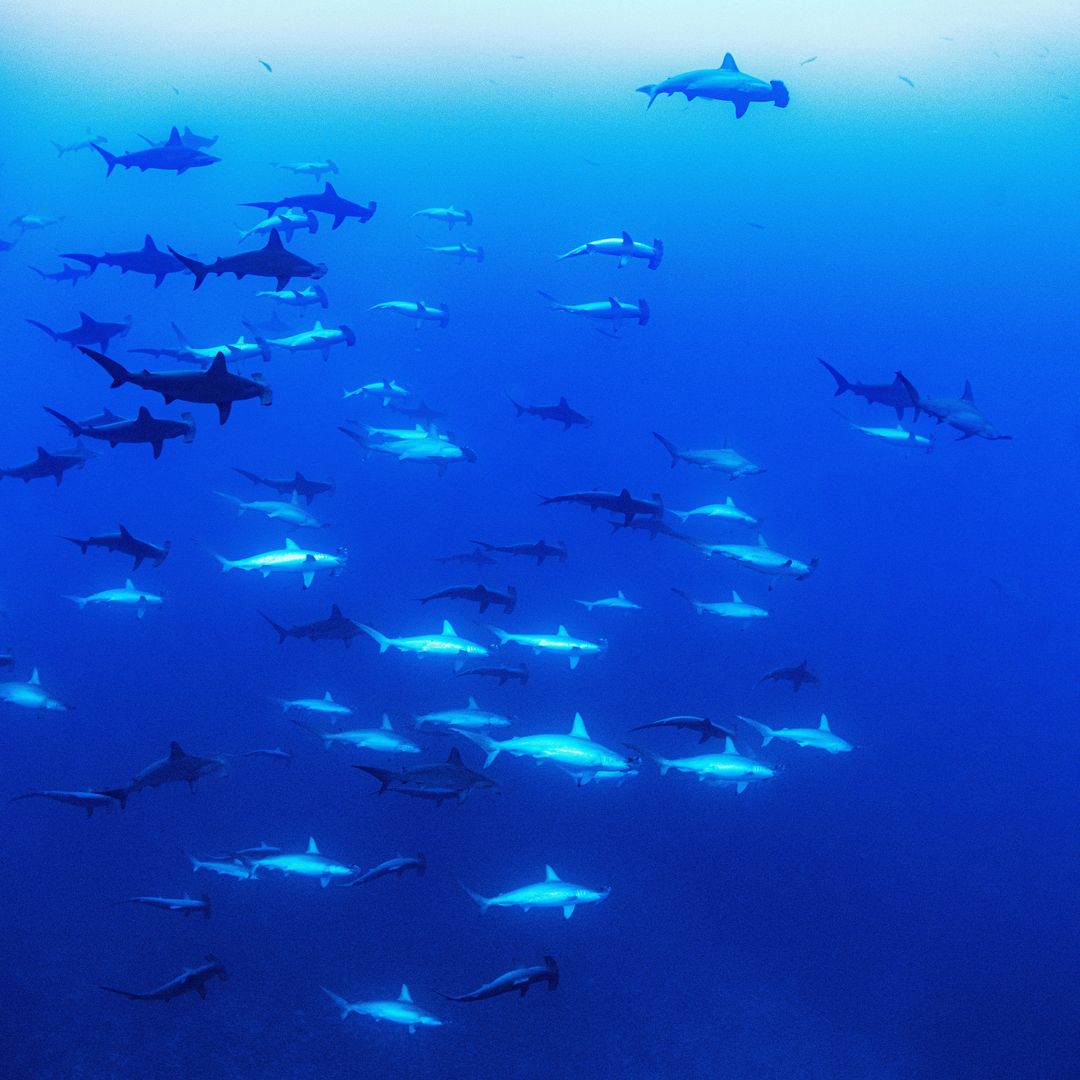
Located at the westernmost edge of Japan, Yonaguni Island is famed for its mysterious underwater ruins — a diver’s dream for both thrill and intrigue. But beyond the ancient stone structures, Yonaguni is also one of Japan’s top destinations for hammerhead shark encounters.
The best time to see hammerheads here is from winter through early spring, when schools of scalloped hammerheads migrate along the island’s coastline. The most popular dive site is Irizaki Point, located at the western tip of the island. On a good day, divers may be lucky enough to witness another awe-inspiring “Hammerhead River”, with dozens of sharks gliding gracefully through the deep blue.
Recently, another site near Irizaki, called Kubura, has also gained popularity for hammerhead sightings, offering a surreal scene of sharks swimming over stretches of white sandy seafloor.
What To Expect
- All dives are boat dives with drift diving conditions.
- Currents can be strong, so advanced-level dive skills are essential.
- Yonaguni offers the unique combination of pelagic wildlife and archaeological curiosity — a rare mix that draws divers from across the globe.
Why It’s Special
Where else can you glide past an underwater pyramid and then drop into the blue for a hammerhead encounter? Yonaguni is a remote paradise for adventurous divers seeking both marine wildlife and a touch of mystery.
3. Izu Oshima Island – Hammerhead Sharks
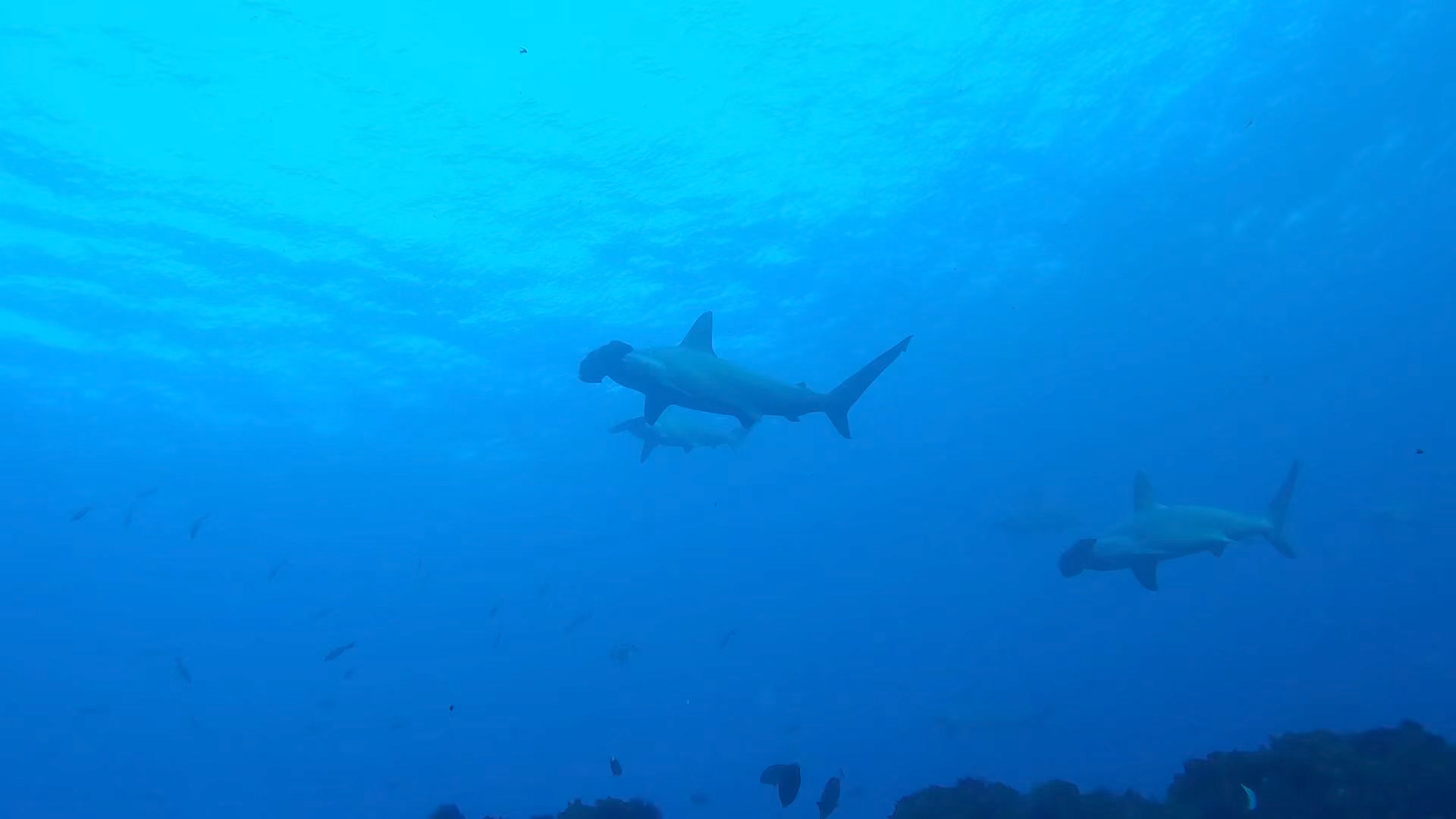
Just a short trip from Tokyo, Izu Oshima Island is a popular getaway for both beginner and experienced divers alike. With a variety of dive sites surrounding the island, it’s known for accessibility and marine diversity, but few realize that it also offers the chance to see scalloped hammerhead sharks.
The place to go is Keikai, located on the island’s northwestern coast. From summer through fall, especially in the early morning hours just after sunrise, lucky divers may spot a school of up to 100 hammerhead sharks cruising along the reef.
Unlike other shark diving locations that require boat trips and deep water, Keikai is a shore-entry site with relatively shallow depths, making it ideal for extended observation. This means Izu Oshima is one of the few places in the world where you can potentially see hammerheads without needing to dive from a boat.
What To Expect
- The best season for spotting hammerheads here is from July to October.
- This is a shore entry site and no boat is required.
- Strong currents may occur, so dive conditions can change quickly.
- A minimum of 30 logged dives is recommended, as per local diving association guidelines.
Why It’s Special
Hammerhead diving just a short ferry ride from Tokyo? Izu Oshima offers a rare blend of convenience and adventure — perfect for experienced divers looking for a big thrill without going far.
4. Ito (Chiba) – Banded Dogfish
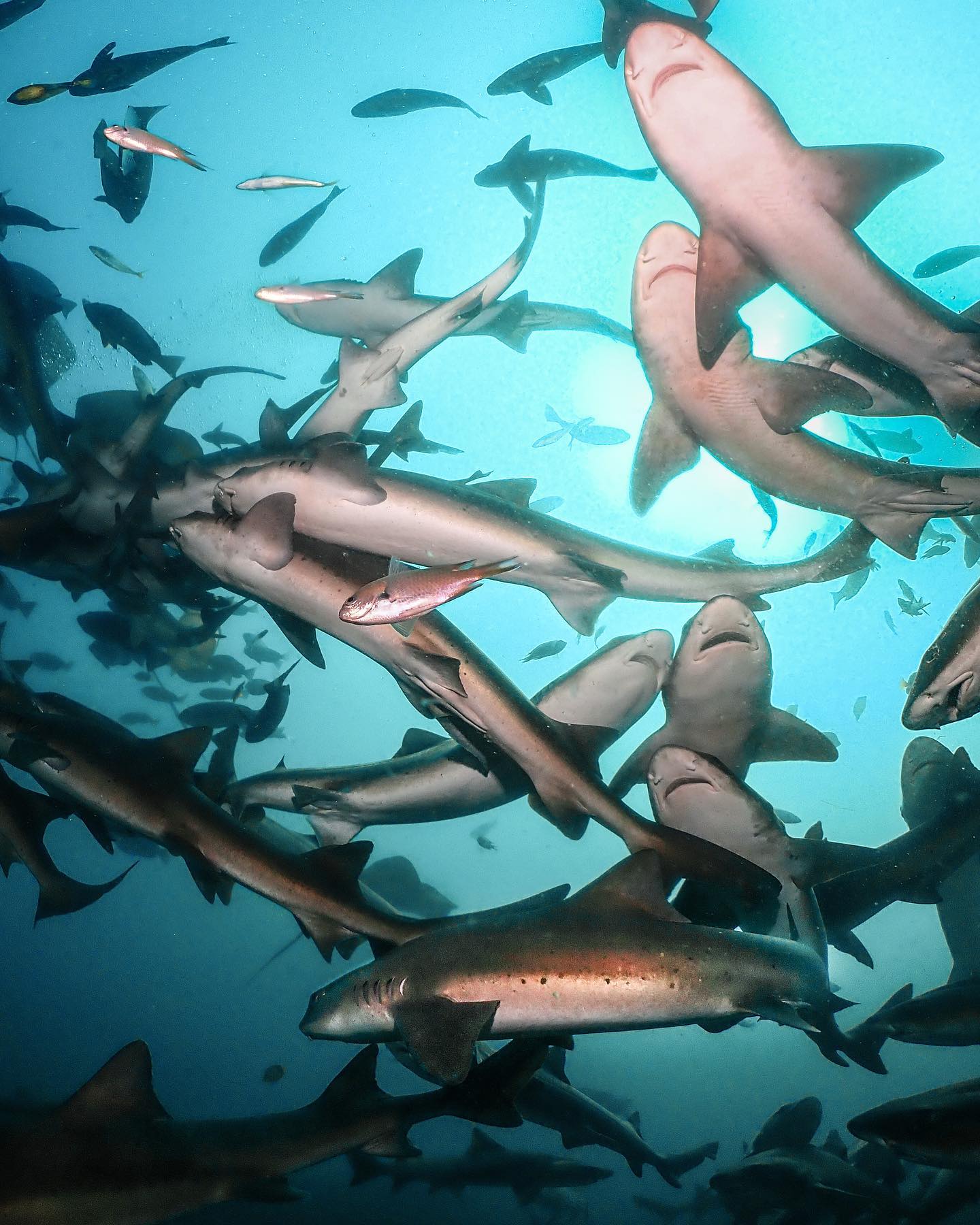
Located in Chiba Prefecture, just east of Tokyo, the coastal town of Ito is home to one of the most unusual and exhilarating shark dives in Japan. At a site called “Shark Scramble”, divers can come face-to-face with dozens — sometimes hundreds — of banded dogfish (locally known as dochizame).
These sharks are non-aggressive and used to divers, which makes for an up-close and unforgettable experience. At times, they swarm the area like a living wall of sharks, creating a truly surreal underwater spectacle.
What To Expect
- The site is home to an exceptionally high shark density.
- To access the site, you’ll need to take a short boat ride.
- This experience is ideal for intermediate divers and up.
- And, it’s close to Tokyo – approximately two-and-a-half hours by car or train.
Why It’s Special
Where else can you dive into a swirling vortex of sharks just a few hours from one of the biggest cities in the world? Ito is one of Japan’s most photogenic and thrilling shark dives — and an unexpected highlight for shark lovers visiting Tokyo.
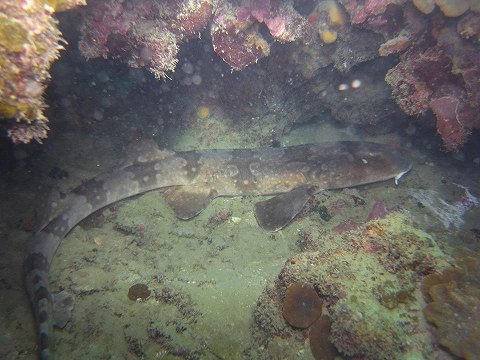
5. Kannoura (Kochi) – Whitespotted Bamboo Shark
Located on the border of Kochi and Tokushima Prefectures, Kannoura is a hidden coastal destination where warm currents from the Kuroshio Current bring vibrant marine life year-round. While the area is known for its colorful soft corals and biodiversity, its biggest secret lies beneath the surface between April and June — the seasonal appearance of the rare whitespotted bamboo shark.
Usually found at depths around 300 meters (984 feet), this mysterious, bottom-dwelling shark makes a rare move into shallow waters to mate and lay eggs, making Kannoura one of the only known places where divers can observe this species up close.
The best place to see them is a site called Ōura, located inside Kannoura Bay. At just five to 10 meters (16 to 33 feet) deep, divers can spot these camouflaged sharks nestled among coral and rocks. If you’re lucky, you might even see egg cases or embryos moving inside the eggs – a truly remarkable glimpse into shark reproduction.
What To Expect
- The best time to spot whitespotted bamboo sharks is from April to June.
- The dive site depth is around five to 10 meters (16 to 33 feet) – perfect for long bottom times.
- The dive site is accessible from shore or via boat.
- This site is ideal for underwater photographers and shark behavior enthusiasts.
- The calm bay conditions are suitable for intermediate divers and up.
Why It’s Special
This is the only known place in Japan where whitespotted bamboo sharks rise from the deep to breed. With so much still unknown about this species, Kannoura offers a rare opportunity to witness the secret life of a shark that usually hides far below human reach.
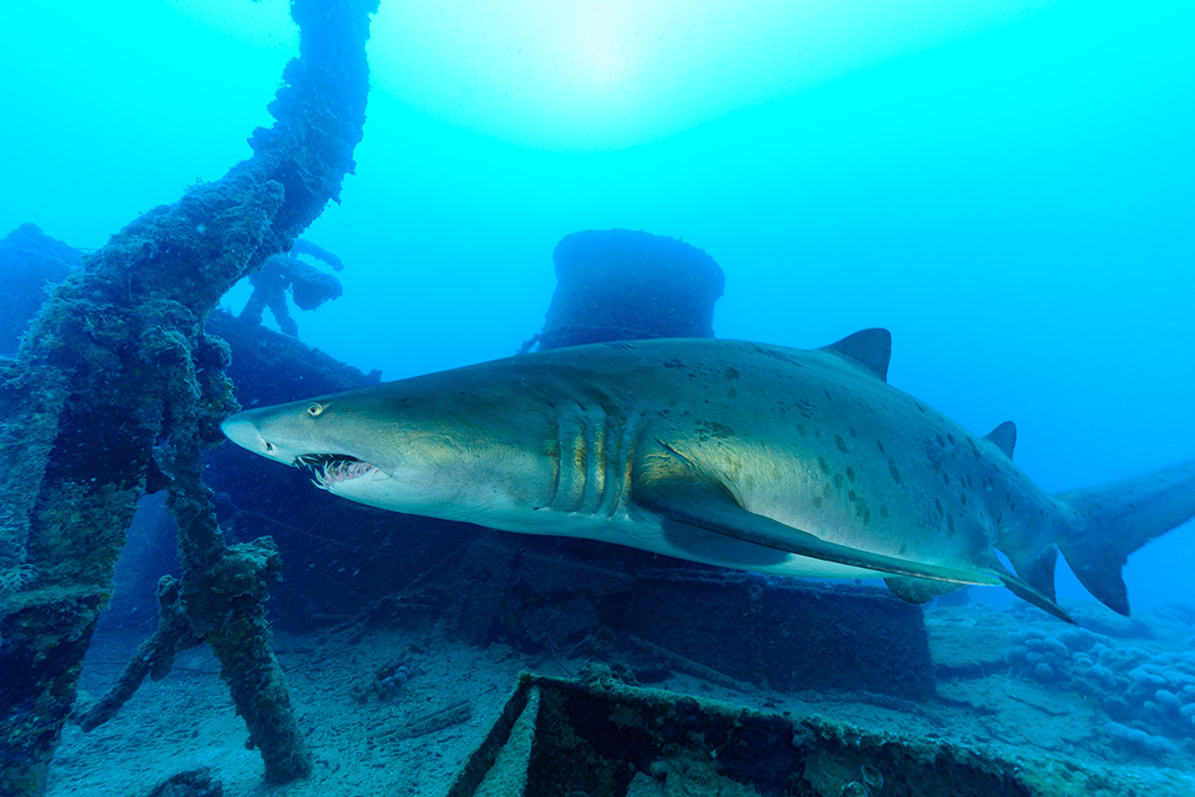
6. Ogasawara Islands – Sand Tiger Sharks
In the far reaches of the Pacific Ocean, the Ogasawara Islands — also known as the Bonin Islands — offer one of Japan’s most remote and biologically unique dive destinations. These islands are the only place in Japan where divers have a chance to encounter the sand tiger shark, a rare and majestic species listed as vulnerable by the International Union for Conservation of Nature (IUCN).
Although they may look fierce with their menacing teeth, sand tiger sharks are slow-moving and docile, allowing for close, respectful observation. Divers often report a sense of awe watching these large sharks cruise silently through deep blue waters or rest within underwater caverns.
The best-known location for sightings is the Mukojima Islands, located about 50 km (31 miles) north of Chichijima Island — a one-and-a-half to two-hour boat ride. However, sand tiger sharks can also be spotted around Chichijima and Hahajima, especially in winter months, when they frequent calm inner bays, caves and even wreck sites, offering dramatic photo opportunities.
What To Expect
- This is the only confirmed location in Japan to see sand tiger sharks.
- The main sites are Mukojima Islands, Chichijima and Hahajima.
- The best season is during the winter (for sightings near Chichijima bays) or late spring to summer for offshore dives.
- Most dives are boat dives, and dive sites include accessible caverns and wrecks.
- Remote travel required to reach the Ogasawara Islands, including a 24-hour ferry from Tokyo.
Why It’s Special
In the shimmering Bonin Blue, divers can encounter one of the ocean’s most misunderstood predators in peaceful, surreal surroundings. With limited global habitats and growing conservation concerns, seeing a sand tiger shark in Japan is a rare privilege — and a memory of a lifetime.
Dive Into the World of Sharks in Japan
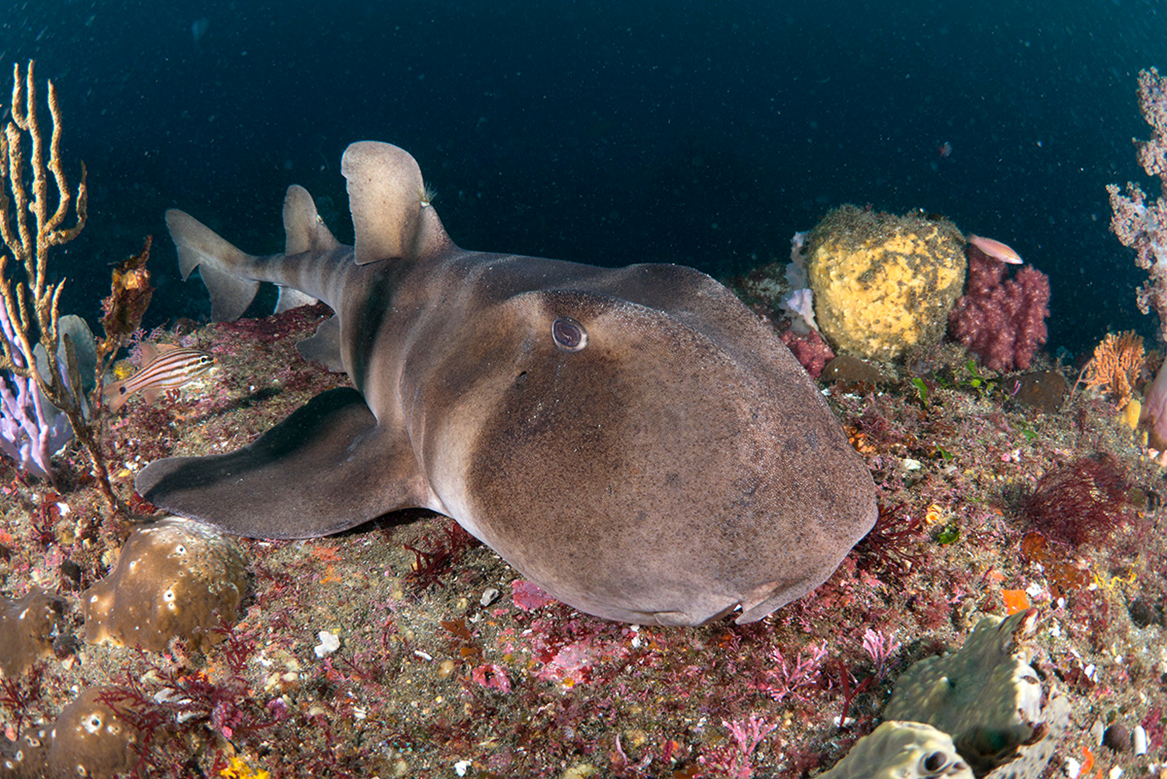
While the six sites above offer some of the highest chances to see sharks in Japan, they’re by no means the only places where shark encounters happen. Even on a casual weekend dive trip from Tokyo, whether to the Izu Peninsula, Shonan and Miura, the Boso Peninsula or the Kii Peninsula, divers frequently spot fascinating species like banded dogfish, Japanese bullhead sharks and angel sharks.
For those who want to deepen their knowledge and appreciation of these misunderstood creatures, consider taking the AWARE Shark Conservation Specialty course. It’s a great way to learn about shark biology, the threats they face and how divers can play a role in protecting them, while enjoying the unforgettable experience of diving with them in their natural habitat.
Whether you’re chasing hammerheads or discovering the quiet beauty of bottom-dwelling species, Japan offers a surprisingly rich variety of shark diving experiences — no matter your skill level or travel style.


