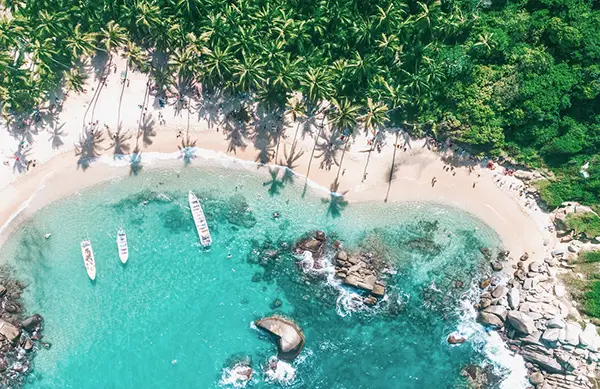
Surrounded by ocean on all sides, Japan offers countless unique dive destinations — including some located just a day trip away from major cities. The eastern coast of the Izu Peninsula is a prime example; it’s packed with marine biodiversity and stunning underwater scenery.
Izu Peninsula is often considered the heart of diving in Japan, attracting divers not only from the Kanto and Tokai regions but also from Kansai and beyond. The eastern side of the peninsula features a variety of beach and boat diving sites, with everything from pelagic fish and macro critters to dramatic underwater landscapes and soft coral gardens. Its easy access from Tokyo and abundance of nearby sightseeing spots also make it ideal for combining diving with a relaxing getaway.
Atami
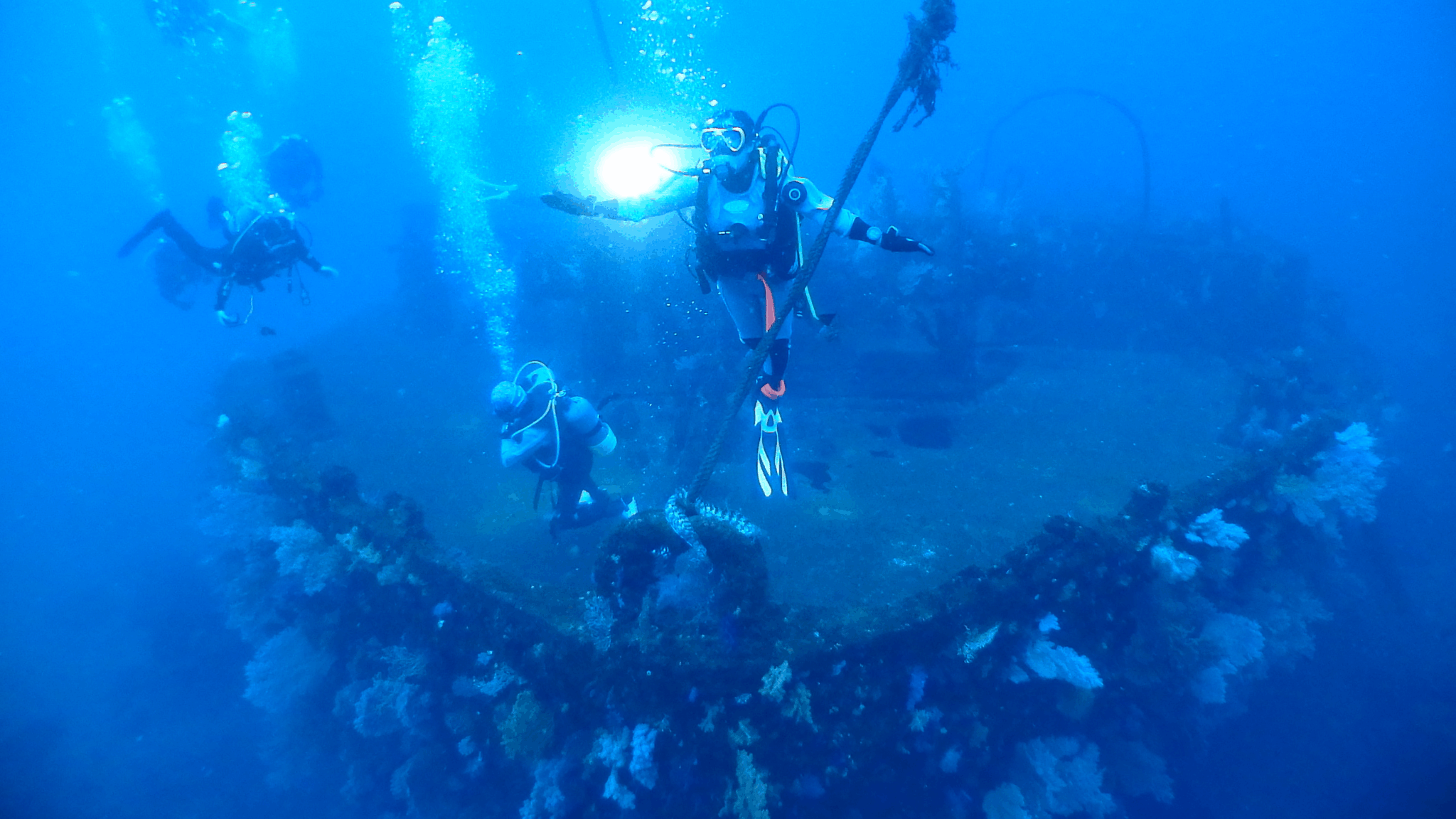
Just 50 minutes from Tokyo by bullet train, Atami is one of the most accessible and dynamic diving areas in all of Japan. Located only minutes from the port, its top dive sites include Japan’s largest sunken ship Asahi No. 16, the colorful soft coral gardens of Sodaine, the rugged topography of Bitagane and the winter-only Kosoga Cave. Known for its rich marine life year-round, Atami offers both visual excitement and excellent conditions for deep diving practice. After your dives, enjoy relaxing hot springs and fresh seafood — the perfect way to end your day in this coastal resort town.

Top Dive Site: The Atami Wreck (Asahi No. 16)
Atami’s most iconic dive site is the Asahi No. 16, one of the largest sunken ships in Japan, stretching 81 meters (266 feet) in length. Resting at a depth of 20-35 meters (66-115 feet), this vast wreck has become a thriving artificial reef, attracting a wide variety of marine life throughout the seasons. Schools of cherry anthias, pelagic fish and macro critters, like longnose hawkfish, shrimp and crabs, call this site home. The area is also covered in vibrant soft corals thanks to favorable currents. Due to the depth, careful monitoring of air supply and dive computer use is essential. Penetration into the wreck is prohibited, so divers should follow their guide’s instructions and enjoy the site responsibly.
How To Get There
- By Car: Approximately one hour and 30 minutes from Tokyo. Take the Tomei Expressway → Atsugi IC → Odawara-Atsugi Road → Seisho Bypass → Route 135.
- By Train: About 40 to 50 minutes from Tokyo Station via Shinkansen. From Atami Station, it’s about 10 minutes by taxi or a short bus ride to the “Atami Port” bus stop.
Hatsushima Island
Hatsushima Island is a small getaway located about 10 kilometers (6 miles) off the coast of Atami, offering a relaxing resort atmosphere and excellent diving. Accessible via a 23 to 30 minute ferry ride from Atami Port or Ito Port, the island provides a peaceful escape from the city. The surrounding waters are steep and benefit from strong currents, attracting schools of pelagic fish, sharks and vibrant soft coral gardens. Despite being a beach diving destination, marine life is abundant and visibility remains relatively stable year-round. While beach dives are the main style of diving here, boat diving is also available for those looking to explore further.
Popular Dive Site: Futatsune
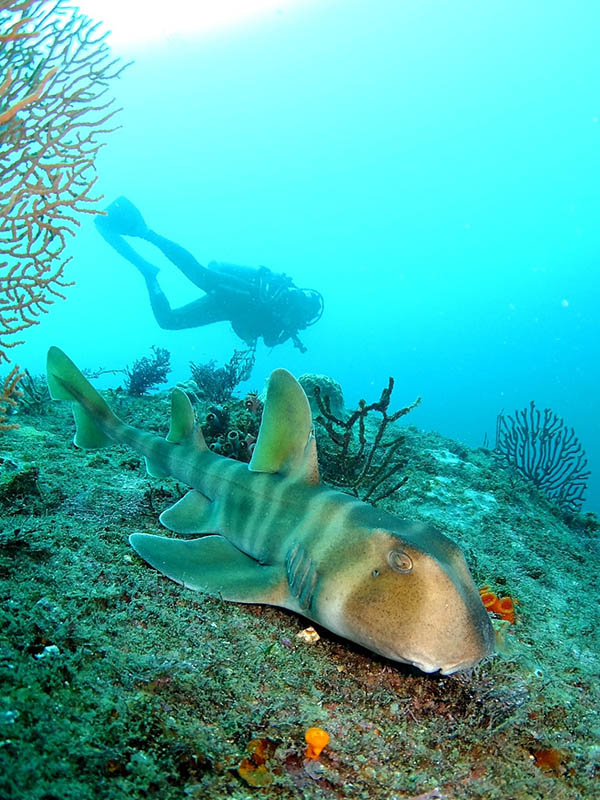
Futatsune is Hatsushima Island’s most popular dive site, ideal for divers of all levels. This beach entry point is located right in front of the dive center and offers easy access via a gentle slope. The site is home to large marine species, such as Japanese bullhead sharks and guitarfish, while schools of fish, like grunt, silver-stripe round herring and amberjack, create a dynamic underwater scene. In the rocky crevices, divers can spot macro creatures, like jawfish and frogfish. Seasonal highlights include cuttlefish spawning in summer and swarms of “Pikachu” nudibranchs (Thecacera pacifica) in winter. With calm conditions and rich marine life, Futatsune is a dive site that you’ll want to return to again and again.

How To Get There
- By Car: About one hour 40 minutes from Tokyo. Take the Tomei Expressway to Atsugi IC, then follow the Odawara-Atsugi Road and Route 135 to Atami Port. From there, take a ferry to Hatsushima Island (approximately 30 minutes).
- By Train: About 40 minutes from Tokyo Station to Atami Station via Shinkansen. From Atami Station, take a bus (approximately 15 minutes) to Atami Port, then a 30-minute ferry to the island.
Usami
Located just a short trip from the Tokyo metropolitan area, Usami offers easy access and the best of both beach and boat diving. One of the main attractions is the high chance of encountering Japanese bullhead sharks, especially in the beach area known as “Japanese Bullhead Shark Castle,” where sightings are frequent. Divers may also spot rays, sea turtles and the occasional sunfish (mola mola).
The underwater landscape features beautiful fields of soft corals and is home to a wide range of macro marine life, such as siphopteron flavum nudibranchs, making it ideal for fish watchers and underwater photographers. For beginners, underwater guide ropes are installed for safe entry. The boat dive sites are conveniently located just about five minutes from the port, and drift diving is also possible. Usami is a versatile destination that caters to both novice and experienced divers alike.

Featured Dive Site: Cargo Ishi
Cargo Ishi is a boat dive site known for its stunning contrast between deep blue waters and white sandy seabed, offering encounters with both large marine life and fascinating macro creatures. In the sandy areas, divers can spot banded dogfish, angel sharks and Japanese bullhead sharks over a meter (three feet) long. Occasionally a green sea turtle glides by.
Sea anemones provide shelter for clownfish and cleaner shrimp, while the site is also rich in crustaceans and nudibranchs — perfect for fish watching and underwater photography. The north-to-south current allows for comfortable drift dives, with a short distance to the buoy for access easy. Suitable for divers of all levels, Cargo Ishi is a site full of charm and discovery.
How To Get There
- By Car: Approximately two hours from Tokyo. Take the Tomei Expressway to Atsugi IC, then follow the Odawara-Atsugi Road and Route 135.
- By Train: From Atami Station, take the JR Ito Line for about 17 minutes and get off at Usami Station. From there, it’s about a five-minute taxi ride.
Ito
Ito, a well-known hot spring resort town, is one of the top destinations for dynamic boat diving in eastern Izu. Off the coast, the area around Teishi Island features spectacular underwater landscapes shaped by volcanic rock, including arches, caves and dramatic drop-offs that plunge to depths of 70 meters (230 feet). Strong currents bring nutrient-rich waters, attracting dense schools of fish and marine life. Divers frequently encounter ocean sunfish (mola mola), sea turtles and large pelagic species with occasional sightings of manta rays and even whale sharks, proving the site’s high potential. The seascape is also decorated with colorful soft corals and sea anemones, making it ideal for both fish watching and underwater photography. Whether you’re into wide-angle or macro diving, this area offers a richly rewarding experience.
Featured Dive Site: Shirane
Shirane is a massive reef stretching north to south. It’s divided into three areas — North, Central and South. Each area has its own highlights, including sea anemones, soft coral gardens and natural underwater channels. Marine life is abundant year-round, offering divers dramatic scenes. The southern area features a steep drop-off descending to 70 meters (230 feet), which is often swarmed with scalefin anthias, amberjack and yellowtail amberjack. Sea turtles, grouper and even rare visitors like manta rays, hammerhead sharks and bull sharks have been spotted here. The site is also rich in macro life, making it perfect for fish watching and photography. Shirane is widely regarded as Ito’s signature dive site.
How To Get There
- By Car: Approximately two-and-a-half hours from Tokyo via the Tomei Expressway → Atsugi IC → Odawara-Atsugi Road → Route 135.
- By Train: Take the JR Ito Line from Atami Station to Ito Station. From there, take a bus or taxi (approximately 10–20 minutes).
Kawana
Kawana is a popular diving destination just about two-and-a-half hours from Tokyo. It offers both beach and boat diving. This traditional fishing village boasts a rich marine environment that changes with the seasons. The bay is shallow and calm, making it ideal for beginners. Its underwater landscape features a mix of rocky reefs, sandy bottoms and drop-offs. Resident sea turtles are often spotted, sometimes even several at once. Boat dive sites, on the other hand, showcase lush soft coral gardens and schools of pelagic fish, with some limited-time-only sites adding extra appeal. With underwater guide ropes installed throughout the area, divers can explore safely and comfortably. Kawana is especially popular with underwater photographers and fish watchers, offering something for everyone — from beginners to experienced divers.
Featured Dive Site: Kawana Beach
This gently sloping beach site caters to all skill levels, from novice to expert. The underwater topography includes rocky areas, sandy flats, muddy slopes and even drop-offs, supporting an incredible diversity of marine life. On the right side, divers can explore rubble zones and rocky reefs where frogfish, yellow pygmy-goby and schools of horse mackerel and banded blue sprats gather. To the left, in the muddy sand, rare species of gobies appear regularly, offering a glimpse into a unique East Izu ecosystem. Further offshore lies a hidden reef where sea turtles are frequently encountered. In early summer, squid spawning beds are installed, allowing divers to witness the dramatic egg-laying scenes of bigfin reef squid up close. Easy sloped entries with handrails make it a beginner-friendly site and a favorite among underwater photographers.
How To Get There
- By Car: About two-and-a-half hours from Tokyo via the Tomei Expressway → Atsugi IC → Odawara-Atsugi Road → Route 135.
- By Train: Take the Izu Kyuko Line from Atami Station to Kawana Station. From Kawana Station, it’s about a three-minute taxi ride.
Futo
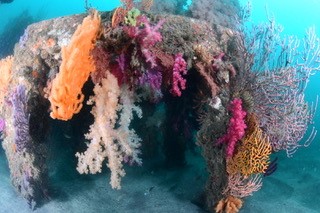
Located on the eastern coast of the Izu Peninsula facing Sagami Bay, Futo is one of the most popular dive areas in East Izu, offering something for everyone, from beginners to advanced divers. The area’s two signature beach sites, Yokobama and Waki-no-Hama, are known for their gentle depth gradients and sandy bottoms that begin around six to eight meters (20 to 26 feet), making them ideal for relaxed underwater exploration. One of the highlights is the spectacular bigfin reef squid spawning that occurs between June and August, which can be seen up close, even on a beach dive.
With over 15 boat dive sites available, Futo also offers dynamic underwater landscapes, vibrant soft corals and impressive fish density. In spring, you may encounter eagle rays and banded dogfish, while autumn brings an abundance of seasonal tropical visitors. Winter boasts excellent visibility and the chance to see elusive deep-sea creatures, like the anglerfish.
After your dive, you can unwind in the iconic open-air “Onsen-maru” hot bath, where you can soak with your wetsuit on — one of Futo’s unique post-dive luxuries that enhances the relaxing resort-like experience.

Featured Dive Site: Yokobama
Yokobama is one of Futo’s most beloved beach dive sites, attracting a wide range of divers. The area offers a mix of rocky reef and sandy bottom sloping down to 30 meters (98 feet), with an impressive diversity of marine life ranging from large pelagics to macro critters, depending on the season.
In the shallows, anemone fields are home to schools of clownfish, while glittering swarms of silver-striped round herring and damselfish fill the water column. Farther out, you might spot symbiotic gobies, frogfish,or even larger species, like angelsharks and guitar sharks.
Accessible only at high tide, the Futo Hole offers a magical underwater cavern experience with shafts of light piercing through the entrance, perfect for underwater photographers and adventurous divers alike. Seasonal highlights include yellowtail and amberjack in autumn, massive schools of mullet in October and rare encounters with ocean sunfish and deep-sea fish in winter.
With calm conditions and rich marine life year-round, Yokobama is ideal for both underwater photography and fish watching.

How To Get There
- By Car: Approximately two hours and 30 minutes from Tokyo. Take the Tomei Expressway to Atsugi IC, then continue via the Odawara-Atsugi Road and Route 135.
- By Train: Take the JR Tokaido Shinkansen to Atami Station, then transfer to the Izu Kyuko Line and get off at either Futo Station or Jogasaki-Kaigan Station. From Futo Station, take a bus for about five minutes. From Jogasaki-Kaigan Station, it’s about a five-minute taxi ride.
Izu Ocean Park
Located within the Jogasaki Coast of Fuji-Hakone-Izu National Park, Izu Ocean Park is one of the most popular dive areas on the Izu Peninsula. The site features dramatic underwater topography created by lava flows from Mt. Omuro’s eruption approximately 4,000 years ago, offering a mix of rocky slopes, giant drop-offs and sandy bottoms. Despite being a shore entry site, it delivers boat-dive-level excitement and biodiversity. You can encounter schools of yellowtail and amberjack, large species, like grouper and Asian sheepshead wrasse, and macro favorites like frogfish, nudibranchs and even harlequin shrimp.
A highlight is the famous underwater mailbox, and during Christmas, a submerged tree adds a festive touch to the dive. The facilities are also top-notch, with showers, changing rooms and a dedicated pool for training. Just about two hours from Tokyo, the area is not only ideal for diving but also offers access to hot springs and local gourmet food, making it a favorite weekend getaway for divers.

Popular Dive Site: Ichi-no-Ne
Izu Ocean Park offers a vast shore diving area with a wide range of route options, and one of the most popular is “Ichi-no-Ne,” located to the right as you head out from shore. Spanning depths from five to 30 meters (16 to 98 feet), this site is home to both large pelagics and fascinating macro life, making it a place you can dive again and again without getting bored.
Around the reef, divers can find frogfish and seahorses, while on the sandy bottom, divers may witness groupers being cleaned at natural cleaning stations. From mid-May to around September, Ichi-no-Ne also becomes a stage for the mesmerizing sight of bigfin reef squid laying their eggs. At the tip of the reef, schools of anthias and blackspotted cardinalfish swim around, and a wide variety of nudibranchs can also be found.
Currents may occur at times, so it’s important to monitor your air supply and dive computer for a safe and enjoyable experience.


How To Get There
- By Car: Approximately two-and-a-half hours from Tokyo. Take the Tomei Expressway to Atsugi IC, then continue on the Odawara-Atsugi Road and Route 135.
- By Train: Take the JR Tokaido Line to Atami Station, transfer to the Ito Line to Ito Station, then take the Izu Kyuko Line to Izu-Kogen Station. From Izu-Kogen Station, it’s about a nine-minute bus ride.
Inatori
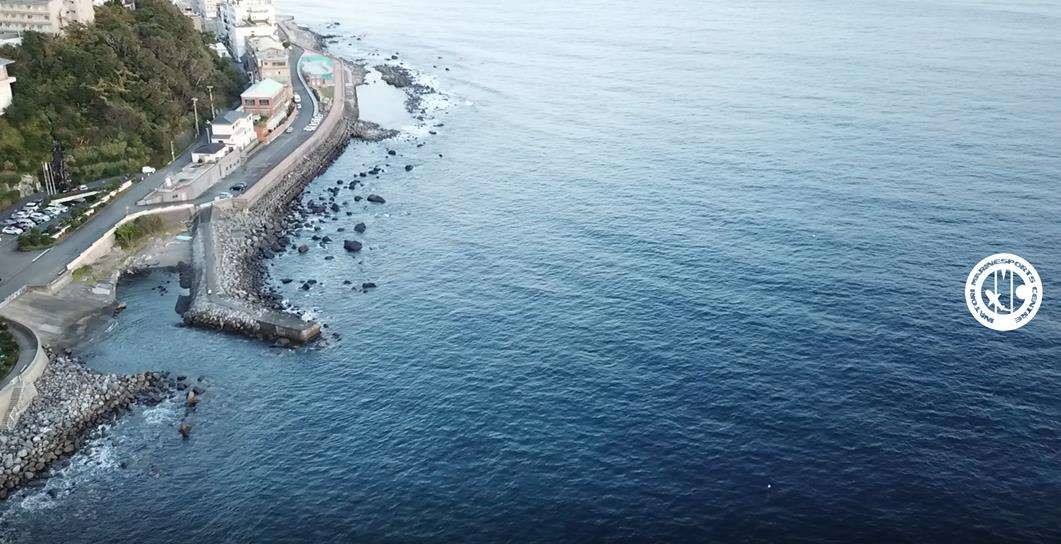
Located on the eastern coast of the Izu Peninsula, Inatori is a charming area known for its traditional hot springs. As a dive destination, it offers expansive beach points, like the approximately 700-meter-long (2300-foot-long) Shizuma Beach and Tosan Beach, where encounters with sea turtles are often reported. Interestingly, sea conditions tend to be more stable when the typical northeastern Izu winds blow, making it a uniquely reliable site.
The area is renowned for its stunning sandy seafloor — so beautiful that even professional underwater photographers are amazed. Divers can expect encounters with large marine life, such as Japanese bullhead sharks, eagle rays and green sea turtles, as well as rare and fascinating macro creatures. With Inatori Onsen close by, Inatori is the perfect place to combine diving with a relaxing hot spring getaway. Additionally, thanks to the different orientations of its dive sites, at least one location is usually open, regardless of offshore conditions.
Popular Dive Spot: Tosan Beach
Located in front of the Inatori Ginsuiso Resort, Tosan Beach is a versatile beach dive site suitable for all levels, from beginners to advanced divers. With a maximum depth of around 17 meters (56 feet), it features a wide expanse of white sandy bottom that beautifully contrasts with the deep blue waters. The area is typically free of strong currents, making it ideal for novice divers.
In addition to fascinating macro life, such as the siphopteron flavum sea slug, divers can also encounter various species of sharks and rays, including banded dogfish, guitarfish and eagle rays. There is even the chance to spot sea turtles. Underwater guide ropes are in place to assist with orientation, enhancing the ease and safety of navigation throughout the dive.

How To Get There
- By Car: Approximately three hours from Tokyo. Take the Tomei Expressway to Atsugi IC → Odawara-Atsugi Road → National Route 135.
- By Train: From Atami Station, take the Itō Line to Itō Station, then transfer to the Izu Kyūkō Line and get off at Izu-Inatori Station. Shuttle service is available from the station.
Shobusawa
Located at the southernmost tip of East Izu, Shobuzawa is a historic diving area situated in Kawazu Town, which is famous for its early-blooming Kawazu cherry blossoms. The annual Kawazu Sakura Festival, held from early February to early March, makes for a great after-dive activity. The beach point features a gently sloping entry, making it ideal for self-guided dives and training sessions, perfect for beginners. Entering the water from a concrete slope reveals a clear, beautiful seascape of rocky terrain and white sand.
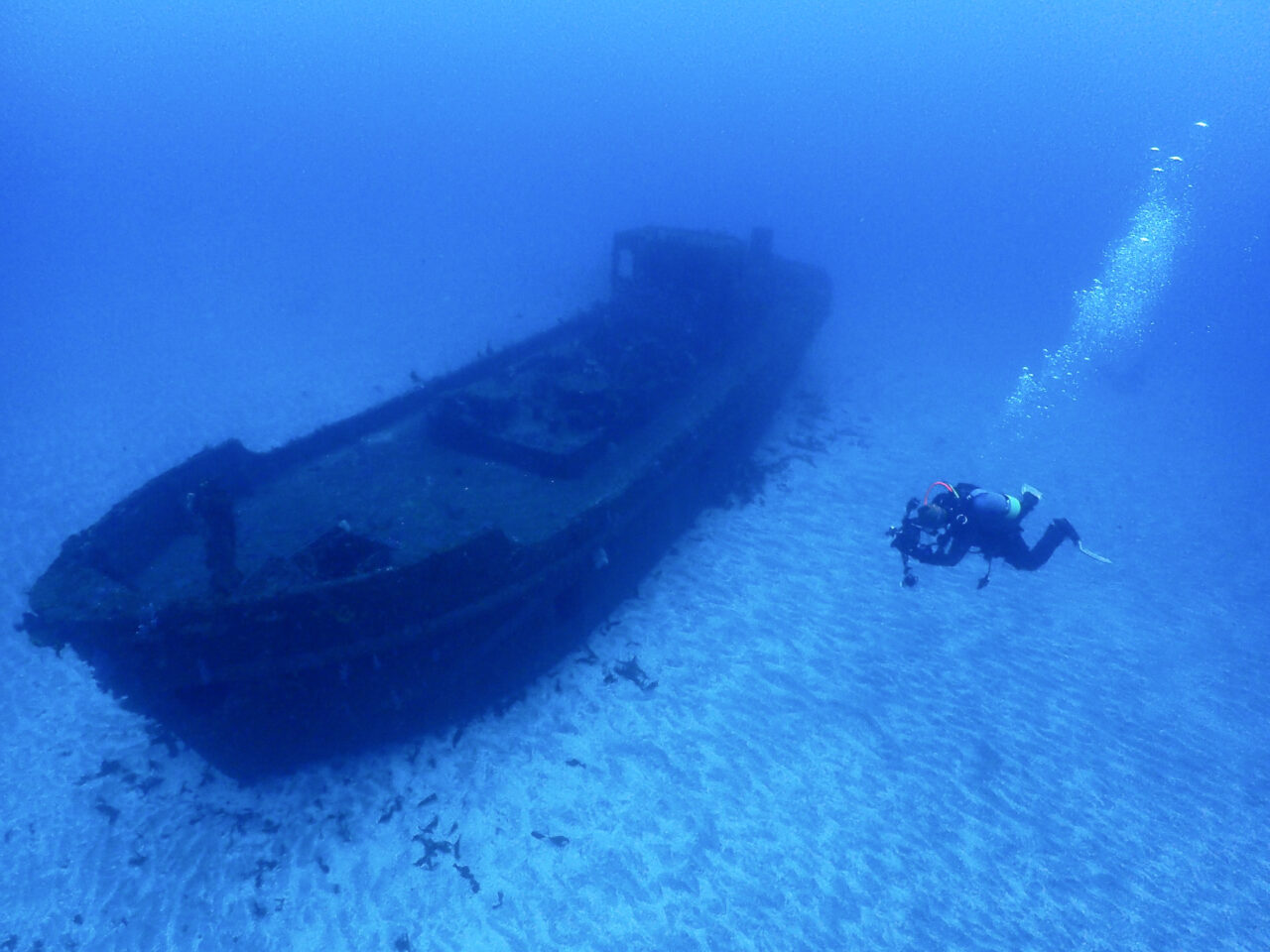
The boat diving site “Wreck” features a sunken vessel resting at a depth of around 24 meters (85 feet). Adventurous divers can explore areas like the wheelhouse. The area is home to a wide range of marine life, such as Japanese lumpfish, eagle rays and green sea turtles. Night diving is available year-round, making Shobuzawa a versatile and rewarding dive site for both novice and experienced divers.

Popular Dive Site: The Wreck
This boat diving site is just a three-minute ride from the port. Divers descend along a rope that leads directly beside the wreck, making it a safe and accessible site even for beginners. The wreck is about 20 meters (67 feet) long, but it remains intact, allowing divers to enter the wheelhouse and experience the thrill of playing captain.
The wreck is often swarmed by schools of fish, such as half-lined cardinalfish and golden sweeper, sometimes so dense that they completely blanket the ship. The hull is also covered in soft corals, and the site teems with macro life, like frogfish, various nudibranchs, gobies and crustaceans, making it a favorite among macro photographers.
How To Get There
- By Car: Approximately three-and-a-half hours from Tokyo. Take the Tomei Expressway → Shin-Tomei Expressway → Izu Jukan Expressway → National Route 135.
- By Train: From Atami Station, take the Ito Line to Ito Station, then transfer to the Izu Kyuko Line and get off at Kawazu Station. It’s about 10 minutes by taxi from there.
Akazawa
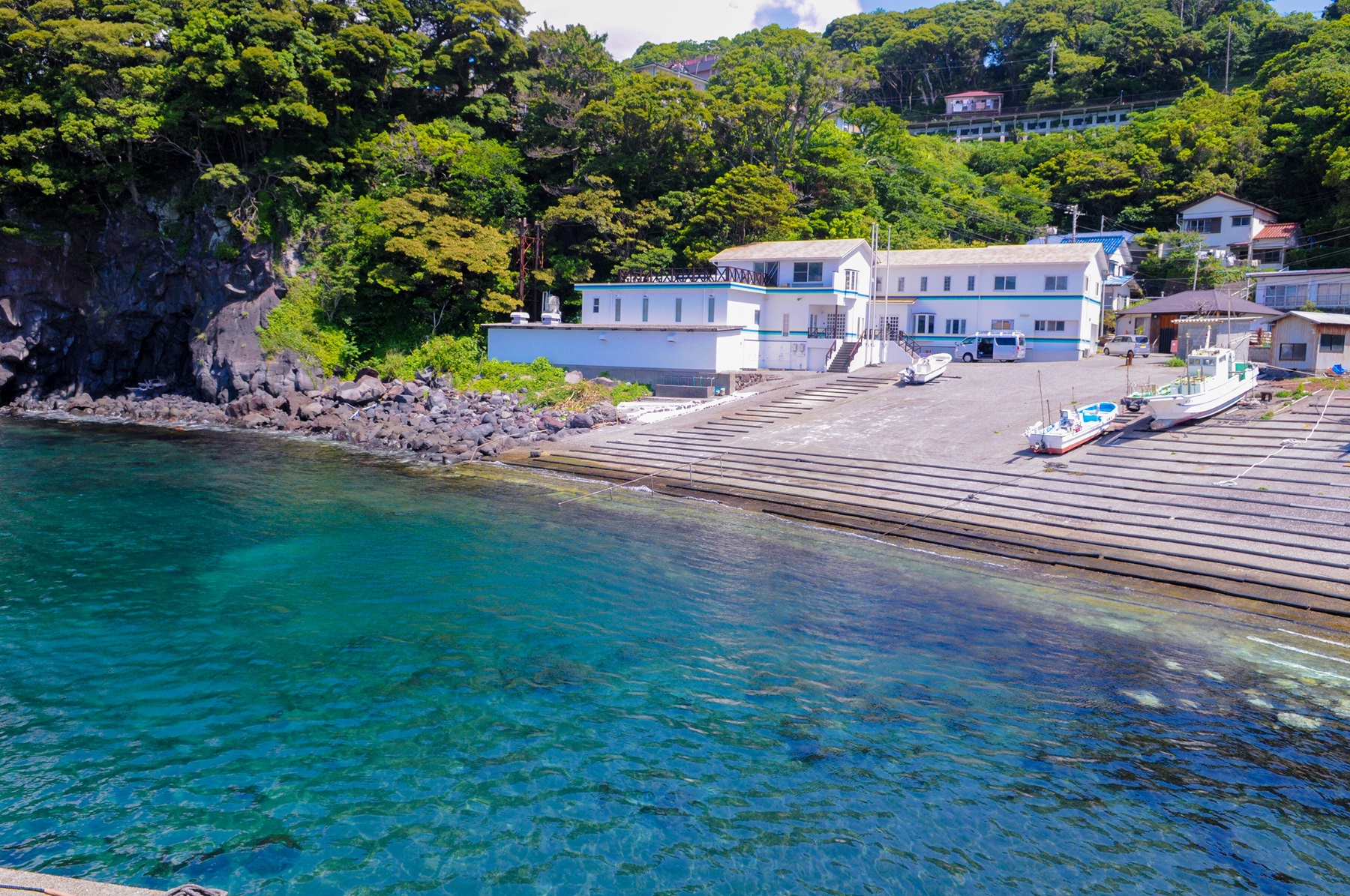
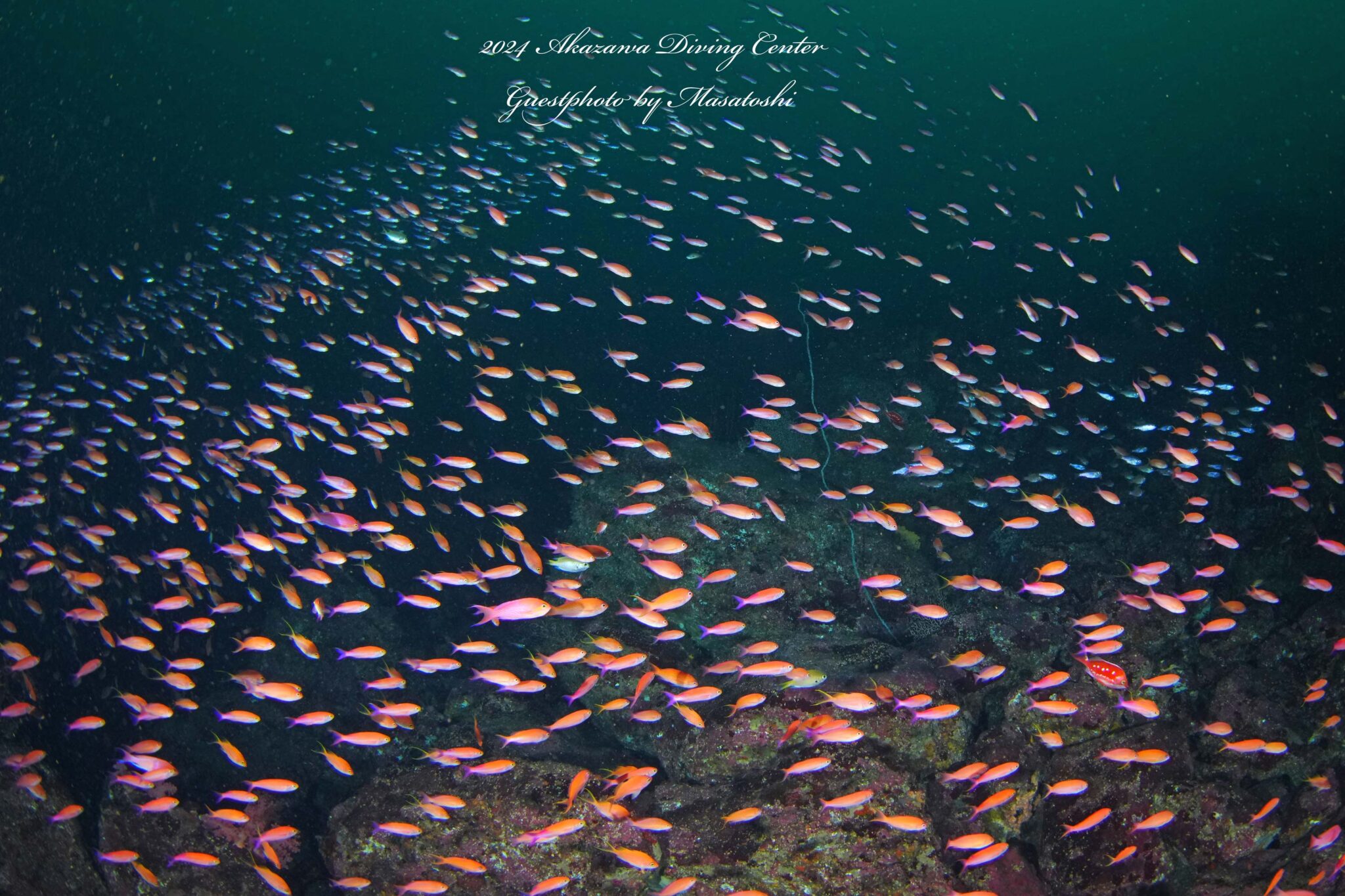
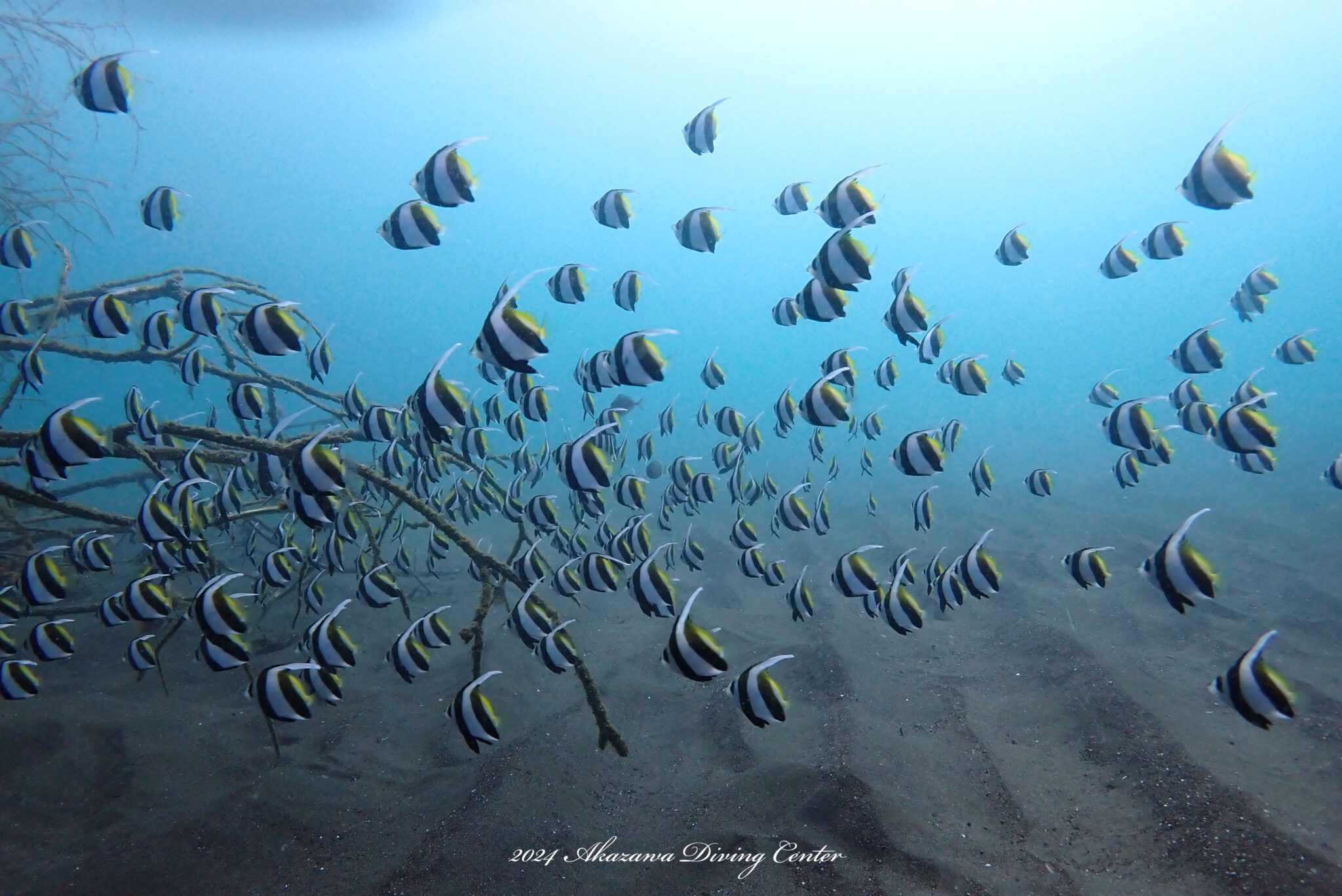
Located in central East Izu, Akazawa is a lush, green area popular for its hot springs and vacation homes. It also has a long history as a diving destination, offering both beach and boat diving. Thanks to its sheltered location protected by natural coves and breakwaters, it is known for calm conditions that allow for comfortable dives even when northeasterly winds blow. Facing south, the coastline is influenced by the Kuroshio Current, bringing in a wealth of tropical marine life. Divers can encounter species like longnose hawkfish, Japanese angelfish, lionfish and even green sea turtles. Shallow sites less than 30 meters (100 feet) deep are often filled with schools of anthias and damselfish, creating breathtaking scenes. With options suited to all skill levels and interests, Akazawa offers a satisfying experience for both beginners and experienced divers.
Popular Dive Site: Beach
With a maximum depth of 12 meters (40 feet) and virtually no current, this beach site features an expansive sandy bottom ideal for training and skill development. Divers can enter the water immediately after gearing up, and the entry point is equipped with handrails for added safety — making it perfect for courses and beginner divers. On the triangular pipes and ropes laid across the sand, you can spot blennies, such as the rockskipper and the striped poison-fang blenny mimic, while stingrays and fanray often hide in the sand. Night diving is also available by reservation, offering the chance to encounter rare deep-sea creatures.
How To Get There
- By Car: Approximately two-and-a-half hours from Tokyo. Take the Tōmei Expressway → exit at Atsugi IC → Odawara-Atsugi Road → National Route 135.
- By Train: From Atami Station, take the Itō Line to Itō Station, then transfer to the Izu Kyūkō Line and get off at Izu-Kōgen Station. From there, it’s about nine minutes by bus or seven minutes by taxi.
The eastern coast of the Izu Peninsula is proof that world-class diving doesn’t have to be far a major world capital. With easy access from Tokyo, a wealth of marine biodiversity and dive sites that range from beginner-friendly beaches to advanced wrecks and deep reefs, the area offers something for every diver. Add in hot springs and breathtaking scenery, and you’ve got the perfect recipe for an unforgettable getaway.