
In 2022, PADI Eco Centers set out to elevate ocean protection leadership, transforming PADI’s network into an accountable force for change.
Backed by PADI AWARE® and The Reef-World Foundation, the aligned efforts of global PADI members — including the impactful initiatives of every PADI Eco Center™ — over the past four years now stand as a historic chapter in diving history.
Click to display the embedded YouTube video
In fact, TIME Magazine recognized PADI as one of the 10 Most Influential Sustainability Companies for 2026, noting:
At a moment when reef systems are under mounting stress, the Professional Association of Diving Instructors (PADI) is helping redefine dive tourism — not just as seeing the ocean, but safeguarding it.
To achieve PADI Eco Center status, operators must meet exemplary environmental best practices. This requires a proven, dual commitment: minimizing operational footprints via Reef-World’s Green Fins Program while driving local conservation through PADI AWARE’s Adopt the Blue. Here is a snapshot of those achievements.
Proven Impact: Why PADI Eco Centers Lead the Charge
Reef-World Foundation data spanning September 2023 to April 2026 confirms that PADI Eco Centers are 24% more effective at reducing environmental threats than standard dive operators. From perfecting eco-briefings and waste management to educating staff, this massive leap proves that centers committing to the Eco Center pathway make significantly more progress than those navigating sustainability alone.
Green Fins members gain access to a world-first digital platform, alongside face-to-face coaching for certified members, to track and incrementally tackle specific local operational changes. This represents a critical shift from taking a “stab in the dark” to execution of evidence-based, scientifically backed action.
“What makes PADI Eco Center truly innovative is that it combines the reach of a global dive brand with independent measurement of environmental performance. Through Green Fins, Eco Center recognition is linked to real-world improvements in sustainability practices, providing both credibility and accountability. The results show that when environmental leadership is supported by clear standards, data and recognition, meaningful behavior change follows. This partnership offers a powerful example of how the dive industry can work together to drive measurable conservation impact at scale,” explains Chloe Harvey, Executive Director, The Reef-World Foundation.
Diving with a PADI Eco Center means supporting smart, trusted actions that create real change on the reef — the ultimate antidote to dive travel greenwashing.
Going for Gold: A Sevenfold Surge in Top-Tier Sustainability
The Green Fins framework categorizes member dive centers by environmental performance: Restricted, Bronze, Silver and Gold.
While “Restricted” members operate with practices too damaging for public recognition, they still receive full access to tools and coaching to improve. Earning Bronze, Silver or Gold requires sustained effort. When PADI Eco Center first launched, the coveted Gold-tier was limited to just five percent of dive centers, only the most pioneering operators worldwide.
Less than five years later, Green Fins Gold-tier membership among PADI Eco Centers has surged from 5% to a staggering 36%.
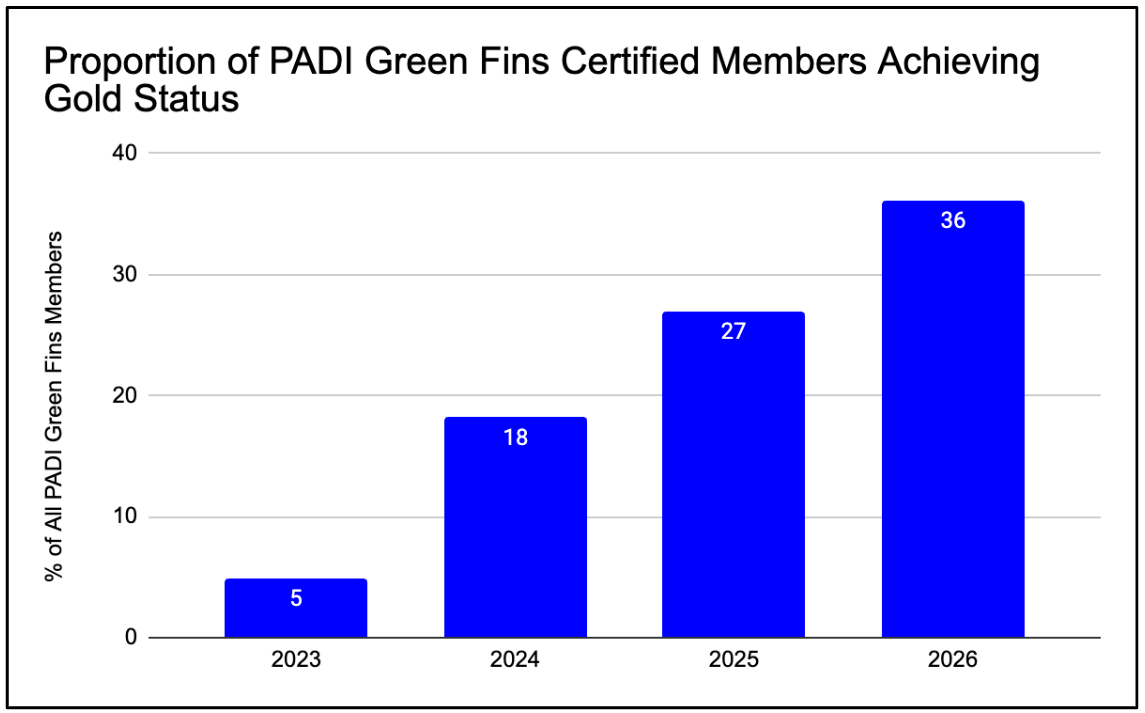
This 7x growth underscores a deeply serious commitment across our global network; operators are actively working to reach the pinnacle of sustainability.
Beyond the Badge: Why Eco Center Status Is Earned, Not Given
PADI Eco Center recognition is an ongoing commitment, not a one-off certification. To maintain status, Green Fins members undergo a rigorous, annual digital or in-person assessment, regardless of longevity or past scores. Over a few days, their entire operation is evaluated, seeking evidence of sustained improvements to secure reclassification.
The pathway focuses on steady, incremental change. Every year, operators select three to four targeted actions tailored to their business, tackling one shift per quarter. Science proves this phased approach is the best way to embed lasting change into business culture.
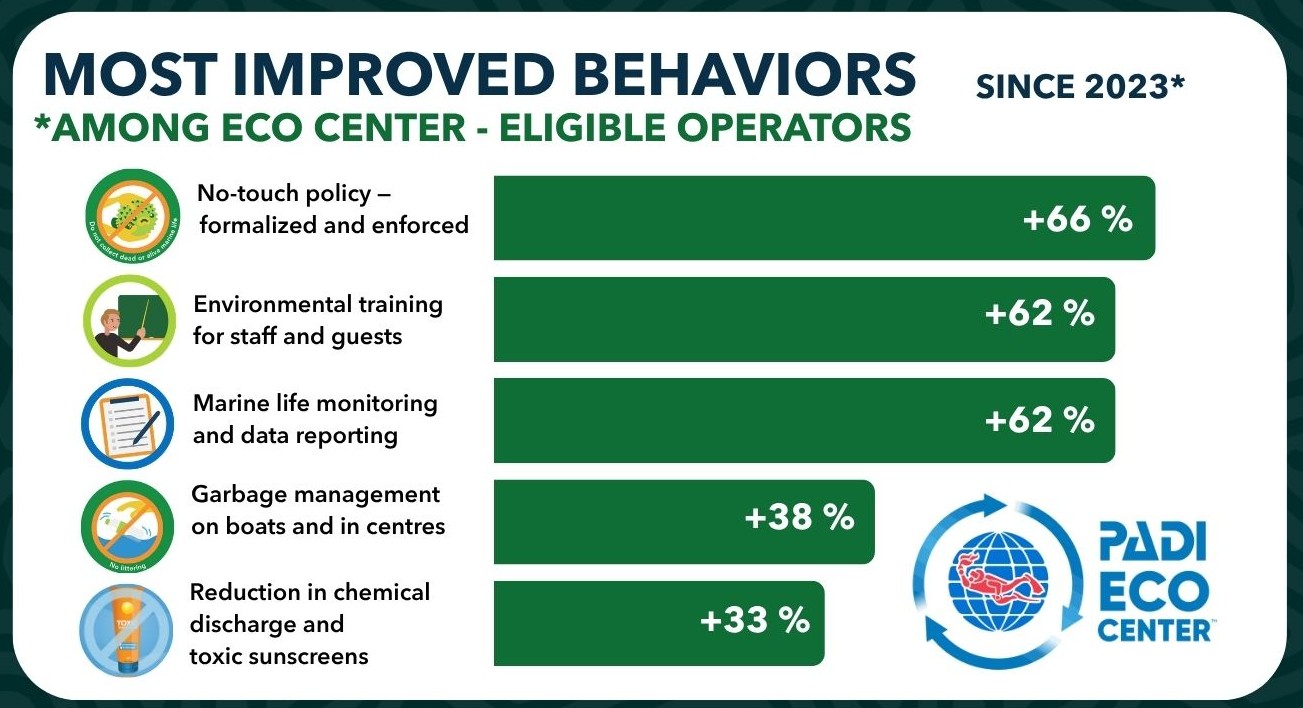
The data shows our community has real skin in the game: over half of all PADI Eco Centers make meaningful operational changes requiring direct financial investment.
“Our Eco Center status inspires us to continue leading by example, proving that world-class dive training and environmental responsibility can thrive together. For our team, this isn’t the finish line – it’s motivation to keep improving, innovating and protecting the waters we love,” says Anthony Cruz of Bongo Bongo Divers, a PADI Eco Center Philippines.
Click to display the embedded YouTube video
Investing capital into daily operations proves sustainability is actively embedded into business models. This is absolute proof that PADI Eco Centers are the real deal.
A Surge in Citizen Science: Turning Hope Into Action
Through PADI AWARE’s Dive Against Debris® program, global citizen science tracking has surged, with debris reporting increasing 64% since 2024.
A streamlined, improved app experience makes it easy to log gathered debris, including dives where no waste was found. By mapping both, our community builds a comprehensive global picture of marine debris, ready to be utilized directly by policymakers to stem the flow of waste at the source.
The goal is to provide action to back up hope.
— Drew Richardson, CEO and President of PADI
Protecting Our Backyards: Building A Global Network
With more than a 55% increase in members who have adopted dive sites between 2024 and now, and over 3,500 dive sites adopted, it’s clear to see the growing network that is developing.
Click to display the embedded YouTube video
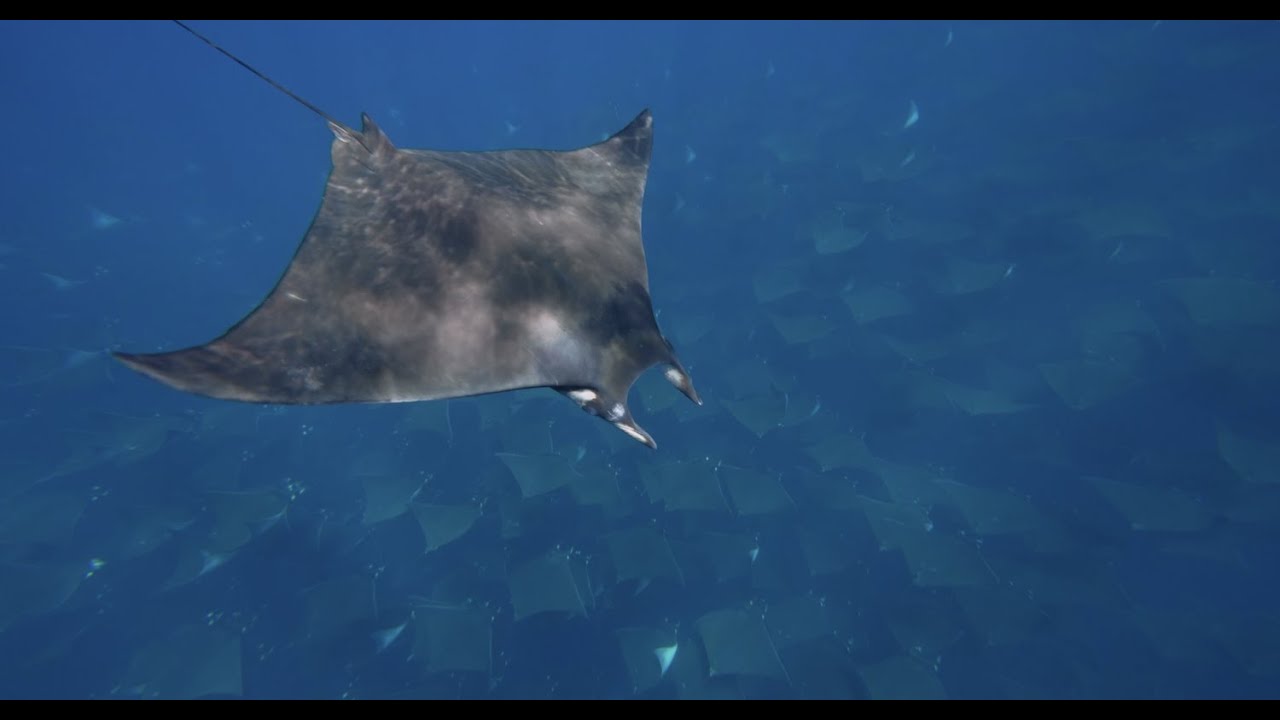
Adopting a site means taking stewardship of loved underwater spaces. Members monitor local reefs and report data to PADI AWARE — fueling the world’s largest marine debris database and tracking apex predators via the newly launched Global Shark & Ray Census.
PADI AWARE is continuing to expand these citizen science tools to include coral reef, blue carbon habitat and other ecosystem monitoring. Together, these initiatives are creating an interconnected network of divers and dive centers generating the data, stewardship and local conservation action needed to strengthen marine protection around the world. The long-term vision is to help inform stronger management of existing Marine Protected Areas (MPAs), support the creation of new protected areas where science identifies a need, and demonstrate how diver-led conservation can contribute to healthier ocean ecosystems.
An impressive 70% of PADI Eco Centers now manage active, localized conservation goals for their adopted sites, directly driving coral restoration, beach cleanups and bleaching monitoring.
According to Ian Campbell, Director of Programmes at PADI AWARE, “Adopt The Blue is now being recognized as an indispensable network of ocean sites that can scale conservation efforts on a global scale. Governments, management authorities and major environmental organizations are seeking to partner with AWARE to establish ATB networks to assess how well ocean conservation efforts are working. This reflects the dedication of the global PADI community to taking action at the dive sites they care about.“
Here, the partnership between Green Fins (reducing diver impact) and PADI AWARE (protecting sites from wider threats) delivers a beautifully integrated, 360-degree approach to ocean protection.
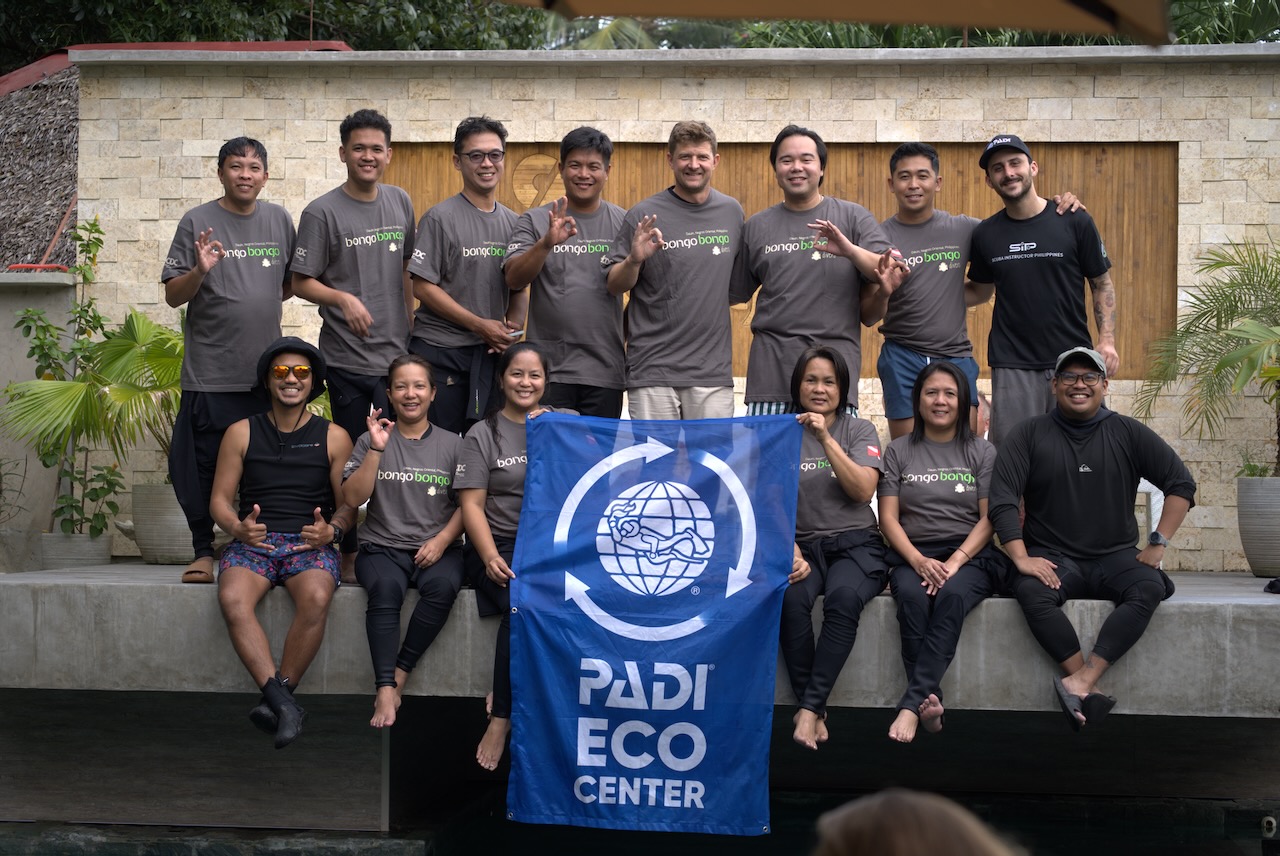
Building the World’s Largest Network of Sustainable Dive Tourism
Viewed in totality, PADI Eco Centers show the power of a shared vision by reducing operational footprints while advocating for wider marine protection.
“PADI Eco Centers were never intended to be the finish line. They are the foundation. Our vision is to transform the world’s largest diving community into the world’s most powerful force for ocean conservation. Every new Eco Center strengthens a global network of businesses that are not only reducing their environmental footprint but actively restoring and protecting the places they dive. That’s how local action becomes global impact,” remarks Katie Thompson, Executive Director, PADI AWARE Foundation.
Protecting our blue planet requires both individual dedication and collective strength. Every dive, piece of data and sustainable choice counts.
Are you ready to be part of the solution?