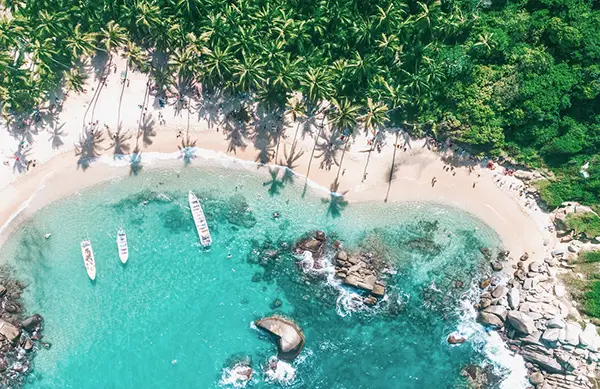
If you want to both seek adventure and save the ocean on your next trip, consider taking an eco travel holiday.
By selecting PADI Dive Centers and Resorts that put marine protection at the core of their operations — such as PADI Eco Centers™ — or by traveling to destinations leading the way in sustainable tourism, you’re casting an eco-travel vote for the future you want to see.
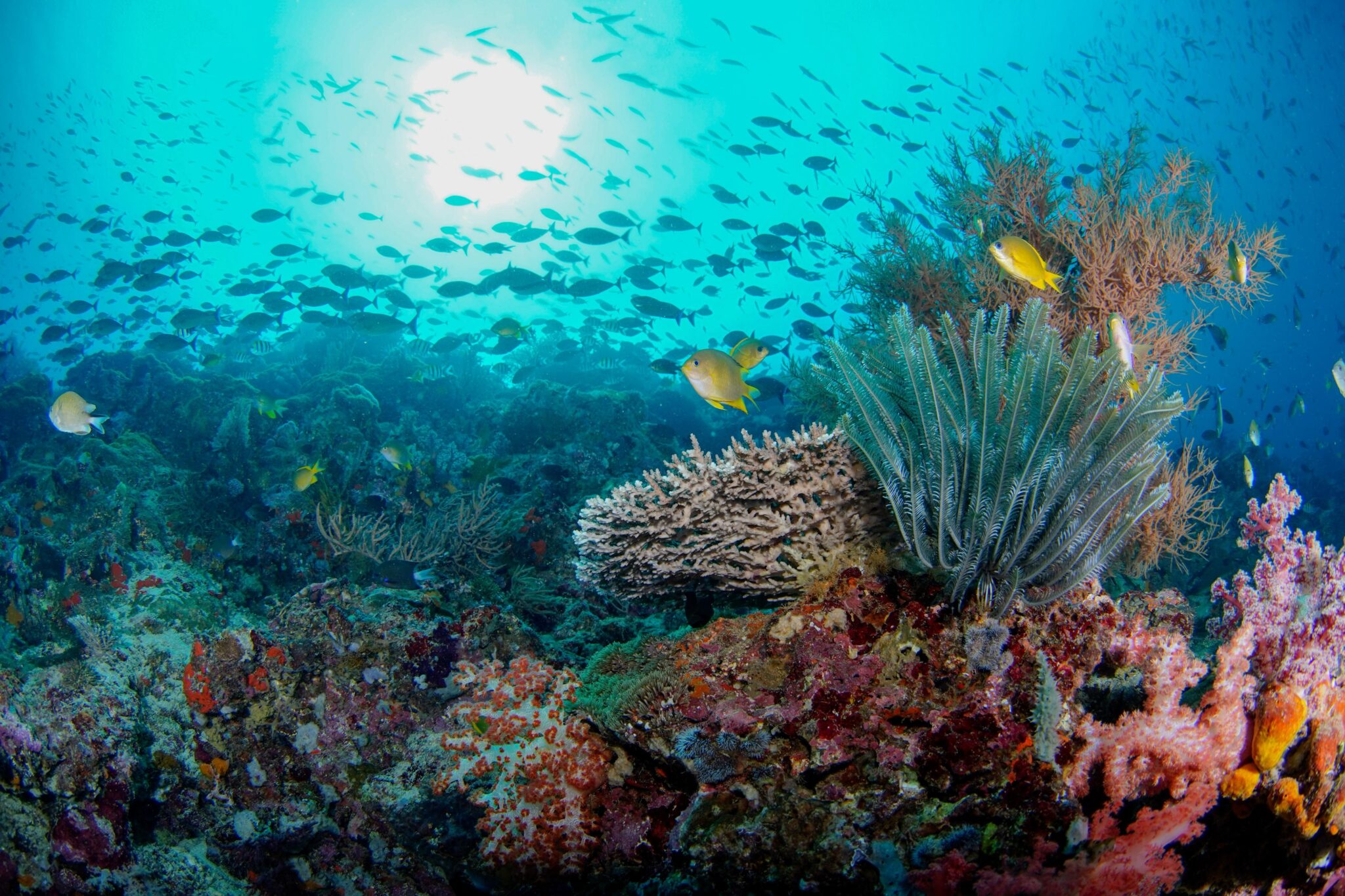
Indonesia – The Eco-Diving Benchmark
If you’re looking for a beautiful natural paradise with pockets of genuine sustainability across every aspect of your stay, Indonesia stands out as a global leader — and a benchmark for low-impact, regeneration-focused diving.
For a trip that directly contributes to reef recovery, consider Ceningan Divers, a 2025 Green Fins Top Performer and AWARE Community Grant recipient. Diving with their team actively supports restoration of the Nusa Penida Marine Protected Area through progressive coral fragmentation techniques and deep community collaboration.
Meanwhile, Bunaken Oasis prioritizes deep connections with the local community and collaborates with the No Trash Triangle Initiative, making them a great option for muck divers seeking small-scale, planet-friendly luxury and a genuinely warm welcome. Further east in Raja Ampat, choose from a selection of iconic eco resorts tucked away along secluded coastlines where dense jungle becomes mangrove and then vibrant coral reefs teeming with life. Papua Paradise Eco Resort, Papua Explorers Dive Resort and Misool Resort will not disappoint even the most discerning eco traveler.
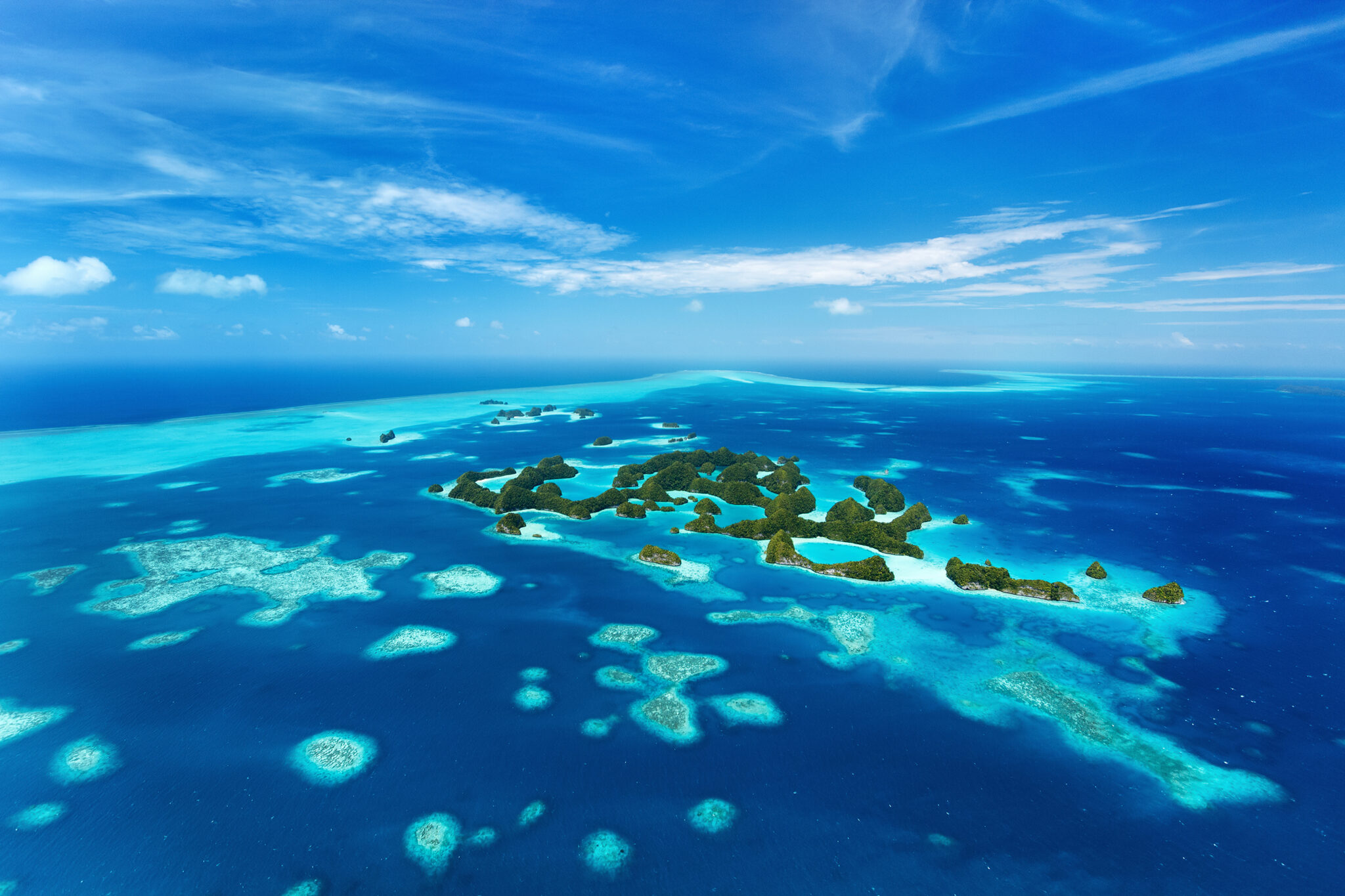
Palau – The Nation That Put Conservation First
In Palau, responsible travel isn’t a marketing angle — it’s woven into the nation’s identity and governance. The Palau Pledge sets the tone from the moment you arrive, inviting every visitor to act as a steward of the islands rather than a passive tourist.
That philosophy is backed by policy. Through initiatives such as the Palau Sustainable Tourism Strategy 2025–2028, the country is actively shaping how tourism develops, with clear attention to long-term impact and careful visitor management.
Underwater, this approach shows. Dive experiences tend to prioritize quality over quantity, with guided drift dives, appropriate reef hook use, comprehensive briefings and strong wildlife protocols as the norm. The overall effect is a diving culture that appeals to those who value respect, restraint and doing things properly.
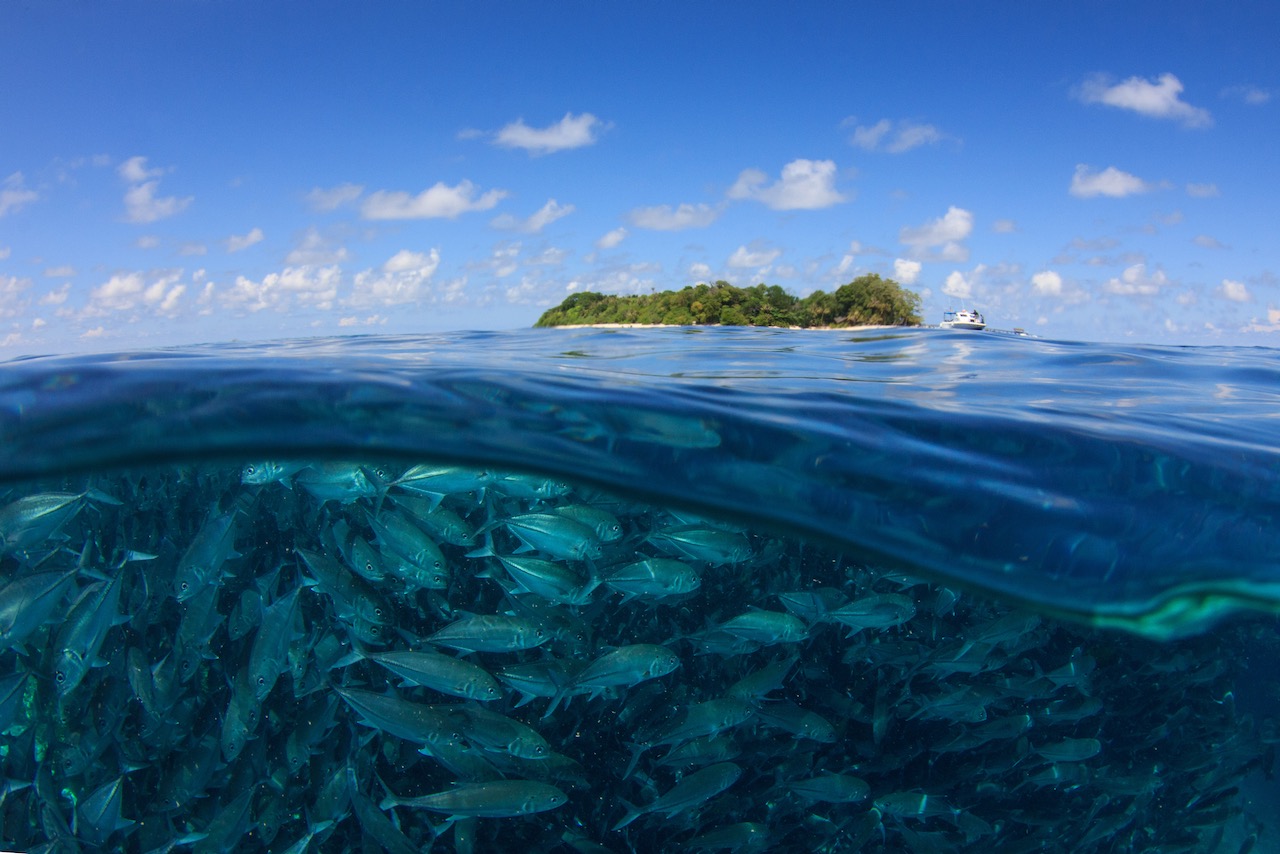
Malaysia – The Permit-Protected Paradise
With 15 PADI Eco Centers — the second-highest number in any single country after Indonesia — Malaysia has firmly established itself as a hub for environmentally conscious dive culture. It’s also a long-standing home of Green Fins, the program that helps marine tourism operators reduce their environmental impact while recognizing those who meet rigorous sustainability standards.
Diving in Sipidan is tightly regulated by Sabah Parks, with a formal permit system and daily limits designed to prevent overuse. The principle is simple: control the number of fins in the water to protect what makes the site special.
For divers seeking vibrant reefs, schooling fish and exhilarating currents — without compromising on impact — Sipidan is well worth considering.

Maldives – The High-End, High-Impact Haven
Famous for refined travel experiences, the Maldives also backs its beauty with marine protection. National efforts safeguard reefs, seagrass, manta rays and turtles through research and responsible tourism. Campaigns like #SeagrassIndustryLeaders promote protecting vital carbon-storing seagrass, while groups such as Atoll Marine Centre build local marine knowledge.
For impact-driven diving, Finolhu Dive Butler runs a cutting-edge marine biology program with a resident marine biologist, Six Senses Laamu blends luxury with sustainability leadership and AWARE Community Grant recipient Aqua Dive & Water Sports Center is committed to removing 3,600 kg (7,936 lbs) of marine debris while training local youth as divers.
While the Maldives is synonymous with ultra-luxury, locally owned guesthouses such as Villa Rosa present an elegant, culturally authentic alternative.

Jordan – The Unexpected Eco-Frontier
To be clear, Jordan isn’t a textbook addition to this list. The country still has some way to go in developing a true conservation culture. However, Jordan’s marine conservation story has deep roots. The Royal Marine Conservation Society of Jordan was founded in 1993 by a group of ecological divers, led by Princess Basma bint Ali, one of the first female divers in the country. Today, a handful of dedicated PADI Eco Centers are showing that another way is possible.
Arab Divers, Coral Garden Diving Center and Deep Blue Diving Center have all met demanding standards to be recognized as PADI Eco Centers. This means they have demonstrated changes in their business practices to limit negative impacts on the reef, while actively engaging in ecosystem regeneration.
Part of the Adopt the Blue™ network, their house reefs are citizen science hubs. Here is somewhere you can make your dives really count; contribute to PADI AWARE’s Dive Against Debris® citizen science database and build the intel needed for legal changes that protect the ocean.

Mozambique – The Slow Travel Megafauna Coast
If you’re drawn to seeing — and protecting — the ocean’s giants, including manta rays and humpback whales, consider Mozambique. Since 2003, the Marine Megafauna Foundation has been studying and safeguarding marine life along the southern coast, especially in Inhambane Province. Their work focuses on creating marine protected areas and promoting sustainable fishing to help local ecosystems thrive.
100% AWARE Liquid Dive Adventures in Tofo and Gozo Azul Diving in Ponta do Ouro offer both marine conservation education and mindful wildlife encounters that support ongoing protection efforts.
Expect wide, open beaches and small-scale lodges that balance comfort with a laid back, close-to-nature feel. Mozambique invites you to stay for a while, emphasizing a mindful and meaningful approach to sustainability recently termed “slow travel.” Dig into this beautiful and wild country and enjoy its rich culture and slower pace of life.

Florida Keys – USA’s Coral Conservation Capital
These islands have a long history of conservation mindedness, with action dating back to the 1970s. The Florida Keys National Marine Sanctuary, established in 1990, protects nearly 3,000 square nautical miles (10,000 square nautical kilometers) of ocean, including North America’s only living barrier coral reef and huge seagrass meadows.
For dives that make a difference, check out some of the world’s first-ever PADI Eco Centers Silent World, Seminole Scuba, Key Dives and Pura Vida Divers. These PADI Eco Centers run AWARE courses, citizen science projects and emphasize low-impact diving. Another standout is Southpoint Divers, whose coral cleanup crew organizes quarterly debris dives, trains volunteers, logs findings for research and certifies new Dive Against Debris divers.

Bonaire – The Shore-Access Stewardship Island
Bonaire is a diver’s dream thanks to its easy shore-access model — you can hop in and out of the water without relying on boats or crowding the reefs. The island also has a strong track record of marine stewardship. Managed for years by STINAPA and the Bonaire National Marine Park, regulations like designated mooring spots, consistent enforcement and mandatory park fees all go directly toward protecting the reefs.
Bonaire was one of the first spots in the Americas to adopt Green Fins, acting as a regional example for best practices in low-impact diving. Here, conservation isn’t just policy — it’s part of daily diving life.
The future of diving — and the future of our ocean — depends on the choices we make today.
Eco travel isn’t about sacrificing comfort or adventure. It’s about aligning your passion for exploration with real, measurable impact. When you book with a PADI Eco Center, choose a destination that manages tourism responsibly or take part in citizen science projects, like Dive Against Debris, you’re doing more than planning a holiday. You’re helping reefs recover, empowering local communities and protecting marine life for generations of divers to come.