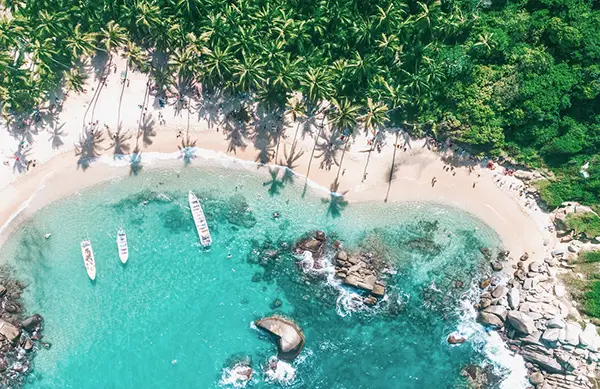
Wrecks, canyons and blue holes are just a fraction of what the best dive sites in the Red Sea have to offer. The collection of dive sites quite literally form a microcosm of diving, inviting divers from around the world to enjoy. The Red Sea combines stunning and diverse marine life with exceptional and adventurous underwater topography, providing some of the best diving worldwide.
Here’s a flavor of what’s ahead:
- Iconic wrecks, from WWII cargo ships to a 19th century steamer
- Sheer walls and drift dives built for advanced divers
- A beginner-friendly reef or two for building confidence
- Some of the best shark and pelagic encounters anywhere in the world
1. SS Thistlegorm Wreck – Ras Mohammed
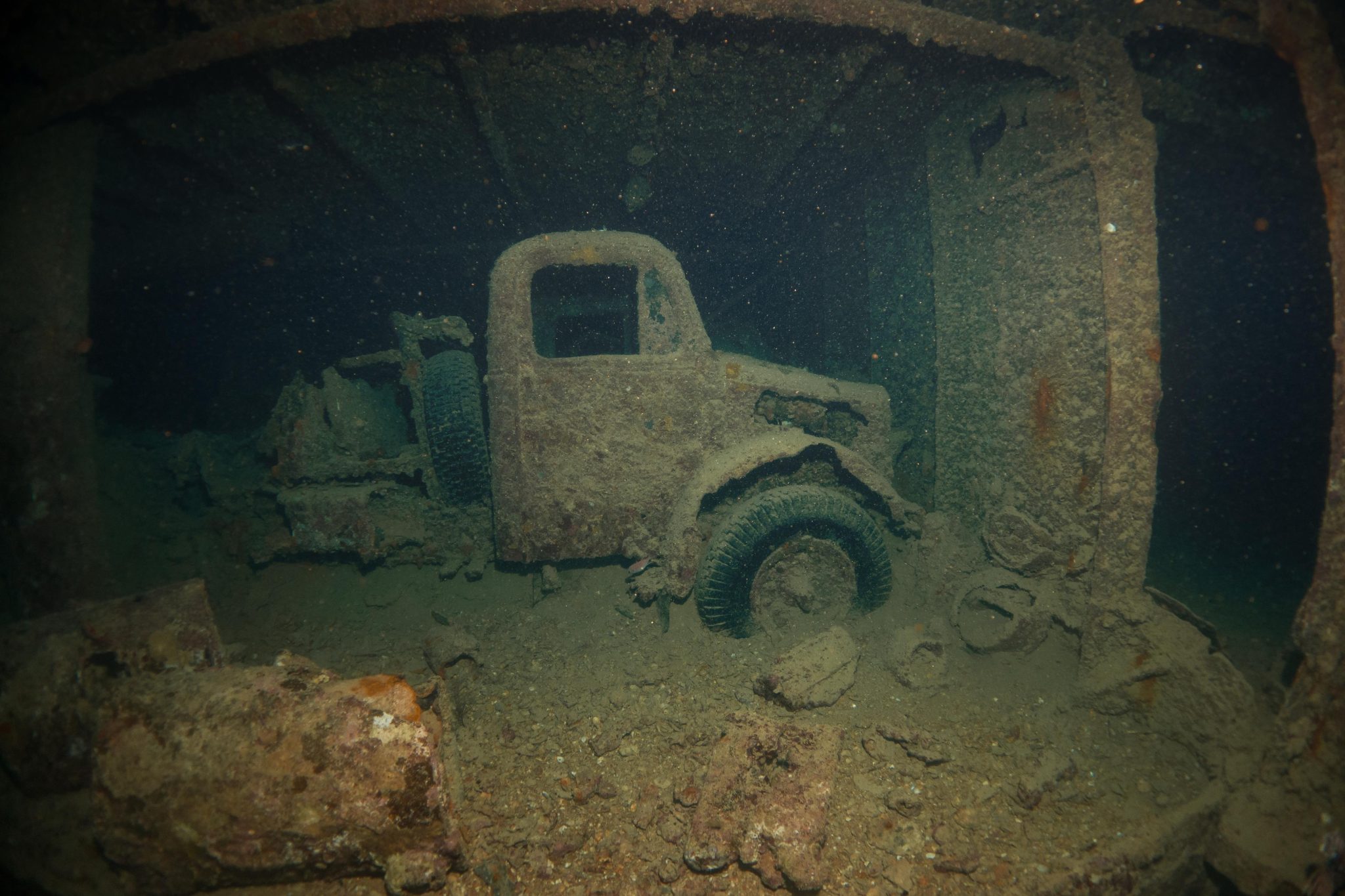
The SS Thistlegorm Wreck sits around 40 kilometers (24.9 miles) from the well-known Egyptian tourism hub of Sharm El Sheikh. The ship was a 1940’s cargo vessel transporting military equipment during the Second World War when it was bombed. She now lies at 33 meters (108 feet). The upright position allows divers to enter the cargo holds to be met with intact motorbikes, trucks, armored vehicles, rifles and more.
The SS Thistlegorm is kept company by schools of marine life. Batfish, turtles, barracuda, snappers and crocodile fish are just some of the regular encounters here. Such incredible structures paired with unbeatable marine life bring the Thistlegorm wreck to the top of the best diving in the Red Sea.
Liveaboards in Egypt are one of the best ways to explore the Thistlegorm, as you’ll want to do at least two to three dives at this site. It’s only suitable for advanced divers due to depth and currents.
2. Elphinstone Reef – Marsa Alam
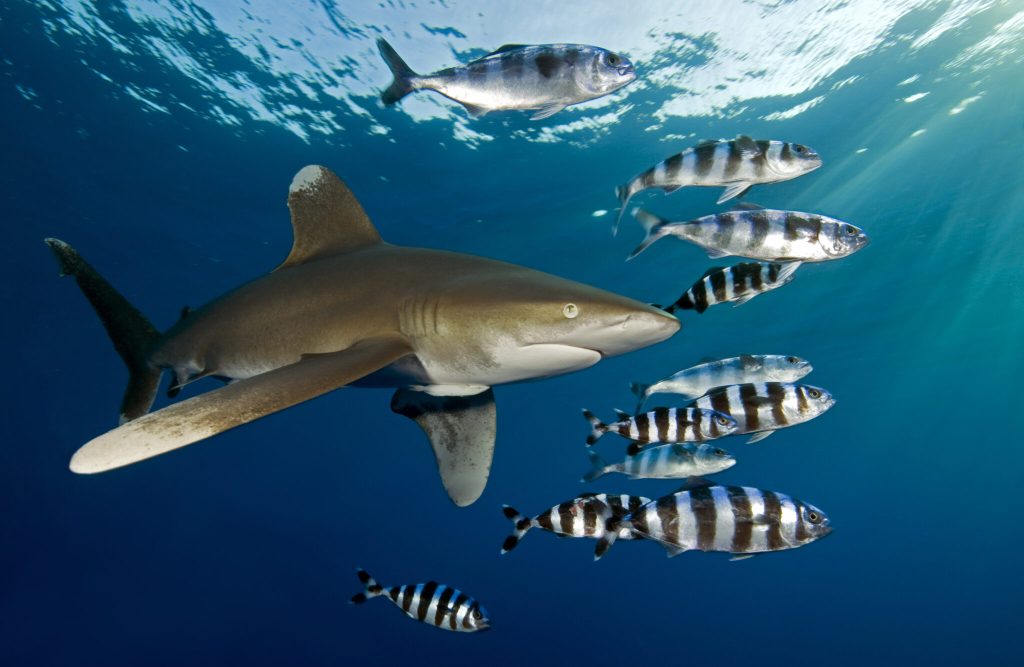
Elphinstone Reef is named after the British Admiral, George Elphinstone. Around 30 kilometers (18.6 miles) from Marsa Alam, it is a hive for hammerhead and oceanic white tip sharks. You’ll often spot these on the northern and southern reef plateaus.
Along with sharks, the 700-meter (2296-feet) long and 600-meter (1968-feet) deep reef wall is engulfed with vibrant soft corals, gorgonia and smaller marine life. Above all, strong currents here attract a wealth of pelagic fish, like tuna and barracuda.
As it gets busier during the day, Elphinstone is best explored from a liveaboard to ensure you’re one of the first to arrive in the early morning.
3. The Blue Hole – Dahab
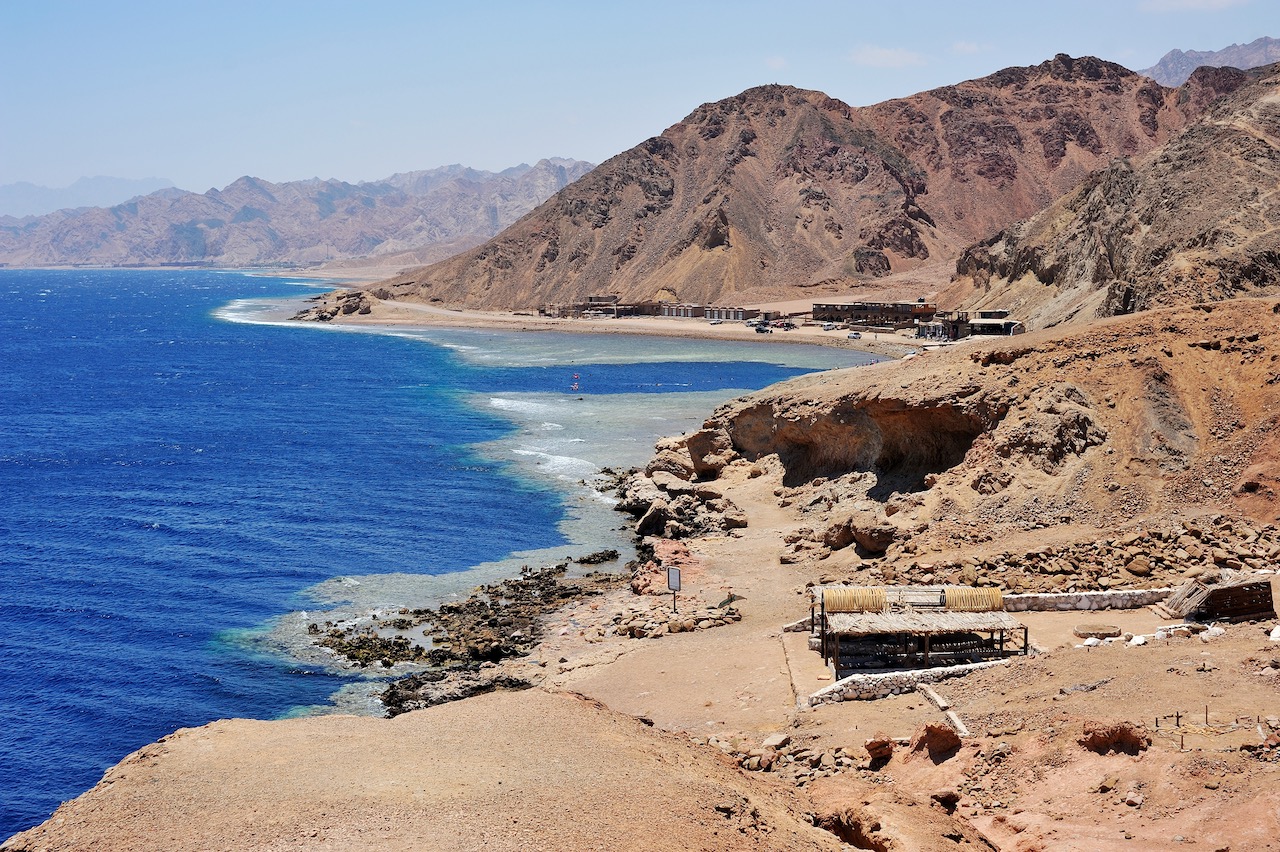
Although the landscape of Dahab has developed significantly since the 1970s, the Blue Hole has retained its mysterious charm. The 130-meter (393-feet) deep sinkhole is a challenging dive, suitable for advanced divers and tec divers who often venture down to the famous arch.
Firstly, the dive begins with a gentle descent down the 28-meter (91-foot) Bell’s – a tunnel in the reef that opens out into the blue. This is followed by a gentle drift dive along the thriving reef wall on your right. A gentle ascent and you’ll cross over the Blue Hole’s saddle, before entering the, without a better word, massive bowl of deep blue.
Many dive guides take a direct route across the center of the sinkhole for a truly immersive experience.
You might also like:
4. Thomas Canyon – Straits of Tiran
Egypt’s Straits of Tiran are narrow, underwater passageways extending around 13 kilometers (8 miles). They separate the Gulf of Aqaba from the Red Sea. The four reefs of Tiran, namely Jackson, Gordon, Woodhouse and Thomas, are quite simply Egyptian diving at its best.
Thomas Canyon, found on Thomas Reef, is one of the best dive sites in the Red Sea. The drift dive begins amongst lush, gorgonian fans and heaps of black coral. Following this, a plummeting east wall explodes with soft corals, and you’ll often encounter sleeping sharks on the sandy plateau, too.
Finally, Thomas Canyon’s opening lays at 35 meters (114 feet) for tec divers to venture into. In short, this site practically engulfs you into the deep blue water – certainly an adventure seeker’s dream.
5. Shark & Yolanda Reef – Ras Mohammed
It’s hard to miss the two towering coral towers of Shark and Yolanda Reef on the Ras Mohammed cape. Ranking among the best dives in the world, the strong current drifts you along the 800 meters (2624 feet) deep wall, full of barracudas and snappers. You’ll then cross the saddle populated with lush corals to admire the entire site while suspended mid-ocean – a moment to remember.
Subsequently, this adrenaline-inducing dive ends along the Yolanda Reef, named after the sunken freighter that lurks some 200 meters (650 feet) below. Fragments of the wreck are now homes for blue-spotted stingrays, angelfish and more. In addition, pelagic life will often accompany you on your left, making this a truly remarkable underwater experience.
6. Daedalus Reef – Marsa Alam
Thanks to its slightly inconvenient location, Daedalus is one of the lesser visited of the best dive sites in the Red Sea. With less tourism comes a beautifully preserved offshore coral reef formation. The site sits around 90 kilometers (55 miles) east of the diving hub Marsa Alam.
The intense currents make this both a drift diver’s best friend and an extraordinary hunting ground for pelagic species. Sightings of hammerheads, tuna, white tips and even thresher sharks are common here. Additionally, as its location is within the a protected marine park, an abundance of vivid corals have been well maintained. This site will not disappoint.
You might also like:
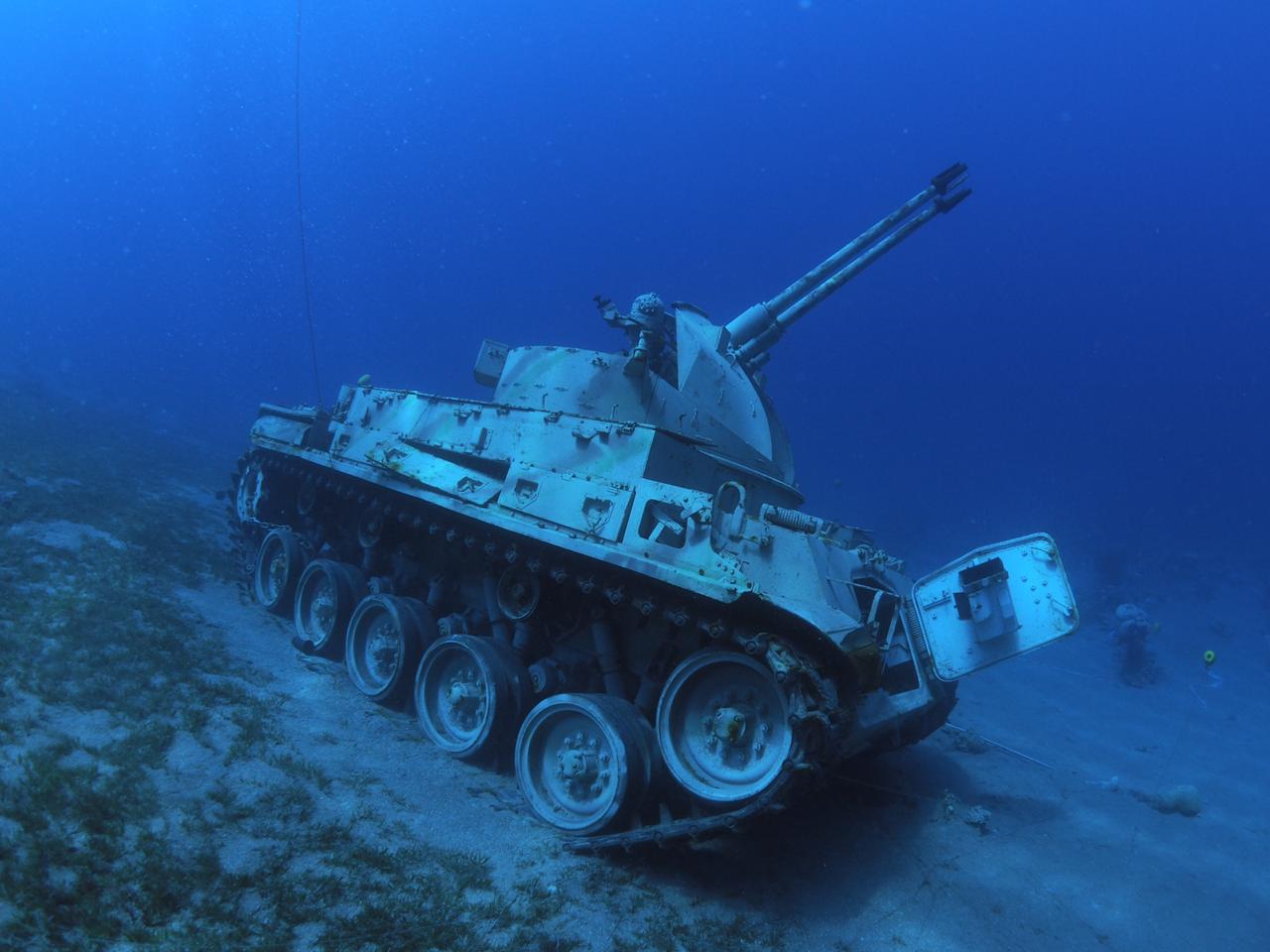
7. The Seven Sisters & Tank – Aqaba, Jordan
Towering underwater pinnacles sit on seagrass and sand, making up the sweetly named Seven Sisters dive site in Aqaba. The shallow depths make these hard coral-encrusted pinnacles a loved location by snorkelers and open water divers alike. To elevate this site even more, the Jordanian Royal Ecological Diving Society (JREDS) sunk an American M42 anti-aircraft tank at 6 meters (19 feet) in 1999.
This resulting artificial reef provides some of the best diving in the Red Sea for underwater photography. The reef is teeming with shoals of fusiliers, barracuda and a plethora of macro life.
8. The Canyon – Dahab
If you’re looking for that “wow” moment underwater, this is where you’ll find it. Just before reaching Dahab’s famous Blue Hole, you’ll usually dive at the Canyon. It’s a fissure in the seabed formed by a tectonic shift in the Gulf of Aqaba. A large 20-meter (65-foot) entry point leads you inside the Canyon’s mouth to a maximum recreational depth of 30 meters (98 feet). Tec divers can continue to 54 meters (177 feet). Once inside, you’ll find yourself gazing up at the sunlight peeking through the crack – a moment that solidifies many divers’ love for the ocean.
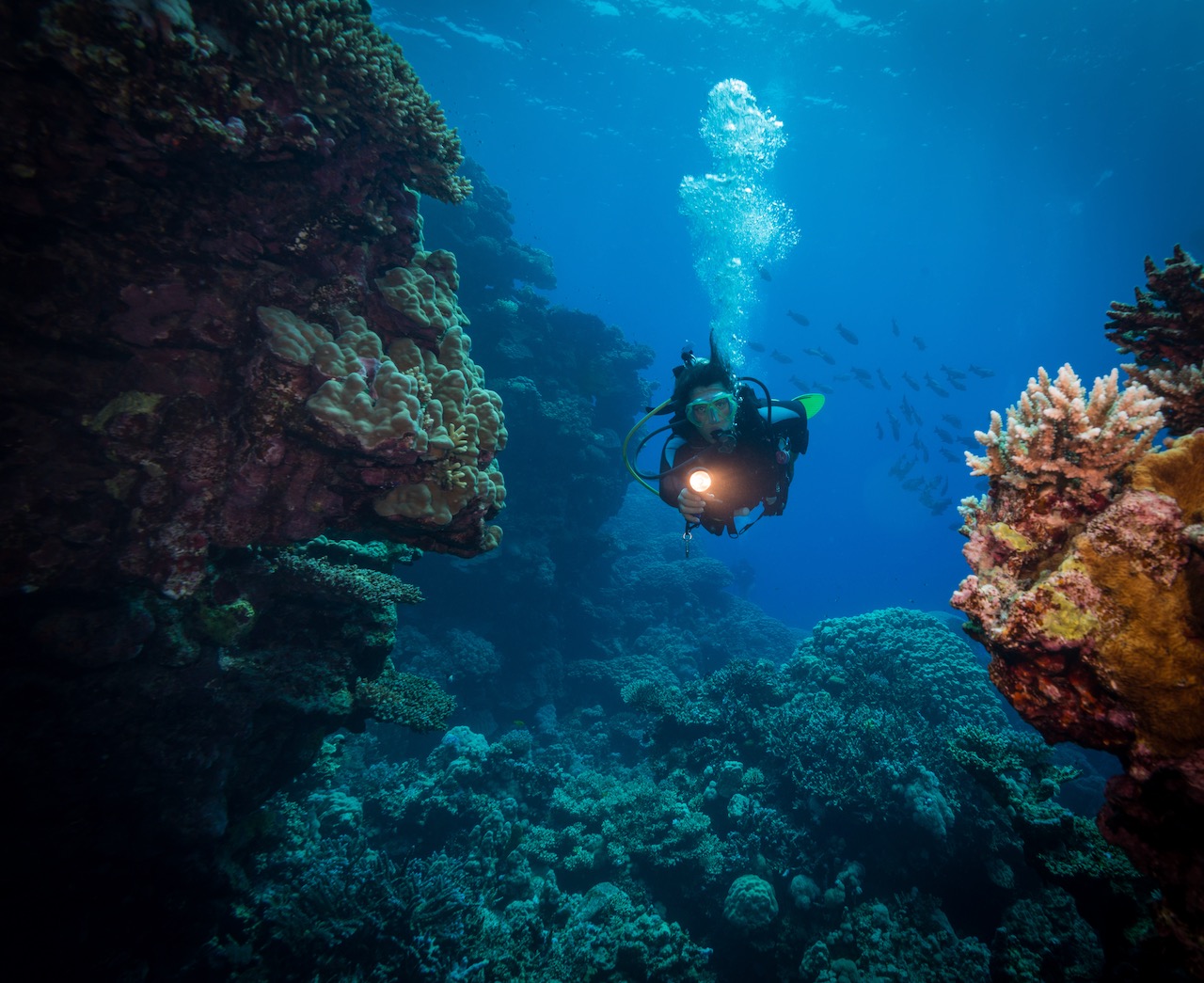
9. Fury Shoals – Marsa Alam
The Fury Shoals reef system is in an area usually referred to as the “Deep South” of the Red Sea, off the coast of Marsa Alam. This site is a drift diving dream, allowing divers to meander along luscious coral gardens and walls. Some of the best sightings of the Red Sea take place here, including dolphins, turtles and bump-head parrot fish. All abilities are catered to at Fury Shoals, with depths ranging from nine meters (30 feet) to 36 meters (120 feet).
10. SS Dunraven Wreck – Ras Mohamed
Once a functioning British Steamer ship, the SS Dunraven now rests upside down on the southern edge of Sha’ab Mahmoud in the Red Sea. It’s undoubtedly one of the best dive sites in the area and is often visited on Ras Mohamed itineraries, sitting just an hour away by boat. The ship sits at approximately 30 meters (100 feet), allowing divers to actually enter the stern at 29 meters (95 feet). Additionally, the ship is often surrounded by crowds of glassfish at the exit.
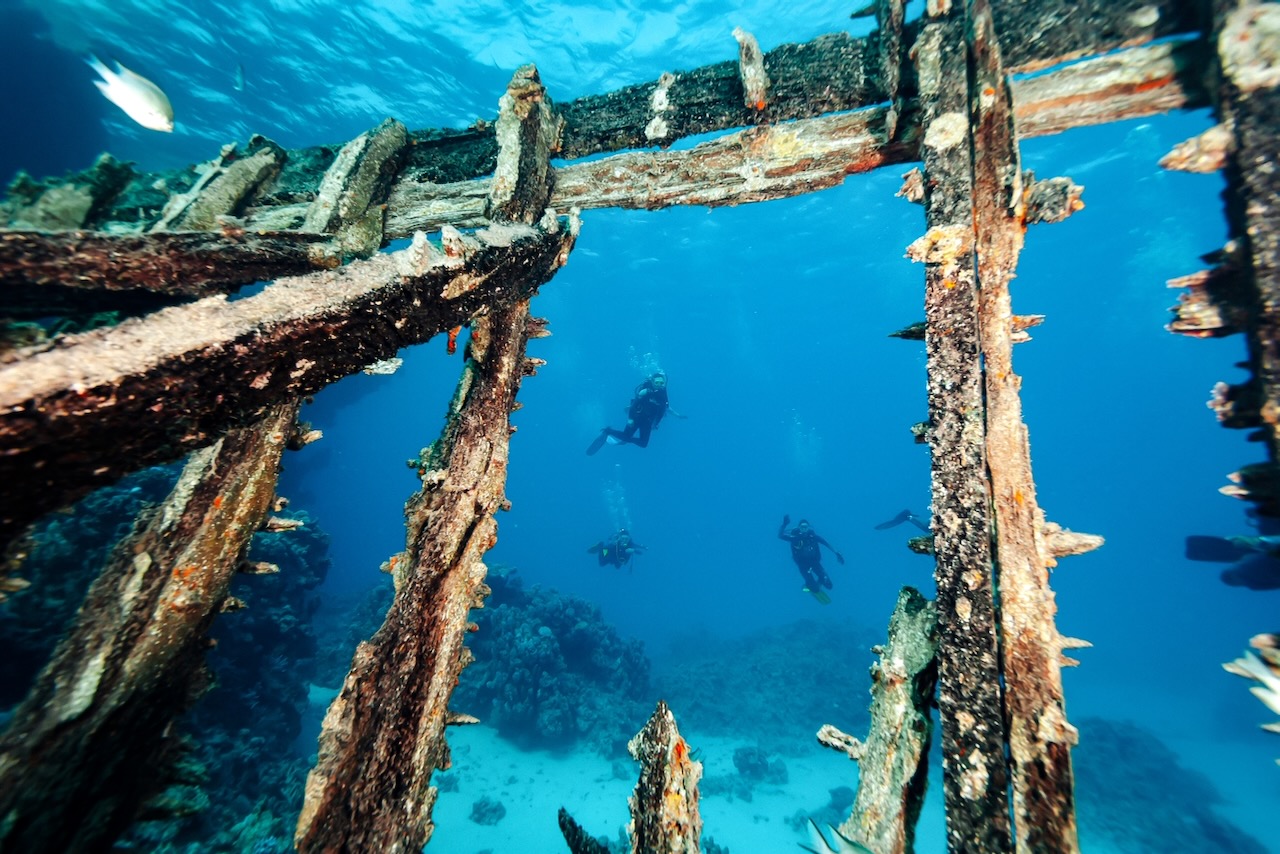
11. Abu Nuhas Wrecks – Hurghada
Nicknamed the “ship graveyard” of the Red Sea, Abu Nuhas is a shallow reef that sits directly in the shipping lane of the Suez Canal. It has claimed vessels for well over a century. Four wrecks are regularly dived here: the Carnatic, a British steamer that went down in 1869; the Giannis D, split into three dramatic sections; the Chrisoula K, still carrying its cargo of Italian floor tiles; and the Kimon M.
Sitting between 18 and 30 meters (30 and 100 feet), the wrecks are draped in soft coral and glassfish, with lionfish and scorpionfish tucked into every gap. A daytrip here offers a full day of wreck diving in one spot.
12. The Brothers Islands – Marsa Alam
Reachable only by liveaboard, The Brothers – Big Brother and Little Brother – are two remote, steep-sided islets thought to have formed from volcanic activity. Big Brother is home to a Victorian lighthouse and the wrecks of the Numidia and Aida, both now blanketed in coral, while Little Brother offers a deep plateau where silvertips, grey reef sharks and the occasional great hammerhead cruise past.
Currents here can be strong and unpredictable, so this site is one for advanced divers with a decent number of logged dives. In return, you get some of the most isolated, pristine walls in the entire Red Sea.
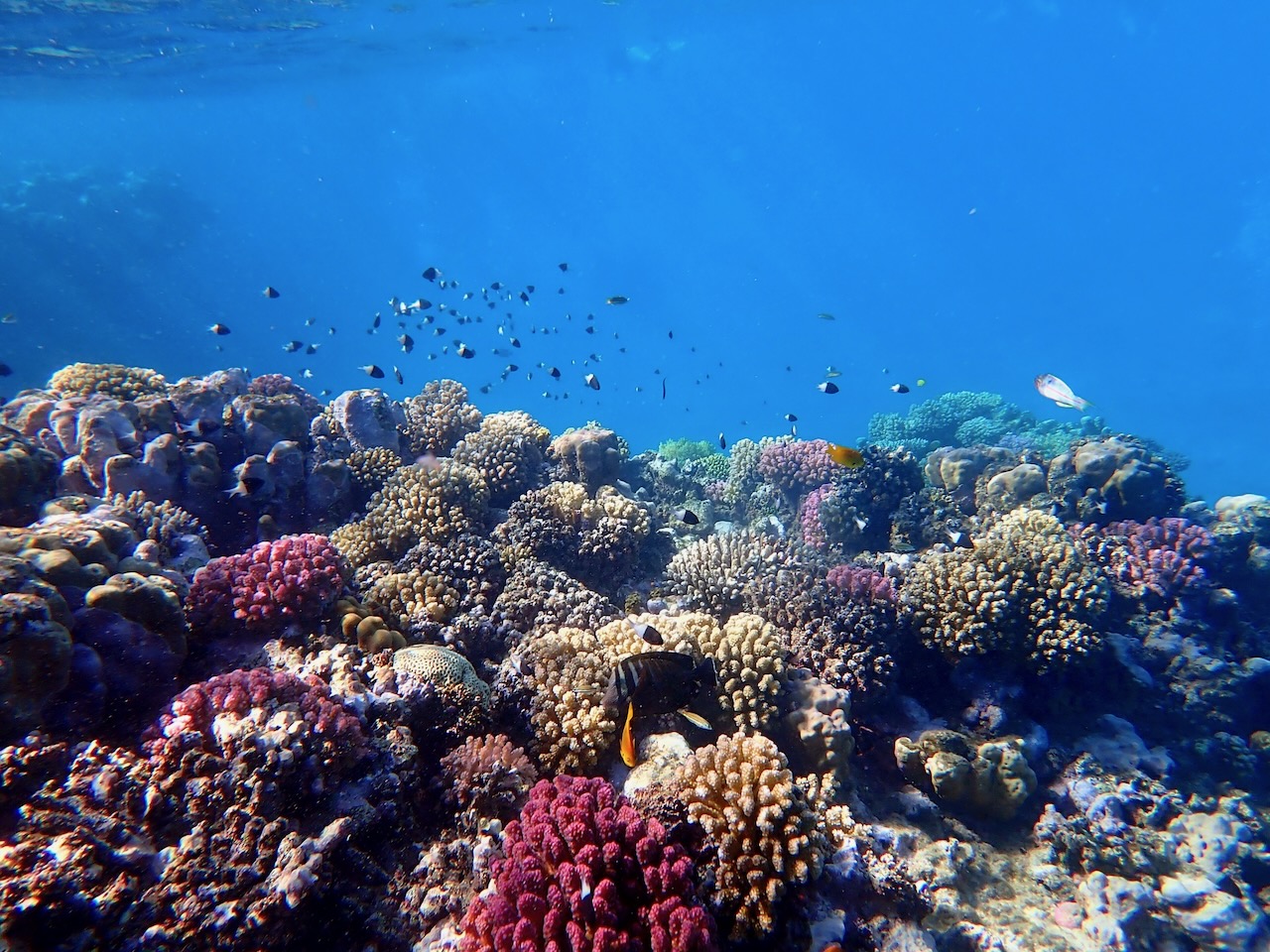
13. Ras Um Sid – Sharm El Sheikh
If most of this list has you thinking you’ll need years of logged dives to enjoy the Red Sea, Ras Um Sid is the exception. Just south of Na’ama Bay and marked by its own lighthouse, this reef offers a gentle sloping wall down to around 25 meters (110 feet), with a striking column of gorgonian fans and a plateau scattered with scorpionfish, blue-spotted stingrays and batfish.
It’s easily accessed from shore or by boat, making it a firm favorite for newly qualified Open Water Divers still building confidence, while more experienced divers can push out to the drop-off for a chance at passing barracuda and jackfish.
Ready To Dive Into the Red Sea?
With some of the best diving in the world, the Red Sea is a serious attraction for new and experienced divers alike. Its vibrant waters are easily explored from dive resorts as well as liveaboards. Which one would you go for?