Ask most divers where their dream dive destination is, and you probably won’t be surprised by the answers: the Maldives, the Great Barrier Reef, the Red Sea, Thailand, Mexico… There are too many wonderful places to explore and never enough time! But if you’re lucky enough to live in the UK, you may not realize that some of the best diving in the world is right on your doorstep. Too often, it’s overlooked in favor of more exotic, far-flung destinations.
For many people, diving in the UK conjures up images of freezing water, strong currents and poor visibility. While diving around the British Isles isn’t always easy, the right equipment and skills can open up a world of beauty, variety and interest that rivals dive destinations around the globe.
Wreck Diving in the UK
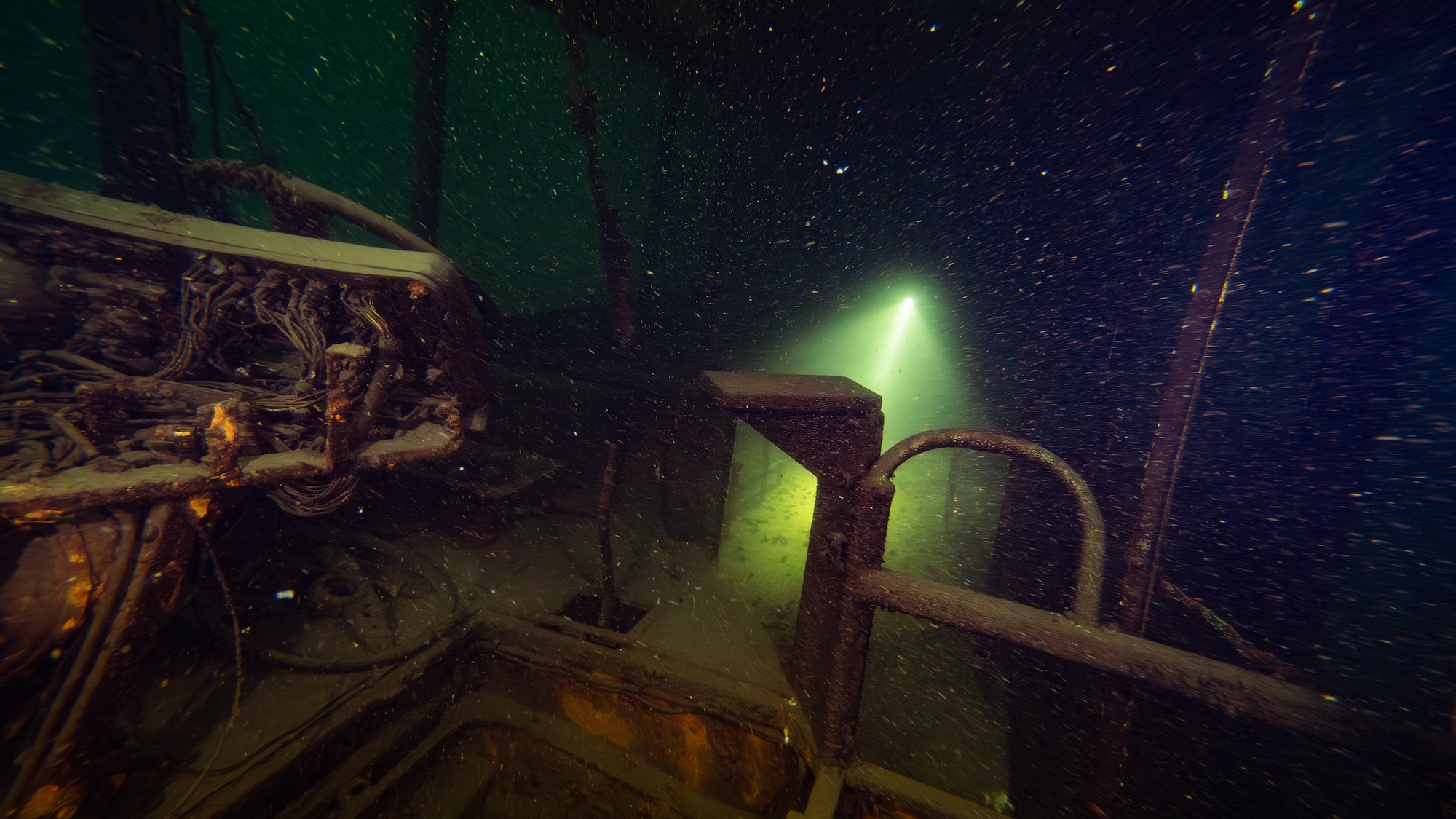
For a history enthusiast such as myself, the wreck diving here holds definite appeal. For a nation surrounded by water, it’s not exactly surprising that we should have plenty of shipwrecks around us. Living as I do in the southwest of England, I spend as many weekends as possible driving a couple of hours to the coast to go diving in the English Channel. This strip of water separates southern Britain from northern France and is one of the busiest shipping lanes in the world. Over the centuries, it has been the scene of countless sea battles, most recently during World War I and World War II. With depths reaching approximately 120 meters (394 feet) in places, and an average depth often cited at around 50 meters (164 feet), the Channel is a shipwreck diver’s dream.
One of the most popular sites is the Kyarra, off Swanage. This twin-screw, four-boiler steamer was being used as a hospital ship toward the end of World War I. In 1918, she was sunk by Oberleutnant Johann Lohs from the German U-boat UB-57. After being torpedoed, she went to the seabed in less than seven minutes and still contains remnants of her original cargo, including perfume bottles, bottles of champagne and pocket watches. It is truly a window into the past. For submarine enthusiasts, one of the best examples is the wreck of the M2 off Portland. This one-of-a-kind submarine aircraft carrier sank in 1932 during training exercises. She now sits in around 35 meters (115 feet) of water.
Scapa Flow: A Wreck Diver’s Dream
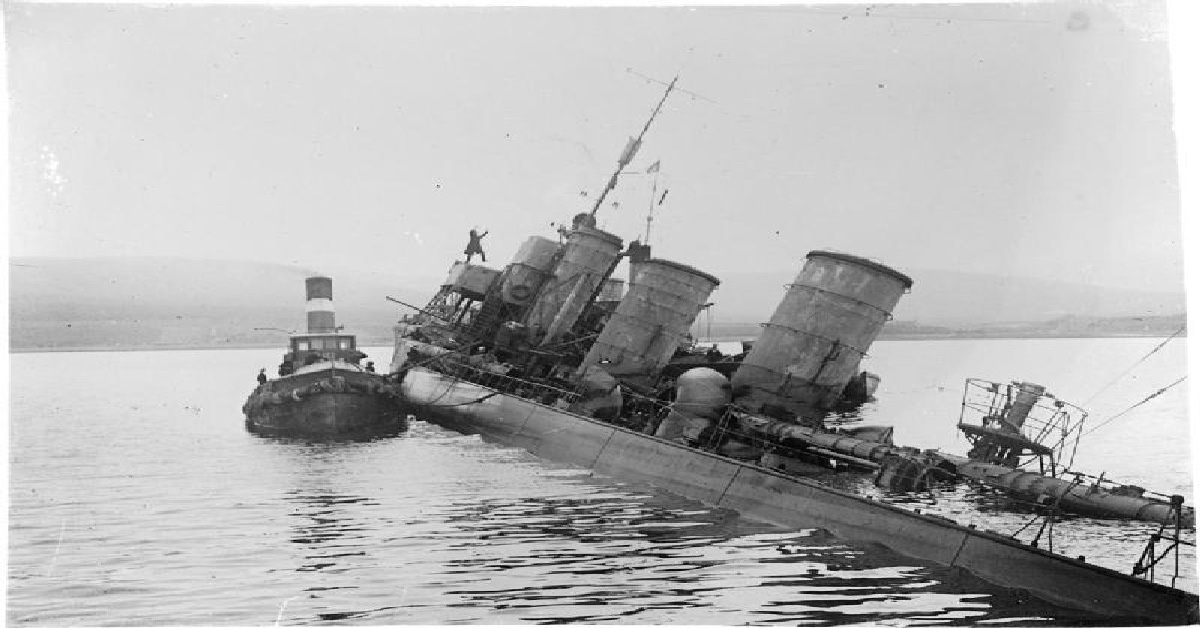
For the real lover of rusting metal, without doubt the most iconic place to be is the Orkney Islands, off the tip of northern Scotland. Here, in the depths of Scapa Flow, lies a scuttled German fleet. At the end of World War I, the captured German High Seas Fleet was interned here. Fearing that peace deals would fall through and that there would be a further outbreak of war, the German officer in command, Rear Admiral Ludwig von Reuter, decided to deliberately sink the ships to prevent them from being used by British forces.
On 21 June ,1919, a total of 52 ships from the fleet were sent to the seafloor. While many were salvaged after the sinking, seven major wrecks still remain, much to the delight of the hundreds of divers who come here every year to see this incredible piece of history.
Marine Life and Big Animal Encounters
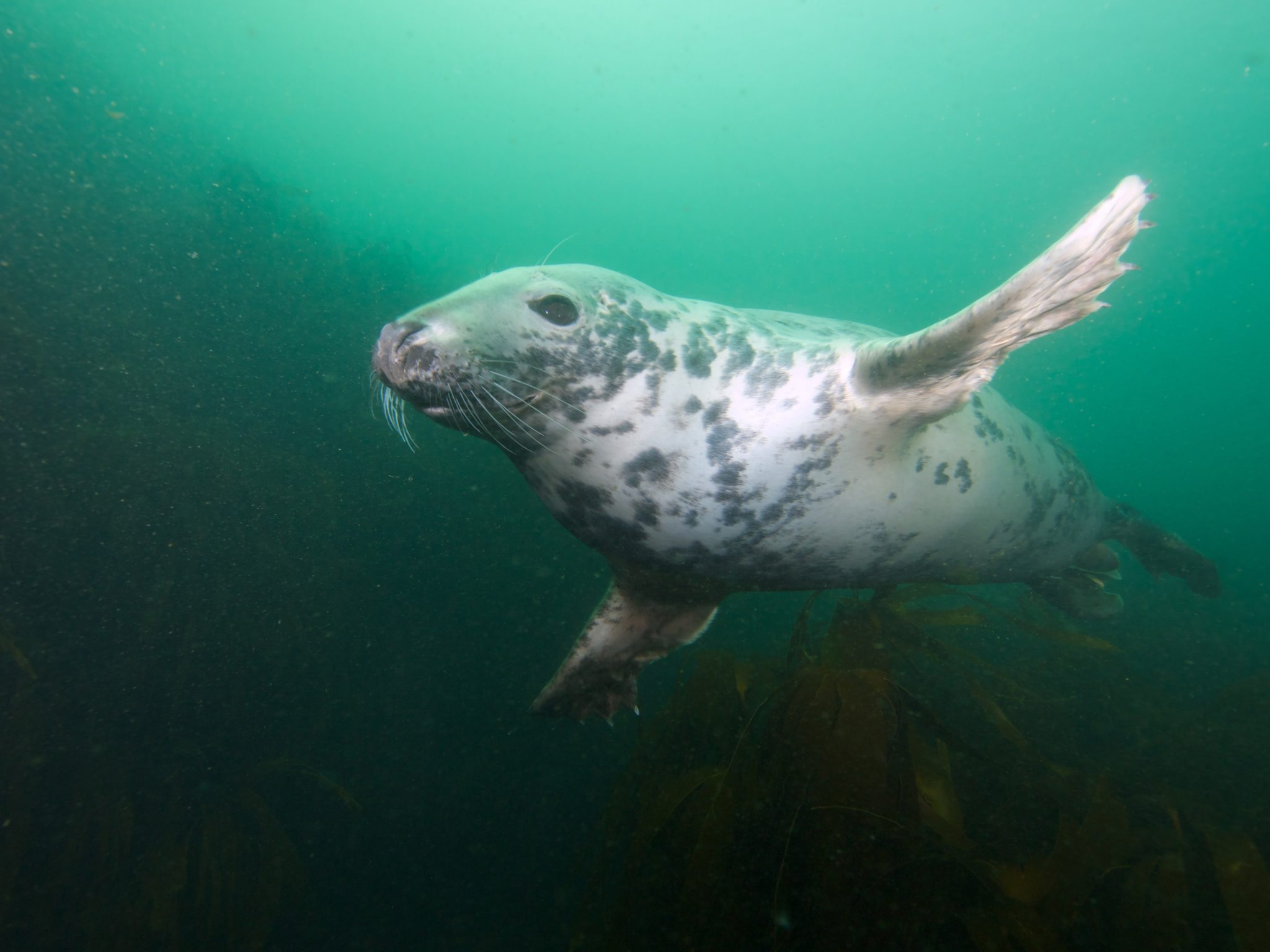
If it’s big fish and marine life encounters that you crave, the UK can also provide plenty of those. Lying off the coast of North Devon is Lundy Island, the largest island in the Bristol Channel. In 1986, it was designated as Britain’s first statutory Marine Nature Reserve and, in 2010, its first Marine Conservation Zone. Its waters are home to some of the richest and most diverse marine life found outside the tropics.
What undoubtedly brings divers here in droves, though, is its resident grey seal colony. If you’ve ever wondered what an underwater puppy would be like, you’d soon find out by diving here! While these seals are wild animals and should be treated as such, it’s not uncommon to feel a gentle tug on your fin during a dive, only to turn and come face to face with playful, curious eyes and long whiskers. It’s a magical experience.
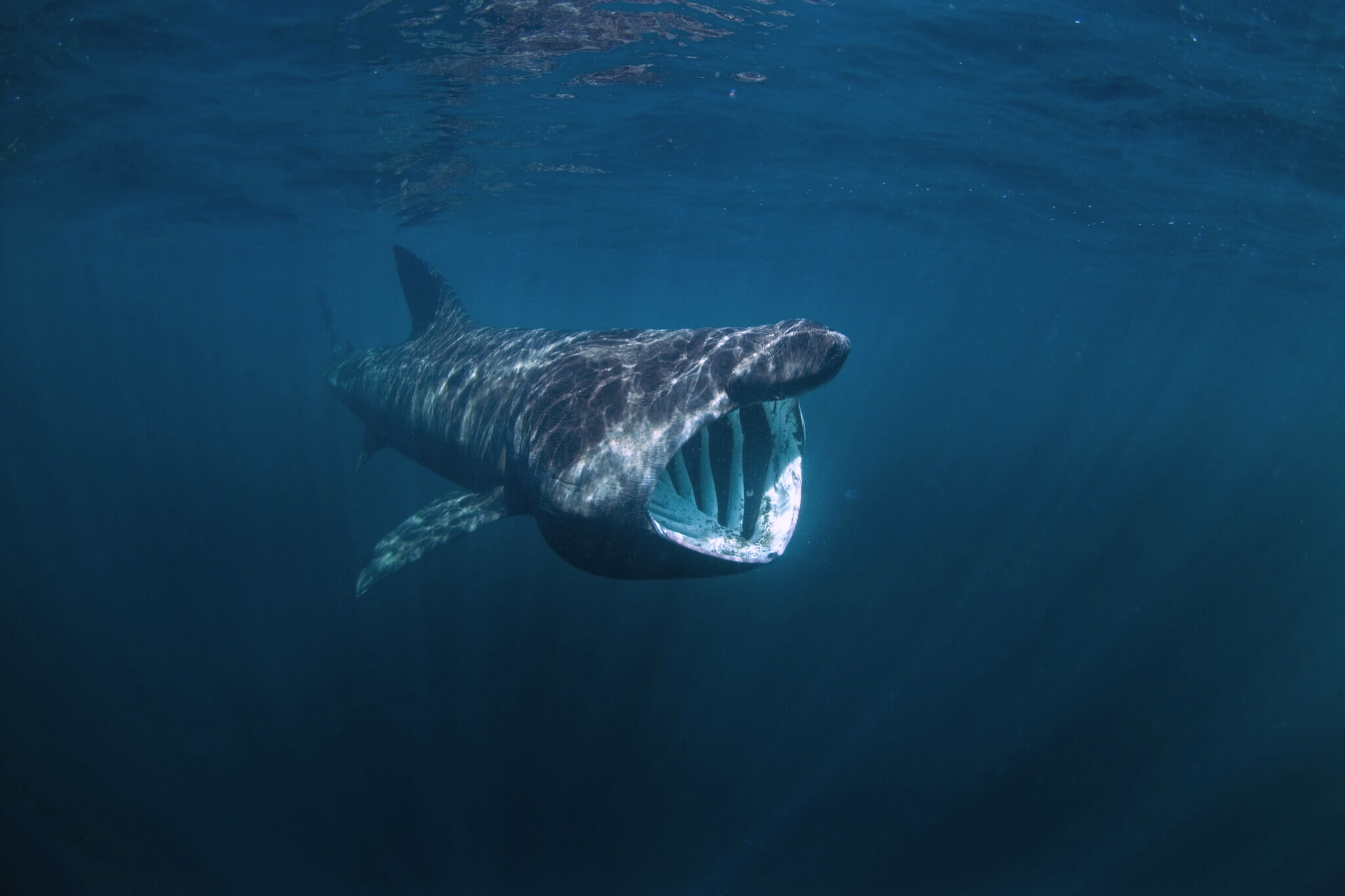
Another regular visitor to our shores is the basking shark. This huge filter feeder is the second-largest fish on the planet after the whale shark and the largest fish to be found in UK waters. In spring and summer, these sharks are regularly spotted feeding on plankton blooms off England’s southwest coast, around the Isle of Man, along the west coast of Scotland and off the north coast of Ireland. Despite growing up to 12 meters (39 feet) in length, surprisingly little is known about this gentle giant, and any opportunity to see one in the wild is not to be missed. For underwater photographers, it’s one of the best experiences to be had off the British Isles.
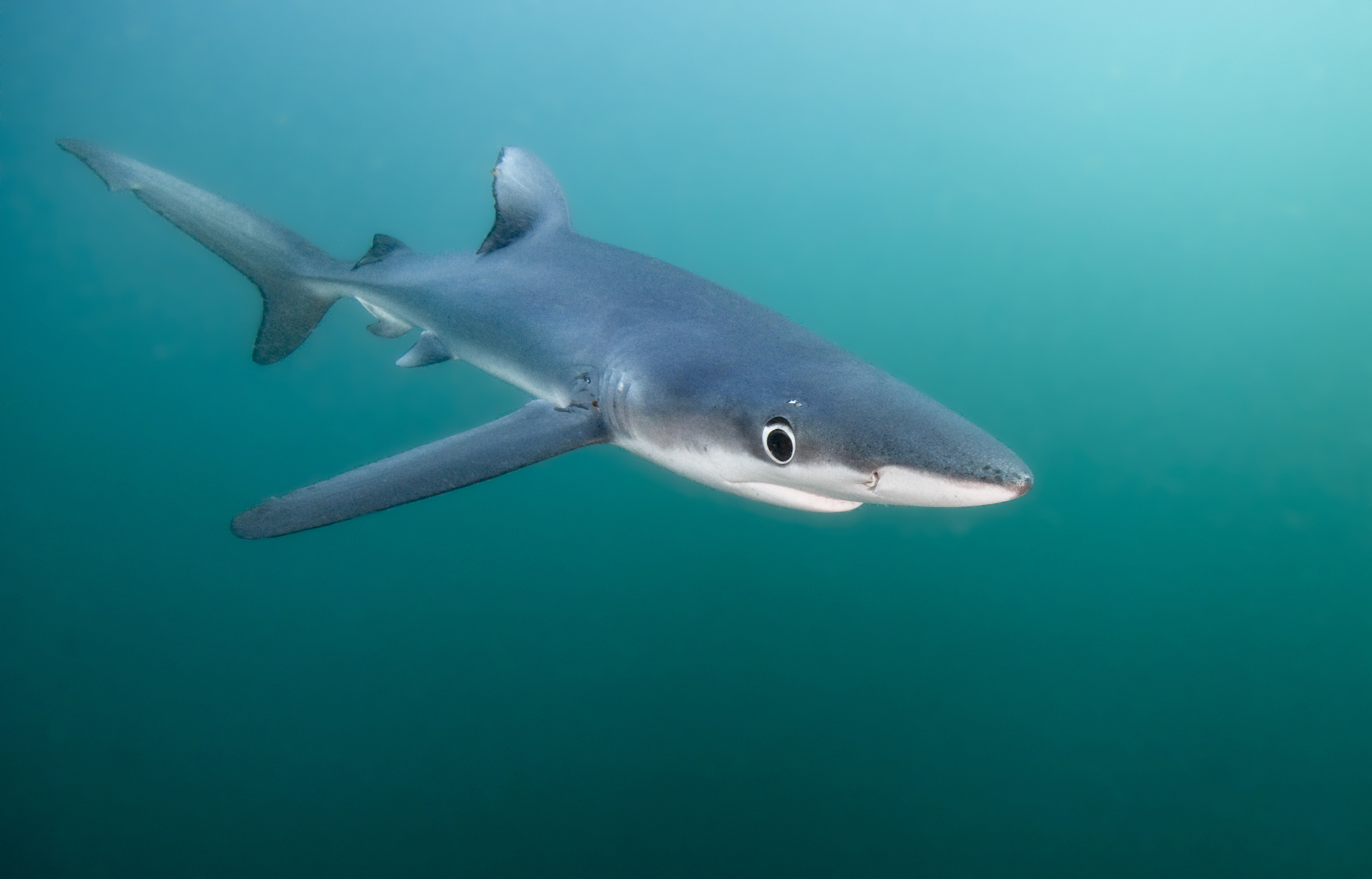
Tending to prefer temperate and slightly cooler waters, the beautiful and elegant blue shark journeys here along its long migratory path during the summer months. An open-ocean shark that can grow to between three and four meters (10 to 13 feet) in length, it feeds mainly on squid and other small pelagic fish. Blue sharks are known for the unusual indigo-blue color of their skin, which gives them their name. Any type of shark diving is extraordinary, but there’s something truly special about these sleek and inquisitive sharks.
If you’re a fan of UK marine life and want to see a spectacular British reef, you can’t go wrong by heading to Skomer Island, just off the coast of Pembrokeshire. This marine reserve is just as beautiful below the water as it is above, and, as a no-take zone, the wildlife is flourishing. In summer, expect to see thousands of breeding puffins on land, and keep your eyes peeled for seals, porpoises, lobsters and, if you’re lucky, seahorses at the dive sites. As well as thriving reefs, there are big walls, plenty of wrecks and scenic drift dives. More than enough to satisfy even the keenest divers!
Unforgettable Dives Closer to Home
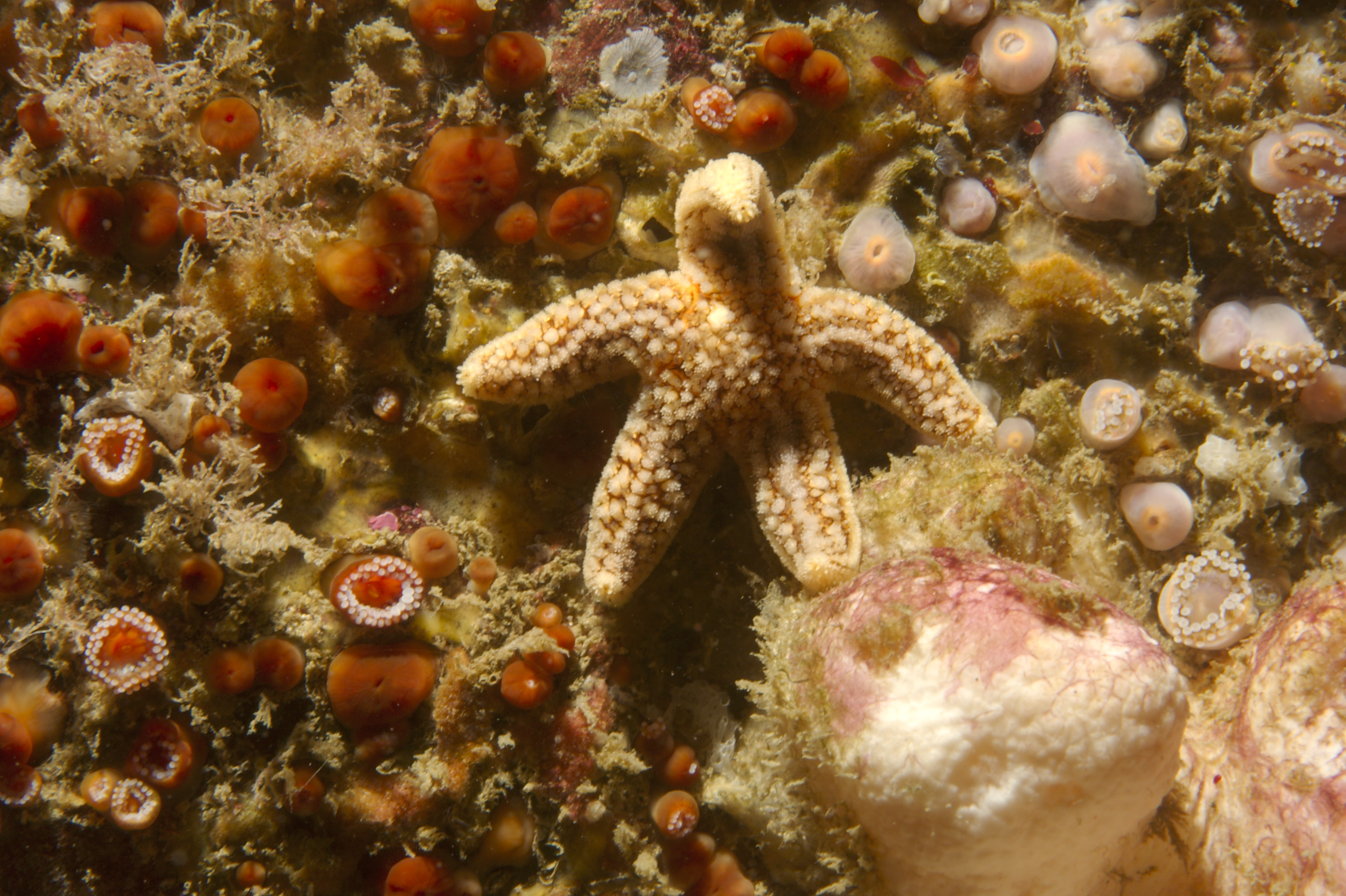
I have been lucky enough to dive in some amazing places all over the world during the last few years, but I can honestly say that some of the dives that stick most in my mind happened much closer to home. From dolphins spinning around me as I ascended from the wreck of the SMS Markgraf in Scapa Flow, to seeing a giant sunfish swim by as I dived the landing craft in Portland Harbour, to spending hours beneath Swanage Pier looking at beautiful soft corals and anemones, there is something to satisfy the interests and enthusiasms of all divers. So, next time you’re looking at booking a holiday to an exotic location to go diving, do yourself a favor and explore the United Kingdom. You won’t be disappointed.
Ready for Your Own UK Underwater Adventure?
Inspired to explore the UK’s underwater wonders? Visit our UK and Ireland vacation destination guide to learn more and to start planning your next dive.
Or, wherever your next dive adventure takes you, find inspiration, explore destinations and book your next dive trip or course with PADI Travel®.
This guest blog was originally written by AmbassaDiver Gemma Smith.