When people hear that I’m a PADI Divemaster, they often assume they know what I do. Most imagine guiding dives or working in a dive center. What surprises them is that my day-to-day work looks very different.
I’m a Divemaster, but I’m also an Assistant Curator and Dive Safety Officer at a UK aquarium. My work involves animal care, conservation projects and a lot of time underwater that most visitors never see. Becoming a Divemaster didn’t put me on a single career track — it opened doors I didn’t even know existed when I started diving.
Becoming a Divemaster Without a Fixed Career Plan
I didn’t start my Divemaster training with a clear job title in mind. I wasn’t chasing a specific role or trying to “go pro” in the traditional sense. I wanted to be better in the water — more capable, more confident and more useful in ocean-focused work.
I completed my Divemaster course in Lanzarote, and what stood out immediately was how much the training went beyond personal diving skills. It changed how I observed people, how I managed responsibility and how I thought about safety. Assisting with students taught me how to stay calm under pressure, communicate clearly and support others without taking over. At the time, I didn’t realize how transferable those skills would become.
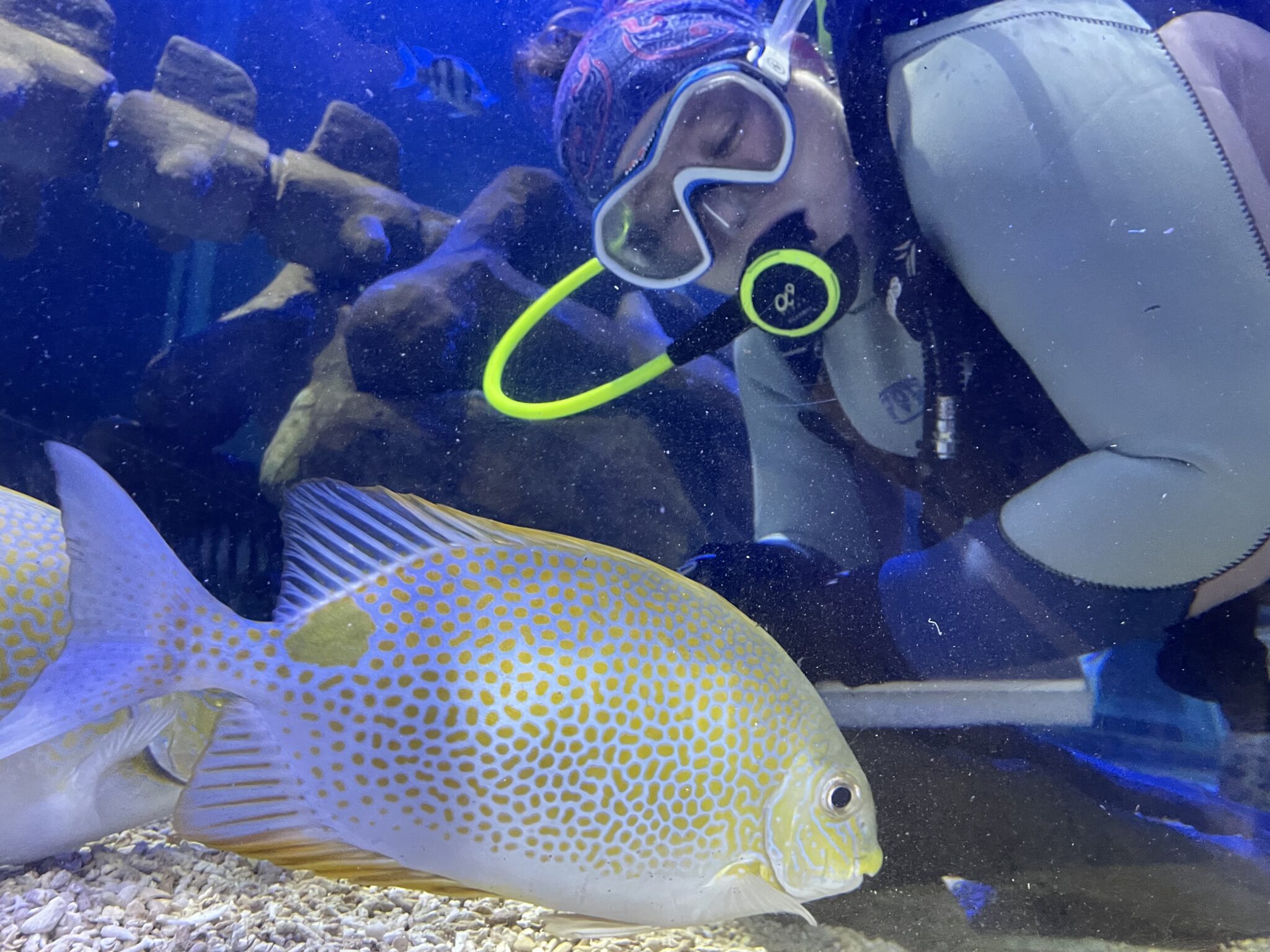
I’m a Divemaster, But My Work Happens in an Aquarium
My route into aquarium work wasn’t something I mapped out in advance. It developed gradually through experience, curiosity and being willing to take on responsibility. What made the difference was that I had the dive training to support the work that needed doing.
Behind the scenes, aquariums rely heavily on divers. We’re in the water to clean habitats, check structures, observe animal behavior and support veterinary procedures. We collect data, monitor welfare indicators and sometimes assist with moving animals safely within exhibits. Many of these tasks require calm, controlled diving and a strong awareness of how your presence affects the environment around you.
Being a Divemaster shaped how I approach all of this. The course taught me to slow down, think ahead and communicate clearly underwater. Those habits matter when you’re working around animals that rely on predictable, low-stress interactions. They also matter when you’re part of a team that depends on you to manage risk and stay focused.
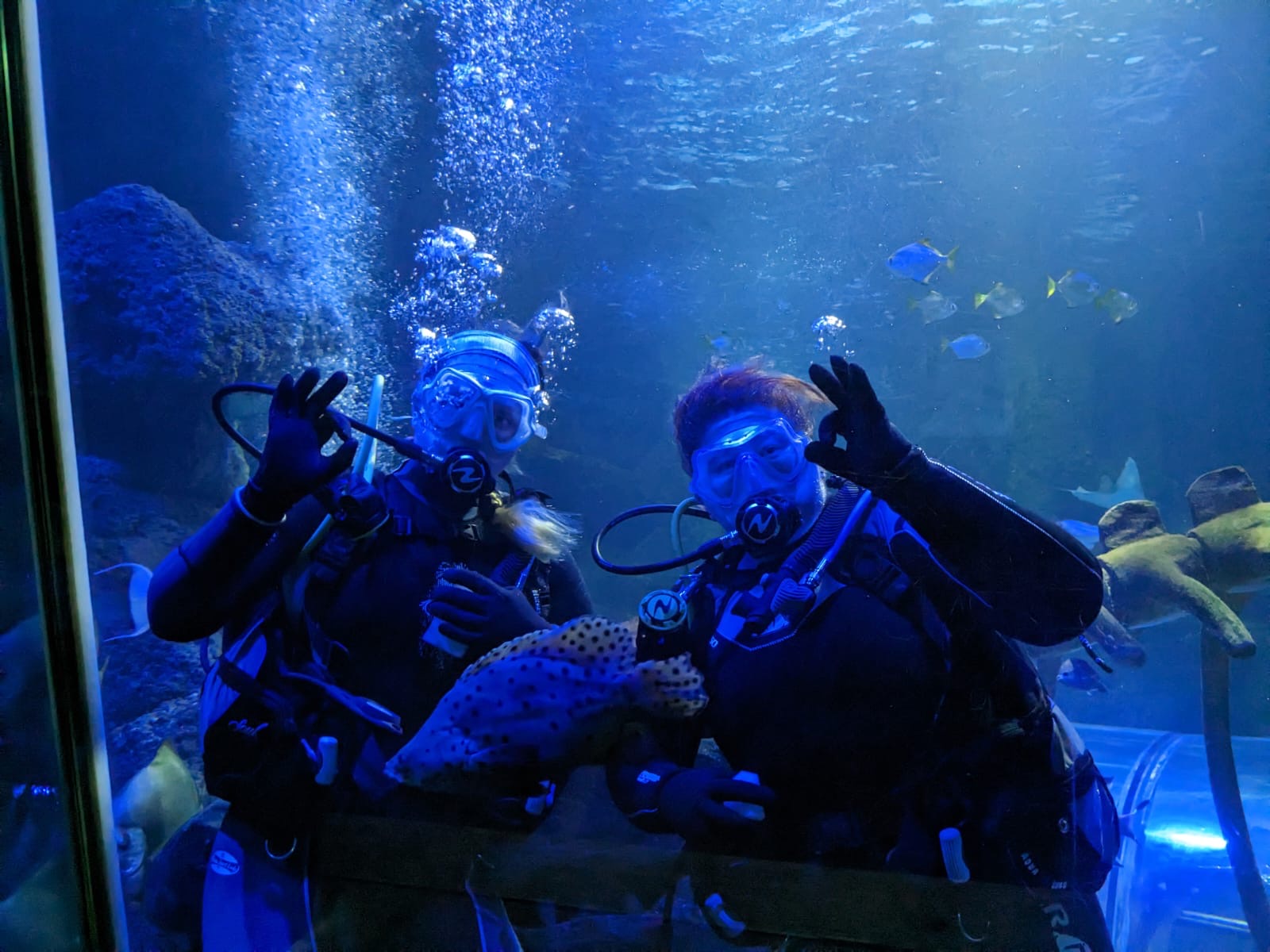
The Conservation Side of the Role
One of the most rewarding parts of my job is the conservation work. Much of it depends on divers who can work carefully and consistently over long periods of time. Some days that means gathering behavioral data for breeding programs. Other days it involves monitoring animals after veterinary treatment or helping prepare individuals for release projects.
My PADI Divemaster training gave me the foundation for this kind of work. Conservation diving isn’t about doing anything quickly or impressively. It’s about accuracy, patience and awareness — qualities that the course helped reinforce.
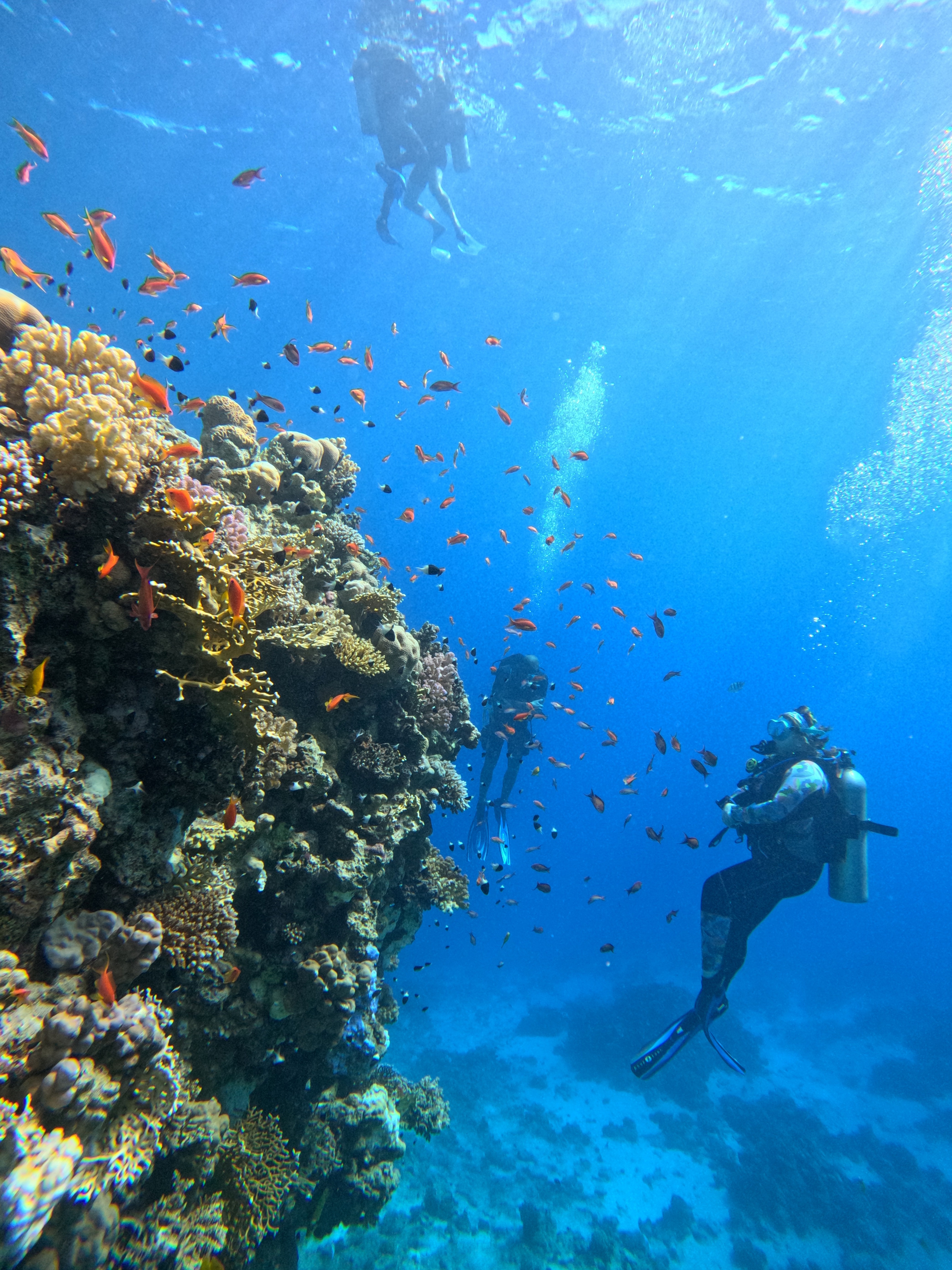
Although much of my work takes place in a controlled environment, I make a point of diving outdoors as often as I can. Staying connected to the wild ocean keeps the conservation work grounded in reality. Seeing reefs under stress, changing coastlines and shifting species distributions firsthand shapes how I interpret behavior in aquarium animals and how I communicate conservation challenges to others.
A Divemaster Is Not a Job Title — It’s a Skill Set
One of the biggest misconceptions I see among divers is that Divemaster equals one specific career. In reality, it’s a qualification that supports many different paths.
For me, it helped me become an aquarist. For others, it might lead into marine science, conservation projects, tourism, education or expedition work. What employers value isn’t just the card — it’s what the training represents. Divemaster shows that you can handle responsibility, work safely with others and stay calm in environments where mistakes matter.
Those skills apply far beyond dive centers. They apply anywhere people, animals and the ocean intersect.
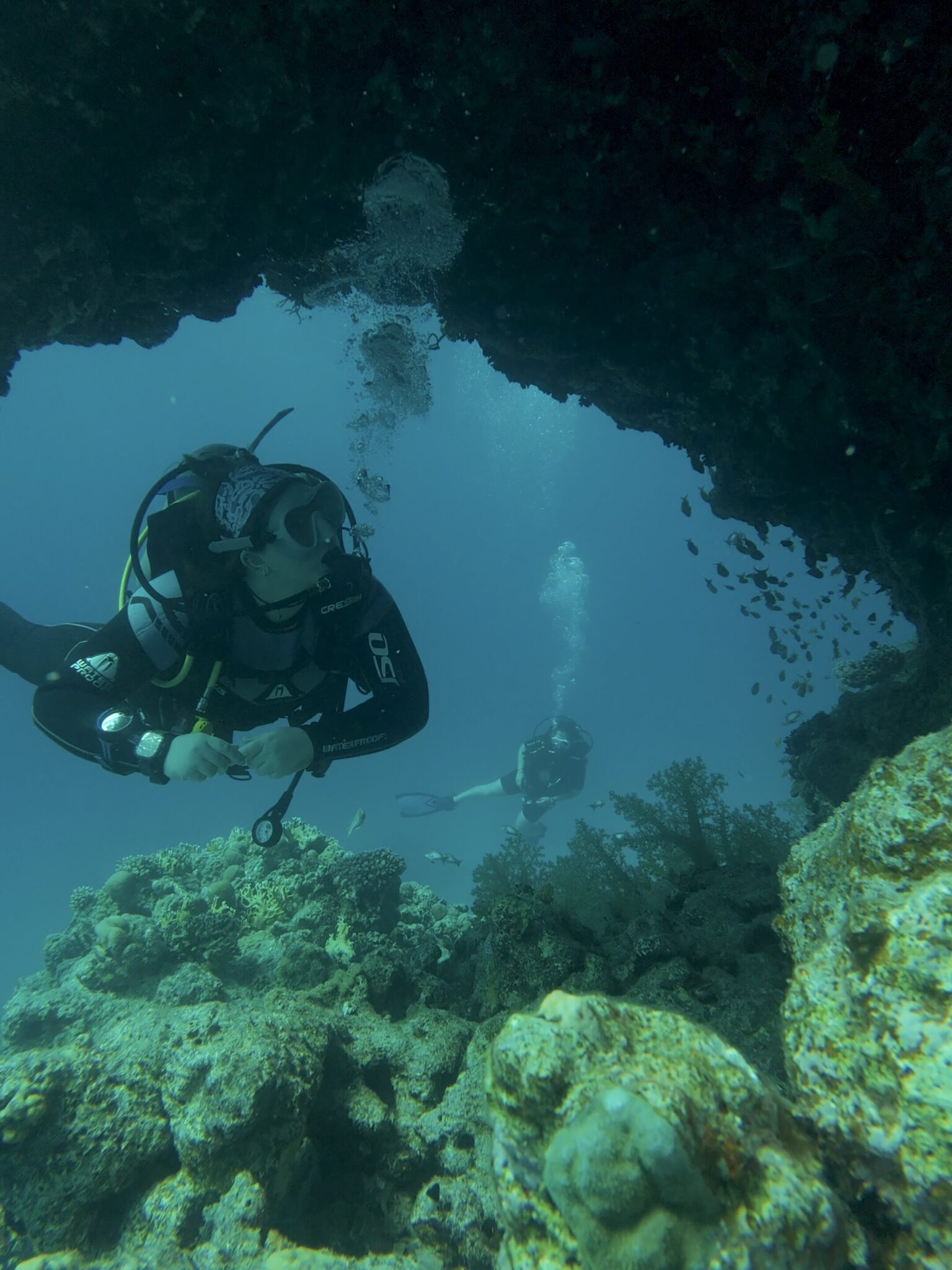
Advice for Divers Thinking About the Next Step
If you’re a recreational diver wondering what comes after Rescue Diver, it’s worth thinking less about job titles and more about capability. Divemaster training doesn’t lock you into a single future. It gives you options.
If you’re interested in working with marine life, diving experience is a real advantage — but it’s the type of diver you become that counts. Focus on being steady, observant and reliable. Spend time in the industry if you can, even as a volunteer. Learn how animal care and conservation work actually happens behind the scenes.
Most importantly, stay curious. I didn’t become an aquarist because I followed a strict plan. I became one because I kept learning, stayed open to opportunity and had the skills to step in when those opportunities appeared.
Being a PADI Divemaster didn’t define my career — but it made the career I have possible.
This blog was written by Sophie Negus, PADI Divemaster & Assistant Curator. Sophie has spent nearly a decade working in and around the ocean, combining her Divemaster training with hands-on experience in animal care and marine conservation. As an Assistant Curator, she supports animal welfare, habitat management, diving operations and conservation-focused research. She is passionate about helping divers build confidence, develop practical skills and find meaningful ways to work with and protect the underwater world.