PADI Master Instructor and co-founder of PADI Five Star IDC Blue Corner Dive, Andrew Taylor has championed coral-restoration science, education and hands-on action in Bali, Indonesia and other parts of the globe. Over the past 15 years, Taylor has built a growing network of ocean advocates to restore local reefs in Nusa Penida and rebuild hope for the future of reef health.
As founder of Blue Corner Conservation and director of Blue Corner Marine Research programs, Taylor’s philosophy is rooted in optimism, focusing on research, ecotourism and community involvement to drive change and protect coral reefs in Indonesia and around the world.
How was the idea for Blue Corner Marine Research born?
“It was born from a lifelong connection to the ocean and a desire to turn that passion into meaningful action. I started diving in Southeast Asia when I was 12, and from that moment the underwater world became a defining part of my life. My childhood friend, now business partner, and I dreamed of opening our own dive center one day.
“While studying marine biology at university, that dream evolved into something deeper: I wanted to create a space where divers could actively contribute to ocean conservation. In fact, I first wrote the business plan for a conservation-based dive center as a university assignment in 2001. Although it would take another decade before Blue Corner came to life, the seed had been planted. Like coral it took time, care and the right conditions to grow.
“Today, Blue Corner is exactly what we envisioned – a place where people can learn, dive and make a tangible difference for coral reefs and marine ecosystems.”
How did you find success in developing the Coral Restoration PADI Distinctive Specialty?
“When students and divers join our coral restoration projects, I believe it’s essential they understand the science behind ecological restoration, because improving the health of a reef is much more than simply planting corals. I wanted participants to appreciate the bigger picture: how restoration decisions are made, and why each step matters.
“To achieve this, I developed a training program that walks students through the same decision-making process we use in the field – from identifying and reducing local impacts and choosing appropriate restoration techniques, to selecting coral species suited for specific sites. The first versions of the course were quite academic, based on the principles of the Society for Ecological Restoration, and delivered through workshops and technical materials.
“As we began collaborating with other conservation groups and dive operators, it became clear there was a growing interest among recreational divers to learn both the science and hands-on aspects of restoration. This inspired me to create the Coral Restoration PADI Distinctive Specialty, a two-day course built within PADI’s educational framework combining scientific understanding with practical skills.”
What strategies have you found to support and educate the local community to champion ocean conservation?
“We focus on inclusion and collaboration. By training local dive guides, hosting school programs and offering internships, we make sure conservation feels like a shared effort, not something foreign. We offer scholarships to Indonesian university students, hold workshops in Bahasa Indonesia and celebrate local conservation leaders – because when people see their own community leading change, it lasts.”
What are your proudest achievements in marine conservation?
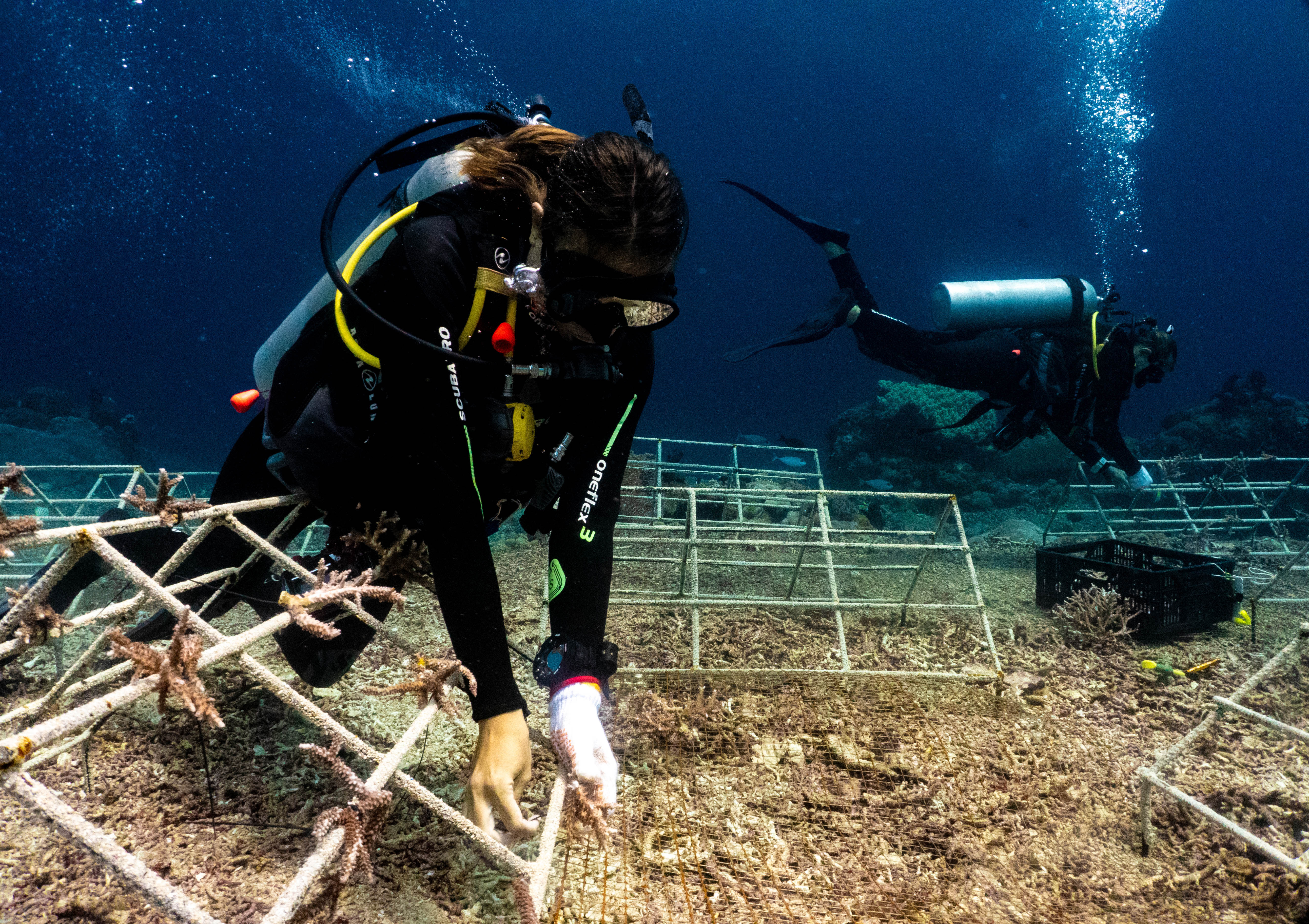
“One of my proudest achievements has been witnessing degraded reefs in Nusa Penida come back to life, and knowing they’ve been restored through the dedication of our students and passionate divers. Ten years ago, our main restoration site was nothing but coral rubble, a place no divers wanted to visit. Today, it has transformed into a thriving reef ecosystem, a popular dive site and a recognized research and training hub for universities from Indonesia and around the world. It stands as living proof of what’s possible when divers unite around a shared purpose.
“A particularly special moment came last year when five baby reef sharks were born at our restoration site. Not long ago, local shark populations had nearly disappeared, with sightings of white-tip reef sharks becoming almost nonexistent. Seeing these juveniles now residing at the reef is an incredible sign that the ecosystem is recovering – an affirmation that our collective efforts are truly restoring balance to the ocean.”
What is your current focus, and what do you hope to achieve in the future?
“Right now, my personal focus is my PhD research, tracking the ecological recovery trajectories of coral-restoration sites around the world. Through Blue Corner, I’m using this work to improve restoration practices and create standardized monitoring approaches. In the future, I hope to connect more dive shops and researchers globally, turning local restoration sites into long-term learning networks for ocean recovery.”
What advice can you share to help other PADI Professionals establish successful conservation initiatives in their local area?
“Start small and build momentum. You don’t need to fix the whole ocean; just start with one reef, one species, one idea. Collaborate with others, keep it fun and make it personal for your students. When people understand the ‘why’ behind your project, they’ll help it grow far beyond what you can do alone.”
If you could ask the Ocean Torchbearer™ community to take one action, what would it be?
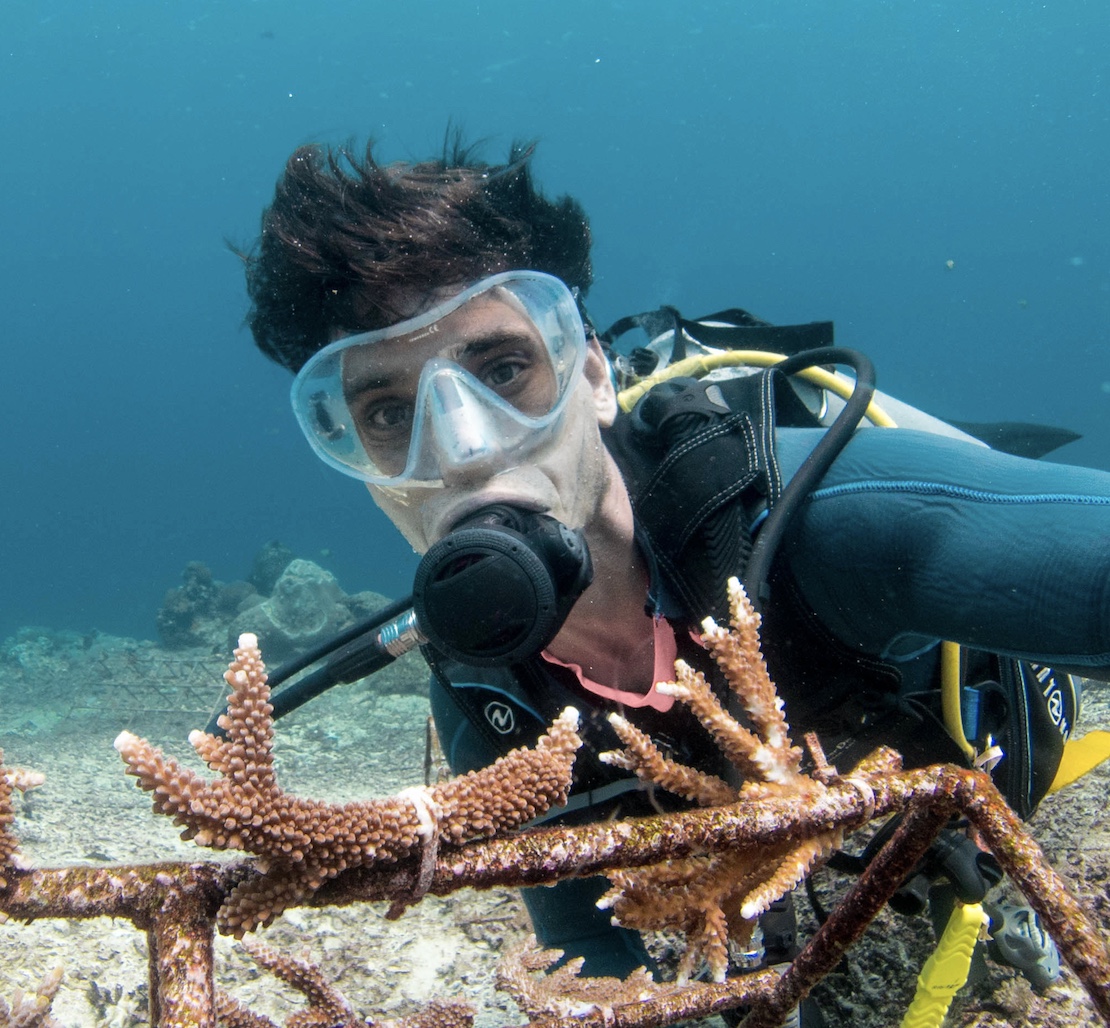
“Adopt your local reef. Whether you’re restoring corals, gathering data or teaching conservation, choose one place in the ocean to nurture and protect. Treat it as a living classroom and a source of inspiration. When divers everywhere commit to caring for their local waters, we weave together a global network of hope and restoration, one dive at a time.
“Just as important, focus on the positive. As divers, we often witness the decline of the environment firsthand, and it can be disheartening. But if we only dwell on what’s being lost, we risk losing hope. Instead, focus on the survivors – the coral colonies that persist, the small victories, the everyday acts of care. Each restoration project may seem small, but these efforts plant the seeds of change. Years from now, one coral you planted might not transform the ocean, but the collective effort of thousands of divers who refused to give up will.“