
In diving, we often say: leave nothing but bubbles. But that takes more awareness than we might expect, especially when dives become exciting, cold or camera-heavy.
Managing our impact isn’t about luck or good conditions. It comes down to awareness — a core skill every diver should have. From shark encounters to cold-water environments and underwater photography, small decisions shape not only our safety and experience, but the health of our dive sites.
Understanding these challenges doesn’t limit your diving, it elevates it.
This is your guide to diving in a way that protects what we love, while making every dive safer, sharper and more meaningful.
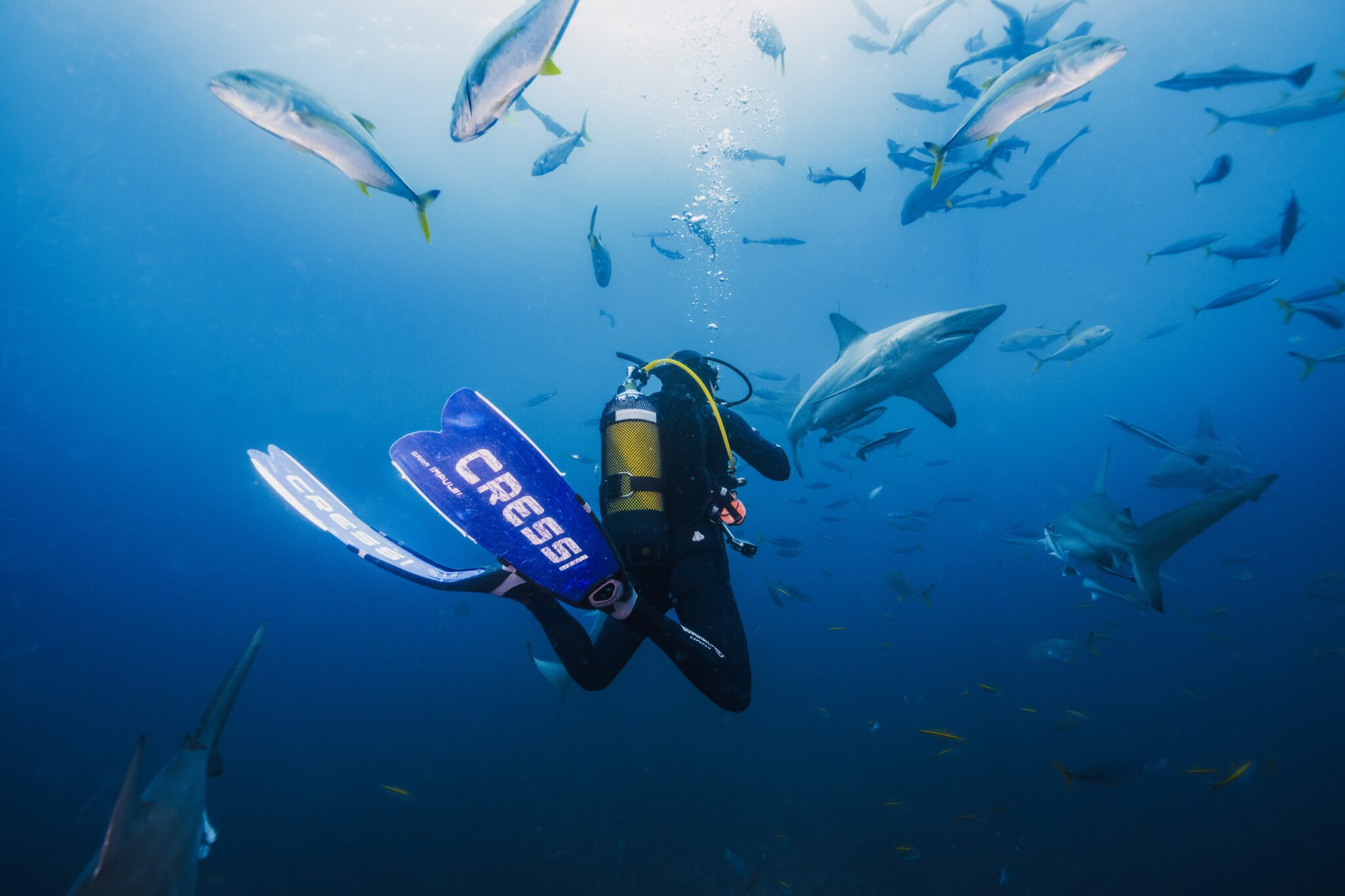
Shark Diving
Seeing your first shark underwater is a memory no diver forgets. But excitement and adrenaline can quickly lead to overwhelming situations, both for you and for the animals.
Here are key considerations to ensure the best experience for yourself and the sharks we love.
Self-Awareness
Shark diving can push you beyond your comfort zone. Being out of your element increases the risk of accidents and makes environmental awareness harder to maintain.
Build your experience progressively. Choose encounters that match your comfort level and communicate openly with your dive operator.
If you want to build confidence first, training through Advanced Open Water Diver, Rescue Diver or the AWARE Shark Conservation Specialty can help strengthen your awareness and control.
Choosing the Right Operator
Responsible operators provide clear briefings on shark behavior, environmental conduct and safety. Their partnerships and conservation engagement are often clear indicators of their values.
Consider choosing a PADI Eco Center, recognized for exemplary environmental performance and participation in Adopt the Blue™ and Green Fins environmental standards.
Share Your Sightings
While sharks are among the most researched marine animals, data gaps remain. You can actively support conservation by logging dive location, depth and species observed.
Citizen science platforms like the Conservation Action Portal with the new Global Shark & Ray Census or Manta Trust allow divers to contribute directly to research. Photos showing identifying markers, like fin shapes or scars, can help support long-term monitoring.
If you want to deepen your understanding, the Shark & Ray Specialty course is a great place to start.
Buoyancy and Buddy Awareness
High-adrenaline dives make core skills even more important.
Whether you’re hovering in the blue water column without a visual reference or positioned near a reef, maintaining neutral buoyancy prevents environmental damage and improves interactions. Ensure proper weighting and speak to your dive shop in advance if you’re unsure. Advanced Open Water Diver and Peak Performance Buoyancy are excellent tools to refine this control.
Excitement can also reduce buddy awareness. Regular silent checks help prevent stressful situations where environmental considerations are forgotten. These skills are just as crucial in drift, wreck and muck diving.
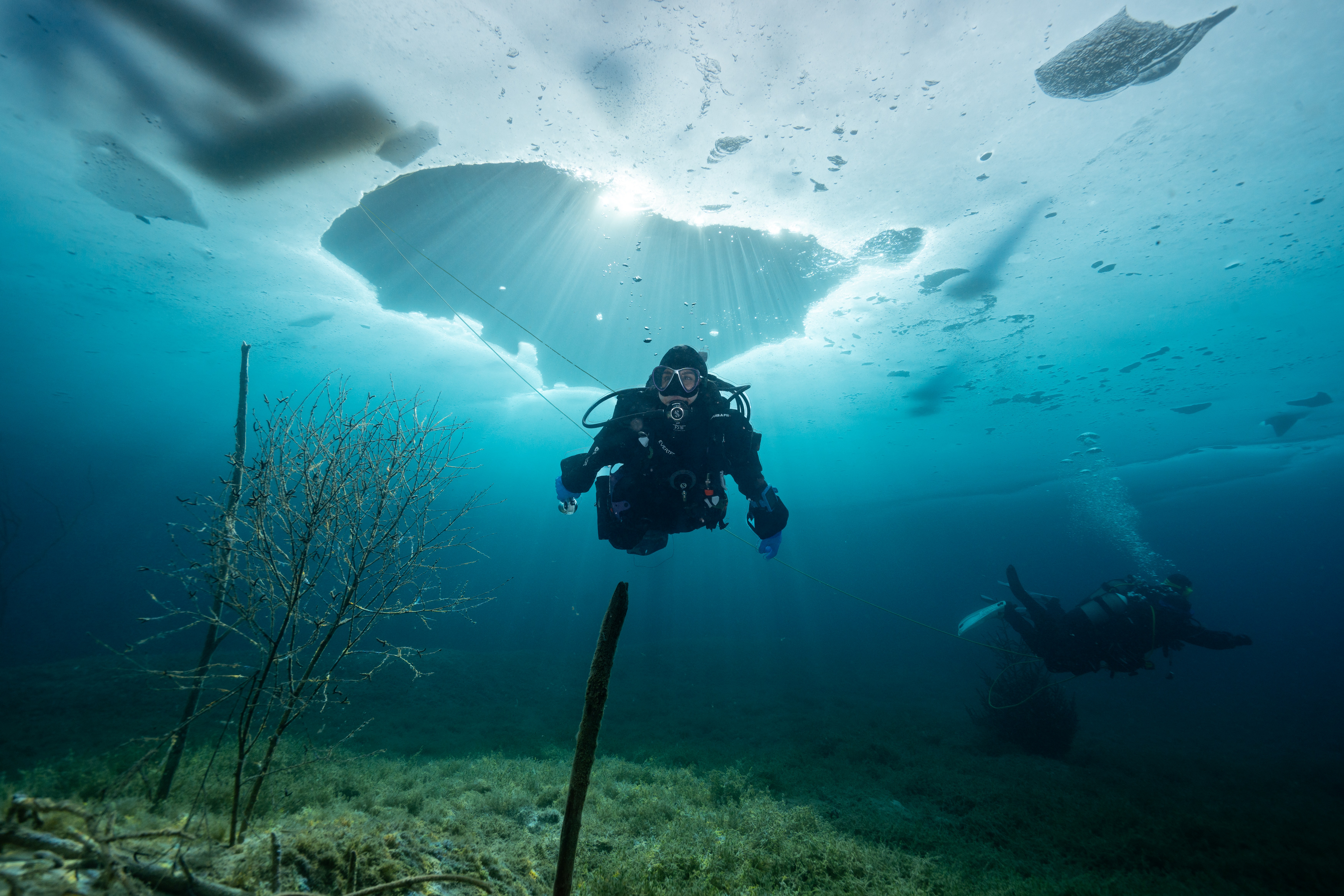
Cold Water Diving
Cold-water environments — from kelp forests to ice dives — may appear robust, but they can be surprisingly fragile.
Here’s how to navigate them responsibly.
Access to Dive Sites
Shore entries often cross sensitive habitats. Use established entry and exit points and follow local regulations.
Pay attention to:
- Seasonal protections
- Glove regulations
- Designated descent, ascent and entry points
Mind Your Positioning
Dry suits and thick gloves can reduce your awareness of bottom contact. Avoid grabbing, kneeling or resting on rocky substrates unless safety requires it.
If you’re new to the equipment, choose appropriate sites to practice and seek proper training, such as the Dry Suit Specialty or Peak Performance Buoyancy Specialty courses.
Clean Your Gear Carefully
Closed systems, such as lakes, contain unique organisms and bacteria. Without realizing it, we can transfer invasive species between environments.
Thoroughly rinse and dry all gear before diving at a new site to reduce this risk.

Diving With a Camera
Photography and videography are powerful storytelling tools that inspire others to care for the ocean. But they also add significant task loading underwater, shifting your focus away from your surroundings.
Managing that balance is key to protecting yourself and the environment.
Master Buoyancy First
If you can’t hover motionless, you may not be ready for close-focus work.
Photography often involves hovering near the bottom, adjusting body position and maintaining patience while waiting for the right moment. This split focus only works when buoyancy control is automatic. Take your time to build that foundation before moving closer to sensitive subjects.
The Digital Underwater Photography Specialty is a great way to develop these skills.
Understand Camera Buoyancy
Cameras affect trim and buoyancy. Depending on your setup, they may pull you down or push you upward.
Floating arms and trim weights can help stabilize your configuration and prevent unintentional reef contact. Planning your setup carefully improves image quality as well as environmental control.
Light With Care
Video lights and strobes enhance color and detail, but they can also stress marine life.
If you notice changes in behavior, such as sudden flight responses or defensive reactions, reduce intensity or back away. For certain experiences, like shark diving, natural light is often recommended.
Learning to manage lighting intentionally — including manual strobe control — gives you greater flexibility while minimizing impact.
Don’t Be Afraid To Edit
It’s easy to get carried away chasing the perfect shot. But often, cropping or adjusting in post-production is more sustainable than moving closer.
Giving animals space results in more natural behavior, less stress and, therefore, often better storytelling.

The Skill That Changes Everything: Buoyancy
No matter your dive objective, buoyancy is the foundation.
Good buoyancy prevents coral damage, avoids silt clouds and eliminates accidental contact. It improves buddy awareness, enables better photography and leads to more relaxed animal encounters.
It’s more than a skill; it’s how we move underwater. Refining it takes time, practice and self-awareness. Challenge yourself in the right environments, develop progressively and you’ll be prepared for any adventure with minimal impact.