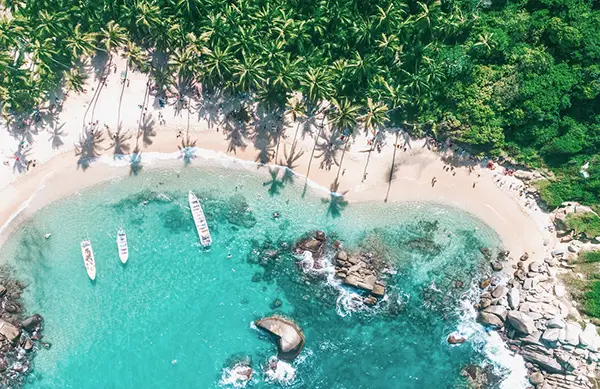
Look no further than the Caribbean for beautiful beaches, island adventures and incredible diving. The region offer diverse cultures, delicious food and dive sites right off the coast. It’s little wonder these crystal clear waters are a hot spot for scuba divers looking for the best shore diving destinations.
The Caribbean offers calm, warm waters with marine parks, artificial reefs, shark diving and diverse coral ecosystems. While many divers opt for liveaboards or boat dives, there are plenty of opportunities for divers who prefer the freedom of entering from the shore. Divers can explore sites on Curacao, Bonaire, the Bahamas, Grand Cayman, Aruba, Saint Lucia, Antigua and beyond. Excitingly, discovering these dive site entry points can lead you to parts of the islands you might otherwise never see.
Whichever destination you choose, read on to learn about top shore diving opportunities in these Caribbean destinations.
Shore Diving in Curaçao
Curaçao is often referred to as a “shore diving haven.” Out of its more than 70 popular dive sites around the island, over half are shore dives.
Road signs along the island direct divers to dive sites off the coast. However, although renting tanks and hopping into the water is easy, the markers are not always situated perfectly. Therefore, it is recommended to partner with local dive guides for a Discover Local Diving experience before you begin your adventure. Importantly, receiving dive instruction from local professionals in any new location is best practice.
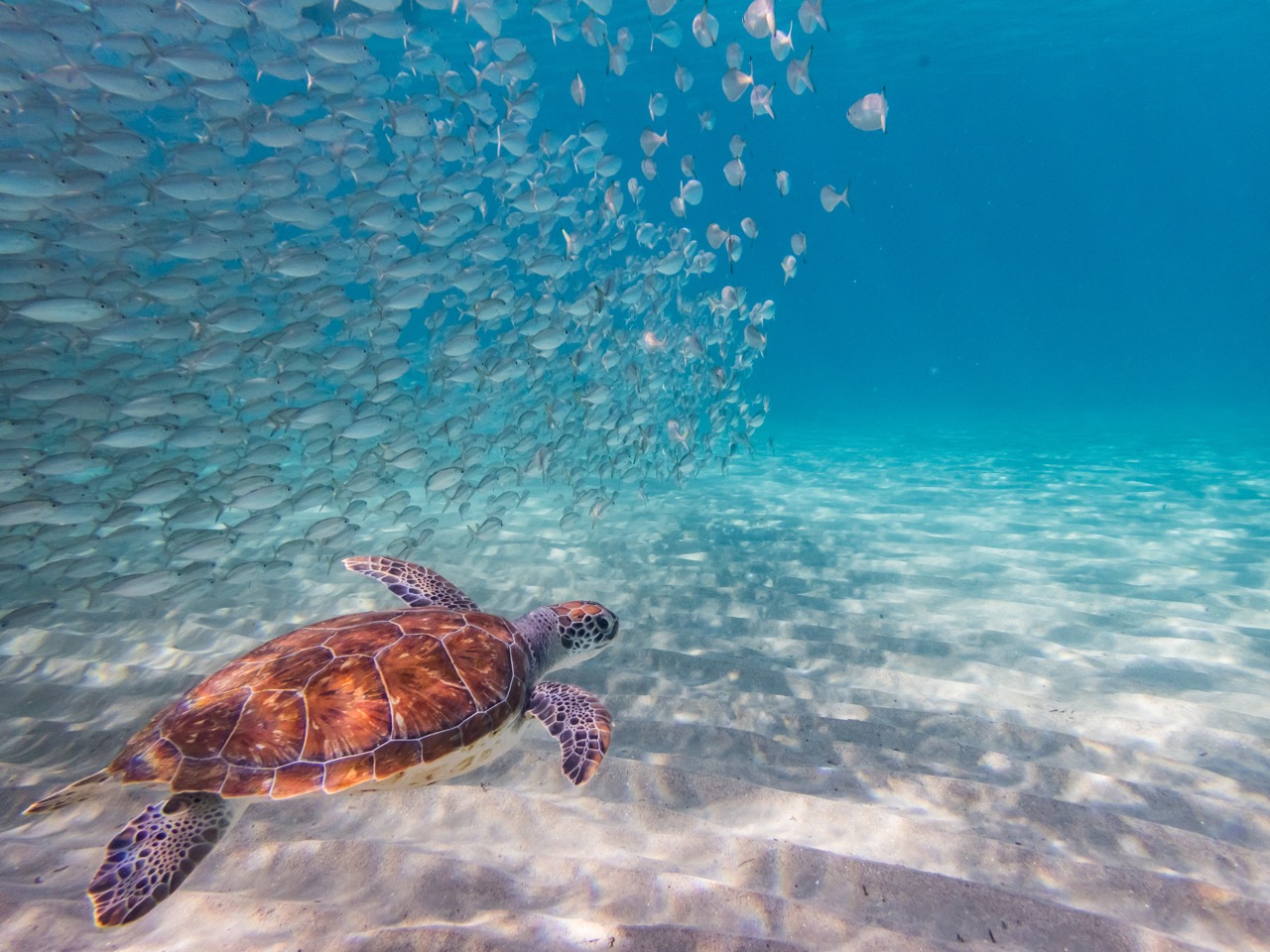
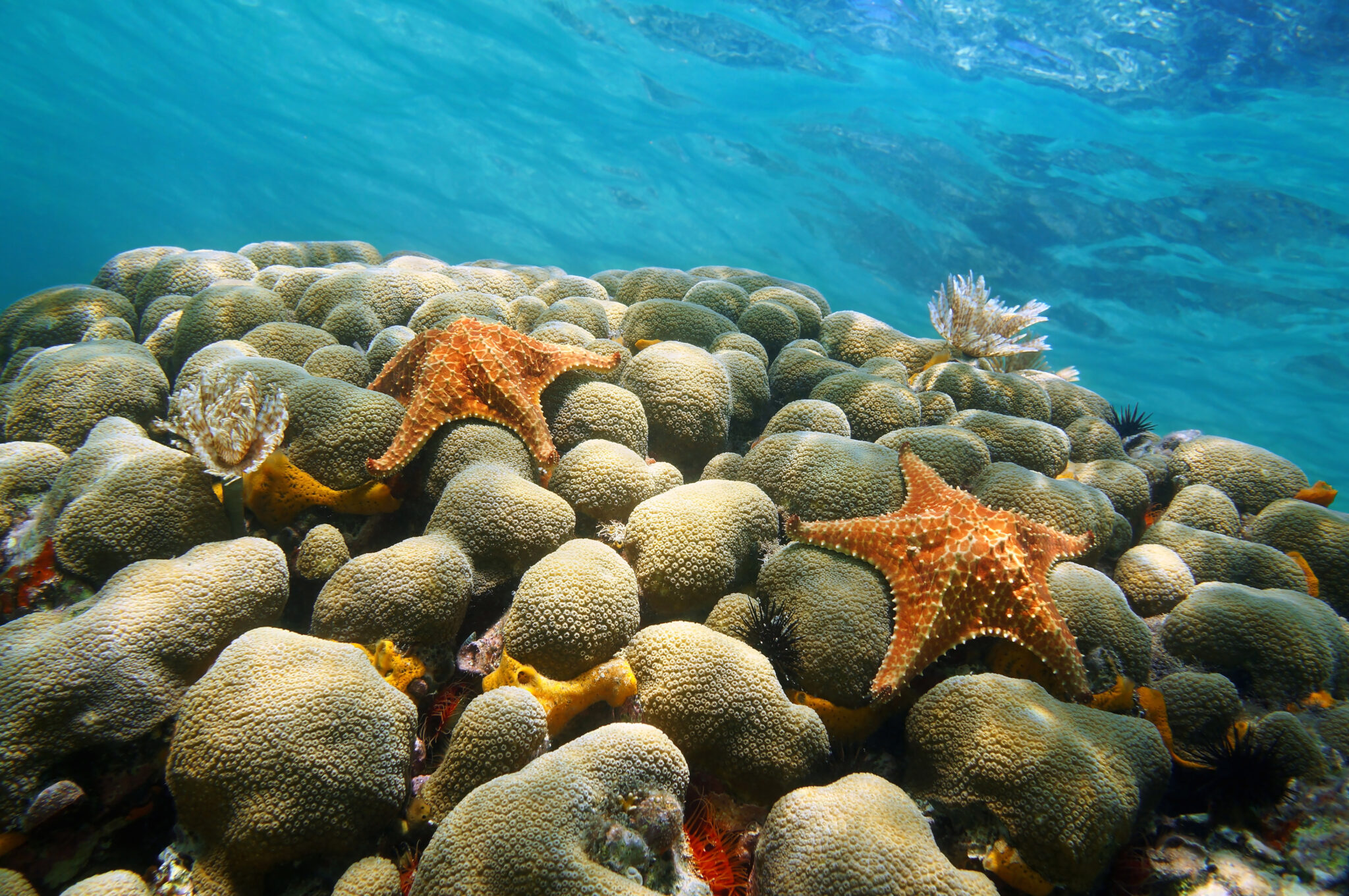
Curaçao’s blue waters host mushroom-like hard corals, a sunken tugboat, a barge carrying cars and trucks, healthy coral reefs, macro marine life and much more.
Shore Diving in The Bahamas
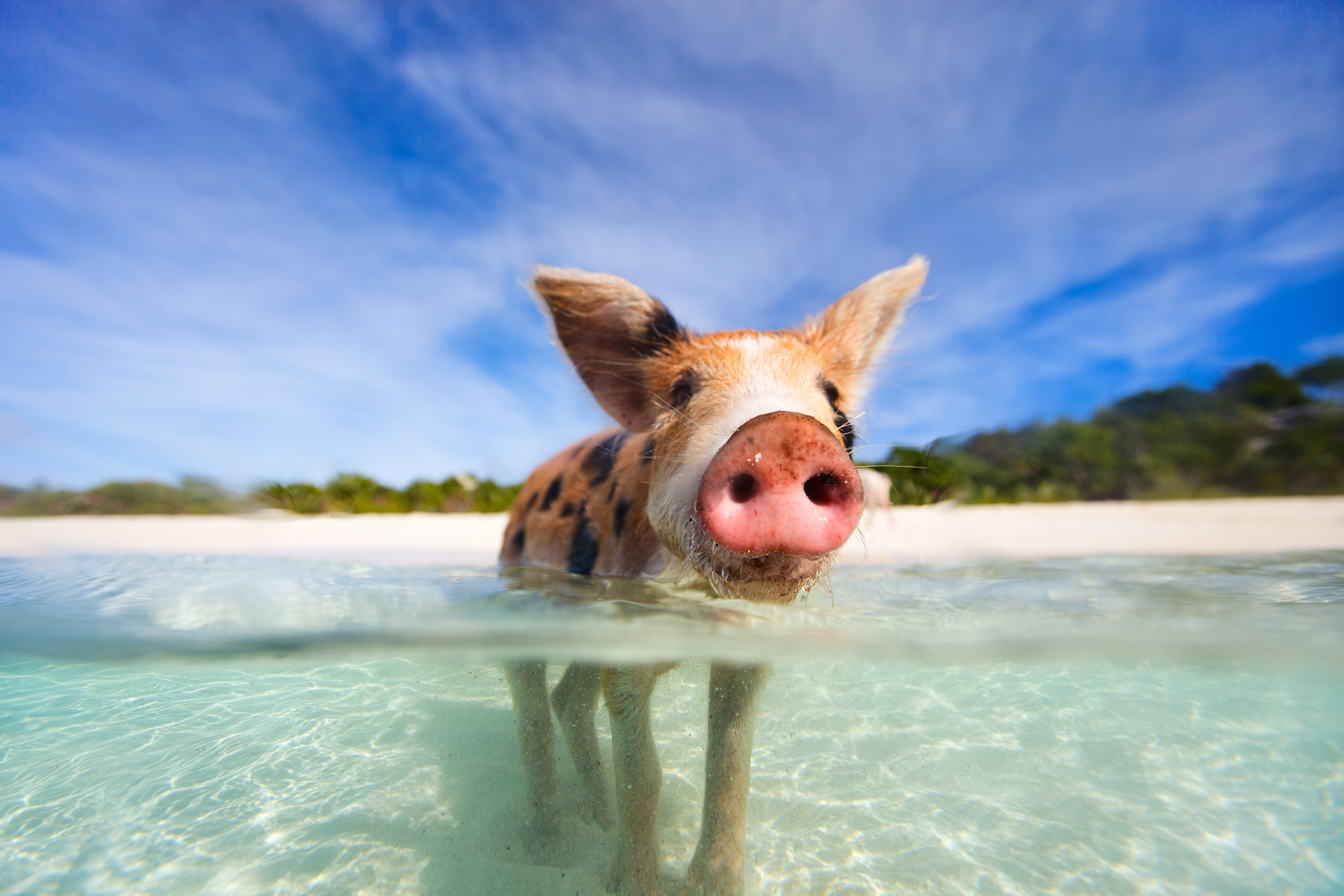
While white sand and blue water may suggest abundant shore diving, opportunities in the Bahamas are actually more limited than other islands, such as Curaçao and Bonaire. However, the land-accessible shore diving in the Bahamas does offer unique diving experiences.
Shore diving in Nassau, Bahamas (New Providence) provides visitors with a unique chance to focuse on art and conservation. The BREEF Coral Reef Sculpture Garden and Coral Nursery off Clifton Bluff is the world’s largest underwater sculpture and living art gallery. Additionally, juvenile endangered staghorn corals are planted among the sculptures to encourage reef and ecosystem rehabilitation.
After diving in Nassau, Bahamas, you can take a ferry to the nearby Abaco Islands. There you will find the most shore dives of all the islands in the Bahamas. Fringing coral reefs and an abundance of tropical fish surround the Abaco Islands’ cays.
Shore Diving in Grand Cayman
There are more than 364 identified dive sites in the Cayman Islands. The good news is that divers can reach many of the wrecks, reefs and wall dives from shore!
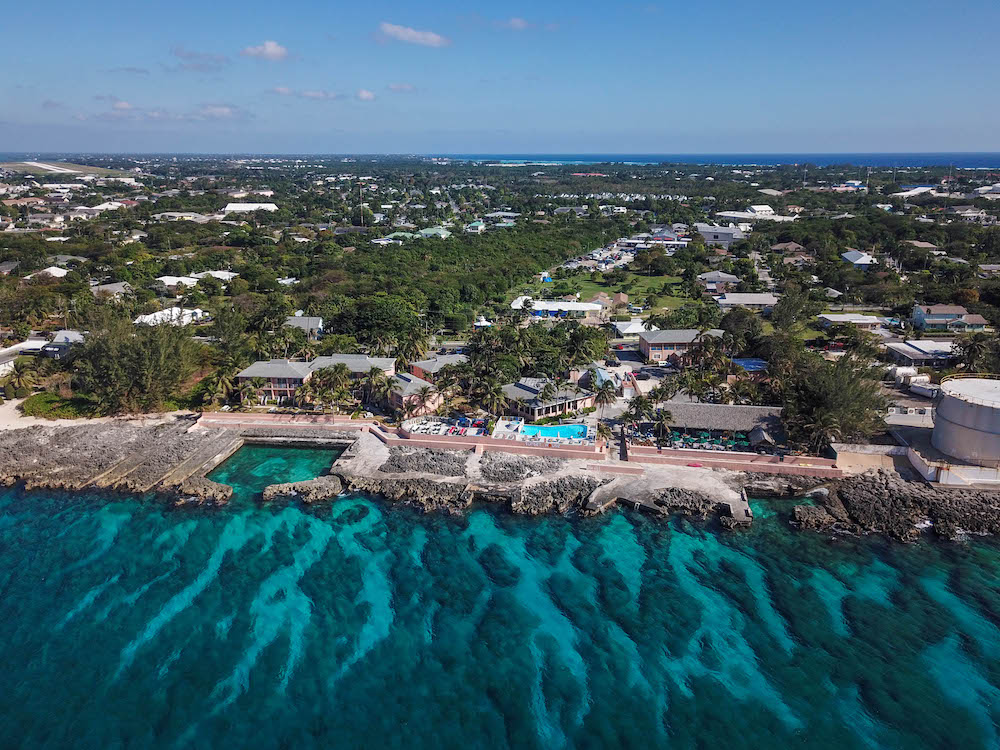
Accordingly, some Grand Cayman dive operators and resorts offer unlimited shore diving packages. Steps or ladders are built directly into the rocky shore to facilitate access to dive sites. You can often find dive shops just steps from reefs. Some shops also have adjacent restaurants where you can relax after a day of diving.
Many Grand Cayman shore dive sites offer a mix of shipwrecks, coral reefs, caves and tunnels. You can even find life in the sandy areas — look out for nudibranchs and flounders!
Shore Diving in Bonaire
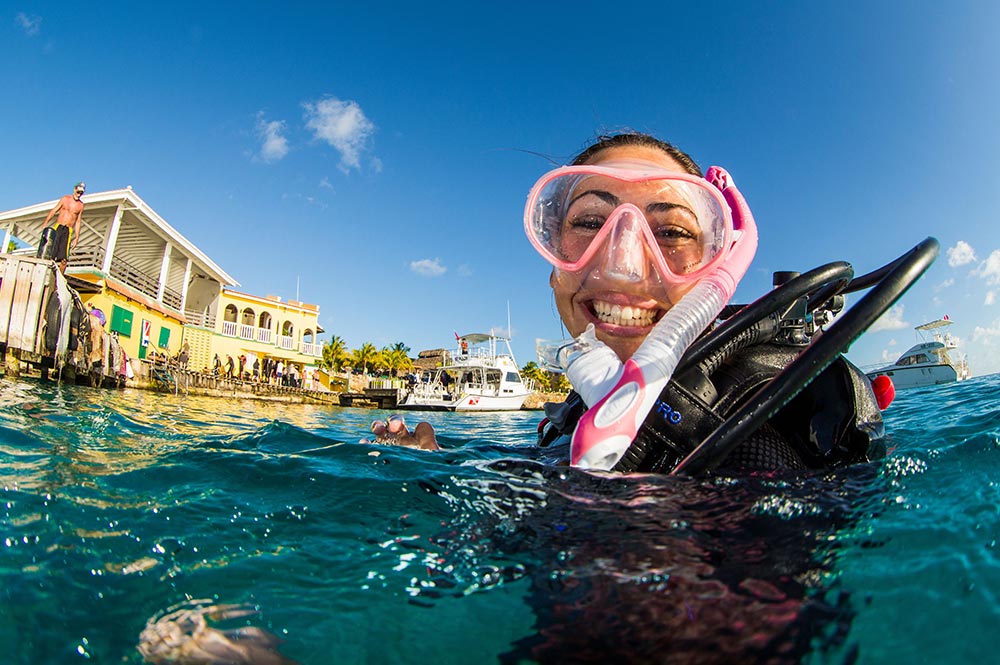
It’s impossible to produce an article about shore diving in the Caribbean without mentioning Bonaire. This little island is known as the “shore diving capital of the world.” In fact, a national marine park borders the entire shore of this inviting destination. Yellow rocks mark 60 shore dives, showing visitors where they can park and (most of the time) easily enter the water.
Divers of every level will find Bonaire a shore diving haven. There are calm waters, minimal currents and abundant marine life just 30 meters (100 feet) from the shore. Accordingly, familiarize yourself with Marine Park regulations to ensure that these exceptional diving opportunities remain available for others.
Shore Diving in Aruba
Although best known for the incredible wreck diving on offer, Aruba has some stunning shore dives (which also include accessible wrecks). Take a step off the beach and enter Aruba’s crystal clear waters to explore bountiful seagrass beds and coral reefs teeming with life.
Aruba has something to offer for all levels of divers. There are calm, protected bays for beginners, as well as deeper wrecks and drifts for more experienced divers. Marine life highlights here include the chance to see hammerhead sharks, hawksbill turtles and loggerhead turtles.
The high season for diving in Aruba is between April and November, which coincides with Aruba’s driest months.
Shore Diving in Saint Lucia
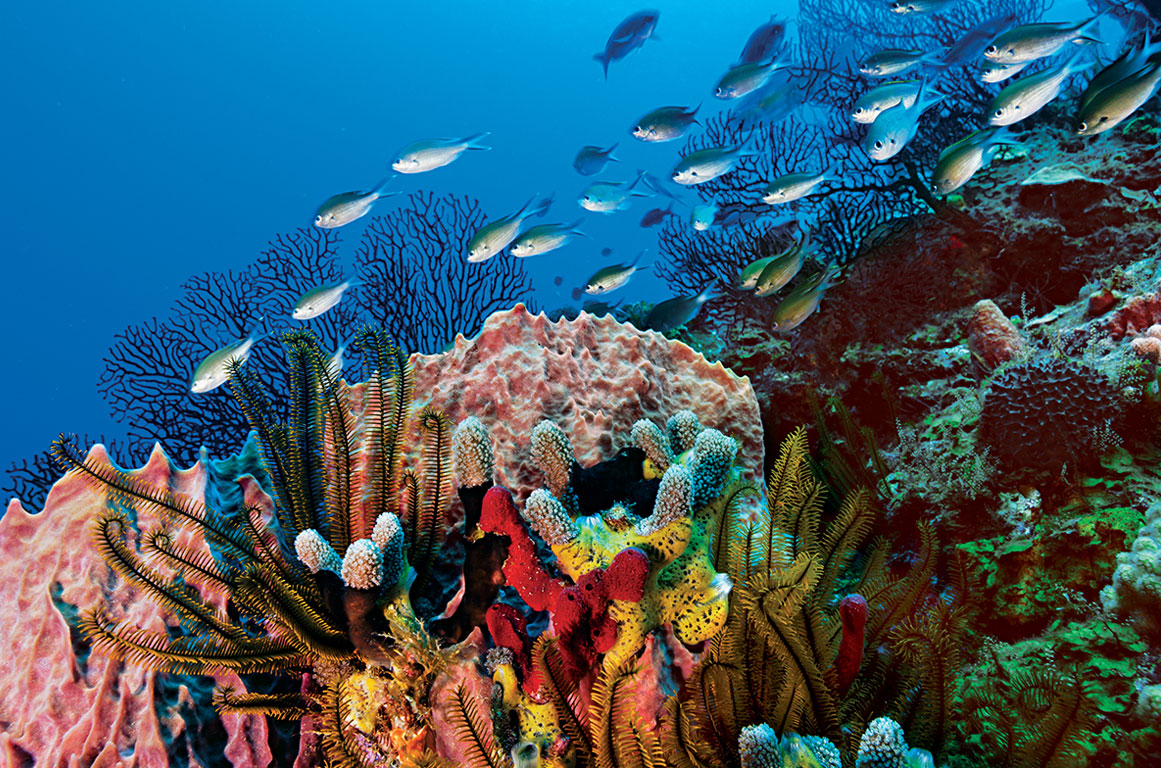
The beautiful, lush green island of Saint Lucia boasts incredible scenery and topography both on land and beneath the surface. Saint Lucia’s kaleidoscopic coral reefs include staggering walls, drop offs and adrenaline-pumping drift diving for more experienced divers.
As well as the chance to see schooling fish and larger pelagics, Saint Lucia’s dive sites are a treasure trove of critters. The dive site known as “Anse Chastanet” is just a step off the beach. There, divers can expect to see an array of macro marine life, including seahorses, frogfish and lionfish. Look out for moray eels among the corals.
Shore Diving in Antigua
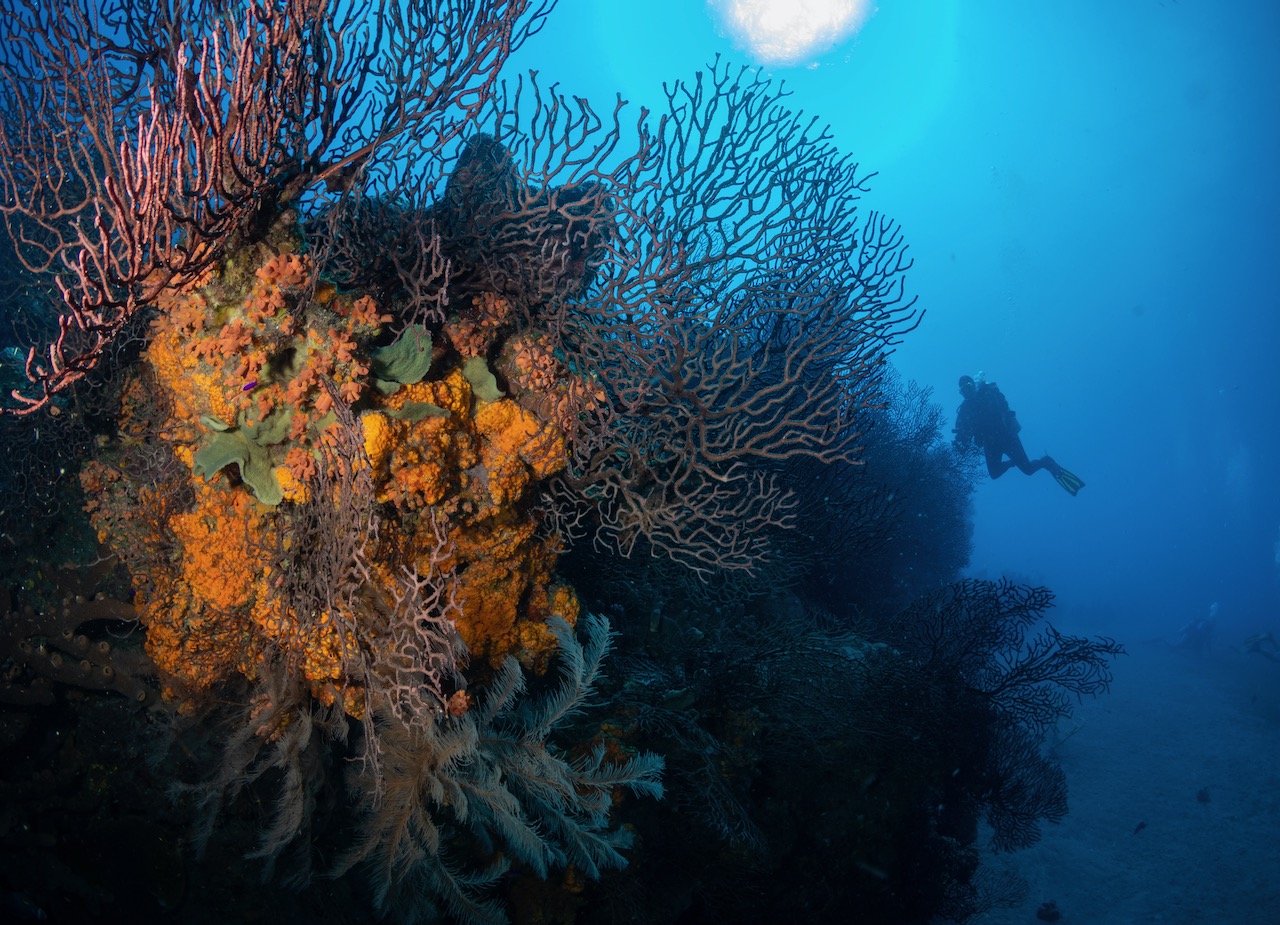
Shore diving in Antigua offers something for divers of all levels. You’ll find that Antigua’s warm Caribbean waters provide excellent visibility and a mix of vibrant hard and soft corals. Dive sites range from slopes and sandy bottoms to drop-offs and canyons.
Marine life in Antigua is diverse, and some common sightings include reef octopus, stingrays, lionfish, nudibranchs, Caribbean spiny lobsters, green moray eels and Atlantic blue tang. One of the major highlights of shore diving in Antigua is the chance to see nurse sharks resting underneath overhangs. Night shore dives in Antigua also offer a unique experience, allowing divers to encounter a plethora of nocturnal marine species emerging after the sun has set.
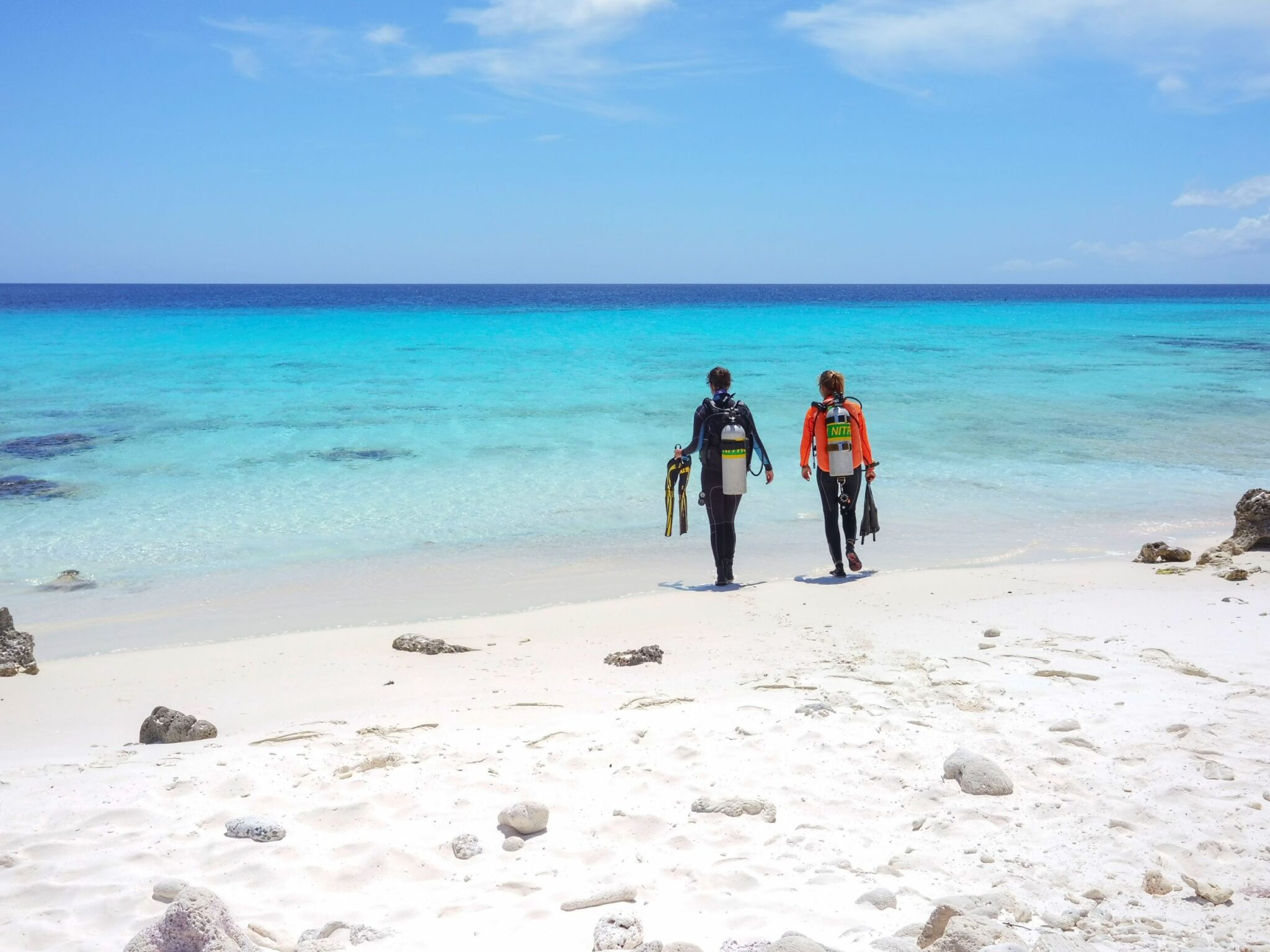
Best Practices for Shore Diving
Shore diving offers freedom and accessibility. However, it is important to note that this type of diving still comes with the usual safety precautions.
All the usual diving rules apply when shore diving. Always dive with a buddy. Additionally, inform someone on land about when you expect to be back and where you are going. Make sure you receive an orientation to the area from a local dive professional before entering the water on your own.
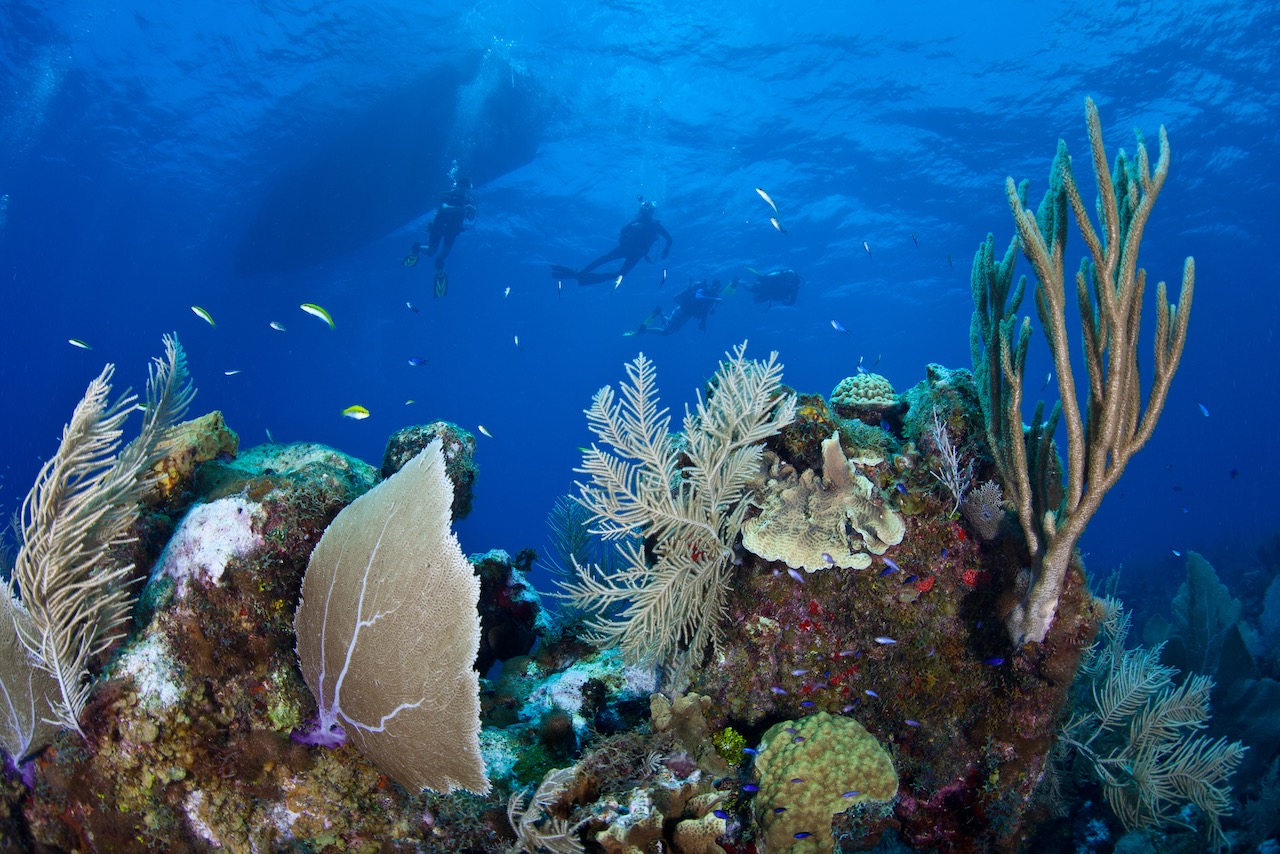
Tips for Diving in the Caribbean
If you are planning a dive trip to the Caribbean, here are a few tips for your preparation and for during your stay:
- Even though you might be shore diving, make sure you are supported by a reputable operator. Not only will this ensure you have a knowledgeable guide and onshore support (tanks, weights, gear rental if needed etc), but if you decide to opt for some boat dives, you can easily sign up for additional dives.
- Make time for night diving. There are some impressive nocturnal species to be found in the Caribbean, and you don’t want to miss out!
- Get your gear serviced before you leave home. Gear servicing and spare parts can be pricey in the Caribbean. As a minimum, get your regulator serviced at home and pack a spares kit with O-rings and a membrane.
- Don’t “self-guide” at sites you don’t know. Diving with a local guide not only increases safety but will also enhance your overall experience and optimize marine life sightings.
- If you have your own gear, and your flight baggage allowance is enough, take your own gear. When diving in your own gear, you’ll be more comfortable, plus you’ll save on gear rental costs — meaning more available funds for more dives!
- Ask your chosen operator about any conservation initiatives you can take part in during your trip. Activities may include beach or underwater cleanups, mooring buoy projects, or even citizen science projects.
Ready To Shore Dive in?
Whichever Caribbean destination you choose to explore from the shore, be sure to enjoy it, follow safety practices and protect the marine life. Click below to find a dive resort in your chosen Caribbean location, or, for more help planning your trip, get in touch with the experts at PADI Travel via phone or email.