
Our scuba gear helps keep us safe and comfortable as we explore the underwater world. However, even with the best care possible, sun, salt and sand eventually take their toll – and that’s why basic equipment checks are essential for every diver.
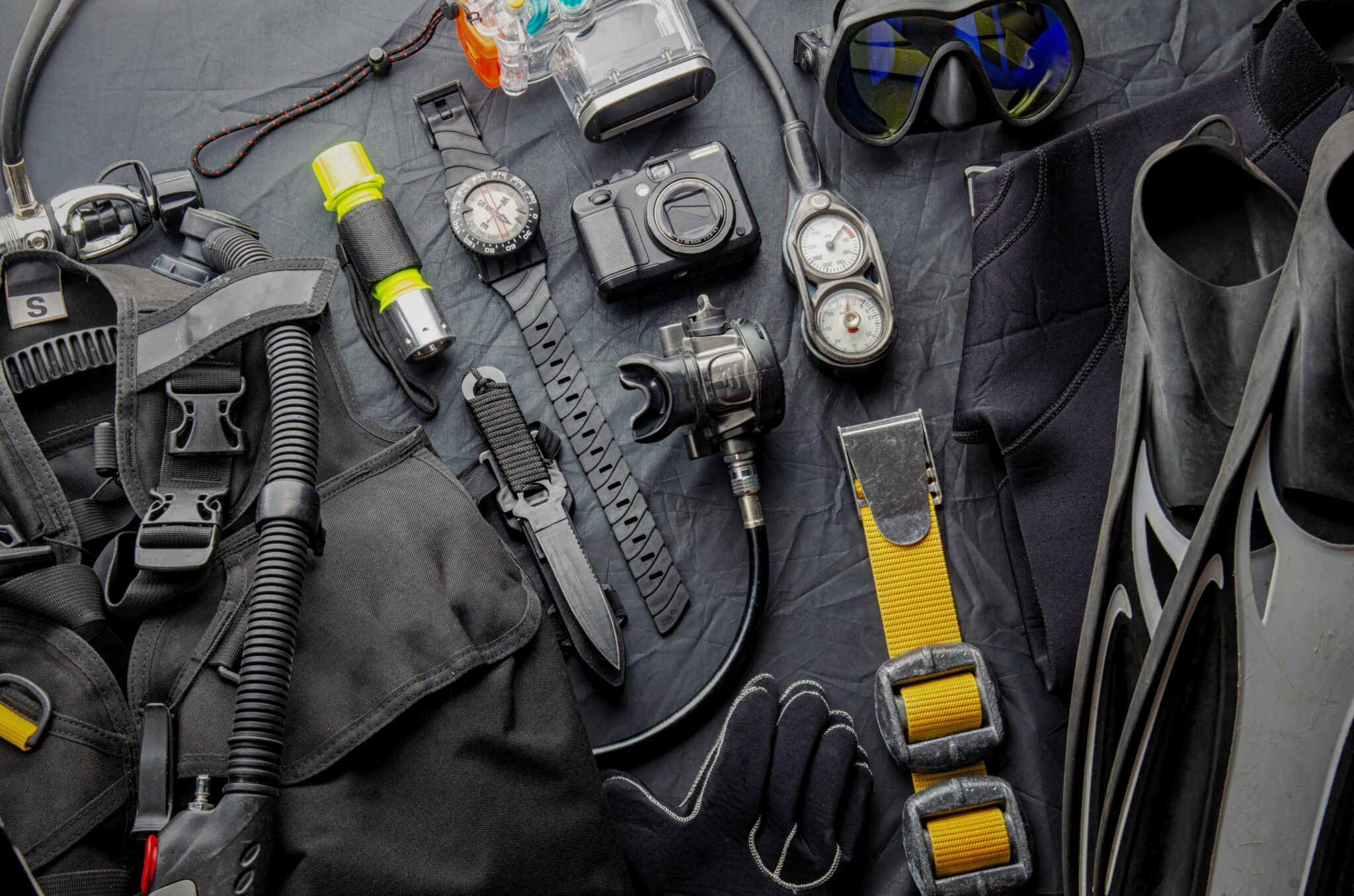
We’re not just talking about your scuba cylinder/tank, buoyancy control device (BCD) and regulator. You’ll want to inspect everything from your mask, fins and snorkel to dive lights, knives, cameras and even clips!
In this blog, we’ll answer questions such as:
- What equipment should be checked before a scuba dive?
- How often should scuba gear be inspected?
- What scuba gear needs to be serviced?
- How do you check a scuba regulator before diving?
Keep reading for some basic equipment checks that can help your gear last longer and reduce the chance of missed dives (or worse, equipment-related incidents).
Basic Equipment Checks Before Your Dive Trip
Whether you’re getting ready for a new dive season or a once-in-a-lifetime scuba vacation, it’s worth taking time to check all your equipment at least a few weeks before you go anywhere near the water.
Although you can fix many simple issues from the beach or boat with a good save-a-dive kit, others might need servicing, new parts or repairs. This is particularly important to keep in mind during peak seasons, when dive shops and technicians may have longer waiting lists.
So, you’ve pulled your dive bag out of storage, dusted off your fins and made sure your wetsuit still fits. What’s next?
Check Service Dates
Some scuba equipment needs professional servicing, even if it seems to work fine. This is typically done every one or two years or after a set number of dives. If you’re not sure, look up the manufacturer’s recommendations or ask your local dive shop.
Because they contain high-pressure gas, scuba cylinders/tanks must be tested; otherwise, dive shops won’t fill them. Furthermore, tanks used for enriched air (Nitrox) may need O2 cleaning. Regulators, BCDs and dive computers should also be serviced by an authorized technician who will inspect, replace and clean parts as needed.
Do keep a note of your scuba equipment maintenance schedule so you don’t get caught out. That said, if something seems wrong with your gear, don’t wait until the next service date before getting it checked out!
Inspect for Wear and Tear
Many scuba gear failures start as small signs of wear. In particular, check any equipment made of silicon, latex, rubber, plastic or webbing for splits, stiffness, corrosion or other signs of deterioration.
This includes:
- Regulator hoses and mouthpieces
- Drysuit neck and wrist seals
- Your BCD’s corrugated hose
- Mask skirts and straps
- Fin straps
- Dive computer straps and screens
- Knives (including straps, sheaths and blades)
- Clips and buckles
If you spot anything that looks worn or damaged, it’s time to repair or replace it.
Check Batteries and Electronics
Some dive computers need specialist battery replacements, so don’t wait until they beep “low battery.” A blank screen on the surface might be inconvenient and mean a missed dive or two, but underwater it’s far more troublesome.
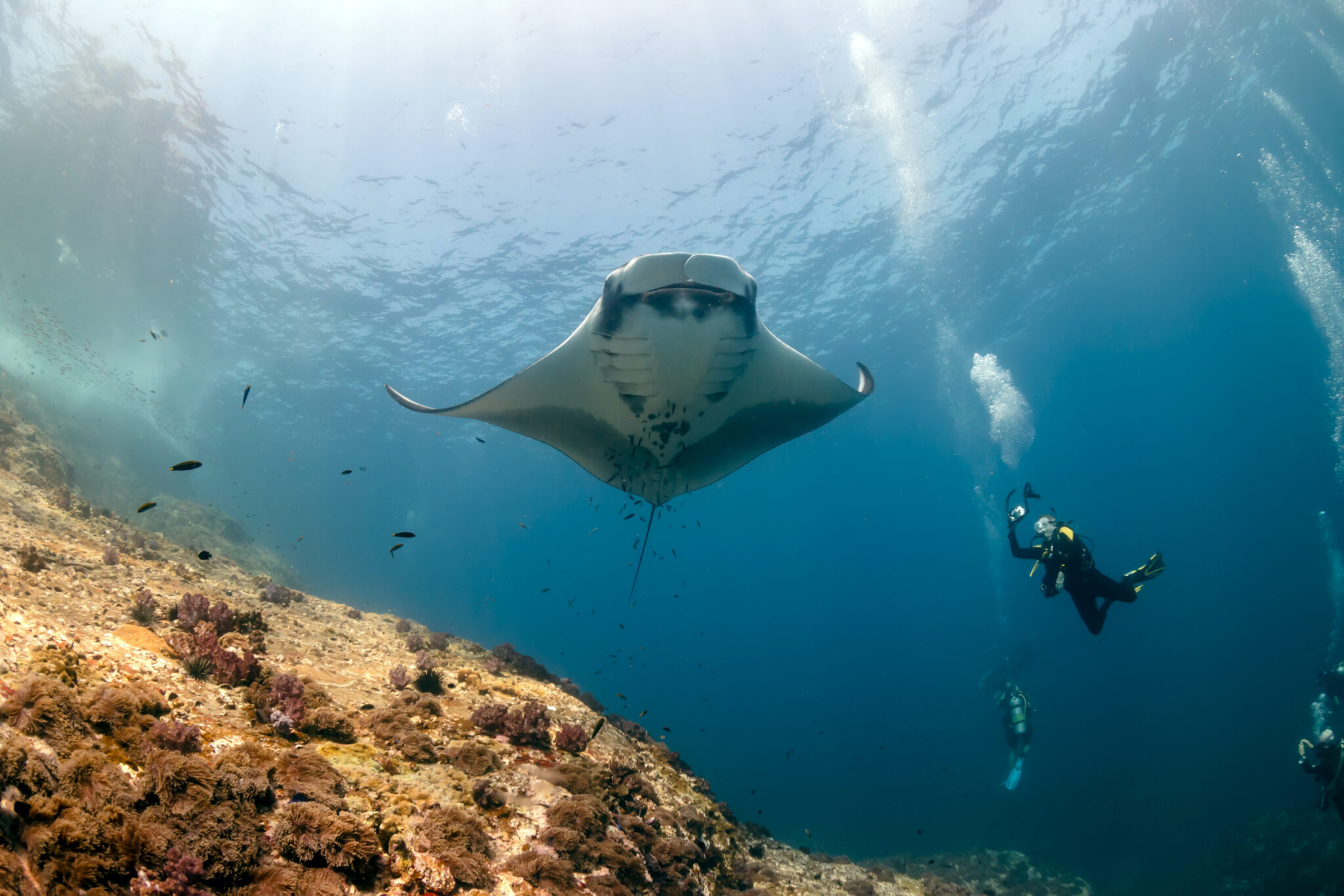
Similarly, charge your dive lights, cameras and other electronics, then switch them on and press all the buttons to make sure everything works correctly. Lubricating the seals on underwater camera housings will help keep them waterproof. Finally, clear enough space on your memory cards – no one wants to see “Card Full” when those beautiful mantas glide past!
Test Your Gear for Leaks
Inflate your BCD and any (delayed) surface marker buoys, then leave them for a few hours. If they deflate, you might have a leak. If you use a drysuit, make sure there’s no wear or damage, especially on the seals and zippers.
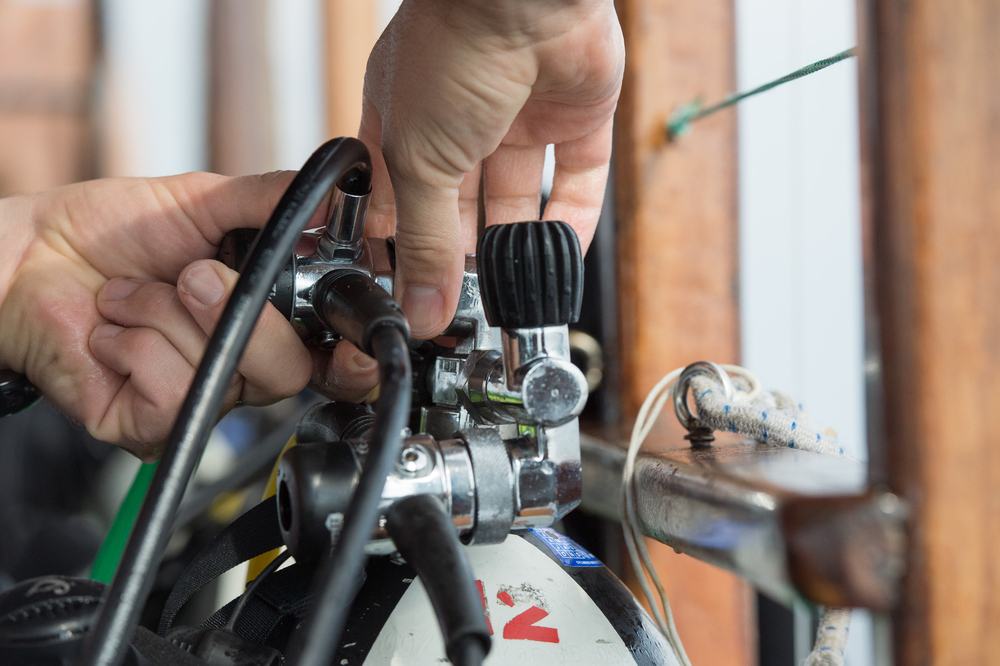
Next, check that your scuba cylinder/tank o-rings are in good condition before assembling your gear. Then, listen for leaks and take a few breaths from your regulator while watching your SPG for any fluctuations. These are the same basic equipment checks you do before your dives – just with more time to fix any issues.
Check Connections and Moving Parts
Anything that pulls or moves should work smoothly and without force, and check that your connectors are secure but not sticky. This includes:
- Drysuit and wetsuit zippers
- BCD inflator hoses
- Regulator hoses
- Dust caps
- Dump/pull valves
- Reels and spools
Don’t forget to inspect clips and fasteners that hold other gear, such as weight belts, cameras, knives or torches. Loose equipment can damage marine environments or disappear altogether!

Basic Equipment Checks on Dive Day
After completing your scuba equipment checks ahead of your dive trip, you’ll also want to add a few more on the morning of your dive.
First, confirm your scuba tank contains enough gas for the planned dive, and analyze your mix if you are using enriched air (Nitrox). This is a good time to double-check your dive computer battery, adjust any settings and pair integrated air transmitters.
Next, give everything a final once-over for signs of wear or damage and make sure everything’s still secure and fully charged. Then you’ll be ready to assemble your full scuba kit and run through your usual predive gear checks.
Finally, always remember your buddy check. The BWRAF checklist – BCD, Weights, Releases, Air and Final Okay – is one of the best ways to catch any potential issues before you jump into the water.
Basic Equipment Checks After Diving
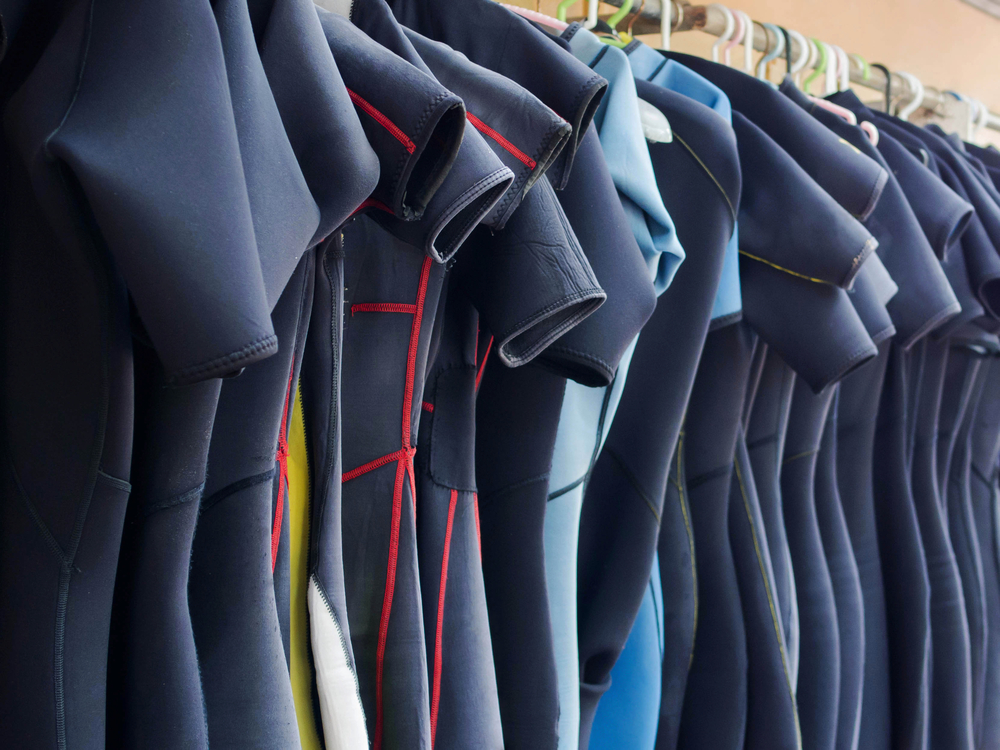
Scuba diving equipment checks don’t stop when your dive is over. Sun, salt, sand and moisture all have the potential to destroy your dive gear, so it’s important to store it properly. For example:
- Rinse your equipment with fresh water
- Dry it completely before packing it away
- Replace dust caps
- Avoid bending hoses too sharply
- Store drysuits and wetsuits according to their instructions
- Don’t store cylinders empty (keeping some pressure inside helps keep moisture out)
Before you forget, now is also a good time to note down any items you’ll need to adjust, replace, repair or service to prevent last-minute surprises before your next adventure.
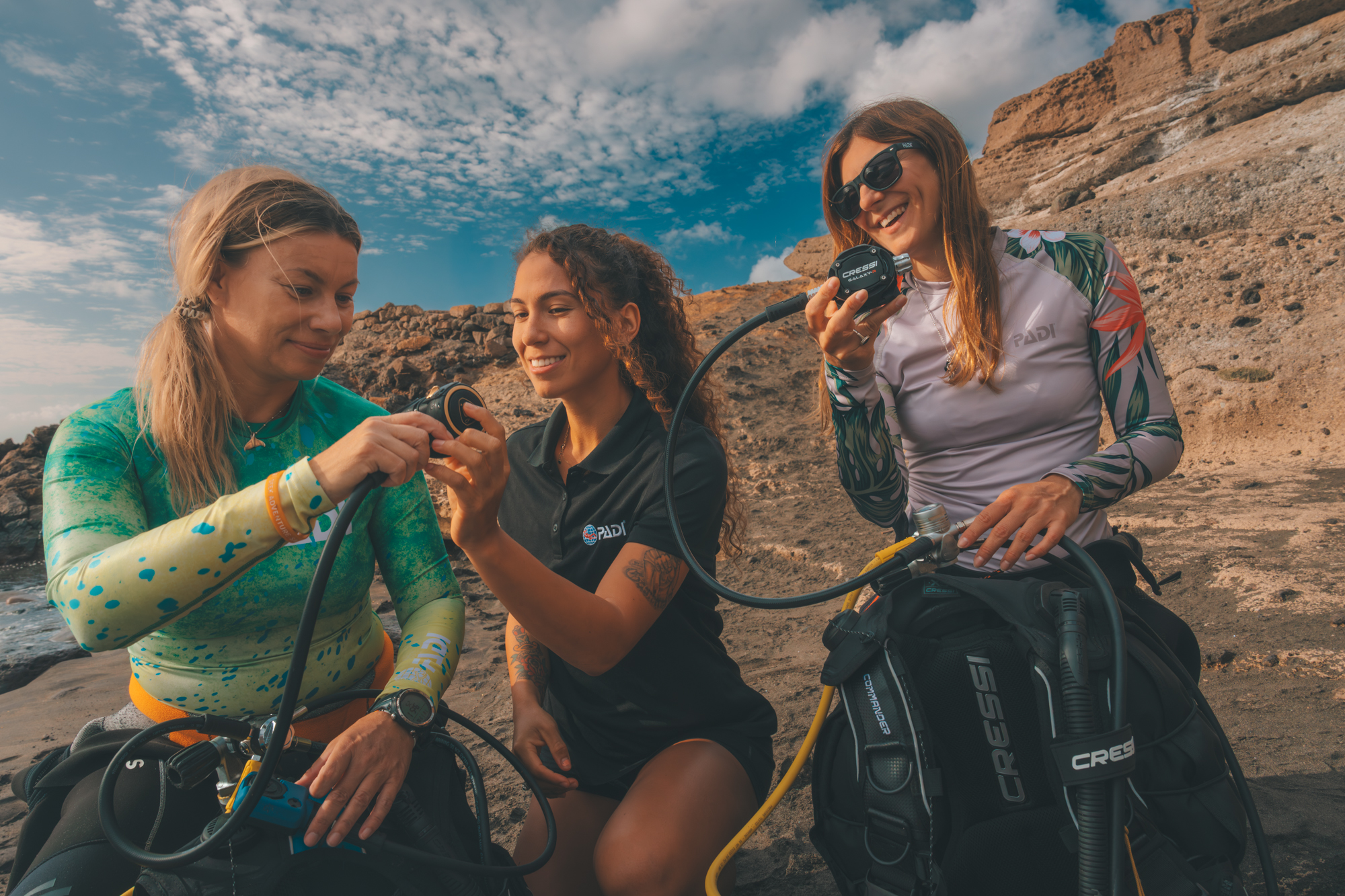
Learn More With Equipment Specialist
If these basic equipment checks uncover any issues, your local PADI dive shop can help with servicing, repairs and replacements.
All the same, if you’d like a deeper understanding of how your gear works, the PADI Equipment Specialist course offers practical knowledge about dive equipment care and maintenance, how to make simple adjustments and troubleshooting common problems. You’ll become more confident, self-sufficient and prepared, leaving you free to do what you want to do: enjoy every dive.