
Cristina Zenato exemplifies the spirit of diving with purpose, turning a childhood dream into a career as a shark expert, cave explorer and PADI Course Director. Based in Grand Bahama, Cristina has dedicated her career to teaching divers, exploring the underwater world and advocating for shark and ocean conservation.
Her contributions to diving have earned her memberships in the Women Divers Hall of Fame, Explorers Club and Ocean Artists Society. She has also developed the PADI Caribbean Reef Shark Awareness Distinctive Specialty course and helped lead efforts that resulted in full protection for shark species in the Bahamas.
From connecting a land cave with an ocean blue hole to spending decades studying and diving with sharks, Cristina has built a career around curiosity, exploration and conservation. As a mentor to fellow divers, she has also long championed women in the diving industry. We caught up with her to learn more about her journey, the lessons she has learned from sharks and what continues to inspire her.
Q: What originally got you into diving and teaching others about scuba and sharks? How did getting your PADI certification impact your life and career?
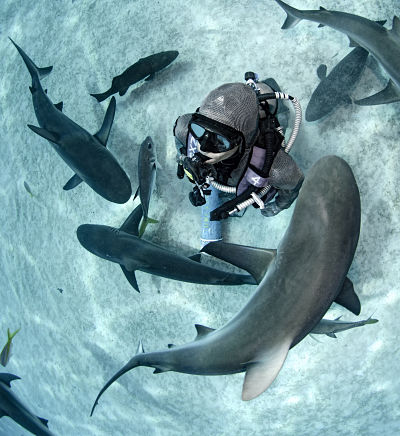
My love of the ocean originated with my family. I grew up with a mask, snorkel and fins and enjoyed endless hours in the water during my childhood. My childhood dream was to become an underwater scuba ranger. In my mind, I would become the guardian of the ocean who could stay in the water all day, which at the time my mom didn’t allow me to do, and roam free through the reef, showing people special places and ensuring that they took care of the environment. In my fantasy world, sharks and eels were my friends. I never thought that my childhood dreams would come true.
Later, I studied languages and tourism and had the opportunity to travel to the Bahamas to take my first scuba course. I became a PADI Open Water Diver and never left, using my language skills to find a job that allowed me to dive every day. In just a year, I became a PADI Open Water Scuba Instructor and changed my career path. PADI has been instrumental and supportive in my scuba and teaching career. Teaching is my passion, especially when it involves scuba diving, sharks, caves and conservation.
Q: You’ve inspired many divers throughout your career. Is there anyone who has inspired you?
There are so many people who have inspired and guided me, but the special and first one is my dad, with his passion for the oceans and for diving as well as his lack of fear dictated by knowledge and understanding. I followed his footsteps and then created my own. Along the way, there was also the beautiful inspiration of Ben Rose and Dr. Eugene Clark.
Q: When you first began working with sharks, did you ever think you would be doing the work you do now?
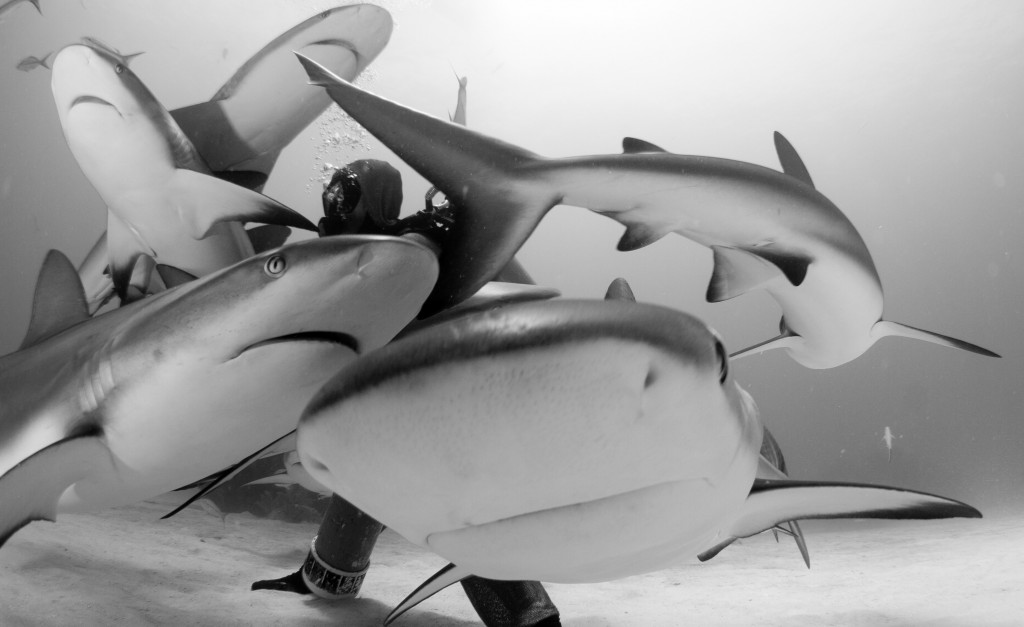
At the time of my first shark dive, I had decided to give up everything to come back to this island and live here for at least a year. I told myself, just one year, it won’t affect my future. I never thought I would be here so many years later, and for sure I never thought I would have the incredible opportunity to be in the water with sharks every day, to teach about them, to protect them and to share their beauty, nature and need to be protected. This has become my childhood dream come true.
Q: Among other accomplishments, you were the first woman to connect a land cave with an ocean blue hole. Can you tell us a little bit about that experience and discovery?
I call it the “connection that didn’t exist.” I was volunteering my time mapping a well-known and vital system on the island, Ben’s cave system in the Lucayan National Park, in order to expand the boundaries of the park and to protect the land over the cave from development. One of the most amazing aspects of the Bahamas is that we have this flat land with no mountains, rivers, lakes or glaciers and yet possess some of the cleanest and freshest water in the world. The caves are the key to this immense fortune, this “Bahamian Gold” as I call it.
I set out to explore and map a cave called Mermaid Pond, in the west side of the island, fed by a water table coming from the industrial area. In line with this cave, 500 feet (150 meters) away on the beach, there was another cave entrance, what the locals call Blue Hole or Chimney. Many others had tried but determined that the caves did not connect.
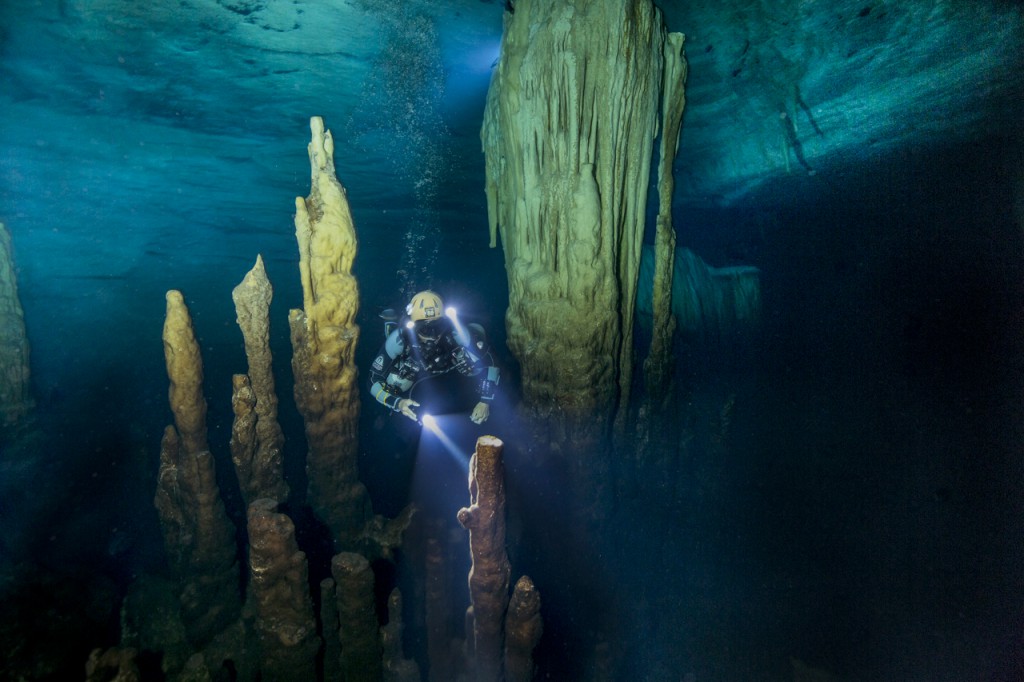
The caves spoke differently to me. The way the water and the sediments moved told me a different story, so I started investigating it. After numerous setbacks and challenges, I found a squeeze-through passage near what looked like a flat wall with more cave behind it. I returned on 31 December, 2012 with a former student, and we successfully swam together from the ocean hole to the land hole and back. In total, it took three hours and 4,026 feet (1,227 meters) to traverse!
There is a special feeling about being where nobody else has ever been before. It is a sense of anticipation and discovery. It allows you to think outside the boundaries and investigate. There is beauty, peace and wonder. I explore a lot. In the Bahamas, I have this wonderful opportunity to roam uncharted territories, but this experience will forever be with me. It is a cave that many others gave up on, which made it even more special for me when I was finally able to see the light at the end of the tunnel.
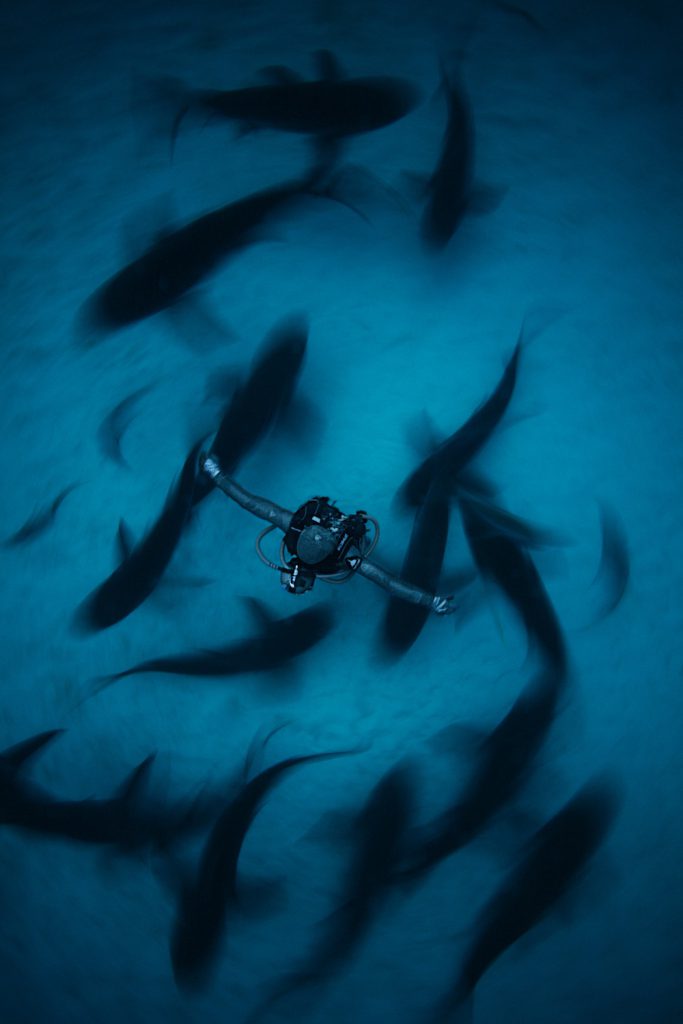
Q: Over your career, you’ve likely encountered thousands of different sharks and had a front-row seat to really study their behavior. What have you learned that people might not know or appreciate about sharks?
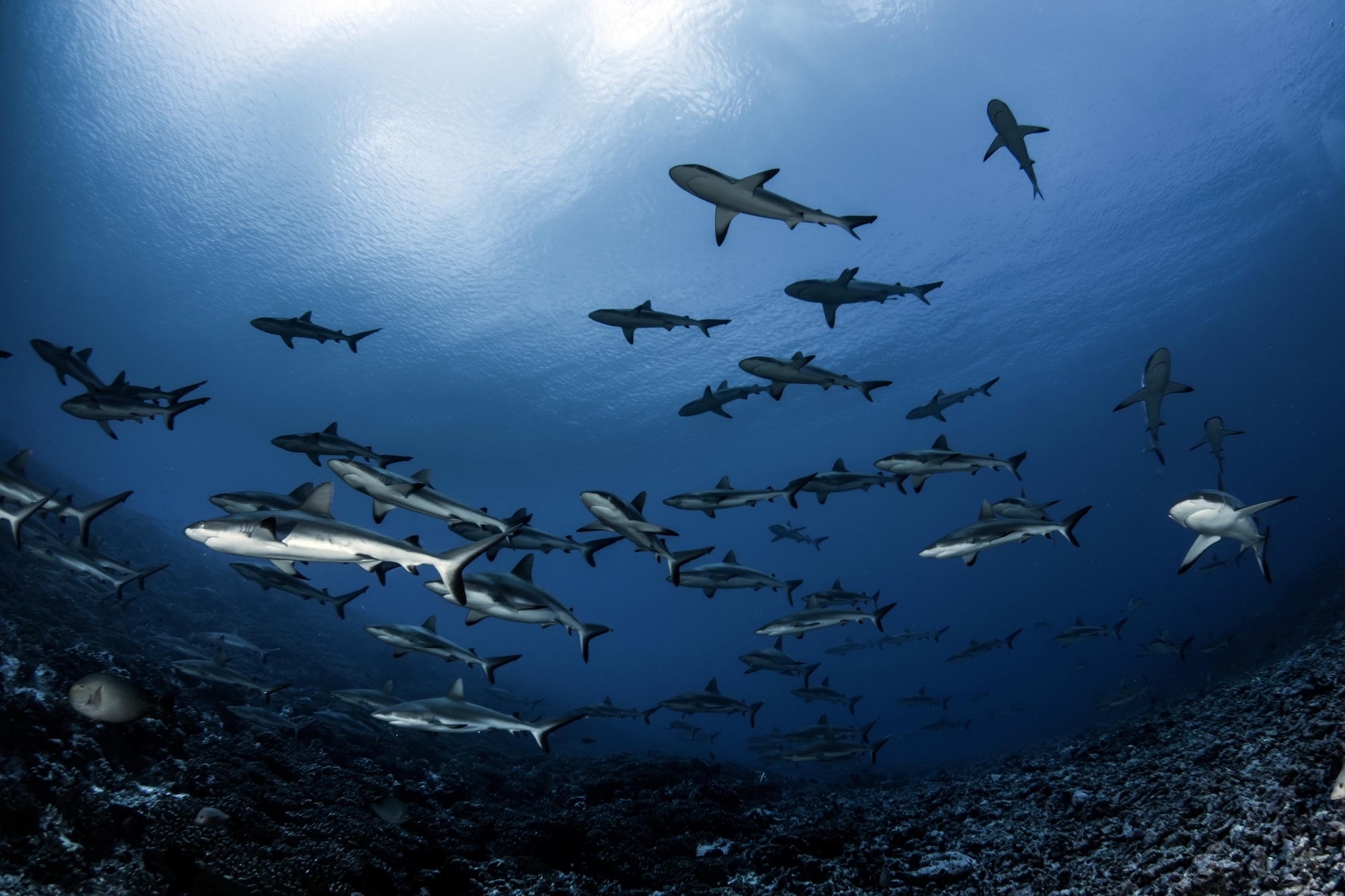
Sharks have amazing and unique personalities. Each is different with its own preferences, fears and habits. In addition, they have a level of communication among themselves that we do not yet fully understand. Based on their behavior, I do believe they recognize and associate things and transfer learnings among themselves. I also think that sharks are incredibly shy and vulnerable creatures – traits which we don’t normally associate with sharks
I find there is a general difference between the way women and men approach diving, specifically with sharks. I find women more cautious towards the sport and sharks in particular; however, they are willing to try and discover more. Through the specialized shark course I teach, I welcome a unique kind of clientele. Women taking this course are, in general, more in tune with the animals. They come in with a desire to learn, connect and discover. They are less task-oriented and more experience-based and usually come out of the course with a renewed love and understanding for the animals.
Q: What advice would you give other women who are interested in diving and diving with sharks?
I always recommend becoming a comfortable, certified diver, access [sharks’] world and spend more time seeing and understanding them without having to worry about diving skills. Buoyancy, awareness, knowledge and understanding can help improve the experience of diving with sharks.
Q: Can you discuss your KORU project, started with friend and fellow Women Divers Hall of Fame member Amanda Cotton? How did this come about and what do you hope it communicates to the world?
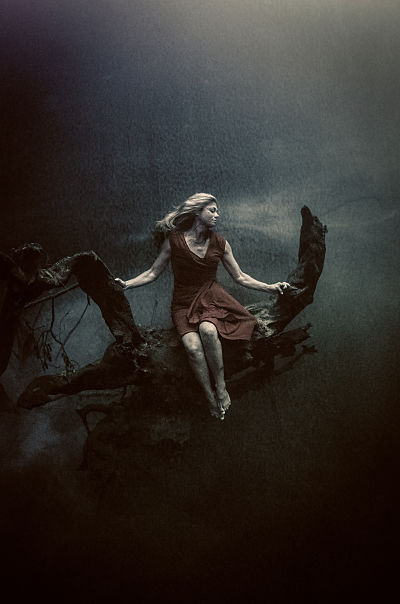
It all started with Amanda taking pictures of me diving with my babies (sharks) and in caves on Grand Bahama. We quickly realized there was more to the story than just the relationship between the photographer and the diver. That was one layer of our story, but we wanted to share more and peel off the layers people could not see or could not understand. We wanted to showcase our emotional connection, as women of water, and to emphasize the feminine spirit and the connection with water that all women have, plus the need to protect and nurture both.
During this journey I talked about my story, my emotions, my great moments, my terrible moments and Amanda captured them through her lens. We wanted the images to speak and yet leave space for others to hear their own voices. In the end we wanted people, not only women, to connect with the feminine spirit and the preciousness of water and the fact that protecting both is a fundamental link to life.
Q: What message do you hope young women take away when they see your work and connection with sharks?
Follow your heart – it really knows the way. People around you will try to say that it may not be possible, or it may not be real, or even more that it may not be a responsible way to live your life, but remember if you wake up in the morning happy to do what you are about to do, you have found the right way.
Q: What advice would you give to women who want to become professionals in scuba diving?
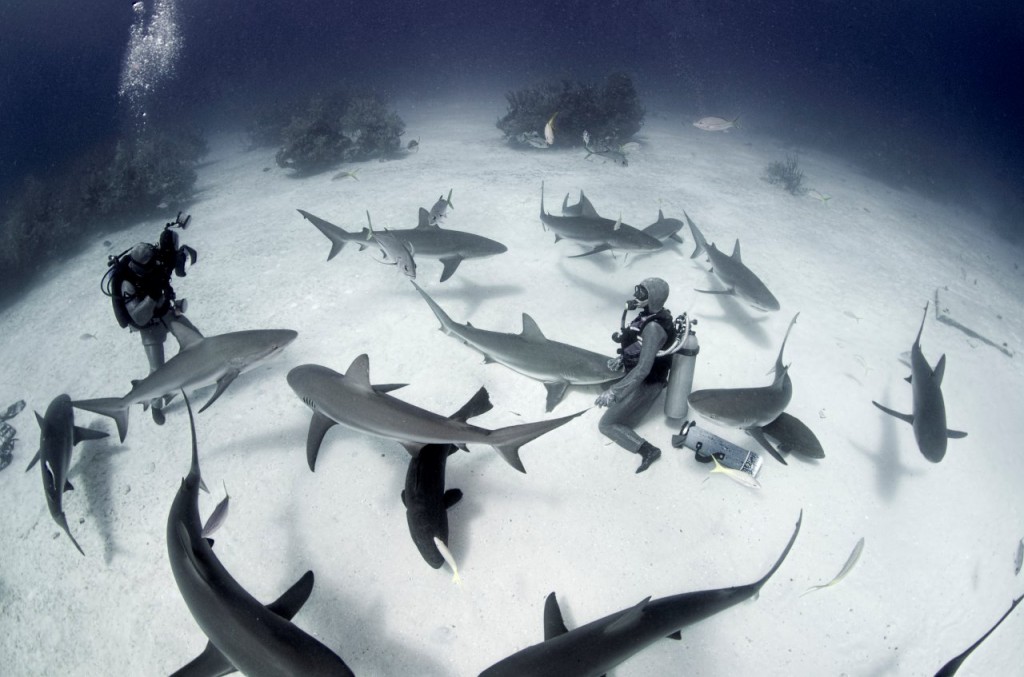
To the women who want to become professionals in scuba diving I can only say, “Do it.” There are many forms of professional expression in scuba diving to choose from – recreational, technical, commercial, medical, military, artistic, conservation, etc. My first recommendation is to follow your heart and your passion, and my second is to acquire knowledge and experience. Continue to grow as a diver and traveler and share it with others, and don’t listen to those who say, “You can’t do that”.
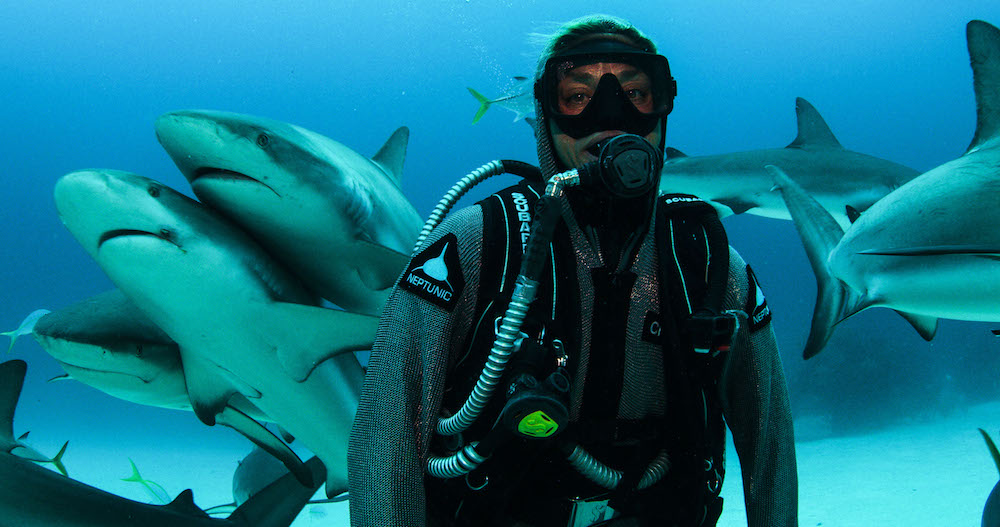
Q: What is the most interesting thing you have learned from your work with sharks?
I have learned many lessons from working with sharks, but the most important one is to not stereotype. When we say sharks, we always think of a few species and a few behaviors, and we forget that there are over 500 species of them in the ocean. Each shark is different, each behavior is different and saying sharks is like saying birds and does not define what they are and how they behave.
To learn more about Cristina Zenato and her work, visit CristinaZenato.com.
Inspired by Cristina’s Story?
Discover how scuba diving can open the door to new adventures, underwater encounters and a deeper connection with the ocean for yourself.
Explore PADI courses and find the right certification for you.
This guest blog was originally written by PADI AmbassaDiver Jillian Morris.