Shipwreck diving connects people to human history in a way few other experiences can. From vessels lost in storms to wartime cargo ships, wrecks offer a glimpse into the past while creating unique dive sites to explore. While some famous wrecks, like SMS Markgraf in Scotland’s Scapa Flow, require technical diving certifications, many are accessible to recreational divers.
If shipwreck history intrigues you, these sites and stories may inspire your next dive trip.
SS Thistlegorm: Red Sea, Egypt
Required Certification: Advanced Open Water Diver
Best Time to Visit: March to May and September to November
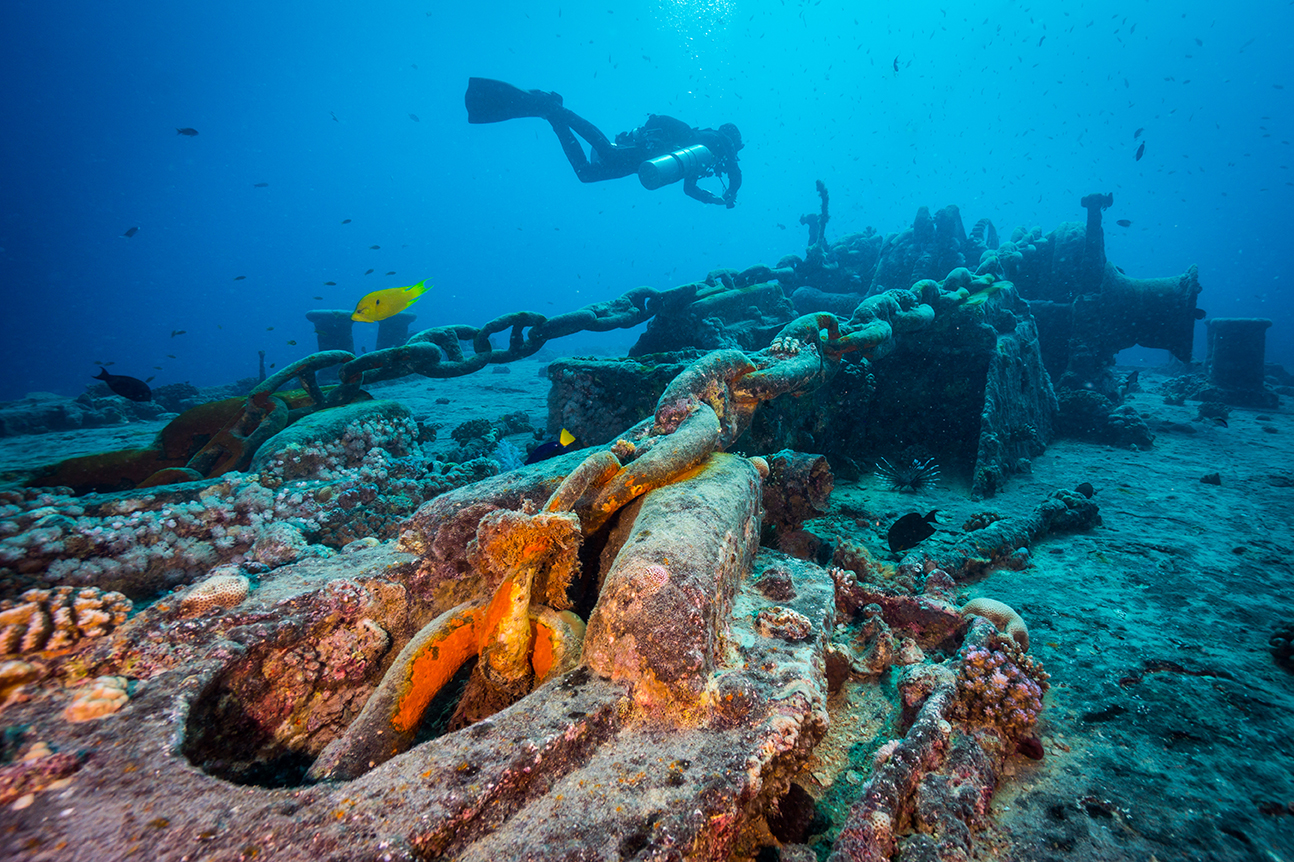
The 415-foot (126-meter) SS Thistlegorm completed only three journeys during its short service, with the fourth becoming its final voyage. On June 2, 1941, the British cargo steamship departed Glasgow carrying ammunition, Bren guns, armored vehicles and other supplies for Allied forces stationed in North Africa during World War II.
The Thistlegorm traveled as part of a 16-ship convoy around South Africa and into the Red Sea. However, a temporary blockage in the Suez Canal prevented the ship from progressing. As a result, the vessel was forced to anchor while awaiting passage.
On October 6, German bombers returning from a failed mission to locate Allied naval vessels discovered the anchored Thistlegorm. Bombs struck the vessel and ignited the ammunition stores in the cargo hold. This resulted in a massive explosion that sank the vessel.
In the 1950s, French ocean explorer Jacques Cousteau located and documented the wreck site, briefly bringing it into the spotlight. The wreck later fell out of attention until recreational divers rediscovered it in the 1990s, making it a popular dive site for visitors based in Sharm el-Sheikh.
Today, the Thistlegorm is considered one of the world’s best wreck dive sites, attracting divers from around the globe. Divers can explore it on day trips from nearby resorts or as part of Red Sea liveaboard itineraries, swimming through cargo holds still filled with motorcycles, trucks and other wartime supplies.
USAT Liberty: Bali, Indonesia
Required Certification: No certification (Discover dives possible)
Best Time to Visit: April to November
Unlike the short career of the Thistlegorm, the shipwreck history of the USAT Liberty is long and storied. It begins in Philadelphia in 1918 and ends on the shores of Bali, Indonesia many years later. The vessel transported supplies between the United States and France during World War I and went on to serve through both World Wars.
After the war, the ship operated as a regular cargo vessel until it returned to military service during World War II, carrying goods across the Pacific.
On January 11, 1942, while en route from Australia to the Philippines, a Japanese submarine torpedoed the 400-foot (121-meter) ship near the Lombok Strait. In an attempt to salvage the cargo on board, the ship was pulled ashore at Tulamben in northern Bali. It remained partially stranded for the next 21 years.
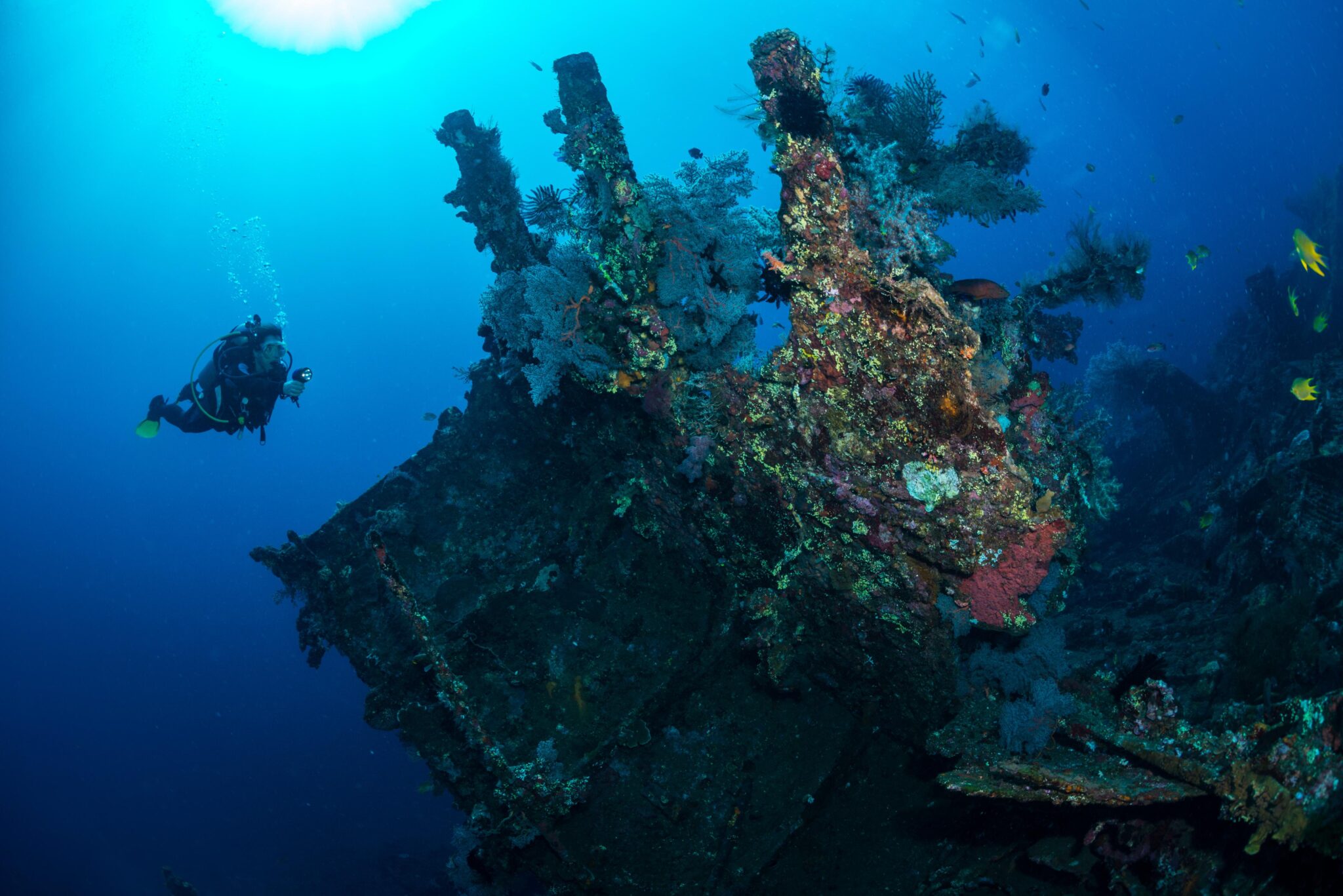
In 1963, the eruption of Mount Agung in Tulamben triggered tremors that slid the USAT Liberty off the beach and onto a sand slope underwater. This is where the wreck now rests, at depths ranging from 25 to 100 feet (7.6 to 30.5 meters).
The USAT Liberty’s fascinating history and its accessible location make it one of the most famous shipwreck dive sites in the world. New divers can even complete their PADI Open Water Diver certification while diving at the USAT Liberty dive site.
SS Antilla: Aruba
Required Certification: Open Water Diver
Best Time to Visit: May to August
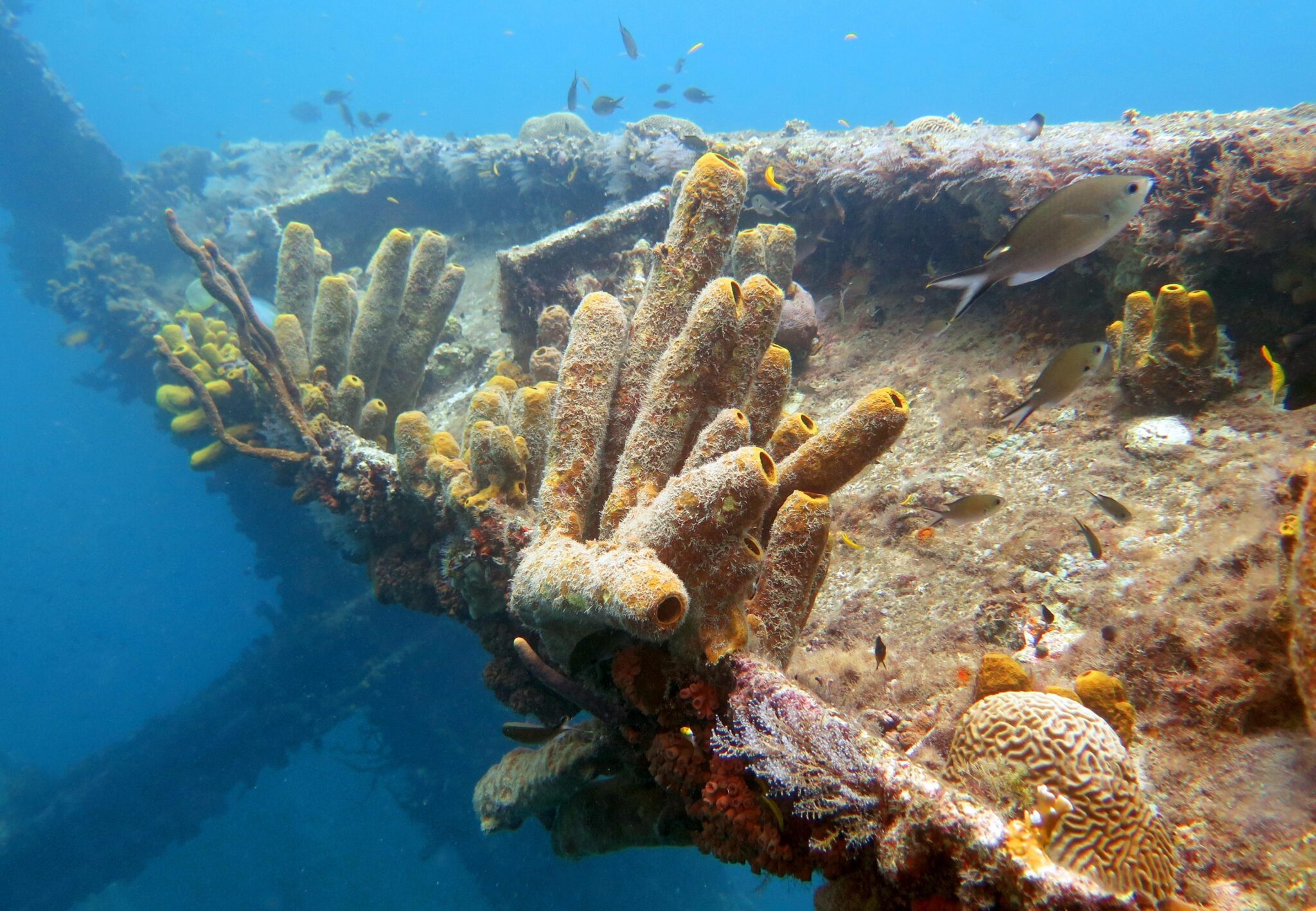
The Antilla shipwreck dive in Aruba is the largest wreck dive in the Caribbean accessible to snorkelers, freedivers and scuba divers. The shipwreck’s history stems from the same period as many other famous wrecks around the globe — World War II.
Built in 1939 in Hamburg, Germany, the Antilla anchored off the coast of Aruba that September, in Dutch-controlled waters. Dutch authorities often searched the Antilla, but didn’t attempt to seize it until May of 1940, when Germany began its invasion of the Netherlands.
This turning point led Dutch Marines to attempt to board the Antilla, but Captain Ferdinand Schmidt refused. He ordered his crew to scuttle the ship, flooding and using explosives to intentionally sink it.
Today, divers can swim through the 400-foot (121-meter) wreck, which split in two over time due to storm damage.

SS Nord: Tasmania, Australia
Required Certification: Advanced Open Water Diver
Best Time to Visit: May to August
At depths ranging between 35–40 meters (115–130 feet), the SS Nord is the deepest wreck featured in our shipwreck history list. In 1915, the ship was transporting benzine (an early form of petrol), when it encountered rough weather off the Tasman Peninsula. While navigating the storm, the vessel struck a submerged pinnacle leading to the ship’s demise, although all the crew on board at the time survived the incident.
The depth, strong currents and cold water make this wreck a challenging dive, even for experienced divers. However, as one of the most intact wrecks, the site still attracts divers exploring Australia’s best wreck dives.
Ready To Become a Wreck Diver?
The shipwreck history behind these famous wreck dives is just the tip of the bow. There are ships, planes and other vehicles lost in time across the world’s lakes, seas and oceans, just waiting to be explored.
While many wrecks are tied to stories of tragedy and conflict, they often transform into thriving artificial reefs, supporting marine life and creating mysterious places to dive. The PADI Wreck Diver Specialty Course teaches you how to explore these sites safely and responsibly, navigate their structures and uncover their stories..