Last month, a new crewed subsea habitat was unveiled in Florida. Called Vanguard and developed by ocean engineering company DEEP, the habitat is the first of its kind in almost 40 years.
But what exactly is Vanguard, how will it work and why does it exist?
Time Underwater
If you want to explore the ocean with your own eyes and spend serious time observing nature, you’ll soon run into a problem: time underwater.
Decompression requirements – among other factors – limit our time under the ocean when using traditional surface diving methods. This is a drain on productivity and also increases risk because we need to go through multiple decompressions to complete a task.
Closed bell saturation diving solved this problem for deep-sea operations from around 100 to 300 meters (328 to 1000 feet) deep. Commercial divers live at pressure for weeks at a time, giving them hours underwater and a single decompression when the job is done.
But what about the shallower areas of the ocean that are filled with life and wonders?
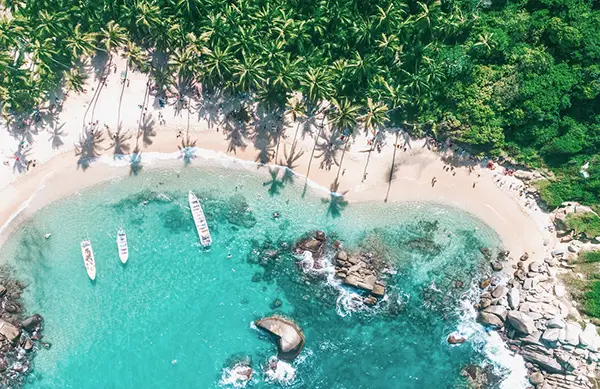
Much of the ocean and marine ecosystems we need to study and conserve lie on continental shelves. In these submerged perimeters of land mass at depths up to 200 meters (650 feet), you’ll find stunning kelp forests, thriving coral reefs and seagrass meadows.
It doesn’t make practical or economic sense to use a closed bell system to explore these areas. The same is usually true of autonomous or manned underwater vehicles.
So, how can we spend more time underwater exploring the continental shelf?
Subsea Habitation
Back in the 1960s, the legendary Jacques Cousteau was wrestling with the very problem of sustaining human life underwater. He pioneered an ingenious solution, resulting in the Conshelf habitats in the Mediterranean and Red Sea.
Several projects followed, including the US Navy’s Sealab experiments and Germany’s Helgoland habitat.
Then, in 1986, the Aquarius habitat was built and deployed in the Florida Keys in 1993, where it was used by scientists to further our knowledge of the ocean, as well as by NASA for its astronaut extreme environment training program.
These projects proved that humans could live for days or weeks on the ocean floor, and now a new habitat is being built to advance subsea habitation.
DEEP’s Vanguard Habitat
DEEP, the ocean engineering and technology company, unveiled Vanguard in October 2025. Vanguard is its pilot subsea habitat and marks the first step toward building a global network of subsea human habitats.
It will enable people to live for days, weeks or even months at the bottom of the ocean, giving researchers and divers more time to explore, make new discoveries and carry out conservation work.
Vanguard’s Design
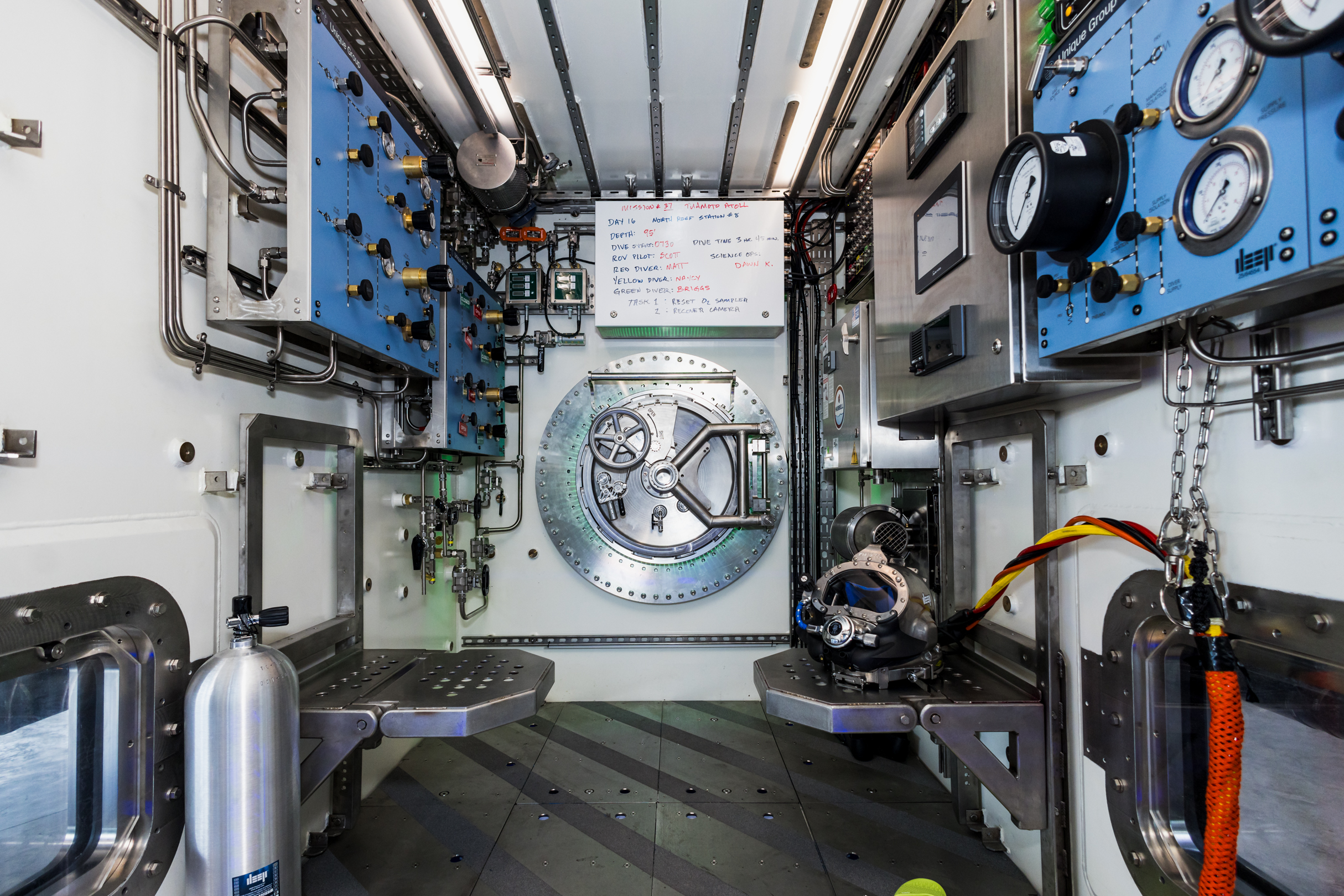
Vanguard is designed to house four crew members for medium-duration missions of seven or more days, offering extended time for discovery and research under the ocean without the need to resurface.
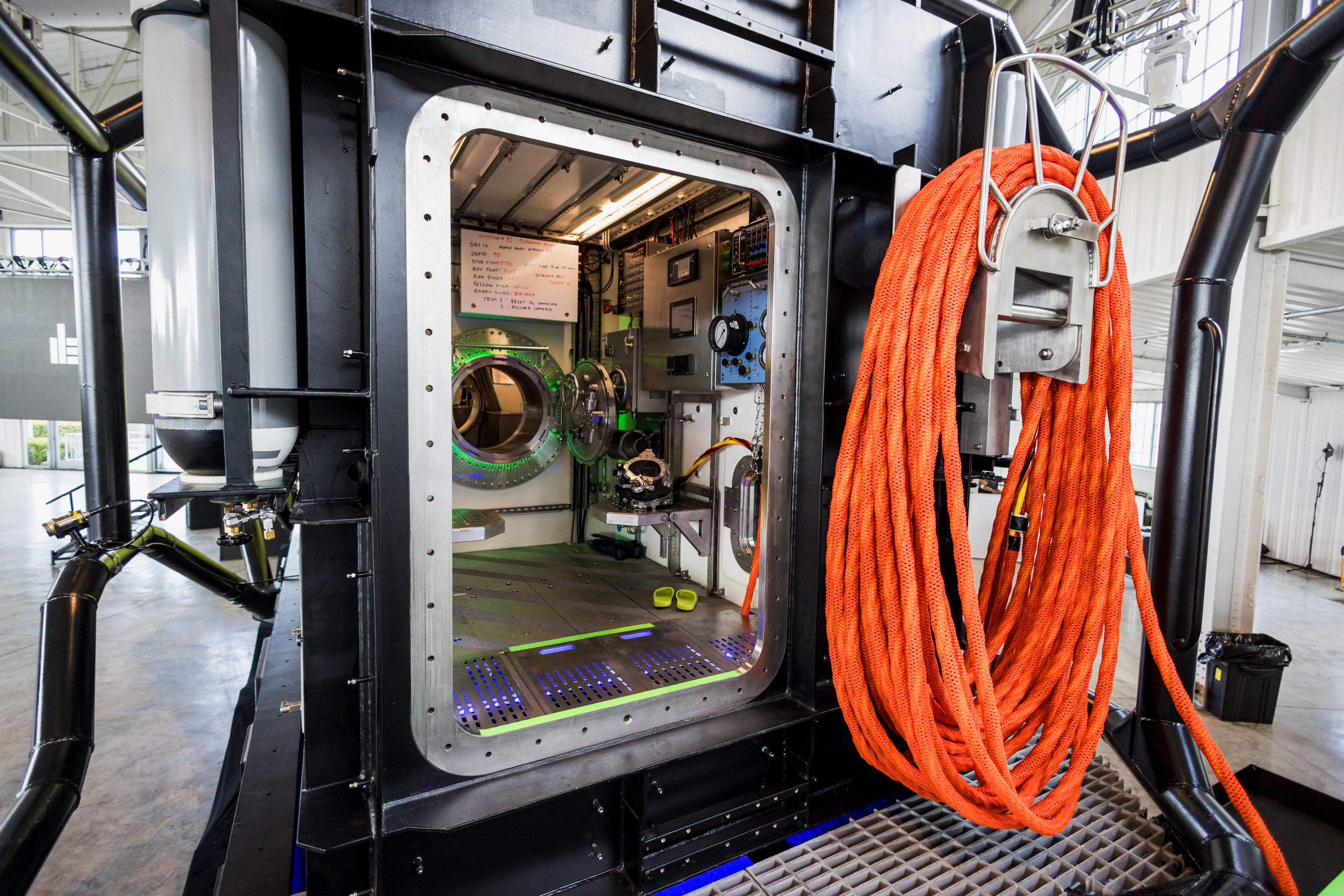
There are three main parts to the habitat: the living chamber, the dive center and the foundation.
The living chamber is where the crew will eat, sleep, work and perform daily tasks. Attached to one end of the living chamber is the dive center, where crew will change in and out of dive gear, and a moon pool (an opening to the ocean) for entry and exit.
The living chamber and dive center are attached to a foundation, which mounts to the ocean floor to secure the habitat from waves and storms.
At the surface, Vanguard is supported by a surface buoy. This structure is tethered to the habitat and provides various life support to the crew, such as compressed air, power and communications. Crews will come and moor to the buoy, dive down to Vanguard and enter through its moon pool.
Once inside, the crew can stay at depth until their body’s tissues absorb all the gases (like nitrogen) that they can at that pressure. At this point the diver is saturated and, although they will still need to go through a single period of decompression at the end of their mission, they can stay at depth indefinitely without adding to that decompression time.
This extended time underwater will be a force multiplier for ocean research.
Who Will Use Vanguard?
Vanguard’s customer base will be varied.
Users will include ocean researchers, marine conservationists, organizations requiring training in advanced diving techniques and the space sector (the subsea environment is an effective simulation for spaceflight).
As well as serving its customers, Vanguard will allow DEEP to fine tune its designs and operations. The learnings they take will pave the way for future subsea habitats on their roadmap, such as Sentinel, a larger modular habitat which can be assembled and deployed in multiple configurations up to 200 meters (650 feet) of water.
Follow DEEP on Social Media
You can follow DEEP’s progress toward making humans aquatic on social media @deepengineered or visit their website deep.com.