The laws of diving physics shape every part of your underwater adventures – from clearing your ears on descent and hovering above a reef to watching colors change as you dive deeper.
Understanding the why behind scuba diving helps you to become a more confident diver and view the ocean in a whole new way. It also answers questions such as:
- How does pressure affect scuba divers?
- Why do we use more gas at depth?
- What is neutral buoyancy?
- Why do divers get decompression sickness?
- Why do we do safety stops?
The good news? You don’t need to be a scientist to see diving physics in action – you experience it on every dive!
Read on to explore how scuba diving gas laws relate to the skills you use underwater and recommended courses to put that knowledge into practice.
Diving Physics #1: Pressure
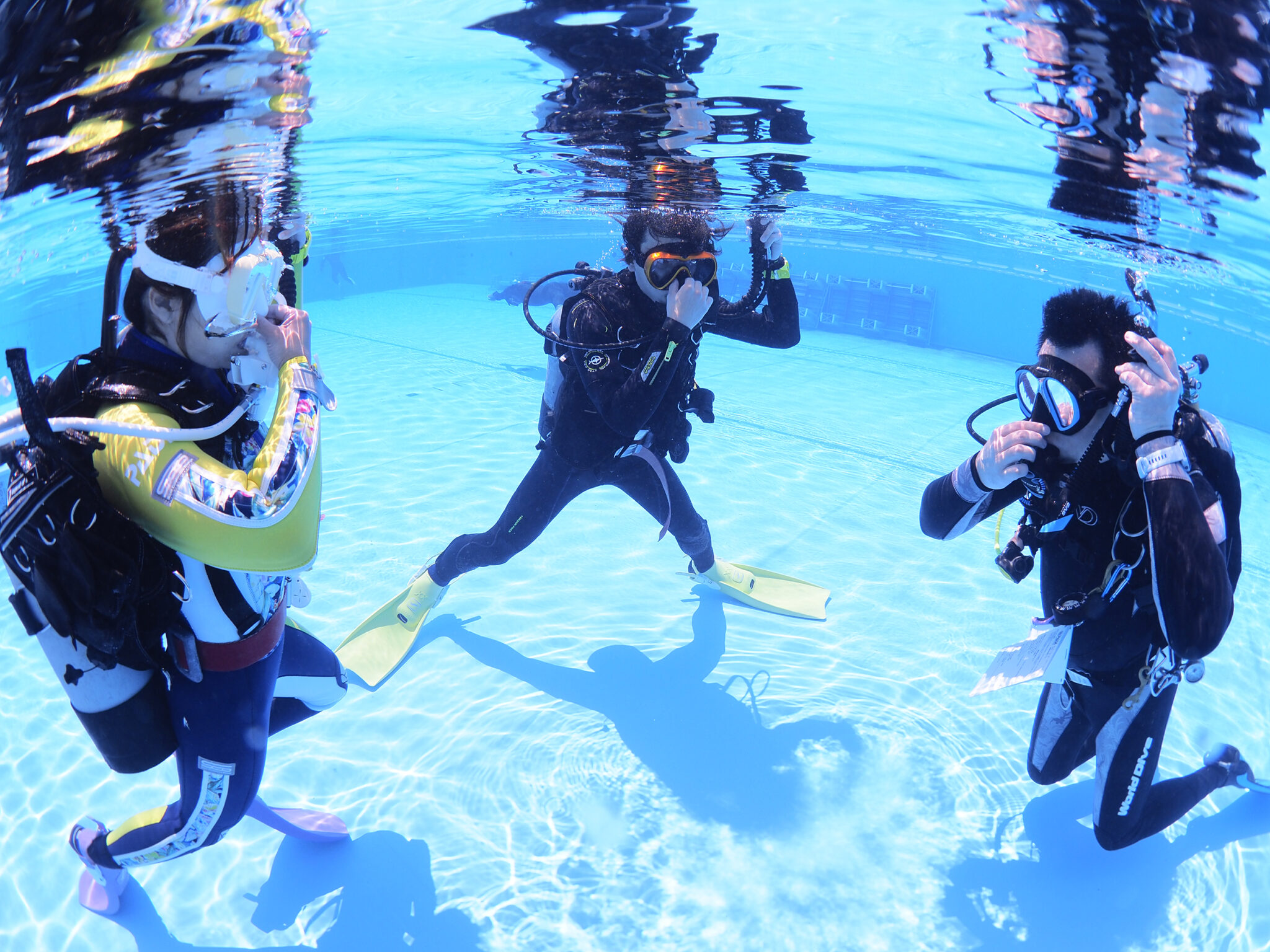
If one thing connects to almost every aspect of scuba diving science, it’s underwater pressure. The deeper you dive, the greater the pressure around you.
Specifically, the ambient pressure exerted by the atmosphere at the surface is called 1 atmosphere (ATA or bar) and this increases by 1 ATA for every 10m / 33ft you descend in sea water:
- At the surface (only the atmosphere) = 1 ATA
- At 10m / 33ft (1 ATA + 1 ATA water pressure) = 2 ATA total pressure
- At 20m / 66ft (1 ATA + 2 ATA water pressure) = 3 ATA total pressure
- At 30m / 99ft (1 ATA + 3 ATA water pressure) = 4 ATA total pressure
While diving, you’ll have already noticed how pressure affects your ears, lungs, buoyancy, no decompression limits and more. It also influences how you scuba dive, your equipment and the golden rules that keep you safe.
Diving Physics #2: Boyle’s Law
For a fixed amount of gas (at a constant temperature), the pressure and volume are inversely proportional.
Boyle’s Law explains what happens to air spaces underwater – both in your body and your scuba gear. For example, a balloon filled with air at the surface will change volume at depth.
| Depth | Pressure | Air Volume |
| 10m / 33ft | 2 ATA total pressure | Reduces to 1/2 that of at the surface |
| 20m / 66ft | 3 ATA total pressure | Reduces to 1/3 that of at the surface |
| 30m / 99ft | 4 ATA total pressure | Reduces to 1/4 that of at the surface |
This law of diving physics is why you:
- Equalize your ears and mask while descending
- Feel your wetsuit or dry suit compress at depth
- Add and vent air from your BCD during dives
- Use more breathing gas on deeper dives
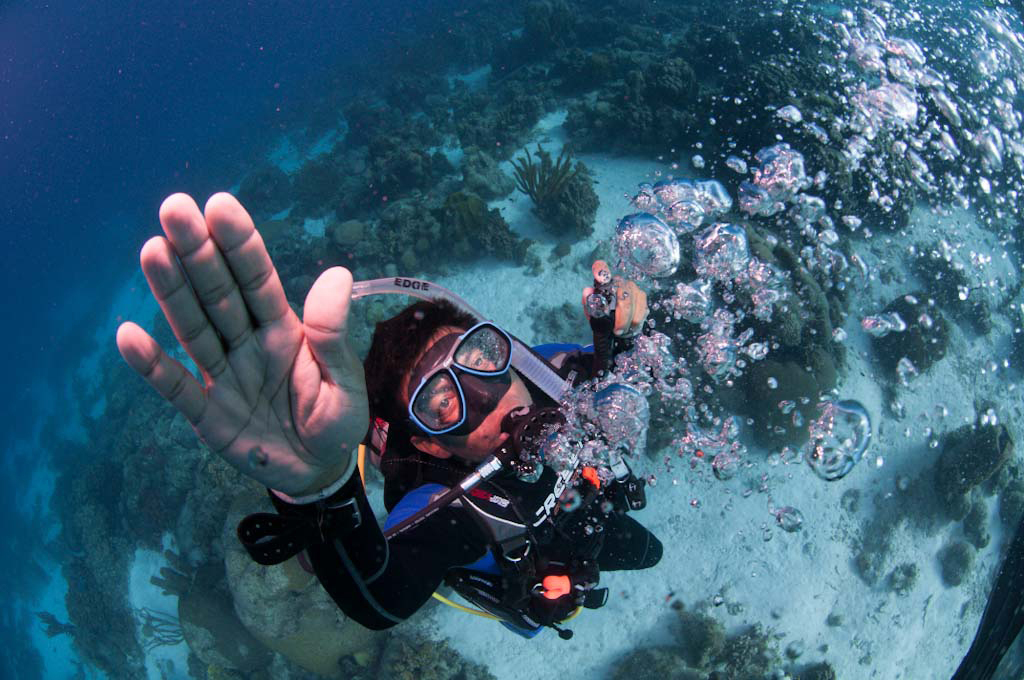
It’s also why you must never hold your breath while diving, especially when ascending. As pressure reduces at shallower depths, the air inside your lungs expands; breathing out lets it escape safely to prevent injury.
Recommended Course: In the PADI Deep Diver Specialty course, you’ll learn how to make dives to 40m / 130ft (that’s 5 ATA) – from planning your gas supply to controlling buoyancy at depth.
Diving Physics #3: Archimedes’ Principle
An object in water experiences an upward force equal to the weight of water it displaces.
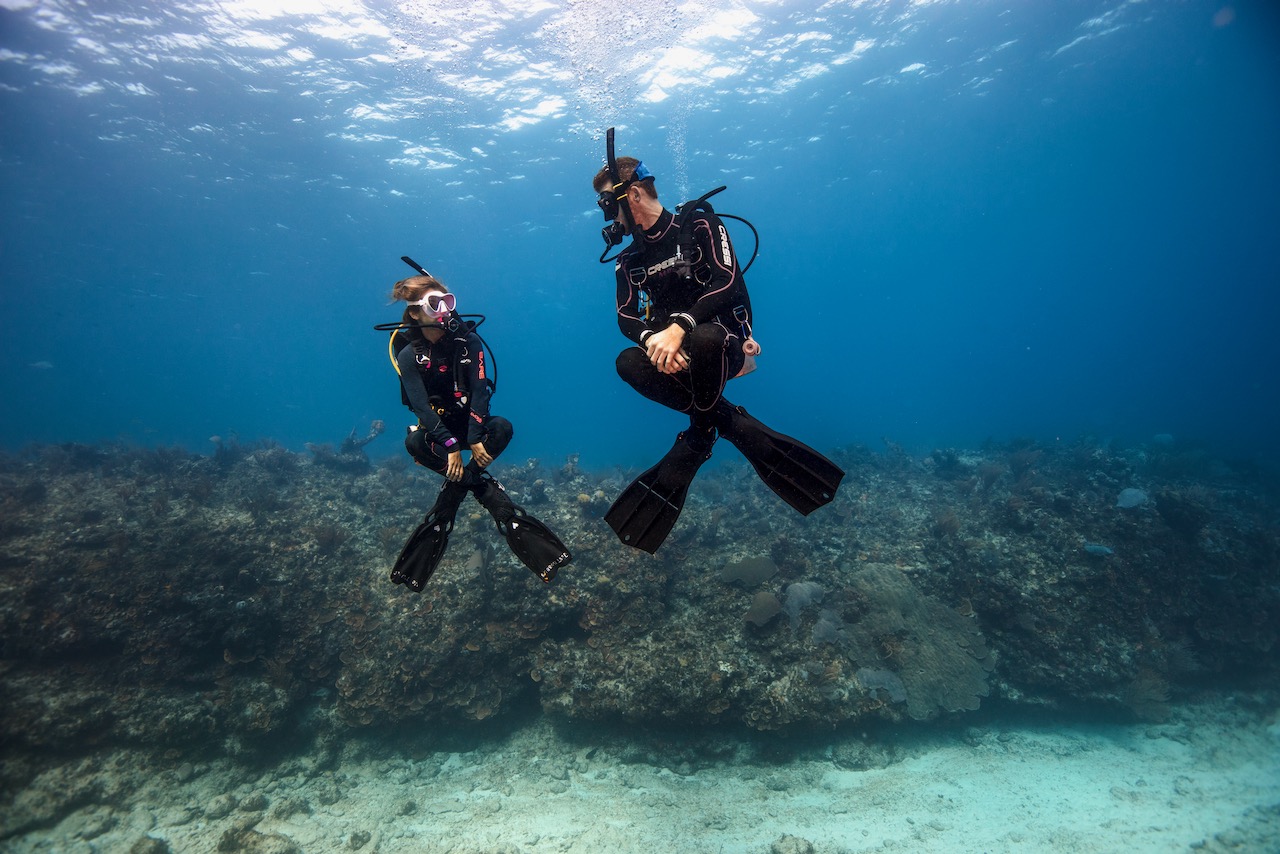
Good buoyancy control improves your safety and gas consumption, and it helps protect you and marine life from accidental bumps. Although that perfect mid-water hover may look like magic, neutral buoyancy is just another part of diving physics.
Archimedes’ Principle, working with Boyle’s Law, explains how buoyancy works in scuba diving:
| Going Deeper | Getting Shallower |
| Pressure increases Air spaces compress You displace less water You become negatively buoyant | Pressure decreases Air spaces expand You displace more water You become positively buoyant |
In addition, saltwater is denser than freshwater, so it has more upward force. This means you’ll usually need to wear more weight in the ocean than in lakes or quarries.
Recommended Course: The PADI Peak Performance Buoyancy Specialty course helps you master your buoyancy control through proper weighting, trim and even breathing skills – so neutral buoyancy becomes second nature.
Diving Physics #4: Dalton’s Law
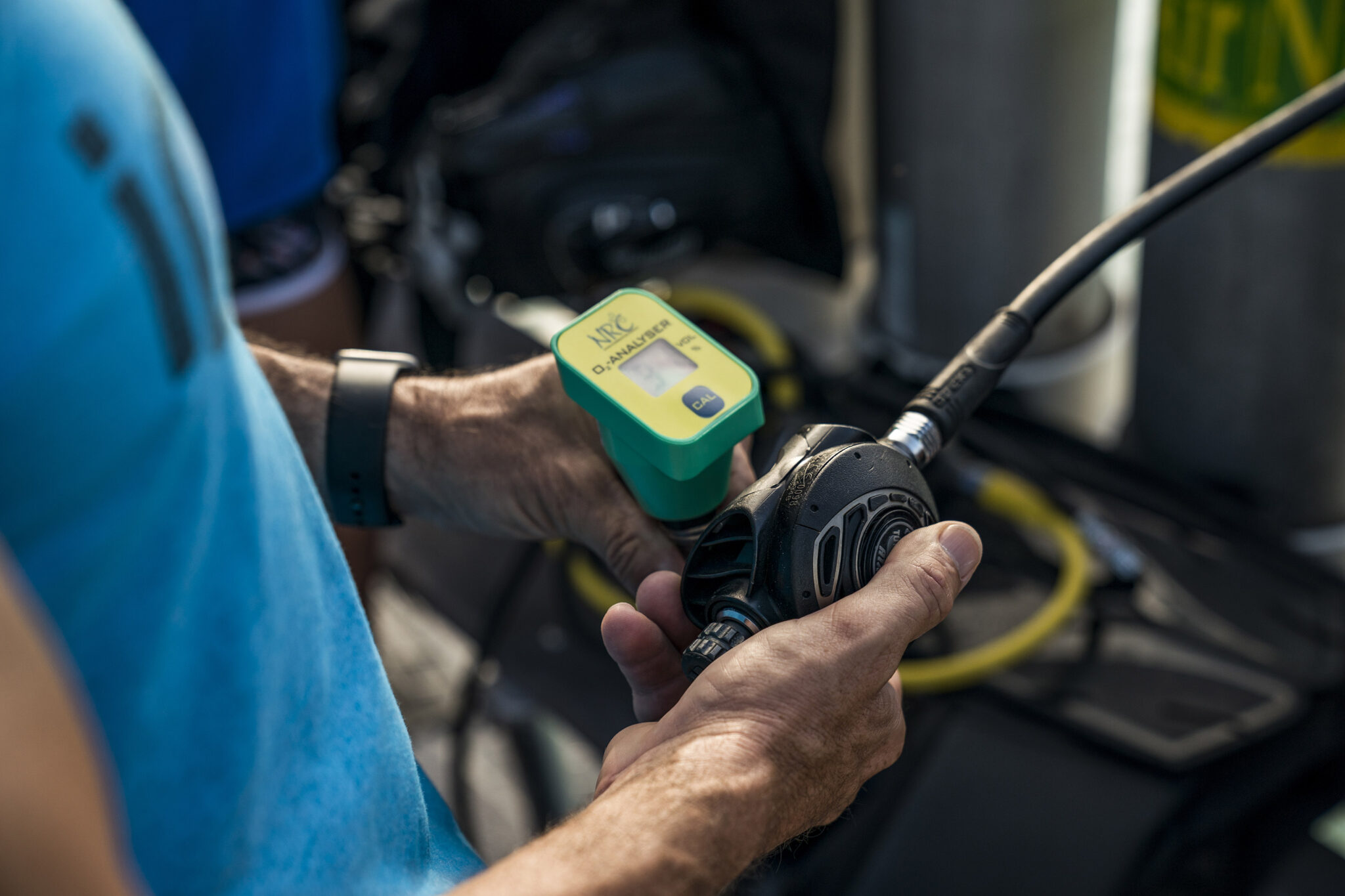
The total pressure of a gas mixture = the sum of the partial pressures of each individual gas.
To explain Dalton’s Law, let’s use air as an example. We know air is made up of roughly 21% oxygen and 79% nitrogen, and these percentages never change. However, the partial pressure of each gas increases with depth.
At the surface (1 ATA):
- 21% oxygen = partial pressure of 0.21 ATA
- 79% nitrogen = partial pressure of 0.79 ATA
At 20m / 66ft (3 ATA):
- 21% oxygen = 3 x 0.21 = partial pressure of 0.63 ATA
- 79% nitrogen = 3 x 0.79 = partial pressure of 2.37 ATA
These elevated partial pressures are why some breathing gases (including air) can have unwanted effects during deeper dives. For example, oxygen can become toxic at higher partial pressures, such as diving too deep on regular air or exceeding the maximum depth limits for enriched air, which could cause oxygen toxicity.
Recommended Course: The PADI Enriched Air (Nitrox) Diver Specialty course explains the benefits of higher oxygen mixes and how to plan dives within safe partial pressure limits.
Diving Physics #5: Henry’s Law
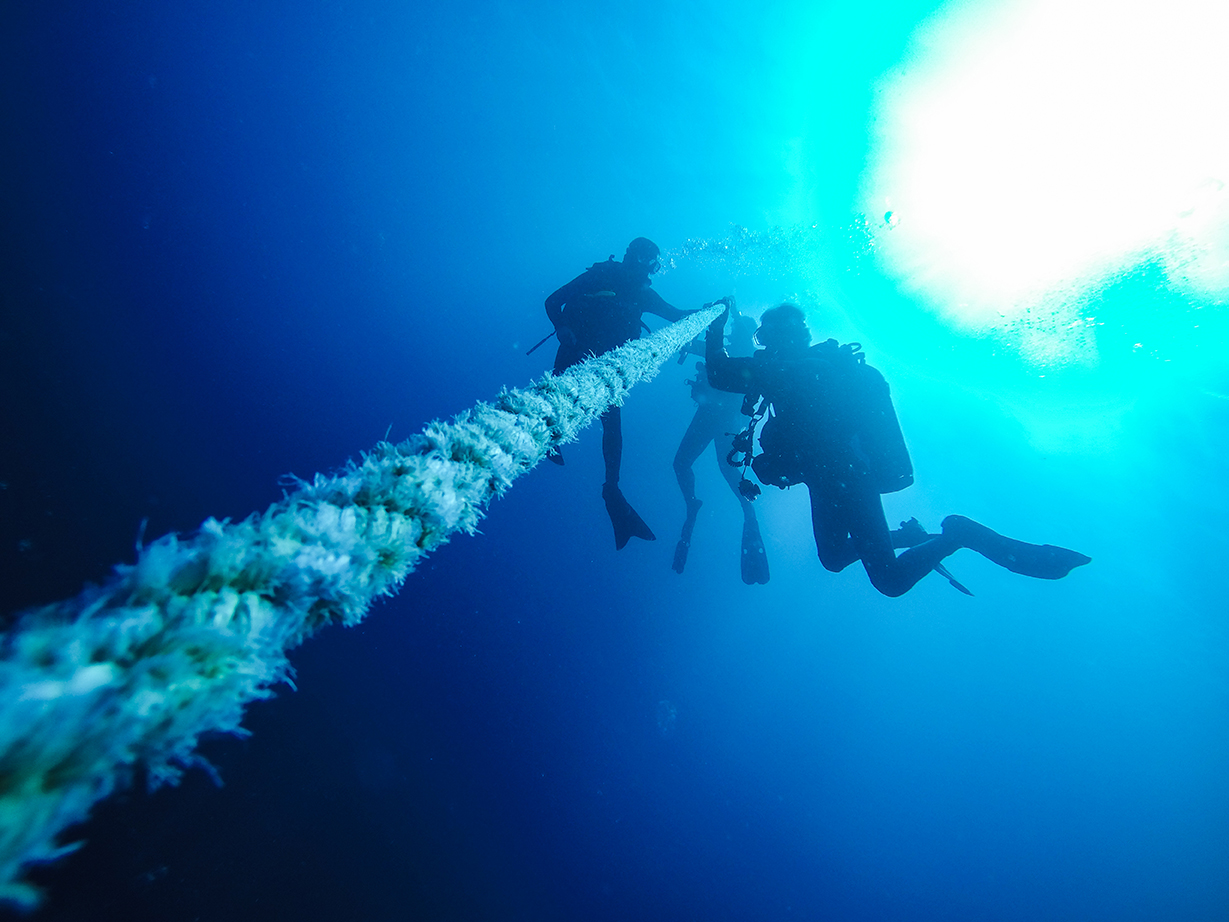
The amount of dissolved gas in a liquid is proportional to the pressure outside the liquid.
You can demonstrate Henry’s Law with a bottle of soda. While sealed under pressure, the fizzy gas stays dissolved in the liquid. If you open the bottle slowly, everything’s fine. However, open it too quickly and bubbles form rapidly as the pressure drops.
The same diving physics applies to the nitrogen in your body during a dive, which is one reason we have No Decompression Limits (NDLs) and safety stops. Ascending too fast, or with too much nitrogen in your body, can lead to harmful bubbles in your tissues and bloodstream – the cause of decompression sickness.
Because of this, dive plans can’t be left to chance. Fortunately, tools such as the eRDPML™ and dive computers help you calculate:
- Maximum depths and times
- Ascent rates and safety stops
- Surface intervals and no-fly times
Recommended Course: In the PADI Rescue Diver course, you’ll develop your knowledge of decompression theory and learn to react to illnesses caused by scuba diving.
Diving Physics #6: Charles Law and the Joule-Thomson Effect
Charles’ Law and the Joule-Thomson Effect are less about your body and more about equipment. If you’ve noticed your SPG reading drop slightly after entering the water, you’ve likely seen Charles’ Law. As your tank cools underwater, the gas pressure inside also decreases.
Similarly, as breathing gas travels from your scuba cylinder (tank) to your regulator’s demand valve, its pressure is reduced, which causes a rapid drop in temperature – this is the Joule-Thomson effect. This means you need gear specifically rated for lower temperatures to avoid free flows while diving in cold water.
Recommended Course: The PADI Equipment Specialist course can help you understand more about how your scuba gear works and how to care for it.
Diving Physics #7: Light, Sound and Heat
Underwater physics also changes how we see, hear and feel beneath the surface. For instance:
- Light refraction makes objects appear about 25% closer and 33% bigger underwater.
- Sound travels about four times faster than in air, making direction and distance harder to judge.
Why Does Everything Look Blue Underwater?
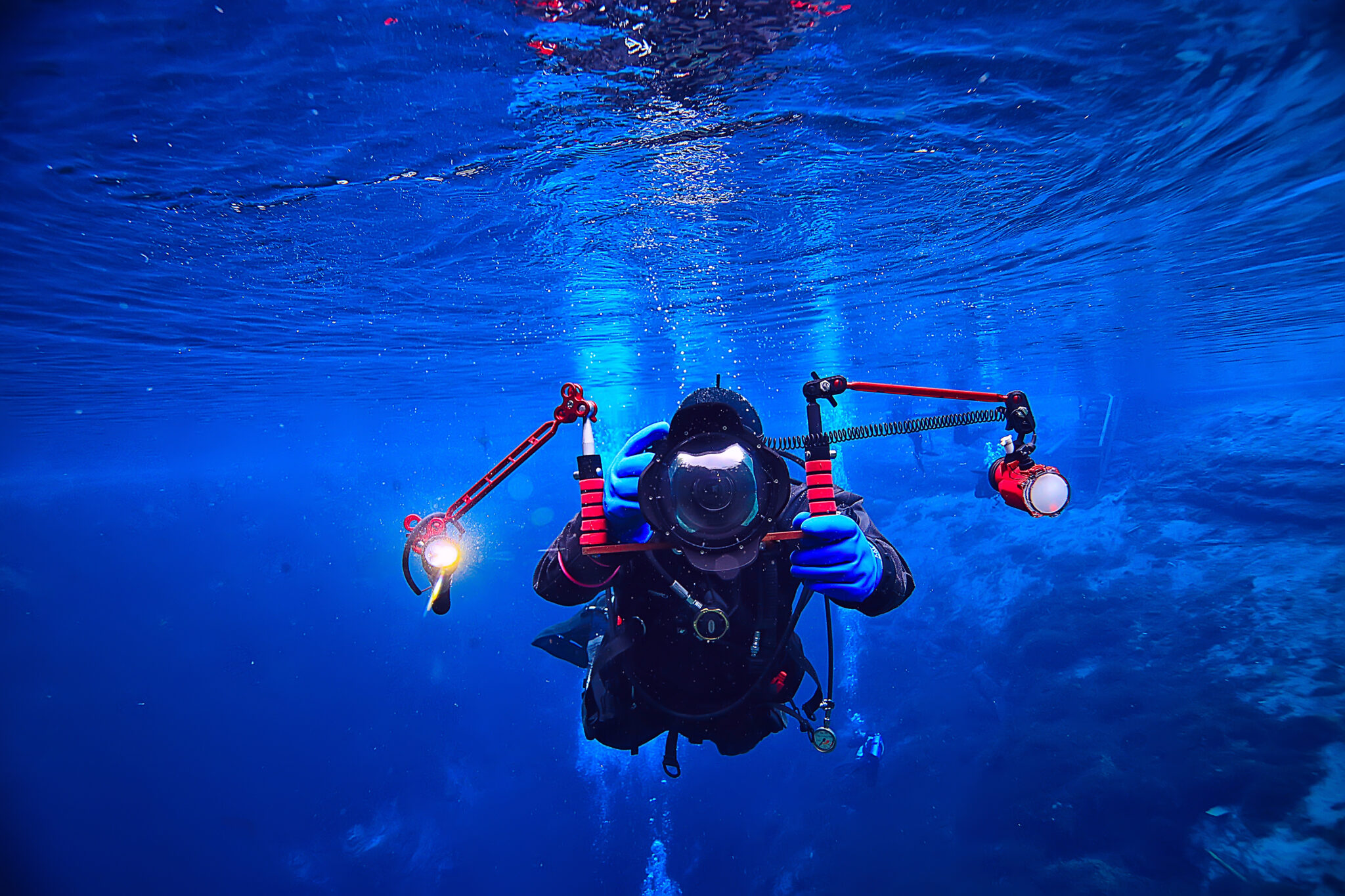
Water absorbs color with depth. Red disappears first at around 5m / 16ft, while blue and violet penetrate deepest. It’s why underwater photographers use strobes and red filters to bring colors back to life – something you can learn more about in the PADI Digital Underwater Photographer Specialty course.
Why Do I Feel Cold Underwater?
Water conducts heat from your body 20 times faster than air, meaning you’ll feel colder sooner – even in tropical destinations. Choosing the right exposure suit is essential, such as using dry suits in cold water.

Discover More Diver Physics
Whether you’re an aspiring instructor or just curious about the “why” behind every dive, the PADI Dive Theory Online course will expand your understanding of diving physics and physiology, equipment, decompression theory and dive planning.