
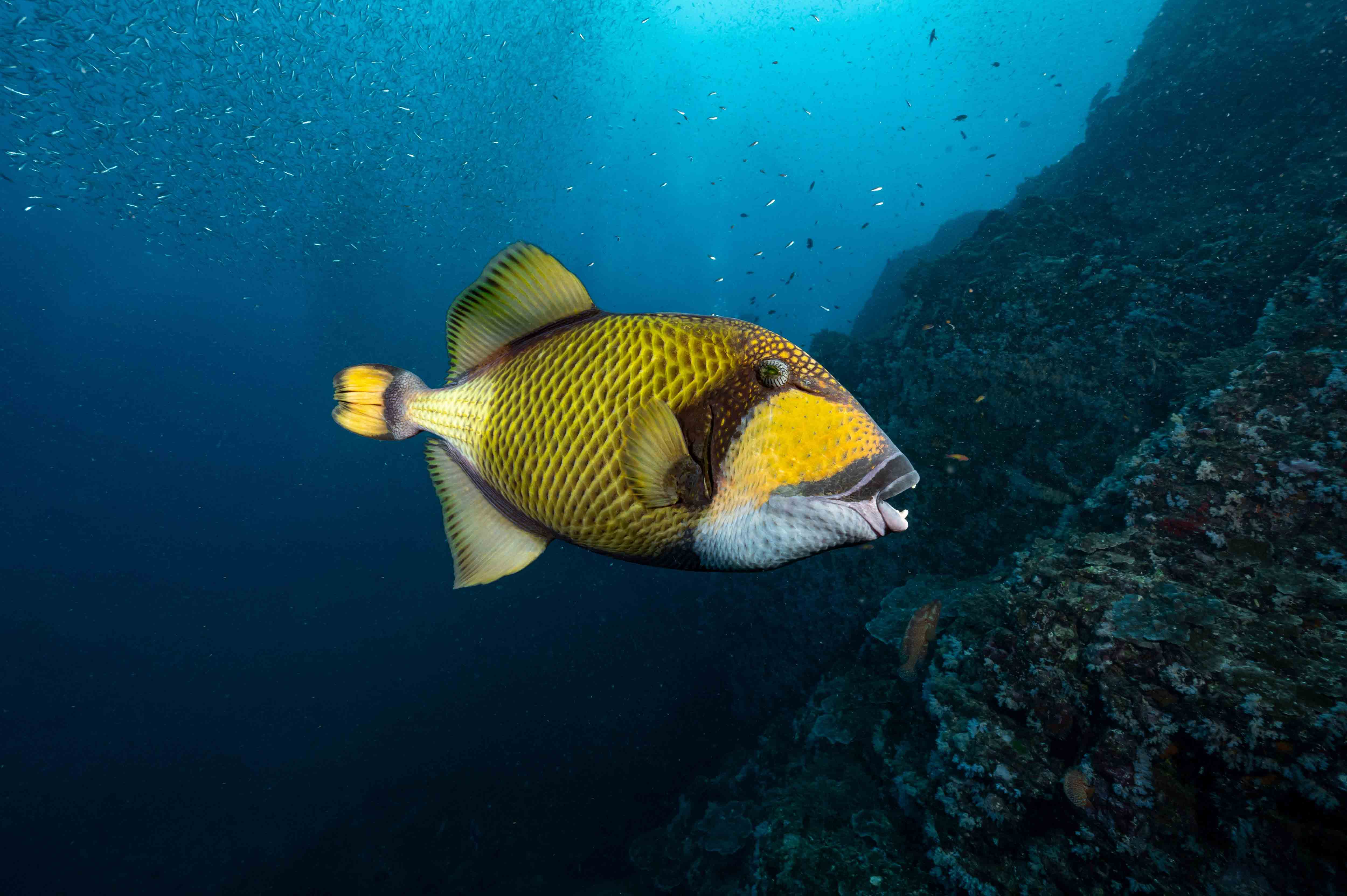
The titan triggerfish (Balistoides viridescens) is an iconic inhabitant of tropical coral reefs. Among divers, the fish in infamous for its bold presence and “complex” interactions with divers. These notorious fish have quite the reputation!
During nesting season, titan triggerfish are known to exhibit territorial nest-guarding behavior. This sometimes results in a diver or swimmer being chased and occasionally bitten. Because of this, they are often hyped as every diver’s worst nightmare. But, in reality, there is much more to these incredible fish than what they do a few weeks out of the year. Below, we’ll take a deep dive into the biology and ecology of these fascinating triggerfish, highlighting incredible facts, explaining the science behind their fierce territorial behavior and outlining exactly how to handle encounters.
The Triggerfish Family
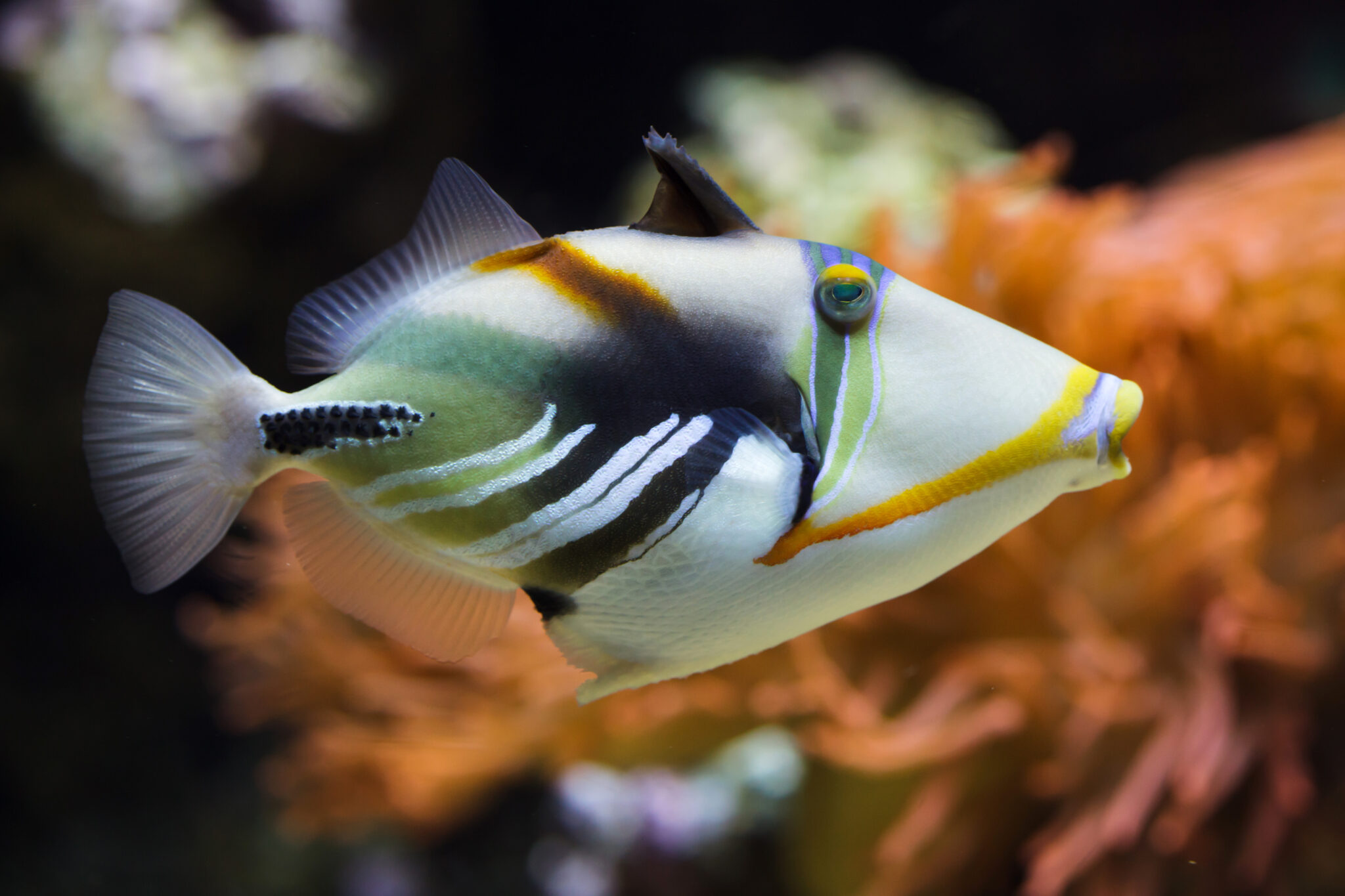
The titan triggerfish is one of roughly 40 species of triggerfishes within the Balistidae family, which get their name from a unique dorsal spine that locks in place and releases like a “trigger.” Triggerfishes are characterized by oval-shaped bodies, high-set eyes, small, yet remarkably powerful jaws and a unique swimming style called balistiform locomotion. Unlike other reef fishes, triggerfishes can undulate their dorsal and anal fins in synchronous waves to propel them through the water.
Habitat and Distribution
Titan triggerfish are very common and occur across the Indo-Pacific Ocean, from the Red Sea and Eastern Africa to Japan, Australia’s Great Barrier Reef and French Polynesia. They usually inhabit shallow reef habitats, like lagoons, sandy areas and reef slopes, often in depths ranging between 5 and 50 meters (15 and 167 feet).
Size
Titan triggerfish are huge! In fact, they are the largest species of triggerfish in the Indo-Pacific Ocean. Titan triggerfish typically grow to 40 to 60 centimeters (16 to 24 inches) in length. Yet, some may grow to 75 centimeters (30 inches) in length and weigh up to 7.2 kilograms (16 pounds). This significant physical presence makes them dominant inhabitants of the reef environment!
A Specialized Diet
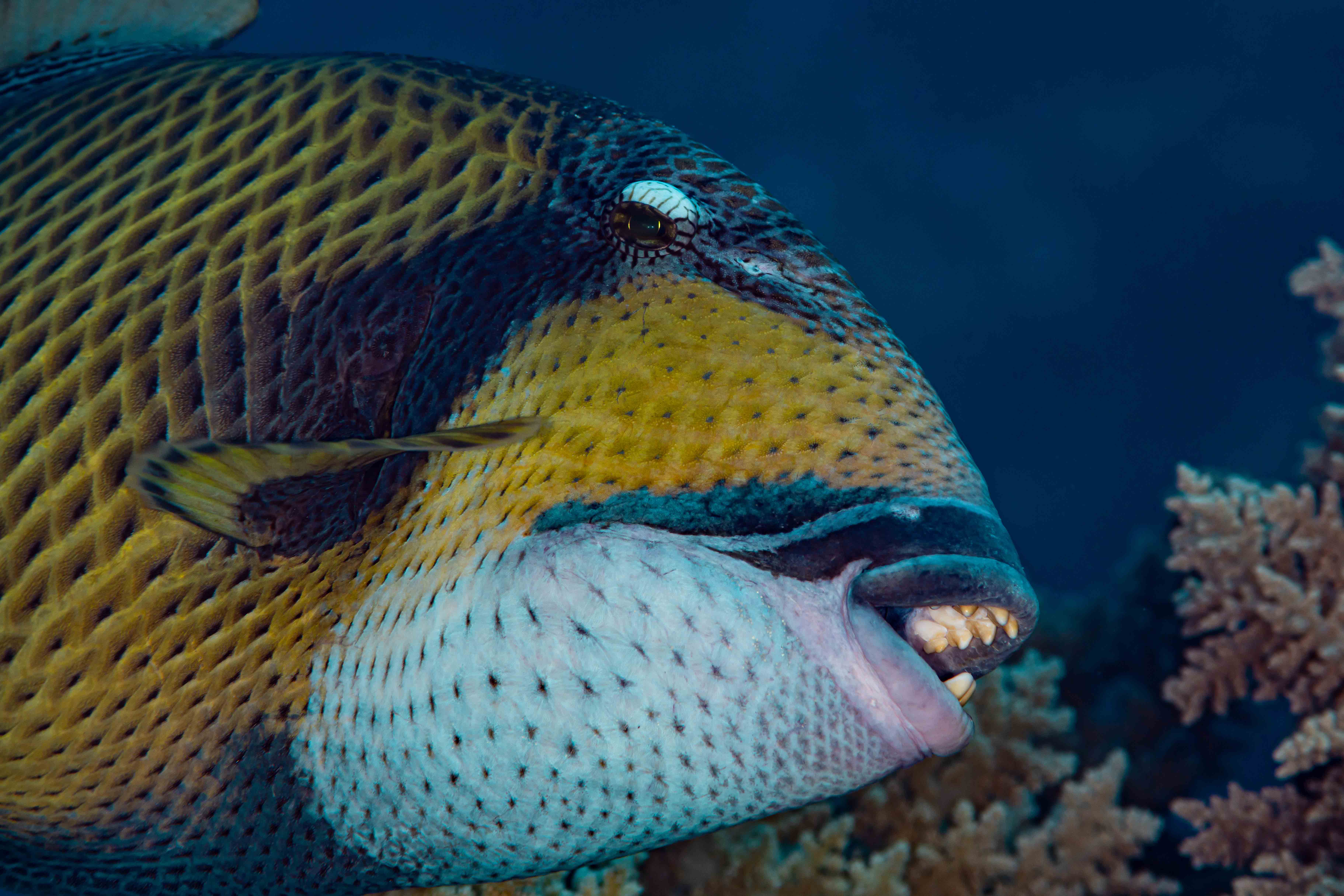
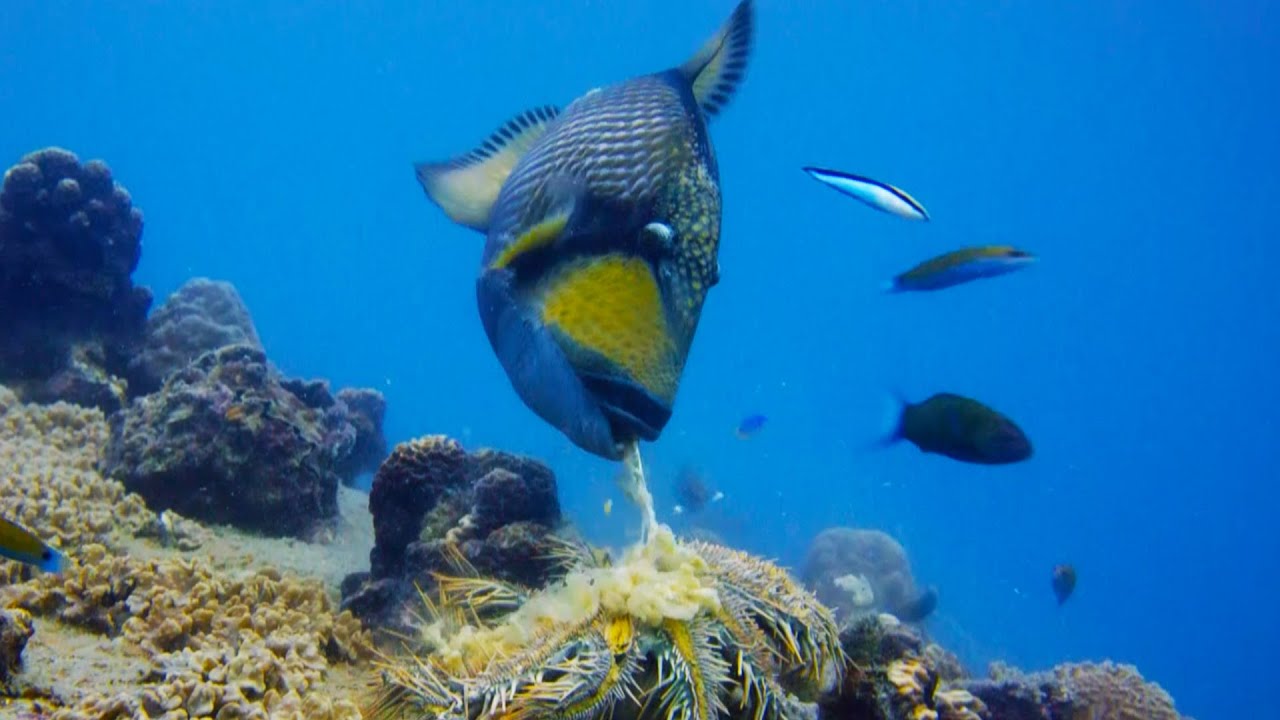
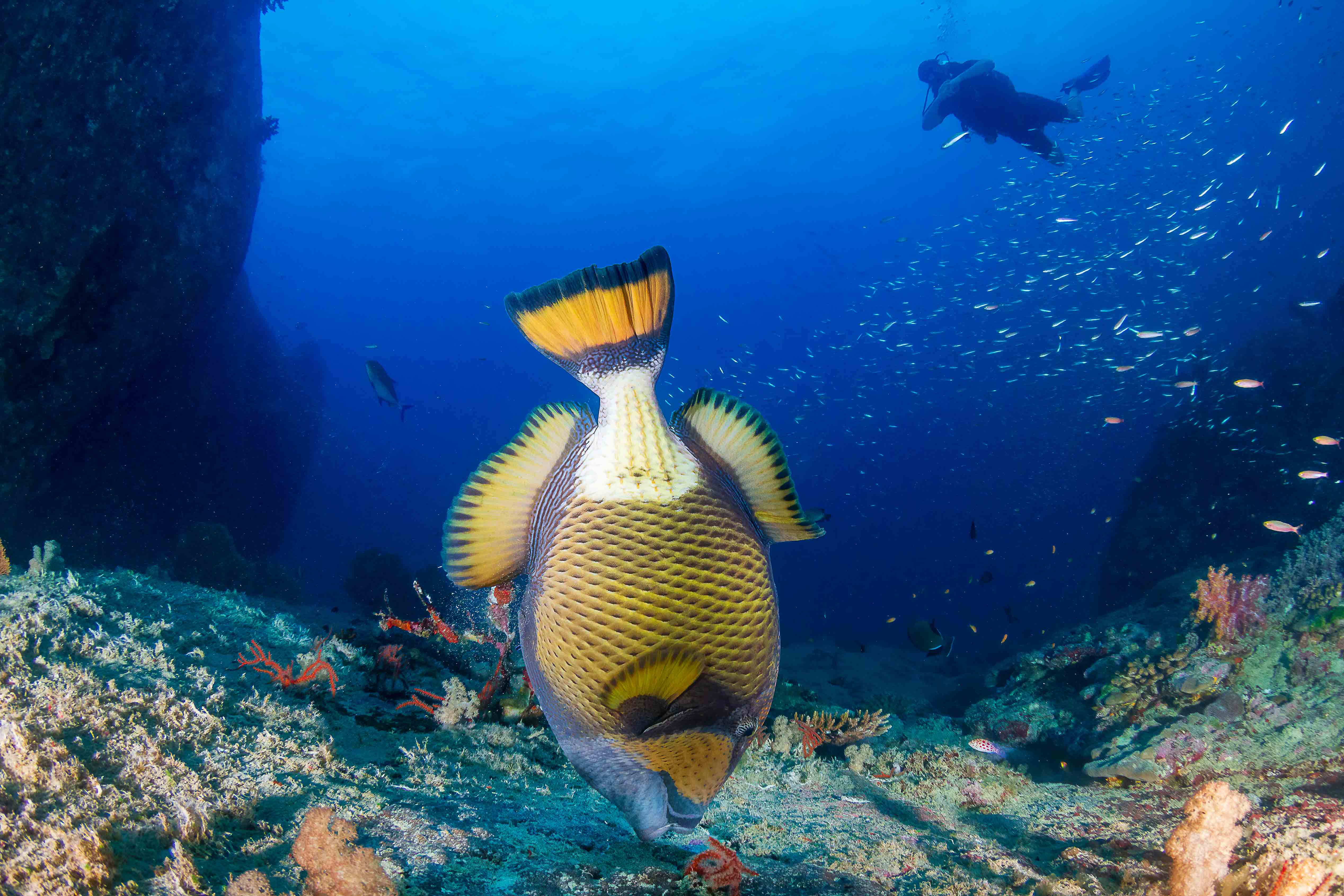
Titan triggerfish are effective benthic predators. That means they feed on prey living on the sea floor, like sea urchins, sea stars, crustaceans, mollusks and tube worms. They have strong, chisel-like teeth that are specifically designed to crush hard-shelled prey. They are also famous for their clever feeding tactics, like flipping sea urchins to expose their vulnerable undersides and shooting water from their mouths to uncover prey hiding in the sand.
Ecosystem Guardians
By feeding on sea urchins and crown-of-thorns starfish, titan triggerfish perform a crucial role in their ecosystem. These invertebrates can overgraze, erode and kill living coral colonies when present in large numbers. By controlling their populations, titan triggerfish ensure the reef ecosystem stays healthy and in balance. When titan triggerfish forage for buried prey, they also move sediment and break apart coral rubble. This process turns over the reef floor and creates new feeding opportunities for smaller fish species. This combination of population control and reef floor maintenance makes them essential contributors to the ongoing health and structural integrity of the reef ecosystem.
Click to display the embedded YouTube video
The ‘Trigger’ Mechanism
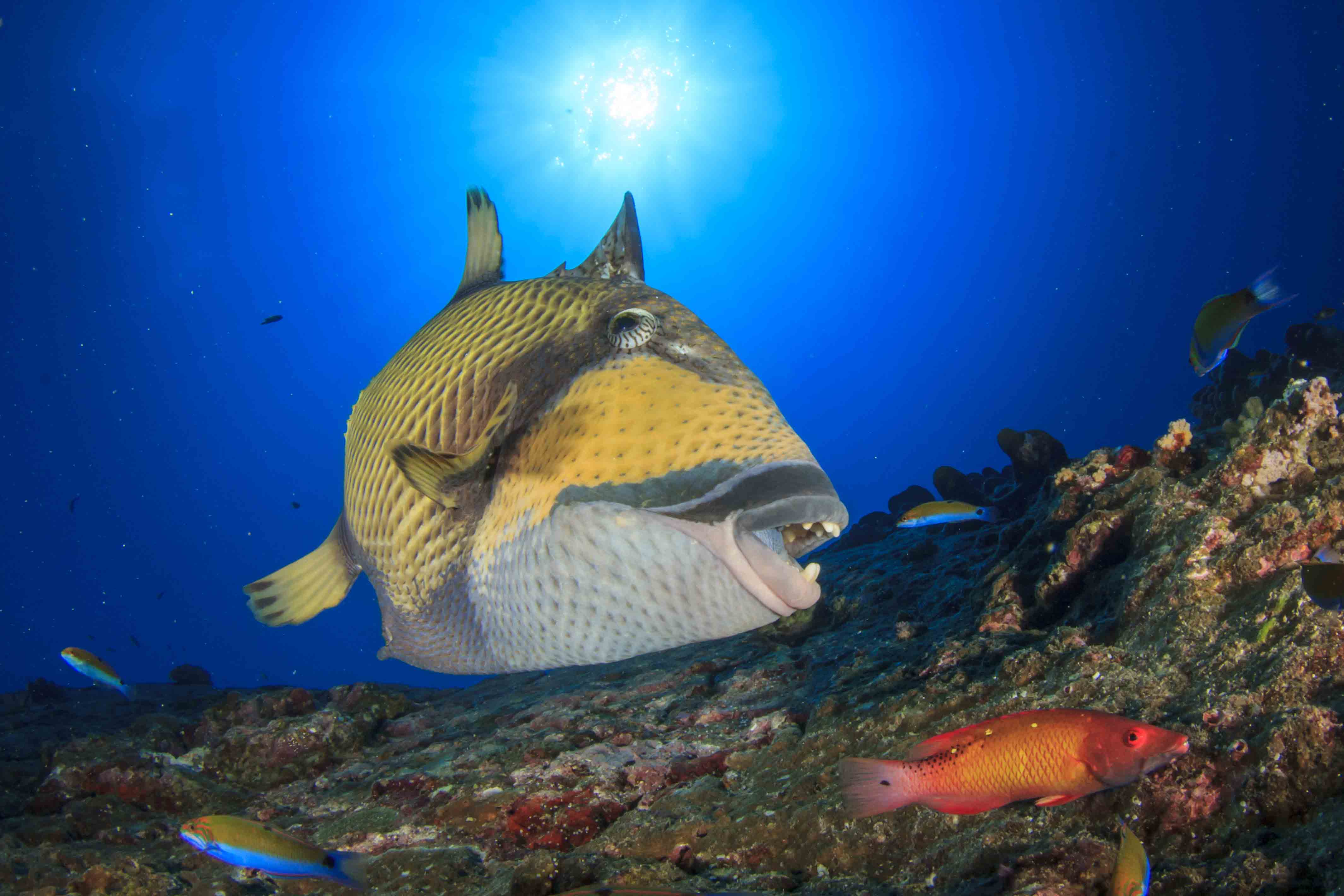
Triggerfish are named after the sophisticated defense mechanism that involves their first and second dorsal spines. When a triggerfish feels threatened, it can snap its first, large dorsal spine into a locked, upright position, which is then held in place by the much smaller, second “trigger” spine. This helps prevent them from being swallowed by predators or being pulled from reef crevices when sleeping at night. To “unlock” the spine, they engage the second spine again. Seeing a titan triggerfish with its dorsal spine locked is a clear defensive signal that the fish feels threatened or is stressed. It serves as a non-verbal warning to “Keep Your Distance!”
Reproduction and Nesting Behavior
Titan triggerfish sync their reproduction to the lunar cycle. Peak spawning (gamete release) usually occurs in the days leading up to the full or new moon. During this time, pairs create “nests” by digging shallow depressions in a sandy area, where the female lays her eggs for the male to fertilize. While both sexes take turns guarding the nest, the female is a particularly fierce protector against any potential “egg-eaters.” She guards an invisible, funnel-shaped area just above her nest, which spans from the seafloor to the surface. This is a definite “no-go area” for all swimmers and divers! When a diver unknowingly swims into this vertical space, the titan triggerfish perceives it as a threat. This triggers the high-speed defensive charges that have earned this species its notorious reputation.
The Myth of the “Attack”
While the defensive charges of titan triggerfish can be intimidating, they are not “attacks” and not motivated by predatory intent. Instead, intense chases are simply a warning intended to drive away perceived threats from their nursery. By reframing this behavior as a natural parental instinct, we can shift our perspective to better appreciate the remarkable defensive strategies of these protective parents.
Avoiding Encounters
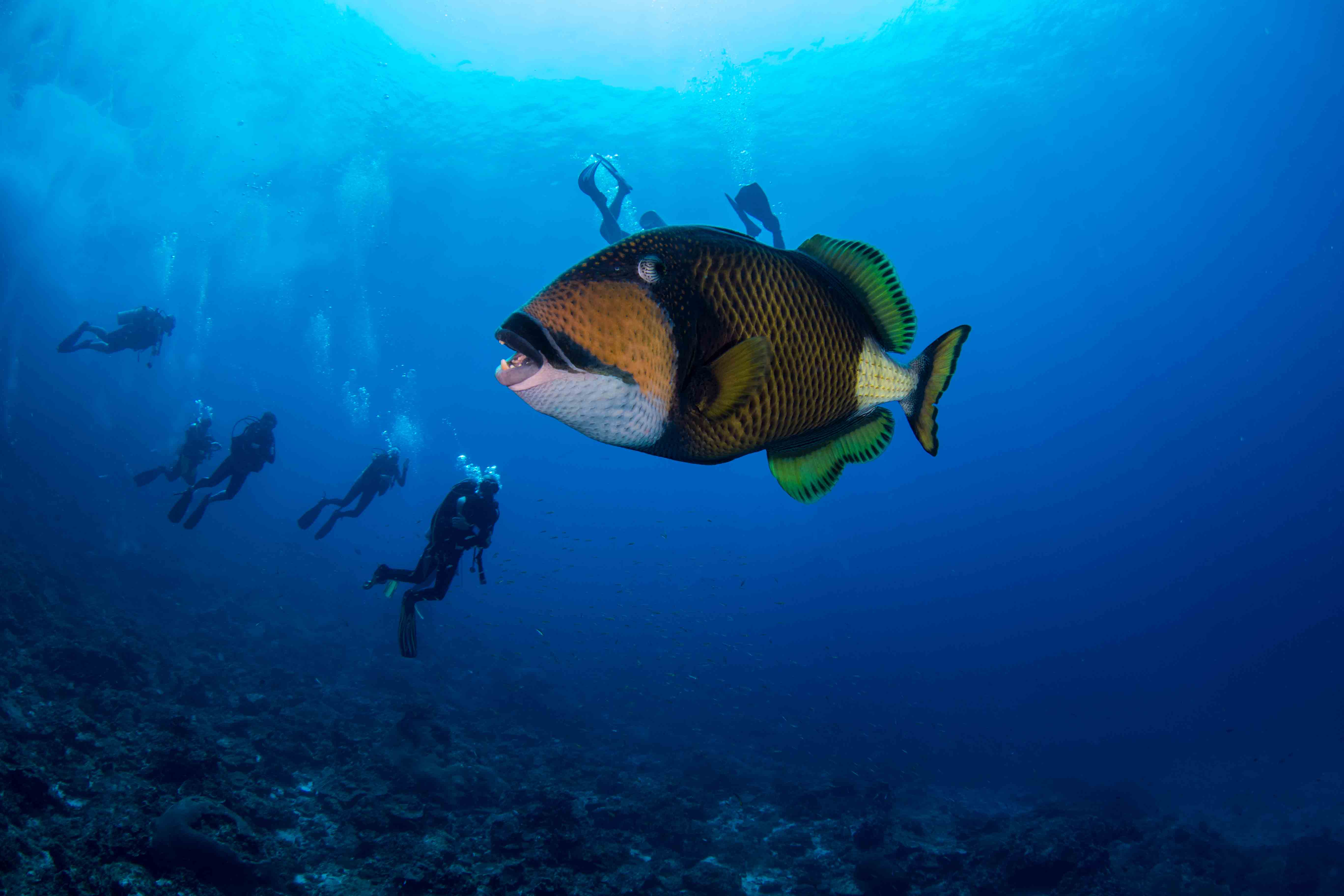
Titan triggerfish are hard to miss, but they can catch you off guard if you are not paying attention. Therefore, on every reef dive, make it a habit to scan the reef as you swim. This will ensure that you are aware of your surroundings and that you don’t accidentally swim into their territory.
The best way to prevent a negative encounter is to look for signs of nesting activity. Keep an eye out for a titan triggerfish that is hovering persistently over a patch of sand or one busy rearranging rubble to clear a nest. If you see these behaviors, simply change your course to steer clear of their territory.
Also, look out for the “trigger!” If the fish’s first dorsal spine is snapped into a locked, upright position while it hovers, consider that a warning. That fish is on high alert and feels threatened by your proximity.
Be sure to also ask a divemaster if titan triggerfish territories are present when visiting new sites.
By learning to read behavioral cues of titan triggerfish, you can enjoy these fascinating fish from a distance.
How To Handle a Titan Charge
If you accidentally do enter the nesting area of a titan triggerfish, swim swiftly and immediately away from the nest horizontally (along the reef). Never swim to the surface to escape a charge. Because the defensive territory is shaped like a funnel, swimming to the surface keeps you within the “danger zone.” By swimming parallel to the reef, you can exit the fish’s protected territory within a few seconds. This quick action typically stops the charge, and the fish will return to its nest.
By mastering your situational awareness and practicing these responses, you can transform a potentially stressful encounter into an opportunity to observe a complex, natural behavior that makes our underwater world so extraordinary.
Become a Reef Naturalist
The secret to becoming a more confident diver is not just about mastering your buoyancy, but also about understanding and appreciating the world around you. Titan triggerfish and their protective behaviors are just one example of the fascinating relationships of the reef ecosystem.
If you want to learn more about how to identify fish and their behavior, reef ecosystems and how to interact with marine life in a responsible, educated way, consider enrolling in the PADI Fish Identification Specialty course. Developing these naturalist skills will transform every dive into an opportunity for deeper, more meaningful discovery.