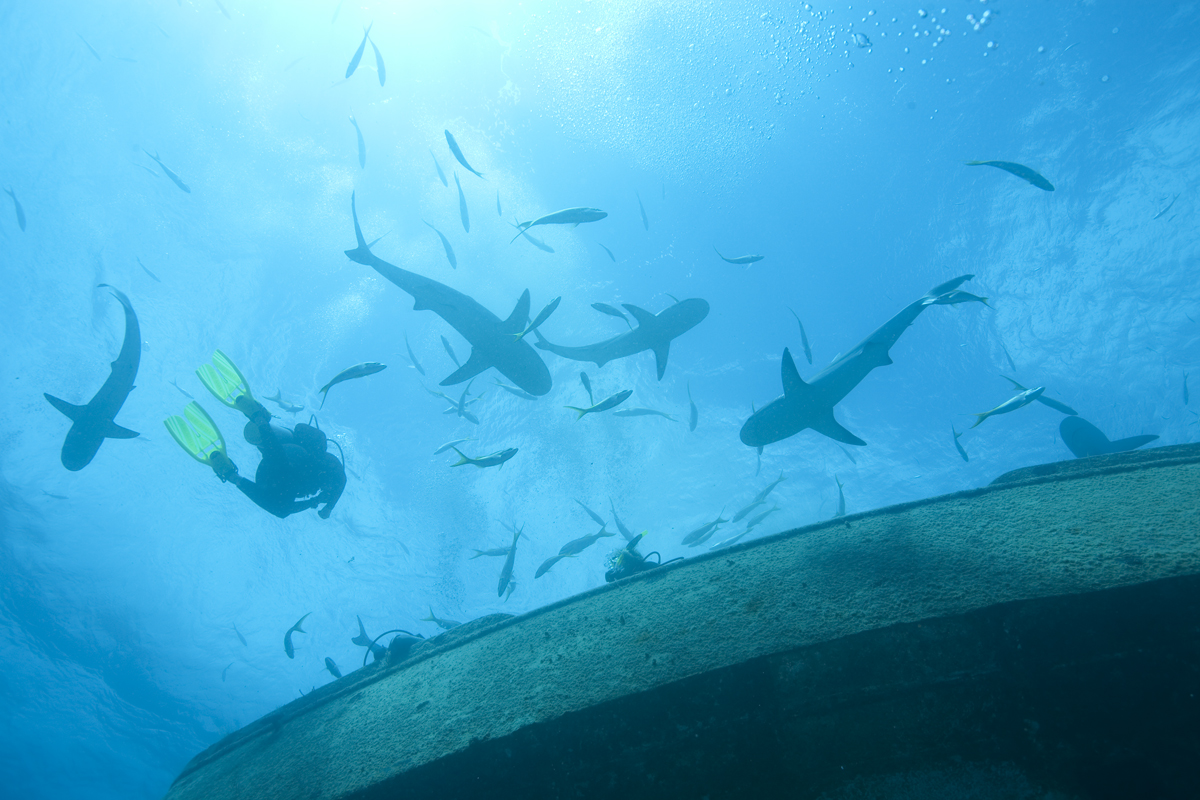
I was floating at the surface in extremely calm, warm water, roughly 12 meters (39 feet) above the seabed, which was clearly visible. I had volunteered as a field assistant on a shark research project, and I’d been briefed on the types of sharks I’d come across, but no briefing prepared me for my first in-water encounter. A reef shark, bigger than I had expected, swam underneath me from behind.
My first reaction was pure, instinctive fear – the kind that bypasses rational thought entirely. All I wanted was to get back to the safety of the boat. The shark never once looked at me. It moved past, unhurried, entirely unoccupied by the humans in the water column. I also remember the exact moment when my fear tipped into something else as I watched it swim away. I wanted it to come back. Not out of any bravado, but out of a desperate curiosity.
I tried to keep up with it, kicking harder than I needed to, willing it to slow down. It never did. That was the first time I understood that the danger in the water that day wasn’t the shark. It was how easily we could potentially stop seeing them altogether.
When Fear Became Curiosity
My fear of sharks lasted for seconds, but my fear for sharks has stayed with me for almost 30 years. Sharks are wild animals, and in exceptional circumstances, a few species can cause serious harm, often exacerbated by media coverage of what is a rare event. Any shark fatality is one too many, and no number of statistics changes that for the people affected by one. But for divers, those circumstances are exceptionally uncommon.
Why Sharks Have More To Fear From Us
From a shark’s perspective, the statistics are alarming, and they confirm my fear for sharks. I’ve since learned that over the past 50 years, populations of shark and ray species found on reef systems have been in decline, and today, studies show an estimated 63% are threatened with extinction. Oceanic species have declined by a staggering 71%, with species being pushed towards extinction. Overfishing is the main cause of these declines. Sharks are slow to mature and produce relatively few young, so populations hit this hard can’t rebound without help.
How Divers Are Helping
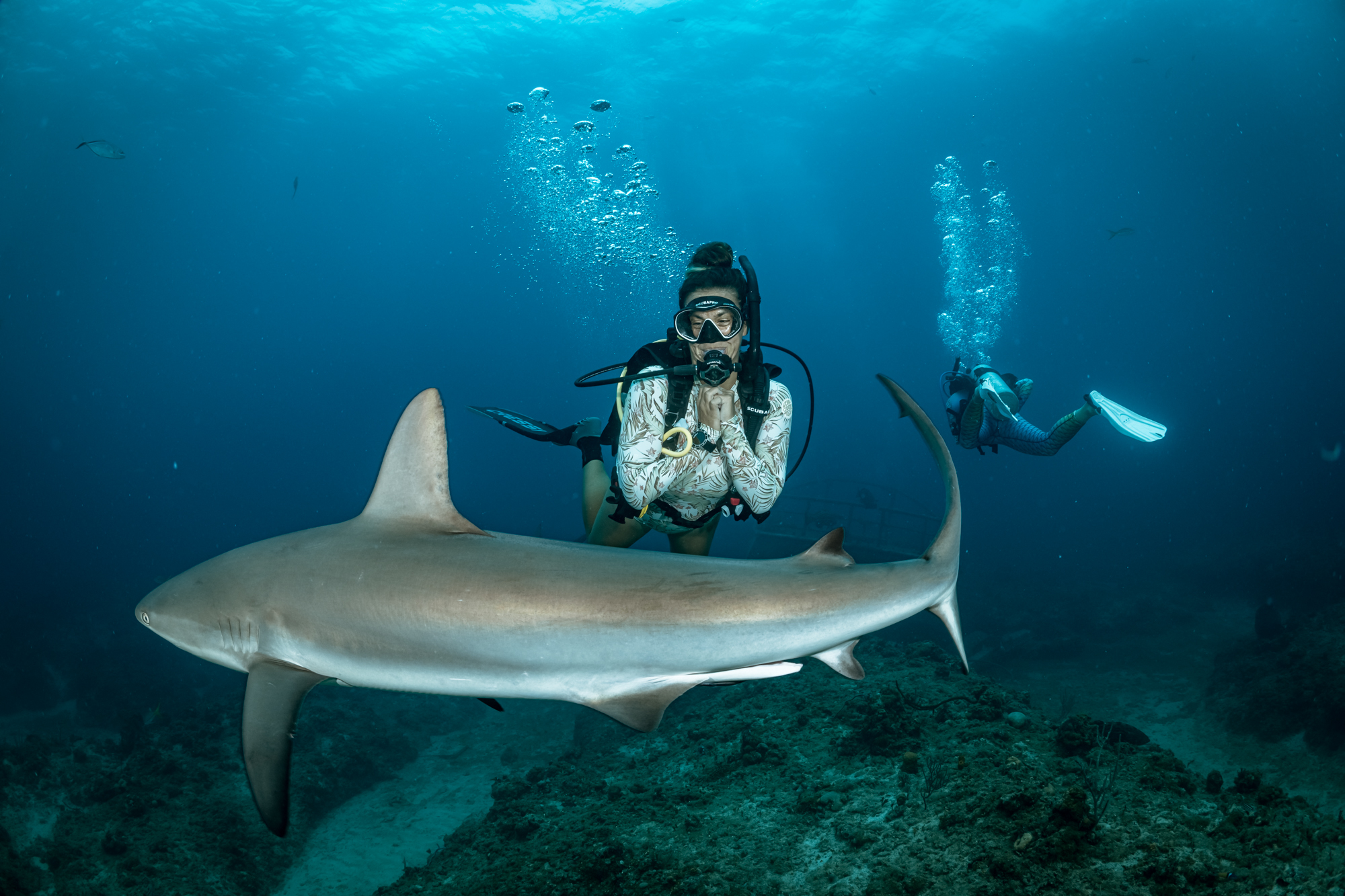
Divers can and are helping protect sharks directly. Citizen science initiatives like the PADI AWARE Global Shark and Ray Census help monitor whether much-needed protection measures are working, and dive operators are also leading the way on establishing marine protected areas for important shark habitats, such as Shark Reef in Fiji.
A Future With Sharks
Shark diving is also a key component of the economies of many countries. In Australia, shark diving tourism contributes tens of millions of dollars to state economies and supports thousands of jobs across hospitality, tourism and travel sectors.
30 years ago, I learned that the real danger wasn’t the shark in front of me. It was the thought of a world where I’d stop seeing them altogether. That world is closer than it should be, but it isn’t here yet.
If you dive, log your next encounter with the Global Shark & Ray Census, or choose a responsible operator for your next shark dive. If you don’t dive, the seafood choices you make can reduce the pressure driving these declines. However you engage, becoming a PADI AWARE supporter helps keep this fight going.