Every good dive starts with you and your buddy on the same page. This is why it’s important to take a moment to confirm that you are both properly set up for a safe and enjoyable dive before entering the water.
A buddy check is a fundamental skill taught during the PADI Open Water Diver course and an essential part of every pre-dive routine. Commonly referred to as the BWRAF safety check, this acronym covers the most important equipment and safety checks that should be completed in the moments after gearing up and before you begin any dive.
What to check during a buddy check:
- B – BCD
- W – Weights
- R – Releases
- A – Air
- F – Final Check
During my Divemaster training in Central America, I learned the acronym BWRAF as “Beans With Rice and Fish” — and honestly, I still repeat it to myself when I’m gearing up for a dive. Maybe your instructor taught you a different acronym. “Begin Review With a Friend” and “Big White Rabbits Are Fluffy” are both common ways divers remember this handy checklist.
Regardless of the mnemonic device you choose, performing a pre-dive safety check is a crucial step in ensuring a safe and seamless dive.
As diving becomes second nature, whether that’s because you’ve been diving for 20 years or because you are on the fifth day of a dive trip, it becomes increasingly more tempting to rush or half-complete your buddy check.
Here is why you should never skip a buddy check.
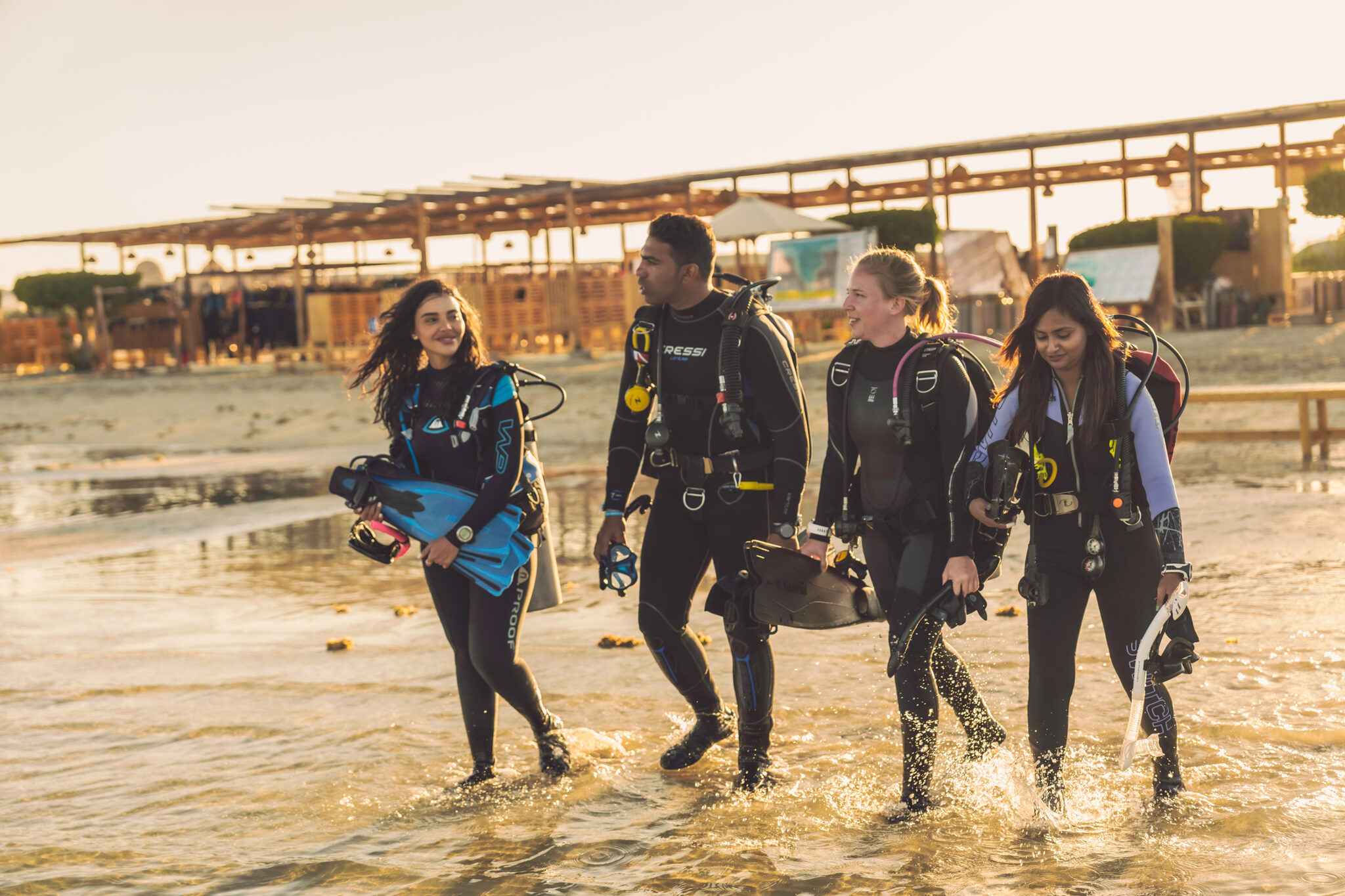
Getting in the Right Headspace To Dive
Standardizing your pre-dive buddy check is a great way to transition into a safety-focused diving mindset before entering the water.
As recreational divers, we primarily dive for fun. Dive outings mean joking with friends, laughing on the boat deck and taking in incredible surroundings. But a carefree attitude can cause problems once it’s time to go diving.
Completing a safety check with your buddy before entering the water helps you focus on taking the dive and your safety seriously. It can also give newer divers a chance to slow down and shake off any pre-dive nerves.
Feel silly doing it? I’ve seen divers jump into the water without a mask, fins and with their air still turned off. Trust me — they look sillier.
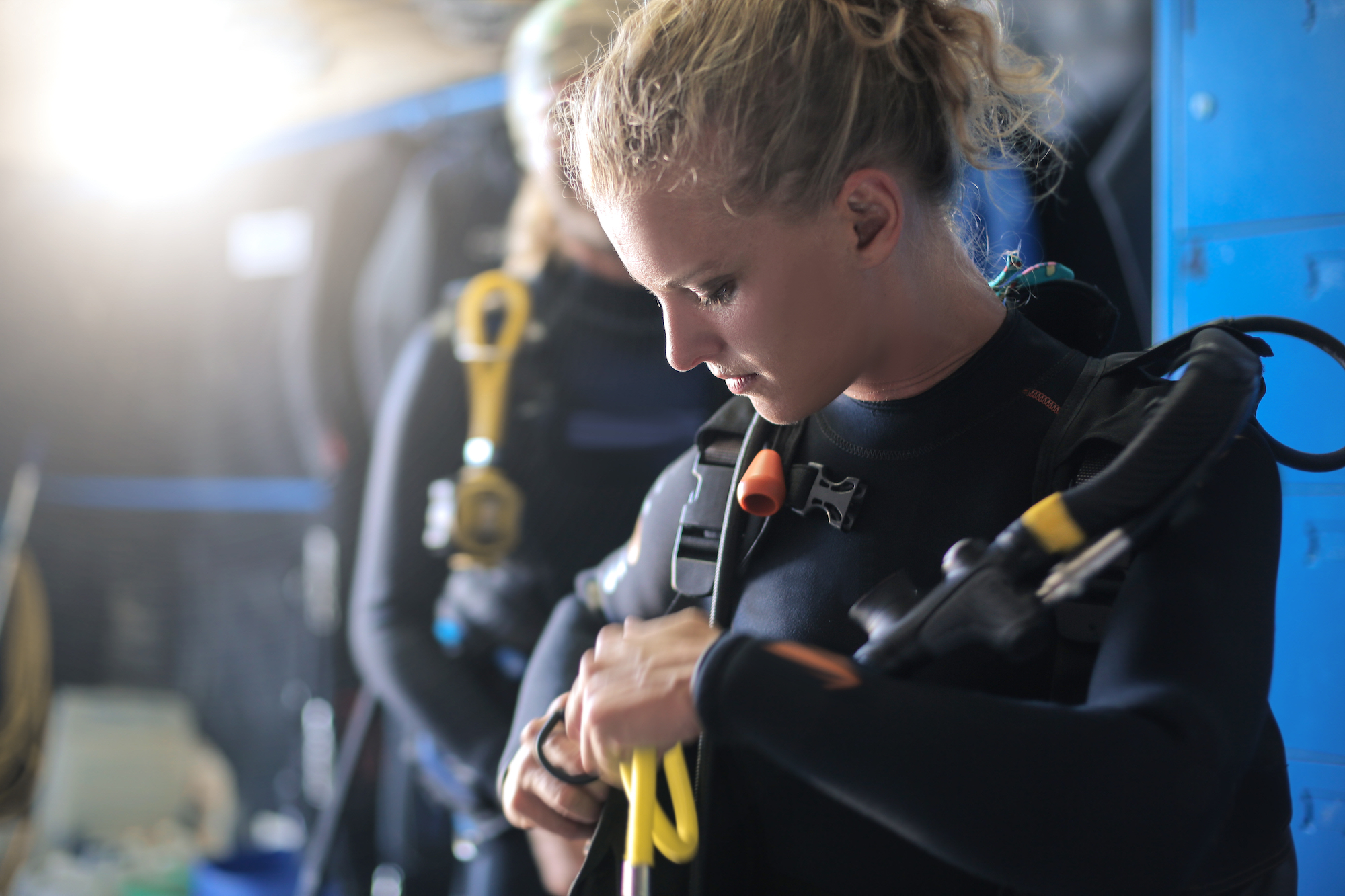
Know Your Buddy’s Gear
Even if you’re using similar equipment, your gear setup will almost always differ from your buddy’s. It’s important to familiarize yourself with your buddy’s gear configuration and mechanics just as well as your own. This is especially true if you are diving with rental gear or a new dive buddy.
In an emergency, unfamiliarity with your buddy’s gear may slow down your response or prevent you from helping your buddy, and vice versa.
Just being familiar with scuba gear in general isn’t enough. For example, I dive with an AIR2 as an alternate air source, instead of a traditional octopus. Due to the short length of this hose, in a shared-air emergency I would switch to my secondary hose and give my buddy my primary regulator. If my buddy didn’t know this beforehand, I can’t imagine how difficult, and potentially dangerous, it would be to explain underwater!
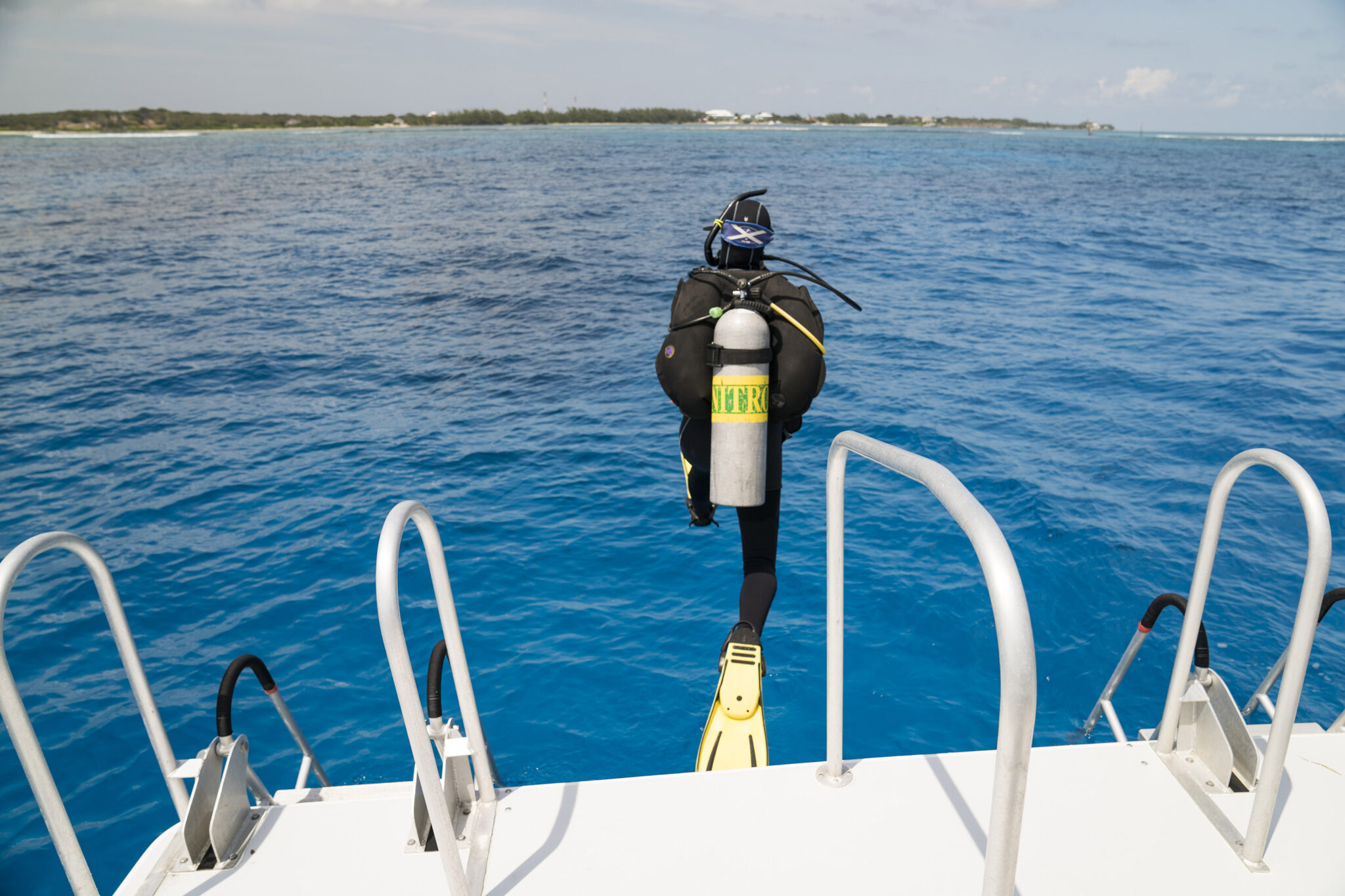
Every Dive Is Different
It’s easy to become complacent after many successful dives. But it’s important to remember that every dive is a new experience with a new set of variables.
Just because your equipment worked perfectly on your last dive, you cannot assume it will be the same on your next.
Whether it’s catching a leaky O-ring that would have cut your dive short or a more significant safety issue, performing a buddy check is always worth the few minutes it takes.
And if you’re looking to become your divemaster or boat crew’s favorite diver, completing your buddy check without being prompted is a great way to show that you are a conscientious and experienced diver.
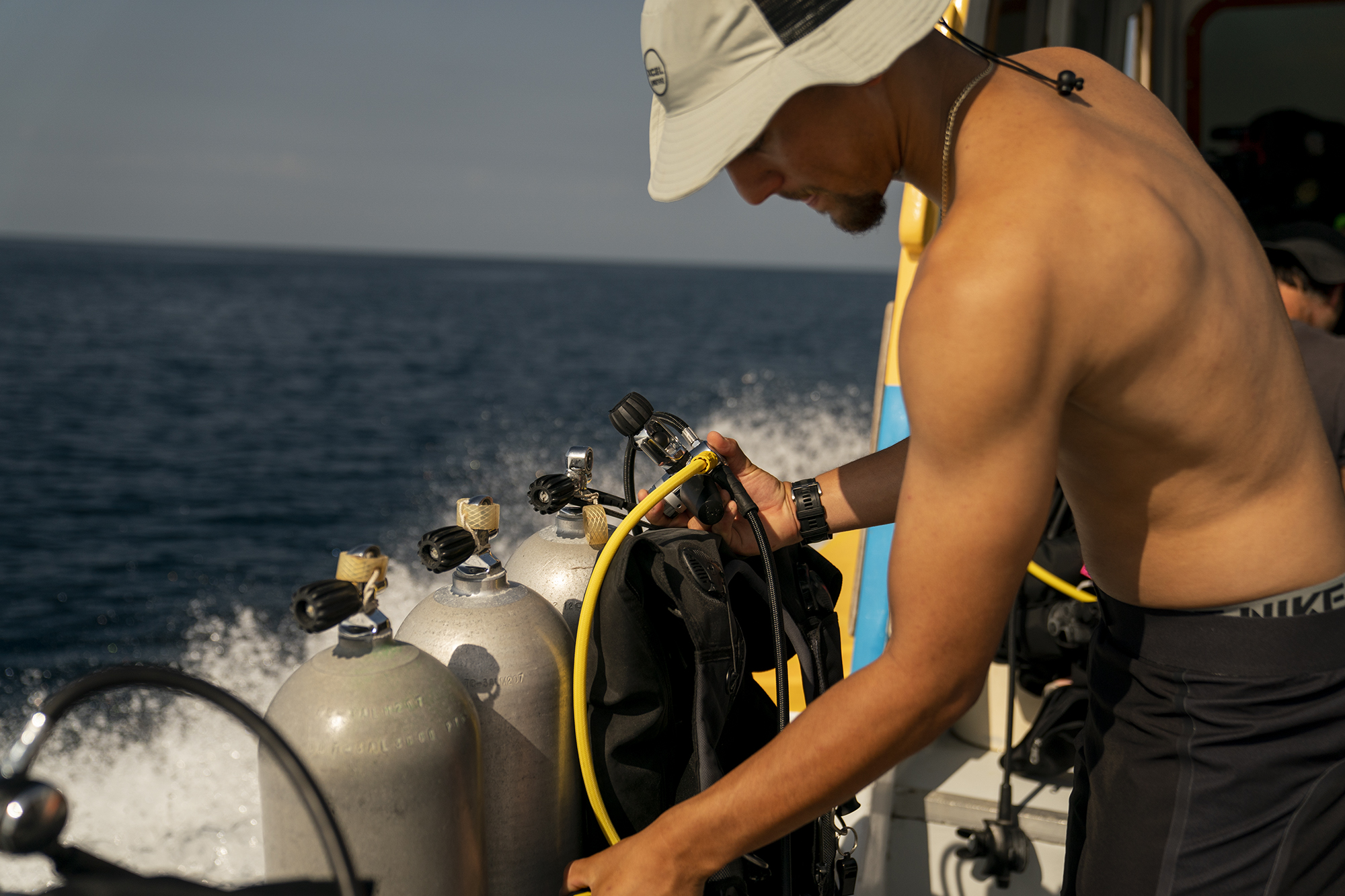
We Are All Human
You — and everyone you dive with — are human. And humans make mistakes.
Both individual divers and dive professionals might make mistakes. This is why it’s always best to double-check your gear.
Busy dive days can make it all too easy to forget to put your integrated weights in your BCD pockets or to leave your air-integrated wrist computer in the freshwater bucket from your surface interval. In these cases, the “W” and “A” in BWRAF will likely save your dive!
Divemasters, instructors and boat crews are also human. Tanks can be missed, valves left partially closed and assumptions made. So always take responsibility for your safety and check your own air!
Two people checking gear is always better than one.
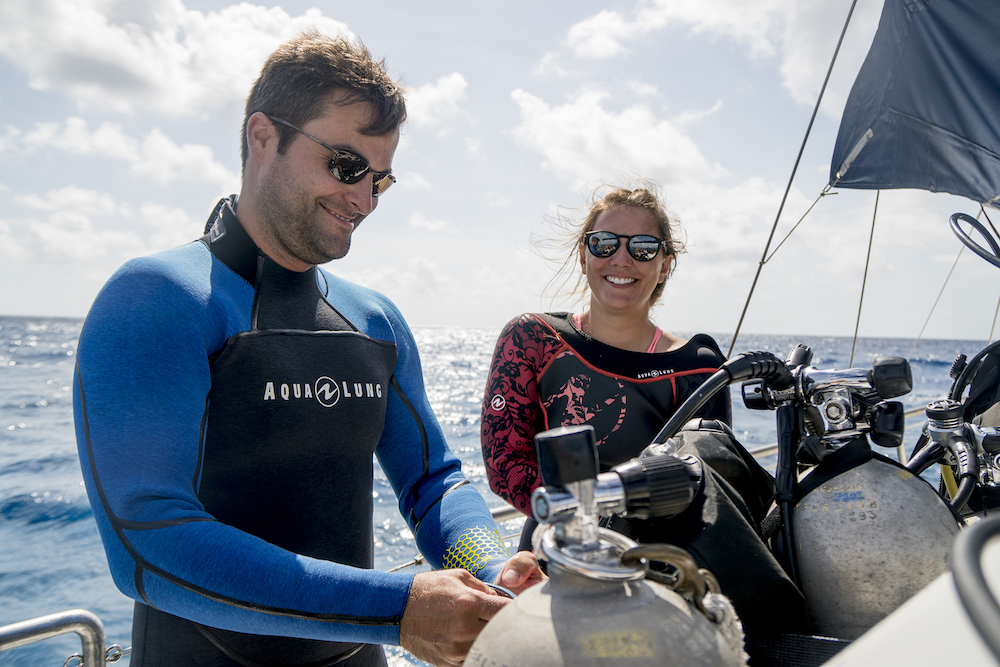
Know a Non-Diver Who’d Make a Great Dive Buddy?
We all have that one friend who keeps saying they want to try scuba diving — now is the time! If you refer a friend, they’ll receive 20% off the cost of their PADI eLearning™. Plus, you will get 20% off select eLearning courses.
Most importantly, you’ll gain a new dive buddy!
Ready for the Next Step?
A buddy check is a simple but effective way to prevent issues from arising underwater. The more familiar you are with emergency procedures, the better prepared you and your buddy will be if something doesn’t go as planned.
The PADI Rescue Diver course builds on these fundamentals, teaching you new skills to increase your dive preparedness and how to manage both minor and major emergencies — making you a more confident diver and a better buddy in the water. Start today with PADI eLearning™ or click below to find a PADI Dive Center to complete your course with.