If you’ve been diving for decades like me, you may remember the Edge, regarded as the first commercially successful dive computer. It was almost as long as your forearm and told you three things: depth, time and no-stop time remaining or required deco – that’s it. Today, dive computers no bigger than a watch (some are watches) also tell you temperature, direction, gas supply, ascent rate and more. As in almost every field, as technologies advance, new features and benefits emerge for users and buyers. Among these, the most critical to popular adoption is often lower price. For example, the Edge cost US $675 when it came out in 1983 – about US $2240 in 2026. Today, budget computers start under US $300, and most high-end dive computers with multiple mixed gas options, logging, CCR function, etc. are US $500 to $1000 cheaper than the Edge was in today’s money.
This is also happening with ROVs – Remotely Operated Vehicles, which, as you may know, are tethered submersible “robots” you control from the surface much as one controls a flying drone (in fact, they are sometimes called “underwater drones”). Made famous by expeditions, such as Ballard’s Titanic expeditions, for decades ROVs have been humanity’s underwater eyes, ears and sometimes hands for underwater science and commercial work that is too deep or dangerous for human divers. Sometimes they’re used for reconnaissance, with divers carrying out the actual tasks after assessing things via ROV. ROVs have even been used to simulate how astronauts might use analogous vehicles in space.
However, because of their large size, high cost (up to US $1 million for commercial ROVs) and complex deployment requirements, ROVs have historically been too big and too costly for recreational diving, or even some other types of diving that would have benefitted, like public safety diving.
Until Now
This is changing as advancing technology brings ROVs within the size, cost and deployment requirements of sport divers – and the future will likely make them even more accessible. At this writing, you can get an ROV as low as US $560, weighing less than three pounds (2 kilograms) and diving to 49 feet (15 meters). For about the same cost as a higher-end dive computer, more advanced “sport” ROVs dive to 300+ feet (100+ meters), and if you want to get serious without getting overly expensive or cumbersome, ones with gripper claws and other commercial ROV features start around US $3100. Follow the links for some examples, but there are many more recreational-range brands and models available in a broad price range suited to serious underwater enthusiasts.
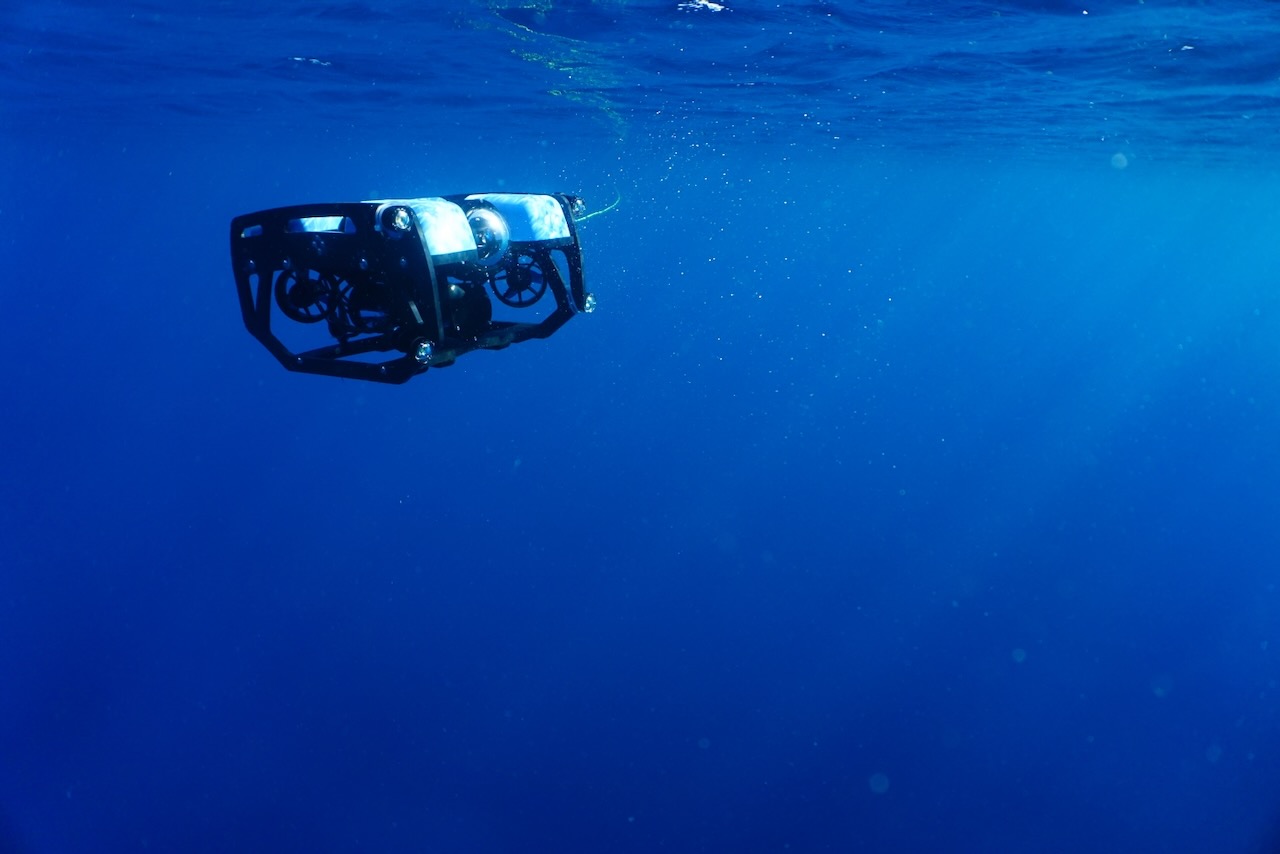
Why Would You Want One?
ROVs are increasingly used by dive boats and recreational divers to confirm anchoring, check out dive conditions and confirm they’re at a desired dive site. Other ROV uses include:
- Finding things. A PADI Search and Recovery Diver can use an ROV to look for say, a lost wallet, then dive after finding it instead of to find it. This is especially useful for a large area that might demand an unreasonably long search.
- Keep an eye on things. An ROV lets surface personnel monitor divers at their safety stop or, for tec diving, follow divers through their decompression. Support divers can stay fresh and ready to respond as warranted by what’s seen via ROV.
- Locate new dive sites. If you’re a boat owner, or in areas with good shore diving potential, using an ROV to check out a site’s potential “diveability” is faster and easier than diving. If one spot misses the mark, it’s easy to bring up the ROV and then move to the next promising location to check out.
- Dive when you can’t dive. In some locations, diving may be prohibited or not desirable, but you still want (or need) to know what’s down there. An ROV is often a doable option, plus it’s also a way for people who don’t, or can’t dive (due to a challenge) to explore underwater – or even “accompany” divers.
- Ocean conservation. Ocean TorchbearersTM involved with PADI AWARE® Adopt the Blue™ and/or other underwater conservation surveys can use ROVs to bolster dive site monitoring. This is especially useful for making checks when conditions or time limitations might prevent making an actual dive to make a survey.
While it’s not likely every diver will have a personal ROV, expect to see them more often and more widely. True, we didn’t become divers to just watch the underwater world on a monitor, but the ability to do so can help us get more out of seeing the underwater world firsthand.
Seek adventure. Save the ocean.
Dr. Drew Richardson
PADI President & CEO